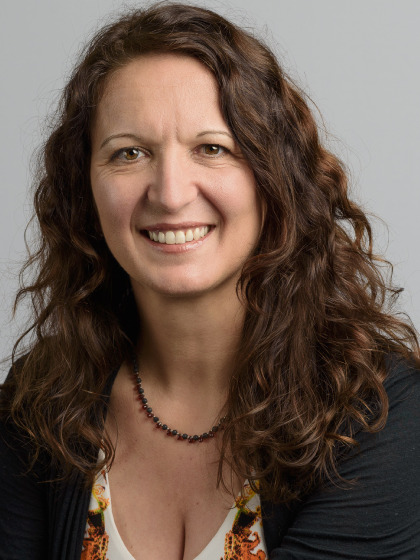
Dr. Andrew Hamilton-Wright is an Associate Professor at the School of Computer Science, University of Guelph, part of the College of Engineering and Physical Sciences. He is a member of the Centre for Advancing Responsible and Ethical Artificial Intelligence (CARE-AI) and has been at the university since 2017. He holds a PhD from the University of Waterloo (2006) and previously worked as a Postdoctoral Researcher at Queen’s University and an Associate Professor at Mount Allison University. His research focuses on machine learning, association mining, and data visualization to support decision-making in healthcare. Key areas include electrophysiological data analysis for disease characterization, fatigue and pain prediction using biophysical signals, and the development of robust software tools for visualizing complex data. He has pioneered work on EMG simulators and models for validating techniques in neuromuscular research. Notable awards include an NSERC Discovery Grant (2021) and an NSERC Engage Grant (2018). His work has been featured in media coverage, such as CTV News’ report on an iron-tracking app for genetic condition management. He is also affiliated with the OneHealth Institute and editorial boards in scientific journals. His grants and collaborations include NSERC-funded projects and partnerships with industry. He advises on ergonomic and postural data analysis, with applications in occupational health and safety. His lab focuses on integrating machine learning with biomedical systems to improve clinical decision-making.
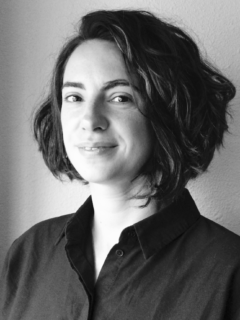
Alexandre Angleraud is a Postdoctoral Research Fellow at Tampere University within the Automation Technology and Mechanical Engineering department under the Faculty of Engineering and Natural Sciences. His research focuses on advancing human-robot collaboration, robotic manipulation, and sensor-based systems in industrial and manufacturing environments. Key areas include knowledge-based planning, tactile feedback learning, and cognitive semantics for dynamic task coordination. His work integrates robotics with machine learning techniques, emphasizing agile production systems, soft robotic grippers, and natural language interfaces for hierarchical task instruction. Notable contributions include innovations in multi-label annotation for visual models and exploration-exploitation mechanisms inspired by neural processes. Recent research trends highlight advancements in co-speech gesture interpretation for human-robot interaction, imitation learning frameworks leveraging sequential data, and comparative studies on sim-to-real learning controllers. His studies often bridge theoretical cognitive models with practical industrial automation challenges. No scientific awards or funded grants are explicitly listed in the provided materials. Advising activities and lab affiliations remain unspecified in the current data.
Ines Heiland is a Professor of Molecular Biology and Bioinformatics at the Department of Arctic and Marine Biology, UiT The Arctic University of Norway. She leads research in systems biology with a focus on metabolic modeling, particularly of NAD and tryptophan pathways, and their implications in aging and disease. She is Chair of the board of the National Research School for Bioinformatics, Biostatistics and Systems Biology (NORBIS), and teaches courses in bioinformatics, systems biology, and scientific programming. Research Interests: Her work lies at the intersection of computational biology and biochemistry. She develops dynamic models to simulate metabolic networks, especially those involving NAD homeostasis, tryptophan metabolism, circadian rhythms, and metabolic signaling. Her research aims to uncover mechanisms underlying aging and disease, guiding therapeutic development through predictive modeling. She emphasizes close collaboration with experimentalists to validate model predictions. Publication Trends: Her recent publications reflect a strong focus on NAD metabolism, systems modeling, and bioinformatics tool development. Key themes include genome-scale metabolic modeling, stable isotope labeling, epigenetic-metabolic crosstalk, and evolutionary analysis of metabolic pathways. Her work appears in high-impact journals such as Nature Metabolism , Cell , and PNAS . Scientific Awards: No specific awards mentioned in the provided text. Advising and Grants: While specific advisees are not listed, she has mentored junior researchers and collaborated widely. She leads or contributes to multiple research projects, including those on metabolic biomarkers, protein-protein interactions, and stable isotope approaches. She has led modeling components in collaborative grants, particularly those involving experimental validation of metabolic hypotheses. Labs and Teams: She is a member of the Bioinformatics and Systems Biology research group at UiT and leads modeling efforts within collaborative projects. She is actively involved in NORBIS, supporting national training in bioinformatics and systems biology.
Timothée Bruel is a researcher at the Institut Pasteur in Paris, France, working in the field of virology and immunology. He is part of the research team led by Olivier Schwartz, focusing on the mechanisms of humoral immune responses against HIV-1 and SARS-CoV-2. His work integrates both basic and translational research to understand antibody effector functions and viral immune evasion. Institution: Institut Pasteur, Paris Research Focus: Humoral Immunity, Neutralizing Antibodies, SARS-CoV-2, HIV-1, Vaccinology Collaborations: Olivier Schwartz Lab, Institut Pasteur Cambodia His research interests center on the mechanisms of action of antibodies against viral pathogens, particularly HIV-1 and SARS-CoV-2. He investigates how antibodies neutralize viruses, mediate effector functions like ADCC, and how viral variants evolve to escape immune responses. His work also explores hybrid immunity resulting from vaccination and natural infection, with a focus on real-world populations including elderly individuals and Pacific Islanders. The recent publications highlight a strong trend in studying SARS-CoV-2 variants (Omicron sublineages, B.1.640.1), neutralizing antibody responses, vaccine efficacy (especially BNT162b2), mucosal immunity, and cross-protection. His studies often involve longitudinal cohort analyses, serological assays, and viral neutralization tests, contributing to public health guidance on vaccination strategies. Scientific contributions include: Characterization of hybrid immunity in Pacific Islanders post-vaccination and infection Analysis of Omicron subvariant resistance to monoclonal antibodies and vaccine-induced immunity Investigation of complement-dependent neutralization in mpox virus Assessment of neutralizing responses in vulnerable populations like nursing home residents Timothée Bruel has been involved in advising on cohort design and data interpretation in multiple collaborative studies. His research is supported through institutional funding at the Institut Pasteur and collaborative grants related to emerging infectious diseases. He contributes to projects involving 3D visualization of biological data and viral pathogenesis modeling. His future work likely continues to focus on emerging variants, pan-coronavirus vaccines, and broad-spectrum antiviral antibodies.
Karolina Rataj is an Assistant Professor at the Faculty of English, Adam Mickiewicz University in Poznań, where she also serves as Head of the Neuroscience of Language Laboratory and Coordinator of the M.A. Programme in Applied Cognitive Linguistics. She has been involved in significant research projects funded by the National Science Center and the National Centre for Research and Development, and previously held a postdoctoral researcher position at the University of Twente, Netherlands. Her research focuses on psycholinguistics, neurolinguistics, and cognitive neuroscience, particularly in the areas of figurative language comprehension (metaphor, irony, similes), semantic processing in monolingual and bilingual contexts, and electrophysiological methods such as ERPs and EEG. She investigates language processing in both healthy individuals and clinical populations, including those with schizophrenia and aphasia. Her recent publications reveal a strong trend in experimental neurocognitive research, employing ERP components like N400, P200, and LPC to decode semantic integration, metaphor comprehension, and creative cognition. Her work frequently compares native and non-native language processing, shedding light on the cognitive effort involved in bilingualism. AMU Rector's Award for organisational achievements (2013) AMU Rector's Award for organisational achievements (2017) AMU Rector’s Scientific Award for publications (2019) She has advised and collaborated on multiple research projects and grants, including the OPUS 13 project on semantic inhibition and an NCN-funded study on novel metaphoric comprehension in bilinguals. She is actively involved in academic service, serving as Deputy Chair of the Human Research Ethics Committee at AMU and as a peer reviewer for journals such as Frontiers in Psychology , Bilingualism: Language and Cognition , and Biological Psychology . Karolina Rataj leads the Neuroscience of Language Laboratory at AMU, which specializes in EEG studies of language and cognition, and she has conducted training in neuroimaging, TMS, and ERP analysis at institutions in Poland, Germany, and the Netherlands.
Martin Aberhan is a Researcher at the Museum of Natural History, Leibniz Institute for Evolution and Biodiversity Research , focusing on evolutionary paleoecology and the taxonomy of marine bivalves. His work integrates field studies with global data mining, particularly through the Paleobiology Database, to explore Mesozoic to early Cenozoic marine faunas, their ecological interactions, and responses to mass extinctions. Research Focus : Marine bivalves, biodiversity dynamics, and macroevolutionary patterns Key Projects : End-Triassic and end-Cretaceous mass extinctions, evolutionary success of bivalve clades, environmental tolerances in marine invertebrates His publications highlight trends in marine biodiversity, the impact of physiological traits on evolutionary success, and post-extinction ecological recovery. He collaborates extensively with institutions and researchers worldwide.
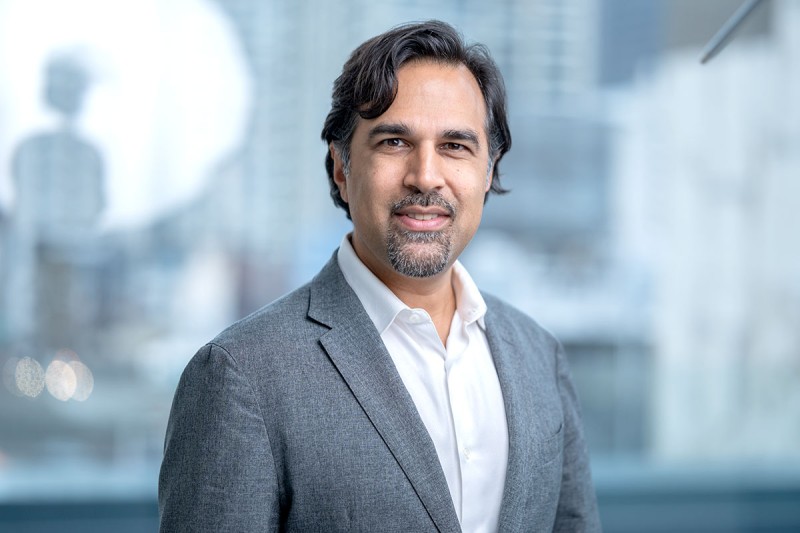
Sohrab Shah, PhD is the Chief of Computational Oncology and holds the Nicholls-Biondi Chair in Computational Oncology at Memorial Sloan Kettering Cancer Center within the Department of Epidemiology and Biostatistics. He leads a vibrant research program focused on computational oncology, leveraging big data resources to translate biologic knowledge to clinical practice and serves as an active faculty member at Gerstner Sloan Kettering Graduate School of Biomedical Sciences. Dr. Shah received his PhD in Computer Science from the University of British Columbia in 2008. Prior to joining MSK, he served as an associate professor in the department of pathology and laboratory medicine and a senior scientist in the department of molecular oncology with BC Cancer. He was also an associate member in the department of computer science at UBC and the Genome Sciences Centre at BC Cancer. Dr. Shah's research focuses on understanding cancer evolution through integrative approaches involving genomics and computational modeling. His lab investigates cancer evolution , single cell genomics and transcriptomics , mutational processes , and prediction of drug response . The Shah Lab develops computational methods for deciphering patterns of cancer evolution, with translational focus on breast and ovarian cancer. They leverage single cell technologies combined with machine learning tools to study cellular dynamics of cancer in patients before, during, and after treatment, with specific projects including spatio-temporal evolution of ovarian cancer and malignant-immune cell interactions. Dr. Shah's recent publications demonstrate a strong focus on multimodal data integration, combining genomics, imaging, and clinical data to improve cancer diagnosis and treatment prediction. His work spans breast cancer, ovarian cancer, and other malignancies, with particular emphasis on understanding tumor evolution and developing computational tools for precision oncology applications, including single cell dynamics, drug sensitivity/resistance mechanisms, and computational pathology. Dr. Shah has received numerous prestigious awards and honors: Susan B Komen Scholar (2018, 2021) Clarivate Analytics Highly Cited Researchers (2018) Nicholls-Biondi Endowed Chair in Computational Oncology Canada Research Chair in Computational Cancer Genomics As Chief of Computational Oncology, Dr. Shah leads a large team of computational biologists, software engineers, and researchers. His lab includes multiple instructors, research fellows, computational biologists, and graduate research assistants. He has successfully secured significant funding to support his research program and has established collaborations across MSK and with external institutions including University of British Columbia and BC Cancer. His lab actively mentors graduate students through the Gerstner Sloan-Kettering Graduate School and Tri-Institutional Computational Biology & Medicine program. The Shah Lab is housed within MSK's newly created Computational Oncology Research Campus on the Upper East Side of New York, in close proximity to Memorial Hospital, Weill Cornell Medical College, and Rockefeller University. The lab maintains active collaborations with clinicians and researchers across MSK, with a strong focus on translating computational findings into clinical applications. Dr. Shah also serves as a recruitment point for new faculty positions in computational oncology at MSK.
Dr. Olaf Dimigen is a tenured Assistant Professor at the University of Groningen , affiliated with the Experimental Psychology Unit in the Faculty of Behavioural and Social Sciences. Previously, he served as a Visiting Professor for Biological Psychology at Humboldt-Universität zu Berlin (2018-2022) and a Guest Researcher at the Max-Planck Institute for Human Development (2022-2023). His research focuses on active vision , visual perception and cognition , and the co-registration of eye movements and EEG . Key areas include microsaccades , fixation-related potentials , and semantic processing in natural reading . He has developed tools like the Unfold toolbox for regression-based EEG analysis and EYE-EEG for combined EEG/eye-tracking studies. Recent publications (2025-2023) analyze self-recognition , face recognition , and preview effects in reading using multimodal neuroimaging. He has taught courses like Applied Cognitive Neuroscience and Data Collection & Analysis for Cognitive Neuroscience , and led workshops in Hong Kong (2024) and Europe on EEG/eye-tracking integration. His peer review contributions span journals like Psychophysiology and NeuroImage .
Elisabetta Chicca is a Professor of Bio-Inspired Circuits and Systems at the University of Groningen's Faculty of Science and Engineering. Her work bridges neuromorphic engineering, spiking neural networks, and bio-inspired sensing. University: University of Groningen Department: Bio-Inspired Circuits and Systems Email: e.chicca@rug.nl Research Interests: Focus on developing CMOS models of cortical circuits for brain-inspired computation, combining spiking neural networks with memristive systems. Key areas include bio-inspired vision, olfaction, touch, and motor control to create agents that operate in real-world environments. Recent Article Trends: Explore neuromorphic processors with hybrid CMOS-memristor architectures, event-based vision for motion detection, tactile sensing in robotics, and benchmarking frameworks for neuromorphic algorithms. Scientific Contributions: She co-founded the Neuromorphic Computing and Engineering journal and serves on its Executive Editorial Board. Her team has received EU Horizon 2020, NWO, and DFG grants.
David Morrison is a Visiting Researcher at the Department of Organismal Biology, Systematic Biology at Uppsala University, Sweden. His contact information lists the Evolutionary Biology Centre at Norbyvägen 18D, 752 36 Uppsala, with email David.Morrison@ebc.uu.se. Morrison's research focuses on advanced phylogenetic methods, particularly the development and application of phylogenetic networks as alternatives to traditional tree-based representations of evolutionary relationships. His work explores reticulate evolution , multiple sequence alignment , and the theoretical foundations of systematics. Morrison has published extensively on the limitations of the "tree of life" metaphor and advocates for network-based approaches that better represent complex evolutionary processes like hybridization and horizontal gene transfer. His research bridges computational biology, evolutionary theory, and systematic practice, with applications ranging from pathogen evolution to botanical systematics. Analysis of Morrison's recent publications reveals a clear trajectory toward more sophisticated representations of evolutionary history. His work increasingly emphasizes phylogenetic networks over traditional trees, recognizing that evolutionary processes are often reticulate rather than strictly divergent. This shift reflects broader trends in evolutionary biology toward more complex models that account for horizontal gene transfer, hybridization, and other non-treelike phenomena. Morrison's publications show strong engagement with both theoretical foundations and practical applications, particularly in the areas of sequence alignment methodology and data visualization for evolutionary relationships. Morrison has served as a reviewer and contributor to numerous publications in systematic biology, including book reviews for significant works in the field. His review of Multiple Sequence Alignment Methods highlighted the critical importance of alignment techniques in modern biology, noting that alignment methods are actually more cited than tree-building programs in scientific literature. This work underscores his expertise in foundational bioinformatics methods that underpin evolutionary analysis. As a Visiting Researcher at Uppsala University's Evolutionary Biology Centre, Morrison contributes to one of Scandinavia's leading institutions for evolutionary research. His work appears to intersect with multiple research groups focused on phylogenetics, systematics, and evolutionary genomics, though specific laboratory affiliations are not detailed in the available information.
Maximilian Rabe is a Postdoctoral Researcher in the Department of Experimental and Biological Psychology at the Faculty of Human Sciences, University of Potsdam, with a secondary affiliation at the University of Copenhagen. Currently on parental leave until September 22, 2025, he maintains active research involvement in computational cognitive science, with particular focus on eye-movement dynamics during reading processes and psycholinguistic modeling. His dual institutional appointments reflect his interdisciplinary research bridging German and Danish academic communities. Dr. Rabe completed his academic training with a B.Sc. in Psychology from the University of Potsdam (2016), followed by an M.Sc. in Psychology - Cognition and Brain Science from the University of Victoria, Canada (2018), and earned his Ph.D. in Cognitive Science from the University of Potsdam in 2024 under the supervision of Ralf Engbert and Shravan Vasishth. His research program centers on computational and statistical modeling of cognitive processes, with specific expertise in eye-movement control, psycholinguistics, and memory systems. Dr. Rabe develops integrated cognitive architectures that simulate how humans process language and allocate visual attention during reading. His methodological approach combines experimental psychology with advanced Bayesian statistics and dynamical systems theory to create predictive models of cognitive behavior. Analysis of his publication trajectory reveals a consistent focus on developing sophisticated computational frameworks for understanding reading processes, with increasing emphasis on integrated models that couple syntactic processing with eye-movement control. A distinctive feature of his work is the development of specialized methodological tools, particularly R packages that advance research practices in cognitive science. His publications span high-impact journals in psychology, cognitive science, and methodology, demonstrating strong interdisciplinary reach. Dr. Rabe is actively involved in multiple research projects funded by the German Research Foundation (DFG), including Project B03 of Collaborative Research Center 1287 on eye-movement control and parsing processes, and Project B03 of CRC 1294 on parameter inference in dynamical cognitive models. His work at the University of Copenhagen investigating visual attention in virtual reality environments receives support from Villum Fonden. As a methodological innovator, Dr. Rabe has developed and maintains several important R packages including hypr for hypothesis-driven contrast coding, designr for experimental design, appRiori for Bayesian analysis, and RStanTVA for visual attention modeling. His commitment to open science practices is evident in his software development and preprint sharing. Working within Ralf Engbert's research group at the University of Potsdam, Dr. Rabe contributes to a vibrant interdisciplinary environment that combines experimental psychology, computational modeling, and advanced statistical methods. His research has implications for understanding fundamental cognitive processes and developing more accurate models of human information processing during language comprehension.
Patrick Fischer, M.Sc., is a Researcher and Doctoral Student at the Department of Health Sciences, Technische Hochschule Mittelhessen (THM), with a focus on biomedical engineering, machine learning, and respiratory disease research. His work spans nocturnal symptom monitoring in COPD and asthma patients, mobile health technology development, and AI-driven medical diagnostics. Key research areas include Biomedical Engineering applications for respiratory monitoring Machine Learning techniques in disease detection Mobile Health Technologies for home-based care Computational Biology in DNA methylation analysis Recent publications highlight graph database applications in nutrition apps, distributed computing for CNS tumor classification, and deep learning for cough detection and plagiocephaly monitoring. All articles demonstrate interdisciplinary approaches combining clinical needs with computational methods. His teaching responsibilities include supervising final thesis and project work. Contact: patrick.fischer@ges.thm.de .
Professor Rachel Warnock leads the Systems Paleobiology research group at the GeoZentrum Nordbayern , part of Friedrich-Alexander University Erlangen-Nuremberg (FAU). Her work bridges paleontological and molecular data through advanced phylogenetic methodologies. Develops Bayesian phylodynamic frameworks Specializes in fossil data integration Focus on speciation/extinction processes Recent publications emphasize Bayesian phylogenetic inference , fossilized birth-death modeling , and macroevolutionary analysis across biological and cultural systems. She co-authored the FossilSim and FossilSimShiny packages for fossil occurrence simulation. Her research team includes collaborators from computational biology, paleontology, and evolutionary ecology domains, operating within FAU's Paleontology Department .
Nathaniel Daw holds the Huo Professorship in Computational and Theoretical Neuroscience at the Princeton Neuroscience Institute , Princeton University. His research integrates computational, neural, and behavioral approaches to study decision-making through trial-and-error learning and reward/punishment processing. Research Interests: Computational Neuroscience Decision-Making Under Uncertainty Model-Based and Model-Free Learning Neural Mechanisms of Self-Control Publications (2025-2019) explore intersections of machine learning and neuroscience, focusing on reward-guided behavior, memory systems, and psychiatric implications like anorexia nervosa and obsessive-compulsive disorder. Key themes include neural replay, cognitive effort allocation, and predictive modeling of human and animal learning. Scientific Awards: Princeton-Rutgers $16M Research Grant for mental illness studies Grants and Collaborations: Highlighted by a major interdisciplinary grant with Rutgers University to advance understanding of mental illness through computational frameworks. Labs and Teams: Leads the Daw Lab at Princeton Neuroscience Institute, focusing on neurocomputational models of decision-making and self-control.
Sabine Kastner is a Professor at the Princeton Neuroscience Institute, focusing on large-scale brain networks during cognition using visual attention as a model. Her research spans human and macaque studies, employing invasive electrophysiology, functional MRI, and diffusion imaging to uncover neural communication mechanisms. Education: M.D., Heinrich-Heine University Ph.D., Georg-August University Her work explores how neural networks enable attentional selection, object perception, and cognitive control, with recent studies on rhythmic oscillations, thalamic contributions, and developmental attention dynamics. She advocates for open science and interdisciplinary collaboration. Recent article trends highlight her focus on attentional rhythms, interspecies comparisons, and neural dynamics in perception. Awards include the 2023 George A. Miller Prize, 2024 Golden Brain Award, and election to the American Academy of Arts and Sciences. Scientific Awards: Cognitive Neuroscience Society's George A. Miller Prize in Cognitive Neuroscience (2023) 2024 Golden Brain Award American Academy of Arts and Sciences Fellow She mentors graduate students and collaborates with researchers like Bob Knight (UC Berkeley) and Josef Parvizi (Stanford). Her lab, the Neuroscience of Attention & Perception Laboratory, emphasizes methodological integration and primate neuroscience advancements.