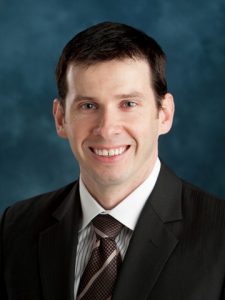
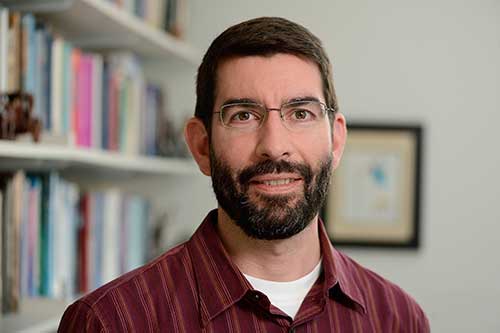
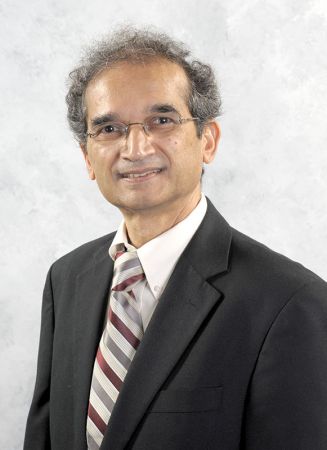
Dr. Derek Patton is an Associate Professor at the School of Polymer Science and Engineering at the University of Southern Mississippi . His work focuses on advanced polymeric materials, particularly functional surfaces and sustainable polymers. Education: B.S. in Chemistry (2000), Jacksonville State University M.S. in Chemistry (2002), University of Alabama at Birmingham Ph.D. in Polymer Chemistry (2006), University of Houston Research Interests span polymer synthesis , degradable materials , and surface engineering , with applications in anti-wetting , anti-fouling , and bioactive systems . His group develops functional polymers for sustainable solutions and antimicrobial platforms. Scientific Awards NSF CAREER Award (2011) USM Junior Faculty Research Award (2011) College of Science and Technology Faculty Research Award (2015) Laboratory Affiliation : Thames Polymer Science Research Center (PSRC), Hattiesburg, University of Southern Mississippi.
Associate Professor Timothy Scott is an Associate Dean of Graduate Research in the Faculty of Engineering at Monash University. He holds dual appointments in the Department of Chemical and Biological Engineering and the Department of Materials Science and Engineering. His research focuses on advanced materials, particularly in additive manufacturing, polymer science, and sustainable materials. He leads projects such as Stereolithographic Additive Manufacturing of Semicrystalline Thermoplastics and MOF-polymer composites for hydrogen carrier applications. His work contributes to UN Sustainable Development Goals through innovations in materials for energy and environmental systems. Education: Not explicitly listed in provided texts. Awards: 2020 PMSE Cooperative Research Award (ACS) ARC Future Fellowship (2020) veski Innovation Fellowship (2019) Research interests include photopolymerization mechanisms, 3D printing technologies, and dynamic covalent chemistry. His lab develops self-healing materials, smart dental composites, and membrane technologies for targeted purification. Current projects span multi-color irradiation systems for ultra-rapid manufacturing and bioactive materials for medical applications. Timothy Scott actively supervises PhD students and collaborates internationally, with publications in Chemistry of Materials , ACS Nano , and Polymers .
Jan K. Rainey is a Professor in the Department of Biochemistry and Molecular Biology at Dalhousie University, with cross-appointments to the Department of Chemistry and School of Biomedical Engineering. He holds a B.Sc. (Biochemistry) from the University of Guelph, an M.Sc. and Ph.D. (Experimental Physical Chemistry) from the University of Toronto, and completed a postdoctoral fellowship in Protein NMR at the University of Alberta. Roles: Undergraduate Coordinator (2022–present), Member of the Protein Assembly Research Team, and BioActives CREATE Training Program. Research Focus: Structural biology of membrane and fibrous proteins, spider silk engineering, and ligand-receptor interactions (e.g., apelin/APJ system). Techniques: NMR spectroscopy (solution/solid-state), scanning probe microscopy, circular dichroism, fluorescence spectroscopy, and recombinant protein production. Current lab members include postdoctoral fellows, Ph.D. students, and undergraduate researchers. Key collaborations involve academic and industrial partners in biomaterials and biotechnology. Funding sources include NSERC, CIHR, and CFI.
Professor Keshavan Niranjan is a faculty member at the University of Reading, serving as Director of the Global Engagement Office. His academic roles include leading international academic programs in teaching and research. He holds a BChem Eng, MChem Eng, and a PhD (tech), and is a Fellow of the Institute of Food Science and Technology (FIFST) and the International Academy of Food Science and Technology. His research focuses on food engineering, particularly in foam stability, sustainable food packaging, high-pressure food processing, and enzyme-assisted extraction. Notable projects include developing plant-based food systems, antimicrobial coatings, and reducing acrylamide in deep-fried products. He supervises PhD projects on topics like date fruit resource recovery and enzymatic protein modification for food processing. Professor Niranjan has authored numerous publications and book chapters, including contributions to Journal of Food Engineering and Food Hydrocolloids . His editorial roles include Editor-in-Chief of Foods and roles at Food and Bioproducts Processing and Scientific Reports . Awards include a Lifetime Achievement Award (2015) and Distinguished Service Award (2019) from the International Association of Engineering and Food.
J. D. Tovar is a Professor in the Department of Chemistry at the Krieger School of Arts and Sciences, Johns Hopkins University, where he has been a faculty member since 2005. His research group focuses on the design, synthesis, and characterization of organic materials with extended π-electron conjugation for applications in flexible electronics and biomedical devices. His research interests include: Organic and materials chemistry of π-conjugated systems Boron-based aromatics, particularly borepins and their fused derivatives Methano[10]annulene-based electronic materials Photochromic polymers and molecular switches Self-assembling bioelectronic materials using peptide-π conjugates Energy transport in organic electronic materials The recent publications from Prof. Tovar's group emphasize the development of air- and moisture-stable organoboron materials, fine-tuning of aromaticity in fused borepin systems, and the design of functional peptide-based nanomaterials. These works span synthetic organic chemistry, physical characterization, and materials engineering, reflecting a multidisciplinary approach to organic electronics and bio-nanomaterials. The research demonstrates a strong trend toward molecular design for controlling electronic, optical, and self-assembly properties in functional materials. Prof. Tovar has successfully advised numerous Ph.D. and M.A. students, many of whom have gone on to postdoctoral positions at institutions like Harvard, NIH, and NIST, or careers in industry at companies such as Solid Biosciences, Church & Dwight, and Kite Pharma. His group has received consistent funding to support graduate students, postdocs, and research activities in the laboratory. He has mentored a diverse cohort including REU students from various universities, indicating active participation in undergraduate research training. The Tovar Research Group operates a well-equipped laboratory focused on organic synthesis, optical and electrochemical characterization, and materials testing. The lab fosters a collaborative environment where students gain expertise in aromatic and polymer chemistry, peptide synthesis, and advanced analytical techniques. Current projects involve cycloparaphenylenes, peptide-π hydrogels, and bioelectronic heterostructures, suggesting ongoing innovation in both fundamental and applied directions.
Dr. Adèle Carradò is a Full Professor in Solid State Physics at the University of Strasbourg (UNISTRA), affiliated with the Institute of Physics and Chemistry of Materials (IPCMS). Her research focuses on bioactive coatings, surface characterization of metallic and multi-layer systems, and mechanical properties of hybrid materials. PhD in Mechanics and Material Science (University of Reims, 2001) HDR (University of Strasbourg, 2004) Research Assistant (University of Ancona, 1997-1998) Post-doc (CEA Saclay, 2002) Her work includes over 70 original articles, two patents, and 50+ invited lectures. She specializes in: Residual stress analysis via neutron and synchrotron radiation Functional thin films for biomedical applications Mechanical behavior of metal/polymer/metal systems 3-layered sandwich structures for lightweight design Zn-Mg alloys for orthopedic implants Surface grafting techniques for biomaterials Recent publications highlight advancements in: Biodegradable Zn-Mg alloys with PMMA coatings ATUM-SEM for bone microstructure analysis Forming mechanics of steel-glass fiber-reinforced composites Residual stress optimization in extruded and drawn materials She actively participates in international conferences and serves on executive committees for biomedical materials symposia.
Dr. Manuel Desco Menéndez is a Full Professor at the Department of Bioengineering , Carlos III University of Madrid , focusing on biomedical imaging and instrumentation. He leads the Biomedical Imaging and Instrumentation Group. Key research domains: Medical Imaging , Neuroimaging , Biomedical Instrumentation Primary publication areas: Computed Tomography , PET Imaging , MRI , Biomaterials His scientific contributions (2022-2025) include: Neuroanatomical changes in pregnancy/postpartum and psychiatric disorders Advanced CT reconstruction algorithms with beam-hardening compensation Innovative biomedical nanoplatforms using milk exosomes Preclinical bone regeneration scaffolds in animal models Current technical developments focus on GPU-accelerated image processing and deep learning applications in tomographic reconstruction.
Vivian Feig is an Assistant Professor in the Department of Mechanical Engineering at Stanford University, with a courtesy appointment in Materials Science and Engineering. Her research focuses on developing low-cost, noninvasive medical technologies that integrate seamlessly with the human body. The Feig Lab leverages chemistry and physics insights to engineer functional materials and devices with dynamic mechanical properties at multiple length scales. Key areas include conductive hydrogels, ingestible robotics, and gas-entrapping materials for therapeutic applications. The lab's publications (2025–2022) span biomedical engineering , materials science , and bioelectronics , with subfields like hydrogel mechanics , drug delivery , and targeted activation . Vivian emphasizes integrity, diversity, and holistic growth in her team. Contact: vfeig@stanford.edu | Stanford Profile
Richard Bright is a Research Fellow at the Biomedical Nanoengineering Laboratory within the College of Medicine and Public Health at Flinders University. His research focuses on the complex interplay between bacteria and mammalian cells on biomaterial substrates, with expertise spanning microbiology, cell biology, and molecular biology. Education: PhD, Biomedical Science from Flinders University (awarded January 20, 2024) Master of Science, Immunology from Charles Sturt University (awarded January 20, 2013) Bachelor of Science (Honors) from University of Adelaide (awarded January 12, 2008) Dr. Bright's research spans multiple interdisciplinary areas including biomaterials, antimicrobials, nanoengineering, tissue engineering, molecular and cell biology, stem cell and bone biology, and immunology. His work particularly focuses on understanding how surface properties of biomaterials influence biological responses, with applications in infection prevention, wound healing, and implant integration. His fingerprint research areas include surface science, antiinfective agents, biomaterials, infection mechanisms, silver nanoparticles, Staphylococcus aureus interactions, nanocomposites, and wound infection management. Dr. Bright has secured significant research funding, including an ARC Discovery Project (2025), Flinders Foundation Seed Grant (2024), and multiple grants from ADRF and industry partners like Colgate Palmolive. His research outputs show consistent productivity with 73 publications to date, demonstrating increasing research activity from 2021-2025. As a supervisor, Dr. Bright emphasizes open communication, collaboration, and critical thinking while providing tailored mentorship. He aims to balance hands-on guidance with encouraging independence, maintaining high ethical standards, and promoting work-life balance. He is committed to supporting students in both academic and industry career paths while fostering an inclusive research environment. His current research involves leading projects, grant writing, manuscript preparation, and supervision of students and laboratory staff. Dr. Bright is a key member of the Biomedical Nanoengineering Laboratory and the Flinders Health and Medical Research Institute. His work contributes to UN Sustainable Development Goals, particularly in health and well-being. His research has practical applications in developing next-generation antimicrobial biomaterials, improving implant integration, and advancing wound healing technologies through innovative nanoengineering approaches.
Mari Lehtonen serves as a University Lecturer in Food Chemistry at the Department of Food and Nutrition, University of Helsinki, a position she has held since April 2021. She also holds the Title of Docent (equivalent to Adjunct Professor) in Food Chemistry from the University of Helsinki, awarded in 2021. University Lecturer, Department of Food and Nutrition, University of Helsinki (2021-present) Post-doctoral researcher, Department of Food and Nutrition (2020-2021) Chemist, Finnish Environment Institute (2017-2020) Dr. Lehtonen earned her Doctor of Science in Food Chemistry from the University of Helsinki in 2012, where she was awarded the best doctoral thesis of the year 2012 in the ABS Graduate School. She also holds a Master of Science in Analytical Chemistry from the University of Helsinki (2004). Her research focuses on food chemistry with particular emphasis on chromatographic and separation techniques, food analysis, and bioactive compounds in food. Her work bridges analytical chemistry with practical food science applications, examining how chemical properties affect food quality, safety, and nutritional value. Recent publications reveal a growing interest in plant-based food components, particularly examining lignin nanoparticles, nanocellulose, and wood-derived compounds for food applications and environmental remediation. Dr. Lehtonen's publication record shows consistent scholarly output with multiple publications annually, demonstrating expertise in both fundamental food chemistry and applied research. Her recent work (2023-2025) increasingly explores sustainable food materials, particularly plant-based polymers and their applications in food systems and environmental contexts. The best doctoral thesis of the year 2012 in the ABS Graduate School (2013) Dr. Lehtonen has supervised 8 MSc theses and 3 BSc theses, in addition to research trainees. She has been involved in multiple research projects including FreshPack (Business Finland), BITE (Novel Biomass-based solutions for Technical Emulsions), WOOD-PRO (Valorization of wood biorefinery products), and WOODLIPS (Novel wood-derived emulsifiers). Her teaching portfolio includes FOOD-305 Chromatographic and Other Separation Techniques, FOOD-302 Research Methods, and ETK-225 Basic Food Analysis, demonstrating her commitment to training the next generation of food scientists. Her laboratory work appears to focus on food chemistry analysis, particularly utilizing chromatographic techniques to examine food components, with recent expansion into plant-based materials research as evidenced by her publications on lignin nanoparticles and wood-derived compounds.
Dr. Himanshu Jain is the T.L. Diamond Distinguished Chair in Engineering and Applied Science and a Professor of Materials Science & Engineering at Lehigh University. He leads the International Materials Institute for New Functionality in Glass and previously directed the Institute for Functional Materials and Devices (I-FMD). His research focuses on advancing glass science through innovations in photonics, bioactive materials, crystal engineering, and laser processing. Education: D.Eng.Sc., Materials Science, Columbia University M.Tech., Indian Institute of Technology (India) M.S., Banaras Hindu University (India) B.S., Kanpur University (India) Research Interests: Laser-induced single-crystal architectures in glass Optical and electronic functionalities in glass Biomedical applications of bioactive glass (e.g., bone scaffolds) Thermal and radiation effects on glass properties Machine learning for crystal growth modeling Awards: Recipient of Otto Schott Research Prize for atomic fluctuation models Zachariasen Award for lithium transport discovery Morey Award for defining new glass science horizons Fulbright and Humboldt Fellowships Advising & Grants: Has supervised numerous students and secured grants for interdisciplinary projects. Active in collaborative initiatives like the Lehigh-NC A&T flood damage mapping partnership. Labs/Teams: Oversees Lehigh's advanced materials facilities, including Sinclair Lab 120A. Coordinates global networks for glass science education and research.
António Manuel de Bastos Pereira is a Full Professor at the Department of Mechanical Engineering, University of Aveiro, Portugal. He has held significant leadership roles including Director of the Master's program in Welding Engineering and Director of the Research Unit Centre for Mechanical Technology and Automation (TEMA) from 2015 to 2024. Under his leadership, TEMA was classified with the highest rating by FCT and included in the European network of Key Enabling Technologies institutions. Dr. Pereira's research focuses on materials science, particularly the study of materials from composites to metals. His work spans advanced manufacturing technologies, surface engineering, and mechanical characterization of materials. He has published 97 articles in SCI journals with 2140 citations and an h-index of 29 (Scopus), demonstrating significant impact in his field. His research has led to the development of over 500 industrial projects worth approximately 100 million euros. His recent publications reveal consistent research trends in materials characterization, advanced manufacturing processes, and sustainable engineering solutions. Key themes include laser processing of materials, welding technologies, composite materials, surface treatments, and thermal engineering applications. His work often combines experimental and numerical approaches to solve practical engineering challenges, with growing emphasis on sustainable manufacturing methods and energy efficiency. Dr. Pereira has supervised numerous graduate students across various mechanical engineering topics, particularly in welding, materials processing, and mechanical design. He has been Principal Investigator for 39 scientific research projects and collaborated in 68 projects total, securing significant research funding. His project portfolio includes national and European initiatives focused on sustainable manufacturing, advanced materials, and innovative industrial processes. As Director of TEMA, he coordinated over 100 researchers within the Research Unit Centre for Mechanical Technology and Automation. TEMA is included in the "Portuguese Roadmap of Research Infrastructures of Strategic Relevance" and was selected to be part of the European network of institutions relevant within Key Enabling Technologies (KETs). Dr. Pereira also coordinated the thematic line "Innovative and Sustainable Industries" of LASI, Portugal's largest associated laboratory with around 500 PhD researchers. His leadership has positioned these research units as key players in technology transfer to small and medium enterprises across Portugal.
Anna Jarosz-Wilkołazka , Professor of Biological Sciences at the Maria Curie-Skłodowska University (UMCS) in Lublin, is affiliated with the Faculty of Biology and Biotechnology and leads research at the Department of Biochemistry and Biotechnology . With expertise spanning fungal enzymes, microbial polymers, and biomaterial modification, her work bridges biochemistry, biotechnology, and environmental science. Current research focuses on biocatalysis in aqueous/non-aqueous systems , fungal enzyme applications (particularly laccases), and the characterization of extracellular polymeric substances (EPS) from bacteria and algae for biosorption and bioflocculation. She has coordinated major research projects including "Modification of biopolymer materials with protease inhibitors" (NCN OPUS 13, 2017-2022) and "Oxalate oxidase in Abortiporus biennis" (NCN Opus 5, 2015-2019). Her recent publications (2016-2023) highlight advancements in fungal laccase immobilization for pollutant removal, EPS applications for heavy metal biosorption, and novel bioactive dyes. A 2023 study investigated oxalate oxidase sources in wood-rotting fungi, while 2020 work explored EPS from endophytic Fusarium culmorum strains affecting cereal crops. Earlier studies focused on lignin degradation mechanisms (2017) and EPS-driven biomineralization (2016). As a scientific supervisor, she has guided NCN projects on Rhodococcus opacus EPS properties (2016-2021) and fungal enzyme immobilization techniques (2015-2018). She actively participates in science outreach through initiatives like the Mobile Science Festival and Design Thinking Week under Erasmus+.
Débora Campos is a Researcher at the Centre for Biotechnology and Fine Chemistry (CBQF) at Catholic University of Portugal (UCP). She holds a PhD in Biotechnology and Food Science and Engineering from UCP (awarded in 2019) and has conducted international research missions at Universidad de Rosario (Argentina), International Nanotechnology Lab (Portugal), UC Davis (USA), and MIT Food Systems Lab (USA). Her research focuses on food waste valorization with emphasis on: Functional ingredients development from agricultural by-products Bioactive compounds extraction and stabilization Sustainable food systems and circular economy approaches Nanotechnology applications in food delivery systems Dr. Campos has 24 h-index (Google Scholar), with 49 research and review papers, 10 book chapters, and over 40 conference abstracts. Her recent publications demonstrate strong focus on pineapple, mango, and fish by-products valorization, with particular expertise in bromelain extraction and applications. Her work shows consistent emphasis on sustainable extraction methods, bioactive compound preservation, and development of functional food ingredients from waste streams. Her scientific contributions have been recognized with multiple awards, including: R&D+i in sustainability category at Born from Knowledge (BfK) Idea Award Letter of Commendation for contribution on polyphenols and Health Five consecutive Annual CBQF incentives for outstanding professional performance (2020-2024) 1st place at 2024 Tech Validation Winners from EIT Food Accelerator Network Dr. Campos actively supervises students, serving as co-supervisor for 3 PhD FCT grant students (2020-24), a PhD mobility student from Algeria, and has supervised 2 BSc students from Turkey. She is also the founder of AgroGrIN Tech, a UCP spin-off focused on sustainable nutraceutical ingredients from food waste.
Lisa Elviri is an Associate Professor in Analytical Chemistry at the Department of Pharmacy, University of Parma, Faculty of Sciences. She holds a PhD in Chemical Sciences (Analytical Chemistry) from the University of Parma and has been a tenured researcher since 2004. Education: PhD in Chemical Sciences (Analytical Chemistry, University of Parma); Laurea in Chemistry (University of Parma). Her research spans analytical chemistry , mass spectrometry , biomaterials , 3D printing , and clinical diagnostics . She focuses on developing LC-MS and immunoenzymatic methods, validating techniques for pharmaceutical analysis, and designing chitosan-based scaffolds for tissue regeneration. Recent publications highlight work on Alzheimer’s disease (PCSK9 inhibition, APOE4 genotype studies), 3D-printed medical devices , and biorefinery quality monitoring using spectroscopy. Her teaching includes Analytical Chemistry for 5-year Master’s programs in Pharmacy and Pharmaceutical Chemistry. She has authored 75 international publications, 140 conference communications, and holds an H-index of 26 (Google Scholar). Her office is located at the Science and Technology Campus, Parma.