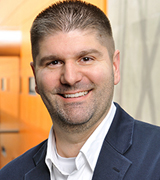
Muhammad Farooq is a Postdoctoral Researcher at Aalto University, affiliated with the Bioproduct Chemistry department under the Bioproducts and Biosystems unit. His research focuses on lignin-based nanomaterials, cellulose-polyester composites, and interfacial interactions for sustainable materials. University: Aalto University, Finland Department: Bioproduct Chemistry Academic Rank: Researcher His work spans advanced materials development, including lignin nanoparticles, Pickering emulsions, and eco-friendly composites. Recent publications highlight applications in battery technologies, waste valorization, and biomaterials. Key trends in his research include the use of colloidal lignin particles, lignocellulosic building blocks, and interfacial engineering for enhancing material properties. His publications appear in journals like Chemical Reviews , ACS Applied Materials & Interfaces , and Langmuir .
Mourad Bentahar is a Researcher at Le Mans University, affiliated with the Institute of Acoustics and the Materials department. He teaches at ENSIM (École Nationale Supérieure d'Ingénieurs du Mans) and conducts research on the characterization of structural and complex materials using linear and non-linear acoustic methods. Research Interests : Mourad focuses on non-linear acoustics and acoustic emission techniques to detect and analyze damage mechanisms in materials such as polymer-based composites, cementitious structures, metal matrix composites, and polymer concrete. His work aims to develop innovative non-destructive testing (NDT) approaches applicable to aeronautics, naval engineering, and civil infrastructure. He also investigates acoustic emission beyond traditional applications, linking micro-scale material behavior to macroscopic observations. Publication Trends : His recent articles emphasize damage monitoring in reinforced concrete and polymer composites adhesion characterization using Lamb waves advanced signal processing algorithms (e.g., S-Transform, Extended Kalman Filter) non-linear dynamics in heterogeneous materials structural health monitoring (SHM) for critical infrastructure Labs & Teams : Mourad is active in the LAUM (Laboratory of Acoustics at Le Mans University) , contributing to projects on acoustic characterization and structural integrity. His collaborations span institutions like Université de Tours, Université de Franche-Comté, and international research networks.
Senbo Xiao is an Associate Professor in the Department of Structural Engineering at the Norwegian University of Science and Technology (NTNU), specializing in nanomechanics and computational materials science. His research focuses on nanoscale phenomena at interfaces with applications in energy, oil recovery, and anti-icing technologies. Dr. Xiao's educational background includes biophysics studies at Nankai University (2000-2007), a PhD in molecular biophysics from Heidelberg University (2007-2011), followed by postdoctoral work at the Heidelberg Institute for Theoretical Studies (2011-2013) and Max Planck Institute for Polymer Research (2013-2015). His primary research interests center on nanoscale mechanisms in materials science, utilizing molecular dynamics simulations and multiscale modeling to investigate: Icing and hydrate formation processes Icevoltaics (energy harvesting from freezing) Interface mechanics at atomic scales Soft materials mechanics Nano-enabled enhanced oil recovery Carbon capture and storage mechanisms His groundbreaking IceVoltaics project, funded by an ERC Consolidator Grant, aims to develop technology for harvesting electrical energy from water freezing processes, analogous to photovoltaics. Analysis of his recent publications reveals strong focus on molecular-scale interface phenomena , particularly ice-solid and hydrate-solid interactions, with significant applications in energy infrastructure protection. His work increasingly integrates machine learning with molecular dynamics, showing evolution toward multi-scale predictive modeling of complex phase transitions. Scientific recognition includes: ERC Consolidator Grant for IceVoltaics project Extensive publication record in high-impact journals including Chemical Engineering Journal, ACS Applied Materials & Interfaces, and Langmuir Dr. Xiao actively supervises master's and PhD students through the NTNU Nanomechanical Lab , which offers thesis topics on nanoscale icing, anti-hydrate technologies, and icing energy harvesting. His research group maintains strong international collaborations, particularly with Brno University of Technology, focusing on multi-scale modeling of materials. Current projects include developing icephobic coatings with self-healing capabilities and investigating hydrogen storage mechanisms in clathrate hydrates. The NTNU Nanomechanical Lab operates as a hub for computational and experimental nanomechanics research, with specialized facilities for molecular dynamics simulation and nanoscale characterization. The lab emphasizes translating fundamental interface science into practical applications for energy, petroleum, and environmental engineering sectors.
Elham Fini is an Associate Professor at the School of Sustainable Engineering and the Built Environment at Arizona State University. She serves as a Senior Global Futures Scientist at the Global Institute of Sustainability and Innovation, Director of the Innovation Network for Materials, Methods and Management, and holds affiliations with the Center for Negative Carbon Emissions. Education: Ph.D. from University of Illinois-Urbana-Champaign Her research focuses on Built Environment and Health , Bio-based Materials , and Multi-scale Characterization , aiming to advance sustainable infrastructure through novel material design and environmental impact mitigation. She has published over 200 scholarly works and her research has been highlighted by BBC Women in STEM, Science Nation, and Wired Magazine. Recent publications analyze bio-based rejuvenators , waste plastic integration , and biochar applications in asphalt systems, addressing carbon management , pollutant adsorption , and asphalt durability . Her work bridges chemical engineering principles with civil infrastructure challenges. Scientific Awards: NSF CAREER award, ASEE Gerald Seeley award, BEYA Emerald STEM Innovation award, NC BioTech Research Excellence award, WTS Innovative Transportation Solution award Dr. Fini serves as editor for the ASCE Journal of Materials and the Journal of Resources, Conservation & Recycling. She previously held leadership roles as ASCE North Carolina Northern Branch president and NSF program director.
Dr Adinda van 't Klooster is a Senior Lecturer in Interdisciplinary Digital Arts at Manchester Metropolitan University's School of Digital Arts (SODA). She is an internationally recognized artist working with digital media, virtual reality, interactive installations, and audiovisual performance. Her practice bridges art, technology, and emotion research, with work exhibited globally across China, the USA, Australia, and Europe. Her research focuses on the intersection of emotion, physiological data, and interactive art. She has developed responsive sound and light installations for UK city councils and created innovative VR interfaces like VRoar (2023) and the AudioVirtualizer. Her practice explores how physiological data can be used as input in interactive artworks, with particular interest in emotion detection, visualization, and creative expression through technology. Her publications demonstrate expertise in virtual reality interfaces, emotion-sensitive artworks, and the representation of difficult emotional experiences through digital media. Her recent work shows a progression from technical explorations of emotion detection toward more socially engaged projects addressing topics like bereavement and stillbirth. Leverhulme funded artist's residency (2014-2015) Van 't Klooster has presented her work at major international conferences including ICMC, NIME, ISEA, and IFPA Sounding Out. Her academic work is closely tied to her artistic practice, with research emerging directly from her creative projects and performances. She has developed teaching units in creating XR interfaces at both Masters and undergraduate levels at MMU.
Ritchie Chen is an Assistant Professor at the University of California, San Francisco (UCSF) in the School of Medicine , specifically within the Department of Neurological Surgery. His research focuses on developing bioelectronic medicine technologies that integrate synthetic biology , nanotechnology , device engineering , and systems neuroscience to create genetically-targeted tools for mapping and modulating neural circuits with minimal tissue damage. Education: B.S. in Bioengineering and Materials Science and Engineering (University of California, Berkeley, 2010), Ph.D. in Materials Science and Engineering (Massachusetts Institute of Technology, 2016) Key Research Areas: Neural Circuit Engineering , Noninvasive Brain Stimulation , Transient Electronics for Medicine , and Genome Architecture in Neuroscience His recent publications demonstrate expertise in optogenetics , magnetic nanotechnology , and bioelectronic interfaces . Notable works include wireless magnetothermal deep brain stimulation (Science, 2015) and transient electronics for neural circuits (ACS Central Science, 2019). While no specific scientific awards are listed, his research has been widely discussed across academic platforms.
Dr. DSc, Eng. Agnieszka Kołodziejczak-Radzimska is an Assistant Professor at the Institute of Chemical Technology and Engineering, Faculty of Chemical Technology, Poznań University of Technology. She has been serving in this academic position since 2019, following her appointment as Assistant at the same institution from 2011-2019. Her educational background includes full-time master's studies in Chemical Technology (2002-2007) and doctoral studies in Chemical Technology and Research Equipment (2007-2011) at Poznań University of Technology. She obtained her doctoral degree on November 15, 2011, with a thesis titled 'Activated zinc oxide – preparation, characterization and application'. Dr. Kołodziejczak-Radzimska's research focuses on the synthesis, physicochemical characterization, modification and functionalization of inorganic systems including oxides, oxide systems, and hybrid systems. She actively searches for innovative biocatalytic systems and their applications as catalysts in model reactions, with particular emphasis on enzymatic degradation and decolorization of organic dyes. Her work bridges fundamental material science with practical environmental applications, particularly in wastewater treatment and sustainable material development. Her publication record shows consistent scholarly output with research spanning enzyme immobilization techniques, hybrid material development, and environmental applications. Recent work (2023-2025) demonstrates continued productivity across multiple journals, with particular focus on biocatalysis, hybrid materials, and environmental applications of novel material systems. She has supervised doctoral research, including Jakub Łukasz Zdarta's 2017 dissertation on 'Immobilization of enzymes on selected organic and inorganic supports.' Additionally, she served as head of the Miniatura 4 research project (2020-2021) titled 'MxOy/fucoidan hybrid systems as active enzyme carriers: design, physicochemical properties and catalytic tests' and was editor of a special issue of the Materials journal (2019-2021) on 'Titania-Based Hybrid Materials for Photocatalytic and Environmental Applications.' Dr. Kołodziejczak-Radzimska also contributes to academic service through co-organizing workshops during Scientists' Night (2017-2020) and open days at the Faculty of Chemical Technology (2017-2019) as part of university-wide campaigns 'Open Doors' and 'Girls to the University of Technology.'
Nicolas Martin is a CNRS Researcher at the Centre de Recherche Paul Pascal (CRPP), a joint research unit of the CNRS and the University of Bordeaux. Based in Pessac, France at 115 avenue Dr Schweitzer, he works as a member of the BIO 2.0 research team. His research focuses on liquid-liquid phase separation, coacervation, artificial cells, and stimuli-responsive systems. Dr. Martin's research centers on creating and studying synthetic cells using principles of liquid-liquid phase separation. His work explores how coacervate droplets serve as models for prebiotic protocells and how these systems can be engineered for various applications. He investigates stimuli-responsive systems that change properties in response to external triggers like light, with applications in synthetic biology and materials science. His research bridges chemistry, physics, and biology to understand and engineer compartmentalized systems that mimic cellular organization. Analysis of Dr. Martin's recent publications reveals a consistent focus on coacervate systems with increasing complexity. His work spans from fundamental studies of phase separation phenomena to practical applications in creating artificial cells. A notable trend is his growing emphasis on light-responsive systems and the integration of biological components into synthetic compartments. His research has evolved from studying basic coacervation phenomena to developing increasingly sophisticated protocell systems with multiple functionalities and environmental responsiveness. ANR PRC PROTOPOLYM (partner, 2025) ANR PRC SHEILA (partner, 2024) Doctoral Network SIGSYNCELL (partner, 2023) RIE U. Bordeaux Project (coordinator, 2023) ANR PRC CHEMinDROPS (partner, 2023) ANR PRC WalLesShape (partner, 2022) CEFIPRA (coordinator, 2022) ANR JCJC LASCO2 (coordinator, 2021) Nouvelle-Aquitaine Region Project (coordinator, 2020) ANR PRC CoSyCell (partner, 2019) IdEx Bordeaux Junior Chair (coordinator, 2018) Marie Skłodowska-Curie Individual Fellowship (declined, 2018) Dr. Martin has coordinated multiple significant research projects including the IdEx Bordeaux Junior Chair (2018), CEFIPRA (2022), and RIE U. Bordeaux Project (2023), demonstrating his leadership capabilities. He has served as a partner in numerous ANR-funded projects, indicating strong collaborative networks across French and international research institutions. His research has received consistent funding from various sources including the French National Research Agency, regional initiatives, and international collaborations. As a member of the BIO 2.0 team at CRPP, Dr. Martin collaborates with researchers working at the intersection of biology, chemistry, and physics. His laboratory focuses on creating and studying synthetic cellular systems using principles of phase separation. The team employs a multidisciplinary approach combining experimental techniques from multiple scientific disciplines to engineer and characterize complex coacervate systems with potential applications in biotechnology and synthetic biology.
Katherine Exss Cid is a Professor at the School of Architecture and Design, Pontifical Catholic University of Valparaíso (PUCV), with a PhD in Architecture and Urbanism from the University of Bío Bío and an MA in Information Design from the University of Reading. She specializes in interaction design, user experience, and inclusive design, particularly focusing on technology mediation for vulnerable audiences. PhD in Architecture and Urbanism (UBB, 2004) MA in Information Design (University of Reading, UK) Graphic Designer (PUCV) Her research interests include: Interaction Design & UX: Human-centered digital systems and co-design methodologies, especially through the PiX Interaction Scores framework Accessibility & Inclusion: Technology-mediated environments for people with disabilities in education, healthcare, and urban spaces Thermal Comfort & Energy Poverty: Personalized comfort systems in Chilean housing for vulnerable populations Recent publications (2023-2025) focus on cognitive accessibility in Chilean public services, thermal comfort for people with intellectual disabilities, and participatory design adaptations. Her work spans journals like Ergonomics , Building and Environment , and Interdisciplinaria , with book chapters on inclusive research and design philosophy. She teaches undergraduate and postgraduate courses in interaction design and service design, supervising projects on thermal comfort systems, digital co-design tools, and accessible urban navigation. Katherine leads the PICTOS service design project and contributes to the PUCV Interdisciplinary Nucleus for Accessibility and Inclusion.
Dr. Soumen De is an Assistant Professor at the School of Chemistry, IISER Thiruvananthapuram , India. His research focuses on stimuli-responsive supramolecular chemistry , particularly in dynamic molecular architectures and non-equilibrium self-assembly. Alumni: PhD (University of Siegen, 2013), M.Sc. (IIT Kanpur, 2007), B.Sc. (RK Mission Residential College, 2005) Postdoctoral experience: Weizmann Institute (2016-2020), University of Bordeaux (2013-2016) Research Interests: Metallo-Supramolecular Chemistry Molecular Switches and Machines Artificial Foldamers Host-Guest Interactions Out-of-Equilibrium Self-Assembly Stimuli-Responsive Materials Publications (2010-present) highlight his work on: Chiral self-sorting in macrocycles Fuel-driven molecular machines Metal-controlled catalytic switches Photo-responsive chiroptical systems Dynamic covalent architectures Coordination-driven molecular motion Collaborations include researchers in Germany, France, Israel, and the UK. Lab members include PhD and Master’s students working on chiral macrocycles, molecular switches, and nanoscale systems.
Prof. Dr. Alf Mews is a full Professor of Physical Chemistry at the University of Hamburg, where he leads the Research Group Mews within the Institute of Physical Chemistry, Department of Chemistry. His research focuses on the synthesis, characterization, and application of nanoscopic structures, particularly semiconductor nanocrystals, nanowires, and nanosheets. Alf Mews studied chemical engineering in Aachen (Diploma in 1988) and Chemistry in Siegen (Diploma in 1992). He received his PhD in 1994 from the Hahn-Meitner-Institute in Berlin under Prof. Horst Weller, focusing on semiconductor nanocrystals. After a DFG fellowship with Prof. Paul Alivisatos at UC Berkeley (1995), he worked with Prof. Christian Bräuchle in Munich (1996) and completed his Habilitation in 2003 at Johannes Gutenberg University Mainz under Prof. Thomas Basché. He was appointed to a full professorship at the University of Siegen in 2004 and moved to the University of Hamburg in 2008. Prof. Mews' research interests span multiple areas of nanoscience and nanotechnology. His group investigates the nucleation and growth processes of colloidal nanoparticles, structure determination of nanoscopic systems using X-ray diffraction, and atomic modeling based on high-resolution electron microscopy. They also study the attachment and uptake mechanisms of nanoparticles in biological cells, synthesis of semiconductor nanostructures (nanorods, nanowires, nanoplatelets), development of surface-modified gold clusters, and biofunctionalization of nanoparticles for medical diagnostics. A key aspect of their work involves determining structure-property relationships by combining different microscopy methods. The research group has published extensively on semiconductor nanowires, particularly focusing on CdS, CdSe, and CdTe systems. Their publications reveal a strong emphasis on understanding the fundamental optical, structural, and electronic properties of nanoscopic model structures. The group employs sophisticated microscopic techniques to investigate individual nanostructures, with significant contributions in areas like cation exchange reactions, quantum confinement effects, and nanowire-based device fabrication. Their research often bridges fundamental science with potential applications in optoelectronics and nanomedicine. Scientific recognition includes: DFG fellowship (1995) to work with Prof. Paul Alivisatos at UC Berkeley Prof. Mews has advised numerous PhD students throughout his career, with a substantial list of former group members who have completed their doctorates under his supervision. His research group maintains active collaborations and participates in various research networks at the University of Hamburg, including those focused on nanochemistry and materials science. The group operates specialized laboratory facilities for nanomaterial synthesis and characterization, including equipment for electrical measurements, optical spectroscopy, and surface potential analysis. The Research Group Mews operates within the Institute of Physical Chemistry at the University of Hamburg, with laboratory and office space at Grindelallee 117. The group maintains strong connections with other research groups within the Department of Chemistry and participates in interdisciplinary research initiatives focused on nanoscience and nanotechnology.
Prof. Tobias Seidl serves as Vice Dean at the Westphalian Institute for Bionics within the Department of Mechanical Engineering at the Westphalian University of Applied Sciences in Bocholt, Germany. He has been with the university since January 2011, teaching bionics and sensor technology while leading research in biomimetic applications for robotics and engineering. Education: Bionics studies at Saarbrücken PhD on desert ant navigation systems under Rüdiger Wehner at the University of Zurich with fieldwork in Tunisia Professional experience at the European Space Agency (ESA) in Noordwijk, Netherlands Research Focus: Prof. Seidl's work centers on bionics , translating biological principles into engineering solutions. His expertise spans neuroethology (neural basis of natural behavior), functional morphology (structure-function relationships), and biomechanics . Key application areas include biomimetic robotics inspired by ants and spiders, sensor development, and bio-inspired materials. His research consistently bridges entomology with robotics, aerospace, and materials science to solve complex engineering challenges. Publication Trends: Recent publications (2025-2016) reveal a strong focus on biomimetic applications in robotics, 3D printing, and aerospace. Dominant themes include adaptive biomimetic valves for automotive cooling, force-based path integration in walking robots, hydrophobic surface replication, and satellite deployable structures inspired by insect wings. His work consistently leverages biological observations—particularly from desert ants and spiders—to advance robotic locomotion, adhesion mechanisms, and space technology. Research Infrastructure: As head of the Westphalian Institute for Bionics, Prof. Seidl leads R&D projects such as developing force sensors in ant legs for robotic applications. His institute serves as a hub for interdisciplinary collaboration between biologists and engineers, focusing on translating biological insights into technical innovations for automotive, aerospace, and medical applications.
Tommy Nylander serves as Expert Professor of Physical Chemistry at Lund University's Faculty of Engineering (LTH), where he is Principal Investigator for NanoLund: Centre for Nanoscience. He holds cross-disciplinary roles in LU's Light and Materials profile area and LTH's Food and Bio initiative, reflecting his integrative research approach spanning surface science, colloid chemistry, and nanotechnology. His research centers on lipid self-assembly, interfacial phenomena, and nanostructured biomaterials, employing neutron scattering, X-ray techniques, and microscopy to investigate systems like sponge-phase nanoparticles, vesicular dispersions, and protein-lipid interfaces. Recent work explores enzymatic modification of food lipids, therapeutic protein stabilization, and ion-specific adsorption effects on oxide surfaces, with strong applications in drug delivery and sustainable materials. Current publications (2025) reveal consistent focus on structural characterization of lipid nanoparticles across Food Hydrocolloids, Langmuir, and Journal of Colloid and Interface Science, demonstrating interdisciplinary collaboration with biologists and engineers for biomedical and food science applications. Notable recognitions include: Norblad-Ekstrand-medal (2017) for surface science contributions Berols Nordic Research price for PhD thesis (1988) He supervises 17 graduate students and leads major grants including Swedish Research Council funding for neutron reflectivity optimization (2025-2026), ESS instrument development, and dietary regulation of gut-brain barriers. His work addresses UN Sustainable Development Goals through sustainable materials and health innovations. Nylander manages Lund's Surface Characterization infrastructure and Super ADAM neutron facility, collaborating with European Spallation Source teams on next-generation scattering instruments while hosting international researchers like Ben Humphreys (2020-2021).
Jason Robert Tavares is a Full Professor in the Department of Chemical Engineering at Polytechnique Montréal since 2011. He also holds an adjunct professorship at Université Laval and is a member of research networks like CREPEC and Astrolith. Education: Ph.D. and B.Eng. in Chemical Engineering from McGill University (2006-2010, 2002-2005). Research focuses on photochemical surface engineering, nanoparticle stabilization, polymer nanocomposites, and atmospheric water harvesting. Recent work emphasizes bio-inspired materials for sustainable agriculture and scalable manufacturing techniques. His 15 most recent articles (2025-2024) span environmental remediation, polymer functionalization, and smart agricultural tools. Notable trends include green chemistry for pesticide reduction, CO₂-to-fuel systems, and induction welding innovations. He has supervised 21 graduate students (8 PhD, 13 Master’s) and contributed to media discussions on topics like biodegradable exclusion nets and plasma waste gasification.
Oscar Verho is a Senior Lecturer and Associate Professor at Uppsala University's Department of Medicinal Chemistry; Drug Design and Discovery. Appointed to this dual position in 2022, he leads research in synthetic methodology development for bioactive molecule synthesis with applications in chemical biology and drug discovery. His work bridges electrochemistry and medicinal chemistry to create sustainable pharmaceutical synthesis routes. Education PhD (2014), Uppsala University, supervised by Prof. Jan-Erling Bäckvall Research Focus Verho specializes in electrocatalyzed C-H functionalization and DNA-encoded library technologies. His research integrates organic synthesis with electrochemical engineering to develop green methodologies for drug discovery, emphasizing reaction efficiency and environmental sustainability. Key applications include antiviral compound development and catalytic mechanism optimization. Publication Trends His 2020-2025 publications reveal consistent advancement in electrocatalysis (particularly water oxidation and C-H activation) and DNA-encoded library applications. Recent work demonstrates interdisciplinary convergence, merging materials science with virology as evidenced by SARS-CoV-2 protease inhibitor research, while maintaining core focus on sustainable electrochemical synthesis. Collaborative Infrastructure Based at Uppsala's Biomedicinskt Centrum (BMC), Verho operates within shared electrochemistry and medicinal chemistry facilities. His extensive co-authorship patterns indicate active collaboration across Uppsala University departments and international research networks, leveraging specialized equipment for electrocatalysis and high-throughput screening.