Dr. Michael Peshkin is a Professor of Mechanical Engineering at Northwestern University and Engineering Education Lead at the Segal Design Institute since 2021. He holds the Allen K. and Johnnie Cordell Breed Senior Professor in Design (2020-2023) and previously the Bette and Neison Harris Professor in Teaching Excellence (2015-2018) and Charles Deering McCormick Professor of Teaching Excellence (2011-2014). Education : PhD in Physics, Carnegie Mellon University (1987) MS in Experimental Solid State Physics, Cornell University (1984) BA in Physics, University of Chicago (1979) Research Interests span robotics , surface haptics , and rehabilitation robotics , focusing on human-machine interfaces and tactile feedback systems. His work has led to four spin-off companies : Mako Surgical (surgical robotics), Kinea Design (rehabilitation robotics), Tangible Haptics, and Tanvas (haptic touchscreen technology). Scientific Awards include: ASEE Ralph Coats Roe National Educator Award (2017) Fellow, National Academy of Inventors (2014) Multiple teaching excellence professorships Teaching Innovations include Lightboard technology for real-time handwritten instruction and courses in Mechanical Engineering , Python Programming , and Maker Electronics . He actively collaborates in the Center for Robotics and Biosystems at Northwestern.
Christopher J. Saldaña serves as the Ring Family Professor at the Georgia Institute of Technology, where he has been a faculty member since 2014. His research focuses on advancing manufacturing science and mechanics of materials, with expertise in additive/hybrid manufacturing, deformation-based surface processing, and Industry 4.0 frameworks. Previously, he held the Harold and Inge Marcus Career Professorship at Penn State University and maintains visiting affiliations with institutions including the US Air Force Research Laboratory and the Indian Institute of Science. His educational background includes: PhD in Mechanical Engineering, Purdue University (2010) MS in Mechanical Engineering, Purdue University (2006) BS in Engineering Science, Virginia Tech (2004) Dr. Saldaña's research establishes foundational processing science for next-generation material systems (alloys, composites, bio-inspired) and manufacturing processes. His group develops integrated frameworks linking process parameters, thermomechanical variables, material structure evolution, and performance outcomes, with emphasis on hybrid additive/subtractive manufacturing qualification and digital manufacturing design tools. They utilize advanced platforms including powder feed directed energy deposition, laser powder bed fusion, and wire-arc deposition systems. Analysis of his recent publications reveals consistent focus on deformation mechanics in manufacturing processes, microstructure evolution under thermomechanical loading, and novel process development for advanced material systems. His work bridges fundamental material behavior studies with applied industrial manufacturing solutions across aerospace, automotive, and biomedical sectors. His distinguished awards include the NSF CAREER Award (2013), Robert J. Hocken SME Outstanding Young Manufacturing Engineer Award (2016), and Georgia Bio Innovation Award (2021). Additional recognitions: Georgia Bio Innovation Award (2021) Gambrinus Fellowship (2018) US Air Force Summer Faculty Fellowship (2017) Research Affiliate of CIRP (2016) NSF CAREER Award (2013) Dow Chemical Sustainability Innovation Challenge Finalist (2013) R&D100 Award (2010) NSF Graduate Research Fellowship (2004) His research program receives substantial support from NSF, DARPA, DMDII, NIST, DOE, ARO, AFRL, and industry partners including Delta Airlines, Volvo, Ford, and Georgia-Pacific. He serves as Associate Editor for IISE Transactions (Design and Manufacturing) and on editorial boards of Manufacturing Letters, Computer Aided Design and Applications, and ASTM Journal of Smart and Sustainable Manufacturing. Dr. Saldaña directs a comprehensive research facility featuring additive manufacturing systems (powder feed directed energy deposition, laser powder bed fusion, hybrid manufacturing, wire-arc deposition), conventional manufacturing equipment, surface/volumetric inspection technologies, and multi-scale characterization tools including SEM/TEM, EBSD, XRD, CT scanning, and nanoindentation capabilities.
David V. Anderson is a Professor in the School of Electrical and Computer Engineering at the Georgia Institute of Technology, where he has been a faculty member since earning his Ph.D. from the same institution in 1999. His academic career is rooted in the College of Engineering, contributing significantly to research and education in electrical and computer engineering. His educational background includes: Bachelor of Science (B.S.) from Brigham Young University, 1993 Master of Science (M.S.) from Brigham Young University, 1994 Doctor of Philosophy (Ph.D.) from Georgia Institute of Technology, 1999 Dr. Anderson's research is centered on audio signal processing and psychoacoustics , with a focus on applying machine learning and signal processing techniques to human auditory characteristics. His notable contributions include the development of a digital hearing aid algorithm that has been commercialized. He also explores low-power signal processing systems , bio-inspired signal processing , and ultra-low power integrated circuits for real-time applications, particularly for the hearing impaired. His achievements have been recognized with prestigious awards: National Science Foundation CAREER Award (2004) Presidential Early Career Award for Scientists and Engineers (2004) Additionally, Dr. Anderson is a Senior Member of the IEEE and a member of the Acoustical Society of America and Tau Beta Pi engineering honor society. He has been actively involved in advancing computer-enhanced education and other educational initiatives at Georgia Tech.
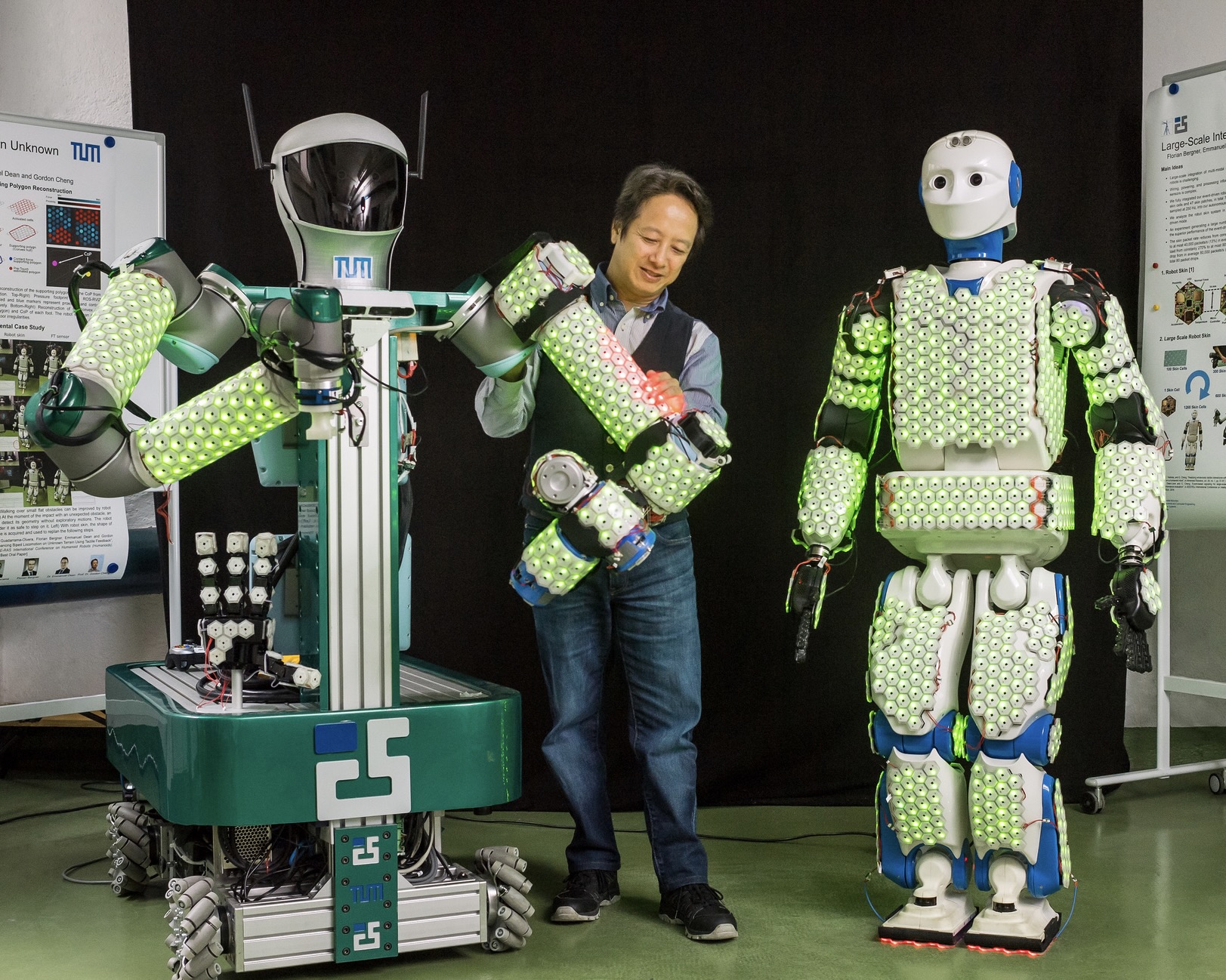
M.Sc. Simon Armleder is a PhD candidate and lecturer at the Technical University of Munich (TUM), affiliated with the Chair of Cognitive Systems under Prof. Gordon Cheng. His research focuses on autonomous systems, robot dynamics, optimal/adaptive control, humanoid robotics, and bio-inspired robotics. He holds a Master's in electrical engineering and information technology from TUM, with prior work in optical receivers for satellite systems at Airbus Defence and Space. Education : Master of Science in Electrical Engineering and Information Technology (TUM) Dual study program in Electrical Engineering with Airbus Defence and Space Teaching : Lecturer for courses like "Multi-sensory Based Robot Dynamic Manipulation" and "Modelling and Control of Legged Robots" Supervised practical projects in robotics, including RoboCup@Home and Advanced RoboCup@Home Research Trends : His work emphasizes tactile-based manipulation, human-robot collaboration, and real-time adaptive control systems. Notable contributions include motion planning with diffusion models, tactile navigation in unstructured environments, and enhancing teleoperation agency through RNN-based visual guidance. Labs/Teams : Part of the Institute for Cognitive Systems (ICS), collaborating with researchers like Prof. Cheng, Dr. Emmanuel Dean-Leon, and teams developing humanoid robots and bio-inspired systems.
Maren Bennewitz is a Professor at the University of Bonn specializing in humanoid robots. She serves as Vice Rector for Digitalization and leads research at the Lamarr Institute for Machine Learning and Artificial Intelligence . As a principal investigator in national and European projects, she contributes to the executive board of the Cluster of Excellence PhenoRob and co-founded the Center for Robotics at Bonn. Key affiliations: University of Bonn, Lamarr Institute, PhenoRob Cluster, Center for Robotics Her research focuses on robot navigation , active perception , intelligent manipulation , and personalized human-robot interaction . Recent work explores privacy-preserving navigation, agricultural robotics, and neuromorphic obstacle avoidance. Publications highlight applications in crop monitoring, multi-agent safety, and VR-based explainability systems. Notable trends in her research include agricultural robotics (AID4Crops, PhenoRob), multi-objective reinforcement learning , and human-swarm interaction . The Lab at University of Bonn develops solutions for dynamic environments, balancing technical innovation with ethical considerations in robotics.
Prof. Erhardt Barth is the Deputy Director at the Institute of Neuro- and Bioinformatics (INB), University of Lübeck . His research focuses on Computer Vision and Machine Learning , drawing inspiration from biological vision systems to develop hybrid human-machine solutions. Education : PhD in Electrical Engineering (1994), Technical University of Munich Positions : Research Associate (Munich), Visiting Fellow (Melbourne), Klaus-Piltz Fellow (Berlin), NASA Vision Science Group member His work bridges computer vision and biological vision , exploring how neural mechanisms can inform algorithm design. Recent projects include deep learning applications in medical imaging (CT scans, radiographs) and bio-inspired neural architectures like FP-Nets and Min-Nets. Publications span medical diagnostics , image processing , and network efficiency . Key trends include explainable AI in healthcare, compact network design , and unsupervised learning techniques. Scientific distinctions : Recipient of the Schloessmann Award (Max Planck Society, 2000) Held prestigious Klaus-Piltz Fellowship (Institute for Advanced Study, Berlin) Prof. Barth has pioneered technology transfer initiatives, founding companies like GazeCom and gestigon while advancing automated diagnostic frameworks in clinical settings.
Volker Dürr is a Professor of Biological Cybernetics at Bielefeld University , Faculty of Biology, and a member of the Center for Cognitive Interaction Technology (CITEC) . His work focuses on sensory control of locomotion , active tactile sensing in insects , and biomimetic modeling of movement systems. Education : Habilitation in Zoology (University of Cologne, 2008; Bielefeld, 2005), PhD in Biology (Bielefeld, 1998), Diploma in Biology (Tübingen, 1994) Academic Career : Professor at Bielefeld (2009-present), Junior Research Group Leader (University of Cologne, 2007-2009), Research Assistant (Bielefeld, 1998-2006) His research investigates how insects use antennal mechanosensory systems and proprioception to control locomotion in complex environments. Key themes include goal-directed movements , sensorimotor integration , and biomimetic robotics . Publications emphasize tactile sensing (15/23 articles), neural control of movement (9/23), biomechanical modeling (7/23), and cross-species locomotion analysis (4/23). Recent work explores virtual reality paradigms for locomotion studies and spiking neural networks for proprioceptive modeling.
Dennis Krupke is a Researcher at the Department of Informatics, University of Hamburg, affiliated with the Human-Computer Interaction (HCI) group and the Technical Aspects of Multimodal Systems (TAMS). His work bridges robotics, virtual reality, and human-computer interaction, focusing on natural interfaces for human-robot cooperation. Education: Diploma in Informatics (2014), University of Hamburg Research Interests: Human-Robot Interaction (HRI) Bio-inspired Robotics and Sensor Systems Modular Robotics and Low-cost Prototyping Mixed Reality for Immersive Scenarios Scientific Awards: Finalist, IROS KROS Best Paper Award on Cognitive Robotics (2018) Highly Commended Paper, Industrial Robot Innovation Award (2017) CLAWAR Association Best Technical Paper Award (2015) Best Innovative Robot Award, CLAWAR (2014) Publications & Projects: Co-developed a printable modular robot with Florens Wasserfall Contributed to ROS-Unity integration for VR-based robotics Explored locomotion techniques for modular robots using reinforcement learning
Muhammad Ardiyansyah is a Postdoctoral Researcher at the Department of Biological and Environmental Sciences , University of Jyväskylä. His work bridges robotics and mathematical frameworks, focusing on computational methods for motion control. Research Interests: His research applies Lie Algebra to robotics optimization, integrating principles from applied mathematics and bio-inspired engineering . This interdisciplinary approach aims to enhance robotic systems' efficiency and adaptability in dynamic environments. Recent Publication Trends: His 2025 work highlights the intersection of robotics , mathematical modeling , and environmental science , indicating a focus on real-world applications of theoretical advances.
Prof. Dr. Martin Bogdan is a faculty member at the University of Leipzig since 2008, currently holding the Professorship for Neuromorphic Information Processing in the Faculty of Mathematics and Computer Science . His academic career spans roles as a research assistant, assistant professor, and department head at institutions including the University of Tübingen and University of Leipzig. Education : Studied technical computer science at Fachhochschule Offenburg (1987–1993) and industrial informatics at Université Grenoble I (1991–1993); earned PhD in 1998 from University of Tübingen. Research Interests focus on: Neuromorphic Information Processing Spiking Neural Networks Brain-Computer Interfaces (BCI) Embedded Systems for Bio-Analogous Processing Real-Time Signal Processing in Medicine Machine Learning Applications in Neurology Mainframe Computing Techniques Article Trends show expertise in: spiking neural networks for real-time applications; BCI systems for locked-in syndrome patients; hyperspectral imaging for agricultural analysis; FPGA-based evolving hardware; and machine learning applications in medical diagnostics. His work bridges neuroscience, computer science, and biomedical engineering. Academic Roles include leadership of the NeuroTeam (2000–2015), editorial positions, and extensive teaching experience in technical computer science and neuromorphic systems. Labs & Teams : Leads the Neuromorphic Information Processing division; collaborates with researchers including Dr. Sophie Adama, Dr. Jörn Hoffmann, and engineers like Max Braungardt.
Jason Yoder serves as Associate Professor of Computer Science and Software Engineering at Rose-Hulman Institute of Technology's College of Engineering. His dual appointment bridges computational and cognitive sciences through interdisciplinary research. His educational background includes: Dual Ph.D. in Computer Science and Cognitive Science, Indiana University (2018) M.S. in Computer Science, Indiana University (2011) B.A. in Computer Science and Mathematics, Goshen College (2008, 2009) Yoder's research spans two interconnected domains. In evolutionary systems, he investigates developmental exaptations, neuromodulation in neural networks, and evolvable hardware through computational modeling. His cognitive science work examines metacognition, emotion theory, and consciousness frameworks. This dual focus manifests in bio-inspired AI approaches that integrate biological principles with computational efficiency. His publication portfolio reveals consistent contributions to artificial life conferences and computational neuroscience journals since 2014, with recent emphasis on developmental strategies in NK fitness landscapes and meta-learning architectures. Key trends include the convergence of evolutionary computation with neuromodulatory principles for adaptive systems. Notable recognitions include: National Science Foundation Research Opportunity Award (2021) Indiana University Male Big of the Year Award (2019) Sarah D. Barder Fellowship (2017) Associate Instructor of the Year Award (2016) Yoder has pioneered educational innovations in software engineering pedagogy, notably implementing exam wrappers to improve student performance. His teaching portfolio covers bio-inspired AI, evolutionary computation, and object-oriented development. Beyond academia, he maintains an active role coaching college ultimate frisbee teams and competing in multiple sports.
Malcolm MacIver is a Professor of Mechanical Engineering at Northwestern University, with courtesy appointments in Neurobiology, Computer Science, and Biomedical Engineering. His research bridges neuroscience, robotics, and evolutionary biology, focusing on sensory systems, animal behavior, and the evolution of cognition. He holds a Ph.D. in Neuroscience from the University of Illinois and has pioneered work on bio-inspired robotics, particularly using weakly electric fish as models for sensing and locomotion. Educational Background: B.Sc. in Philosophy & Computer Science (University of Toronto, 1991); M.A. Philosophy (University of Toronto, 1992); Ph.D. Neuroscience (University of Illinois, 2001). Research Interests: The algorithmic and neural basis of decision-making, bio-inspired robotics, the evolutionary origins of planning and consciousness, and the intersection of sensory ecology with cognition. His work explores how vertebrate vision evolution during the water-to-land transition enabled strategic planning and imagination. Recent Publications Highlight: Studies on climate prediction markets' impact on climate policy support, the neuroecological basis of vertebrate brain evolution, and robotic systems mimicking electric fish sensing. His work emphasizes the link between sensory range and cognitive complexity. Scientific Awards: Presidential Early Career Award for Science and Engineering (2009). Grants & Labs: Leads the MacIver Lab, focusing on computational neuromechanics and neuroethology. Collaborations include projects on autonomous robotics, climate policy engagement via serious games, and art-science installations like scale . Labs/Teams: MacIver Lab at Northwestern, interdisciplinary collaborations with artists, roboticists, and ecologists.
Nina Bulanova is a Lecturer in Computer Science at the Department of Computer Science, Aberystwyth University. Her research focuses on evolutionary computation, black-box complexity, and bio-inspired algorithms such as clonal selection and artificial immune systems. She has contributed to optimizing algorithms for dynamic environments and hybridizing bio-inspired techniques with local search methods. Her work spans theoretical analysis of algorithm performance, including memory-constrained models and operator design in evolutionary algorithms. Key contributions include studies on re-optimization under frequent changes, fixed-arity algorithms, and unbiased black-box complexity analysis. Bulanova has collaborated extensively on topics such as hybrid optimization strategies combining artificial immune systems with local search, and her publications appear in venues like IEEE Congress on Evolutionary Computation, GECCO, and MENDEL conferences. Her research bridges algorithm design theory and practical applications in dynamic optimization landscapes.
Chen Li is an Associate Professor in the Department of Mechanical Engineering at Johns Hopkins University (JHU), affiliated with the Whiting School of Engineering and the Laboratory for Computational Sensing and Robotics (LCSR). He also holds a secondary appointment in the Center for Functional Anatomy & Evolution. His research focuses on terradynamics—understanding animal locomotion in complex terrain and applying these principles to robot design. Li’s work integrates biomechanics, robotics, and physics, with notable contributions to bio-inspired robots like the OmniRoach and SenSnake. Li earned a BSc in Physics and Economics from Peking University (2005) and a PhD in Physics from Georgia Tech (2011). As a Miller Postdoctoral Fellow at UC Berkeley (2011–2014), he studied integrative biology and robotics. He joined JHU in 2016. His lab investigates movement in environments like rubble, mud, and arboreal spaces, with applications in search and rescue, planetary exploration, and environmental monitoring. Key research interests include: terradynamics of legged robots, snake-like locomotion, and amphibious fish mobility. Li’s team has published in Science , PNAS , and Advanced Robotics , and received awards such as the Army Research Office Young Investigator Award and the Beckman Young Investigator Award. Education : BSc, Peking University, 2005 PhD, Georgia Tech, 2011 Miller Postdoc, UC Berkeley, 2011–2014 Awards : Miller Research Fellowship (UC Berkeley) Burroughs Wellcome Fund Career Award Army Research Office Young Investigator Award Lab & Collaborations : LCSR (Interdisciplinary robotics and sensing) Focus on bio-inspired robots and terradynamics
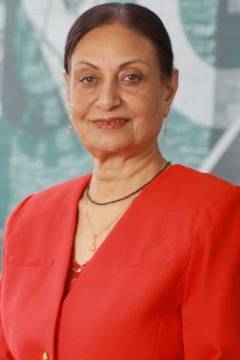
Dr. Devinder Kaur is a Professor in the Department of Electrical Engineering and Computer Science at the University of Toledo's College of Engineering. She holds a PhD in Computer Engineering from Wayne State University (1989), alongside degrees from the University of Aberdeen and Panjab University. Her research focuses on bio-inspired computational algorithms for engineering applications, including fuzzy logic, neural networks, and swarm intelligence. She has published over 100 articles and secured grants from NSF, Daimler Chrysler, and others. Education: PhD and MS in Computer Engineering, Wayne State University (1989, 1985) M.Sc. in Medical Physics, University of Aberdeen (1976) M.Sc. (Hons.) in Physics (Electronics), Panjab University (1970) Research Interests: Integrating intelligence into engineering systems using bio-inspired methods, nature-inspired machine learning, and parallel computing architectures. Her work spans applications in energy systems, medical imaging, and autonomous systems. Key Achievements: Developed courses like 'Biologically Inspired Computing' and 'Fuzzy Systems and Applications.' Summer fellowships at NASA Glenn, AFRL Dayton, and Daimler Chrysler. Fulbright Senior Specialist Award (lectured at Nippon Institute of Technology and Tokyo Denki University). Recipient of Thomas Rumble Fellowship, Commonwealth Fellowship, and Panjab University Medal. Grants & Contributions: Over $2M in research grants, including NSF support and industry partnerships. Active in professional societies like IEEE, WSEAS, and INFORMS. Labs/Teams: Leads research in bio-inspired computing and smart energy systems. Collaborates on interdisciplinary projects involving AI, medical diagnostics, and autonomous UAV systems.