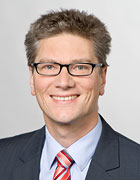
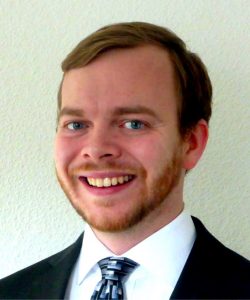
Prof. Dr. Franz Pfeiffer is a full professor at the Chair of Biomedical Physics within the Department of Physics at the Technical University of Munich (TUM) . He has served as director of the Munich School of BioEngineering since 2016. His research focuses on translating advanced X-ray physics concepts to biomedical imaging and clinical applications, particularly for early cancer and osteoporosis diagnostics. Research Interests: X-ray phase-contrast and dark-field imaging, synchrotron instrumentation, CT reconstruction algorithms, and medical imaging technology. Awards: Alfred Breit Prize (2017) ERC Advanced Grant (2016) Leibniz Prize (2011) National Latsis Prize (2010) ERC Starting Grant (2009) His work bridges fundamental X-ray physics with clinical translation, involving collaborations with radiologists, engineers, and medical researchers. Recent publications emphasize AI integration in CT, dark-field chest radiography, and spectral imaging applications.
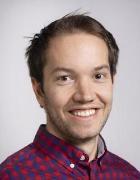
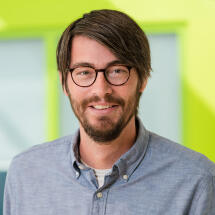
Zhang Yang is an Associate Professor at the School of Medical Engineering, Harbin Institute of Technology (Shenzhen), with a joint appointment as Visiting Professor at the University of Tokyo starting in July 2024. He holds a PhD from the University of Cambridge's Department of Pathology and an M.Phil. from the University of Hong Kong's HKU-Pasteur Research Center. Previously, he served as an Assistant Professor at Harbin Institute of Technology (Shenzhen) from September 2015 to December 2020. His research integrates computational and experimental approaches to address challenges in pathogen and cancer research. On the computational side, his work focuses on developing AI-powered microscopic imaging systems, applying deep learning to analyze multi-omics data (including proteins, DNA, miRNAs, LncRNAs, and mRNAs), and utilizing deep learning in cheminformatics for drug discovery. On the experimental side, his laboratory combines imaging, high-throughput sequencing, mass spectrometry, and chemical biology to understand disease mechanisms at the molecular level. His publication record demonstrates significant impact, with over 50 SCI-indexed papers in high-impact journals including Nature Communications, Briefings in Bioinformatics, Bioinformatics, Analytical Chemistry, and Trends in Biotechnology. His work has been cited by prestigious journals such as Nature Reviews Methods Primers and Nature Communications, with three ESI highly cited papers. His research spans multiple interdisciplinary fields, combining artificial intelligence with biomedical applications to advance diagnostic and therapeutic approaches. World's Top 2% Scientists 2021 Fellow of the Royal Society of Biology Three ESI Highly Cited Papers Five authorized national invention patents As an academic leader, he serves as Associate Editor for BMC Biology and Frontiers in Microbiology, Academic Editor for PLOS Genetics, Editorial Board Member for Communications Biology, and Guest Editor for a Special Issue on AI in analytical chemistry in Trends in Analytical Chemistry. His laboratory actively collaborates with international institutions, with graduates pursuing further studies at Hong Kong Chinese University, Hong Kong University of Science and Technology, Hong Kong Polytechnic University, Macau University, and the University of New South Wales. He teaches Introduction to Modern Biology for undergraduates and Bioanalytical Chemistry for graduate students.
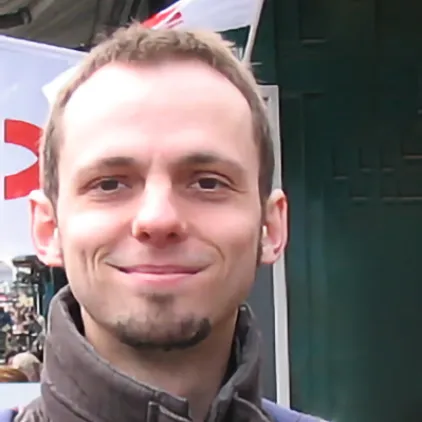
Thomas Gries is a Professor at RWTH Aachen University 's Department of Textile Technology . He serves as the Director of the university's textile machinery department, leading research in composite materials, sustainable textiles, and advanced manufacturing technologies. Current Role: University Professor & Director, Chair of Textile Machinery Research Focus: Textile engineering, carbon fiber composites, sustainable manufacturing, digital twins His work spans experimental studies on fiber-reinforced composites, AI-driven process optimization, and lunar regolith-based fiber production for space applications. Collaborations include public research projects with industrial partners and events like the WIRKTag 2025 on AI in work design. Recent publications analyze: Mechanical behavior of natural/synthetic fiber composites Recycled thermoplastic composite thermoforming 3D-woven CFRP structural optimization Moon-based fiber production from lunar materials Environmental impact assessment tools for textiles
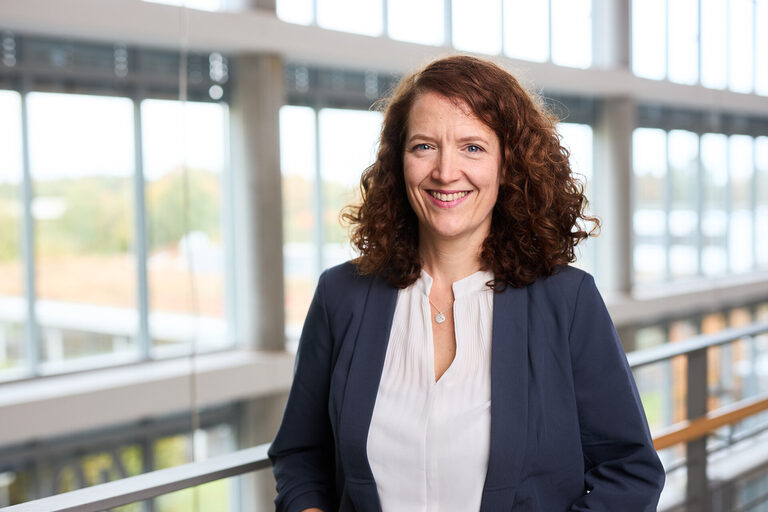
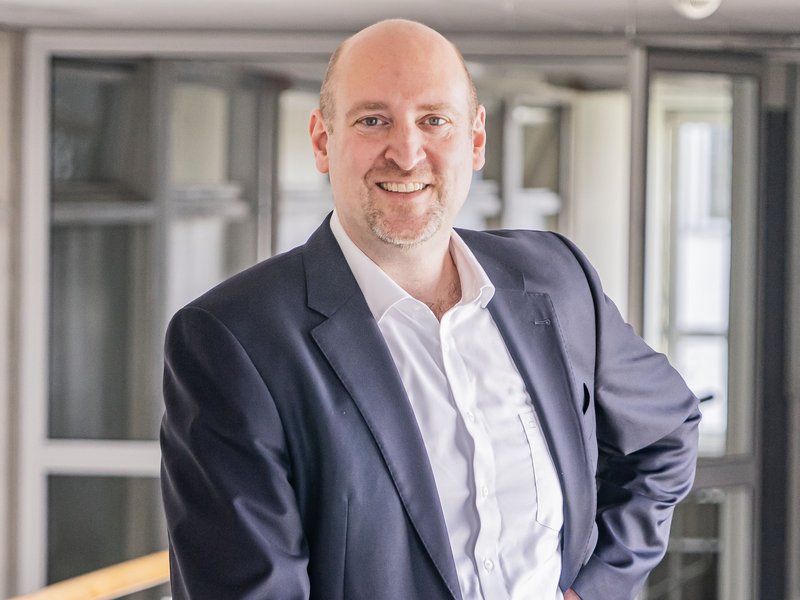
Sandra Geisler is a Junior Professor for Data Stream Management and Analysis at the Department of Computer Science, RWTH Aachen University, a position she has held since September 2021. She is also the leader of the Digital Health Spaces group at the Fraunhofer Institute for Applied Information Technology (FIT) in St. Augustin, reflecting her dual expertise in academic research and applied digital health solutions. Bachelor/Master: Diploma in Computer Science, RWTH Aachen University (2008) PhD: Doctoral degree in Computer Science, RWTH Aachen University (2016) Her research focuses on data stream systems, real-time analytics, data quality, and their applications in digital health and industrial processes. She has made significant contributions to ontology-based data quality management, edge computing for stream processing, and FAIR data principles. Recent work explores the integration of large language models into data management workflows and the development of privacy-preserving platforms for industrial data exchange. Her recent publications demonstrate a strong trend in distributed and edge-based stream processing, interdisciplinary applications in healthcare and supply chains, and the use of AI for data discoverability and quality. Topics include in-network computing, simulation of edge queries, self-tonometry for glaucoma, and cross-company data sharing with privacy awareness. She has served as Associate Editor for the Data & Knowledge Engineering Journal (Elsevier), Public Relation Chair for QDB Workshop (VLDB 2016), and Workshop Chair for IMMoA and HIMoA workshops. She has also edited a special issue on Information Management in Mobile Applications in the Pervasive and Mobile Computing Journal. Geisler has supervised multiple theses on topics including LLM-based ontology integration, edge anomaly detection, and data ecosystem modeling. She has been actively involved in research grants and projects related to industrial data processing, digital health, and sustainable production. She teaches courses such as Data Stream Management and Analysis and Data Ecosystems Lab. She leads the Digital Health Spaces research group at Fraunhofer FIT, focusing on innovative solutions for health data management and patient-centric digital tools. Her work bridges computer science, healthcare, and industrial applications, promoting secure, efficient, and intelligent data ecosystems.
Prof. Jan Torgersen is a Professor of Materials Science at the TUM School of Engineering and Design , Technical University of Munich. His research focuses on advanced materials, additive manufacturing, electrochemical systems, and biomedical applications. He leads projects exploring novel material synthesis techniques, corrosion-resistant coatings, and energy storage solutions. Key research areas include: - Design of architected carbon materials for fuel cells and energy storage - Development of bio-inspired materials for biomedical devices - Computational modeling of material failure and microstructural behavior - Solar energy systems and high-concentration photovoltaics - Atomic layer deposition (ALD) for thin film applications Recent work highlights: - Innovations in gas diffusion layer optimization for PEM fuel cells - Biomimetic designs enhancing mass transport in electrochemical systems - Corrosion mitigation strategies for biomedical implants - Breakthroughs in ultra-thin ALD membrane fabrication His interdisciplinary research bridges materials science with engineering applications, addressing challenges in sustainability, energy efficiency, and healthcare technologies.
Prof. Katerina Rose is a Professor of Clothing Technology & CAD at Reutlingen University's TEXOVERSUM School of Textiles. She leads the Department of Clothing Technology and CAD, focusing on innovative textile design methodologies. Her expertise includes 3D pattern construction, technical textiles manufacturing, and AI-driven garment design. Her research emphasizes digital avatars for clothing simulation, low-cost 3D scanning technologies, and soft tissue modeling. Notable projects include the InBiO initiative for bio-based automotive interiors and the FLAX365 regional textile chain initiative. She holds a patent (DE102020119338A1) for patternless garment cutting methods. Teaching areas: Clothing Technology, CAD Pattern Construction, Technical Textiles Manufacturing Labs: Sewing & CAD Lab, Material Testing Lab, Electronic Textiles Lab Key collaborations: Hometrica Consulting, SciTePress, Browzwear Recent work explores microwave imaging for body dimension capture and AI-enhanced pattern generation, published in journals like Communications in Development and Assembling of Textile Products. Her contributions bridge textile engineering with digital innovation in fashion and medical applications.
Prof. Dr. Tobias Preußer is a Professor of Mathematical Modelling of Medical Processes at the School of Computer Science and Engineering, Constructor University Bremen gGmbH. His research focuses on mathematical modeling in biomedical processes, numerical analysis, image processing, and scientific visualization. He holds a PhD in Mathematics from the University of Duisburg-Essen (2001-2003), a Diploma in Mathematics from the University of Bonn (1994-1999), and completed an exchange semester in applied mathematics at New York University. His academic roles include Deputy Institute Director and Head of Modeling and Simulation at Fraunhofer MEVIS, General Manager at TechsoMed GmbH, and Visiting Assistant Professor at the University of Bremen. His work emphasizes interdisciplinary collaboration, particularly in systems biology and medical imaging applications. Key research interests include partial differential equations, bio-medical process simulation, anisotropic diffusion techniques, and multiscale methods. He has contributed to advancements in radiofrequency ablation modeling, liver pharmacokinetics simulations, and uncertainty quantification in medical visualization. His publications span computational biology, medical physics, and visualization techniques, with notable contributions to virtual liver modeling and stochastic collocation methods for optimal control problems. He has led collaborative projects involving academic and industrial partners, advancing both theoretical and applied aspects of mathematical modeling in healthcare.
Prof. Dr. Andrea Schütze is a full professor at the Department of Microelectronics and Circuit Technology, Technische Universität Dresden. Her research focuses on nanoelectronics, energy-efficient systems, and bio-inspired circuits. She leads the Nanoelectronics and Circuits Group and directs the Dresden Center for Emerging Technologies. Education: PhD in Electrical Engineering, TU Dresden (2007) Diploma in Microelectronics, TU Ilmenau (2003) Research Interests: Andrea Schütze pioneers bio-inspired circuits for neuromorphic computing and develops ultra-low-power mixed-signal systems for IoT. Her work bridges nanoelectronics with biomedical applications, emphasizing energy-efficient architectures and novel device integration techniques. Publications: Recent articles highlight advancements in nanoelectronic devices, neuromorphic circuits, and 3D stacked CMOS integration. Her work frequently addresses emerging technologies like quantum dots and spintronics. Awards: 2018 IEEE Women in Engineering International Leadership Award 2020 German Future Prize Grants & Advising: Current EU Horizon 2020 grant (€4.2M) for bio-inspired computing. Supervises 5 PhD students and 12 master's students in topics ranging from neuromorphic hardware to energy harvesting circuits. Labs & Teams: Leads the TU Dresden Nanoelectronics Lab, collaborating with Fraunhofer Institute for Integrated Circuits (IIS). Active in EU-funded Clean Sky 2 consortium for energy-efficient avionics systems.
Dimitrios Makrakis is a Professor affiliated with the University of Ottawa, Canada. His research focuses on interdisciplinary areas at the intersection of computer networks, cybersecurity, and biomedical engineering. Key research interests include blockchain technology applications in healthcare and finance, molecular communication for nanonetworks, vehicular networks security, and optogenetic-based communication systems. He has collaborated extensively with researchers like Abdelhakim Hafid and Binod Vaidya, producing impactful work in IEEE journals and conferences. His work spans theoretical and applied domains, such as developing secure authentication protocols, analyzing blockchain protocols in quantum contexts, and designing biomedical sensor systems. Notable contributions include frameworks for federated learning in healthcare, privacy-enhanced authentication systems, and bio-inspired nanogenerators for medical applications. Makrakis has also contributed to network protocols optimization in software-defined data centers and vehicular communication networks. Publications highlight his expertise in interdisciplinary fields: from quantum-resistant blockchain strategies to machine learning-driven price prediction in cryptocurrency markets. His research often bridges fundamental science with real-world applications, addressing challenges in privacy, security, and efficiency across distributed systems.
Dr. Albert A. Smith-Penzel is a Principal Investigator at the Institute for Medical Physics and Biophysics , University of Leipzig Medical Faculty . He leads a DFG-funded project titled "Disentangling dynamics in biomolecules with experiment and simulation" since 2021, following his 2019-2020 Research Associate position at the same institution. B.Sc. in Physics, University of Mount Union (2007) Ph.D. in Chemistry, Massachusetts Institute of Technology (2012) Postdoctoral Researcher at ETH-Zürich (2012-2018) His research focuses on biomolecular dynamics characterization through advanced NMR relaxation techniques combined with molecular dynamics simulations. He pioneered detector analysis methods for correlating experimental and computational dynamics data, addressing challenges in motion amplitude quantification across multiple timescales. Recent publications highlight his work on: Dynamic landscapes of bio-membranes Energy landscapes of GPCRs Model-free analysis of protein fibrils Software development for NMR analysis (INFOS, DIFRATE) He actively develops open-source tools for dynamics analysis and contributes to understanding how distributed motions influence macromolecular function.
Prof. Dr. Benjamin Risse leads the Computer Vision and Machine Learning Systems (CVMLS) group at the Institute of Geoinformatics, University of Münster . His interdisciplinary research bridges biomedical image analysis , machine learning , and virtual reality (VR) applications for medical education. Develops FIMTrack for high-throughput analysis of animal locomotion Focuses on VR-based medical training systems (e.g., brain death diagnostics) Pioneers deep learning in acute myeloid leukemia (AML) diagnosis and neuroscience-inspired AI Research Interests: Biomedical image analysis, tracking algorithms, behavioral quantification, machine learning for biological systems, VR in clinical education, and interdisciplinary imaging technologies. His work addresses algorithm limitations in ecology , neuroscience , and medical diagnostics . Recent Publications (2025–2024) span coherent nanophotonic networks , VR-based medical training , and Gaussian splatting for occupancy estimation , reflecting trends in AI-driven biomedical systems and cross-disciplinary innovation . Scientific Awards: Teaching Prize of the University of Münster (2021) Lehrpreis des Fachbereichs Mathematik/Informatik (2021) AI Starter Grant on neuroscience-inspired deep learning (2022) Advising & Grants: Mentors PhD students in AI applications for 3D printing , insect monitoring , and medical education . Holds grants from BMBF , DFG , and Else Kröner-Fresenius Foundation for projects like medical tr.AI.ning and inFlame Medical Scientists College . Labs & Collaborations: Part of the Cells in Motion graduate program and Health-AI Network . Develops FIM imaging systems for Drosophila studies and insect camera traps with the Institute for Landscape Ecology . Collaborates with University Hospital Münster on AI diagnostics.
Mohammad Nassef is an academic researcher with a focus on interdisciplinary applications combining computer science, bioinformatics, and cryptography. His work spans multiple domains, including Developing bio-inspired algorithms for audio and image encryption Optimization techniques in genetic data analysis Automated scoring systems in educational software Edge detection methods for biomedical imaging Research Trends: His publications highlight a consistent integration of biological sequence modeling into computational algorithms, with recent work emphasizing cybersecurity, data compression, and machine learning applications in genetics. Collaborations with researchers like Ibrahim Farag, Amr Badr, and Monagi H. Alkinani indicate a networked approach to solving complex problems in data security and medical informatics.
Anirban Mukhopadhyay is a leading researcher in Medical AI at TU Darmstadt, Germany, heading the Medical & Environmental Computing (MEC-Lab). His work focuses on developing AI systems for image-guided diagnosis and surgery. He collaborates with RACOON, a consortium of 38 German hospitals, and hosts the AI-Ready Healthcare podcast. His research spans neural cellular automata (NCA), federated learning, and medical image segmentation. Key projects include: MEC-Lab : Specializes in assistive AI for healthcare, emphasizing bio-inspired algorithms and low-power device applications. RACOON : Combats COVID-19 through AI-driven radiology collaboration among German hospitals. Publications : Over 100 peer-reviewed papers on medical imaging, surgical robotics, and AI ethics, with a focus on NCA-based solutions and federated learning frameworks. Research interests emphasize: Medical image segmentation (e.g., Med-NCA , GAUDA ) Continual learning for evolving medical data AI ethics and human-AI collaboration in clinical settings His work bridges theoretical advances (e.g., NCA) with practical applications in surgery, radiology, and pathology. Recent trends show a focus on edge computing, robustness in AI systems, and interdisciplinary collaboration with clinicians.
Prof. Dr. Martin Bogdan is a faculty member at the University of Leipzig since 2008, currently holding the Professorship for Neuromorphic Information Processing in the Faculty of Mathematics and Computer Science . His academic career spans roles as a research assistant, assistant professor, and department head at institutions including the University of Tübingen and University of Leipzig. Education : Studied technical computer science at Fachhochschule Offenburg (1987–1993) and industrial informatics at Université Grenoble I (1991–1993); earned PhD in 1998 from University of Tübingen. Research Interests focus on: Neuromorphic Information Processing Spiking Neural Networks Brain-Computer Interfaces (BCI) Embedded Systems for Bio-Analogous Processing Real-Time Signal Processing in Medicine Machine Learning Applications in Neurology Mainframe Computing Techniques Article Trends show expertise in: spiking neural networks for real-time applications; BCI systems for locked-in syndrome patients; hyperspectral imaging for agricultural analysis; FPGA-based evolving hardware; and machine learning applications in medical diagnostics. His work bridges neuroscience, computer science, and biomedical engineering. Academic Roles include leadership of the NeuroTeam (2000–2015), editorial positions, and extensive teaching experience in technical computer science and neuromorphic systems. Labs & Teams : Leads the Neuromorphic Information Processing division; collaborates with researchers including Dr. Sophie Adama, Dr. Jörn Hoffmann, and engineers like Max Braungardt.
Prof. Dr.-Ing. Cristóbal Curio is a Professor of Cognitive Systems at the Faculty of Informatics, Reutlingen University since 2014. He also serves as Prodekan for Research. His academic career includes roles at Max Planck Institute for Biological Cybernetics (2004-2013) and Ruhr-University Bochum. Research focuses on cognitive architectures, deep learning, and experimental methodologies applied to robotics, computer vision, and biomedical engineering. Key projects include EU-funded HEIDI and AIDA initiatives, and BMBF KI Delta Learning. Education: 1992-1998: Electrical Engineering and Computer Science degrees at Ruhr-University Bochum and Purdue University 1998-2003: PhD in Computer Science, Ruhr-University Bochum 2014: Habilitation, University of Tübingen Teaching: Courses include Cognitive Systems (Master's), Advanced Image Processing, and Applied Artificial Intelligence. Labs: Leads the Angewandte Künstliche Intelligenz and Ambient Assisting Cloud Lab . Research interests span cognitive systems, neural networks, and human-centric computing with applications in healthcare and autonomous systems. Active in EU and national research programs, publishing extensively on topics like robotic pose estimation, medical image analysis, and human-robot interaction.