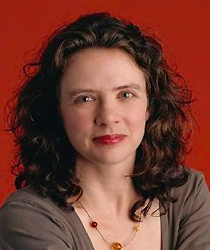
Darryl Charles is a Professor of Artificial Intelligence and Games at the School of Arts & Humanities , Ulster University, specializing in computational intelligence applied to serious games, virtual reality, and connected health. He has over 80 peer-reviewed publications and authored the book Biologically Inspired Artificial Intelligence for Computer Games . Member of Computer Science Research Institute Fellow of the Higher Education Academy Active in SDGs related to health and education Research Interests: His work spans intelligent interactive storytelling , machine learning in games , user modeling , cloud computing , and connected health , with recent focus on natural user interfaces for rehabilitation and learning motivation. Scientific Awards: Catalyst Invent Finalist (2020) iCURE Business Accelerator (2020) Intertrade Ireland Seedcorn Finalist (2018/2019) ICVRAT/ICDVRAT Prizes (2014-2016) Academic Leadership: Served as External Examiner at Glasgow School of Art (2019-2023), University of West of Scotland (2008-2014), and other institutions.
Dr. Timothy H. Lacey is an Adjunct Assistant Professor in the Department of Computer Science at the Air Force Institute of Technology (AFIT), located at Wright-Patterson Air Force Base, Ohio. He contributes to graduate-level education and research in cybersecurity, digital forensics, and artificial intelligence applications in cyber defense. Education: Ph.D. in Computer Science, Air Force Institute of Technology, 2010 M.S. in Computer Systems, Air Force Institute of Technology, 2000 B.S. in Computer Science and Management/Computer Information Systems, Park College, 1991 Dr. Lacey's research focuses on cybersecurity , particularly in reputation-based security for mobile networks (MANETs) , cyber defense exercises (CDX) , and qualia-based modeling of cyberspace awareness . His work bridges theoretical AI and practical military cybersecurity applications. He has extensively studied how cyber competitions shape curriculum and enhance graduate education in digital forensics and information assurance. The recent publications reflect a strong trend in integrating artificial intelligence and cognitive models into cybersecurity, especially for situational awareness and intrusion detection. His work also emphasizes real-world training through NSA-sponsored Cyber Defense Exercises, influencing pedagogical strategies in military and academic settings. Scientific Awards: No awards explicitly mentioned in the provided text. Dr. Lacey has played a significant role in advising and shaping cybersecurity curricula, particularly through the integration of hands-on cyber defense exercises. While no specific grants are listed, his repeated collaboration with agencies like the NSA and DC3 suggests involvement in funded educational and research initiatives. He has contributed to multiple publications on curriculum development, indicating leadership in pedagogical innovation within information assurance. Though no formal lab or team is named, Dr. Lacey is part of a collaborative research group at AFIT, frequently publishing with colleagues such as R. F. Mills, R. A. Raines, S. K. Rogers, and B. E. Mullins. Their work centers on cyber operations, AI-driven security, and military cybersecurity education, likely operating within AFIT’s cybersecurity or digital forensics research units.
Maia Fraser is an Associate Professor in the Department of Mathematics & Statistics at the University of Ottawa, with a cross-appointment in the School of Electrical Engineering and Computer Science. She is also a member of the Brain and Mind Research Institute, reflecting her interdisciplinary research bridging mathematics, machine learning, and neuroscience. Her research focuses on the theoretical foundations of machine learning, especially interactions with neuroscience, and she actively explores how biological learning can inspire AI algorithms. She also contributes to contact and symplectic geometry and computational geometry. Her work increasingly addresses the societal implications of AI, including its role in mathematical discovery and AI safety. Her recent publications reveal a strong trend toward integrating reinforcement learning with temporal and spatial hierarchies, drawing from both neuroscience and geometry. She investigates regret bounds in learning, temporal abstraction, and large-scale geometric invariants, demonstrating a unique blend of mathematical rigor and AI innovation. Her work often involves interdisciplinary collaboration, particularly with neuroscientists and mathematicians. Guest editor, Bulletin of the AMS special issue on 'Will machines change mathematics?' Co-applicant on Canada-UK AI Initiative grant on modeling the self Co-organizer, 2022 Fields Medal Symposium in honor of Akshay Venkatesh Co-moderator, Panel Discussion at Forward from the Fields Medal (FFFM) 2024 Fraser leads the NSERC-CREATE-funded INTER-MATH-AI training program and is involved in the Major Thematic Program on the Mathematics of Neuroscience at the Fields Institute (2025). She has advised students and researchers across disciplines and is currently writing a book on conceptual tools for understanding AI from a societal systems perspective. Her teaching includes courses in mathematical machine learning, differential geometry, topology, and linear algebra. She maintains active research collaborations and participates in key seminars and initiatives in machine learning, symplectic geometry, and AI ethics.
Lino Marques is an Associate Professor at the Department of Electrical and Computer Engineering , University of Coimbra, with a Senior Researcher position at the Institute for Systems and Robotics (ISR-UC) . He leads the Field Robotics group and has supervised 8 PhD students and over 60 MSc students. 1994–Present: Faculty at University of Coimbra 2005: PhD in Electrical and Computer Engineering 2023: Habilitation in Robotics His research focuses on mobile robot olfaction , multi-robot systems , sensor data fusion , and hazardous environment robotics . Recent projects emphasize UV-C disinfection robots , precision agriculture , and energy-efficient path planning . Key applications include pollutant monitoring , maritime surveillance , and mine detection . He has participated in major projects like FP7-TIRAMISU (mine removal) and FP6-GUARDIANS (scent-based navigation). His editorial roles include Editor-in-Chief for Mobile Robots and Multi-Robot Systems in the International Journal of Advanced Robotic Systems. With an h-index of 33 , he has published 16 book chapters, over 40 journal articles, and 150+ conference papers. His work spans robotic clusters , wireless sensor networks , and cyber-physical systems .
Antonio Couce Casanova is a Professor in the Department of Industrial Engineering at the Ferrol Engineering Polytechnic University College, part of the University of A Coruña (UDC) in Spain. His teaching spans multiple engineering programs including Automation and Industrial Electronics Engineering, Electrical Engineering, and various Master's degrees in Energy Efficiency, Occupational Risk Prevention, and Textile Technology. His research interests focus on renewable energy systems , particularly hydrokinetic and wind turbine technologies, energy efficiency certification, and building energy simulation. His work bridges theoretical engineering principles with practical industrial applications, especially in marine energy and sustainable manufacturing processes. Analysis of his publication record reveals a strong focus on biomimetic approaches to energy generation , with significant contributions to vertical axis wind turbine design and hydrokinetic energy systems. His more recent work (2022-2024) emphasizes meteorological data processing for building energy simulation and optimization of renewable energy systems using computational methods. Earlier work (2010-2015) focused on control systems and foundational renewable energy technologies. Dr. Couce Casanova has supervised numerous final degree and master's theses since 2013, with projects spanning energy rehabilitation, facility design, and industrial process optimization. His research has been supported by entities including Siemens Industry Software, the Galician regional government (Consellería de Economía e Industria), and NORVENTO INGENIERÍA S.L. He is actively involved in the INNOVACIONES MARINAS research unit, focusing on marine energy applications and sustainable industrial processes. His work demonstrates a consistent trajectory from theoretical control systems toward practical renewable energy solutions with marine applications.
Zervoudakis Konstantinos is a Researcher at the School of Production Engineering and Management, Technical University of Crete. His work focuses on computational intelligence, optimization algorithms, and their applications in education and product design. He holds a fixed-term research position and is based in Office G3.0.01, Building G3. Research Interests: His primary areas include developing nature-inspired optimization algorithms (e.g., flying fox, mayfly, and bees algorithms), applying computational methods to educational challenges like student psychological fitness assessment and group formation, and optimizing product line design using metaheuristics like Tabu Search and Differential Evolution. He also investigates the impact of ICT on education and special education teacher efficacy. Publications Trends: Recent works emphasize hybrid optimization algorithms for real-world problems (maintenance scheduling, product design), AI-driven educational tools for mental health assessment and learning grouping, and algorithmic solutions for multi-objective decision-making. His research bridges computational innovation with practical applications in education and engineering. Awards: None explicitly mentioned in the provided texts. Advising & Grants: No student advisees listed. No grants disclosed in the data.
Hamed RAHIMI NOHOOJI is a Postdoctoral researcher at the University of Luxembourg's Interdisciplinary Centre for Security, Reliability and Trust (SnT), specifically within the Automation department under Prof. Holger Voos's research group. He holds a Ph.D. from Curtin University (Australia, 2018) and has held research positions at the National University of Singapore, UC Louvain, University of Pisa, and the University of Birmingham. His research focuses on soft robotics , adaptive control systems , and human-robot interaction , with notable contributions to projects like the EU H2020 CYBERLEGs Plus Plus initiative and Singapore's A*STAR-funded soft gripper development. His work spans neuroadaptive control , reinforcement learning , and fault-tolerant systems , with applications in space robotics, wind turbine control, and collaborative robotics. With over 900 citations and an H-index of 18 (Google Scholar, 2023), his publications appear in top journals like Mechanical Systems and Signal Processing (IF 8.934) and Neurocomputing (IF 5.779). He has authored four Springer book chapters and served as a guest editor for journals including Frontiers in Robotics and AI and IEEE Transactions on Industrial Electronics . Research interests include: Soft Robotics : Design of compliant actuators, jamming grippers, and topology-optimized soft mechanisms Control Systems : Barrier Lyapunov functions, Nussbaum gain techniques, and neuroadaptive methods Human-Machine Collaboration : Adaptive trajectory optimization for safe human-robot interaction Space Applications : Soft robotics for extraterrestrial missions and compliant systems for space environments His recent articles emphasize constrained control systems , reinforcement learning for robotics , and lightweight gripper design for aerial platforms . His work often bridges theoretical control principles with practical robotic implementations in dynamic environments. Scientific achievements include a Student Travel Award at the 2016 Australasian Conf on Robotics and Automation. He has edited topical collections on Human-Robot Interaction and Soft Robotics , reflecting his leadership in shaping the field's research directions. Labs/Teams: Member of the Automation & Robotics Research Group at SnT, collaborating with Prof. Holger Voos and international partners on EU-funded projects.
Mark Minor is a Researcher in the Department of Mechanical Engineering at the University of Utah. His research focuses on wearable robots, virtual reality, soft robotics, haptics, and automated ground vehicles. He has contributed to projects like the MeLLO Data Library and developed haptic terrain display technologies. Key articles include work on augmented RF propagation modeling and digital spectrum twins, reflecting his interdisciplinary approach spanning robotics, control systems, and human-robot interaction. His recent work emphasizes autonomous vehicle control systems, soft robotic materials, and safety mechanisms in human-robot collaboration. Collaborations include contributions to the POWDER platform for radio dynamic zones and advancements in multi-sensory VR interfaces. Notable research themes include terrain modeling for robotics, bio-inspired mechanisms, and improving mobility technologies for assistive devices. His work integrates both hardware development and algorithmic innovation, particularly in haptic feedback and modular robotic systems.
Pamela Abshire is a Professor in the Department of Electrical and Computer Engineering and the Institute for Systems Research at the University of Maryland, College Park. She holds the rank of Fischell Institute Fellow and is affiliated with the Maryland Robotics Center, Brain and Behavior Institute, and Robert E. Fischell Institute for Biomedical Devices. Her work bridges VLSI circuit design and bioengineering, focusing on performance-resource tradeoffs in natural/engineered systems. Education: B.S. Physics (Caltech, 1992), M.S. and Ph.D. in Electrical Engineering (Johns Hopkins University, 1997 and 2001). Pre-UMD career included R&D roles at Medtronic (1992-1995). Research focuses on CMOS biosensors, low-power microsystems, and bio-inspired designs for applications like cell-based sensing, robotics, and medical devices. Notable projects include nose-on-a-chip odor detection systems, ant-like microrobots, and lab-on-CMOS platforms for real-time cell monitoring. Awards include IEEE Fellow (2018), NSF CAREER Award (2003), and 2021 University Distinguished Scholar-Teacher honor. Active in academic leadership roles including ADVANCE Professor (2020-2021) and editorial work for IEEE Transactions on Circuits and Systems. Grants include NSF funding for olfactory sensing, AFOSR bio-inspired flight tech, and DARPA CogniSense initiatives. Her Integrated Biomorphic Information Systems Lab collaborates on semiconductor innovation through partnerships like the Mid-Atlantic Semiconductor Collaborative. Labs/Teams: Leads the Integrated Biomorphic Information Systems Lab and contributes to Microelectronics at Maryland group. Co-develops biohybrid systems integrating CMOS, MEMS, and biological components.
Elio Tuci is a Professor at the Faculty of Computer Science , University of Namur , Belgium (since 2022). Prior roles include Senior Lecturer at Middlesex University London (2016–2018) and Lecturer at Aberystwyth University (2010–2016). He holds a PhD in Computer Science and Artificial Intelligence from the University of Sussex (2004) and a Master in Experimental Psychology from Sapienza University of Rome (1996). His research lies at the intersection of bio-inspired robotics , computational intelligence , and collective decision-making . He designs control mechanisms for autonomous agents to operate in complex environments, drawing inspiration from biological systems. Key themes include agent-environment interaction, communication in multi-robot systems, and the relationship between morphological structure and behavior. Recent work involves robot swarming models for Caenorhabditis elegans behavior; synchronization mechanisms in e-puck2 robots; evolutionary dispersal strategies under information costs. He co-organizes the WIVACE workshops and leads projects like BABOTS (swarming biological robots) and AUTOMATic (urban traffic management). His research has been featured in media outlets discussing robotics and self-driving technology. He advises PhD students and collaborates with teams at the Namur Digital Institute (NADI) and Namur Institute for Complex Systems (naXys) . Grants and projects focus on autonomous systems, transgenic organisms, and complex network synchronization.
Malte von Scheven is a Senior Researcher and Deputy Director at the Institute of Structural Analysis and Dynamics at the University of Stuttgart. He holds a Dr.-Ing. degree (2009) and specializes in adaptive structures, fluid-structure interaction, and computational mechanics. Research Focus: Redundancy matrices for structural assessment, high-performance computing, actuator placement optimization Teaching: Finite element methods, computational mechanics, nonlinear structural analysis Leadership: Deputy Director since 2006, conference organizer for ECCOMAS and SMART symposia His work bridges structural mechanics with bio-inspired design, including studies on sea urchin skeletons as models for segmented shells. He has supervised numerous theses on SFRP composites, topology optimization, and adaptive systems. Scientific Engagement: Published 15+ papers on redundancy matrices and FSI Organized mini-symposia at international conferences (ECCOMAS 2024, SMART 2023) Active in university governance through Faculty Council and TIK committee Recent research investigates mechanical modeling of adaptive structures, with applications in civil engineering and architectural geometry. His redundancy matrix framework provides novel performance indicators for robust design and assemblability assessment.
Giovanni Iacca is an Associate Professor at the University of Trento's Department of Information Engineering and Computer Science (DISI), where he serves as Coordinator of the Master's Degree in Computer Science and Deputy Director of the Information Engineering and Computer Science Doctoral School. He leads the Distributed Intelligence and Optimization Lab (DIOL) and teaches courses including Computer Architectures, Introduction to Machine Learning, Bio-Inspired Artificial Intelligence, and Optimization Techniques across multiple academic programs. PhD in Computer Science, University of Jyväskylä, Finland (2011) MSc in Computer Engineering, Technical University of Bari, Italy (2006) Professor Iacca's research focuses on the intersection of evolutionary computation, machine learning, and optimization with applications in distributed systems and robotics. His work spans from theoretical foundations of memetic computing and multi-objective optimization to practical implementations in soft robotics, embedded systems, and healthcare applications. Recent efforts emphasize interpretable AI, particularly in reinforcement learning contexts, where his team develops methods to make decision processes transparent while maintaining performance. His research bridges the gap between fundamental algorithmic development and real-world engineering challenges, with over 15 years of industrial experience in optimization applied to engineering, logistics, and scheduling. Analysis of his recent publications reveals a strong trend toward interpretable AI systems, particularly in reinforcement learning contexts, with significant contributions to federated learning optimization, evolutionary neural architecture search, and applications in healthcare scheduling. His work consistently combines evolutionary algorithms with modern machine learning techniques to solve complex optimization problems across diverse domains including soft robotics, batteryless edge computing, and supply chain management. Scientific Awards: EvoApplications Best Paper Award (2017) UKCI AWARENESS Best Paper Award (2012) IEEE CIS Outstanding Student-Paper Award (2011) Professor Iacca actively supervises a large research group with numerous PhD students across multiple doctoral programs, including Information Engineering and Computer Science, Industrial Innovation, and the National PhD in Artificial Intelligence for Society. His lab has secured significant research funding through collaborations with industry partners and international research consortia. Recent grants support work on interpretable reinforcement learning, federated optimization, and applications of evolutionary computation in healthcare and robotics. He has also been appointed to editorial roles for prestigious journals including IEEE Transactions on Evolutionary Computation and Evolutionary Intelligence. The Distributed Intelligence and Optimization Lab (DIOL) under Professor Iacca's leadership comprises over 30 researchers including postdocs, PhD students, and master's students. The lab maintains strong international collaborations and has developed specialized expertise in evolutionary computation, interpretable AI, and optimization for embedded systems. Current projects include work on the EIC Pathfinder Challenge "Awareness Inside," development of methods for batteryless edge intelligence, and applications of evolutionary algorithms to healthcare scheduling problems.
Paolo Motto Ros is a Researcher specializing in biomedical engineering, wearable systems, and low-power electronics. He has extensive experience in event-driven signal processing , functional electrical stimulation , and biocompatible sensor design , with a focus on human-machine interfaces and implantable devices. His research interests include: Biomedical instrumentation Wireless power/data transmission Surface electromyography (sEMG) Low-complexity embedded systems Plant impedance monitoring Neuroprosthetics Recent publications highlight collaborations with institutions on piezoelectric skin sensors , CMOS neural implant circuits , and plant health monitoring systems . His work spans applications in healthcare, robotics, and environmental technology.
Silvia Curteanu is a Professor at the Faculty of Chemical Engineering and Environmental Protection of the Gheorghe Asachi Technical University of Iasi, Romania. Her academic career spans over 40 years, with roles ranging from researcher to PhD supervisor in chemical engineering and applied informatics. She holds a PhD in Chemical Engineering (1998) and a License in Chemical Engineering (1981). University: Gheorghe Asachi Technical University of Iasi School: Faculty of Chemical Engineering and Environmental Protection Department: Department of Chemical Engineering Academic Rank: Professor Research Interests: Specializing in artificial intelligence applications for chemical processes, Silvia Curteanu has developed methodologies using neural networks , genetic algorithms , and hybrid models for tasks like process modeling, optimization, and inverse problem solving. Her work addresses polymerization , bio-processes , electrochemical treatments , and molecular design , with notable contributions to soft sensors and multi-objective optimization . Scientific Output: With over 192 papers (133 ISI-indexed), 23 books/chapters, 14 patents, and 32 research grants, her articles focus on neural network topology , biologically inspired algorithms , and chemical process optimization . Her work has been published in journals like Journal of Chemical Engineering , Environmental Science and Pollution Research , and Applied Soft Computing . Scientific Awards: Best Paper Award (2016) for 'Performance Comparison of Different Regression Methods for a Polymerization Process with Adaptive Sampling' Grants & Projects: 32 research grants, including international collaborations 11 projects as director (1 international) Advising: Acted as PhD supervisor since 2005, mentoring students in chemical engineering and AI applications. Her laboratory collaborates with institutions like Oxford University and Aristotle University of Thessaloniki.
Sambriddhi Mainali serves as the Undergraduate Programs Director and Assistant Teaching Professor in the Department of Computer Science at the University of Missouri-St. Louis within the College of Arts and Sciences. Holding a Ph.D. in Computer Science from the University of Memphis (2021), she bridges computational theory with biological applications through her research and teaching. Education: Ph.D. in Computer Science, University of Memphis, 2021 Dr. Mainali's research program focuses on computational biology and bioinformatics, employing advanced machine learning, information theory, and molecular computing techniques to solve genomic challenges. Her work spans pathogenicity prediction, genomic sequence analysis, phenotype forecasting, and environmental DNA profiling, with particular emphasis on dimensionality reduction methods and species identification systems. This interdisciplinary approach integrates computer science fundamentals with biological data to advance precision medicine and biodiversity conservation. Analysis of her 14 publications from 2017-2022 reveals consistent innovation in genomic data science, with recent work emphasizing deep learning for DNA structure analysis (2022), information-theoretic dimensionality reduction (2021), and universal genomic positioning systems (2017-2020). Her research trajectory demonstrates increasing sophistication in applying computational frameworks to complex biological questions, particularly in translating genomic sequences into phenotypic predictions and environmental assessments. As Undergraduate Programs Director, she oversees curriculum development and student mentorship in computer science, maintaining office hours Tuesdays and Wednesdays 1:30-3:30 PM in ESH 313 with Zoom availability. Her contact details include email smbtk@umsl.edu and phone (314) 516-5239.