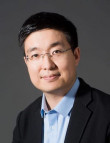
Yuankai (Kenny) Tao is an Associate Professor of Biomedical Engineering at Vanderbilt University's School of Engineering and an SPIE Faculty Fellow. He directs the Graduate Studies program in Biomedical Engineering and leads research in optical imaging systems for clinical diagnostics and therapeutic monitoring in ophthalmology, gastroenterology, and oncology. His lab develops technologies like intraoperative OCT and SECTR, focusing on noninvasive subcellular visualization and biomarker monitoring. Collaborations span engineering, basic sciences, and medicine to translate innovations into clinical tools. Education: Ph.D., Biomedical Engineering, Duke University M.S., Biomedical Engineering, Duke University B.S.E., Biomedical Engineering and Electrical Engineering, Duke University Research Interests: Biomedical optics, optical coherence tomography (OCT), image-guided surgery, therapeutic monitoring, big data analytics, and high-throughput imaging for drug discovery. His work bridges engineering and medicine, emphasizing real-time feedback systems and interdisciplinary innovation. Grants & Labs: Director of the Vanderbilt Institute for Surgery and Engineering (VISE)-affiliated lab, focusing on surgical imaging and translational research. Projects include automated instrument tracking, SECTR systems, and AI-driven imaging analysis. Collaborations involve clinicians and researchers across disciplines.
Amalia Foka is an Assistant Professor in Computer Science Applications for the Arts at the Department of Fine Arts & Art Sciences , School of Fine Arts , University of Ioannina , Greece. She has held academic positions at the University of Patras (2005-2013), University of Ioannina (2005-2008), and Computer Technology Institute & Press "Diophantus" (2014-2015). Her research bridges Artificial Intelligence with Digital Art , focusing on Generative AI , Social Media Mining , and Human-Computer Interaction within artistic contexts. Education: BEng in Computer Systems Engineering (1998) from the University of Manchester Institute of Science & Technology (UMIST) , UK MSc in Advanced Control (1999) from UMIST PhD in Robotics (2005) from the Department of Computer Science , University of Crete Her artistic research includes projects like Bushwalking (StyleGAN2 landscape generation), Breaking the Silence (NLP analysis of taboo topics), and The Invisible Structures of the Artworld (social media-driven network visualization). She leads the Multimedia Lab at the University of Ioannina, focusing on AI in Creative Processes and Digital Interaction methodologies.
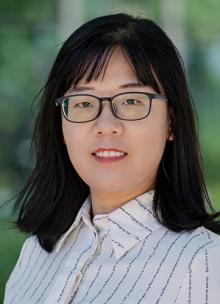
Xiaohui Yu is a Professor and Graduate Program Director in the School of Information Technology at York University. He holds a BSc from Nanjing University, an MPhil from the Chinese University of Hong Kong, and a PhD from the University of Toronto. His research focuses on the intersection of data management and machine learning, including ML-based database systems, large-scale machine learning, and spatio-temporal data analysis in contexts like intelligent transportation systems and social networks. Supported by grants from NSERC and industry partners, his work has been published in top venues such as SIGMOD, VLDB, and TKDE. He serves as an Associate Editor for journals like IEEE TKDE and ACM TKDD, and actively participates in conference program committees. Education: BSc (Nanjing University), MPhil (Chinese University of Hong Kong), PhD (University of Toronto). Research Interests: Big data management, database systems, machine learning, spatio-temporal data analytics, and video query processing. Recent articles emphasize ML-driven database components, efficient video query optimization, and scalable algorithms for large-scale data. His work addresses challenges in query processing, indexing, and real-time systems. Service: Serves on editorial boards (e.g., Information Systems), and chairs/workshops (e.g., Symposium on Data Markets). Active in program committees for SIGMOD, ICDE, and other leading conferences. Advising & Grants: Directs graduate programs and leads research groups. Collaborates with industry on data marketplaces and AI model integration. No specific student names listed, but actively recruits PhD/Master’s candidates.
Susan Holmes is Professor at the School of Media, Language and Communication Studies at the University of East Anglia (UEA), where she joined as Reader in Television in 2007 and was appointed to Professor in 2018. She is an active member of several research groups including Media Equality, Film, Television and Media, Gender and Its Intersections Steering Committee, and HealthUEA. Her work spans television studies, celebrity culture, and feminist approaches to eating disorders. Professor Holmes received her academic training at the University of Sussex (BA in English and Media Studies), followed by an MA in Film from the University of Southampton, and completed her PhD on British film and television in the 1950s at the same institution. Prior to joining UEA, she taught Media and Cultural Studies at the Southampton Institute (now Southampton Solent University) and television and film at the University of Kent. Her research focuses on several interconnected areas that challenge traditional disciplinary boundaries. In television studies, she has made significant contributions to understanding British television history, particularly through her books 'British TV and Film in the 1950s' and 'Entertaining TV: the BBC and Popular Programme Culture in the 1950s,' where she challenges canonical ideas about early BBC television. Her work on reality TV examines historical development, generic labeling, and celebrity. Since 2014, she has conducted important empirical research on feminist approaches to eating disorders, analyzing media representations and working directly with people with lived experience. A key focus of this research examines how feminist approaches are neglected in contemporary eating disorder treatment, with implications for both clinical practice and cultural understanding. She co-founded the influential Celebrity Studies journal in 2010 and edited it for the first eight years of its publication. Analysis of Professor Holmes' recent publications reveals a clear trajectory where her expertise in media and television studies converges with her feminist scholarship on eating disorders. Her most recent work (2023-2025) increasingly focuses on cross-cultural applications of feminist approaches to eating disorders (including work in China), the use of innovative methodologies like Photovoice, and examinations of therapeutic alliance in treatment settings. Simultaneously, she continues to analyze contemporary media representations, particularly focusing on motherhood, true crime television, and reality TV through feminist lenses. This dual focus demonstrates how media representations shape cultural understandings of both celebrity and health conditions. Professor Holmes' significant contributions to academia have been recognized with several prestigious awards: Senior Fellowship from Advance HE (2024) UEA engagement award (2017) ALPSP award nomination for Celebrity Studies as best new journal (2011) She currently runs the Feminist Media Studies research cluster at UEA and is actively supervising postgraduate research in areas including popular television, television/film history, British TV history, stardom/celebrity, and feminist approaches to eating disorders. Her current major research project is the 'ALLIANCE study' (2024-2026), funded by the National Institute for Health and Care Research, which aims to develop practice and policy recommendations to support effective therapeutic alliance in inpatient treatment for eating disorders. This builds on her earlier British Academy-funded research on 'Entertaining Television: British TV, the BBC and Popular Programme Culture in the 1950s' (2007-2008). Professor Holmes plays a significant role in the academic community through her editorial work, serving on the boards of journals including Archives of Psychology, Big Data & Society, and Critical Studies in Television, and previously as co-founder and editor of Celebrity Studies. She has also been active in media engagement, contributing expert commentary on topics ranging from Netflix's portrayal of eating disorders to Celebrity Big Brother.
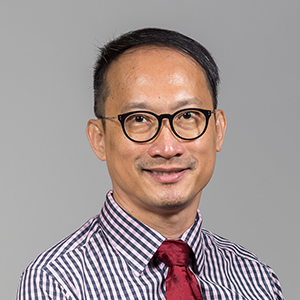
See Kiong Ng serves as Professor of Practice in the Department of Computer Science at the School of Computing, National University of Singapore (NUS), while concurrently holding leadership roles as Director of AI Technology at AI Singapore and Deputy Director of NUS's Institute of Data Science (IDS). His work focuses on translational data science research and developing integrated capabilities for Singapore's Smart Nation initiative through industry and public agency collaborations. His academic credentials include a B.S. in Applied Mathematics (Computer Science Track) from Carnegie Mellon University (1989), an M.S.E. in Computer & Information Science (Artificial Intelligence) from the University of Pennsylvania (1990), and a Ph.D. in Computer Science from Carnegie Mellon University (1998), supported by Singapore's National Computer Board overseas scholarship. Professor Ng's research bridges artificial intelligence with real-world applications across diverse domains. His primary interests span Data Mining, Machine Learning, Natural Language Processing, Smart Cities, and Computational Biology, with emphasis on extracting value from big data through interdisciplinary approaches. He actively pioneers applications in urban systems and bioinformatics, demonstrating data science's transformative potential beyond traditional boundaries. His publication record reveals consistent innovation in algorithm development for complex data challenges, with recent work focusing on taxonomy construction, single-cell genomics analysis, urban transportation systems, and imbalanced time series classification. These contributions demonstrate his commitment to solving practical problems through cutting-edge data science techniques. His major recognitions include: MTI Borderless Award (2014) as Green Growth Working Group project member Minister for National Development's R&D Award 2017 (Distinguished Award) for city-level analytics platform innovation A*STAR Borderless Award (2014) as Urban Systems Initiative team leader MTI Innovation Award (2013) for Strategic Technology Translation in Business Analytics Professor Ng has established significant research infrastructure including founding A*STAR's Data Analytics Department and leading the Urban Systems Initiative. His translational research model emphasizes industry partnerships and practical implementation, particularly in smart city development where he connects data science with urban planning challenges across Singapore's government agencies.
Stephen Marshall is Professor of Urban Morphology and Urban Design at The Bartlett School of Planning, University College London. He also served as Visiting Professor at the Department of Architecture and Urban Studies, Politecnico di Milano, Italy from 2019 to 2021. With over twenty-five years of experience in the built environment fields, initially in consultancy and subsequently in academia, Professor Marshall has established himself as a leading expert in urban morphology and design. His educational background includes a Doctor of Philosophy from University College London (2001), a Postgraduate Diploma from Edinburgh College of Art (1995), a Master of Science from the University of Leeds (1989), and a Bachelor of Engineering from the University of Glasgow (1988). Professor Marshall's principal research focuses on urban morphology and street layout, examining their relationships with urban formative processes including urban design, coding and planning. His work bridges urban design theory with practical applications, exploring how cities evolve through complex interactions of physical form, social processes, and planning interventions. He has written or edited several influential books including 'Streets and Patterns' (2005), 'Cities, Design and Evolution' (2009), and 'Urban Coding and Planning' (2011). His recent publications reveal a growing interest in applying complexity science to urban morphology, with particular attention to biological analogies for understanding self-organizing cities. He has pioneered research on digital participation methods in urban planning, exploring how online platforms can enhance public engagement in urban space design. His work consistently bridges theoretical urban morphology with practical applications for contemporary urban challenges like pandemic adaptation and sustainable transport. Professor Marshall has served as Chair of the Editorial Board of Urban Design and Planning from its launch to 2012, and is now co-editor of Built Environment journal. His editorial work has significantly shaped scholarly discourse in urban planning and design. He leads several significant research initiatives including the Incubators of Public Spaces project, which explores digital platforms for co-creating urban spaces, and the Self-Organising Built Environment project, which investigates biological analogies in urbanism. These projects reflect his interdisciplinary approach to understanding and shaping urban environments, connecting with Sustainable Development Goal 11 (Sustainable Cities and Communities).
Dr. Jia Zhang is the Inaugural Robert H. Dedman Jr. Endowed Department Chair and Professor of Computer Science at Southern Methodist University (SMU Lyle School of Engineering). She holds the Cruse C. and Marjorie F. Calahan Centennial Chair in Engineering and has a courtesy appointment in the Department of Operations Research and Engineering Management. Her research focuses on applying machine learning, natural language processing, and information retrieval to data science infrastructure, particularly scientific workflows, provenance mining, software discovery, knowledge graphs, cloud computing, immune AI, and applications in earth science and healthcare. Education: Ph.D. in Computer Science, University of Illinois at Chicago M.S. in Computer Science, Nanjing University B.S. in Computer Science, Nanjing University Dr. Zhang's work emphasizes data science infrastructure and machine learning for scientific workflows and knowledge graphs. Her recent publications highlight deep learning , graph neural networks , and optimization algorithms in cloud computing, cybersecurity, and environmental applications. Key trends include spatiotemporal modeling , hybrid neural architectures , and AI-driven service ecosystems . Scientific Awards: Best Paper Awards IEEE SCC (2011, 2017) Best Student Paper Awards IEEE ICWS (2014, 2018), IEEE ICCC (2018) Distinguished Paper Award ICSOC (2023) First Outstanding Service Award IEEE Technical Committee on Services Computing (2016) She has secured over $5 million in federal grants (as PI) and $11 million as PI/Co-PI from NSF, NASA, NIH, UTSW, Ericsson, SAP, and Google. Her lab (Caruth Hall 308) actively recruits research assistants. She previously served as a faculty member at Carnegie Mellon University, Northern Illinois University, and Nanjing University, and worked in industry as a software architect.
Xuan Liang is a Lecturer in Statistics at the Research School of Finance, Actuarial Studies and Statistics (RSFAS), Australian National University. With a PhD from Peking University and postdoctoral experience at Monash University, his research focuses on spatial statistics, nonparametric modeling, and environmental data analysis. Education: PhD in Statistics (Peking University, 2017), BSc in Statistics (Zhejiang University, 2012) His work addresses methodological challenges in spatial panel data analysis, network modeling, and air pollution quantification. He has developed novel techniques for meteorological confounder adjustment in air quality assessments and contributed to distributed data analysis methods. Recent research trends include: Advancing quasi-score matching for spatial econometric models Improving subbagging algorithms for big data Creating robust distributed data aggregation frameworks Refining spatial autoregressive panel data methodologies Scientific contributions include: ANU Vice-Chancellor’s Citation for Outstanding Contribution to Student Learning (Early Career), 2022 CBE Teaching Commendation for Outstanding Teaching, 2020 Co-development of the ggmatplot R package for matrix visualization Co-inventor of Chinese patent 201811183512.0 for air quality assessment He teaches advanced courses in time series analysis, regression modeling, and mathematical statistics at ANU, while maintaining active research collaborations in econometrics and environmental statistics.
Prof. Dr. Bernd Skiera holds the first chair for electronic commerce in Germany at Goethe University Frankfurt am Main since 1999. He serves on the board of efl - The Data Science Institute and the Schmalenbach Society, while representing Germany at the European Marketing Community (EMAC). Chair of Marketing, Goethe University Frankfurt am Main Board member, efl - The Data Science Institute National representative, European Marketing Community (EMAC) His research focuses on MarTech/SalesTech integration, customer value management, online advertising analytics, data-driven pricing models, and the economic implications of internet privacy regulations. He leads the ERC Advanced Grant project on cookie usage restrictions' economic consequences. Recent publications examine dynamic pricing in digital markets, competition visualization using big data, and AI applications in marketing analytics. The ERC Advanced Grant research has produced empirical analyses of GDPR impacts on advertising ecosystems. 2015 Journal of Marketing Best Paper Award 2013 International Journal of Research in Marketing Best Paper Award Multiple MSI/H. Paul Root Award recognitions He has mentored 17 doctoral students who became professors globally, including at London Business School and LMU Munich. His work bridges marketing analytics with financial valuation through customer equity modeling.
Katy Börner is a Professor affiliated with Indiana University, Bloomington, USA. Her research focuses on data visualization, scientometrics, and the science of science, with contributions to tools like Network Workbench (NWB) and Sci2. She leads interdisciplinary projects such as the Human Reference Atlas and explores visualization literacy in education and public health. Her work spans virtual reality applications, biomedical knowledge networks, and AI-driven scientific discovery. Key research interests include mapping scientific collaboration networks, analyzing scholarly publications, and developing visualization frameworks for big data. She collaborates widely with institutions like NIH and VIVO, advancing open science and interdisciplinary research. Her projects often bridge computational methods with human-centric design, enhancing understanding of complex systems in health, technology, and social sciences. Publications highlight innovations in interactive visualization tools (e.g., opioid crisis research networks), data integration (Human Reference Atlas), and AI applications in biomedical research. She emphasizes translating data into actionable insights through visual analytics, impacting policy, education, and healthcare.
Zhuo Feng is Professor of Electrical and Computer Engineering at Stevens Institute of Technology, directing the HUDSON Lab and holding a Ph.D. from Texas A&M University. His research develops spectral graph methods for VLSI design, including circuit simulation, power grid verification, and machine learning applications. Funded by NSF CAREER and multiple grants, his work has produced award-winning algorithms like GRASS for graph sparsification. Recent publications focus on spectral methods for circuit stability analysis, physics-informed neural networks, and explainable AI frameworks. He teaches graduate courses in VLSI design and GPU programming while co-founding LeapLinear Solutions. NSF CAREER Award (2014) ACM/IEEE DAC Best Paper Award (2013) Multiple Best Paper Nominations (ICCAD 2008, 2006)
Dan Lizotte is an Associate Professor jointly appointed to the Department of Computer Science in the Faculty of Science and the Department of Epidemiology and Biostatistics in the Schulich School of Medicine & Dentistry at Western University. Additional affiliations include the Schulich Interfaculty Program in Public Health and a cross-appointment to the Department of Statistics and Actuarial Sciences. Based in Middlesex College, London, Ontario, his contact email is dlizotte@uwo.ca. His research centers on machine learning and biostatistics for health decision support, with emphasis on sequential decision-making in chronic disease management where evolving patient health status and preferences inform adaptive interventions. Core contributions involve adapting reinforcement learning frameworks to model dynamic health decisions in public health and primary care settings, addressing methodological challenges in personalized medicine and risk prediction. Analysis of his publication record reveals consistent focus on healthcare applications of machine learning, particularly in chronic disease risk modeling using electronic medical records, intersectionality frameworks in public health AI, and Bayesian methods for dose personalization. His work bridges reinforcement learning with clinical decision support systems, advancing dynamic treatment regimes and statistical methodologies for evolving patient data. No scientific awards were mentioned in the provided text. The text does not specify any advisees, grant funding, or educational background details. Lizotte leads a research laboratory focused on machine learning applications in health, as evidenced by the dedicated lab site referenced in his contact information. His team likely explores intersections of statistical methodology, AI ethics, and clinical implementation for personalized health interventions.
Dr. Kaibo Liu is the Grainger STAR Professor in the Department of Industrial and Systems Engineering at the University of Wisconsin-Madison and serves as Associate Director of the UW-Madison IoT Systems Research Center. He earned his B.S. from the Hong Kong University of Science and Technology (2009), and M.S. and Ph.D. from Georgia Tech (2011/2013). His research focuses on system informatics, big data analytics, and data fusion for process modeling, monitoring, and decision-making. He has been funded by NSF, ONR, DOE, and industry partners. Notable awards include the 2024 Hromi Medal (ASQ), 2021 IISE Technical Innovation Award, and multiple early-career recognitions. Recent work emphasizes real-time cyber-physical security, reinforcement learning for data streams, and Bayesian methods for prognosis. He edits IEEE Transactions on Automation Science and Engineering and IISE Transactions on Data Science.
Gerald Reiner serves as Head of the Institute for Production Management at the Vienna University of Economics and Business (WU), within the Department of Information Systems and Operations Management. He holds a Magister Degree, doctorate, and Habilitation in Business Administration from WU. His academic career includes positions as full professor in Production Management and Logistics at the University of Neuchatel (Switzerland, 2007-2014) and Universitaet Klagenfurt (Austria, 2014-2018), where he also served as head of the department of Operations, Energy, and Environmental Management. Dr. Reiner has held visiting professorships at Aston Business School (UK), HEC Lausanne (Switzerland), University of Bergamo, and Università Cattolica del Sacro Cuore in Milan (Italy). His research spans several critical areas including Industry 4.0 implementation, integrated capacity and inventory management, humanitarian logistics operations, circular supply chains, and operations management for base of the pyramid contexts. His work particularly focuses on practical applications addressing food waste reduction, sustainable manufacturing, and blockchain technology in supply chains. His publication portfolio demonstrates a clear evolution toward digital transformation in operations, with recent focus on hydrogen production systems, AI integration in manufacturing, and blockchain applications for food supply chain transparency. The research shows increasing emphasis on sustainability integration within traditional operations management frameworks, particularly addressing European manufacturing challenges and food system inefficiencies. Publication Excellence Award 2021 (2023) Researcher of the month (January 2023) Highly Commended paper in the 2017 Emerald Literati Network Awards for Excellence ISIR Service Award (2014) Emerald Outstanding Paper Award (2013) Dr. Reiner coordinates multiple significant international research projects including EU-project 'Keeping Jobs in EU', EU/Ecsel-project 'Power Semiconductor and Electronics Manufacturing 4.0', 'Integrated Development 4.0', and 'Artificial Intelligence in Manufacturing leading to Sustainability and Industry 5.0'. His current projects focus on FOODIS (cross-border ecosystem for innovation in food supply chains), Circular Design implementation, and blockchain applications for banana supply chains. He actively supervises research teams working on food waste reduction, sustainable packaging systems, and AI applications in operations management.
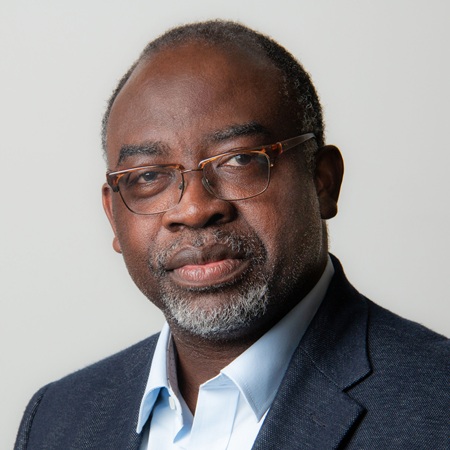
Dr. Adegboyega Ojo is a Professor at the School of Public Policy and Administration (SPPA), Carleton University , holding the prestigious Canada Research Chair (Tier 1) in Governance and Artificial Intelligence since 2014. His work bridges digital government , AI governance , and smart city development , with a focus on public sector innovation and policy analytics . Research Interests Smart Cities and Urban Digital Infrastructure Open Government Data and Transparency Blockchain Applications in Public Administration AI Ethics and Algorithmic Governance Electronic Participation and Citizen Engagement Publication Trends : His research emphasizes interdisciplinary approaches to digital governance, often involving data-driven policy analysis , smart city frameworks , and open data platform design . Collaborations span institutions in Ireland, Poland, and the U.S., with citations exceeding 5,200. Scientific Awards : Canada Research Chair in Governance and AI (Tier 1) Labs & Teams : Collaborates with the Insight Centre for Data Analytics (Ireland), Delft University of Technology , and United Nations University on projects like OpenGovIntelligence and BOLD (Big and Open Linked Data).