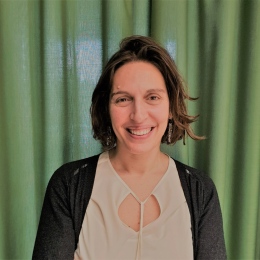
Ei HlaingView profile
Assistant Professor
- Biopsychosocial aspects of aging
- College students’ grit and resilience
- Effects of sleep loss on cognitive functions
- +5 more
Dr. Ei Hlaing serves as an Assistant Professor of Psychology in the School of Liberal Arts & Sciences at the University of Lynchburg, where she has been a core faculty member since 2016. Her teaching responsibilities include foundational courses such as Introduction to Psychological Science (PSYC 111), Developmental Psychology (PSYC 241), Statistics for Psychologists (PSYC 274), and specialized instruction in Sleep and Circadian Rhythms (PSYC 353). Her academic credentials feature: PhD in Experimental Psychology from Southern Illinois University at Carbondale Graduate Certificate in Gerontology from Southern Illinois University at Carbondale MA in Experimental Psychology from Southern Illinois University at Carbondale BA in Psychology from University of Maine at Farmington Dr. Hlaing's research program investigates the biopsychosocial dimensions of aging, with dual emphasis on cognitive aging mechanisms and sleep-related cognitive impacts. Her work bridges gerontology and sleep medicine through examinations of obstructive sleep apnea, sleep self-efficacy, and mental health determinants. Current investigations extend to college students' resilience and grit development within academic environments. Analysis of her 2010-2021 publications reveals consistent scholarly focus on sleep disorders and cognitive aging across the lifespan. Key patterns include neuropsychological consequences of obstructive sleep apnea, educational moderators of cognitive decline in aging populations, and bidirectional relationships between sleep quality and mental health. Her methodological approach spans clinical interventions, community-based observational studies, and cross-sectional analyses of diverse adult cohorts. No major scientific awards or professional honors were documented in the source materials. Available documentation does not specify graduate student mentorship activities, external research grants, or funded projects. Similarly, no dedicated research laboratories or collaborative teams were referenced in the provided information.