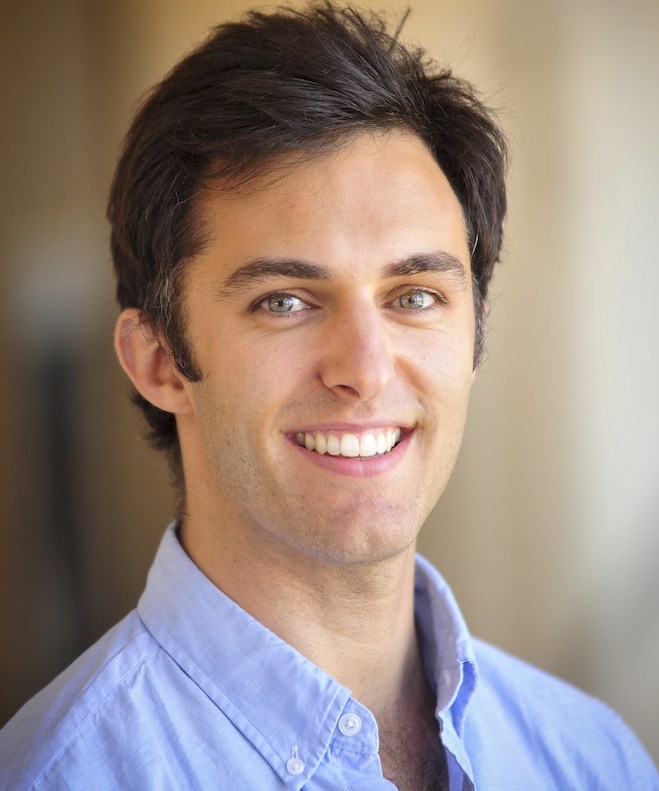
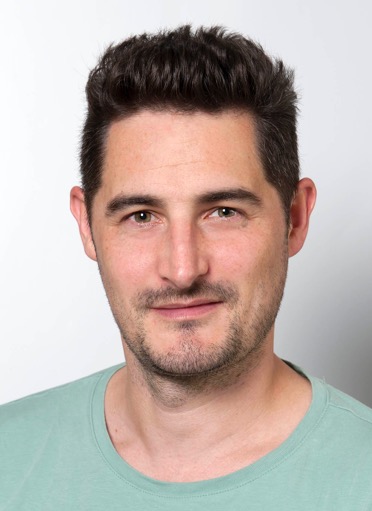
Daniel M. Roy is a Full Professor at the University of Toronto, with cross-appointments in the Department of Computer Science, Department of Statistical Sciences, and Department of Electrical and Computer Engineering. He serves as Research Director at the Vector Institute and holds the CIFAR Canada AI Chair. Research Focus: Foundational principles of prediction, inference, and decision-making under uncertainty across machine learning, statistics, mathematical logic, applied probability, and computer science. Scientific Contributions: Key work in learning theory, statistical network analysis, probabilistic programming, and information-theoretic frameworks for generalization. Awards: ICML 2024 Best Paper Award for "Information Complexity of Stochastic Convex Optimization" and promotion to Full Professor in 2024. Student Advising: Actively mentors Ph.D. candidates and postdoctoral researchers with strong quantitative backgrounds, particularly at the intersection of machine learning, statistics, and computer science. Email: daniel.roy@utoronto.ca
Helge Langseth is a Professor at the Department of Computer Technology and Informatics , within the Faculty of Information Technology and Electrical Engineering at the Norwegian University of Science and Technology (NTNU). His research focuses on Artificial Intelligence , Machine Learning , and Probabilistic Graphical Models , particularly Bayesian Networks and their applications in Decision Support Systems . Langseth's work addresses Explainable AI (XAI) , Reinforcement Learning , and Recommender Systems . He has contributed to Bayesian Optimization , Probabilistic Modeling , and Robotic Control in oceanic environments. His recent publications emphasize transparency , fairness , and scalability in AI systems, with applications spanning maritime trade, migraine diagnosis, and power grid management. He is affiliated with the Intelligent Systems Research Group at NTNU and actively mentors doctoral and master's students. Co-authored works with Yanzhe Bekkemoen , Sverre Herland , and Jørgen Hanssen reflect his role in advising the next generation of AI researchers.
Dieu Tien Bui is a Full Professor in the Department of Business and IT at the University of South-Eastern Norway (USN) School of Business. His research focuses on Geospatial Artificial Intelligence Machine Learning GIS and Remote Sensing Natural Hazard Modeling Environmental Problems (landslides, floods, soil salinity, biomass) . He has contributed to over 15 recent publications in journals like Science of the Total Environment , Remote Sensing , and Geomorphology , emphasizing hybrid AI models for landslide and flood susceptibility. His work spans Vietnam, India, China, and Iran with applications in climate change adaptation and disaster management. Scientific Awards: Global Highly Cited Researcher PhD Supervision: He has supervised 8 PhD students at institutions including USN, NTNU, and Vietnamese universities.
Pierluigi Salvo Rossi is a Professor at the Department of Electronic Systems , Norwegian University of Science and Technology ( NTNU ), with additional roles as Deputy Head of Department (since 2021) and Deputy Manager at the Center for Green Shift in the Built Environment (since 2022). He also serves as a part-time Research Scientist at SINTEF Energy's Gas Technology department. Education: Ph.D. in Computer Engineering, University of Naples “Federico II”, Italy (2005) Dr.Eng. (cum laude) in Telecommunications Engineering, University of Naples “Federico II”, Italy (2002) Research Interests span Wireless Communications , Digital Twins , Machine Learning , and Statistical Signal Processing , focusing on applications like Industrial IoT , Fault Detection , and Energy Systems . His recent Publications highlight trends in Federated Learning , Graph Signal Processing , and Multi-Sensor Anomaly Detection across domains from Natural Gas Pipelines to Subsea Leakages . Scientific Awards include: Exemplary Senior Editor, IEEE Communications Letters (2018) Department Ambassador, NTNU (2016) IEEE Senior Member (since 2011) Professional Roles encompass editorial leadership (e.g., IEEE Sensors Journal) and conference organization (e.g., General Chair for IEEE Sensor Array and Multichannel Signal Processing Workshop, 2022). He leads major funded research projects like PREFERENCE (RCN, 2023-2027) and AUTOSHIP (RCN, 2020-2028).
Alvaro Köhn-Luque is an Associate Professor at the Oslo Center for Biostatistics and Epidemiology, University of Oslo, and Group Leader at the Department of Medical Genetics, Oslo University Hospital. His work bridges mathematical modeling with clinical applications, particularly in cancer research. His academic background includes a PhD in Mathematical and Computational Biology from Complutense University of Madrid (2012), preceded by multiple Master's degrees in Mathematics and Physics from Spanish universities. Dr. Köhn-Luque's research focuses on mathematical oncology , developing computational models to understand cancer dynamics and improve treatment strategies. His work spans multiscale modeling of tumor growth, personalized cancer medicine through computer simulations, and biomarker discovery using machine learning approaches. He has made significant contributions to modeling breast cancer progression and treatment response, particularly in the context of endocrine therapy and CDK4/6 inhibition. His recent publications demonstrate a strong trend toward integrating mechanistic learning approaches that combine mathematical models with machine learning techniques. This hybrid methodology allows for more accurate prediction of treatment outcomes while maintaining biological interpretability. His work frequently involves collaboration with clinical researchers to ensure models are grounded in real patient data and have direct translational potential. Computational modeling of tumor heterogeneity and drug response Development of methods for phenotypic deconvolution in cancer cell populations Integration of multi-omics data for personalized treatment prediction Application of birth-death processes to model tumor evolution Creation of user-friendly computational tools for biomedical researchers Dr. Köhn-Luque has supervised multiple PhD students including Even M Myklebust, Salim Ghannoum, and Xiaoran Lai, and has secured funding for projects including RESCUE, BigInsight, and Integreat. His research demonstrates a consistent trajectory from theoretical mathematical biology toward increasingly clinically relevant applications in personalized cancer medicine.
Arnoldo Frigessi is Professor of Statistics at the University of Oslo, where he leads the Oslo Center for Biostatistics and Epidemiology and serves as director of BigInsight—a Centre of Excellence for Research-Based Innovation. This consortium unites industry, business, public actors, and academia to develop model-based machine learning methodologies for big data, with strong emphasis on health applications. His research centers on statistical methodology driven by real-world scientific challenges, specializing in stochastic models for complex dependence structures and computationally intensive inference algorithms. Core application domains include: Genomics and personalized cancer therapy (particularly breast and lung cancer) Infectious disease modeling (including pandemic response) eHealth, sensor data analysis, and recommender systems Personalized marketing and viral diffusion dynamics Analysis of his 15 most recent publications (2024-2025) reveals dominant themes in cancer systems biology , where he integrates multi-omics, single-cell transcriptomics, and computational modeling to decode tumor evolution under therapy. Parallel work advances infectious disease epidemiology through time-varying reproduction number estimation and mobility-based transmission modeling, while methodological innovations span synthetic data generation (TVineSynth), causal inference via target trial emulation, and Bayesian ranking models for recommender systems. Scientific Awards: No specific awards mentioned in source materials Frigessi actively supervises graduate students, including a Department of Informatics project on "Utilizing covariate information in recommender systems." His leadership of BigInsight—funded as a Research-Based Innovation Centre by the Research Council of Norway—secures major grants supporting interdisciplinary collaborations with industrial partners (e.g., Telenor, DNB) and public health institutions. Current projects integrate real-world clinical data with mechanistic models for treatment optimization. He directs BigInsight's multidisciplinary team of statisticians, computer scientists, and domain experts, while leading the Oslo Center for Biostatistics and Epidemiology's efforts in developing statistical frameworks for complex health data. These initiatives drive Norway's national strategy for data-driven health innovation.
Ida Scheel is an Associate Professor in Statistics and Data Science at the University of Oslo , Department of Mathematics. She specializes in Bayesian hierarchical modeling, recommendation systems, and stochastic processes on networks. Her research interests include: Bayesian statistics and model diagnostics Data science applications in environmental and health domains Network-based machine learning Uncertainty quantification in predictive modeling Recent publication trends show a focus on Bayesian model validation, machine learning for product adoption prediction, and real-estate analytics. She contributes to interdisciplinary projects like BigInsight and CELS . Scientific awards : Sverdrup Prize for Young Researchers (2011) Advising : Supervised 8 PhD students (main/co-supervisor) in areas spanning Bayesian causal effects, neural network survival analysis, and model conflict detection. Key grants include participation in the Data Science@UiO and Integreat projects. Labs/teams : Active member of the Center for Computational Inference in Evolutionary Life Science (CELS) and the BigInsight center.
Anders Skrondal is a Professor II at the University of Oslo's Faculty of Educational Sciences, affiliated with the Centre for Educational Measurement (CEMO). He also serves as a Senior Scientist at CEFH (Research Council of Norway Centre of Excellence) at the Norwegian Institute of Public Health and Co-Principal Investigator at CREATE, another Norwegian Centre of Excellence. His academic journey includes roles as Head of the Biostatistics Group at the Norwegian Institute of Public Health and Professor of Statistics at the London School of Economics (LSE), where he directed the Methodology Institute. Skrondal's research focuses on psychometrics, statistics, biostatistics, and econometrics, with a major contribution being the development of the GLLAMM framework. He has authored 14 books and over 200 peer-reviewed papers, achieving an h-index of 63 and 30,000+ citations. His awards include the 1997 Psychometric Society Dissertation Prize and leadership roles in prestigious organizations like the Psychometric Society and Royal Statistical Society. Research Interests: Skrondal specializes in statistical methodologies including latent variable modeling, multilevel modeling, and missing data analysis. His work bridges theoretical advancements and practical applications in medicine, psychology, and social sciences. He is renowned for integrating latent variable and mixed model frameworks to address complex data structures. Recent trends in his publications emphasize methodological solutions for missing data, non-ignorable mechanisms, and psychometric model validation. His articles span statistical theory, medical applications, and educational measurement. Awards: President, Psychometric Society (2016–2017) Elected Member, International Statistical Institute Outstanding Academic Title for 'The Cambridge Dictionary of Statistics' (2011) Fulbright Professor at UC Berkeley (2013–2014) Advising & Grants: Skrondal has led major research initiatives such as CEFH and CREATE, funded by the Research Council of Norway. While no specific advisee list is provided, his collaborations span international institutions. His work on GLLAMM software is used in over 750 journals, reflecting widespread academic impact. Labs/Teams: Active in CEMO and CEFH, he contributes to interdisciplinary teams advancing educational measurement and public health research. His involvement in CREATE focuses on equality in education through statistical innovations.
Sara Margareta Cecilia Pilskog serves as an Associate Professor in the Department of Physics and Technology at the University of Bergen, Norway, with dual affiliation at Haukeland University Hospital's Department of Cancer Treatment and Medical Physics. Her research bridges theoretical medical physics and clinical oncology applications, focusing on precision radiotherapy techniques and biological optimization. Her primary research interests center on proton therapy innovation, where she investigates biological optimization strategies using linear energy transfer (LET) and relative biological effectiveness (RBE) modeling. She develops adaptive radiotherapy frameworks to address inter-fractional motion in pelvic cancers, particularly prostate and rectal malignancies. Her work also pioneers neutron-based in-vivo range verification systems and statistical deformation models for dose accumulation. Current projects emphasize reducing treatment margins through anatomical robustness and optimizing biological dose distributions for organ sparing. Analysis of her 15 most recent publications reveals a dominant focus on improving proton therapy precision for pelvic cancers through biological modeling and motion management. Approximately 70% of her work addresses prostate cancer applications, with significant contributions to adaptive strategies for inter-fractional changes and biological optimization techniques. Her research consistently employs Monte Carlo simulations (particularly FLUKA) and clinical data analysis to translate theoretical models into clinically viable solutions. No scientific awards were documented in the provided materials. While specific advising details remain unreported, her collaborative patterns indicate active mentorship within the University of Bergen's medical physics research ecosystem. Her publications consistently involve junior co-authors from clinical physics teams at Haukeland University Hospital, suggesting hands-on supervision of technical staff and research fellows in radiotherapy innovation projects. Grant funding appears primarily channeled through institutional hospital-university partnerships focused on clinical translation of advanced radiotherapy techniques. Dr. Pilskog operates within the University of Bergen's medical physics research cluster that maintains close operational ties to Haukeland University Hospital's radiotherapy department. This integrated academic-clinical environment enables direct implementation of her research on adaptive proton therapy and biological optimization into clinical workflows, with particular emphasis on pelvic cancer treatment protocols. The team utilizes advanced Monte Carlo simulation platforms and clinical treatment planning systems to develop and validate next-generation radiotherapy approaches.
Carlos José Díaz Baso is a Research Fellow at the Rosseland Centre for Solar Physics (RoCS), part of the Institute of Theoretical Astrophysics at the University of Oslo. His research focuses on solar chromospheric phenomena, Bayesian statistics, and deep learning applications in solar physics. Education: Ph.D. in Astrophysics (2014-2018, Universidad de La Laguna, Spain), followed by postdoctoral positions at Stockholm's Institute for Solar Physics (2018–2022) and currently at RoCS (2022–present). Research emphasizes analyzing solar spectra and magnetic field dynamics using advanced statistical and machine learning techniques. Key projects include the ISSRESS initiative studying small-scale solar reconnection events. Recent publications explore spectral resolution impacts, coronal oscillations, and sunspot light bridges. Active in international collaborations using instruments like SST/CRISP and SolO/EUI. Engaged in developing observational strategies for solar telescopes and improving data analysis methodologies.
Hugo Lewi Hammer er professor ved Oslo Metropolitan University, tilhørende Faculty of Technology, Art and Design og Department of Information Technology – Mathematical Modeling . Hans forskning fokuserer på forbedring av pålitelighet og transparens i maskinlæring, forsterkende læring og dyb læringsmodeller gjennom metodikk innen modelltolkning, usikkerhetskvantifisering, robust statistikk og kausal inferens. Hans nylige arbeid inkluderer: AI-drevet optimering i assistert reproduksjonsteknologi (embryoutvalg og sædcelleanalyse) Medisinsk bildebehandling (polypdeteksjon, meibomkertutgang) Neural nettverkstolkning og usikkerhetsmodellering i EEG-analyse Biomekanisk prediksjon av muskelutmatting Hans publikasjoner viser mangfoldige anvendelser av AI i medisin og teknologi, med spesialvekt på: Explainable AI (XAI) i diagnostikk og behandling Usikkerhetskvantifisering i dyb læring Automatisering av medisinske prosedyrer (ICSI, embryoanalyse) Stokastisk simulering og kausal inferens Hammer er engasjert i forskningsgruppene Applied Artificial Intelligence og Mathematical Modeling og har publisert over 130 vitenskapelige artikler og 7 forskningsrapporter.
Nils-Ole Stutzer is a Doctoral Research Fellow at the Institute of Theoretical Astrophysics , University of Oslo, specializing in Cosmology , Line Intensity Mapping , and Cosmic Microwave Background (CMB) data analysis. He contributes to major projects like COMAP COSMOGLOBE BeyondPlanck and develops computational tools in Python/C++ for mitigating systematic errors in radio telescope data. His research interests focus on Galactic and extragalactic CMB analysis Radio interferometry for molecular gas mapping Bayesian methods in cosmological parameter estimation Instrumental signal deconvolution Open science data frameworks His work addresses fundamental questions about cosmic structure formation and early universe physics. Key publication trends include: 2024 studies on 30GHz spinning dust emission in dark clouds Advanced CO power spectrum constraints at z ∼ 3 2023-2024 Bayesian reanalysis of Planck/WMAP missions LiteBIRD mission forecasts for gravitational waves Projects emphasize reproducibility and end-to-end data modeling. He teaches AST2000 project groups and collaborates across institutions on CMB&CO initiatives. Current affiliations include the Faculty of Mathematics and Natural Sciences at the University of Oslo.
Joakim Sundnes is a Chief Research Scientist and Research Professor at the Department of Scientific Computing, Simula Research Laboratory. He specializes in computational physiology, cardiac biomechanics, and mathematical modeling of cardiovascular systems. Key Research Areas: Cardiac electromechanics, computational fluid dynamics in cardiology, uncertainty quantification in cardiac models, and mechano-electric feedback mechanisms Recent Trends: Focus on patient-specific modeling, left atrial flow dynamics, right ventricular mechanics in pulmonary hypertension, and personalized treatment simulations Scientific Contributions: Active participant in international conferences and editorial work. Co-author of multiple benchmark studies and educational texts on physiological modeling.
Gudmund Horn Hermansen is an Associate Professor at the University of Oslo, affiliated with the Department of Mathematics within the Faculty of Mathematics and Natural Sciences. His research focuses on advanced statistical methodologies, including Bayesian analysis, time series modeling, and applications in fields such as conflict dynamics, neuroscience, and environmental science. He is a member of the Statistics and Data Science research group and collaborates with interdisciplinary teams on projects involving uncertainty quantification and statistical inference. Key research interests include change-point analysis, hidden Markov models, astrocytic calcium signaling in Alzheimer’s research, and probabilistic forecasting. His work bridges theoretical statistics with practical applications, such as analyzing democratization processes and reservoir parameter interactions. Hermansen has contributed to over 30 peer-reviewed publications, emphasizing methodological innovations and interdisciplinary collaborations. Notable publications include studies on Bayesian hidden Markov models in conflict research, astrocytic signaling mechanisms in sleep regulation, and statistical frameworks for temporal heterogeneity analysis. He maintains an active role in academic service, including editorial contributions and conference participation.
Esther Ulitzsch is an Associate Professor at the University of Oslo 's Centre for Educational Measurement (CEMO) . Her research focuses on advancing psychometric models, particularly Bayesian latent variable techniques for small-sample conditions, and analyzing digital interaction data from simulated learning environments. She holds a PhD from Freie Universität Berlin and previously worked as a Research Associate at the IPN – Leibniz Institute for Science and Mathematics Education in Kiel, Germany. Education: PhD in Educational Measurement (Freie Universität Berlin) Research Associate at IPN Kiel Research Interests: IRT model development for aberrant response detection Efficient estimation in small samples Clickstream analysis for student behavior Test-taking engagement dynamics Publications: Over 20 peer-reviewed articles since 2017, including work on mixture models for careless responding, neural networks for IRT estimation, and Bayesian factor modeling. Recent contributions address response time analysis, cross-country measurement invariance, and sequential process mining in interactive tasks. Affiliations: Active in the CREATE (Research on Equality in Education) and FREMO (Frontier Research in Educational Measurement) groups at CEMO.