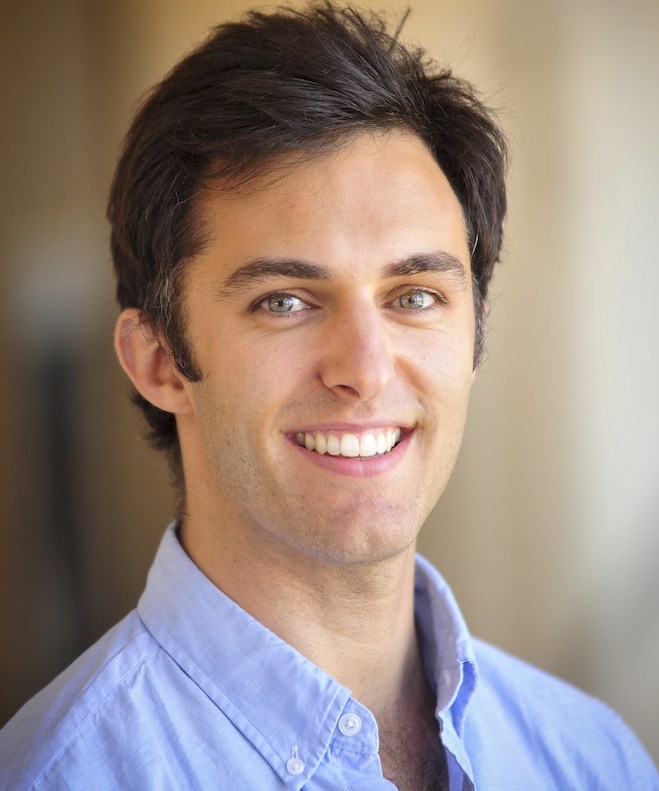
Daniel M. Roy is a Full Professor at the University of Toronto, with cross-appointments in the Department of Computer Science, Department of Statistical Sciences, and Department of Electrical and Computer Engineering. He serves as Research Director at the Vector Institute and holds the CIFAR Canada AI Chair. Research Focus: Foundational principles of prediction, inference, and decision-making under uncertainty across machine learning, statistics, mathematical logic, applied probability, and computer science. Scientific Contributions: Key work in learning theory, statistical network analysis, probabilistic programming, and information-theoretic frameworks for generalization. Awards: ICML 2024 Best Paper Award for "Information Complexity of Stochastic Convex Optimization" and promotion to Full Professor in 2024. Student Advising: Actively mentors Ph.D. candidates and postdoctoral researchers with strong quantitative backgrounds, particularly at the intersection of machine learning, statistics, and computer science. Email: daniel.roy@utoronto.ca
Helge Langseth is a Professor at the Department of Computer Technology and Informatics , within the Faculty of Information Technology and Electrical Engineering at the Norwegian University of Science and Technology (NTNU). His research focuses on Artificial Intelligence , Machine Learning , and Probabilistic Graphical Models , particularly Bayesian Networks and their applications in Decision Support Systems . Langseth's work addresses Explainable AI (XAI) , Reinforcement Learning , and Recommender Systems . He has contributed to Bayesian Optimization , Probabilistic Modeling , and Robotic Control in oceanic environments. His recent publications emphasize transparency , fairness , and scalability in AI systems, with applications spanning maritime trade, migraine diagnosis, and power grid management. He is affiliated with the Intelligent Systems Research Group at NTNU and actively mentors doctoral and master's students. Co-authored works with Yanzhe Bekkemoen , Sverre Herland , and Jørgen Hanssen reflect his role in advising the next generation of AI researchers.
Dieu Tien Bui is a Full Professor in the Department of Business and IT at the University of South-Eastern Norway (USN) School of Business. His research focuses on Geospatial Artificial Intelligence Machine Learning GIS and Remote Sensing Natural Hazard Modeling Environmental Problems (landslides, floods, soil salinity, biomass) . He has contributed to over 15 recent publications in journals like Science of the Total Environment , Remote Sensing , and Geomorphology , emphasizing hybrid AI models for landslide and flood susceptibility. His work spans Vietnam, India, China, and Iran with applications in climate change adaptation and disaster management. Scientific Awards: Global Highly Cited Researcher PhD Supervision: He has supervised 8 PhD students at institutions including USN, NTNU, and Vietnamese universities.
Nicola Paltrinieri is a Professor of Risk Assessment at the Department of Mechanical and Industrial Engineering, NTNU (Norway), and an Adjunct Professor at the University of Bologna (Italy). His expertise spans risk assessment, hydrogen technologies, process safety, and data-driven safety management. He holds Chartered Engineer and Chartered Scientist certifications and has served on editorial boards for journals like Safety Science and Journal of Risk Research . Education: PhD in Environmental, Safety and Chemical Engineering (University of Bologna, 2012) Master’s in Chemical and Process Engineering (University of Bologna, 2008) Research Interests: Focuses on hydrogen infrastructure safety, Natech accident analysis, risk-based inspection strategies, and AI integration in safety systems. His work emphasizes sustainable energy transitions and mitigating risks in emerging technologies like hydrogen. Key Projects (2022-2026): H2Glass : Decarbonizing glass and aluminum sectors via hydrogen HyInHeat : Hydrogen technologies for industrial heating HYDROGENi : Norwegian research center for hydrogen/ammonia Awards: Onsager Fellowship (2016–2021) Frank Lees Medal (2012) for safety-related publications Grants & Leadership: Head of NTNU Energy Team Hydrogen, coordinator for EU-funded projects like SUSHy , and active in international risk committees (e.g., EFCE, ESRA). His work bridges academia and industry, with over 8 PhD examinations supervised. Labs/Teams: Leads the NTNU Energy Team Hydrogen and collaborates on initiatives like SH2IFT-2 for safe hydrogen fuel handling. His research group focuses on AI-driven risk analysis and hydrogen infrastructure resilience.
Pierluigi Salvo Rossi is a Professor at the Department of Electronic Systems , Norwegian University of Science and Technology ( NTNU ), with additional roles as Deputy Head of Department (since 2021) and Deputy Manager at the Center for Green Shift in the Built Environment (since 2022). He also serves as a part-time Research Scientist at SINTEF Energy's Gas Technology department. Education: Ph.D. in Computer Engineering, University of Naples “Federico II”, Italy (2005) Dr.Eng. (cum laude) in Telecommunications Engineering, University of Naples “Federico II”, Italy (2002) Research Interests span Wireless Communications , Digital Twins , Machine Learning , and Statistical Signal Processing , focusing on applications like Industrial IoT , Fault Detection , and Energy Systems . His recent Publications highlight trends in Federated Learning , Graph Signal Processing , and Multi-Sensor Anomaly Detection across domains from Natural Gas Pipelines to Subsea Leakages . Scientific Awards include: Exemplary Senior Editor, IEEE Communications Letters (2018) Department Ambassador, NTNU (2016) IEEE Senior Member (since 2011) Professional Roles encompass editorial leadership (e.g., IEEE Sensors Journal) and conference organization (e.g., General Chair for IEEE Sensor Array and Multichannel Signal Processing Workshop, 2022). He leads major funded research projects like PREFERENCE (RCN, 2023-2027) and AUTOSHIP (RCN, 2020-2028).
Xuan Zhang is an Associate Professor at the Department of Information and Communication Technology, University of Agder. His research focuses on Tsetlin Machines, learning automata, and their applications in machine learning, computer vision, and hyperspectral imaging. Research Trends: Zhang’s recent work includes developing interpretable machine learning models (e.g., Tsetlin Machines), optimizing convolutional architectures for image processing, and applying automata theory to solve multi-armed bandit problems and channel selection in cognitive networks. His field spans theoretical analysis and practical implementations in AI, remote sensing, and health informatics. Scientific Contributions Co-developed advanced Tsetlin Machine variants for XOR/NOT operator convergence, disease forecasting, and image restoration Published in journals like IEEE Transactions on Pattern Analysis and Machine Intelligence , Information Sciences , and Applied Intelligence Explored Bayesian pursuit algorithms, hierarchical learning automata, and particle swarm optimization techniques Contact: xuan.zhang@uia.no
Sebastien Nicolas Gros is a Professor at the Department of Engineering Cybernetics, Norwegian University of Science and Technology (NTNU). His research focuses on safe reinforcement learning (RL) and data-driven model predictive control (MPC), with applications in energy systems, biomedical engineering, and autonomous vehicles. Institution: Norwegian University of Science and Technology Department: Engineering Cybernetics His work emphasizes AI-driven optimization for domestic energy storage, battery integration, and smart building management. Collaborations include Equinor, DNV, Kongsberg, Volvo, and CorPower Ocean. Key themes in his publications include: Control theory for renewable energy systems (wave energy converters, buildings) Biomedical applications (artificial pancreas, glucose monitoring) Transportation systems (electric vehicles, autonomous ships) Machine learning integration with physical models He supervises 6 PhD students and co-supervises projects on multi-rotor wind turbines and industrial PhD collaborations. The articles demonstrate a convergence of RL, MPC, and uncertainty quantification across energy, biomedical, and transportation domains.
Professor Ole-Christoffer Granmo is a distinguished academic at the University of Agder, Norway, where he serves as Professor in the Department of Information and Communication Technology. He is the Founding Director of the Centre for Artificial Intelligence Research (CAIR) at the University of Agder, leading cutting-edge research in artificial intelligence and machine learning. Dr. Granmo obtained his master's degree in 1999 and his PhD in 2004, both from the University of Oslo. His academic journey has been marked by significant contributions to the field of AI, most notably the creation of the Tsetlin machine in 2018, for which he received the AI research paper of the decade award from the Norwegian Artificial Intelligence Consortium (NORA) in 2022. Professor Granmo's research primarily focuses on logical and causal world modeling across multiple modalities including images, sound, and natural language. His work spans logical auto-encoding, convolution, regression, transformer architectures, and reinforcement learning, all with the overarching goal of creating ultra-low-power artificial general intelligence through transparent logical learning and reasoning. His publications reveal a strong emphasis on interpretable AI systems, hardware implementations, and applications across diverse domains including cybersecurity, healthcare, social media analysis, and bioinformatics. AI Research Paper of the Decade (2022) - Norwegian Artificial Intelligence Consortium (NORA) Eight paper awards in machine learning Professor Granmo has coordinated over seven research projects and mentored 55+ master's students and nine PhD students. His leadership extends to co-founding the Norwegian Artificial Intelligence Consortium (NORA) and establishing two companies: Anzyz Technologies AS and Tsense Intelligent Healthcare AS. As an advisor at Literal Labs, he actively bridges academic research with practical industry applications, demonstrating his commitment to translating theoretical innovations into real-world solutions that address complex challenges across multiple sectors.
Ida Scheel is an Associate Professor in Statistics and Data Science at the University of Oslo , Department of Mathematics. She specializes in Bayesian hierarchical modeling, recommendation systems, and stochastic processes on networks. Her research interests include: Bayesian statistics and model diagnostics Data science applications in environmental and health domains Network-based machine learning Uncertainty quantification in predictive modeling Recent publication trends show a focus on Bayesian model validation, machine learning for product adoption prediction, and real-estate analytics. She contributes to interdisciplinary projects like BigInsight and CELS . Scientific awards : Sverdrup Prize for Young Researchers (2011) Advising : Supervised 8 PhD students (main/co-supervisor) in areas spanning Bayesian causal effects, neural network survival analysis, and model conflict detection. Key grants include participation in the Data Science@UiO and Integreat projects. Labs/teams : Active member of the Center for Computational Inference in Evolutionary Life Science (CELS) and the BigInsight center.
Abbas Roozbahani is an Associate Professor in the Department of Building and Environmental Technology at the Faculty of Science and Technology, Norwegian University of Life Sciences (NMBU). His academic expertise lies in Water Infrastructure Engineering, where he contributes to research, teaching, and project leadership in sustainable urban water systems. His research interests include: Sustainable water management Urban water transport systems (drinking water, wastewater, stormwater) Risk assessment of water infrastructure Simulation and optimization of water systems Hydroinformatics and artificial intelligence Asset management for urban water infrastructure The analysis of his recent publications (2022–2025) reveals a strong focus on integrating advanced computational methods—such as Bayesian Networks, Fault Tree Analysis, machine learning (e.g., LSTM), and multi-criteria decision-making (MCDM)—into water resources management. His work frequently addresses urban stormwater optimization, drought and climate change risk assessment, groundwater forecasting, and the water-food-energy nexus, demonstrating a consistent trend toward data-driven, risk-informed, and sustainable solutions for complex water systems. Dr. Roozbahani teaches graduate-level courses including: THT301 - Asset Management for Urban Water Infrastructure THT302 - Analysis and Design of Water Distribution Networks THT261 - Introduction to Water and Wastewater Systems (co-instructor) THT313 - Water Management in Changing Conditions (co-instructor) THT390 - Preparations for the Master's Thesis (co-instructor) He has supervised multiple MSc and PhD students and led projects funded by academic and private institutions. His collaborative research spans international institutions, with frequent co-authorship on topics related to risk modeling, AI in hydrology, and sustainable infrastructure planning.
Hugo Lewi Hammer er professor ved Oslo Metropolitan University, tilhørende Faculty of Technology, Art and Design og Department of Information Technology – Mathematical Modeling . Hans forskning fokuserer på forbedring av pålitelighet og transparens i maskinlæring, forsterkende læring og dyb læringsmodeller gjennom metodikk innen modelltolkning, usikkerhetskvantifisering, robust statistikk og kausal inferens. Hans nylige arbeid inkluderer: AI-drevet optimering i assistert reproduksjonsteknologi (embryoutvalg og sædcelleanalyse) Medisinsk bildebehandling (polypdeteksjon, meibomkertutgang) Neural nettverkstolkning og usikkerhetsmodellering i EEG-analyse Biomekanisk prediksjon av muskelutmatting Hans publikasjoner viser mangfoldige anvendelser av AI i medisin og teknologi, med spesialvekt på: Explainable AI (XAI) i diagnostikk og behandling Usikkerhetskvantifisering i dyb læring Automatisering av medisinske prosedyrer (ICSI, embryoanalyse) Stokastisk simulering og kausal inferens Hammer er engasjert i forskningsgruppene Applied Artificial Intelligence og Mathematical Modeling og har publisert over 130 vitenskapelige artikler og 7 forskningsrapporter.
Salman Nazir is Professor at the University of South-Eastern Norway (USN) , Faculty of Technology, Natural Sciences and Maritime Sciences, Department of Maritime Operations. He heads the Training and Assessment Research Group (TARG) and is Scientific Leader of the national Centre of Excellence in Maritime Simulator Training and Assessment (COAST). Since 2019 he has held the rank of Professor, after serving as Associate Professor from 2015 and earlier post-doctoral and lecturer roles in Norway, Italy, South Korea and Pakistan. Education PhD in Industrial Chemistry and Chemical Engineering ( cum laude ), Politecnico di Milano, Italy, 2011–2013 MSc in Chemical Engineering (Process System Engineering), Hanyang University, South Korea, 2007–2009 BSc in Chemical Engineering, Bahauddin Zakariya University, Pakistan, 2002–2006 Research Interests Prof. Nazir’s work sits at the intersection of Human Factors, Safety and Simulation Technology . He investigates how immersive virtual- and augmented-reality simulators, novel training syllabi and evidence-based performance indices can enhance operator competence and safety in complex maritime and process-industry systems. Concepts such as Distributed Situation Awareness , multi-criteria decision making , accident analysis and learning process optimisation are central to his multidisciplinary agenda, which actively involves cognitive scientists, computer scientists, maritime practitioners and industrial stakeholders. Research Trends & Article Overview Across more than 80 peer-reviewed outputs, a clear trajectory emerges: early focus on process-industry training simulators and KPI development evolved into maritime-centric studies on simulator fidelity, VR-based education, and human-automation interaction in autonomous shipping. Recent work (2019–2021) emphasises systematic reviews and comparative European studies, validating VR-headset efficacy, performance-assessment frameworks, and sociotechnical implications of increased automation. Honours & Awards COAST designated one of 12 national Centres of Excellence in Education (SFU) by DIKU, Norway Coordinator/Leader, EU Horizon 2020 project ENHANCE (multi-million NOK) 400 000 NOK MARKOM 2020 Workshop grant PhD cum laude , Politecnico di Milano Young-researcher grants, Politecnico di Milano (2011 & 2013) Merit scholarships, Hanyang University & Korean Government Advising & Grant Portfolio Prof. Nazir currently supervises 6 master students and 1 PhD candidate in “Automated Performance Assessment in Maritime Operations”, while co-supervising additional PhD students at Liverpool John Moores University. He has successfully graduated 3 master and 6 bachelor students . External funding includes EU Horizon 2020, Norwegian SFU scheme, MARKOM 2020, Maritime Technology and Innovation (MTDI) and multiple Italian national grants. Labs & Collaborative Networks He leads TARG at USN, acts as Scientific Leader of COAST , and collaborates with leading international scholars such as Prof. Zaili Yang (Liverpool John Moores), Prof. Annette Kluge (University of Duisburg-Essen), Prof. Davide Manca (Politecnico di Milano) and Prof. Paulo Carvalho (UFRJ, Brazil). These partnerships span computer science, cognitive psychology, maritime logistics and safety engineering, ensuring a truly interdisciplinary research ecosystem.
Bjarte Hoff is an Associate Professor and Study Program Director for the Master of Electrical Engineering at UiT The Arctic University of Norway's Department of Electrical Technology. His core research focuses on power electronics, energy conversion systems, microgrids, and smart energy applications, particularly in Arctic environments. He leads multiple projects including RENEW (renewable energy systems), Smart Senja, and HyEkoTank (hydrogen fuel cells for maritime transport). His research interests span: Power electronics and control algorithms Low-voltage electrical installations and microgrids Distributed generation and smart grids Electric transport systems (maritime/vehicular) Renewable energy integration Capacitive wireless power transfer Publication analysis shows consistent focus on: energy conversion topologies (especially current source inverters), Arctic energy management using deep learning, capacitive wireless charging for maritime applications, and optimization of power transfer systems. His most recent works demonstrate increasing emphasis on AI-driven energy management and hydrogen fuel cell integration. He teaches courses including: ELE-3605 Electrical Engineering Project ELE-3607 Power Electronics ELE-3608 Advanced Electric Drives ETE-2801 Electrical Installations As principal investigator, he leads projects such as: RENEW - Renewable & Smart Rural Power Systems Smart Senja (Arctic microgrids) HyEkoTank (hydrogen PEM fuel cells for ships) Arctic Energy research initiative UNDERSEA capacitive charging systems He collaborates with the Electromechanical Systems research group and supervises PhD candidates in power electronics and energy systems.
Norbert Pirk is an Associate Professor at the University of Oslo, affiliated with the Department of Physical Geography and Hydrology. His research focuses on ecohydrology in cold environments, land-atmosphere energy and trace gas exchange, and snow-vegetation interactions. He teaches courses including Geophysical Data Science and Fluvial Hydrology, and contributes to arctic climate studies through field campaigns and modeling. His research spans tundra carbon cycling, permafrost dynamics, and machine learning applications in climate modeling. Recent publications highlight advancements in snow data assimilation techniques, greenhouse gas flux monitoring using drones, and deep learning methods for Arctic methane analysis. He actively collaborates within international research networks. Current projects include SvalGaSess (methane monitoring in Svalbard), SnowSub (snow sublimation impacts on hydropower), and EMERALD (terrestrial climate interactions). He contributes to initiatives like FLUXNET2015 and the Land Sites Platform, advancing Arctic observation systems and climate modeling frameworks.
Saket Saurabh is a Professor at the Department of Informatics, University of Bergen. His research focuses on parameterized complexity, algorithms, graph theory, and combinatorial optimization. He has contributed extensively to theoretical computer science, with a strong emphasis on algorithm design and analysis for NP-hard problems. His work includes studies on graph algorithms, approximation schemes, and fairness in computational problems. Recent publications address topics such as minimum membership dominating sets, hybrid clustering, and fair hitting set problems. Saurabh has collaborated widely, with co-authors like Fedor Fomin, Petr Golovach, and others. Key research interests include parameterized algorithms for graph problems, exponential-time approximation methods, and structural graph theory. His contributions have advanced the understanding of computational complexity and practical algorithmic solutions for challenging problems.