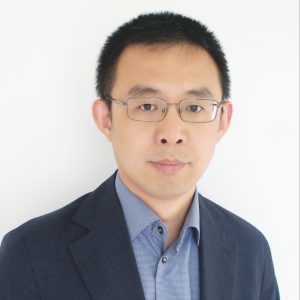
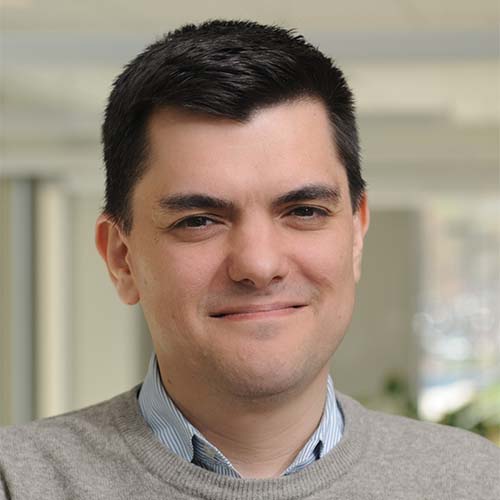
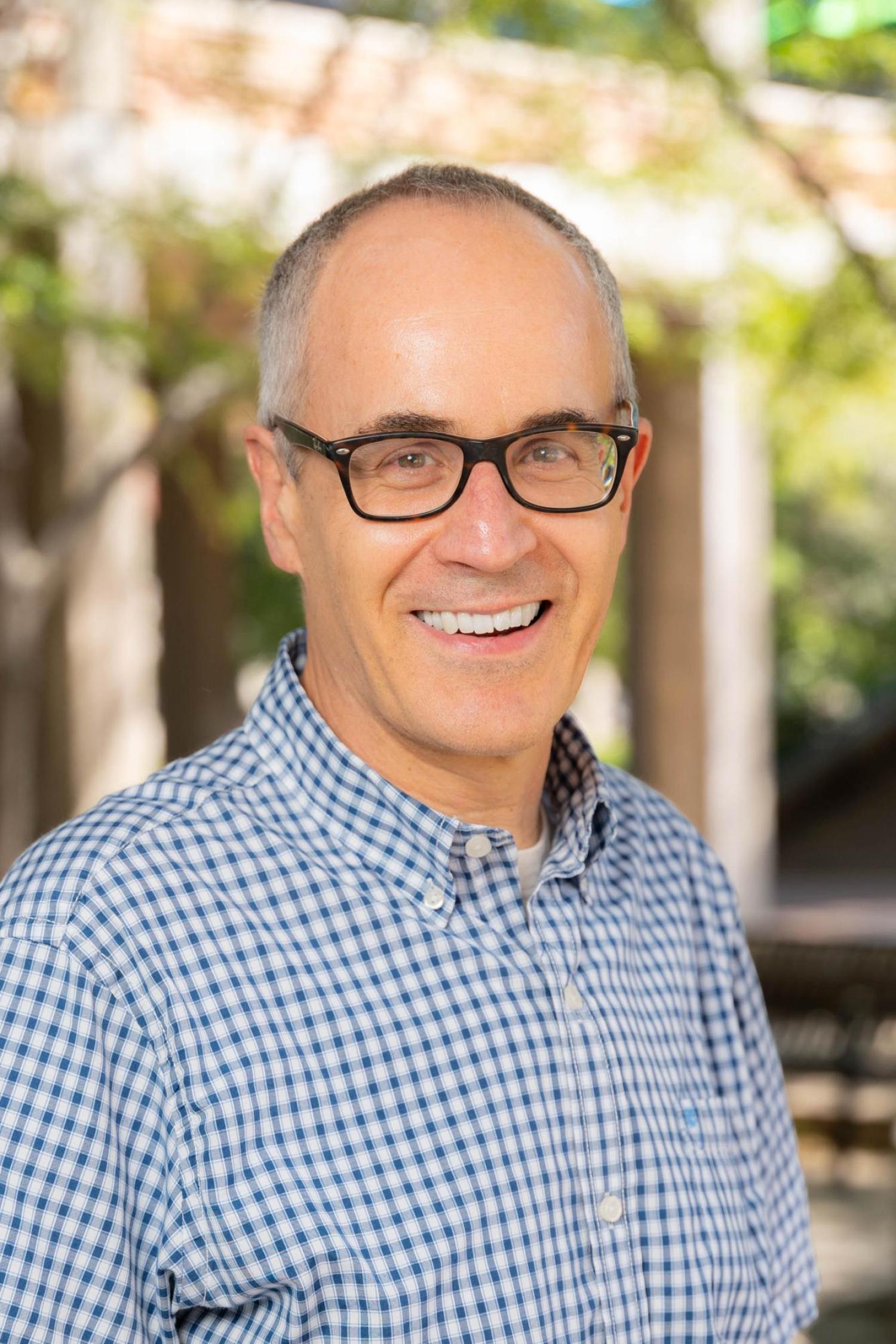
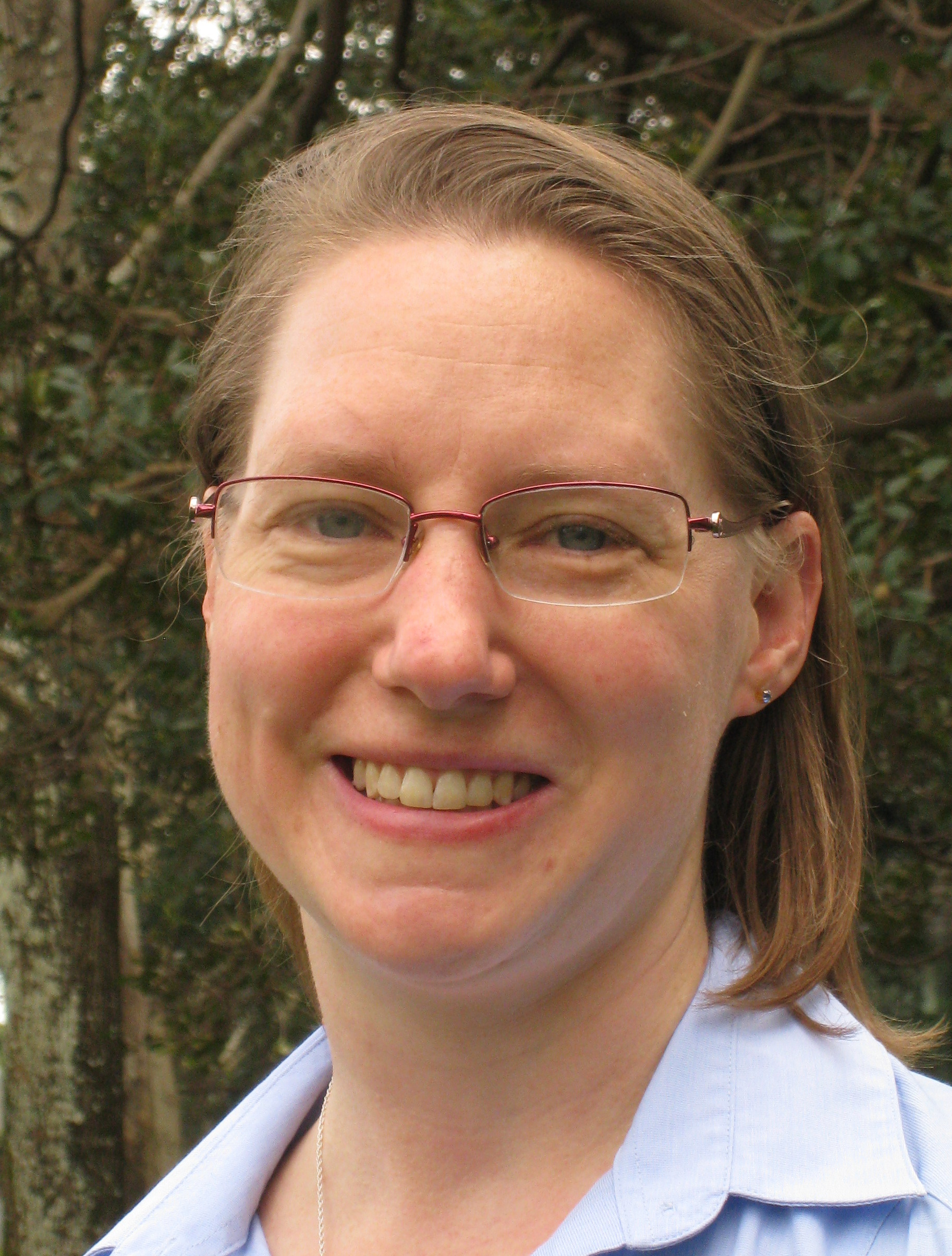
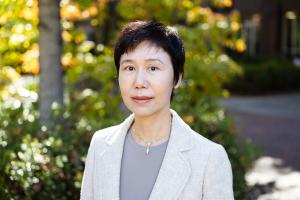
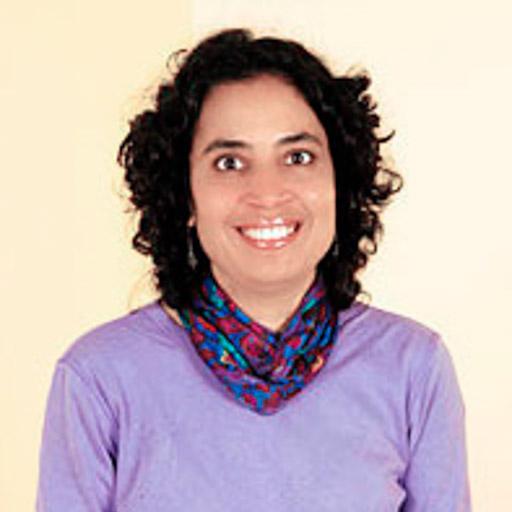
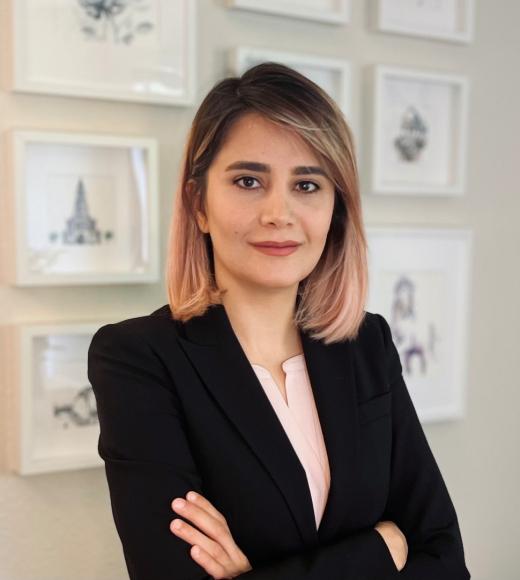
Federico Miretti is an Assistant Professor at the Polytechnic University of Turin, affiliated with the Department of Energy and the interdepartmental center Cars@PoliTo. His research focuses on hybrid and electric vehicles, with emphasis on energy management strategies, battery state estimation, and sustainable transport solutions. PhD in Energetics from Polytechnic University of Turin Research areas include: Optimization-based Energy Management Strategies for hybrid propulsion systems Simulation and digital twinning of hybrid systems Thermal management for electrified vehicles Techno-economic assessment of mobility solutions Recent publications highlight advancements in battery temperature anomaly detection, wireless power transfer feasibility, and control algorithms for energy efficiency. His work aligns with SDGs 7 (Clean Energy) and 9 (Innovation). Teaching roles include: Fluid Machinery (2019-2025) Energy Management in Hybrid/Electric Vehicles (2021-2025) Projects: PRoSIT (2025): Predictive thermal management demonstrator Consulting contract with MIDAC SpA (2025): Battery Digital Twin development EBOAT project (2025-2026): Technical support for Vulkan
Remus Teodorescu is a Professor at AAU Energy , Aalborg University , specializing in Power Electronics System Integration and Materials . His work bridges Lithium-Ion Batteries , Modular Multilevel Converters , and Smart Battery Systems . Education : Not explicitly mentioned in the text. Research Interests focus on Battery Management Systems , AI-Driven Energy Optimization , and Power Electronics for renewable energy integration. Key projects include Digital Twin for Lithium-Ion Batteries and BMS-DC for Data Centers . Recent Publications (2025) emphasize Finite Set MPC , Gradient Descent Optimization , and AI in Battery Parameter Estimation . His 2024 work explores Physics-Informed Neural Networks and Fault-Tolerant Converters . Scientific Awards : Villum Foundation Grant (313 million kroner, 2021) Named world's best in electrical engineering (2023) Advising includes supervising PhD projects on AI-Accelerated Battery Twins and Data-Driven SOH Estimation . Collaborations span Energy Cluster Denmark and Villum Fonden .
Xiongfei Wang is a Visiting Professor at KTH Royal Institute of Technology in Stockholm, Sweden, and a Digital Futures Fellow. He holds academic leadership roles, including Editor-in-Chief of IEEE Transactions on Power Electronics and chairs in IEEE committees. His research focuses on power electronics systems, stability analysis, and data-driven approaches for energy systems. Previously, he served as a Professor at Aalborg University (2009–2022). His work addresses challenges in power system stability, converter dynamics, and renewable integration. He leads projects like 'Machine Learning for Dynamics Analysis of Power Electronic Systems,' aiming to enhance grid resilience through AI-driven methods. Notable awards include IEEE Fellow (2023), Isao Takahashi Award (2022), and multiple best paper awards. Wang collaborates extensively, organizing conferences and editing journals. His research spans power electronics, grid stability, and smart grid technologies, with a focus on practical applications in energy transition.
Dr Paul Henshall is a Senior Lecturer in Mechanical Engineering at Oxford Brookes University, affiliated with the School of Engineering, Computing and Mathematics. His work bridges advanced thermal systems, renewable energy, and mathematical modelling, with a strong focus on sustainable technologies. His research interests include: Mathematical modelling of renewable energy systems Second-life battery energy storage Thermal management of battery packs Lithium-ion cell characterization Advanced solar thermal systems Thermochemical energy storage The analysis of his recent publications (2018–2025) reveals a consistent focus on energy storage and solar thermal technologies. His work emphasizes computational modelling, experimental validation, and sustainability assessment, particularly in second-life batteries and high-efficiency solar collectors. Key themes include battery degradation prediction, thermal stress analysis, and the integration of renewable systems in buildings and industry. Professional recognitions include: Chartered Physicist (CPhys) Member of the Institute of Physics (MInstP) Fellow of the Higher Education Academy (FHEA) Member of the Institute of Physics Energy Group Committee Paul supervises MEng and PhD students, including Dr. Farhad Salek, whose thesis focused on second-life battery systems. He teaches core modules in engineering mathematics, numerical methods, and computational modelling. He is involved with the Centre for Batteries, Electric Vehicles and Electronics and the Architectural Engineering Research Group, contributing to interdisciplinary research in sustainable energy systems.
Hakan Aydin is a Professor and Director of the PhD Program in the Department of Computer Science at George Mason University's Volgenau School of Engineering. He has been teaching at George Mason University since 2001 and has established himself as a leading researcher in real-time embedded systems and energy-aware computing. Education: PhD in Computer Science from the University of Pittsburgh (2001) Hakan Aydin's research primarily focuses on sustainable computing, real-time embedded systems, fault tolerance, Internet-of-Things, and cyber-physical systems. His work bridges theoretical foundations with practical implementations, particularly in energy management for real-time systems. He has developed innovative techniques for reliability-aware power management, dynamic voltage scaling, and energy harvesting in wireless sensor networks. His research has significant implications for extending battery life in mobile devices, improving reliability in safety-critical applications, and enabling sustainable computing practices. Aydin's publications reveal a consistent research trajectory centered around energy efficiency and reliability in real-time systems. His work spans theoretical algorithm development, system-level implementation, and experimental validation. A notable trend is the evolution from single-processor systems to multicore and heterogeneous architectures, reflecting industry trends. His recent work increasingly addresses security aspects of real-time systems and the integration of IoT technologies. Scientific Awards: National Science Foundation CAREER Award (2006) George Mason University Computer Science Department Teaching Award (2006, 2009) Best Paper Award at IEEE Green and Sustainable Computing Conference (IGSC'20) Best Student Paper Award at IEEE International Conference on Embedded Software and Systems (ICESS'15) Best Paper Award at IEEE International Conference on Embedded Computing (EmbeddedCom'14) Best Paper Award at International Workshop on Highly-Reliable Power-Efficient Embedded Designs (HARSH'13) Best Paper Award at ACM International Conference on Modeling, Analysis and Simulation of Wireless and Mobile Systems (MSWIM'11) Hakan Aydin has advised seven PhD students to completion, including Vinay Devadas (2011), Baoxian Zhao (2012), Bo Zhang (2012), Mohammad Atiqul Haque (2016), Maryam Bandari (2016), Arda Gumusalan (2019), and Abhishek Roy (2021). His research has been generously supported by the National Science Foundation through multiple grants, including CSR: Small: Collaborative Research: Towards Reliability-Centric Real-time Computing on Heterogeneous Chip Multiprocessor Systems (2014-2017), CSR: Small: Energy Harvesting for Performance Sensitive Wireless Sensor Networks (2011-2015), and CSR: Small: Collaborative Research: Generalized Reliability-Aware Power Management for Real-Time Embedded Systems (2010-2014). Prof. Aydin has held significant leadership roles in the academic community, serving as the Technical Program Committee Chair of the IEEE RTAS 2011 and General Chair of IEEE RTAS 2012. He is also a member of the Editorial Board of Journal of Real-Time Systems (Springer). His work has established foundational principles in reliability-aware energy management for real-time systems, influencing both academic research and industrial practices in embedded computing.
Kwantae Kim is an Assistant Professor at the Department of Electronics and Nanoengineering within Aalto University's School of Electrical Engineering . He leads the Tiny Systems and Circuits (TSirc) Group , focusing on power-efficient analog/mixed-signal ICs for biomedical and neuromorphic sensor systems. IEEE Senior Member (2025) Collaborates with institutions across Europe, Asia, and America Specializes in ultra-low-power AI-embedded IoT platforms His research emphasizes Tiny, Sensory, Intelligent, and Wireless IoT systems through: Development of energy-efficient IC architectures Democratizing access to advanced chip design Hardware-software co-design for edge computing Recent publications highlight innovations in: Spoken-language-understanding SoCs Temporal-sparsity-aware keyword spotting Open-source silicon frameworks Awards include: 2025 IEEE Senior Member 2023 Best Poster Award (AICAS) 2019 Samsung HumanTech Silver Award Research partnerships span: Prof. Tobi Delbruck (UZH/ETH Zurich) Prof. Hoi-Jun Yoo (KAIST) Prof. Shih-Chii Liu (UZH) Prof. Sohmyung Ha (NYU Abu Dhabi)
Joshua Ignatius is a Professor of Business Analytics at the Aston Business School, part of the College of Business and Social Sciences at Aston University. He focuses on research areas including supply chain analytics, prescriptive analytics, electronic commerce, and operations management. His work often addresses challenges such as information asymmetry in supply chains, user recommender systems, and logistics optimization. He is currently accepting PhD students in topics like Information Asymmetry in Supply Chains, User Recommender Systems, and Supply Chain Analytics. His research interests are centered on leveraging data-driven approaches to improve decision-making in supply chain and operational contexts. This includes studying disruption risk management, dynamic data modeling, and the integration of AI in cloud services. He also explores strategic decisions in e-commerce logistics, customer segmentation strategies, and environmental sustainability. Recent publications highlight his contributions to supply chain resilience, optimal security in cloud computing, and sustainable manufacturing processes. For instance, his 2025 work on supply chain network viability addresses disruption risks through dynamic data strategies. Another key area is the analysis of customer behavior in product upgrades, utilizing online review data to inform quality differentiation strategies. Dr. Ignatius has collaborated on projects involving platform information sharing, manufacturer encroachment, and logistics sourcing for e-commerce firms. His research often bridges theoretical frameworks with real-world applications, emphasizing practical solutions for operational challenges. He holds a strong record of supervising PhD students and guiding projects that combine academic rigor with industry relevance. His work frequently appears in leading journals such as the European Journal of Operational Research and Journal of Operations Management.
Matteo Nardello is a researcher affiliated with the Department of Industrial Engineering at the University of Trento. His work focuses on embedded systems, IoT, and energy harvesting technologies for sustainable applications. Current academic affiliation: Department of Industrial Engineering, University of Trento Research interests: IoT, embedded systems, energy harvesting, machine learning, cyber-physical systems Contact: matteo.nardello@unitn.it His research integrates hardware-software co-design for batteryless IoT systems, with applications in smart agriculture, industrial monitoring, and autonomous vehicles. Recent work explores deep learning at the edge, energy-efficient sensor networks, and microbial fuel cells for self-powered devices. Key article trends highlight a focus on sustainable power solutions, wireless sensor networks, and machine learning optimization for constrained environments. He contributes to courses on embedded systems, IoT, and AI-powered industrial applications at the University of Trento.
Ting He is a Professor in the Department of Computer Science and Engineering, specializing in interdisciplinary research at the intersection of network sciences, energy systems, and cybersecurity. Their work addresses critical challenges in network tomography, software-defined networking, and cyber-physical systems, with a strong emphasis on advancing edge computing and decentralized learning paradigms. NSF-funded research on Distributed Edge Intelligence (2024–2025) Collaborative projects on Overlay Networks and Adversarial Reconnaissance in SDN Recent publications analyze network topology inference, energy-efficient decentralized learning, and secure cloud file systems. Their research aligns with UN SDGs through contributions to sustainable energy systems and secure IT infrastructure. Key collaborations with Silvestri, La Porta, and Chaudhuri Active in Smart Grid resilience and cascading failure mitigation
Kurt Maute is a Professor and Palmer Engineering Chair at the University of Colorado Boulder’s College of Engineering and Applied Science (CEAS). He currently serves as Associate Dean for Undergraduate Education. His academic journey includes a PhD in Civil Engineering (University of Stuttgart, 1998) and a Dipl.-Ing. in Aerospace Engineering (University of Stuttgart, 1992). He has held progressively senior roles at CU Boulder, including Associate Dean for Research (2012–2014), Associate Professor (2006–2012), and Assistant Professor (2000–2006). Maute’s research focuses on structural topology optimization, multi-disciplinary optimization, and aeroelastic systems. He has pioneered methods integrating XFEM, level-set techniques, and isogeometric analysis for complex engineering problems. His work spans fluid-structure interaction, hypersonic vehicle design, and additive manufacturing. His notable contributions include advancements in immersed boundary methods, multi-material optimization, and uncertainty quantification. Awards include the NSF Career Award (2004) and Palmer Endowed Chair (2016–present). Maute’s lab (Aerospace Mechanics Research Center, AMREC) addresses challenges in computational mechanics and multi-physics systems. He has advised numerous students and led grants in battery modeling, topology optimization, and aerospace systems. His research bridges theory and application, emphasizing industrial relevance and computational innovation.
Associate Professor Judy Hart is a materials scientist at the School of Materials Science & Engineering, UNSW Sydney , specializing in the development of semiconducting materials for renewable energy applications. Her work integrates computational (DFT) and experimental approaches to understand composition-property relationships in systems like solid solutions , heterostructures , and doped materials for photocatalysis and solar cells . She leads projects funded by ARC Discovery and Linkage grants , including work on photo-electro-catalysis systems and stabilizing ceramic materials . Education: PhD in Materials Engineering (Monash University, 2007), BEng (Materials) (Monash, 2002) Professional Experience: Senior Lecturer (UNSW, 2017–), Lecturer (UNSW, 2013–2017), University of Bristol (2007–2012) Research Interests Her research focuses on designing materials for renewable energy , particularly photoelectrochemical water splitting and organic oxidation reactions . Key areas include Density Functional Theory (DFT) , defect engineering , band gap tuning , and nanostructured materials . She investigates ferroelectric polarization effects , metal oxide heterostructures , and stability of battery components , with applications in hydrogen production , CO2 conversion , and advanced battery materials . Scientific Awards Ramsay Memorial Fellowship (University of Bristol, 2007–2009) Teaching Contributions She is co-author of the 1st Australian & New Zealand edition of "Materials Science and Engineering: An Introduction" , and teaches courses on computational materials science , corrosion-resistant surfaces , mechanical behavior of metals , and materials design .
Qing (Cindy) Chang is a Professor in the Department of Mechanical Engineering at the University of Virginia. Her research focuses on cyber-physical systems for smart manufacturing, real-time production control, and human-robot collaboration. Prior to academia, she worked at General Motors, earning three Boss Kettering Awards for innovation. She holds an M.S. from the University of Wisconsin-Madison and a Ph.D. in Manufacturing from the University of Michigan. Education: M.S. in Mechanical Engineering, University of Wisconsin - Madison Ph.D. in Manufacturing, University of Michigan – Ann Arbor Research Interests: Cyber-Physical Systems for Smart Manufacturing Real-time Production Control Knowledge-guided Machine Learning-based Control Human-Robot Collaboration in Industrial Settings Intelligent Maintenance and Energy Management Awards: 20 most influential professors in smart manufacturing (2020) NSF CAREER Award (2014) General Motors Boss Kettering Awards (2005, 2006, 2008) GM R&D Charles L. McCuen Special Achievement Awards (2005, 2006, 2008) Leadership & Grants: She serves on the board of NAMRI/SME and holds editorial roles in ASME, IEEE, and SME journals. Her work bridges AI, robotics, and manufacturing systems, with notable grants including the NSF CAREER Award. Labs & Teams: Her Intelligent Systems Lab develops AI-driven solutions for manufacturing efficiency and sustainability, focusing on energy management, predictive analytics, and human-robot collaboration.
Dr. Lata Narayanan is a Professor in the Department of Computer Science and Software Engineering at Concordia University, Montreal, Canada. Her research spans theoretical and applied aspects of distributed systems, with a focus on algorithms for mobile agents, communication networks, and sensor networks. Department: Computer Science and Software Engineering University: Concordia University Research Interests Lata Narayanan specializes in algorithms for mobile robots and ad hoc networks , with expertise in routing on distributed networks , parallel algorithms , and social network analysis . Her work addresses challenges in sensor network optimization, barrier coverage, and time-energy tradeoffs for evacuation systems. Article Trends Her recent publications (2021-2025) emphasize game theory for network dynamics, cloud resource allocation , and temporal graph exploration . Key themes include strategic diversity, truck-drone delivery logistics, and energy-sharing protocols for mobile agents.
Shima Nazari is an Assistant Professor in the Department of Mechanical and Aerospace Engineering at the University of California, Davis. Her research focuses on dynamics and control with applications to transportation systems, energy systems, and electrified/automated vehicles. She leads the CORE Lab, exploring advancements in hybrid powertrains, autonomous vehicle control, and energy-efficient systems. Education: Ph.D., Mechanical Engineering, University of Michigan (2019) M.S., Electrical Engineering, University of Michigan (2016) M.S., Mechanical Engineering, Sharif University of Technology, Iran (2012) B.S., Mechanical Engineering, Sharif University of Technology, Iran (2009) Her research interests span dynamics and control theory applied to hybrid electric vehicles, powertrain optimization, and autonomous systems. She has contributed to advancements in energy-efficient vehicle designs, regenerative braking, and control strategies for electrified powertrains. Her work often bridges mechanical and electrical engineering disciplines to address real-world challenges in transportation and energy. Recent research trends in her articles emphasize data-driven control methods, hybridization strategies for autonomous systems, and thermal management of energy storage solutions. These studies reflect her commitment to interdisciplinary innovation. Although no scientific awards are explicitly mentioned, her contributions to the field are evident through her active research and publications. She advises students in her lab and collaborates on grants focused on sustainable mobility solutions. Dr. Nazari is affiliated with the UC Davis College of Engineering and actively contributes to graduate programs in Dynamics, Controls, Vehicles, and Robotics. The CORE Lab serves as a hub for experimental and computational research in her areas of expertise.
Yoshua Bengio is a Full Professor at the Université de Montréal, affiliated with the Department of Computer Science and Operations Research at the Faculty of Arts and Sciences. He is a pioneer of deep learning and a leading figure in AI safety. He co-founded Mila – Quebec Institute of Artificial Intelligence and serves as its scientific director. His work focuses on advancing AI technology while addressing ethical and safety challenges, including AI governance and catastrophic risk mitigation. Education: Ph.D. in Computer Science from McGill University (1991), postdoctoral studies at MIT. Research interests include deep learning, causal inference, AI ethics, and responsible AI development. He contributed to the Montreal Declaration for Responsible AI and leads the International Scientific Report on AI Safety. Recent articles emphasize AI safety frameworks, governance, and technical advancements in machine learning. Awards include the Turing Award (2018), Killam Prize (2019), and recognition as TIME's Most Influential Person (2024). He holds prestigious fellowships and is a member of the UN Scientific Advisory Board for Breakthrough Science and Technology. Affiliations include Mila, IVADO (as founding scientific director), and CIFAR programs. His work bridges academia, industry, and policy to ensure AI benefits humanity while minimizing existential risks.