London School of Economics and Political Science (LSE)United Kingdom
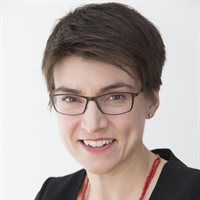
Professor Jo Braithwaite is a faculty member at the LSE Law School, specializing in international commercial finance law with a focus on derivatives markets and financial infrastructure. She joined LSE in 2008 and holds a PhD from the University of London, an LLM from the University of Pennsylvania (as a Thouron Scholar), and a BA(Hons) from the University of Oxford. Her research explores legal frameworks in global financial markets, particularly regarding central counterparties (CCPs), default management, and standard form contracts. Her notable achievements include the 2022 Inner Temple Main Book Prize for The Financial Courts , which examines judicial roles in financial markets. She has also received Modern Law Review Scholarship and multiple LSE teaching awards. Her work bridges legal theory and practice, addressing challenges like crisis management, regulatory compliance, and market resilience. Professor Braithwaite teaches financial, banking, and commercial law while supervising PhD students. Her external activities include contributions to academic journals and policy discussions on financial market infrastructure. She practices in the Cheng Kin Ku Building and can be reached at J.P.Braithwaite@lse.ac.uk.
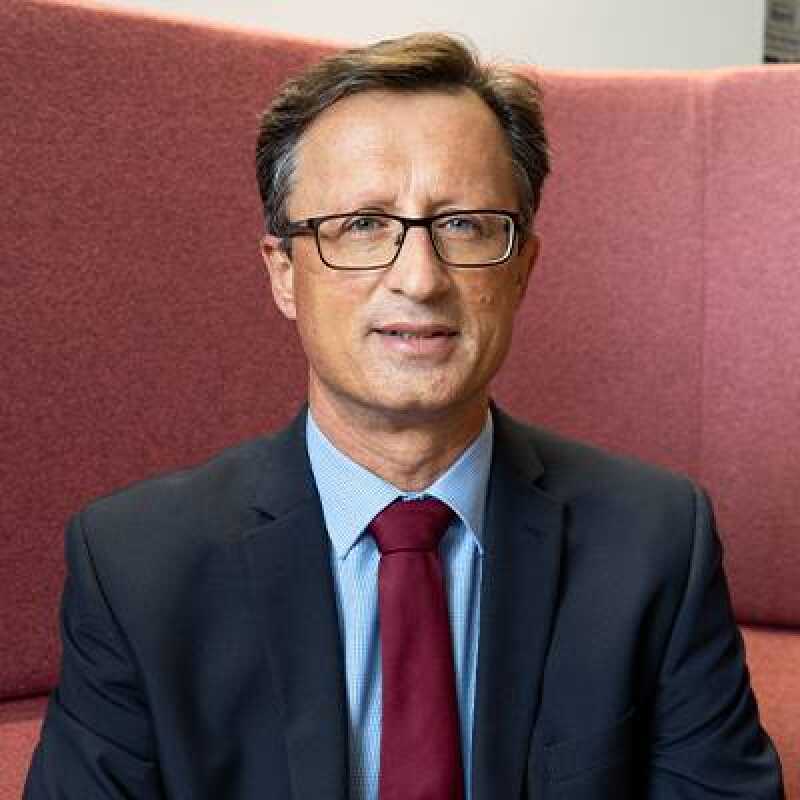
Professor Mustapha Sheikh is Chair in Islamic Thought and Muslim Societies at the School of Languages, Cultures and Societies, University of Leeds. He is Co-Director of the Iqbal Centre for Critical Muslim Studies and actively contributes to interdisciplinary research on Muslim intellectual history, Islamic law, and contemporary socio-political issues affecting Muslim communities globally. His educational background includes a DPhil in Theology and Religion from the University of Oxford, an MSt in the Study of Religions (Oxford), a BA in Arabic and Islamic Law, and a BSc in Project Management from University College London. His academic journey reflects a deep integration of traditional Islamic scholarship and rigorous Western academic training. Sheikh's research is centered on two interrelated strands: first, Islamic intellectual and legal history, particularly revivalist and reformist movements in the Ottoman and early modern Islamic world; second, the socio-scientific analysis of contemporary Muslim societies, including Islamophobia, Islamic finance, food and water security, and decolonial studies. His seminal work Ottoman Puritanism and Its Discontents (Oxford University Press, 2016) has significantly reshaped scholarly understanding of the Qadizadeli movement and Taymiyyan influences in Ottoman thought. He is a pioneer in advancing Critical Muslim Studies as a post-Orientalist framework for rethinking Islamic tradition. His recent publications reveal a strong interdisciplinary trend, combining Islamic legal theory with social justice, environmental security, and political economy. Themes such as intersectional oppression, decoloniality, and ethical finance recur across his work, reflecting a commitment to justice-oriented scholarship. He frequently collaborates with scholars across disciplines and geographies, particularly in the Global South. Member, British Society for Middle Eastern Studies (BRISMES) Member, British Association of Islamic Studies (BRAIS) Board Member, (In)Justice International Professor Sheikh actively supervises PhD students and has successfully guided over 20 doctoral candidates to completion. His research is supported by collaborations across institutions, including the University of Punjab (where he is a Visiting Professor) and Harper Adams University. He is currently co-editing volumes on global injustice and Islamic finance, and working on a book about healing racial trauma from an Islamic psycho-spiritual perspective. He leads and participates in numerous research groups, including the Arabic History group and the Centre for Religion and Public Life, and is deeply involved in public engagement through talks, webinars, and podcasts addressing Islamophobia, women’s rights under Shari’a, and decolonising knowledge.
Dr. Matthias Nnadi serves as a Senior Lecturer in Accounting at Cranfield School of Management, Cranfield University, within the Department of Economics, Finance and Business Data Analytics. His academic career spans both theoretical research and practical industry applications in accounting and finance. His educational background includes a Bachelor's degree in Accounting (BSc), Master in Business Education (MEd), MBA, and PhD, complemented by Postgraduate certificates in Academic Practice and Business Enterprise. Professional memberships span multiple accounting bodies, reflecting his deep engagement with the field. Dr. Nnadi's research focuses on accounting in emerging economies, particularly examining the relevance of International Financial Reporting Standards (IFRS) in developing contexts, corporate mergers and acquisitions, and earnings management practices. His work bridges academic theory and practical application through extensive industry engagement. His scholarly output demonstrates consistent contributions to top accounting journals, with recent publications examining IFRS implementation effects, corporate sustainability impacts, and M&A performance metrics. The research shows particular strength in African and Asian emerging markets contexts. Chartered Institute of Taxation research grant recipient Seedcorn funding awardee for academic research Editorial Board member of Journal of Bonds and Derivatives As an educator, Dr. Nnadi developed the Individualised Accounting Technique (IAQ), a teaching and assessment model widely adopted in business schools for large accounting classes. His industry contributions include executive training programs on IFRS and IPSAS for both private and public sector organizations, drawing on his practical experience as former budget manager at a telecommunications company and stock accountant at a multinational corporation.
Professor Yusuf Karbhari is a Professor of Accounting at Cardiff Business School, Cardiff University. With a distinguished career spanning several decades, he has established himself as an expert in accounting, particularly in the areas of public sector accounting, Islamic finance, and corporate governance in emerging economies. His work bridges theoretical frameworks with practical applications across diverse economic contexts, from the UK public sector to Middle Eastern and Southeast Asian financial systems. Professor Karbhari holds a PhD and MBA from institutions in Wales, along with a BA (Hons) degree. His educational background has provided the foundation for his extensive research career focused on accounting practices in both developed and emerging economies. Professor Karbhari's research interests encompass a wide range of topics including Accounting and Accountability in government sectors across the Middle East and Malaysia, Accounting practices of UK Executive Agencies, International Government Accounting, Communicative Effectiveness of International Auditor's Reports, Financial Reporting and Performance Measurement in UK Central Government, and Managerial and Accounting Reforms in the Public Sector. His work particularly emphasizes the intersection of traditional accounting principles with cultural and religious contexts, especially in Islamic finance systems. His extensive publication record demonstrates a consistent focus on accounting practices in emerging economies, with particular attention to Islamic banking and finance, corporate governance structures, and public sector accounting. Over the past decade, his research has increasingly examined the role of Sharia boards in Islamic financial institutions, environmental disclosure practices, and the relationship between governance mechanisms and financial performance in diverse economic contexts. Professor Karbhari is available for postgraduate supervision and has research interests that align with his expertise in Accounting and Auditing in Emerging Economies, International Public Sector Accounting, Corporate Governance in emerging economies, and Islamic Banking and Finance. He teaches undergraduate courses in Accounting for Decision Making and Control (Year 2) and Public Sector Accounting (Year 3).
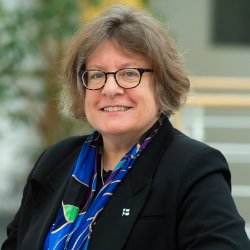
Professor Rosa María Lastra is the Sir John Lubbock Chair in Banking Law at Queen Mary University of London’s Centre for Commercial Law Studies (CCLS). She holds affiliations with the School of Law and leads the Institute of Banking and Finance Law. Her expertise spans financial regulation, central banking, and international monetary law. She advises global institutions like the IMF, ECB, and European Parliament, contributing to policy on banking union, climate finance, and central bank independence. Educated at institutions including Harvard Law School (Fulbright Fellow) and the LSE, she has authored influential works on banking law, sovereign debt, and monetary policy. She chairs key initiatives like the Sovereign Debt Forum and co-directs the Queen Mary-UNIDROIT Institute. Recent roles include advising the House of Lords on the Bank of England’s independence and serving on expert panels for the European Parliament’s Monetary and Banking Union committees. Her research explores legal frameworks for financial stability, climate-related financial risks, and the evolving role of central banks in global governance. **Education**: LLB/MA (University of Valladolid), LLM (Harvard University, Fulbright Fellow), PhD (Universidad Complutense de Madrid, with LSE research stay). **Research Interests**: Financial regulation, central banking, climate law and finance, bank resolution, EU financial law, and sovereign debt restructuring. Recent projects include the ESRC-funded 'Legal and Economic Conceptions of Money' and analysis of climate-related legal issues for the IMF. **Key Roles**: Vice-Chair of the International Law Association’s Monetary Committee (MOCOMILA), member of the European Banking Institute (EBI), and advisor to the Banco de España on central bank independence. She has testified in international arbitrations and contributed to policy reforms post-2008 crisis and Brexit. **Grants & Collaborations**: Co-led the EU-funded project on Banking Union resolution mechanisms (2016–present), collaborated with the IMF on climate finance legal frameworks, and co-organized major conferences on central banking and financial stability. **Labs/Teams**: Leads the Sovereign Debt Forum (Georgetown/Queen Mary), co-directs the Queen Mary-UNIDROIT Institute, and chairs CCLS-Bank of England research initiatives.
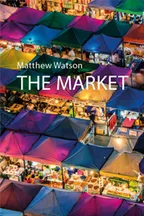
Matthew Watson is a Professor of Political Economy at the University of Warwick's Department of Politics and International Studies, and an ESRC Professorial Fellow (2013-2019). His work explores the intersection of political economy and the history of economic thought, focusing on how markets are ideologically framed as naturalized institutions and the political implications of such framing. He leads the 'Rethinking the Market' project and serves as Department REF Lead and Director of Academic Staff Development. PhD from University of Birmingham Joined Warwick in 2007 Watson's research investigates the cultural and political evolution of market ideology, tracing its roots in economic theory and its pervasive influence on public discourse. He challenges the dominance of mathematical market models across social sciences, critiques the historical underpinnings of comparative advantage theory, and examines the role of narratives like Robinson Crusoe in shaping economic subjectivity. His work also extends to analyzing austerity policies post-financial crisis and the politicization of economic expertise. His recent publications include False Prophets of Economics Imperialism (2024), which critiques the ontological separation between abstract economic models and empirical realities, and The Market (2018), which unpacks the ideological construction of market forces. Articles span topics such as epistemic injustice in budgetary politics, financialization's impact on state action, and the raced market frames in economics education. ESRC Professorial Fellow (2013-2019) Over 20 years of academic leadership Watson supervises PhD and postdoctoral researchers in political economy and history of thought, emphasizing alignment with his 'Rethinking the Market' project. He has mentored 20 postdoctoral fellows and 38 PhD students to completion, with six current supervisees. His insights are disseminated through academic presentations, blog posts, and podcasts.
Dr Christine Guo is a Senior Lecturer at Birkbeck Business School, University of London, with expertise in Financial Economics. She holds a PhD from Imperial College London and has taught at the University of Newcastle. Her research focuses on market microstructure, asset pricing, stochastic differential equations, and inflation targeting. Notably, her paper Constructing Asset Pricing Models with Specific Factor Loadings won the ABACUS Best Paper Award. Dr Guo supervises PhD students and teaches modules like Financial Management (ACCA-accredited) and Introduction to Accounting. She has published extensively in top journals including Abacus , European Journal of Finance , and Pacific Basin Finance Journal . Education: PhD in Economics, Imperial College London MSc in Economics and Financial Economics, University of Nottingham BSc in Economics and Econometrics, University of Nottingham Research Interests: Dr Guo’s work bridges theoretical and applied finance, with emphasis on: - Quantitative financial modeling - Market efficiency and regulatory frameworks - Inflation dynamics and monetary policy - ESG transparency and firm valuation Recent Publications Trends: Her articles analyze market structure (e.g., ETFs, multilateral trading facilities), Chinese financial markets, and ESG impacts. Methodologically, she applies stochastic models and spatial econometrics. Awards: ABACUS Best Paper Award (2012) for groundbreaking asset pricing methodology critiques Supervision & Teaching: Supervised 4 doctoral researchers (e.g., Stella Zhixin Xu on urban sustainability). Teaches BUMN145S5 (Financial Management) and BUMN131H4 (Accounting). Actively engages in PhD mentorship. Labs/Teams: Collaborates with interdisciplinary teams on financial regulation and ESG metrics through her research network.
Seung Joo Lee is an Associate Professor of Finance at the Saïd Business School, University of Oxford. He holds a Ph.D. in Economics from UC Berkeley and prior degrees in Physics and Economics from Seoul National University. His research focuses on monetary economics, macro-finance, and behavioral finance, addressing topics like unconventional monetary policies, financial stability, and wage-price dynamics. He also explores contract theory and policy design in risk management contexts. Education: Ph.D. in Economics, UC Berkeley (2022) MA in Economics, Seoul National University BS in Physics, Seoul National University Research Interests: Monetary Policy: Stabilization frameworks, unconventional tools Behavioral Finance: Crisis dynamics, optimism biases Contract Theory: Risk-management incentives, mathematical models His recent work includes studies on net-worth traps in financial crises and optimal communication strategies in banking supervision. Teaching: Financial Economics (MPhil/DPhil) Empirical Finance (DPhil) MBA Macroeconomics He also serves as a Visiting Fellow at Princeton University's Bendheim Center.
Dr Elias Boukrami is an Associate Professor in Banking and Finance and Director (Content) of Business, Finance and Entrepreneurship at Regent’s University London. He specializes in post-Keynesian financial economics, focusing on demand-driven economic output and Business Models Innovation , particularly in financial services. As a leader in curriculum design, he integrated advanced financial technology, simulations, and experiential learning into Regent’s Finance programs. Education: PhD in Empirical Finance (Manchester Graduate Business School), MSc in Financial Services Management (University of Surrey), PGCHE (University of Westminster), BSc in Business and Finance (Ecole Supérieure de Commerce). His research spans Financial Technology , ESG Investment , and Ethical Finance , with over 30 publications including peer-reviewed journals, books, and conference papers. Recent work examines blockchain in Sukuk markets, dual financial systems regulation, and digital transformation in SMEs. He has supervised over 15 PhD theses and serves as Associate Editor for the Journal of Islamic Marketing . Scientific Awards: 2014 Trustees’ Prize for Outstanding Service to Regent’s University London 2018 Double Award: Excellence in Teaching and Learning & Leadership and Management Dr Boukrami acts as external examiner for institutions like Cranfield Business School and University of Bradford, and is a Visiting Professor at University of Lyon 3 IAE France. He has secured grants such as £14,750 from the Algerian Department of Higher Education for research on financial bubbles' impact on the global economy and holds professional affiliations including Fellow of the Higher Education Academy and Chartered Management Institute .
Dr. Tri Tri Nguyen is a Senior Lecturer in Accounting and Finance at the University of Roehampton's Faculty of Business and Law, serving as Programme Convener for BSc Accounting. He holds a PhD from the University of East London and an MSc from the University of Sydney. His research focuses on corporate financial reporting (earnings management, accounting conservatism), corporate governance, climate finance, and ESG reporting. He has published in top journals like the Journal of Business Finance & Accounting and serves as Associate Editor of the Journal of Financial Reporting and Accounting . Prior roles include academic positions at the University of Brighton and Deloitte auditing experience. He actively supervises PhD students and leads projects on Vietnamese firms' ESG preparedness. Research highlights include examining manager sentiment's impact on accounting conservatism and analyzing customer concentration effects on accounting comparability. His work bridges theoretical accounting frameworks with practical implications for regulatory policies and corporate governance structures. He frequently presents at global conferences (AAA, EAA) and engages in policy discussions via platforms like Columbia Law School's Blue Sky Blog. Awards include FHEA and CMBE certifications.
Pedro Schilling De Carvalho is a Lecturer in Law at University College London's Faculty of Laws, specializing in Financial and Environmental Law. He holds a PhD in Law and Finance from the University of Cambridge, where he received a Cambridge International Scholarship, as well as an LLM in Commercial Law from Cambridge (supported by a Chevening Scholarship) and a LLB from the University of São Paulo, Brazil. His academic journey includes positions at: University of Cambridge (Research Affiliate, Judge Business School and Lauterpacht Centre for International Law) London School of Economics (Guest Lecturer) University of Edinburgh (Early Career Fellow in Financial Law and Regulation) Max Planck Institute for Comparative and International Private Law (Visiting Fellow) Harvard Law School (Visiting Fellow) Pedro's research focuses on financial regulation, corporate finance, environmental law, international economic law, and sustainable finance. His work explores regulatory diffusion in sustainable finance, international financial governance in multipolar contexts, and the intersection of corporate governance with environmental and social concerns. He has published in peer-reviewed journals such as the Journal of Financial Regulation and has been cited by institutions including the International Monetary Fund. His recent publications demonstrate a strong focus on sustainable finance frameworks, regulatory coordination across jurisdictions, and the evolving landscape of financial technology regulation globally. His work spans theoretical analysis of corporate governance models alongside practical regulatory frameworks for emerging financial technologies and sustainable investment. Pedro has received several prestigious awards and recognitions: Cambridge International Scholarship Chevening Scholarship Max Planck Institute & Cambridge Scholarship Certified peer-reviewer by the Equitable Growth, Finance and Institutions Global Practice He has actively contributed to policy development through written evidence to the UK Parliament Committee on the Future Relationship with the European Union, consultancy work for the World Bank Group's Legal Vice Presidency, the Green Climate Fund, and the Bill & Melinda Gates Foundation. His professional activities include being Co-Director of the UCL Centre of Law and the Environment, academic member of the European Corporate Governance Network, and member of the Leadership of the Commission on Arbitration and ADR at the International Chamber of Commerce. Pedro has extensive experience as both a transactional and dispute resolution lawyer, having worked with prominent law firms and served as Chief of Staff at the Commercial Law Chamber of the São Paulo Supreme Court.
Professor Sonia Falconieri holds a faculty position in Corporate Finance at the Bayes Business School, City St George's, University of London. She previously held roles at institutions including the Einaudi Institute for Economic and Finance (Rome), the University of Amsterdam, Tilburg University, and Brunel University (London). Her research focuses on corporate finance, IPO design, gender diversity, and corporate governance. She contributed to the 2019 Hampton-Alexander review and has been featured in Forbes and People Management. Education: BSc/MSc in Economics from Bocconi University (Milan, Italy), PhD in Economics from the University of Toulouse (France). Research interests include IPO underpricing, gender quotas in corporate boards, and the role of information theory in corporate finance. She has supervised multiple PhD students, including 1st supervisions of Chiara De Amicis and Chen Xu. Professional activities include serving as Associate Editor of the European Journal of Finance , organizing conferences, and media engagements on IPOs and corporate governance. Notable awards include the Senior Fellow of the Higher Education Academy.
Dr. Epameinondas Katsikas is a Senior Lecturer in Accounting at Kent Business School, University of Kent, with a focus on management accounting, institutional change, and public sector accounting. He holds a BSc in Accounting from Strayer University, an MBA from Leicester University, and a PhD in Accounting from Durham University Business School. Research interests include management accounting change, performance measurement, and accounting innovations in public sector organizations Teaching spans management accounting, financial accounting, and financial statement analysis Supervision topics cover CSR, public sector accounting, and management control systems His work has been published in international peer-reviewed journals and presented at conferences. Key research trends include institutional dynamics in financial systems, CSR impacts, and ESG policy analysis.
Professor Bonnie Buchanan is the Director of the Sustainable and Explainable FinTech (SAEF) Center and a Professor of Finance at the University of Surrey's Surrey Business School (SBS). She previously served as Head of the Department of Finance and Accounting (2019–2023). Her affiliations include fellowships at the University's Center for Sustainability, the Center for AI, and the Centre for Digital Economy (CoDE). Professor Buchanan holds a BSc (Hons), MAppSc, and PhD. Her research focuses on FinTech, AI in financial services, securitization, CSR, and synthetic/alternative data. Notable projects include work on biodiversity in FinTech and regulatory frameworks for financial technologies. Recent grants include a 2020–2022 grant from the Liikesivistysrahasto in Finland (€200,000). She actively supervises PhD students in FinTech, AI, securitization, CSR, and law-related finance topics. Teaching roles include courses on FinTech (MANM493), Banking and Money (MAN3124), and historical financial crises. Her research aligns with UN Sustainable Development Goals, emphasizing environmental and social impacts. Key publications explore sustainability in private investing, creditor governance, and AI's role in UK financial services. Current initiatives include promoting biodiversity-friendly FinTech solutions and advising the Bank of England-FCA consortium (2025).
Novi Quadrianto is a Professor of Machine Learning at the School of Engineering and Informatics, University of Sussex, where he joined as a Lecturer in February 2014. He is currently a Principal Investigator on three active EU grants: BayesianGDPR (ERC), TANGO (EU Horizon RIA), and Act.AI (ERC Proof of Concept). He also holds an Adjunct Professor position in Data Science at Monash University, Indonesia, and serves as Strategic Lab co-Leader of the BCAM Severo Ochoa Strategic Lab on Trustworthy Machine Learning in Bilbao, Spain. His educational background includes a PhD in Machine Learning from the Australian National University (2012) and a BEng in Electrical and Electronics Engineering from Nanyang Technological University, Singapore. During his PhD, he conducted research at multiple international institutions including HIIT-Finland, Yahoo! Research-US, University of Alberta-Canada, Fraunhofer IAIS-Germany, and IST Austria. From 2012-2014, he was a Newton International Fellow of the Royal Society at the University of Cambridge. Professor Quadrianto directs the Predictive Analytics Lab (PAL) since 2017, which focuses on "Responsible AI" research developing AI models that embed fairness, accountability, transparency, and trustworthiness. His research spans algorithmic fairness, federated learning, and computer vision, with applications in sustainable development, healthcare, and finance. His work has been funded by prestigious organizations including the European Research Council, EPSRC, and HM Treasury. His publications reveal a strong focus on addressing challenges in AI fairness, robustness, and privacy, particularly in dynamic environments and heterogeneous data settings. Recent work explores performative prediction, diversity-driven learning, and efficient vision transformer inference, demonstrating his leadership in cutting-edge machine learning research. European Research Council ERC Proof of Concept Grant (2023) Guarantor Researcher for BCAM Severo Ochoa Excellence Accreditation (2023) European Lab for Learning and Intelligent Systems (ELLIS) Scholar/Fellow (2020) European Research Council ERC Starting Grant (2019) Newton International Fellowship (2012) Microsoft Research Asia Fellowship (2009) Professor Quadrianto currently supervises six PhD students and five postdoctoral researchers. He has served as Action Editor for Transactions on Machine Learning Research since 2022 and as Associate Editor for IEEE Transactions on Pattern Analysis and Machine Intelligence since 2016. He has also been an Area Chair for major conferences including NeurIPS, ICML, and AAAI. His PAL laboratory hosts a team of 15 members focused on inter-disciplinary AI research with domain experts across various sectors. The PAL Lab operates three innovation strands: AI for Sustainable Development (supporting UN SDGs), AI for Healthcare (transforming health outcomes), and AI for Finance (personalized loan decision-making). The lab also leads initiatives in Diversity & Inclusion in AI and offers Pro-Bono Office Hours to organizations seeking guidance on machine learning aspects.