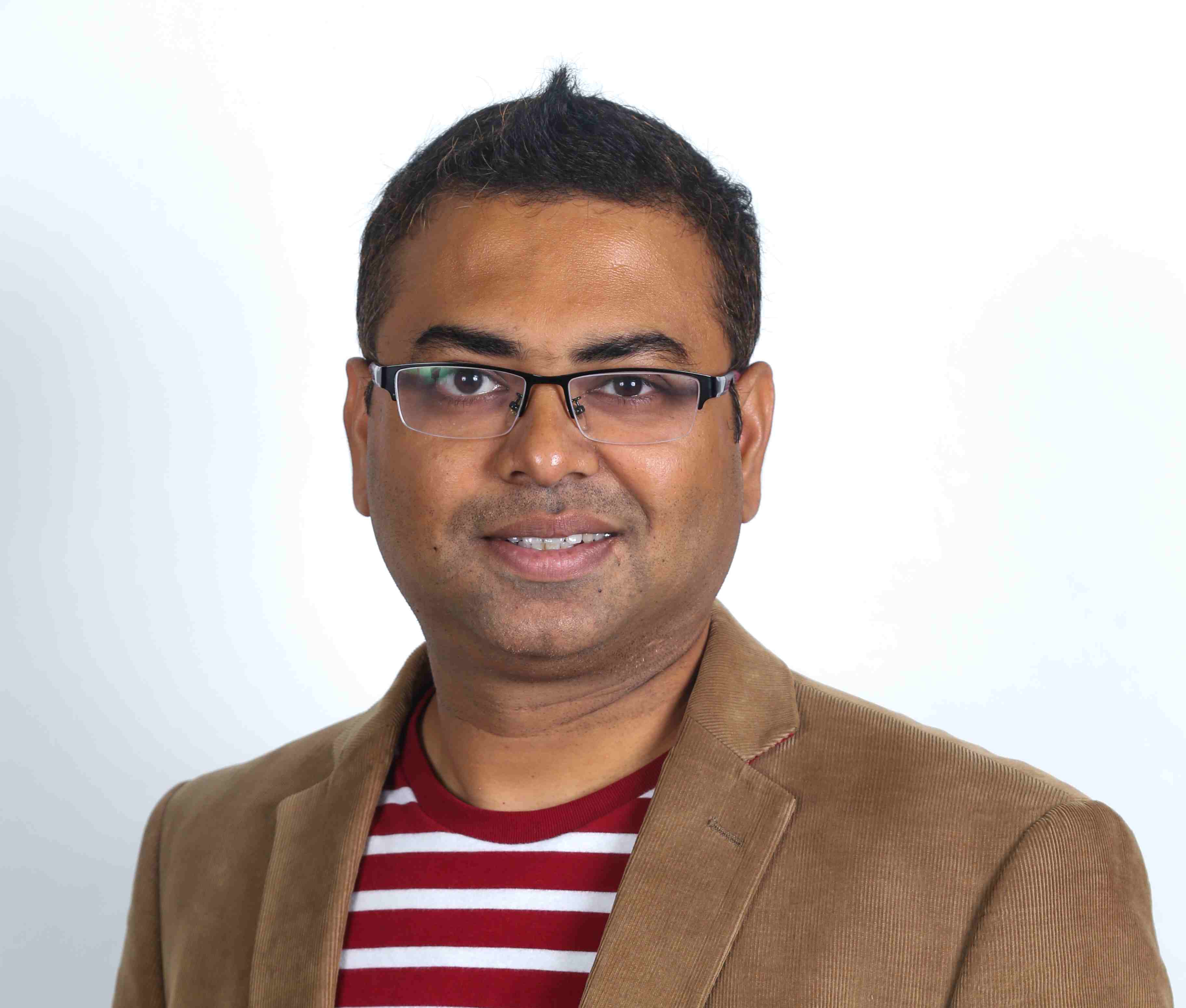
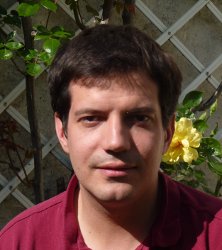
Shahrear Iqbal is an Adjunct Associate Professor at Queen's University and a Cyber Security Researcher at the National Research Council (NRC) Canada . He holds a PhD in Cybersecurity (2017) and MSc in Combinatorial Optimization (2011) from Queen's University, along with a BSc in Computer Science and Engineering (2008) from Bangladesh University of Engineering and Technology. Research Focus: Security and Privacy of Smart Systems, including in-vehicle security, self-aware operating systems, IoT-cloud security, and AI-driven cybersecurity. Teaching: Previously taught CISC490: Cybersecurity at Queen's University. Key Projects: Droid Mood Swing (DMS) for context-aware Android security policies Securing ECU Communications in connected vehicles FCFraud for user-side click-fraud detection
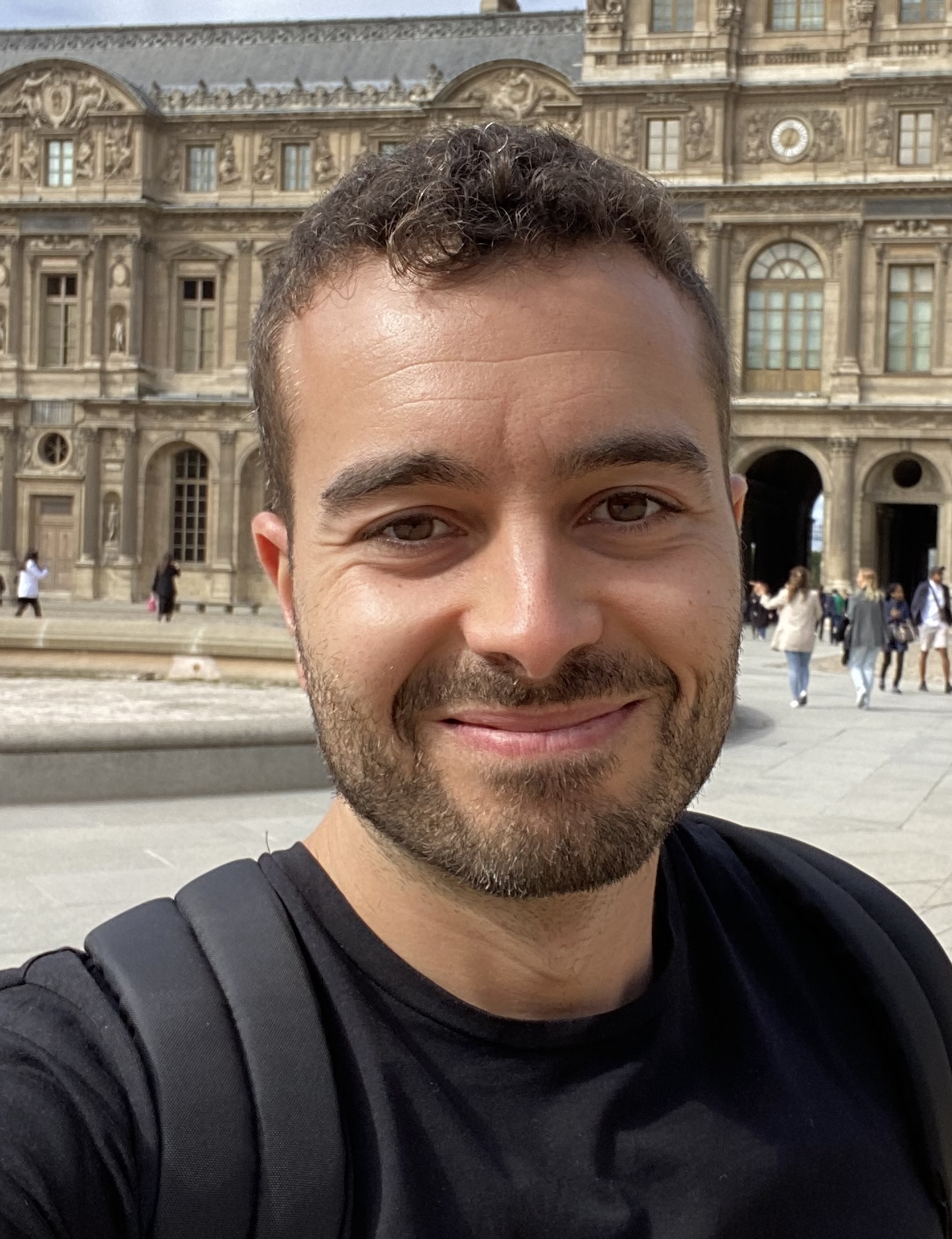
David R. Matos is an Assistant Professor at the College of Engineering, University of Lisbon, and a researcher at the Distributed, Parallel and Secure Systems Group (DPSS) of INESC-ID. He is also a member of the BIG ERA Chair Team. His primary research interests include distributed systems, cybersecurity, and cloud computing, with a specific focus on intrusion recovery mechanisms for cloud environments and microservice architectures. Education: BSc in Informatics Engineering, University of Lisbon MSc in Informatics Engineering, University of Lisbon PhD in Computer Sciences and Engineering, Instituto Superior Técnico His research applies machine learning techniques to associate application requests with database statements, enabling identification and reversal of malicious operations. Key themes include decentralized storage, blockchain recovery, secure communication protocols, and pluggable intrusion recovery systems. David has contributed to projects such as PATI, SITAN, SafeCloud, SEAL, and the BIG ERA Chair. He developed the Rectify system for intrusion recovery in PaaS clouds, which is deployable alongside applications without software modifications.
Waylon Brunette is an Assistant Professor in the Department of Computer & Cyber Sciences at Augusta University. His research focuses on mobile computing, computing for development, ubiquitous computing, and edge computing, with an emphasis on creating systems that integrate seamlessly into users' environments to support global health and humanitarian efforts in resource-constrained settings. He leads the development of the Open Data Kit (ODK) framework, designed to simplify mobile application development for disconnected environments. Education: Ph.D. (Computer Science, University of Washington, 2020), MS (Computer Science, UW, 2012), BSE (Computer Engineering, UW, 2002). Research interests include wireless sensor networks, sensor-enhanced systems, and frameworks for non-programmers to deploy robust applications in low-resource areas. He serves as Chair of the Research Computing Infrastructure Committee (RCIC) and Editor for the ACM Journal on Computing and Sustainable Societies. Previously, he was a co-founder of the ODK Project at UW's Allen School. Service activities include mentoring junior researchers and organizing the Southeastern Collegiate Penetration Testing Competition. His work emphasizes practical, deployable solutions for global challenges in healthcare, logistics, and international development.
Prof. Nearchos Paspallis is the Head of the School of Sciences and Professor in Mobile and Distributed Systems at UCLan Cyprus. He holds a PhD in Computer Science from the University of Cyprus (2010) and has extensive academic leadership roles, including Deputy Head of School (2020–2022) and Chair of the Teaching and Learning Enhancement Committee (2018–2023). His teaching responsibilities include leading the BSc (Hons) Computing program and delivering modules on software development, mobile computing, and algorithms. Education: PhD Computer Science (University of Cyprus, 2010), MSc Computer Science (University of California, 2002), BEng/MEng Computer Engineering and Informatics (University of Patras, 2001). His research focuses on software engineering , distributed systems , and mobile computing , with recent work on machine learning applications, context-aware systems, and computer science education. He has pioneered initiatives like Code Cyprus to inspire youth in coding and co-led EU-funded projects such as WIDERa (€4.2M) and MentorME (€296K). Key Awards: Shortlisted for 2024 Outstanding Contribution award, Best Paper (2016), Fulbright Scholarship (2001). Prof. Paspallis has supervised multiple research projects, including a PhD on MMOG backend architectures. His outreach efforts extend to judging hackathons and robotics competitions, emphasizing STEM engagement.
Ganesh Neelakanta Iyer is a Lecturer in the Department of Computer Science at the School of Computing, National University of Singapore (NUS). He holds a PhD (2012) and MSc (2008) from NUS and a B.Tech. in Computer Science and Engineering from Mahatma Gandhi University, India (2004), where he ranked first. He brings over a decade of industry experience from companies like Salesforce, NXP, and Progress Software, and prior academic roles at Amrita Vishwa Vidyapeetham and IIIT-Hyderabad. His research interests span Software Engineering , Cloud/Edge Computing , Machine Learning , AI for Cultural Heritage , and Software Engineering Education . He founded the STeAdS (Software Engineering and Technological Advancements for Society) research group in 2021, focusing on technology applications in healthcare, education, and traditional arts like Kathakali and Wayang Kulit. The recent publications highlight a strong trend in AI-driven educational technologies , including LLMs for curriculum customization, web-based DevOps learning platforms, and agile project management tools. Another major theme is AI in cultural preservation , with works on Kathakali gesture and facial expression recognition. A third stream involves distributed systems and networking , particularly in edge computing and federated learning. Faculty Teaching Excellence Award 2024, NUS AWS Educate Cloud Faculty Ambassador (2019, 2020) Certified Kubernetes Administrator (CKA) University Topper (First Rank, 2004) NUS Postgraduate Research Scholarship (2009–2012) Dr. Iyer mentors students through UROP, FYP, Master’s, and PhD projects, and has led numerous grants and initiatives in cloud computing education and AI for societal benefit. He has delivered workshops and keynote speeches across the USA, Europe, Australia, and Asia. He actively leads the STeAdS virtual research group, fostering global collaborations. As a maestro in Kathakali, he integrates traditional art with technology, composing and staging performances while applying AI to preserve and analyze this heritage.
Candace Brakewood is an Associate Professor in the Department of Civil and Environmental Engineering at the University of Tennessee, Knoxville, within the College of Engineering. She joined the faculty in August 2017 after serving at the City College of New York. Her research focuses on intelligent and smart transportation systems, particularly public transit, shared mobility, and real-time information technologies. PhD in Civil Engineering, Georgia Tech, 2014 MS in Transportation, MIT, 2010 MS in Technology and Policy, MIT, 2010 BS in Mechanical Engineering, Johns Hopkins University, 2006 Her research interests include intelligent transportation systems, public transportation, shared mobility, transportation planning, and the integration of real-time information into urban transit networks. She investigates how new communication technologies can improve transit efficiency, equity, and user experience in cities. Her recent publications analyze the impact of real-time transit information, ridehailing regulations, bike-sharing effects on bus ridership, and mobile app usage in transit. These works reflect a strong trend toward data-driven urban mobility research, emphasizing user behavior, policy implications, and technological innovation in transportation. She has received several honors and recognitions: Rising Star Fellow, Transportation Research Board, 2016 Top 40 under 40, Mass Transit Magazine, 2016 Fred Burggraf Award for Young Researchers, Transportation Research Board, 2017 Candace Brakewood has led and contributed to numerous research projects analyzing transit data, behavior, and policy. She is currently on a Faculty Development Leave (sabbatical) from August 2025 to July 2026 in Munich, Germany, conducting research under a Humboldt Research Fellowship. While no formal advisees are listed, her collaborative publications suggest active mentorship and team-based research. Her work bridges engineering, policy, and data science in urban transportation. She is actively engaged in research through collaborations with institutions and agencies focused on public transit innovation. Her current sabbatical with the Humboldt Research Fellowship indicates ongoing international research engagement and scholarly development in transportation systems.
Dr. Philipp Seuferling is an LSE Fellow in Media and Communication at the Department of Media and Communications, London School of Economics. His research focuses on the historical and contemporary intersections of media technologies with migration, border regimes, and refugee camps. He holds a PhD from Södertörn University (Stockholm) and was a visiting researcher at NYU in 2022. His key expertise includes media and migration, borders, media technologies, and media history. His monograph Encampment: A history of media, control, and care investigates the role of media practices and technologies in refugee camps in Germany since 1945. His work critically examines how borders are enacted through media technologies and explores 'smart borders' as modern testbeds for digital and AI-driven systems. Recent publications analyze automated border control (e.g., Smart Ellis Island? ), historical media practices in refugee camps, and the entanglements between migration infrastructures and technological imaginaries. He has contributed to journals like New Media & Society , Communication, Culture & Critique , and Mobilities . Dr. Seuferling’s research integrates historical and critical perspectives, emphasizing the socio-technical dimensions of migration governance. He collaborates on projects analyzing media backends, digital infrastructures, and postcolonial mobility regimes.
Christopher Kelly is a Research Fellow at the Computational Science Initiative (CSI) of Brookhaven National Laboratory , where he specializes in high-performance computing (HPC) and theoretical particle physics. His expertise spans two decades in developing and optimizing large-scale scientific software for supercomputers like Summit, Perlmutter, and Frontier. Research Focus : Lattice Quantum Chromodynamics (QCD) and kaon physics, particularly exploring CP-violation in K→ππ decays to address matter-antimatter asymmetry in the universe. Design and optimization of HPC tools (e.g., Chimbuko, CPSfit) for performance analysis and data analysis workflows on exascale systems. Collaboration with the RBC & UKQCD groups and Intel PathForward Exascale Computing Project. Scientific Awards : ISAV 2020 Best Paper Award for Chimbuko tool development. RIKEN Foreign Postdoctoral Research Fellowship (2013). Ken Wilson Lattice Award (2012). Leadership and Mentorship : Leads the Chimbuko project, supervises backend development teams, and mentors summer interns and postdocs. He was instrumental in the DEI Council at CSI and has collaborated with Columbia University on lattice QCD optimization projects. Labs & Teams : Active in the RBC & UKQCD collaborations, ECP CODAR and LatticeQCD projects, and the Intel Aurora oneAPI framework.
Deborah Volpe is a Part-Time Lecturer at the Department of Electronics and Telecommunications (DET), Politecnico di Torino. She actively contributes to teaching in the Master of Science in Microelectronic Systems and Quantum Hardware Design courses since 2022. Her research focuses on quantum computing, optimization algorithms, and FPGA development for quantum-classical hybrid systems. Teaching: Microelectronic Systems (2022–2024), Quantum Hardware Design (2024) Collaborations: Quantum Engineering and FPGA-based quantum emulation Recent publications (2024–2025) highlight applications of quantum optimization in satellite operations and FPGA-based quantum circuit emulation. She supervises doctoral student Christian Conti and participates in interdisciplinary research teams for quantum hardware projects.
Levent Ertaul is a Professor and Chair of the Department of Computer Science at California State University, East Bay (CSUEB). He holds a PhD in Computer Networks Security from the University of Sussex, UK, and advanced degrees in Electrical and Electronics Engineering from Hacettepe University, Turkey. His expertise spans Cyber Security & Privacy, Cyber War, Cryptology, and Wireless Security. He has led research in IoT Security, Post-Quantum Cryptography, and Enterprise Security Planning. Ertaul has held leadership roles including CSUEB Department Chair and served on committees such as the California Cybersecurity 4 Year Education Program Workgroup. His professional development includes summer faculty positions at Lawrence Livermore National Laboratory (LLNL) focusing on CyberDefenders and Global Security programs. He has authored over 50 publications and presented globally at venues like RSA Conference and IEEE events. Awards include the Cisco Instructor Excellence Award and Keynote Speaker recognitions. He teaches advanced courses in Cyber Security, Cryptology, and Network Security Management. Notable contributions include inventing the L4NE protocol for location-based services and the ERTAUL Crypto Algorithm. His grants exceed $15M, including work on National Military Messaging Systems and Firewall Development. He actively participates in cybersecurity competitions (HackCSUEB, CTFs) and advises on policy matters through roles like Bay Area Council Cyber Security Representative.
Nicos Kasenides is a Lecturer in Computing at the University of Central Lancashire Cyprus (UCLan Cyprus), associated with the School of Sciences. He holds a PhD in Computing (2023) and BSc (Hons) in Computing (2018) from UCLan UK and UCLan Cyprus respectively. His research focuses on Software Engineering, Distributed Systems, Real-time Systems, Cloud Computing, and Game-Based Learning Environments. He has contributed to over 8 peer-reviewed publications in conferences like IEEE COMPSAC and International Conference on Human-Computer Interaction, exploring topics ranging from educational robotics integration to sustainable development goal frameworks in gaming. Kasenides has held roles including Lecturer (2024–present), Associate Lecturer (2019–2024), and Research Associate (2018–2019) at UCLan Cyprus. He leads modules such as The Computing Challenge , Mobile Computing , and Distributed Enterprise Systems , while teaching foundational courses in programming and computing exploration. His work combines academic rigor with practical applications, emphasizing scalable cloud frameworks for gaming and pedagogical innovations in technology-enhanced learning.
Tom Heine Nätt is an Associate Professor at the Department of Computer Science and Communication at Høgskolen i Oslo og Akershus. His academic work focuses on foundational computer science concepts, information security, and programming language theory. He has contributed extensively to technical lexicon entries covering IT infrastructure, cyber-security practices, software development methodologies, and digital literacy education. His research interests include exploring system reliability through redundancy mechanisms, mitigating cyber-threats via robust validation techniques, and clarifying core IT concepts for educational purposes. He has authored over 50 entries in the Store Norske Leksikon , addressing topics ranging from API architecture to quantum computing basics . Professionally, he teaches courses in software engineering and cyber-security at HiOA. His publications consistently emphasize clear technical communication and practical application of theoretical principles.
David Monniaux is a senior researcher (Researcher) at the CNRS, based at VERIMAG laboratory, a joint research unit of CNRS and Université Grenoble Alpes. His work focuses on formal methods for software verification, particularly on proving the correctness of critical software used in civil aviation and industrial applications. He holds a PhD in Computer Science from Université Paris Dauphine (2001) and a Habilitation from Université Joseph Fourier, Grenoble (2009). Education: PhD in Computer Science, 2001, Université Paris Dauphine Accreditation to Supervise Research (Habilitation), 2009, Université Joseph Fourier, Grenoble Agrégation in Mathematics Research Projects: VERASCO (2012–2015): Integrated a static analyzer into the CompCert compiler and proved its correctness using Coq. STATOR (2012–2017): Advanced program invariant inference techniques using abstract interpretation and SMT-solving. ASOPT (2009–2012): Static analysis algorithms leveraging optimization and game theory. Key Contributions: Developed the Astrée static analyzer for proving absence of runtime errors in C programs. Pioneered work on verified compilers and formal verification of optimizations. Contributed to tools like Mjollnir for quantifier elimination and the Verimag Polyhedra Library. Grants & Awards: ERC Consolidator Grant (STATOR project). ANR funding for VERASCO. Labs & Teams: Leading research at VERIMAG in static analysis and formal methods. Collaborations with Absint GmbH for industry applications of Astrée.
Dr. Lakshmi Prayaga is an Associate Professor in the Department of Cybersecurity and Information Technology at the University of West Florida, part of the Hal Marcus College of Science and Engineering. She is based in Building 4, Room 437, and can be reached at lprayaga@uwf.edu . Education: Ed.D. in Instructional Technology, University of West Florida M.S. in Software Engineering, University of West Florida MBA, Alabama A&M University M.A. in Philosophy, Bangalore University, India B.A. in Liberal Arts, Osmania University, India Dr. Prayaga's research focuses on the integration of advanced technologies—such as robotics, augmented reality, 3D printing, data visualization, game programming, and computer-mediated simulations—into educational and workforce training contexts. Her work aims to enhance comprehension, develop cognitive skills, and make technology accessible through innovative platforms like tele-robotics. She emphasizes practical, hands-on learning experiences that bridge theory and application in instructional and applied technologies. Her recent publications reflect a strong trend in using interactive and immersive technologies to transform education and training. Topics include game-based learning, web development pedagogy, data visualization in social media, and the use of 3D printing and robotics in curricula. These works span disciplines such as computer science education, cognitive development, workforce technology, and instructional design, demonstrating a multidisciplinary approach to educational innovation. Scientific Awards: No awards listed in the provided text. Dr. Prayaga is actively involved in curriculum development and teaching graduate-level courses such as Information Engineering Technology, Exploring the Internet, Web Server Technologies, and Game Programming 2 (3D Game Studio), most of which she designed. She has co-authored books on robotics, Android app development, game programming, and web technologies. While specific grant funding and advisees are not mentioned, her extensive publication record and course leadership indicate a strong commitment to academic mentorship and research leadership. She contributes to advancing accessible and inclusive educational technologies, particularly through her tele-robotics platform, which reduces infrastructure costs and broadens access to robotics education. Her interdisciplinary work connects computer science, education, and cognitive science, positioning her as a key contributor to technology-enhanced learning environments.
Dr. Conor Muldoon is a Senior Lecturer in Software Engineering at the Department of Computing and Mathematics, Manchester Metropolitan University. His research focuses on distributed artificial intelligence, sensor networks, and multi-agent systems with applications in environmental monitoring and smart home technologies. Previously, he held postdoctoral positions at University College Dublin (UCD) and the University of Oxford, supported by prestigious fellowships including the INSPIRE Marie Curie and Government of Ireland Embark awards. He earned a Ph.D. in Computer Science from UCD, along with a first-class B.Sc. in Computer and Software Engineering and a Postgraduate Certificate in Higher Education Teaching. His research portfolio includes developing water quality forecasting systems, citizen science platforms (e.g., COBWEB), and autonomic energy management solutions. He has published extensively in journals and conferences, addressing topics such as sensor network optimization, incentive mechanisms for crowdsourcing, and adaptive middleware for ambient intelligence. Dr. Muldoon is a Fellow of the Higher Education Academy and supervises PhD candidates in areas like multi-agent systems and environmental informatics. Education: Ph.D. in Computer Science, University College Dublin B.Sc. (Honours) in Computer and Software Engineering, University College Dublin Postgraduate Certificate in Teaching and Learning in Higher Education His work bridges theoretical computer science with real-world applications, emphasizing sustainability and participatory technologies. Key projects include the Dublin Bay Water Quality Modelling and the MERA Data Extraction Toolkit. Awards include recognition for his contributions to agent-based systems and environmental data science.