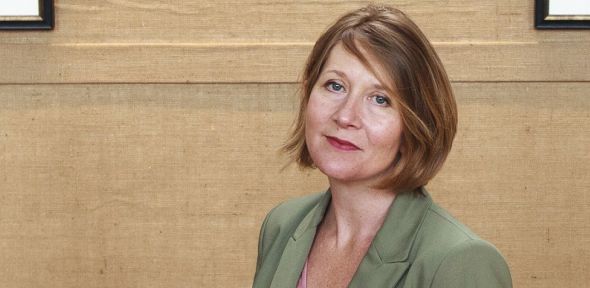
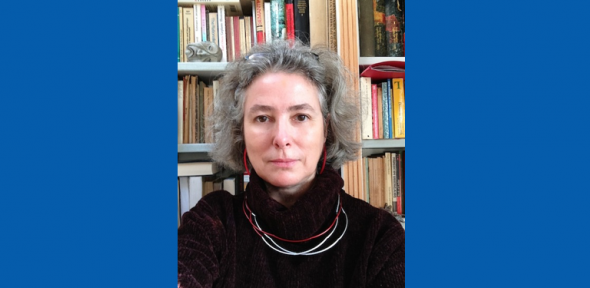
Professor Emma Widdis is a leading scholar at the Faculty of Modern and Medieval Languages and Linguistics at the University of Cambridge, specializing in the intersection of Soviet cinema, ideology, and cultural geography. Her work explores the reeducation of sensory perception through film, early Soviet urban spaces, and the construction of subjectivity via cinematic techniques. Teaches 20th-century Russian/Soviet literature, cinema, and film theory Focuses on sensory engagement, political avant-garde, and urban spatial representation Supervisor for MPhil and PhD students in Slavonic Studies Her recent book Socialist Senses (2017) examines how cinema shaped Soviet perceptions of reality. Her publications span topics like silence in sound film, set design materiality, and costume symbolism in early Soviet cinema. While no formal scientific awards are listed, her research has been supported through institutional grants and collaborations with centers like CRASSH and Cambridge Language Sciences.
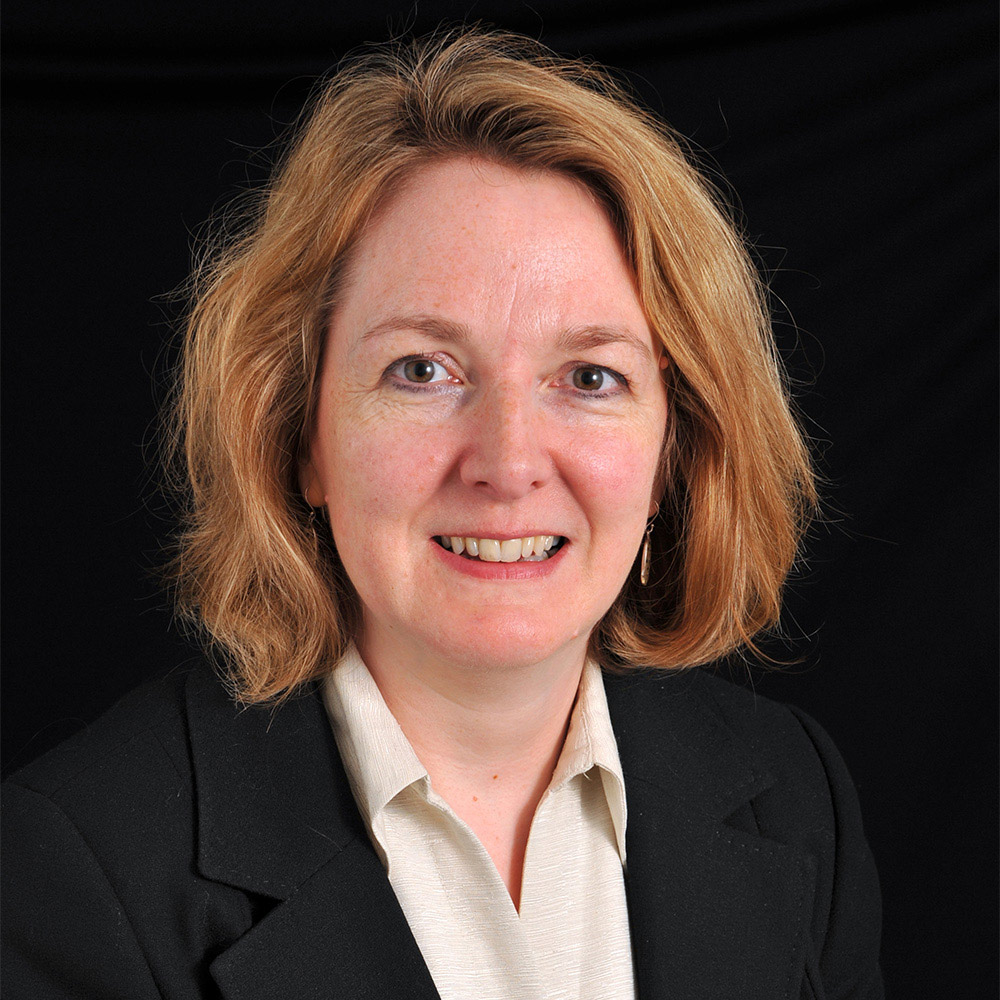
Rachel Morley is an Associate Professor at the School of Slavonic and East European Studies (SSEES), University College London. She holds a BA in French Language and Literature from the University of Oxford (1992), followed by BA, MA, and PhD degrees from UCL (1999, 2001, 2011). Her roles include Academic Director of Education and Student Experience at SSEES (2022–2027) and Co-Convenor of the UCL SSEES Cinema Research Group. Dr. Morley's research focuses on Cinema studies Cultural studies Feminist and queer theory Literary studies with emphasis on Soviet/Russian cinema, gender representation, and film historiography. She held a Leverhulme Trust Research Fellowship (2020–2022) for her project on female subjectivity in contemporary Russian cinema. Her teaching spans Russian cinema, poetry, language, and translation. Past roles include Postgraduate Teaching Assistant at SSEES (1999–2009) and lecturer at the University of Cambridge (2006, 2008). She has also supported international students as SSEES International and Affiliate Tutor (2014–2018). Key Achievements: Leverhulme Trust Research Fellowship Fellow of the Higher Education Academy (2016) Her work bridges film, literature, and cultural history, emphasizing underrepresented narratives and feminist perspectives in Russian and Soviet cinema.
Kamila Kociałkowska is an Assistant Professor in the Department of History of Art at the University of Warwick, Faculty of Arts. She joined the department in 2024 after holding postdoctoral fellowships at the Metropolitan Museum of Art, the Getty/ACLS, and Harvard University’s Davis Center. Education: PhD in History of Art, University of Cambridge MA in History of Art, Courtauld Institute of Art MA in Fine Art, University of Edinburgh Her research centers on modernism in Eastern Europe, especially the interplay between artistic production and systems of censorship and surveillance in the Soviet Empire and its peripheries. She employs new materialist approaches to analyze redacted and fragmented visual and textual sources, rethinking the origins of abstraction beyond traditional resistance narratives. Her work also explores the cryptographic imagination and the impact of surveillance technologies on interwar avant-garde aesthetics. Her recent publications span topics such as Suprematist resistance, undead imagery in Stalinist propaganda, and explosive futurist texts, reflecting a deep engagement with avant-garde experimentation under repression. These works reveal recurring themes: the materiality of censorship, subversive semiotics, and the transformation of political constraint into aesthetic innovation. Scientific Awards and Fellowships: Leonard A. Lauder Postdoctoral Fellow, Metropolitan Museum of Art Getty/ACLS Postdoctoral Fellow in the History of Art Visiting Scholar, Davis Center, Harvard University She is currently completing her first book, The Black Square and the Blue Pencil: Censorship and the Stimulation of Modernist Style , which charts how censorship shaped avant-garde aesthetics in Russia, Georgia, Ukraine, and Azerbaijan. Her second project, Coding Modernity: The Cryptographic Imagination and the Interwar Avant-Garde , investigates the cultural history of spying and secret policing in interwar Europe. She does not currently have any listed advisees or research grants in the provided text.
Professor Katharine Cockin is a leading scholar in Victorian theatre, women's suffrage history, and interdisciplinary literary studies at the University of Essex. She holds the Chair of English Literature in the Department of Literature, Film, and Theatre Studies (LiFTS). Her research focuses on Ellen Terry and Edith Craig, pioneering figures in theatre and suffrage activism, with major publications including Edith Craig and the Theatres of Art (2017) and the Collected Letters of Ellen Terry (8 vols., 2010–). She leads the AHRC-funded Searching for Theatrical Ancestors and Ellen Terry and Edith Craig Database projects, recognized nationally for their impact on cultural heritage. Education: BA, MA, and PhD in English Literature from the University of Leicester. Her doctoral thesis examined the Pioneer Players theatre society (1911–25). She previously held professorial roles at the University of Hull, where she established interdisciplinary programs in literature and law. Research interests include archival studies, women's suffrage literature, modern literature, and the 'Literary North'. She advises on topics like science fiction and autobiography. Awards include a Principal Fellowship of the Higher Education Academy and AHRC Peer Review College membership. Administrative roles at Essex include Director of the Centre for Interdisciplinary Research in Literary Studies and former Director of Research for LiFTS. Publications span over 50 articles and edited volumes, emphasizing feminist historiography and cultural preservation. Her work bridges academia and public engagement through digital archives and collaborative projects.
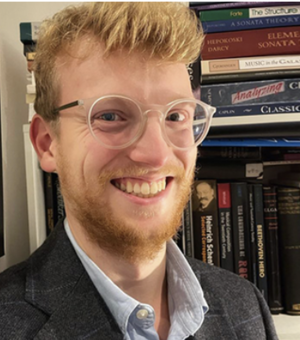
Oliver Chandler is a Senior Lecturer in Music at the University of Oxford and holds multiple lecturing roles at Hertford College, Keble College, St Hugh's College, and Queen's College. He also serves as an academic professor at the Royal College of Music. His research focuses on music analysis, particularly in British music, chromaticism, and tonal theory, with notable works on Edward Elgar, Reginald Smith Brindle, and guitar repertoire. Chandler has been awarded the 2024 Adele Katz Early Career Researcher Award for his contributions to music theory. His research interests span music theory, including (neo-)Riemannian theory, Schenkerian analysis, and guitar studies. He co-authored Return to Riemann: Tonal Function and Chromatic Music (2024) and edited Born by the Thames: Stephen Dodgson, a Centenary Celebration (2024). His work often bridges historical and analytical approaches, exploring topics like Elgar’s chamber music and the interplay of tonality and serialism. Awards: Adele Katz Early Career Researcher Award (2024) Editorial Roles: Member of Soundboard Scholar editorial board and Cambridge Cohort for Guitar Research Grants & Collaboration: Collaborations on projects including analyses of Elgar’s works and studies on British modernist composers. Chandler’s publications span journals such as Music & Letters and Music Analysis , with a focus on analytical methodologies and British musical heritage. His research underscores the enduring relevance of tonal frameworks in understanding 20th-century music.
Stephen Willey is a poet, researcher, and critic affiliated with the School of Arts at the University of London . He serves as Programme Director for BA Creative Writing and English , Admissions Officer , and Director of the Contemporary Poetics Research Centre . His work bridges experimental poetry, political engagement, and cross-cultural collaboration. Research Interests : Sound and concrete poetry Avant-garde poetics Palestinian creative writing workshops Eco-poetics and radical pedagogies Key Projects : Incarceration and Poetry (funded by Council for British Research in the Levant) Living In: Creative Solidarities in Palestine (2020 book) Scientific Awards : Team-Based Fieldwork Award (2020) Artists’ International Development Award (2013) AHRC Collaborative Doctoral Award (2008) Teaching : He teaches modules like Migration Literatures , Climate Change Communication , and Poetry Workshop at Birkbeck, while mentoring PhD candidates in avant-garde poetics, diaspora studies, and creative writing.
Joanna Pawlik is an Associate Professor and Head of the Department of Art History at the University of Sussex, within the School of Media, Arts and Humanities. Her research focuses on modern art and literature, emphasizing transnationalism, avant-gardism, and protest movements. She has been funded by prestigious grants like the Leverhulme Trust and the AHRC. Her 2021 monograph Remade in America , awarded the MSA First Book Prize, examines Surrealism's role in American activism post-1940. Current research explores fascist iconography in American art (1945–1980), funded by a Leverhulme Fellowship. Education: PhD in Art History, University of Sussex (2003–2008) MA in Art History, York University, Canada (2021–2022) BA Hons in Art History, University of East Anglia (2018–2021) Research Interests: Her work investigates surrealism's transnational legacies, anti-fascist art, feminist/queer methodologies, and postwar American visual culture. She examines how surrealist principles intersect with race, gender, class, and activism in movements like the Beat Generation and Black Arts Movement. Grants & Awards: Leverhulme Research Fellowship (2020–2022) Leverhulme Trust Grant 'Radical America: Afterlives' (2016) MSA First Book Prize (2021) Professional Activities: Co-director of the SAVAnT Doctoral School promoting interdisciplinary American visual studies. Supervises PhD projects on postwar American art, anti-fascism, and feminist/queer art history. Engages in public scholarship through interviews and exhibitions.
Dr. Kaye Mitchell is a Senior Lecturer in Contemporary Literature within the Department of English and American Studies at the University of Manchester. She serves as Co-Director of the Centre for New Writing and is affiliated with the Centre for the Study of Sexuality and Culture. Her academic career spans over fifteen years at Manchester, following previous teaching at the University of Westminster. Her educational background includes a BA in English Literature from Queen Mary University of London, an MA in Philosophy from Birkbeck, and a PhD from Birkbeck completed in 2004. She has held visiting positions including a Visiting Scholar at NYU in 2011 and an 18-month Humboldt Experienced Research Fellowship in Berlin from 2014-2015. Dr. Mitchell's research focuses on contemporary literature with particular emphasis on gender and sexuality studies, literary theory, and experimental writing by women. Her work explores the relationships between form, meaning, and gender/sexual identity and representation. She has published extensively on topics including literary intention, women's experimental writing, and the politics and poetics of shame in contemporary literature. She is currently working on a monograph titled Gendered Experiments which analyzes gender ramifications of literary experiment through strategies of appropriation, constraint, and excess. Her research output shows a consistent trajectory toward increasingly specialized work on women's writing, gender, and experimental literary forms. The publications demonstrate interdisciplinary connections between literary studies, gender theory, and affect studies, with particular attention to how negative affects like shame operate within contemporary literary texts. Humboldt Experienced Research Fellowship (2014-2015) Co-Editor of Contemporary Women's Writing (OUP journal) Member of editorial boards for Open Gender Journal and C21 Dr. Mitchell actively supervises PhD students working on diverse topics spanning gender studies, contemporary literature, and experimental writing. Her external engagement includes talks at major festivals and events including Ladyfest Manchester, Queer Up North, Homotopia, and the Manchester Literature Festival. She also participates in the annual Sexuality Summer School through her affiliation with the Centre for the Study of Sexuality and Culture.
Elena Gorfinkel is a Professor of Film Studies at King’s College London’s Faculty of Arts & Humanities. Previously, she was Associate Professor of Art History and Film Studies at the University of Wisconsin-Milwaukee (2009–2016). Her research focuses on independent/underground cinemas, women’s filmmaking, feminist film historiography, and materialist approaches to cinema. Key publications include Lewd Looks: American Sexploitation Cinema in the 1960s (Minnesota UP, 2017), Wanda (BFI Classics, 2025), and co-authored The Prop (Fordham UP, 2025). She has received the 2022 Kraszna-Krausz Award and a 2018 Andy Warhol Foundation Grant for her work on cinema’s materiality and feminist historiography. Gorfinkel actively engages in public scholarship through film curation (e.g., BFI’s Barbara Loden retrospective), editorial roles ( Journal of Cinema and Media Studies , ASAP/Journal ), and media writing ( Sight & Sound , Art Monthly ). Her research bridges academic and popular realms, emphasizing marginalized cinemas and feminist critique. Teaching focuses on experimental film, women’s filmmaking, and cinema history. She has led international symposia and lectures on topics ranging from Andy Warhol’s films to global art cinemas.
The Courtauld Institute of Art, University of LondonUnited Kingdom
Sarah Wilson is Professor of Modern and Contemporary Art at The Courtauld Institute of Art, University of London. She has been a faculty member since 1982 and has held leadership roles including Head of the Modern and Contemporary Section (2005-2008) and Head of Diploma programmes (2014-2015). She is internationally recognized as the English-language expert on Post-War European art and has held visiting positions at Paris-IV Sorbonne and the University of Versailles-Saint Quentin. Wilson was educated at the University of Oxford (BA English Literature) and at the Courtauld Institute of Art (MA and PhD). She was awarded the title Chevalier des Arts et des Lettres in 1997 for services to French art and culture, and received the International Association of Art Critics' Award for Distinguished Contribution to Art Criticism in 2015. She has held visiting professorships at Paris-IV Sorbonne (2002-2004), École Nationale Supérieure des Beaux-Arts (2006-2007), and University of Versailles-Saint Quentin (2012-2013). Sarah Wilson's research spans post-war and Cold War European art, contemporary global art practices, and the intersections between conceptual art, political theory, and visual culture. Her work extends from European avant-gardes to contemporary art across the former Soviet Union and Asia. She is particularly known for her expertise in French Stalinism, neo-Marxism and the arts, and conceptual art practices beyond the 'first world.' Wilson has initiated important academic programs such as the 'Global Conceptualism' MA course with Boris Groys, which connects Anglo-American conceptual art with practices from Moscow and beyond. She has also expanded her research to include modern and contemporary Asian art since 2013. Her extensive publication record shows a consistent focus on European art history with increasing engagement with global perspectives, particularly Asian contemporary art since 2013. Wilson's scholarship bridges art historical analysis with philosophical inquiry, especially regarding French theory and its visual manifestations. Her major publications include 'Paris, Capital of the Arts, 1900-1968' (2002) and 'The Visual World of French Theory: Figurations' (2010), with a second volume 'The Visual World of French Theory II: Interventions' in preparation. Chevalier des Arts et des Lettres (1997) International Association of Art Critics' Award for Distinguished Contribution to Art Criticism (2015) Marie Curie Actions – RBUCE-UP, Chaire d'excellence, Université de Versailles-Saint Quentin (2012-2013) Professor Wilson has supervised 36 PhD students to completion and over 230 MA dissertations, creating what she describes as 'a unique English-language archive in the field of post-1945 European and global art history.' Her former students now hold prominent positions in major institutions worldwide including Tate, the British Museum, Design Museum, Scottish National Gallery of Modern Art, British Council, Centre Georges Pompidou, Kunsthalle Bremen, and universities across Europe and North America. She has received significant research funding including a Marie Curie Actions grant for her project 'Globalisation before globalisation: avant-gardes, academies, revolutions.' Wilson is actively involved with the Courtauld alumni's former East Wing Collection (now VS1, Vernon Square) and has contributed to the Research Forum's programmes. She has curated numerous exhibitions including the 'Global Conceptualism'-related projects and served on the curatorial team of the 1st Asian Biennale (China-Guangzhou) in 2014. Her commitment to women artists has led to early exhibitions of artists like Zofia Kulik and Alina Szapocznikow before their international prominence. She is involved with CCRAC (Cambridge-Courtauld Russian Art Centre), Calvert 22, and Pushkin House in London, reaching out to Russia and Eastern Europe.
Professor Helen Finch (University of Leeds) is a leading scholar in German Literature , with a focus on Holocaust Studies , Queer Memory , and German-Jewish Cultural Production . Affiliated with the School of Languages, Cultures and Societies and the Centre for Jewish Studies , she co-leads the LCS Queer Area Studies Network and contributes to equality initiatives through the LGBT+ staff network . Research: Holocaust representation in German works, queer identity in postwar literature, transnational memory studies, curriculum design in German studies Awards: Fellow of the Higher Education Academy (2014) Academic Output : Her 15 most recent publications span Holocaust poetics , queer life writing , translation ethics , and Sebaldian intertextuality , with a particular focus on intersections between trauma , identity , and intergenerational testimony . Supervision : Currently guides PhD research on topics including transnational transphobia , queer art practices , and LGBTQ+ cross-cultural representation . Her students explore areas from German exile photography to postcolonial queer narratives .
Dr Marion Kant is a Lecturer in the Department of German at the University of Cambridge's Faculty of Modern and Medieval Languages and Linguistics. Her work bridges musicology and dance history, focusing on body politics, the history and aesthetics of performance (theatre, opera, dance, ballet), German-Jewish relations, Nazi ideology, and anti-fascist exile. Her research explores the intersection of physical culture, nationalism, and avant-garde arts. She is currently editing a six-volume Cultural History of Dance for Bloomsbury, examining German nationalism and movement concepts from the 19th and 20th centuries. Her publications span German physical cultures, nationalist ideologies, and the role of dance in exile communities. Key Research Themes: Body aesthetics, German-Jewish assimilation, Nazi cultural policies, avant-garde movements, and transnational exile networks. Notable Projects: Analysis of Nazi-era dance policies, documentation of anti-fascist artists in Los Angeles, and historical studies of German physical cultures.
Stephen M. Hart is a Professor of Latin American Film, Literature and Culture at University College London (UCL), affiliated with the School of European Languages, Culture and Society (SELCS) and the Department of Spanish, Portuguese and Latin American Studies. He is a General Editor at Tamesis Publishers and founder-director of the Centre of César Vallejo Studies at UCL. Education: BA (1980), MA (1984), PhD (1985) from University of Cambridge Academic Career: Lecturer at Westfield College (1984-1990), Associate/Full Professor at University of Kentucky (1991-1998), Senior Lecturer/Reader at UCL (1998-present) Specializing in Latin American literature, film, and culture, Hart has published extensively on César Vallejo and Santa Rosa de Lima, including critical editions of their works. His research spans literary theory, art history, and East-West relations, with a focus on documentary film-making and magical realism as a framework for understanding post-truth narratives. Recent publications address colonial sainthood processes, poetic modernism, and China-Latin America connections. He has directed documentary projects in Cuba since 2006 and received honors including the Order of Merit from the Peruvian Government and Honorary Doctorates from Peruvian institutions. Key Awards: Order of Merit for Distinguished Services (Peruvian Government, 2004), Honorary Doctorate (San Marcos University, 2004), Corresponding Member of Academia Peruana de la Lengua (2014) Leadership Roles: Director of UCL's ESRC DTC (2014), Director of Documentary Film-Making Summer School (Cuba, 2006-present) Teaching: Undergraduate courses on Latin American supernaturalism and cultural dilemmas; MA documentary film-making courses
London School of Economics and Political Science (LSE)United Kingdom
Lea Ypi is a Professor of Political Theory at the London School of Economics and Political Science (LSE) and an Honorary Professor of Philosophy at the Australian National University. She holds degrees from the University of Rome La Sapienza and a PhD from the European University Institute, followed by postdoctoral research at Nuffield College, Oxford. Her work spans political theory, the history of philosophy, Marxism, critical theory, and Kantian philosophy. Notable publications include Global Justice and Avant-Garde Political Agency , The Meaning of Partisanship (with Jonathan White), and Free: Coming of Age at the End of History . Ypi’s research has been recognized with the British Academy Prize and a Leverhulme Prize. She is a Fellow of the British Academy, Academia Europea, and the Albanian Academy of Sciences. Her research interests include revolutionary theory, Kantian philosophy, structural injustice, and global justice. Key publications address topics like Kant’s views on colonialism, the ethics of migration, and the role of partisanship in democracy. Ypi’s academic contributions bridge normative political theory with critical engagement in contemporary social and political issues. Awards include the British Academy Prize for Excellence in Political Science (2015), Leverhulme Prize (2014), and fellowships in leading academic institutions. Her interdisciplinary approach integrates historical, philosophical, and contemporary analyses to address urgent political questions.
Claire Robins serves as Professor of Museology and Art at University College London's Institute of Education, leading the Art, Design & Museology Academic Group and acting as Department Graduate Tutor for the Department of Culture, Communication and Media. Her work critically bridges art practice, museum studies, and educational theory to advance democratic engagement in cultural institutions. Education: PhD in Museum Education, University of London (2009) Master's degree in Gallery/Museum Education, University of London Bachelor's degree in Fine Art, St Martins School of Art (now University of the Arts London) Research Focus: Robins investigates the intersection of artists' practices with critical pedagogy, emphasizing progressive education and avant-gardist strategies in twentieth-century knowledge production. Her scholarship examines how contextual forces shape learning definitions in museums, with particular attention to materialities, pedagogic forms, and democratic potential within institutional frameworks. This work consistently challenges conventional museum narratives through artist-led interventions. Publication Trends: Her 15 most recent publications (2012-2025) reveal sustained exploration of museology-art education synergies, highlighting pedagogic innovation through artists' interventions, critical assessment frameworks, and democratic museum practices. Key thematic threads include narrative disruption in galleries, sustainability in art education assessment, and the transformative role of fiction in reimagining museum epistemologies. Advising & Leadership: Robins has supervised PhD/EdD students since 2010 and directed the MA Art Education, Culture and Practice program (2011-2023). She currently teaches MA modules in Museums and Galleries in Education and leads the Education and Curation component, while mentoring MA dissertations. Her leadership extends to developing gallery-based short courses with Engage. Professional Engagement: As editorial board member for Arts & Communication and Engage , and active participant in ICOM and NSEAD, Robins shapes global discourse through international keynotes (e.g., Korean Society for Education in the Arts, 2019) and curated seminars like Soft Subjects: Material Practice in Gallery Education (2024). Her review work for Routledge and Intellect Books further demonstrates scholarly stewardship.