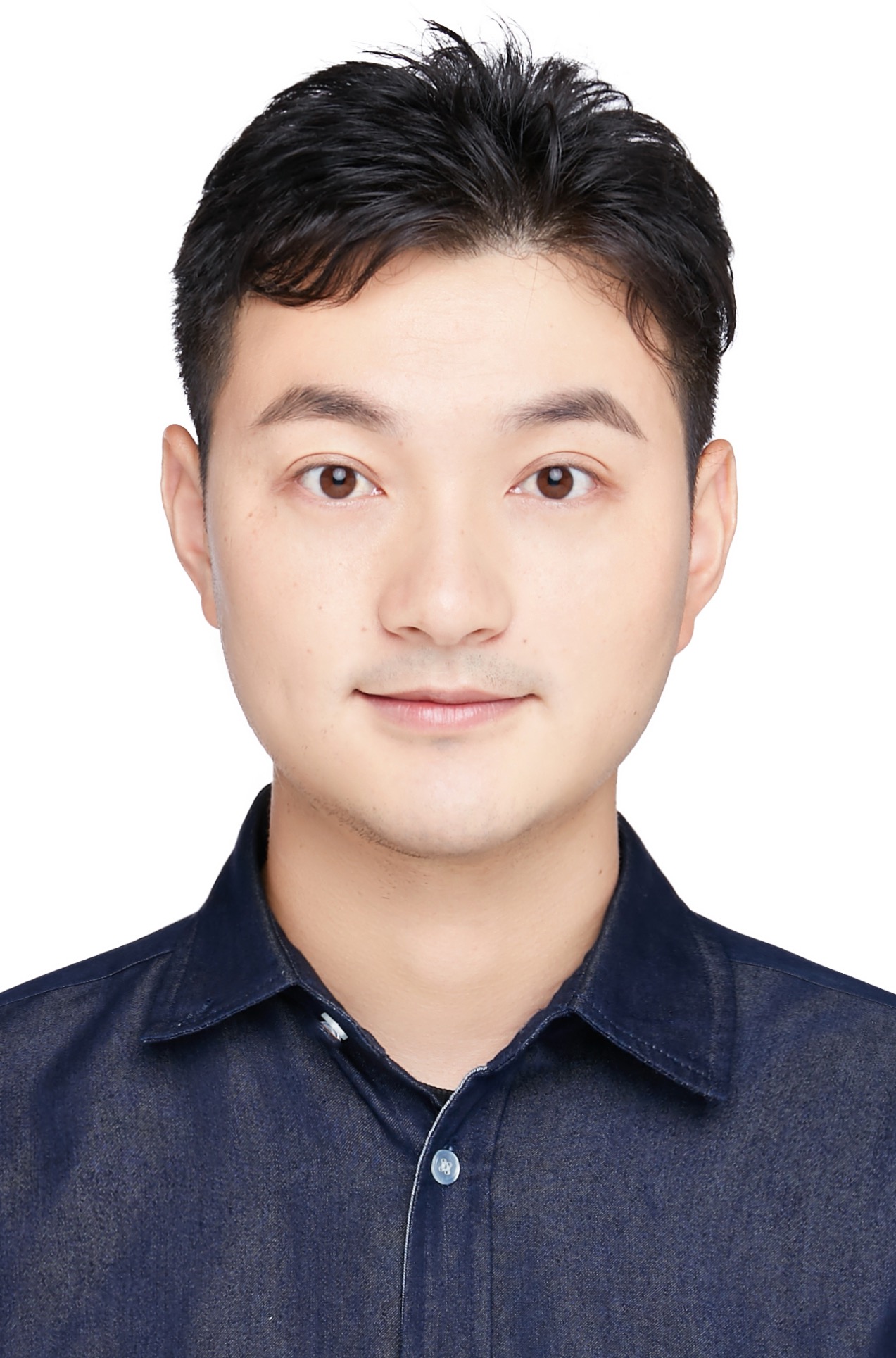
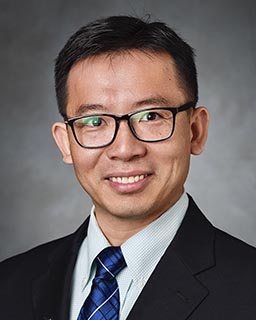
Yan Xia is a Senior Researcher at the Computer Vision Group of the Technical University of Munich (TUM) and a Research Scientist at the Munich Center for Machine Learning. She collaborates with Prof. Daniel Cremers and previously completed her PhD at TUM under supervision of Prof. Uwe Stilla and Prof. Daniel Cremers, with a visiting period at the Visual Geometry Group of the University of Oxford under Dr. João Henriques.
Dr. Almas Shintemirov is a Research Fellow at Aalto University's Department of Electrical Engineering and Automation, specializing in robotics, control systems, and human-robot interaction. His research focuses on intelligent robotics, with emphasis on Real-time motion prediction for collaborative robots Nonlinear control algorithms for safe human-robot interaction Open-source robotic hardware design Deep learning applications in autonomous systems
Hui Yang is a Professor of Industrial and Manufacturing Engineering and Biomedical Engineering at Pennsylvania State University , holding the Gary and Sheila Bello Chair Professor title. He is affiliated with multiple institutions including the Penn State Cancer Institute , Clinical and Translational Science Institute , and Institute for Computational and Data Sciences . Currently serving as PI and Site Director of the NSF Center for Health Organization Transformation (CHOT) , his career includes leadership roles in professional societies such as IISE Data Analytics and Information Systems Society (President 2017-2018) and INFORMS Quality, Statistics and Reliability (QSR) society (President 2015-2016). As Associate Editor for journals like IISE Transactions , IEEE JBHI , and IEEE Transactions on Automation Science , he maintains strong editorial influence. His research integrates nonlinear stochastic dynamics with sensor-based system informatics to advance both smart manufacturing and healthcare engineering . Recent work explores digital twin technologies , blockchain applications , and AI-driven disease modeling for conditions like Alzheimer's and cardiovascular disease . Key scientific contributions include developing character-level linguistic biomarkers for early dementia detection, self-organizing network representations of cardiac systems, and privacy-preserving neural networks for Industry 4.0 environments. His research group has received significant external funding from NSF , DOE , and NIST to address challenges in heterogeneous manufacturing networks , adaptive failure prognosis , and spatiotemporal optimization . Fulbright Award in Science, Technology and Innovation (2022) IISE Fellow (2021) NSF CAREER Award (2015) Through his Virtual Learning Factory and SCOUT spatiotemporal framework , Yang bridges manufacturing analytics with health informatics , creating cross-domain methodologies for system diagnostics/prognostics , process optimization , and smart health monitoring . His Cross Recurrence Analysis Toolbox provides open-source methods for nonlinear time series analysis.
Daniel Flippo serves as Associate Professor and Patrick Wilburn Keystone Research Scholar in Biological and Agricultural Engineering at Kansas State University's College of Engineering. His research integrates robotics with agricultural systems to address global food sustainability challenges beyond 2050 through precision automation. His educational foundation includes: Ph.D. in Mechanical Engineering, University of Oklahoma (2009) M.S. in Mechanical Engineering, Wichita State University (2004) B.S. in Mechanical Engineering, Kansas State University (1994) Flippo's work pioneers small autonomous agricultural vehicles and drone systems that enhance soil management, reduce chemical runoff, and enable biodiversity through innovations in wheel-terrain interaction and skid-steering dynamics. His research bridges space robotics testing methodologies with terrestrial farming applications. Publication analysis reveals consistent advancement in robotic vehicle dynamics, particularly in wheel-soil interaction modeling and autonomous navigation systems applicable to both Mars exploration and precision agriculture. Key recognition includes: Patrick Wilburn Keystone Research Scholar designation He has directly mentored four graduate students while securing competitive research funding from NASA and the Kansas Corn Commission. His grant portfolio focuses on robotic pest identification systems and sustainable agricultural machinery development. Flippo directs the SWEET (Suspension and Wheel Evaluation and Experimentation Test-bed) laboratory and actively contributes to BotsKC, a STEM education initiative promoting engineering through competitive robotics.
Markus Enzweiler serves as Professor of Computer Science and Autonomous Systems at Esslingen University of Applied Sciences within the Department of Computer Science and Engineering. He concurrently holds the leadership position of Director at the Institute for Intelligent Systems, where he oversees research initiatives focused on intelligent systems development for real-world autonomous applications. His research program centers on computer vision for autonomous systems , with specialized expertise in visual-inertial SLAM, collective perception, and neural rendering techniques. Key investigation areas include environmental robustness across agricultural and urban settings, real-time processing constraints for embedded systems, sensor fusion methodologies (particularly camera-radar integration), and the application of generative models for perception enhancement. His work consistently addresses practical implementation challenges such as computational efficiency and sensor calibration in unstructured environments. Analysis of his 2023-2025 publications reveals three dominant research trajectories: (1) Advancement of lightweight perception systems through stixel-based representations and neural rendering; (2) Development of infrastructure-supported collective perception frameworks with datasets like CoopScenes and OPNV; and (3) Rigorous benchmarking of SLAM components in domain-specific contexts including agricultural robotics and multi-season navigation. His recent systematic review on LLM-based vulnerability detection also demonstrates expanding interest in software security for autonomous systems. As Director of the Institute for Intelligent Systems, Prof. Enzweiler leads a research ecosystem focused on translating theoretical advances into practical autonomous vehicle technologies. His team develops specialized datasets (Rover, OPNV) and software stacks for smart city environments, emphasizing the integration of novel perception approaches with vehicle dynamics modeling and real-time operational constraints.
Dr.-Ing. Frank-Josef Heßeler is a Senior Research Engineer (Geschäftsführender Oberingenieur) and Deputy Institute Director at the Institute of Control Engineering (IRT), RWTH Aachen University . His work focuses on control systems for automotive and urban mobility applications, including model predictive control, vehicle localization, and intelligent infrastructure. He actively contributes to research in autonomous driving, hybrid drivetrains, and thermal systems optimization. Control Engineering Automotive Systems Model Predictive Control Thermal Diagnostics Urban Traffic Simulation His publications highlight advancements in connected vehicle localization, scenario-specific motion modeling, and hybrid drivetrain control. He collaborates extensively with Dirk Abel and other researchers. No scientific awards or student advisement details are explicitly mentioned in the provided texts. He is affiliated with the Institute of Control Engineering, engaging in projects like CERMcity (autonomous urban driving testbed) and Galileo-based navigation systems. His work integrates simulation platforms, Neuro-Fuzzy models, and hardware-in-the-loop testing for automotive control solutions.
Jia Hu is an Associate Professor in Computer Science at the University of Exeter. He holds a PhD in Computer Science from the University of Bradford (2010), and M.Eng/B.Eng degrees in Electronic Engineering from Huazhong University of Science and Technology. His research specializes in edge-cloud computing, federated learning, and AI-driven optimization for networks and IoT systems. Research Interests: Hu's work spans resource optimization, applied machine learning (particularly in distributed settings), network security, blockchain integration, and intelligent systems for electric vehicles and Industry 4.0. His recent projects focus on federated edge AI, 6G-enabled industrial IoT, and real-time federated learning via hardware-algorithm co-design. Publications: His 150+ papers emphasize federated learning, edge computing, and reinforcement learning applications. Recent works (2020–2025) show a strong trend toward optimizing AI at the network edge, with themes like digital twins, blockchain security, and EV-integrated systems dominating. Awards & Recognition: Best Paper Awards: IEEE SOSE'16, IUCC'14 Outstanding Service & Leadership Awards for IEEE conferences Top 4% contributor to EPSRC Peer Review Fellow of the Higher Education Academy (HEA) Grants & Projects: Secured €4.7M+ funding from EU Horizon, EPSRC, and Royal Society for projects including: SAILING (Secure AI for Smart Internet-of-Energy, €3.6M) REFINE (Real-time Air Quality Monitoring with UAVs, €897K) SustainAIRA6G (Energy-Efficient AI for 6G Networks, £118K) Advising: Supervised 12 PhD students to completion; currently mentoring 7 students in federated learning, edge computing, and AIoT.
Stephan Kessler is a researcher at the Technical University of Munich , affiliated with the Department of Mechanical Engineering and the Chair of Conveying Technology, Material Handling, and Logistics . His work focuses on construction logistics, digital twins, and IoT integration in building processes. Contact: stephan.kessler@tum.de Key research areas: Digital Twin, BIM, DEM simulations, IoT in construction Collaborates with Prof. Johannes Fottner on construction automation projects His research emphasizes digitalization of construction processes through technologies like RFID, machine learning, and simulation tools. Recent publications address tower crane planning, co-robot integration, and bulk material handling standards. Article trends show consistent focus on construction automation (IoT, digital twins, BIM), material flow optimization (DEM simulations, screw conveyor standards), and equipment lifecycle management (telematics, RFID identification). Kessler contributes to industry-university collaborations through projects like BauFlott (fleet management systems) and TEP (Tower Crane Deployment Planner). His work bridges theoretical research with practical implementations in construction site logistics.
Dr. Jose Paolo Talusan is a Research Scientist at the Department of Computer Science and Computer Engineering , Vanderbilt University, specializing in smart transportation systems , distributed computing , and cyber-physical systems . He is affiliated with ScopeLab , a research group focused on smart cyber-physical systems. Education: PhD from Nara Institute of Science and Technology, Japan (2020) Research Interests: His work addresses challenges in urban mobility through middleware architectures, optimization algorithms, and machine learning. Key areas include incident detection in transportation systems, privacy-preserving route planning, and vehicle-to-building charging optimization. Publication Trends: Recent publications focus on real-time transit optimization (2024-2025), leveraging reinforcement learning for heterogeneous agents in vehicle-to-building systems, and privacy-aware route planning in smart cities. His work integrates IoT , edge computing , and graph neural networks to tackle imbalanced data and sparsity issues in transit analytics. Labs & Teams: Actively contributes to ScopeLab at Vanderbilt University, collaborating on interdisciplinary projects with researchers in computer science, electrical engineering, and urban planning.
Dr. Ye Zhao is an Associate Professor and Woodruff Faculty Fellow at the Georgia Institute of Technology's Woodruff School of Mechanical Engineering, where he directs the Laboratory for Intelligent Decision and Autonomous Robots (LIDAR). He holds affiliations with the Institute for Robotics and Intelligent Machines, Machine Learning Center, and Supply Chain and Logistics Institute. Dr. Zhao received his Ph.D. from UT Austin (2016) and completed postdoctoral training at Harvard University. Research Focus: His work integrates planning, control, and learning for contact-rich robots, emphasizing computationally efficient algorithms with formal safety guarantees. Key research thrusts include: Reactive synthesis for terrain-adaptive locomotion and manipulation Vision-tactile perception for deformable object grasping Social navigation of bipedal robots in human environments Distributed optimization for multi-robot coordination His lab utilizes platforms including Mini Cheetah quadruped, Cassie biped, and custom manipulators. Publication Trends: Recent articles demonstrate a strong focus on bridging formal methods (temporal logic, reactive synthesis) with learning-based approaches (RL, transformers) to enhance robustness in locomotion and manipulation. Key themes include terrain adaptation, human-robot interaction, and real-time model predictive control. Awards & Honors: ONR Young Investigator (2023) NSF CAREER Award (2022) IEEE ICRA Best Automation Paper Finalist (2021) IEEE Senior Member (2022) Woodruff Faculty Research Award (2023) Educational Initiatives: Leads the Vertically Integrated Program (VIP) for Agile Locomotion & Manipulation, engaging 80+ undergraduates in robotics research. The team won 1st place in Georgia Tech's VIP Innovation Competition (2021, 2022).
Professor Mahdi Mahfouf holds the Chair in Intelligent Systems at the University of Sheffield's School of Electrical and Electronic Engineering . He obtained his MPhil (1988) and PhD (1991) in Control Systems from the same institution. After postdoctoral research (1992-1996) on Leverhulme-funded projects in Model-Predictive Control and Fuzzy Logic, he progressed through academic ranks at Sheffield to Full Professor (2005). Recipient of the IEE Hartree Premium Award (1992) and MEDIPEX Innovation Award (for ICU Decision Support Systems) Over 370 publications, including 130+ journal papers Head of the Intelligent Systems Research Laboratory Research Themes His work spans fundamental research in Fuzzy Logic (modelling, control), Neural-Fuzzy Systems, Self-Organising Control, and Evolutionary Optimization, alongside applied domains in pharmaceutical manufacturing, aerospace systems, biomedical engineering (ICU monitoring), and intelligent transportation. Recent publications focus on hybrid AI for pharmaceutical processes , type-2 fuzzy control systems , and machine learning in manufacturing metrology . Lab initiatives include multistage process monitoring and human-machine interaction systems for stress management.
Dr Richard Collins is a Senior Lecturer in Water Engineering at the University of Sheffield , affiliated with the School of Mechanical, Aerospace and Civil Engineering. His research focuses on hydraulic transients , pipeline integrity , and smart water infrastructure . Graduated with an Aerospace Engineering degree (2005) and PhD in Materials and Mechanical Engineering (2009) Current research explores pressure transients , leak detection , and autonomous robotic systems for pipeline inspection Projects include fatigue analysis , biofilm mobilisation , and ultrasound-based pipe assessment His publications emphasize cast iron pipe fatigue , acoustic leak detection , and transient-induced contamination . Funded by RCUK and Datatecnics , his work bridges mechanical engineering and civil infrastructure challenges.
Prof. Monika Sester is a distinguished Professor and Executive Director of the Institute of Cartography and Geoinformatics at Leibniz University Hannover, within the Faculty of Civil Engineering and Geodetic Science. She also serves as Spokesperson for the Leibniz Research Center FZ:GEO and holds multiple leadership roles including Faculty Information Officer (FIO) for the Faculty of Civil Engineering and Geodetic Science, Ombudsman for Good Scientific Practice, and Exchange Coordinator for Geodetic Science and Geoinformatics. Her research focuses on the intersection of geospatial information science, cartography, and urban mobility. Prof. Sester's work spans several key areas: Geospatial data processing and analysis Cartographic representation and visualization Urban mobility and transportation systems Spatial data uncertainty and quality Digital mapping technologies and applications Historical map analysis and interpretation Prof. Sester's recent publications demonstrate a strong focus on applying advanced computational techniques to geospatial problems. Her work shows increasing emphasis on machine learning applications for map analysis, urban mobility optimization, and 3D spatial modeling. She has been particularly active in researching applications of deep learning for historical map interpretation, urban mobility patterns, and spatial uncertainty visualization. Her contributions to the field have been recognized through leadership positions in major research initiatives: Executive Director, Institute of Cartography and Geoinformatics Spokesperson, Leibniz Research Center FZ:GEO Faculty Information Officer, Faculty of Civil Engineering and Geodetic Science Ombudsman for Good Scientific Practice Member of multiple academic committees including the Admissions and Examination Board Prof. Sester actively collaborates with students and researchers across multiple projects focused on geospatial information systems, urban mobility, and cartographic visualization. Her leadership extends to guiding research directions within the Leibniz Research Center FZ:GEO, which brings together interdisciplinary expertise to address complex spatial challenges.
Luis Merino is an Associate Professor at the School of Engineering, Universidad Pablo de Olavide (UPO), Seville, Spain. He founded and leads the Service Robotics Laboratory and contributed to establishing the Systems Engineering and Automation division at UPO. He served as Vice-Dean for five years and currently coordinates the Computer Science degree program. Education: Ph.D. in Robotics from the University of Seville (2007), supervised by Anibal Ollero. Research: Focuses on cooperative robotic systems, human-robot collaboration, localization/navigation techniques, and machine learning in social robotics. His work includes leading 2 H2020, 4 FP7, 3 National R&D, and 3 Andalusian regional projects. Notable projects: MBZIRC 2020 (PI), collaboration with Honda Research Institute Japan, and EU-funded initiatives. He advocates for open-source code/datasets and industry technology transfer. Scientific Awards: ABB Award to the Best Doctoral Dissertation on Robotics (2007) Best Paper Award at ROBOT2019 Professional Roles: Associate Editor for Image and Vision Computing and IEEE Robotics and Automation Letters . Serves on ICRA/IROS conference program committees. Grant reviewer for FONDECYT (Chile), SBIR (USA), and ERC.
Associate Professor Melrose Brown is a faculty member at UNSW Canberra, School of Engineering and Technology, where he leads numerical space situational awareness research and coordinates the Space Masters program. He holds advanced degrees in Aerospace Engineering and specializes in applying high-fidelity simulations to satellite-environment interactions in Low Earth Orbit (LEO). Research Focus: DSMC/PIC simulations for LEO satellites Orbit propagation and determination Ionospheric drag modeling Atmospheric physics Hypersonic CFD His recent publications analyze thermospheric responses to geomagnetic storms using GITM-OVATION models, ionospheric drag effects, and numerical tools like pdFOAM. Key keywords include Space Weather, Satellite Formation Control, and Computational Fluid Dynamics. He supervises Ph.D. projects related to aerospace engineering and offers scholarships for research in LEO dynamics. His work involves collaborations on CubeSat missions (e.g., M2) and space traffic management systems.