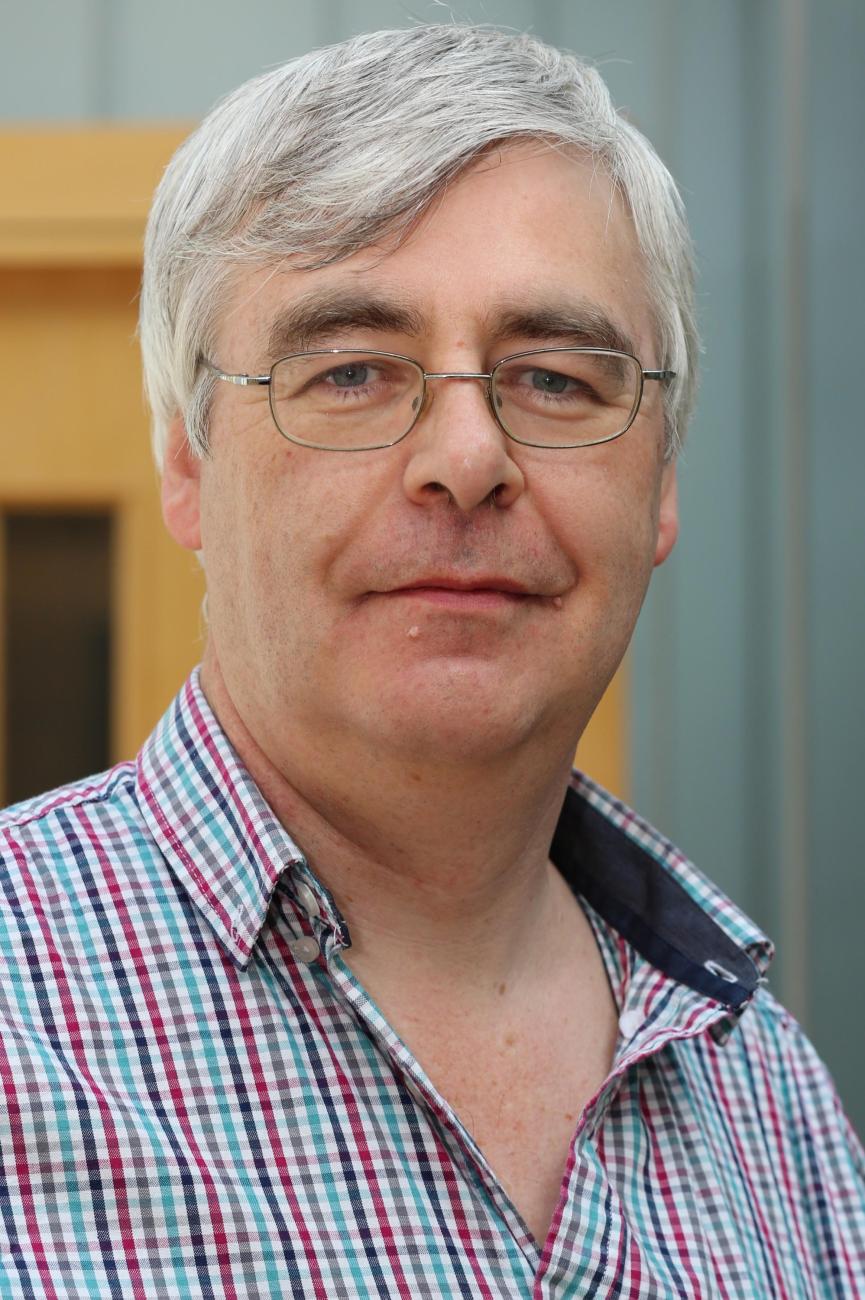
Prof Mansour Moniri is a Professor at the University of East London , affiliated with the School of Architecture, Computing & Engineering . His research spans deepfake detection, speech enhancement, extended reality, and conversational analysis, with over 8,500 views on his publications. Primary Research Areas: Deepfake speech recognition and mitigation Extended Reality (XR) applications for remote collaboration Speech enhancement algorithms for hearing aids and ASR systems Conversational fraud detection using linguistic markers Adaptive compressive sensing in wireless sensor networks Publication Trends: Recent works focus on hybrid deep learning architectures for audio analysis (2023-2025), with earlier contributions in immersive technologies (2019-2022) and sensor network optimization (2014-2017). His research consistently combines computational methods with real-world applications in security, healthcare, and communication technologies. Contact: Email: mansour@uel.ac.uk
Dr Tommaso Perego is a Senior Lecturer at the University of East London's College of Arts & Creative Industries. With expertise in audio engineering and multimodal perception, his research focuses on integrating spatial audio, wave field synthesis, and dance choreography. Research Interests Audiovisual perception and multimodal integration Spatial audio and immersive sound technologies Dance technology and interactive performance systems Wave field synthesis applications in creative industries Selected Publications His work demonstrates interdisciplinary approaches combining engineering principles with artistic practice, particularly in developing audiovisual environments for dance performance and spatial audio experimentation.
Matthew Plumlee is a Principal Lecturer in the Department of Computer Science at the University of New Hampshire's College of Engineering and Physical Sciences. He holds a Ph.D. and B.S. in Computer Science from the same institution. His research focuses on data visualization, human-computer interaction, and geospatial systems, with notable contributions to weather display design, marine navigation tools, and underwater behavior visualization of animals like humpback whales. Plumlee has authored numerous articles on topics ranging from hydrographic data processing to 3D visualization techniques in oceanography and robotics. His educational background includes advanced degrees from UNH, and he teaches courses such as Introductory Scientific Programming, Data Structures, and Software Engineering. His work frequently integrates interdisciplinary approaches, combining computer science with marine science and environmental modeling. Key projects include the GeoCoastPilot system for port navigation and the GeoZui3D platform for oceanographic data fusion. Plumlee's publications span over two decades, emphasizing user-centered design principles and real-time data visualization challenges. He collaborates with institutions like CCOM (Center for Coastal and Ocean Mapping) to develop innovative geospatial tools for maritime and environmental applications. His research also addresses cognitive aspects of interface design, such as comparing zooming versus multiple window techniques for visual tasks.
Jurgen Bauer is a Lecturer in the Department of Architecture and Built Environment at South East Technological University (formerly Waterford Institute of Technology). He holds a Diplom-Ingenieur (Architecture) from Braunschweig Technical University and has professional experience in architectural offices across Germany, Switzerland, and Ireland. His research focuses on architectural acoustics, soundscape design, and sustainable urban development, particularly in the context of climate adaptation and resilient design. He coordinates initiatives like the ‘Building Change 2022–2025’ project, which aims to integrate climate resilience into architectural education. Bauer is a chartered member of the Royal Institute of Architects of Ireland (RIAI) and the German Chamber of Architects (AKH/AKSH). Education: 1986–1993: Architectural Studies at Braunschweig Technical University, Germany, and ETH Zurich, Switzerland 1993: Diplom-Ingenieur (Architecture) from Braunschweig Technical University 2001: Certificate in Building Energy Consulting from Kassel University Research Interests: Soundscape design and its application in architectural projects Climate-resilient urban development and circular economy strategies Acoustic awareness in architectural education and design processes International collaboration in architectural education and sustainable design Bauer’s publications explore topics like ISO standards for soundscape, acoustic design tools for architects, and the integration of hearing into design education. His work contributes to UN Sustainable Development Goals related to sustainable cities (SDG 11), climate action (SDG 13), and quality education (SDG 4). He has held visiting roles at institutions like Chalmers University of Technology and UNAM (Mexico), and actively engages in professional organizations such as the Acoustical Society of America and the German Society of Acoustics.
Eileen Simpson is a Reader at Manchester School of Art, Manchester Metropolitan University, specializing in the intersection of sound art, digital archives, and information networks. She co-founded the Open Music Archive with artist Ben White, a collaborative initiative focused on sourcing, digitizing, and distributing out-of-copyright sound recordings while facilitating networked artistic projects. Her research centers on archival practices , collaborative sound production , and critical data engagement , exploring how communities interact with historical audio materials through participatory frameworks. Key methodologies include distributed network performance , public domain reactivation , and speculative archival futures , often manifested in large-scale exhibitions that transform institutional spaces into sites of collective sound exploration. Notable projects span British Art Show 8 ( Auditory Learning , 2015), Modern Art Oxford ( Premonition 2037 , 2016), and international venues including Casa Luis Barragán in Mexico City ( Open House: Divided Estates , 2012). Her 2025 works Please Destroy All Previous Lists and All or Together advance critiques of data ownership and collaborative sound production. Simpson's output consistently examines power dynamics in archival systems , community-based knowledge sharing , and temporal dimensions of sound preservation . As a core member of the Art and Performance Research Hub, Simpson operates through long-term collaborations rather than conventional advising structures. Her work integrates institutional partnerships with grassroots community engagement, particularly through the Open Music Archive's distributed network of contributors. Current projects like Toward Usership (2025) investigate collaborative data mining within orchestral archives, bridging historical collections and contemporary participatory practices. The Open Music Archive functions as her primary research vehicle, operating as both a digital platform and physical project space facilitating workshops, exhibitions, and international residencies. This initiative embodies her commitment to decentralized knowledge production and critical engagement with copyright frameworks , creating infrastructure for communities to reclaim and recontextualize historical sound materials.
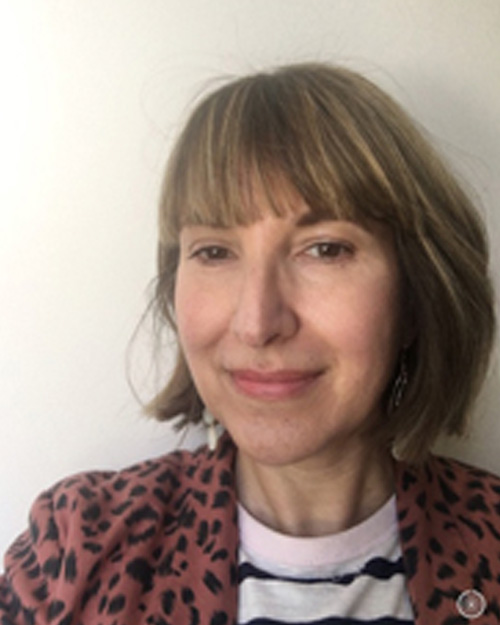
Sarah Levitan is an Assistant Professor in the Department of Computer Science at Hunter College and a doctoral faculty member in the Computer Science and Linguistics PhD programs at the CUNY Graduate Center. She holds a PhD (2019) and MS from Columbia University and a BS from Brooklyn College. Her research focuses on spoken language processing, with special emphasis on paralinguistic aspects of speech and computational methods for analyzing deception, misinformation, and speaker traits. Her key research areas include acoustic-prosodic and lexical analysis of speech to identify deception cues, trustworthiness perception in conversational agents, and mental health analysis through social media data. She has developed methodologies for detecting hate speech, radicalization content, and psychiatric conditions from online text and speech. Recent work highlights include studies on cross-lingual trust perception in dialogues, multimodal deception detection systems, and computational models for analyzing speaker states. Her research has been supported by NSF grants ($298k as PI), Google Cyber NYC ($80k), and the Air Force Office of Scientific Research ($764k as Co-PI). Levitan leads the Hunter Speech Lab, mentoring 3 PhD students, 4 MS students, and 2 undergraduates. She has published over 30 peer-reviewed articles and received the 2015 Cognitive Conference Best Paper Award. Her teaching portfolio includes undergraduate/graduate courses in Natural Language Processing, Computational Linguistics, and Computer Theory. Funded projects include $20M ARNI Institute (Senior Personnel) and NSF EAGER grant exploring trust perception in AI agents. Current research trends focus on hybrid acoustic-lexical models, human-AI collaboration in speech analysis, and ethical applications of NLP in media.
Maria C. R. Harrington, Ph.D. , is an Associate Professor of Digital Media in the Games and Interactive Media Program at the University of Central Florida (UCF), Nicholson School of Communication and Media. She also directs The Harrington Lab , an interdisciplinary research group that designs, develops, and evaluates immersive AR/VR/XR applications for informal learning and health. Education Ph.D. in Information Science, University of Pittsburgh (2008) M.S. in Information Science, University of Pittsburgh (1990) B.S. in Economics and Art, Carnegie Mellon University (1988) Research Focus Harrington’s scholarship lies at the intersection of virtual reality , human-centered design , and ecological data visualization . Using game engines, GIS datasets, and botanically accurate 3-D models, she creates “virtual nature” experiences—digital twins of forests, arboretums, and museum dioramas—that foster awe, curiosity, and measurable learning gains. Her work explores how information fidelity , navigational freedom , and aesthetic beauty influence emotional and cognitive outcomes in informal settings such as museums, botanical gardens, and K-12 classrooms. Publications & Creative Impact Across 2020-2023 alone, Harrington has advanced the field through Frontiers in Virtual Reality , Multimodal Technologies and Interaction , SIGGRAPH, and I/ITSEC venues. Recent titles such as “Virtual Nature Makes Knowledge Beautiful” and “Learning and Emotional Outcomes in an Immersive Omnidirectional Pilot Study” highlight her dual commitment to rigorous empirical evaluation and public engagement. Scientific Awards & Honors 2024 UCF College of Sciences Teaching & Research Incentive Awards ($10 k each) 2022 UCF College of Sciences Excellence in Research Award 2022 UCF Nicholson School Outstanding Creative Activity Award 2021 AECT Outstanding Digital Learning Artifact Award 2018 Carnegie Museum Artist in Residence Award 2006 Pitt Outstanding Graduate Student Award Advising & Collaborative Grants Harrington mentors a steady stream of undergraduate and graduate research assistants—many co-authoring papers and software releases. Notable mentees include Zachary Bledsoe, Chris Jones, Thomas Pring, and James Miller. Multi-year support has come from Epic Games , UCF Office of Research , and Carnegie Museum of Natural History , enabling flagship projects such as The Virtual UCF Arboretum (100-hectare VR simulation) and AR Perpetual Garden (mobile AR diorama suite). Labs, Teams & Partnerships The Harrington Lab is a hub for cross-disciplinary collaboration with UCF’s Department of Biology, Landscape & Natural Resources, Carnegie Museum of Natural History, Powdermill Nature Reserve, Salzburg University of Applied Sciences, and NASA’s Human Research Program. Current and future efforts target restorative VR for isolated/confined environments, AI-enhanced storytelling in XR, and scalable digital twins of global ecosystems for STEM outreach and climate-change education.
Savas Konur is a Professor of Artificial Intelligence and Computational Modelling at the University of Bradford's Faculty of Engineering and Digital Technologies, serving as Head of the School of Computer Science, Artificial Intelligence and Electronics. Previously, he held roles as Lecturer, Senior Lecturer, and Reader at Bradford, and worked at the University of Sheffield and Liverpool. He earned his B.Sc. from METU (Turkey), M.Sc. from RWTH Aachen (Germany), and Ph.D. from the University of Manchester (UK). His research focuses on computational modelling, machine learning, software engineering, and high-performance computing with interdisciplinary applications in systems biology, membrane computing, and smart manufacturing. He has secured £1.5M as PI and £1.3M as Co-I in grants from EPSRC, Innovate UK, and others, fostering collaborations with industry and academia globally. He leads the Computational Modelling Research Group and serves on editorial and advisory boards including the Journal of Membrane Computing and International Membrane Computing Society. Prof Konur’s work spans cybersecurity, synthetic biology tools, and automation, evidenced by over 76 publications and 11 research projects. His research has garnered multiple awards and recognitions, reflecting his contributions to computational science and interdisciplinary innovation.
Magnus Moar is an academic affiliated with the School of Film at Middlesex University, holding the position of Lecturer. His research focuses on the intersection of virtual reality (VR), theatre, and education technology. Moar explores immersive media's role in performance, narrative design, and learning environments, with notable work on VR locomotion mechanics, 360-degree storytelling, and spatial computing applications. His research interests include virtual environments for historical education, locative audio drama, and collaborative VR experiences. Moar has collaborated extensively with institutions like the University of Leuven and the BBC on projects such as the Fellow Creature 360 series and the VERTEX educational initiative. Publications span academic journals (e.g., Contemporary Theatre Review , Computers & Education ) and conferences like CHI PLAY and SciFi-It. His work bridges technical innovation with artistic expression, emphasizing user experience and pedagogical impact.
Prof. Vassil Vassilev is a Professor of AI and Intelligent Systems and Head of the Cyber Security Research Centre at London Metropolitan University. His work spans artificial intelligence, cyber security, and data integration with a focus on applications in urban systems, malware analysis, and cyber-physical systems. He leads initiatives in secure transaction risk assessment (CyDRA) and smart city technologies. Research interests include reinforcement learning for cyber incident response, AI policy validation frameworks, and adaptive security systems. He explores hybrid AI models, IoT-based environmental monitoring, and semantic frameworks for vulnerability detection. His work bridges theoretical AI advancements with practical implementations in cyber defense, urban data spaces, and financial security. Grants and funding support his projects on cyber security analytics, threat intelligence, and low-cost data platforms. He collaborates on initiatives like the first urban data space in Bulgaria and innovative authentication techniques using audio steganography. His leadership at the Cyber Security Research Centre drives applied research in both academic and enterprise contexts.
Florence Abad-Turner is a Lecturer in the Department of French and Francophone Studies at the University of Tennessee. She holds a BA in Chinese Language and Civilization from the University of Bordeaux III (France), an MA in French Literature from the University of Tennessee, and a K-12 teaching certification in French and Spanish. Her teaching roles include leading the French Honors Program, coordinating the French Language and World Business program, and instructing French language courses from first to fourth year. She has also led the UT in Paris summer program in 2018 and 2019. Abad-Turner’s research focuses on innovative curricula and the integration of French and Francophone graphic novels into academic teaching. She has developed specialized courses like French 450: Graphic Novels and Films. Her work emphasizes language pedagogy, cultural awareness, and the use of multimedia resources for language instruction. Her publications and conference presentations highlight her contributions to teaching methodologies, including the use of graphic novels, French cinema, and phonetics in education. She has been actively involved in educational initiatives since 1993, including roles as an instructor in French and Italian and a high school teacher.
Manuel Armenteros Gallardo is an Associate Professor and Deputy Director of Infrastructure and Laboratories in the Department of Communications at the University Carlos III de Madrid. He also serves as Vice Dean of Audiovisual Communications, overseeing academic and technical operations. His research focuses on multimedia technologies, sports refereeing systems (particularly VAR), 3D and stereoscopic imaging, and educational technology integration in sports training. Key research interests include the application of virtual reality in referee education, gamification for 21st-century skills, and photogrammetry in cultural heritage preservation. He has pioneered projects like the Octoson surround sound system and interactive video tools for FIFA referee training. Over 50 publications since 2011 reflect his work in sports technology, audiovisual production, and educational innovation. Recent articles emphasize VAR system experiments in international football, 3D workflow optimization, and immersive audio-visual techniques. His work bridges academic research with practical applications in sports arbitration and cultural heritage documentation. No scientific awards are listed, but his contributions to audiovisual and sports technology are evident through his extensive publication record. He leads laboratory infrastructure management and collaborates on multimedia teaching materials for FIFA instructors.
Dr. David Sinclair is an Associate Professor and Year Head in the School of Computing at Dublin City University, affiliated with the Dependable Systems, Software Engineering, and Security research groups. His research spans formal methods, distributed systems, real-time systems, and AI applications in strategic games. Teaching responsibilities include foundational and advanced courses: CSC1018 Logic CSC1048 Computability & Complexity CSC1098 Compiler Construction CSC1141 Concurrent Programming CSC1049 Third Year Project supervision His publications demonstrate strong focus on real-time systems, motion prediction, and immersive technologies, with recent work exploring AI-driven virtual environments and light field processing. Research consistently addresses computational efficiency and formal verification challenges.
Gabriel Vigliensoni is an Assistant Professor in Creative Artificial Intelligence within the Department of Design and Computation Arts at Concordia University. He holds a PhD in Music Technology from McGill University and maintains active research and creative practice at the intersection of artificial intelligence, music, and human-computer interaction. His work spans academic research, artistic performance, and music production. PhD in Music Technology, McGill University Assistant Professor, Department of Design and Computation Arts, Concordia University Vigliensoni's research focuses on sound and music making through machine learning, human-computer interaction, artificial intelligence, embodied musical interaction, music information retrieval, and new interfaces for musical expression. His approach merges formal musical training with extensive experience in sound recording, music production, and computational techniques. His creative work challenges traditional notions of liveness and immediacy in digital music production through procedural composition and embodied interaction. His recent publications demonstrate a strong focus on interactive machine learning for creative applications, particularly in audio and music domains. The research trends show increasing emphasis on explainable AI for the arts, ethical considerations in AI music applications, and the development of interfaces that facilitate sustained artistic practice with machine learning systems. His work spans from theoretical foundations to practical implementations in musical interfaces. 2025-2027: Co-Applicant, New Frontiers in Research Fund—Exploration 2024–2025: PI, Petro-Canada Young Innovator Award (PCYIA) 2024–2025: Collaborator, Responsible AI UK international partnerships UKRI 2023–2025: PI, Explore and Create | Research Creation (Canada Council for the Arts) 2023–2025: PI, Faculty Research Development Program (Concordia University) 2022–2023: PI, Knowledge Mobilization Grant (FRQSC) 2020–2022: PI, Postdoctoral Research Creation (FRQSC) Vigliensoni supervises graduate students in Design (MDes), Individualized Programs (MA, MSc), and Individualized Programs (PhD). His research is supported by significant grants from Canadian funding agencies as well as international collaborations. His work bridges academic research with artistic practice, creating feedback loops between theoretical exploration and creative output. His studio practice and research involve developing interactive systems for musical expression, with notable projects including Clastic Music, Telematic Awakening, and Re•col•lec•tions. These projects often combine real-time audio processing, machine learning, and gestural interfaces to create novel musical experiences that explore the relationship between human performers and AI systems.
Natalie Phillips is a Professor at Concordia University and holds the Concordia University Research Chair (Tier 1) in Sensory-Cognitive Health in Aging and Dementia. She is affiliated with the Department of Psychology in the Faculty of Arts and Science and collaborates with institutions like the Lady Davis Institute. Her research integrates behavioral and electrophysiological (ERP) measures to study cognitive aging and dementia. Research Themes : Cognitive aging, bilingualism, sensory-cognitive interactions, Alzheimer's disease, and executive function assessment. Awards : Recipient of the CIHR-Institute of Aging Age Award Collaborations : Involved in major initiatives like the COMPASS-ND study on dementia. Publications highlight her work on bilingualism’s role in cognitive reserve, sensory-cognitive tradeoffs in aging, and neurophysiological markers for early dementia detection. Her research bridges auditory neuroscience, neuropsychology, and clinical applications.



.jpg)