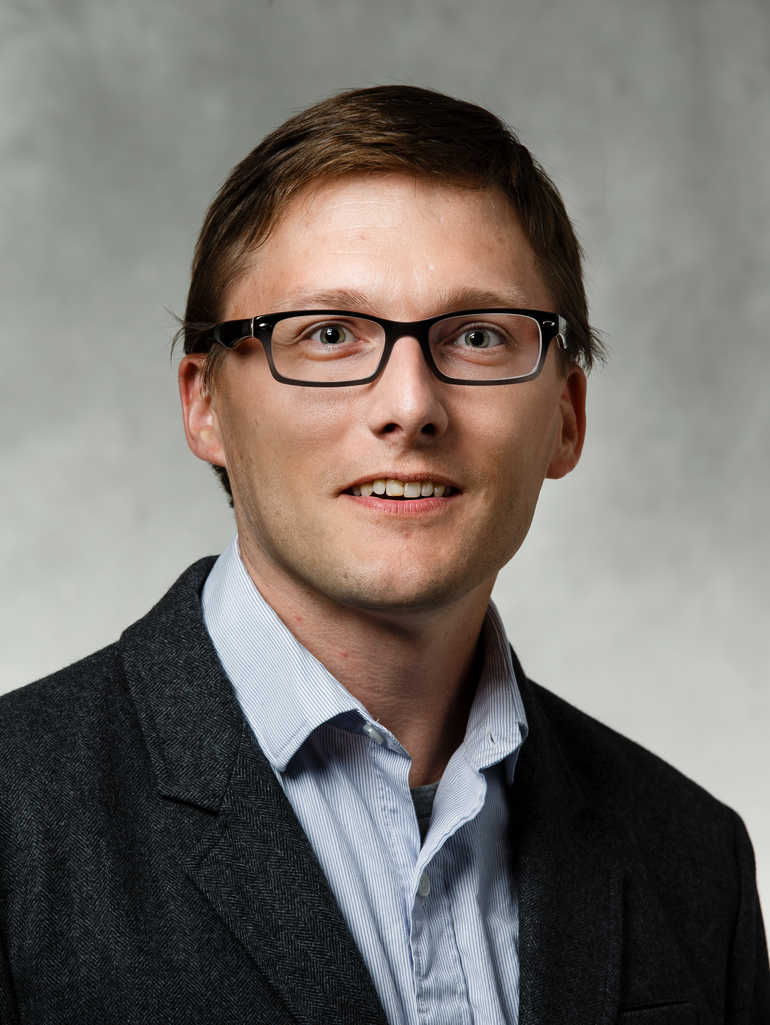
Magnus Moar is an academic affiliated with the School of Film at Middlesex University, holding the position of Lecturer. His research focuses on the intersection of virtual reality (VR), theatre, and education technology. Moar explores immersive media's role in performance, narrative design, and learning environments, with notable work on VR locomotion mechanics, 360-degree storytelling, and spatial computing applications. His research interests include virtual environments for historical education, locative audio drama, and collaborative VR experiences. Moar has collaborated extensively with institutions like the University of Leuven and the BBC on projects such as the Fellow Creature 360 series and the VERTEX educational initiative. Publications span academic journals (e.g., Contemporary Theatre Review , Computers & Education ) and conferences like CHI PLAY and SciFi-It. His work bridges technical innovation with artistic expression, emphasizing user experience and pedagogical impact.
Prof. Vassil Vassilev is a Professor of AI and Intelligent Systems and Head of the Cyber Security Research Centre at London Metropolitan University. His work spans artificial intelligence, cyber security, and data integration with a focus on applications in urban systems, malware analysis, and cyber-physical systems. He leads initiatives in secure transaction risk assessment (CyDRA) and smart city technologies. Research interests include reinforcement learning for cyber incident response, AI policy validation frameworks, and adaptive security systems. He explores hybrid AI models, IoT-based environmental monitoring, and semantic frameworks for vulnerability detection. His work bridges theoretical AI advancements with practical implementations in cyber defense, urban data spaces, and financial security. Grants and funding support his projects on cyber security analytics, threat intelligence, and low-cost data platforms. He collaborates on initiatives like the first urban data space in Bulgaria and innovative authentication techniques using audio steganography. His leadership at the Cyber Security Research Centre drives applied research in both academic and enterprise contexts.
Florence Abad-Turner is a Lecturer in the Department of French and Francophone Studies at the University of Tennessee. She holds a BA in Chinese Language and Civilization from the University of Bordeaux III (France), an MA in French Literature from the University of Tennessee, and a K-12 teaching certification in French and Spanish. Her teaching roles include leading the French Honors Program, coordinating the French Language and World Business program, and instructing French language courses from first to fourth year. She has also led the UT in Paris summer program in 2018 and 2019. Abad-Turner’s research focuses on innovative curricula and the integration of French and Francophone graphic novels into academic teaching. She has developed specialized courses like French 450: Graphic Novels and Films. Her work emphasizes language pedagogy, cultural awareness, and the use of multimedia resources for language instruction. Her publications and conference presentations highlight her contributions to teaching methodologies, including the use of graphic novels, French cinema, and phonetics in education. She has been actively involved in educational initiatives since 1993, including roles as an instructor in French and Italian and a high school teacher.
Manuel Armenteros Gallardo is an Associate Professor and Deputy Director of Infrastructure and Laboratories in the Department of Communications at the University Carlos III de Madrid. He also serves as Vice Dean of Audiovisual Communications, overseeing academic and technical operations. His research focuses on multimedia technologies, sports refereeing systems (particularly VAR), 3D and stereoscopic imaging, and educational technology integration in sports training. Key research interests include the application of virtual reality in referee education, gamification for 21st-century skills, and photogrammetry in cultural heritage preservation. He has pioneered projects like the Octoson surround sound system and interactive video tools for FIFA referee training. Over 50 publications since 2011 reflect his work in sports technology, audiovisual production, and educational innovation. Recent articles emphasize VAR system experiments in international football, 3D workflow optimization, and immersive audio-visual techniques. His work bridges academic research with practical applications in sports arbitration and cultural heritage documentation. No scientific awards are listed, but his contributions to audiovisual and sports technology are evident through his extensive publication record. He leads laboratory infrastructure management and collaborates on multimedia teaching materials for FIFA instructors.
Dr. David Sinclair is an Associate Professor and Year Head in the School of Computing at Dublin City University, affiliated with the Dependable Systems, Software Engineering, and Security research groups. His research spans formal methods, distributed systems, real-time systems, and AI applications in strategic games. Teaching responsibilities include foundational and advanced courses: CSC1018 Logic CSC1048 Computability & Complexity CSC1098 Compiler Construction CSC1141 Concurrent Programming CSC1049 Third Year Project supervision His publications demonstrate strong focus on real-time systems, motion prediction, and immersive technologies, with recent work exploring AI-driven virtual environments and light field processing. Research consistently addresses computational efficiency and formal verification challenges.
Gabriel Vigliensoni is an Assistant Professor in Creative Artificial Intelligence within the Department of Design and Computation Arts at Concordia University. He holds a PhD in Music Technology from McGill University and maintains active research and creative practice at the intersection of artificial intelligence, music, and human-computer interaction. His work spans academic research, artistic performance, and music production. PhD in Music Technology, McGill University Assistant Professor, Department of Design and Computation Arts, Concordia University Vigliensoni's research focuses on sound and music making through machine learning, human-computer interaction, artificial intelligence, embodied musical interaction, music information retrieval, and new interfaces for musical expression. His approach merges formal musical training with extensive experience in sound recording, music production, and computational techniques. His creative work challenges traditional notions of liveness and immediacy in digital music production through procedural composition and embodied interaction. His recent publications demonstrate a strong focus on interactive machine learning for creative applications, particularly in audio and music domains. The research trends show increasing emphasis on explainable AI for the arts, ethical considerations in AI music applications, and the development of interfaces that facilitate sustained artistic practice with machine learning systems. His work spans from theoretical foundations to practical implementations in musical interfaces. 2025-2027: Co-Applicant, New Frontiers in Research Fund—Exploration 2024–2025: PI, Petro-Canada Young Innovator Award (PCYIA) 2024–2025: Collaborator, Responsible AI UK international partnerships UKRI 2023–2025: PI, Explore and Create | Research Creation (Canada Council for the Arts) 2023–2025: PI, Faculty Research Development Program (Concordia University) 2022–2023: PI, Knowledge Mobilization Grant (FRQSC) 2020–2022: PI, Postdoctoral Research Creation (FRQSC) Vigliensoni supervises graduate students in Design (MDes), Individualized Programs (MA, MSc), and Individualized Programs (PhD). His research is supported by significant grants from Canadian funding agencies as well as international collaborations. His work bridges academic research with artistic practice, creating feedback loops between theoretical exploration and creative output. His studio practice and research involve developing interactive systems for musical expression, with notable projects including Clastic Music, Telematic Awakening, and Re•col•lec•tions. These projects often combine real-time audio processing, machine learning, and gestural interfaces to create novel musical experiences that explore the relationship between human performers and AI systems.
Natalie Phillips is a Professor at Concordia University and holds the Concordia University Research Chair (Tier 1) in Sensory-Cognitive Health in Aging and Dementia. She is affiliated with the Department of Psychology in the Faculty of Arts and Science and collaborates with institutions like the Lady Davis Institute. Her research integrates behavioral and electrophysiological (ERP) measures to study cognitive aging and dementia. Research Themes : Cognitive aging, bilingualism, sensory-cognitive interactions, Alzheimer's disease, and executive function assessment. Awards : Recipient of the CIHR-Institute of Aging Age Award Collaborations : Involved in major initiatives like the COMPASS-ND study on dementia. Publications highlight her work on bilingualism’s role in cognitive reserve, sensory-cognitive tradeoffs in aging, and neurophysiological markers for early dementia detection. Her research bridges auditory neuroscience, neuropsychology, and clinical applications.
Yannis Ioannidis is a Professor at the Department of Informatics and Telecommunications of the National and Kapodistrian University of Athens. His research spans interdisciplinary areas including database systems, virtual reality applications, and cultural heritage technology. He leads projects integrating technology with education, art, and social sciences, such as VR environments for urban planning (ARSINOE VR) and AI-driven scientific discovery frameworks. His work emphasizes collaborative tools for digital storytelling and participatory cultural experiences. Ioannidis has contributed to advancements in database query optimization, text exploration through SQL extensions (DETEXA), and indexing techniques for data lakes. His recent focus includes exploring the intersection of tabletop role-playing games with historical education and ethical AI-human coevolution. He actively participates in initiatives like the EBRAINS infrastructure for brain research and the MagicARTS social VR project. Notable research trends in his publications include leveraging VR for immersive learning, designing hybrid museum kits, and applying AI to support UN Sustainable Development Goals. His work bridges technical innovation with societal impact, addressing challenges in education, art preservation, and ethical technology use.
Lisa Hale is an academic professional at Oxford Brookes Business School (Oxford Brookes University) with expertise in e-learning, educational technology, and student-teacher collaboration. She serves as Associate Dean for Student Experience and Programme Lead for Pathways Programmes. MA in Online and Distance Education RSA Dip TEFLA Her research focuses on technology-enhanced feedback systems, collaborative learning, and integrating Environmental Social Development (ESD) into educational frameworks. She has pioneered initiatives like strategic LTSE projects and Peer Observation Champions. Hale's recent work emphasizes digital pedagogies, multimodal feedback techniques, and interdisciplinary approaches to education. She actively collaborates with international students across diverse cultural contexts. Key professional affiliations include: BALEAP IATEFL University Pathways Alliance She has presented extensively on topics spanning from audio-visual feedback to social bookmarking tools, demonstrating a commitment to pedagogical innovation.
Shawn Decker is a Professor in the Sound and Art and Technology Studies departments at the School of the Art Institute of Chicago (SAIC). His work bridges music composition, visual arts, and performance, employing electronic and physical media to explore natural and unnatural worlds. Notable collaborations include partnerships with Jan Erik-Andersson, Anne Wilson, and Jan Tichy. His installations have been exhibited globally at venues like the Kiasma Museum (Helsinki), Victoria and Albert Museum (London), and the Chicago Cultural Center. Decker's teaching and artistic practice are interconnected, emphasizing interdisciplinary methods. His research focuses on environmental soundscapes, bioacoustics (particularly birdsong), and merging traditional folk music with modern technology. Key projects include the Prairie installation and the Bird’s Nest collaboration with Jan-Erik Andersson, exploring historical and contemporary sound contexts in architectural spaces. His recent works include immersive installations like The Night Sounds and Sauna-stereo , reflecting ongoing investigations into natural systems and urban environments. Exhibitions frequently integrate multi-channel soundscapes and interactive elements, showcasing his expertise in both technical and conceptual artistry.
Nicol Nixon Augusté serves as Professor of Liberal Arts at the Savannah College of Art and Design (SCAD) since 2009, following prior appointments including Assistant Professor at the University of South Carolina, Lancaster (2007-2009) and Lecturer at the University of North Carolina, Greensboro (2004, 2006-2007). Her two-decade academic career spans multiple institutions across the United States with a consistent focus on interdisciplinary humanities. Her educational foundation includes a Ph.D. in English from The University of North Carolina at Greensboro, an M.A. in English from Western Carolina University, and a B.A. in Liberal Arts from Marietta College, establishing her expertise at the intersection of literature, religion, and cultural studies. Dr. Augusté's research centers on Religious Studies with emphases in Christian Literature and Female Saints, where she examines gendered religious experiences through poetic and scholarly lenses. Her work actively bridges Women's Studies and Native American Studies, particularly in analyzing syncretic religious identities like Chippewa-Catholic traditions. This manifests in both academic publications and creative outputs, including her poetry collection 'Rome’s Female Saints: A Poetic Pilgrimage to the Eternal City' which explores sacred geography through verse. Her methodology consistently integrates literary analysis with theological inquiry and cultural anthropology. Analysis of her 2016-2019 publications reveals a cohesive trajectory exploring female sanctity across cultural contexts, with increasing attention to indigenous religious experiences and pedagogical innovation. The corpus demonstrates interdisciplinary rigor through encyclopedia contributions on Christian theology, poetic explorations of pilgrimage, and visual/audio projects examining teaching methodologies in art education contexts. Her scholarly recognition includes: Research sabbatical for 'Women of the Way: Writing the Camino do Santiago' in France and Spain (2019) Affiliated fellowship at the American Academy in Rome for 'Verbum Eius: Versing the Biblical Female Voice' (2016) SCAD Professional Development Stipend (2013) SCAD Presidential Fellowship for 'Renowned Catawba Potters' project (2011) As an active member of the Academy of American Poets and Conference on Christianity and Literature, she has chaired numerous panels at national conferences including CCCC and Southeast Regional Conference on Christianity and Literature. Her presentations consistently address intersections of faith, literature, and art education, while her current projects suggest continued exploration of Catawba cultural heritage and poetic forms of theological expression.
Wang Zhaoxia is an Associate Professor of Computer Science (Practice) at the School of Computing and Information Systems, Singapore Management University. Her expertise lies in Artificial Intelligence, Data Science, and Machine Learning with a focus on Natural Language Processing (NLP), Sentiment Analysis, and Knowledge Graphs. She holds a PhD from Nankai University (2004). Research Interests: Her work spans AI-driven solutions for sentiment analysis, maritime risk management, audio-to-music conversion, and social media analytics. Recent projects include leveraging Large Language Models (LLMs) for tasks like logical reasoning, translation optimization, and risk assessment. Publications: Recent work highlights include developing metrics for LLM performance (RAP), emotion analysis in images, and automated music transcription. Her research demonstrates cross-disciplinary applications of AI in fields like finance (ICO success prediction) and health (disease surveillance). Awards: No awards explicitly listed Advising: Supervises 3 PhD/Master students including HUANG Donghao and Nicole Anne Hui Ying TEO Contact: zxwang@smu.edu.sg | +65 68261347
Devon Ward is an Assistant Professor at Auburn University's School of Industrial and Graphic Design within the College of Architecture, Design and Construction. He holds a Master of Biological Art from the University of Western Australia and a Bachelor of Graphic Design from the University of Florida. His research focuses on the expanding field of design, emphasizing interdisciplinary, future-oriented, and inclusive approaches across biological design, motion graphics, and speculative practices. Devon teaches courses such as Introduction to Graphic Design and Advanced Interactive Media, mentoring students who have achieved notable recognition including Graphis New Talent Awards. He has advised students like Jay Denning, Emma Burns, and Lavens Maginnis whose projects received accolades for their innovative designs. Education: Master of Biological Art, University of Western Australia Bachelor of Graphic Design, University of Florida Research Interests: Devon explores intersections between biological systems and design education, advocating for creative practices that address contemporary societal and environmental challenges. His work integrates speculative design, critical pedagogy, and emerging technologies. Student Achievements: Jay Denning (silver award, Munich logo design) Emma Burns (honorable mention, Guangzhou logo) Ally Mathis (honorable mention, Hanoi logo) Lavens Maginnis (honorable mention, digital ID app) Carly DeSimone (honorable mention, noise detection app) Grants & Recognition: His work has been supported by Auburn University's College of Architecture, Design and Construction (CADC) Seed Grant program. Students under his guidance have been highlighted in Graphis New Talent Awards and GDUSA 'Students to Watch' listings.
Dr. Melody Moh is a Professor and Interim Chair in the Department of Computer Science at San Jose State University, where she has been a faculty member since 1993. Her research focuses on cloud computing, mobile networks, security/privacy in networks, and machine learning applications. She coordinates Cyber Security Certificates and has published over 130 refereed papers in journals, conferences, and book chapters. Moh holds an MS and PhD in Computer Science from the University of California, Davis. Research Interests: Cloud and Network Security, 5G Networks, IoT Security, Blockchain Applications, Machine Learning for Cybersecurity, Smart Grid Authentication, and Fog Computing. Her work bridges theoretical advancements with practical implementations, such as developing efficient cache management for Cloud-RAN systems and adversarial defense mechanisms for deep learning models. Recent Publications: Recent work includes blockchain-based public key infrastructure, adversarial attacks on deep learning models, and autonomous driving systems using LiDAR data. Her research often involves student collaborators, with many publications featuring *SJSU students. Awards: Best Paper Runner-Up (2019 ACM Southeast Conference) for randomized load balancing research, and Honorable/Best Paper Award (2018 ACM Southeast) for cache management in 5G networks. Grants & Labs: Secured over $500K in NSF and industry grants. Leads research teams focusing on cybersecurity, edge computing, and AI-driven network optimization. Active in collaborative projects with industry partners and government agencies.
Peter Gregg is an Associate Professor and Department Chair in the Department of Digital Media Arts at the University of St. Thomas, College of Arts and Sciences. He coordinates Digital Media Arts programs and teaches courses in media production, analysis, and film studies. His professional background includes media production across film, audio, and web design, alongside leadership in DEI initiatives and award-winning student media projects through TommieMedia. Gregg’s research focuses on emerging media, parasocial interaction, media literacy, and the intersection of media with cultural and societal issues like prejudice and sports analytics. He has held leadership roles in the National Audio Theatre Festivals (NATF), including vice-president and president, advocating for audio as an art form and advancing diversity initiatives. His work bridges theoretical scholarship with practical media production, emphasizing inclusive pedagogy and storytelling. Notable scientific awards include the National Communication Association’s Charles H. Woolbert Research Award for his paper on the Parasocial Contact Hypothesis, recognition by the Society for American Baseball Research as one of the fifty most influential papers, and a cinematography award for his webseries Forsythia . His audio drama The Chronos Paragon won the 'Best New Original Ongoing Production' at the Audio Verse Awards and was a NATF HEAR Now festival selection. Gregg advises the UST Film Society and collaborates with Prof. Keston and Dr. Neuzil on DEI frameworks in media production. He oversees TommieMedia’s nationally recognized student content and has completed the Inclusive Classroom Institute certification (2017). His teaching spans foundational courses like Digital Imagery and Sound and advanced topics such as Advanced Media Production , integrating media technology with critical analysis. He is affiliated with the Society of American Baseball Researchers and contributes to interdisciplinary projects like Honors Hollywood’s Reporters (Summer 2025) and Motion Graphics and Digital Visual Effects (Fall 2025). His research has been published in journals such as Communication Monographs and Journal of Homosexuality , and in edited volumes including Mass Media Effects .

.jpg)