Niccolò PrettoView profile
Researcher
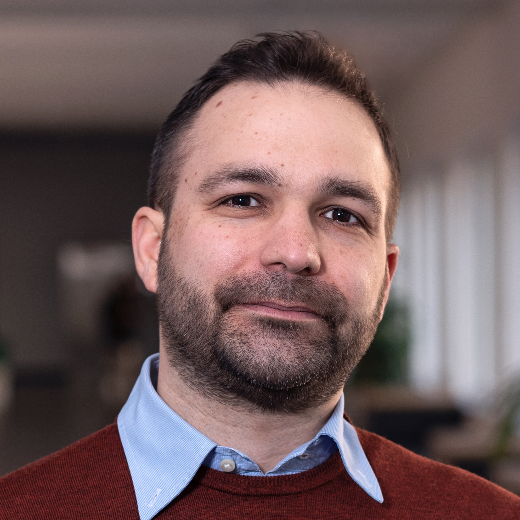
Niccolò Pretto is a Researcher at the Faculty of Engineering, Free University of Bozen-Bolzano, Italy, based at NOI Techpark in Bolzano. He teaches Engineering of Mobile Systems for Bachelor in Computer Science students and Research Methods for Doctoral candidates in computer science. His research specializes in audio cultural heritage preservation, focusing on AI-driven solutions for analog magnetic tape restoration and international standardization efforts. Key projects include developing computer vision algorithms for audio tape anomaly detection, creating capacitive interfaces for stone artifacts, and co-authoring the MPAI/IEEE Audio Recording Preservation (ARP) standard. His work bridges musicology, archival science, and engineering to address challenges in electroacoustic music preservation and interactive heritage experiences. Analysis of his 15 most recent publications reveals three dominant themes: (1) Technical innovation in audio restoration (e.g., digital filters for speed/equalization correction), (2) Human-centered interaction design for cultural artifacts (e.g., submersible textile interfaces), and (3) Ethical AI standardization for heritage preservation. His publications consistently emphasize "active preservation" methodologies that combine philological rigor with computational approaches. Dr. Pretto maintains active collaborations with the Computational Sonology Center (CSC) at the University of Padova, where he has contributed to projects preserving Luciano Berio's audio archives and developing the FONTI 4.0 transcription system for historical oral sources. His teaching in mobile systems and research methods directly informs his applied work in heritage technology development. He operates from NOI Techpark, a leading Alpine innovation hub, where his laboratory focuses on sensor development for cultural heritage applications. Current projects include magnetoresistive textile interfaces for underwater interaction and AI-based anomaly detection systems for archival audio tapes, positioning his team at the forefront of preservation technology research.