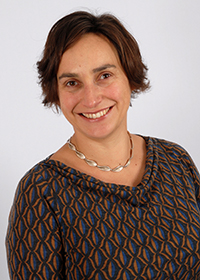
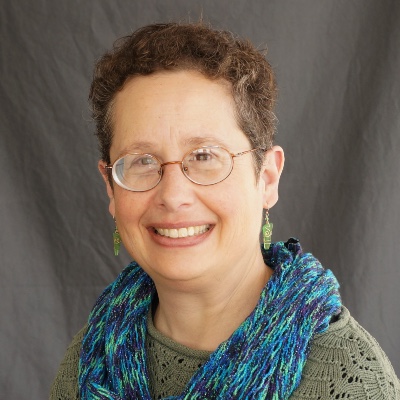
Prof. Kees van den Bos is an academic specializing in developmental psychology and educational neuroscience. His work focuses on reading disabilities, attention deficit hyperactivity disorder (ADHD), and intervention programs for neurodevelopmental disorders. He contributes to UN Sustainable Development Goals related to quality education and good health. Research interests include text comprehension mechanisms, phonemic awareness development in children, and the interplay between attention deficits and learning outcomes. His studies utilize electrophysiological methods (e.g., ERP) and behavioral assessments to investigate cognitive processes in neurotypical and atypical populations. Key research trends involve multisensory interventions for dyslexia, neurocognitive mechanisms underlying reading difficulties, and the impact of visual/verbal thinking styles on academic performance. He has published extensively on topics such as rapid automatized naming (RAN), phonological processing deficits, and neurodevelopmental disorder comorbidities.
Phaedra Royle is a Full Professor at the Université de Montréal's School of Speech-Language Pathology and Audiology, part of the Faculty of Medicine. She holds a PhD in Linguistics from the Université de Montréal and a postdoctoral fellowship from McGill University. Her research focuses on language acquisition, psycholinguistics, neurolinguistics, and developmental language disorders, particularly in French and multilingual populations. She leads the Language Acquisition and Processing Lab and collaborates with institutions like the CRBLM (Brain, Language, and Music Research Centre). Education: Postdoc at McGill University (Communication Sciences), PhD in Linguistics (Université de Montréal), Master's in Linguistics (McGill), and Bachelor's in Linguistics with a minor in Spanish (Concordia University). Research Interests : Morphology, neurolinguistic processing of language, bilingualism, aging effects on language, and clinical applications for language disorders. She uses ERPs (electrophysiological methods) to study syntactic and semantic processing in both typical and atypical populations. Grants & Collaborations : Principal investigator on multiple projects funded by FRQNT, CRSH, and CRSNG. Notable projects include Language Acquisition and Processing in Teen and Adult L1 and L2 and Aging and the Time-Course of Morphology for Reading in French . She co-leads teams like the REPAR network for rehabilitation research. Labs & Teams : Director of the Language Acquisition and Processing Lab (Laboratoire de recherche sur l’acquisition et le traitement du langage). Affiliated with CRBLM, CIRCA, and the Centre de réadaptation Marie-Enfant (CHU Sainte-Justine).
Professor Silke Göbel is a leading academic in Numerical Cognition and Developmental Cognitive Neuroscience at the University of York, where she leads the Numerical Cognition Lab. She holds a Visiting Professorship at the University of Oslo (since 2019) and is a Co-director of the ESRC Centre for Early Mathematics Learning at Loughborough University (since 2022). Her academic journey includes a Diplom from Goethe University Frankfurt, a DPhil from Oxford, and postdoctoral research in Oxford before joining York. Her research focuses on numerical processing in typical/atypical development, cross-cultural differences, dyscalculia, and the interplay between language and mathematics. Key methodologies include longitudinal studies, EEG/fMRI, and eye-tracking. She has secured significant grants, including £347k (2023-2026) for studying conceptual spaces and £454k (2022-2025) on rational numbers understanding. Teaching roles include directing the MSc in Developmental Cognitive Neuroscience and teaching modules on mathematical cognition. She has supervised students like Eleanor Redfern (PhD) and contributes to textbooks such as *An Introduction to Mathematical Cognition*. Her work bridges cognitive science, education, and clinical neuroscience, addressing fundamental questions about how children acquire numerical skills and why some struggle. Collaborators include leading researchers in Germany, Austria, and France. Her lab’s work has implications for educational interventions targeting math learning difficulties and cross-cultural disparities in mathematics performance.
Dr. Emma Hayiou-Thomas is a Senior Lecturer (Associate Professor) in Psychology at the University of York, specializing in developmental language and literacy disorders. She holds roles as Co-Director of the MSc in Development, Disorders & Clinical Practice and Parenting Champion in the Inclusiveness and Development Committee. Her academic journey includes a D.Phil. in Experimental Psychology and a BA in Psychology & Physiology from the University of Oxford. Her research focuses on typical/atypical language development, dyslexia, and Developmental Language Disorder (DLD), employing behavioral genetics and experimental methods. She has led grants from the Waterloo Foundation, Wellcome Trust, and Medical Research Council, investigating risk factors and underlying mechanisms. Education: 1998-2002: D.Phil. in Experimental Psychology, University of Oxford 1995-1998: BA in Psychology & Physiology, University of Oxford Research Interests: Behavioral genetics, family-risk designs, language-learning mechanisms, and neurodevelopmental disorders. Her work spans collaborative projects with institutions like the University of Oxford, exploring genetic/environmental contributions to developmental disorders. Notable collaborations include studies with Maggie Snowling and Charles Hulme. She supervises PhD students and teaches modules on neurodevelopmental disorders and educational neuroscience. Dr. Hayiou-Thomas also serves as an Associate Editor for the Royal Society for Open Science. Grants: Waterloo Foundation (2013-14): Co-occurrence of language and psychosocial difficulties. Wellcome Trust (2007-14): Developmental relationships between dyslexia and language impairment. MRC (2010-15): Origins of learning difficulties and behavior problems. Awards & Honors: None explicitly listed, though her leadership in grants and academic roles highlights her scholarly contributions. Labs/Teams: Developmental Research Group at the University of York, collaborating with institutions like the SGDP Centre (King's College London).
Letitia Naigles is a Professor in the Department of Psychological Sciences at the University of Connecticut. She serves as Vice President of the International Association for the Study of Child Language and leads the UConn Child Language Lab. Her research focuses on language acquisition across diverse populations, including typically developing children and those with autism spectrum disorders. She examines how linguistic input interacts with innate cognitive, neurological, and social factors to shape language development. Naigles holds a Ph.D. in Psychology from the University of Pennsylvania (1988). Her work spans theoretical and applied domains, addressing cross-linguistic variations in language acquisition and neurobiological underpinnings of developmental language disorders. She has held visiting appointments at the MIND Institute and Koç University, Turkey. Her awards include Fellow status in the Association for Psychological Science (2009). She has secured research funding from NIH, NSF, and other agencies, focusing on topics such as grammatical impairment in autism and longitudinal language profiles in developmental disorders. Her teaching includes courses on developmental psychology, language acquisition, and the neurobiology of language. Naigles’ research group, the UConn K.I.D.S. (Kids in Developmental Science), collaborates internationally to explore language mechanisms in diverse populations. Her publications bridge cognitive science, linguistics, and clinical applications, advancing understanding of both typical and atypical language development.
Dr. Silvia Clement-Lam is an Assistant Research Professor in the Department of Psychological Sciences Education at the University of Connecticut. She holds a Ph.D. from Northwestern University (2019) and leads multidisciplinary research integrating neuroimaging, behavioral assessments, and intervention design. Her office is located in Arjona 324 on the Storrs campus. Her research examines literacy acquisition mechanisms across typical/atypical development, multilingual contexts, and socio-cultural influences, with emphasis on early dyslexia identification and evidence-based reading interventions. Primary methodologies include: Behavioral and neuropsychological assessments Advanced neuroimaging techniques Cross-cultural intervention design Publication analysis reveals three primary domains: 1) Neural correlates of reading automaticity and dyslexia, 2) Cross-linguistic literacy development (particularly Chinese), and 3) Bilingual cognitive processing. Recent work increasingly bridges neuroscience with educational practice. Awards & Grants: NIH F32 Kirschstein-NRSA Postdoctoral Fellowship (F32HD106739-01A1; 11/2022-10/2024; PI) She teaches PSYC 2501: Cognitive Psychology and maintains active translation of research into clinical/educational applications.
Liis Themas is a Junior Research Fellow at the University of Tartu's Institute of Psychology and a practicing speech-language therapist. She is concurrently pursuing her PhD in Estonian and Finno-Ugric Linguistics at the same institution. Her research focuses on neurolinguistics, language perception disorders, and phonological development in children. She utilizes EEG and behavioral methods to study neural mechanisms of language processing in typical and atypical development. Recent publications analyze phonological development in Estonian-speaking children and auditory processing in developmental language disorders. Her work demonstrates strong interdisciplinary approaches combining linguistics, neuroscience, and clinical practice. Awards include: Special prize from Ministry of Education for published research (2023) Young Speech Therapist of the Year award (2018) She contributes to several major research projects including the Estonian Center of Excellence of Well-Being Sciences studying brain and cognition.
Katie Gilligan-Lee is an Assistant Professor (Ad Astra Fellow) at the School of Psychology, University College Dublin. She holds a PhD in Developmental Psychology from University College London and previously served as an Assistant Professor at the University of Surrey. Her research focuses on cognitive development, particularly how spatial thinking influences STEM outcomes in children, with a focus on interventions using embodied action and Lego play. She has led projects funded by organizations like the Baily Thomas Charitable Fund and the British Academy. Her research interests include spatial and mathematical development in both typical and atypical populations, including those with Down Syndrome and neurodevelopmental disorders. She advocates for open research practices and has developed educational resources like the Spatial Reasoning Toolkit. Katie coordinates modules in research methods and statistics and has supervised PhD and post-doctoral students. She currently holds grants such as the JEDI initiative funded by Science Foundation Ireland. Key achievements include demonstrating the efficacy of spatial training on mathematics performance and exploring technology use in neurodevelopmental populations. Her work bridges research and practice through teacher training resources and interventions targeting spatial reasoning.
Dr. Daniel Koo serves as Professor and Director of the School of Human Services and Sciences at Gallaudet University. He holds a PhD in Brain and Cognitive Sciences from the University of Rochester (2003) and completed postdoctoral work at Georgetown University's Center for the Study of Learning. His research focuses on neuroanatomical correlates of language processing in deaf individuals, bilingualism effects, and phonological processes in signed/cued languages. Key areas include studying how visual language experiences shape brain structure and cognitive function, with particular attention to deaf cuers and signers. Teaching responsibilities include courses in Cognition, Research Methods, Psycholinguistics, and Neuropsychology at both undergraduate and graduate levels. He currently advises 13 students (undergraduate and doctoral) and has served on numerous university committees including Tenure & Promotion and Faculty Development. 2014 Rising Star Faculty Award for Distinguished Scholarship Principal Investigator on grants studying bilingual deaf adults' cognitive performance and phonological processing Active member of CueSign Inc. board and Deaf Calvary Church His work bridges neuroscience, linguistics, and education to improve understanding of deaf cognition and inform educational practices.
Edward G. Freedman, Ph.D., is a Professor in the Departments of Neuroscience and Biomedical Engineering at the University of Rochester School of Medicine and Dentistry (SMD). He co-leads the Frederick J. and Marion A. Schindler Cognitive Neurophysiology Lab (CNL-R), focusing on understanding neural mechanisms underlying sensory processing, cognitive control, and motor behavior across the lifespan. His work integrates advanced neuroimaging (EEG, fMRI), motion capture (MoBI), and clinical collaborations to study autism, Alzheimer’s, Parkinson’s, lysosomal storage disorders (e.g., Batten disease), and HIV-cocaine comorbidity. Education: Ph.D. in Neuroscience (University of Pennsylvania, 1996), MS in Neurobiology (Cornell University, 1992), BS in Biology (Brown University, 1986). Research Interests: Investigates sensory and cognitive processing deficits in neurodevelopmental and neurodegenerative disorders. Key projects include: Autism: Sensory processing atypicalities, somatosensation, and EEG biomarkers. Aging: Cognitive-motor interactions and neural plasticity using Mobile Brain/Body Imaging (MoBI). Lysosomal Storage Disorders: Multisensory deficits in Batten disease and Rett syndrome. Adolescent Brain Cognitive Development (ABCD Study): Longitudinal brain-behavior relationships in 10,000+ children. Scientific Awards: NSF CAREER Award (2002), Alfred P. Sloan Fellowship (2001), Donald B. Lindsley Prize (1997). Advising and Grants: Mentors graduate students and postdocs in translational neurophysiology. Collaborates with institutions like the University of Rochester Batten Center and the Schmitt Program on Integrative Neuroscience. Labs/Teams: Leads the CNL-R, part of the UR Center for Advanced Brain Imaging (UR CABIN). Active in interdisciplinary networks including the Adolescent Brain Cognitive Development (ABCD) Consortium.
Valentina Fantasia is a Senior Lecturer in the Department of Philosophy at Lund University, Sweden. She holds a PhD from the University of Portsmouth and previously worked as a researcher at the Max Planck Institute for Human Development in Berlin. Her research focuses on intersubjectivity, social cognition, self-development, and language socialization in children with typical and atypical development, emphasizing ecological methodologies. Education: PhD from University of Portsmouth; prior research at Max Planck Institute for Human Development. Research Interests: Investigates how intersubjectivity and social cognition develop, particularly through language socialization processes in diverse childhood populations. Uses ecological approaches to understand the self-construction in social contexts. No academic awards, student advisees, or published articles were explicitly listed in the provided materials. Attachments include a final report and presentation, though their content details are not transcribed here.
Estela Garcia Alcaraz is a Permanent Lecturer (PPL) in the Department of Spanish Philology, Modern and Classical Spanish Language at the University of the Balearic Islands, Faculty of Philosophy and Letters. She focuses on bilingualism and second language acquisition in populations with typical and atypical development, particularly those with intellectual disabilities linked to genetic syndromes. Research spans language acquisition, cognitive linguistics, and special education. Collaborates with research groups BASLA (University of the Balearic Islands) and LARLAB (University of Ottawa). Participates in national and international R&D&I projects. Publishes in internationally renowned journals and presents at conferences. She holds two bachelor's degrees, two master's degrees, and two doctorates, reflecting multidisciplinary academic training. Her teaching involves courses like Introduction to Spanish Language Studies, Spanish as a Foreign Language, and final-year projects for primary education and Spanish language degrees. As Vice Dean, she contributes to academic leadership. Her research emphasizes interdisciplinary approaches to language learning challenges in neurodivergent populations.
Jean-Christophe Lega is a Pharmacology researcher at University of Lyon leading the Modeling and Therapeutic Effect Modeling Team since January 2021. His work focuses on benefit-risk balance estimation and evidence-level assessment for antithrombotics and immunosuppressants through advanced meta-analytical methods. His research spans baseline risk modeling, risk stratification, treatment effect interactions, subpopulation analysis, and personalized medicine applications. This has expanded into meta-research examining methodological and cognitive biases in treatment effect measurement, directly informing his work with the transparency commission of the French Haute Autorité de Santé (HAS). Analysis of his 15 most recent publications reveals consistent expertise in meta-epidemiological studies (60% of works), with primary focus on pharmacovigilance (statin-associated muscle symptoms, bisphosphonate complications), autoimmune disease management (giant cell arteritis protocols, immune thrombocytopenia), and cardiovascular pharmacology (aspirin polypill simulations). Methodological themes center on publication bias quantification and risk-stratification modeling. His scientific contributions include development of national clinical guidelines (giant cell arteritis protocol) and leadership of multicenter studies (STOPAGO long-term follow-up). Recent work features critical examination of compassionate-use drug outcomes during the COVID-19 pandemic. Lead researcher for Modeling and Therapeutic Effect Modeling Team (University of Lyon) Active member of Haute Autorité de Santé transparency commission Principal investigator for STOPAGO multicenter study on thrombopoietin receptor agonists Contributor to French national protocols for autoimmune disease management
Stephanie Borrie is a Professor in the Department of Speech & Hearing Sciences, Emma Eccles Jones College of Education and Human Services, Utah State University, where she also holds the title of Emma Eccles Jones Dean’s Scholar and directs the Human Interaction Lab . Her work bridges speech perception, motor speech disorders, and human interaction to advance understanding and treatment of dysarthria and other communication challenges. Education PhD, Speech and Language Therapy, University of Canterbury, 2011 — Dissertation: Perceptual Learning of Dysarthric Speech Additional qualification, Speech-Language Therapy, University of Canterbury, 2005 Research Focus Professor Borrie’s program explores how listeners perceive and adapt to disordered speech and how conversational partners entrain their speech behaviors . Spanning speech acoustics, cognitive psychology, and clinical intervention, her investigations target motor speech disorders (especially dysarthria from Parkinson’s disease and traumatic brain injury), listener training paradigms, and the social-cognitive factors that modulate communicative success. Recent work delves into developmental trajectories of perceptual learning in adolescents and the impact of motivation on therapeutic outcomes. Article Landscape Across more than 50 peer-reviewed publications since 2007, her scholarship reveals three dominant threads: (1) perceptual learning —how listeners attune to dysarthric speech and generalize that learning across talkers and contexts; (2) conversational entrainment —the rhythmic, prosodic, and lexical alignment that occurs during dialogue and its disruption in clinical populations; and (3) clinical translation —developing evidence-based tools (e.g., Autoscore software) and training protocols to improve intelligibility and reduce listening effort. The 2022–2024 output intensifies focus on developmental perspectives, motivation, and novel signal-processing techniques to enhance real-world communication. Scientific Awards & Honors While no named awards are listed in the provided text, Professor Borrie’s designation as Emma Eccles Jones Dean’s Scholar signifies a high-level research distinction within the college. Advising & Grant Activity She has mentored numerous master’s and doctoral students in Speech & Hearing Sciences, including Samantha Budge, Taylor Hepworth, Camille Wynn, Elizabeth Josephson, Kiersten Pope, Michelle Parker, Kristen Jensen, Christine Delfino, and Elizabeth Fall. Although specific grant details are not provided, her prolific publication record and sustained mentoring imply active federal or foundational funding. Labs & Teams Professor Borrie directs the Human Interaction Lab at Utah State University, a research environment devoted to experimental and translational work on speech perception, entrainment, and motor speech disorders.
Nicola Botting is a Professor of Developmental Disorders at City St George's, University of London, where she has researched language and communication difficulties for 25+ years. Previously, she co-led the Manchester Language Study at the University of Manchester, the largest UK longitudinal study of developmental language disorder. Education: BSc (Hons) Psychology, University of Hertfordshire MA Clinical Child Psychology, University of Nottingham PhD Child Health, University of Liverpool Research Focus: Professor Botting investigates atypical language development, autism, deafness, and overlapping developmental disorders. Her work emphasizes longitudinal pathways, assessment methods, cognitive interfaces (e.g., language-memory relationships), and real-world impacts (e.g., COVID-19 effects). She maintains an H-index of 36 (Scopus) and edits the journal Autism and Developmental Language Impairment . Publication Trends: Her recent articles cluster around: 1) Early identification of communication disorders, 2) Intervention co-design with stakeholders, 3) Neurodiversity in adolescence, and 4) Healthcare accessibility. Cross-cutting themes include longitudinal methodologies, family-centered approaches, and multidisciplinary collaboration. Grants and Advising: Co-PI: £92k for Dynamic Assessment study (Heather van der Lely Trust) Co-I: £204k for LUNA aphasia project (Stroke Association) Co-I: £90k for STARS elderly narrative study (Dunhill Trust) Co-PI: £998k ESRC grant on SLI in adulthood Supervises 8+ PhD students including projects on DLD, autism, and healthcare access Collaborations: Works with Gina Conti-Ramsden, Gary Morgan, Lucy Dipper, and others across UK institutions.


.jpg)