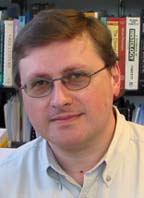
Alexander Nikitin is a Professor of Pathology at Cornell University's College of Veterinary Medicine, Department of Biomedical Sciences. His research focuses on molecular mechanisms linking tissue homeostasis to cancer development using autochthonous mouse models. Key Affiliation: Cornell University, Ithaca, NY Research Niche: Cancer-prone stem cell niches in female reproductive tract and prostate Research Interests Dr. Nikitin investigates how aberrations in p53/miR-34/MET and Rb networks drive malignant transformation of adult stem cells. His work includes: Identification of ovarian surface epithelium stem cell niche Technology-oriented cross-disciplinary collaborations Characterization of cancer initiation mechanisms in reproductive tissues Article Trends His publications span 2003–2025, emphasizing: Mouse models for epithelial cancers Role of tumor suppressor genes (p53, Rb) in cancer miR-34 family's tumor suppression functions Stem cell niche mapping in reproductive tract cancers Genetic drivers of high-grade serous carcinomas Translational research applications Lab Members Current lab personnel include: Andrea Flesken-Nikitin (Assistant Research Professor) Christopher Ashe (Research Support Specialist) Technicians and student researchers
Dr. Oluwabunmi (Bunmi) Olaloye is an Assistant Professor of Pediatrics in the Division of Neonatology at Yale School of Medicine. She holds appointments in Neonatal-Perinatal Medicine and is affiliated with the Janeway Society. Her academic background includes an MD from Rutgers New Jersey Medical School, pediatrics residency at University of Texas Medical Branch, and neonatology fellowship at University of Pittsburgh Medical Center. Dr. Olaloye's research focuses on immune dysfunction underlying neonatal intestinal diseases such as necrotizing enterocolitis (NEC) and spontaneous intestinal perforation (SIP). Using cutting-edge techniques like single-cell RNA sequencing and mass cytometry, her work identifies biomarkers and therapeutic targets to improve outcomes for premature infants. Key research areas include fetal immune system maturation, placental immune interactions, and gestational age-specific inflammatory responses. Her publication record spans 12 peer-reviewed articles between 2019-2025, emphasizing translational immunology and neonatal pathophysiology. Notable contributions include defining immune cell trajectories in preterm infants and developing gating guidelines for high-dimensional cytometry data. Current projects involve constructing immune cell atlases across human lifespans and investigating nutritional interventions for intestinal disorders. Laboratory affiliations include the Laboratory for Surgery, Obstetrics & Gynecology where she explores neonatal mucosal immunity. Her work integrates clinical observations with systems immunology approaches to address critical gaps in understanding prematurity-associated gastrointestinal pathologies.
Adam Doupé is an Associate Professor at Arizona State University's School of Computing and Augmented Intelligence (SCAI) and Director of the Center for Cybersecurity and Trusted Foundations (CTF). He holds a Ph.D. and M.S. in Computer Science from the University of California, Santa Barbara. His research focuses on cybersecurity, vulnerability analysis, web security, and hacking competitions. Notable awards include the NSF CAREER Award (2017), Best Teacher Award, and Outstanding Assistant Professor Award from ASU's Fulton Schools of Engineering. Education: Ph.D. and M.S. in Computer Science, UC Santa Barbara (2014, 2009). Research emphasizes automated vulnerability analysis, binary analysis, and cybersecurity education. Key contributions include frameworks like SCAMNet and SENSAI for fraud detection, and tools like Fuzz to the Future for uncovering future vulnerabilities. Recent articles highlight advancements in phishing ecosystem analysis, browser fingerprinting mitigation, and compiler-aware decompilation. Awards reflect his impact in both teaching and research. Advising and grants support his work in secure systems and ethical hacking. He co-leads the SEFCOM lab with Drs. Ahn, Shoshitaishvili, Wang, and Bao, and hosts CTF Radiooo for cybersecurity discussions.
Bjørn Olav Åsvold, MD, PhD, is a Professor of Medicine (Epidemiology) and Center leader at the HUNT Centre for Molecular and Clinical Epidemiology (HUNT MCE), Department of Public Health and Nursing, Norwegian University of Science and Technology (NTNU). He also serves as a Consultant at the Department of Endocrinology, St. Olavs Hospital, Trondheim University Hospital. His research spans epidemiology, genetics, and clinical medicine. MD, Norwegian University of Science and Technology, 2001 PhD, Norwegian University of Science and Technology, 2008 Specialist in internal medicine, 2014 Specialist in endocrinology, 2015 Åsvold's research focuses on thyroid dysfunction and diabetes , investigating their interplay with cardiometabolic diseases and pregnancy complications . He utilizes Mendelian randomization studies to explore causal relationships between genetic factors and health outcomes, including sleep traits , autoimmune thyroid disease , and kidney function . His work also addresses global health issues like obesity in Nepal and diabetic complications in Norway. Recent publications highlight his contributions to understanding hip fracture risk prediction , cardiovascular implications of sleep patterns , and genetic determinants of trace elements . Åsvold's collaborations span multiple international institutions, including the HUNT Study and HUNT MCE in Norway.
Daniela Cutas is an Associate Professor of Medical Ethics at Lund University since 2020 and an Associate Professor of Philosophy at Umeå University since 2012. She is also a Senior Lecturer at the Department of Medical Ethics and a Profile Area Member of LU Profile Area: Human Rights. Her research bridges Medical Ethics, Philosophy, and Reproductive Medicine, with a focus on topics such as synthetic DNA, mitochondrial replacement therapy, genetic kinship, and the ethics of intra-familial reproduction. Her work aligns with UN Sustainable Development Goals related to Ethics, Medical Ethics, and Philosophy. Recent publications highlight her expertise in synthetic biology, reproductive justice, and epigenetic responsibilities. She has received notable awards including a Marie Curie fellowship, the title of Docent in Philosophy (2013), and Merited Teacher (2019). Scientific Awards: Marie Curie fellowship Docent in Philosophy (2013) Merited Teacher (2019)
Lorin D. Warnick is currently serving as the Austin O. Hooey Dean of Veterinary Medicine at Cornell University College of Veterinary Medicine. He is a tenured Professor in the Department of Population Medicine and Diagnostic Sciences, where his research focuses on the epidemiology of Salmonella infections and antimicrobial resistance in enteric bacteria affecting both domestic animals and humans. A key contributor to Cornell's response to the COVID-19 pandemic, he has led research on SARS-CoV-2 diagnostic testing and campus outbreak dynamics. Education : B.S. in Microbiology (1984) from Brigham Young University DVM (1988) from Colorado State University Ph.D. in Veterinary Medicine (Epidemiology) and Statistics from Cornell University (1994) Professional Experience : Assistant Professor (1994-1996) at Virginia-Maryland Regional College of Veterinary Medicine Assistant/Associate Professor (1996-2008) and Professor (2008-present) at Cornell University Section Chief in Ambulatory and Production Medicine (1997-1999) Research Interests span veterinary epidemiology, antimicrobial resistance, foodborne pathogens, and public health. His work connects animal and human health through One Health frameworks, particularly in Salmonella transmission dynamics between dairy cattle and humans. He has pioneered surveillance systems for infectious diseases, including the model used during Cornell's COVID-19 response. Scientific Awards include: Phi Zeta Veterinary Honor Society (1987) Phi Kappa Phi Honor Society (1988) Honorary Diploma from American Veterinary Epidemiology Society (2018) One Cornell Award for Leadership in Pandemic Testing (2021) Advising and Grants highlight his role in mentoring students and leading interdisciplinary research teams. His grants focus on antimicrobial resistance mitigation, dairy calf health, and pandemic response infrastructure. He has collaborated extensively with institutions like USDA and CDC on foodborne disease research. Labs and Collaborations include leadership in Cornell's Veterinary Diagnostic Laboratories and contributions to the American College of Veterinary Preventive Medicine. His work integrates epidemiological modeling, microbiome analysis, and policy development for sustainable agricultural practices.
Dr. Anna Stevens is a Senior Lecturer in Archaeology and Ancient History at Monash University and an Honorary Research Associate at the McDonald Institute for Archaeological Research, University of Cambridge. She serves as Assistant Director of the Amarna Project, leading fieldwork at Akhetaten (modern Amarna), the Bronze Age city built by Pharaoh Akhenaten. Her work is conducted with permission from the Egyptian Ministry of Tourism and Antiquities. Stevens specializes in ancient Egyptian archaeology with a focus on urbanism, lived religion, and cultural interaction in the ancient world. Her research particularly examines how material culture and urban space illuminate the lives of non-elite populations in ancient Egypt. She has conducted fieldwork in Egypt, Sudan, the UK, and Australia, with Amarna serving as her primary research site. Her recent publications demonstrate a strong focus on cemetery studies at Amarna, examining burial practices, health patterns, and urban context. The research reveals significant insights about non-elite populations during Akhenaten's reign, including dietary deficiencies, heavy labor burdens, and pathogen loads that indicate challenging living conditions. Her work bridges Egyptology with broader social sciences through her editorial role for the book series 'Ancient Egypt in Context' published by Cambridge University Press. Stevens co-directs the Amarna Cemetery Project with Dr. Gretchen Dabbs, funded by the National Endowment for the Humanities, British Academy, and Egypt Exploration Society. She also leads 'Akhenaten's City: Protecting Amarna's Urban Heritage' (2023-2026), supported by the American Research Center in Egypt's Antiquities Endowment Fund. She serves on the editorial board of the Journal of Egyptian Archaeology and accepts PhD students at Monash University. Her fieldwork program at Amarna integrates archaeology and bioarchaeology to investigate health in ancient urban centers, non-elite funerary practices, and life under Akhenaten. This multidisciplinary approach has produced significant findings, including the discovery of a mature ovarian teratoma from New Kingdom Amarna, published in the International Journal of Paleopathology.
Cassidy Ellis is an Assistant Professor at the University of Cincinnati, specializing in critical cultural communication, media studies, and rhetorical criticism. Her academic work intersects with grassroots activism in reproductive justice, particularly in the Deep South, West, and Southwest regions of the U.S. PhD in Cultural Studies, Media Studies, Rhetorical Criticism (University of New Mexico, 2023) M.A. in Communication - Identity & Difference (University of Alabama, 2016) B.A. in History (University of Alabama, 2013) Her research focuses on unpacking ideologies in social debates, settler colonialism, and the material histories shaping contemporary discourses. She critically examines anti-abortion rhetorics, particularly how race and personhood are discursively constructed within the social imaginary. Her methodological approach includes autoethnography, qualitative research, and intersectional frameworks. Her recent publications in journals like The Journal of Autoethnography and Fat Studies Journal , as well as chapters in edited collections, emphasize praxis-based scholarship, queer futurities, and critical resistance to colonial narratives. Her work bridges academic inquiry with community organizing, informed by her co-founding of the Yellowhammer Fund and other reproductive justice initiatives. Graduate Student Activist Award, NCA Activism and Social Justice Division Top Student Paper, Southern States Communication Association Gender Studies Division Doctoral Fellowship for Inclusive Engagement, University of Denver Ellis has served editorial and professional roles, including peer reviewing for international journals and organizing within the Southern States Communication Association. Her community service spans abortion funds, doula projects, and patient advocacy, reflecting her commitment to material change.
Henrik von Coler is an Assistant Professor at Georgia Institute of Technology's School of Music within the College of Design. His work bridges engineering, electronic music, and empirical research, focusing on spatial audio systems, live electronics, and human-computer interaction in musical contexts. He joined Georgia Tech in 2023 after serving as director of the TU Studio for Electronic Music at Technische Universität Berlin from 2015 to 2023, where he founded the Electronic Orchestra Charlottenburg (EOC) to explore live electronic ensembles in multichannel environments. His research emphasizes the integration of sound, space, and HCI to enhance compositional and performative expressiveness. Notable projects include immersive audio installations, virtual instrument design, and AI-assisted composition. Coler has performed globally on immersive audio systems and curated international concerts. His technical contributions span spatial sound synthesis algorithms, networked music systems, and real-time signal processing tools. Key areas of exploration include volumetric music performances in metaverse environments, hybrid spatial interaction via ARCube, and statistical models for spectral synthesis. He has developed open-source systems like Orchestra (for metaverse performances) and SPRAWL (for ensemble interaction). Coler’s work often combines empirical research with artistic practice, aiming to redefine the boundaries of live electronic music through technological innovation. His academic output spans over 30 peer-reviewed articles since 2011, with recent focus on metaverse applications, AI-human collaboration, and immersive audio design. While no formal awards are listed, his leadership roles and project outcomes highlight significant contributions to music technology and spatial audio engineering.
Joanna N. Erdman is an Assistant Professor and MacBain Chair in Health Law and Policy at Dalhousie University's Schulich School of Law. Her work focuses on reproductive rights, health equity, and human rights within legal frameworks. She has extensively researched abortion law, global health policies, and gender equality in healthcare access. Erdman's scholarship addresses intersections between law, public health, and human rights, particularly in contexts like abortion accessibility, HPV vaccine equity, and prenatal care ethics. Her research interests emphasize harm reduction strategies, evidence-based lawmaking, and transnational legal perspectives. Erdman has contributed to influential discussions on constitutionalizing abortion rights in Canada, WHO guidelines on safe abortion practices, and the implementation of CEDAW in healthcare systems. Her work often critiques legal barriers to healthcare access and advocates for policy reforms grounded in human rights principles. Erdman has collaborated with leading scholars like Rebecca J. Cook and Bernard Dickens on publications analyzing abortion law and medical ethics. Her articles frequently appear in interdisciplinary journals such as the International Journal of Gynecology and Obstetrics and Emory Law Journal . While no formal grants or awards are cited here, her extensive citation count (over 5,000 downloads on SSRN) underscores her impact in health law research. Erdman’s recent work includes updating global abortion policy analyses and exploring gender equality in health systems through CEDAW frameworks. She maintains an active research agenda on transnational healthcare law and its implications for marginalized communities.
Dr. Heather Latimer is an Assistant Professor in the Gender, Women and Sexuality Studies department at the University of British Columbia's Irving K. Barber Faculty of Arts and Social Sciences. She teaches courses including Politics of Reproduction, Critical Sexuality Studies, Feminist Epistemologies, Gender and Popular Culture, and Gender, Race, Sexuality and Power. Her academic work focuses on feminist theories, sexuality studies, and reproductive politics across various cultural texts. Dr. Latimer earned her PhD in English from Simon Fraser University and her MA in Gender and Women's Studies from the University of British Columbia. Her educational background has shaped her interdisciplinary approach to examining reproductive politics through literary and cultural analysis. Her research primarily explores feminist theories and epistemologies, sexuality studies, science and technology studies, cultural studies, literature and film, with a particular focus on reproduction and pregnancy, reproductive technologies and politics, and reproductive governance and abortion. She is currently investigating the role of reproductive politics in contemporary dystopian fiction through an SSHRC Insight Development Grant-funded project that examines how fourteen core texts portray dystopian societies fixated on reproductive control. This research suggests these narratives reveal 'the political unconscious' of public and private discourses about reproduction. Dr. Latimer's publications demonstrate a consistent thematic focus on reproductive politics across literature, film, and political discourse. Her work connects feminist theory with contemporary political debates, particularly around abortion rights and reproductive justice. The articles show increasing engagement with intersectional approaches, examining how reproductive politics intersect with race, migration, and environmental concerns. SSHRC Insight Development Grant (2019-22) UBC Teaching and Learning Enhancement Fund Grant (2017-19) UBC Killam Teaching Prize (2017) Women's and Gender Studies and Recherches Féministes Outstanding Scholarship Award (2015) As a graduate student supervisor, Dr. Latimer mentors students interested in feminist theory, reproductive politics, and cultural studies. Her teaching philosophy emphasizes critical engagement with contemporary issues of power, conflict, and ideas as they relate to gender, sexuality, and reproduction. She maintains an active research agenda that bridges academic scholarship with current political debates around reproductive rights and justice.
Dr. Owen K. Davis serves as Professor of Obstetrics and Gynecology and Reproductive Medicine and Associate Director of In Vitro Fertilization at the Ronald O. Perelman and Claudia Cohen Center for Reproductive Medicine (CRM) of Weill Cornell Medical College. He is a board-certified obstetrician/gynecologist and reproductive endocrinologist with a distinguished career in advancing reproductive medicine through clinical practice and research. His academic journey began with a B.A. from Swarthmore College, followed by an M.D. from Wake Forest University School of Medicine. He completed his internship and residency at New York Hospital-Cornell Medical Center and a fellowship at Brigham and Women's Hospital in Boston, where he also served as Instructor in Obstetrics & Gynecology at Harvard Medical School. Dr. Davis's research spans the breadth of assisted reproductive technology (ART) and reproductive endocrinology, focusing on optimizing fertility treatments and understanding human reproduction. His work has led to key innovations in the field, contributing to CRM's remarkable success rates. He has authored over 85 articles in leading medical journals and more than 25 textbook chapters, though specific titles are not detailed in the provided text. His significant contributions have been recognized with multiple honors: Who's Who in America Who's Who in the World New York Magazine's Best Doctors New York Super Doctors Castle & Connolly's Top Doctors - New York Metro Area Dr. Davis has held prominent leadership positions, including Immediate Past President of the American Society for Reproductive Medicine (ASRM) and former President of the Society for Assisted Reproductive Technology (SART). He has served as Chief of the Division of Gynecology at Weill Cornell Medical College and as Chair of Weill Cornell Medical Center's Institutional Review Board. As an Associate Editor of Fertility and Sterility, he plays a key role in shaping the scientific literature in reproductive medicine. Although specific grant information is not provided, his extensive research output suggests active involvement in funded projects. At CRM, Dr. Davis works within a comprehensive team that includes specialized laboratories in Andrology, Embryology, Gerhardt Lab, and Preimplantation Genetic Testing (PGT), as well as fellowship programs and multidisciplinary support staff, to deliver cutting-edge fertility care.
Dr. Rebecca M. Rosen is an Assistant Professor of English at Murray State University, serving as Coordinator for the Medical and Health Humanities Minor and Certificate programs. She holds a PhD and MA from Princeton University, an MSt from the University of Oxford, and a BA from Barnard College, Columbia University. Her research focuses on multiethnic early American literature, Native American literature, African American literature, and intersections between literature and medicine. Dr. Rosen teaches courses including ENG 105 (BIPOC Contemporary American Women Writers), ENG 311 (American Literature to 1865), and ENG 320 (Survey of African American Literature). Her work bridges historical literary analysis with contemporary medical humanities, examining themes like reproductive rights, colonial legal practices, and bioethical dilemmas in science fiction. Education: PhD, Princeton University MA, Princeton University MSt, University of Oxford BA, Barnard College, Columbia University Her awards include the Richard Beale Davis Prize (2022), AAS-NEH Fellowship (2023), and recognition as Junior Scholar of the Month by the Society of Early Americanists (2018). She co-coordinates the American Studies Minor and actively participates in professional organizations like the Modern Language Association and the American Studies Association.
Rhoda Kanaaneh is an Adjunct Assistant Professor in the Department of Anthropology at Columbia University. She specializes in Palestinian Studies, Gender and Sexuality, and the intersection of ethnicity, nationalism, and military service. Her work examines Palestinian citizens of Israel through lenses of reproductive rights, military participation, and ethnic identity. Dr. Kanaaneh has held academic positions at Columbia University, New York University, and the American University in Washington, DC. She has received fellowships from Harvard University, the European University Institute, and Columbia University. She serves on the editorial committee of the Journal of Palestine Studies . Her award-winning scholarship includes Birthing the Nation: Strategies of Palestinian Women in Israel (2002) and Surrounded: Palestinian Soldiers in the Israeli Military (2008). Her research explores themes such as gendered citizenship, queer perspectives on Palestinian identity, and the paradoxes of Palestinian military service in Israel. Recent work focuses on reproductive politics in the Galilee and queering Palestinian national narratives. Her publications consistently bridge ethnographic fieldwork with critical analysis of state policies and ethnic dynamics.
Mehmet Soyer , Assistant Professor at Utah State University’s College of Arts & Sciences , specializes in the School of Social Sciences . His work bridges environmental sociology , social inequality , and pedagogical innovation . Research Focus : Socio-environmental conflicts, hydraulic fracturing impacts, autoethnography, and community-engaged learning. Teaching Philosophy : Advocates for experiential learning, digital tools, and brave spaces in classrooms. Publication Trends : Recent work highlights climate activism, inclusive education, and interdisciplinary approaches to sustainability. Earlier research explores Kurdish identity, sociological theory, and health dynamics.