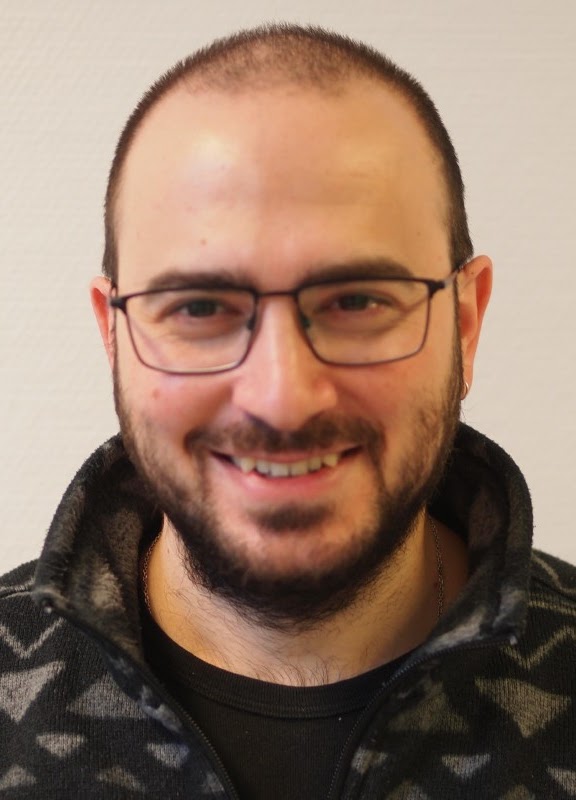
Roberto Mora Cortez serves as an Associate Professor in the Department of Business and Sustainability at the University of Southern Denmark (SDU), Kolding campus, with a primary focus on Business-to-Business (B2B) marketing research and instruction. His academic contributions span teaching, publication, and industry engagement within the global B2B domain. His research expertise centers on B2B Marketing , Market Segmentation , and Quantitative Methods , with significant extensions into Sales , Trade Shows , Customer Journey mapping, and DEI in B2B contexts. His methodological approach combines systematic reviews, survey research, and empirical analysis, emphasizing practical applications for businesses across diverse economic environments including Chile and Peru. Key investigations address segmentation efficacy, digital transformation of trade shows, and the integration of diversity principles into B2B selling frameworks. Analysis of his 15 most recent publications (2022-2025) reveals dominant trends toward digitalization, sustainability, and inclusivity in B2B practices. His work consistently bridges theoretical frameworks with actionable implementation strategies, particularly in global and emerging markets. Notable thematic clusters include AI-driven business processes, relationship marketing resilience during economic fluctuations, and social media's role in B2B engagement. No scientific awards, prizes, or fellowships are documented in the available records. Mora Cortez has supervised at least one bachelor thesis student (Catherine Scheck) and teaches courses including Business-to-Business Marketing, Advanced Quantitative Analyses, and Scientific Research Processes. His academic service includes peer reviewing for the Journal of Business & Industrial Marketing and participation in conferences such as the AMA Winter Academic Conference. International collaborations with Georgia State University and the University of Chile indicate active research networking. His departmental work within SDU's sustainability-focused business unit involves media engagement on mining industry marketing in Latin America, including contributions to Peruvian business media on value propositions and trade show ROI. Current research trajectories emphasize digital transformation, sustainable innovation, and DEI integration within evolving B2B landscapes.
Timo Minssen is Professor of Law at the University of Copenhagen (UCPH) and the Founding Director of UCPH's Center for Advanced Studies in Bioscience Innovation Law (CeBIL). He also holds affiliations as an LML Research Affiliate at the University of Cambridge and an Inter-CeBIL Research Affiliate at Harvard Law School's Petrie-Flom Centre. With extensive expertise in Intellectual Property, Competition, and Regulatory Law, Minssen focuses on the legal aspects of emerging health and life science technologies, including genome editing, big data, artificial intelligence, and quantum technology. His educational background includes a German law degree (Staatsexamen) from Georg-August-University in Göttingen, and Swedish biotech & IPR related LL.M., LL.Lic., and LL.D. degrees from Lund University and Uppsala University. His PhD thesis on the patentability of biopharmaceutical technology in the US & Europe received the prestigious Swedish King Oscar award. 2024: TUM Global Visiting Professor, Technical University of Munich (Germany) 2016: Visiting Research Fellow, University of Cambridge (UK) 2014: Visiting Research Fellow, University of Oxford (UK) 2013-14: Visiting Scholar, Harvard Law School (US) 2012: LL.D. - Doctor of Laws (Swedish "juris doktor"), EU/US patent law, Lund University, Sweden Minssen's research spans AI & Big Data in Health & Life Sciences, Sustainable and responsible innovation & tech transfer, Pharmaceutical-, Life Science- & Biotech Law, Comparative European & US Patent Law, Intellectual Property Law & Open Innovation, and EU Competition- & US Antitrust Law. His work addresses legal issues throughout the lifecycle of health and life science products and processes, from R&D regulation to technology transfer and commercialization. His extensive publication record includes 7 books and over 200 articles and book chapters published in leading journals such as Science, Nature Biotechnology, JAMA, and Harvard Business Review. His research has been featured in The Economist, Financial Times, and other major media outlets. Minssen's recent work shows a strong focus on AI regulation, quantum technology law, and data governance in health contexts, reflecting the evolving landscape of technology and law. Scientific Awards and Recognition King Oscar award for best Jur. Dr. thesis (2014) Jorcks Fonds Forsknings Pris (Jorck's Foundation Research Prize) (2017) Awapatent Research Prize (2009) Max Planck Research Scholarship (2005) Visiting Scholar appointments at Harvard Law School, University of Oxford, and University of Cambridge Recipient of a Novo Nordisk Foundation Grant for a "Collaborative Research Program in Biomedical Innovation Law" (2018) As an advisor, Minssen serves international organizations including the WHO, WIPO, and EU Commission. He has supervised numerous PhD students in areas including pharmaceutical law, biotechnology patents, and antimicrobial resistance. His current research projects include the Novo Nordisk Foundation's International Collaborative Bioscience Innovation & Law (Inter-CeBIL) Programme (50 million DKK), CLASSICA: EU Horizon Project on AI-assisted surgery, and AI@Care: Law and Ethics and Algorithmic Bias in Healthcare. Minssen leads the Center for Advanced Studies in Bioscience Innovation Law (CeBIL), which serves as a hub for interdisciplinary research on the intersection of law, technology, and innovation in the health and life sciences. The center collaborates with institutions worldwide to address pressing legal challenges in emerging technologies.
Jan Damsgaard is a Professor at the Department of Digitalization, Copenhagen Business School, where he conducts research at the intersection of digital technology and business transformation. His work spans multiple domains including artificial intelligence, blockchain, digital platforms, and payment systems, with significant contributions to understanding how organizations navigate digital disruption. Professor Damsgaard's research interests focus on digital transformation , artificial intelligence implementation , blockchain applications , and digital sovereignty . He examines how organizations can strategically leverage emerging technologies while addressing governance challenges and societal implications. His work particularly emphasizes practical applications in the public sector, financial systems, and small-to-medium enterprises. His recent publications reveal a strong focus on AI adoption in Danish businesses , digital sovereignty challenges , and blockchain applications for sustainable commerce . The research demonstrates increasing attention to regulatory frameworks, national security implications of technology dependence, and practical implementation strategies for emerging digital tools across various sectors. With over 132 publications including books, journal articles, and conference contributions, Damsgaard has established himself as a leading voice in digitalization research. His work extends beyond academia through extensive media engagement, with over 1,122 press appearances where he discusses current technology trends and their societal implications. Professor Damsgaard actively participates in public discourse through media contributions, expert panels, and advisory roles. His research connects academic insights with practical business applications and policy recommendations, particularly regarding digital governance, payment systems, and AI implementation strategies across sectors.
Thorsten Schoormann is an Associate Professor at Roskilde University's Department of People and Technology, specializing in Sustainable Digitalization. He holds a PhD in Information Systems from the University of Hildesheim (2019), along with MSc (2015) and BSc (2014) degrees in the same field. His research focuses on digital sustainability, circular economy, AI applications, and data ecosystems. He also held an Assistant Professorship at the Technical University of Braunschweig (2023–2025) and was a PostDoc at the University of Hildesheim (2020–2023). Research Interests: Digital transformation, sustainable business models, design science, and AI ethics. Awards: Multiple Best Associate Editor Awards (ECIS 2023/2024), Best Reviewer Award (PACIS 2022), and Best Paper in ICIS Track (2021). Activities: Organized conferences like INFORMATIK 2025 and Hawaii International Conference on System Sciences 2026; editorial roles in journals like European Journal of Information Systems . His work spans theoretical advancements in design science and practical implementations of sustainable technologies, with a focus on unlearning systems, data spaces, and AI-driven sustainability solutions.
Erik Bjørnager Dam is a Professor in the Machine Learning section at the Department of Computer Science, University of Copenhagen (UCPH). His research spans theoretical foundations of machine learning to practical applications in medical data analysis, sustainability, and materials science. His key research interests include: Small-scale and resource-efficient deep learning Medical image analysis and segmentation Sustainable and environmentally conscious AI development Graph neural networks for materials science Resource-constrained AI systems Professor Dam's recent publications demonstrate a strong focus on making AI more accessible and sustainable while maintaining high performance standards. His work on 'Performance Per Resource Unit' metrics addresses critical challenges in deploying AI in resource-limited environments, particularly in healthcare applications. His research bridges theoretical machine learning with practical implementations across multiple domains. His notable professional activities include: Co-founding Cerebriu A/S (since 2018) Co-founding Biomediq A/S (since 2008) Delivering lectures on AI's role in green transition (April 24, 2023) Media contributions on deep learning applications in plant research (September 13, 2018) With 74 documented research outputs, Professor Dam maintains an active research profile with significant contributions in 2023-2025 across medical imaging, sustainable AI, and materials science applications.
Abayomi Baiyere serves as an Associate Professor in the Department of Digitalization at Copenhagen Business School (CBS), where he conducts cutting-edge research at the intersection of digital technologies and organizational transformation. His work significantly contributes to UN Sustainable Development Goals through digitally-enabled societal impact initiatives and has yielded 69 research outputs including high-impact publications in premier journals like Information Systems Journal and Information Systems Research . His research program focuses on: Digital transformation frameworks (notably the MIND framework for capability assessment) Platform design and governance mechanisms Smart service systems development Workplace transformation through digital subtraction logic Digital strategy implementation challenges Analysis of his 15 most recent publications (2024-2025) reveals a strong theoretical grounding in institutional and practice-based perspectives, with increasing emphasis on ethical dimensions of digital transformation, AI implementation constraints, and methodological innovations in computational research. His work consistently bridges conceptual rigor with practical applicability for organizational leaders. Dr. Baiyere actively shapes academic discourse through editorial roles including co-editing The Routledge Companion to Management Information Systems (2025) and organizing key events like the African IS Paper Development Workshop (2020). His public engagement includes 6 media contributions discussing digital workplace transformation and strategic implementation challenges, demonstrating commitment to translating research into practical insights for broader audiences. Within CBS, he has supervised 8 academic works while contributing to the department's international recognition in digitalization research. His activities reflect deep engagement with both theoretical advancement in information systems and practical solutions for organizational digital maturity.
Hanne Leth Andersen is the Rector of Roskilde University and a Professor of University Pedagogy. She holds a PhD and has extensive experience in higher education leadership, including roles as director of the Centre for Teaching Development at Aarhus University and director of the Learning Lab at Copenhagen Business School. Her research focuses on foreign language didactics, university pedagogy, educational quality, and innovative teaching methods. Education: PhD in University Pedagogy. Previous academic positions include Professor of University Pedagogy at Aarhus University and Copenhagen Business School. Research interests emphasize exam form innovations, teaching development, language learning methodologies, and the role of foreign languages in education. She advocates for educational quality and pedagogical strategies to enhance student learning environments. Key awards include Chevalier de l'Ordre de la Légion d'Honneur (France), Commandant of the Ordre des Palmes Académiques (France), and Dannebrog Order (Denmark). Notable contributions include developing teacher training programs and advising on educational policies in Norway, Sweden, Finland, and France. Advising and grants: Pioneered collegial supervision methods for teacher competence development at Aarhus University, contributed to Norway’s university quality systems evaluations, and advised on French bachelor’s program reforms. Engaged in strategic board roles within research, education, and cultural institutions. Labs/teams: Active in Roskilde University’s Rectorate leadership, previously directed Learning Lab at CBS, and collaborates internationally on educational strategy initiatives.
Thomas Bjørner is an Associate Professor at Aalborg University's Department of Architecture, Design and Media Technology within The Technical Faculty of IT and Design. He serves as Head of the Media Innovation & Game Research (Me-Ga) unit and co-founded the research network for qualitative methods (since 2007) with 40+ company collaborations. Specializes in qualitative/mixed methods for technology evaluation Teaches PhD courses in advanced qualitative methods EU expert evaluator for research grants His research focuses on gamified learning , VR for social communication , and technology acceptance studies , often addressing UN Sustainable Development Goals. Recent projects include: Audio-only VR for blind gamers Generative AI integration in education Plastic crisis awareness games Smart city implementation barriers Scientific Awards: Serious Game Competition Award (2022) International conference prizes (2020, 2018) With over 121 publications including two textbooks, his work emphasizes applied qualitative methods with improved validity in technology contexts, particularly for youth education and media research.
Sara Shafiee is a Senior Researcher at the Department of Civil and Mechanical Engineering , Technical University of Denmark (DTU) . She specializes in product configuration systems, manufacturing engineering, and AI-driven innovation. Her work bridges technical systems with organizational agility, emphasizing sustainability and customer-centric design. External Roles: Founder & CEO of DivERS (Jan 2021–) External Lecturer at Copenhagen Business School (2022–2024) Senior Business Consultant at Haldor Topsoe AS (2017–2019) Research Focus: Her work addresses challenges in product configuration systems, generative AI applications, and sustainable construction. Key themes include: Optimal product design through recommendation systems Agile methodologies in knowledge-intensive development Environmental impact monitoring via configurators Publications Trends (2023–2025): Recent work explores AI-driven manufacturing optimization, consumer-centric innovation strategies, and the integration of environmental monitoring into design systems. High-impact areas include generative AI applications (13K+ downloads) and modular construction configurators. Awards: Agnes & Betzy Award (2025) Nordic Women in Tech Leadership Award (2022) Best Digital Startup (Venture Cup Denmark, 2021) Innovation Fund Denmark Role Model (2018) Advising & Grants: Supervised PhD projects on recommendation systems and configurator design. Lead PI of the RECODE project (DFF Grant DKK 10M+, 2024–2027) focusing on deep learning for engineer-to-order systems. Labs & Teams: Core member of DTU’s Design and Manufacturing Systems group, collaborating with industry partners like Haldor Topsoe and DivERS to develop scalable configurator solutions.
Anders Kalsgaard Møller is an Associate Professor in the Department of Culture and Learning at Aalborg University's Faculty of Humanities and Social Sciences. He is actively engaged in research and innovation in learning design, digital technologies, and artificial intelligence in education. His work is centered around the L-ILD (IT and Learning Design), Green Society, and MASSHINE Xlab – Design, Learning and Innovation research environments. His research interests span Learning Design , Computational Thinking , Artificial Intelligence in Education , Human-Robot Interaction , and Environmental Literacy . He investigates how emerging technologies can be integrated into educational practices to enhance collaborative learning, literacy development, and sustainable thinking. His work often involves participatory and co-design methods with educators and children. The recent publications of Anders Kalsgaard Møller reflect a strong trend toward the application of generative AI, robotics, and digital tools in language and primary education. His scholarly output emphasizes interdisciplinary collaboration, technological innovation, and real-world educational impact, particularly in K-12 and higher education contexts. Principal Investigator, 'Using artificial intelligence in English teaching at upper secondary schools' (2023–2026) Co-PI, 'Co-Designing Robot-Assisted Learning for Children' (ongoing) Co-PI, 'Labor market-oriented AI skills at cand.it.' (2024–2026) Co-PI, 'Understanding and fostering future consumers' environmental literacy' (2024–2025) Anders Kalsgaard Møller has been involved in media outreach, including coverage on children's interactions with social robots and discussions on AI in education. He has also contributed to academic leadership through conference organization and editorial roles, such as in the DLI conference series. He is affiliated with key research labs including: L-ILD – IT and Learning Design Green Society MASSHINE Xlab – Design, Learning and Innovation These labs focus on digital innovation, sustainability, and human-centered design in educational contexts.
Mark Bo Jensen is an Assistant Professor (tenure track) at the Department of Engineering Technology and Didactics, Technical University of Denmark (DTU), specializing in Energy Technology and Computer Science. His research is centered on Perception Engineering and Extended Reality technologies, particularly Virtual Reality (VR), with applications in human cognition, computer graphics, and scientific visualization. His research interests lie at the intersection of engineering and cognitive sciences, focusing on creating immersive and convincing extended reality experiences. Jensen applies his over 10 years of expertise in real-time computer graphics to advance VR systems for perception modeling, geometric data visualization, and material appearance simulation. His work contributes to fields such as medical diagnostics, 3D annotation, and photorealistic rendering. The recent publications highlight a strong trend in leveraging VR for scientific tasks, such as anatomical landmark annotation and visual field testing, as well as advancing core graphics techniques like meshlet optimization and diffusion-based stereo image generation. His research integrates computer vision, graphics algorithms, and human-centered design. While no scientific awards are currently listed, his active participation in research projects and consistent publication output indicate a growing academic profile. He has contributed to interdisciplinary collaborations involving medical, biological, and engineering domains. Jensen has been involved in advising and research projects, including serving as a PhD student in the 'Virtual Reality-Based Visualization of Geometric Data' project and currently as a project participant in 'AL-EYE: The Visual Aid'. These projects reflect his focus on applied VR solutions and data understanding. His work is conducted within the Energy Technology and Computer Science division at DTU, where he contributes to advancing perception-driven technologies and their practical implementation in scientific and medical contexts.
Christian Koch is a Professor and Head of Section at the University of Southern Denmark (SDU) Civil and Architectural Engineering, Department of Technology and Innovation, where he leads research on construction industry dynamics, climate change mitigation, and digital transformation. His work bridges institutional theory with practical challenges in sustainable development and organizational innovation. SDU Climate Cluster EU SAND Project Participant Creative Construction Conference Chair Research interests include circular economy implementation, blockchain in construction logistics, lean construction methodologies, and AI applications for safety analysis. His studies focus on institutional entrepreneurship, interorganizational networks, and policy impacts on construction practices, particularly in Denmark and Sweden. Recent article trends analyze machine learning for accident report analysis, blockchain-enabled resource marketization, and climate-resilient infrastructure. Notable awards include the Taylor and Francis Best Theoretical Paper (2025), SCC Fast Track Award (2024), and CME Best Paper on Societal Challenges (2022). Scientific awards include: Taylor and Francis Best Theoretical Paper (2025) SCC Fast Track November 2024 CME Best Paper Transformative Impact (2022) Best Paper Creative Construction Conference (2025) He actively participates in public discourse through media engagements on construction safety, climate adaptation, and sustainable sand extraction for green transitions.
Georgios Arvanitidis is an Associate Professor at the Technical University of Denmark (DTU) in the Department of Applied Mathematics and Computer Science, specifically within the Section for Cognitive Systems (CogSys). He has established himself as a leading researcher in geometric machine learning, focusing on the application of differential geometry principles to enhance machine learning models. His work bridges theoretical mathematics with practical applications in artificial intelligence, with particular emphasis on understanding the geometric structure of data manifolds and latent spaces. Dr. Arvanitidis completed his educational journey with a Bachelor's degree from the Department of Informatics at the Aristotle University of Thessaloniki, followed by a Master's degree in Computer Science from Saarland University supported by the Max Planck Institute for Informatics. He earned his PhD at DTU's Cognitive Systems section under the supervision of Søren Hauberg, with additional research experience at Philipp Hennig's Probabilistic Numerics group. Prior to his current position as associate professor, he was a PostDoc at the Max Planck Institute for Intelligent Systems working with Bernhard Schölkopf. Dr. Arvanitidis's research primarily focuses on differential geometry in machine learning , where he explores how geometric structures can enhance representation learning and statistical modeling. His work in generative models investigates how learning the geometry of data manifolds can improve deep learning architectures. In the domain of deep learning theory , he examines why deep learning models generalize effectively on unseen data, with particular attention to the curvature properties of loss landscapes. His research in approximate Bayesian inference applies geometric principles to improve uncertainty quantification in neural networks. Through his innovative approaches, Dr. Arvanitidis has established himself as a leading researcher in geometric machine learning, contributing to both theoretical foundations and practical applications across various domains including robotics and life sciences. The publication trends of Dr. Arvanitidis reveal a consistent and evolving focus on geometric approaches to machine learning problems. His recent work (2023-2025) demonstrates increasing sophistication in applying Riemannian geometry to deep learning architectures, with particular emphasis on latent space geometry, optimization on manifolds, and geometric interpretations of neural network behavior. A notable pattern is the progression from foundational work on geometric representations to more applied research in areas like robotics and causal inference. His publications span top-tier conferences including NeurIPS, ICML, ICLR, and AISTATS, reflecting the high impact of his research. The interdisciplinary nature of his work is evident in collaborations across mathematics, computer science, and robotics domains, with recent papers addressing challenges in multimodal sampling, safety guarantees for dynamical systems, and counterfactual explanations. Dr. Arvanitidis has received several notable scientific awards and recognitions: Sapere Aude starting grant from the Independent Research Fund Denmark (DFF) GADL funding i-Rase, Pathfinder, and EIC (European Innovation Council) funding Best reviewer award for NeurIPS 2019 Best reviewer award for NeurIPS 2018 Best student paper award at Robotics: Science and Systems (R:SS) 2021 Dr. Arvanitidis actively mentors PhD students and researchers, currently supervising Alejandro Valverde, Johanna Gegenfurtner, and Albert Kjøller Jacobsen. He has previously co-supervised Alison Pouplin's PhD and worked with research assistant Georgios Pantis. His group receives substantial funding through multiple prestigious grants including the Sapere Aude starting grant from the Independent Research Fund Denmark, as well as European Innovation Council funding. He has been instrumental in creating opportunities for students interested in geometric machine learning, offering BSc and MSc thesis projects focused on generative models, deep learning theory, and optimization techniques. Dr. Arvanitidis also contributes significantly to the academic community as a reviewer for top conferences including ICLR and TMLR, and as an area chair for NeurIPS, ICML, AISTATS, and UAI. He co-organized the Machine Learning Summer School 2020 in Tübingen, further demonstrating his commitment to education and community building. Dr. Arvanitidis leads a vibrant research group focused on geometric machine learning within the Cognitive Systems section at DTU. His team includes multiple PhD students working on cutting-edge research at the intersection of differential geometry and artificial intelligence. The group has developed notable software tools, including the "geometric_ml" GitHub repository with over 70 stars, which contains implementations for applying Riemannian geometry in machine learning. His research has practical applications in robotics, where geometric approaches enable more robust motion planning, as evidenced by his work on "Reactive Motion Generation on Learned Riemannian Manifolds" which received a best student paper award. Additionally, his methodologies have found applications in life sciences, as mentioned in his 2022 AISTATS paper. The collaborative nature of his work is evident through extensive partnerships with researchers at institutions including the Max Planck Institute for Intelligent Systems, University of Cambridge, and various European universities. His recent news items indicate active engagement with the academic community through talks, conference presentations, and ongoing supervision of new PhD students joining his group.
Shashi Raj Pandey serves as Assistant Professor in the Department of Electronic Systems at Aalborg University's Technical Faculty of IT and Design, Denmark. His research is anchored in the Connectivity section and Connectivity Classique-Center for Classical Communication in the Quantum Era, with office location at Fredrik Bajers Vej 7C, C1-111, 9220 Aalborg Øst. His core research spans Network Economics, Game Theory, and Wireless Networks, with specialization in Decentralized Machine Learning and Semantic/Goal-oriented Communications. Current work integrates Digital Twin technologies with 6G systems for industrial automation and earth observation, emphasizing resource-efficient protocols for Internet of Things and edge intelligence applications. Recent publications (2024-2025) reveal a clear trajectory toward AI-6G convergence, featuring semantic communications for satellite imaging, game-theoretic network resource allocation, and digital twin implementations for autonomous systems. Key themes include communication efficiency in distributed learning and physical-digital world integration. Notable recognitions include: Best PhD Thesis Nominee (2021) Excellent Paper at Korea Software Congress, KIISE 2021 Student Best Paper Award at APNOMS 2019 Best Paper at Korea Software Congress, KIISE, 2018 Brain Korea 21st Century Plus Fellowship Academic service includes external PhD examination for EU SNS projects and peer review for premier conferences (AAAI, ICLR, ICML). His lab work within the Connectivity Classique-Center explores classical communication frameworks applicable to quantum-era networks, with focus on semantic information theory and decentralized network architectures.
Professor Andreas Kjær (MD, PhD, DMSc) serves as Head of the Cluster for Molecular Imaging (CMI) at the Department of Biomedical Sciences, Faculty of Health and Medical Sciences, University of Copenhagen. He is also Chief Physician at Rigshospitalet and co-founder of Minerva Imaging, a CRO established in 2011. University of Copenhagen Department of Biomedical Sciences Cluster for Molecular Imaging Rigshospitalet His research focuses on translational molecular imaging with PET/PET-MRI and targeted radionuclide therapies (theranostics) for precision medicine in cancer, cardiovascular, and inflammatory diseases. CMI bridges basic research to clinical implementation, leveraging interdisciplinary expertise in physics, chemistry, biology, and medicine to develop imaging agents and therapies. Recent publications highlight advancements in theranostics , PET/CT , hyperpolarized MRI , and radiopharmaceutical development . Collaborations span oncology, cardiology, and nuclear medicine, with clinical trials in neuroendocrine tumors and metabolic imaging. Current affiliations include University of Copenhagen (Professor, Department of Biomedical Sciences) Rigshospitalet (Chief Physician)