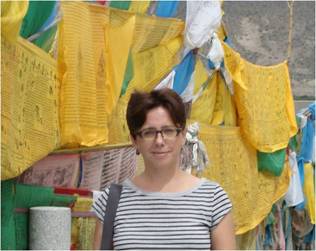
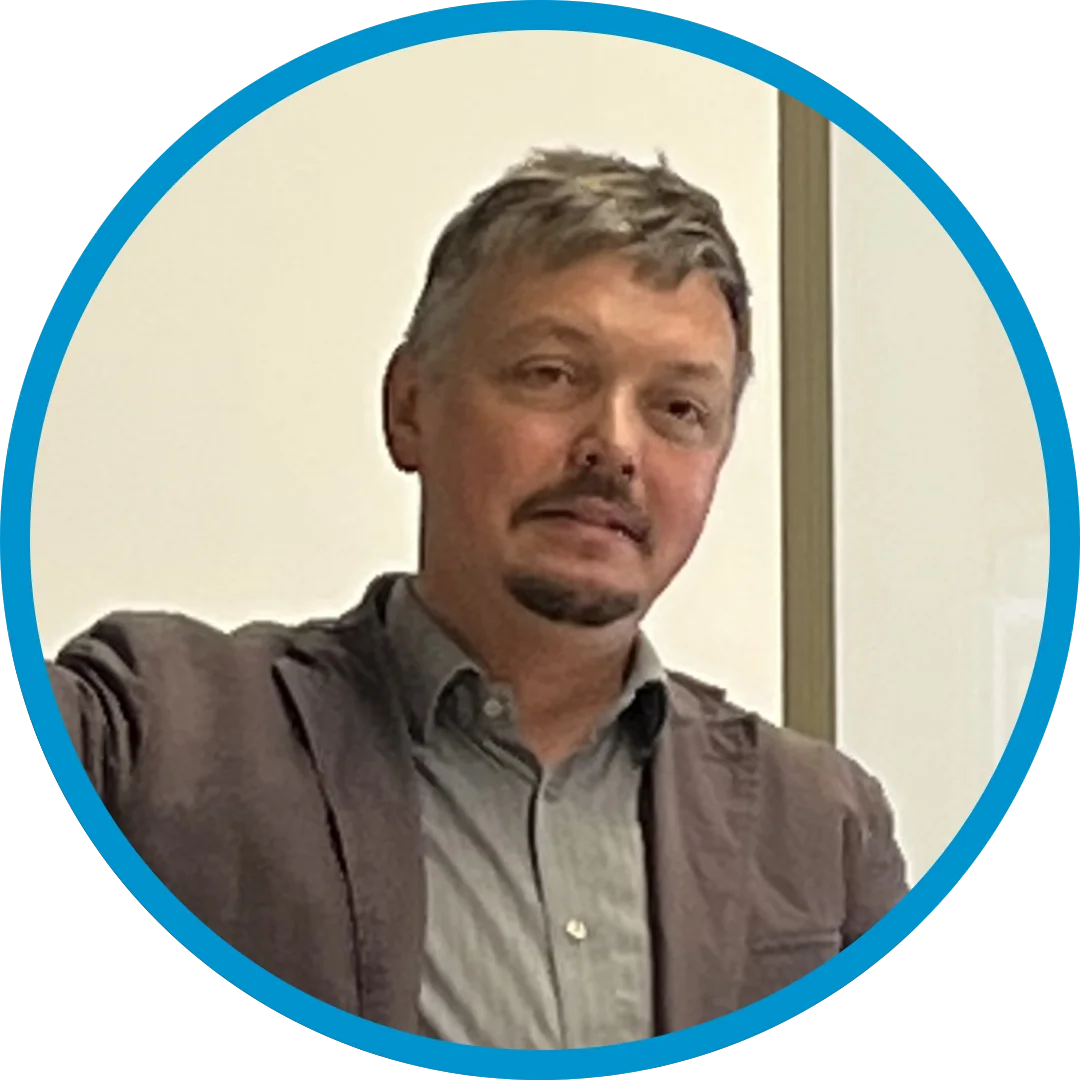
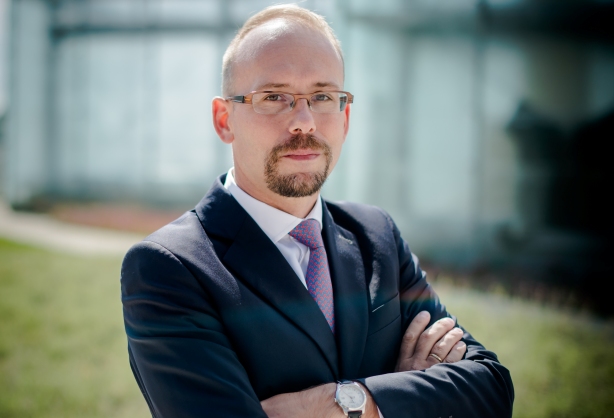
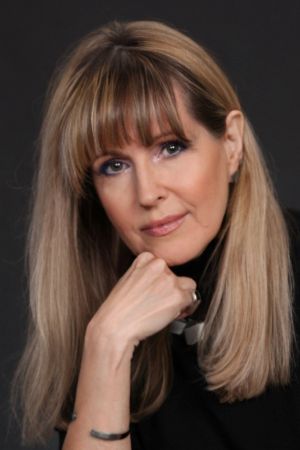
Monika Gabryś-Sławińska is a Professor at the Department of Polish Literary History , part of the Faculty of Languages, Literatures and Cultures at the University of Maria Curie-Skłodowska (UMCS). Her research spans 19th- and 20th-century Polish literature , focusing on Stefan Żeromski , historical journalism , text editing , voice emission , and museology . MA in Polish Philology (1998, UMCS) PhD in Literary Studies (2007, UMCS) Habilitation in Literary Studies (2016, UMCS) Her research interests include political commentary in historical press , media's role in cultural identity , and sociolinguistic trends . She has edited over 29 academic volumes and authored 5 monographs. Scientific awards: Bronze Cross of Merit KEN Medals (Bronze, Silver) 8 Rector's Awards (UMCS) Lublin Mayor's Medal (2019) She has participated in 5 research grants , organized 35 academic conferences , and contributed extensively to Annales UMCS as a scientific editor.
Professor Agnieszka Zabłocka-Kos is a faculty member at the Institute of Art History, University of Wrocław, specializing in Central European architectural history and urbanism. Her work focuses on 19th-20th century architecture, with particular emphasis on Wrocław/Breslau, including post-war reconstruction, national identity construction, and sacred space design. Professor, University of Wrocław Specialist in 19th-20th century Central European architecture Director of postdoctoral internships (NCN FUGA III) Recipient of multiple Rector's awards for research and teaching Research Themes: Urban development in Central Europe, political architecture in Poland/Germany, sacred architecture of the 19th century, post-war modernism, industrial architecture revitalization. Her students have produced award-winning theses on topics like Wrocław urban blocks, Silesian architects, and post-industrial adaptations. Scientific Contributions: Notable works include the edited volume Architecture in the 'long' 19th century (2019), multiple articles on Breslau's architectural conflicts, and international projects on Central European sacred architecture. She has supervised 33 master's and 5 doctoral theses, with several student works published as books. Dettloff Prize for dissertation (1992) Rector's awards for research and didactic achievements International projects with universities in Berlin, Freiburg, and Leipzig Advisor for Wrocław's Monument Office and City Development Bureau Her teaching integrates interdisciplinary approaches, linking art history with political, economic, and social contexts. She promotes student research popularization through conferences, exhibitions, and publications.
Dr. Edyta Chlebowska is an Assistant Professor at the Cyprian Norwid Research Center, John Paul II Catholic University of Lublin. Specializing in the visual art and literary legacy of Cyprian Norwid, she explores intersections between Polish Romanticism, art history, and cultural studies. Her work extends to album art analysis and interdisciplinary connections with music (e.g., Pink Floyd, Czesław Niemen). Her research focuses on Norwid's self-portraits, eschatological themes in his drawings, and comparative studies with 19th-century Warsaw painting. She reconstructs lost artworks, documents private collections (e.g., Konstancja Górska, Victor Gomulicki), and examines Norwid's reception in Florence and Odessa. Key projects include translating Studia Norwidiana and critical editing of Norwid's complete works. As editor-in-chief of multiple On Cyprian Norwid. Studies and Essays volumes and organizer of conferences like Niemen Non Stop and Colloquia Norwidiana , she bridges academic rigor with public engagement. Her publications span peer-reviewed books, journal articles, and popular science pieces, emphasizing Norwid's unpublished works and symbolic programs.
Stanislaw Moniuszko Academy of Music in GdańskPoland
Professor Marcin Ciszewski is a distinguished faculty member at the Stanisław Moniuszko Academy of Music in Gdańsk, where he serves at the Faculty of Vocal and Acting. A graduate of the same institution with distinction in 1999, he has established himself as one of Poland's leading countertenors and vocal pedagogues. His educational background includes studies under Professor Piotr Kusiewicz and additional training with renowned instructors including Kinga Chełmińska, Ryszard Minkiewicz, Kai Wessel, Gerhard Kahry, and Dariusz Paradowski. Graduated with distinction from the Academy of Music in Gdańsk (1999) Habilitated doctor of musical arts (2019) Professor at the Faculty of Vocal and Acting Professor Ciszewski specializes in early music performance and is recognized as one of the first Polish countertenors who made significant contributions to the development of vocal art in the authenticity movement in Poland. His research focuses on the history and physiology of countertenor voices, and he regularly conducts lectures and voice training for professional and academic groups. His artistic output spans several hundred concerts across Poland and Europe, featuring collaborations with renowned ensembles, orchestras, and conductors. He has given over a dozen world premieres of both early and contemporary works, including compositions specifically written for him by modern composers. His recordings include extensive work for Polish Radio and Television, the French music television channel Mezzo, and Radio Classique. Notable Achievements Member of the European artists' association Spedidam based in Paris Nominated for the "Fryderyk" music award in the Early Music category Honored with international titles "Outstanding Teacher" and "Excellent Vocal Teacher" Since 2006, Professor Ciszewski has maintained a successful artistic partnership with organist Ewa Bąk, performing at over one hundred national and international organ festivals. Their collaborations have resulted in numerous CD, radio, and television recordings, including world premieres of works by Polish composers such as Marian Sawa and Jacek Urbaniak.
Joanna Grela is a Professor at the Department of Comparative Civilization Studies within the Faculty of Philosophy at Jagiellonian University (UJ) in Kraków, Poland. She holds habilitation in cultural studies (2016, SWPS University, Warsaw), a doctorate in religious studies (2004, Jagiellonian University), and is a certified Tibetologist (2000, INALCO, Paris). Her academic credentials also include an MA in philosophy (1996, Jagiellonian University) and postgraduate studies in gender (2009, Jagiellonian University). Her educational background includes: 2004: PhD in Humanities in religious studies, Jagiellonian University 2000: Diplôme Unilingue de Langue et Civilization Orientales de Tibétain, Institut National des Langues et Civilizations Orientales (INALCO), Paris 1996: Master of Philosophy, Jagiellonian University 2009: Postgraduate studies in gender, Jagiellonian University Professor Grela's research focuses on Tibetan, Himalayan, and Mongolian cultures, with particular emphasis on pre-Buddhist cults and their contemporary representations in popular culture, societal transformations, Tibetan ethnic and cultural identity, cultural stereotypes, and the comparative anthropology of Buddhism. Her work bridges religious studies, cultural anthropology, and Tibetan studies, examining both historical traditions and their modern adaptations. She has made significant contributions to understanding how traditional Buddhist practices interact with contemporary social contexts, digital technologies, and global cultural flows. Her scholarly output reveals consistent engagement with Tibetan religious culture, Buddhist textual traditions, and the adaptation of Buddhist practices in modern contexts. She has extensively explored the relationship between pre-Buddhist traditions and contemporary religious practices, the role of deities in Tibetan Buddhism, and the transformation of Buddhist thought in different cultural settings including Thailand and Poland. Her more recent work addresses how Buddhism is adapting to digital environments and contemporary social challenges. Her notable achievements include: 2017: Pro Arte Docendi Award from the Rector of Jagiellonian University Multiple teaching awards (2011/12, 2012/13, 2014/15) Membership in the International Association of Buddhist Universities (IABU) Collaboration with the Centre d'Etudes Himalayennes CNRS Professor Grela has led significant research projects including 'The impact of secularization and schooling on socio-religious relations between ritual specialists and the lay community in the Rebkong region' (2018-2020) and 'The Common Buddhist Text Project' (2009-2016). Her work demonstrates a strong commitment to both scholarly research and teaching excellence, with numerous publications spanning academic journals, edited volumes, and encyclopedia entries. She maintains active international collaboration and has presented her research at conferences across Europe and Asia.
Przemysław Kordos is a Professor at the University of Warsaw , affiliated with the Faculty of Liberal Arts , where he serves as Coordinator for the Development of the Modern Greek Philology Program . He holds two PhDs in Humanities (2007, 2019) and was awarded the Loukis Papaphilippou Seat of Advancement in Modern Greek scholarship. Education: MA in Ethnology and Cultural Anthropology (University of Warsaw, 2001) MS in Sociology (University of Warsaw, 2002) PhD in Humanities (University of Warsaw, 2007) Second PhD in Humanities (University of Warsaw, 2019) His research interests span: Contemporary Modern Greek and Cypriot literature Polish-Greek cultural relations (philhellenism) Social and ethnographic issues in Greece and Cyprus Travel literature analysis Fantasy literature's cultural implications His scientific work reveals a focus on linguistic assimilation in foreign language learning (via fMRI studies), historical parallels between Polish and Greek independence movements, and critical analyses of Cypriot folk culture's politicization. Key scientific awards include: Loukis Papaphilippou Seat (University of Warsaw) Internships at EKPA and IKY (Greece) Scholarships at IMXA (Greece) and MUNI (Czech Republic) His academic contributions include cataloging 60+ Polish travel accounts to Greece, analyzing the shift from travel literature to tourism discourse, and examining the Hellene-Romios dichotomy's role in modern Greek identity construction.
Dorota Jarecka is an Adjunct Professor at the Institute of Literary Research of the Polish Academy of Sciences (PAN), specializing in the social history of art and visual culture. She is also the director of Warsaw’s Galeria Studio since 2016, and a renowned curator and author. Her work focuses on 20th-century art, surrealism, and gender studies in Eastern Europe. Key professional roles include: Adiunkt (Adjunct Professor) at PAN’s Institute of Literary Research Kurator of major exhibitions including the Erna Rosenstein series (2011–2014) Editor of monographs on artists like Krystiana Robb-Narbutt, Natalia LL, and Ewa Zarzycka Research highlights include her 2021 monograph analyzing surrealism, realism, and Marxism in post-war Polish art, and a 2013 interview with Anda Rottenberg. Her 2022 article on Helena Berlewi explores avant-garde movements and gendered artistic identity. Her exhibitions and publications emphasize underrepresented female artists and political contexts shaping art production in communist Poland.
Rev. Dr. hab. Waldemar Żurek, Professor at the John Paul II Catholic University of Lublin, serves at the Center of Ecclesiastical Archives, Libraries and Museums (ABMK) within the Faculty of Theology. His academic career spans decades of dedicated research and publication in church history, particularly focusing on Eastern European Catholicism and the Salesian Order. As an active scholar, he continues to contribute significantly to ecclesiastical documentation and historical research. Professor Żurek's research interests center on ecclesiastical archives, parish documentation, and the history of religious orders, with particular emphasis on the Salesian Order's activities in Poland and Eastern Europe. His work explores the intersection of religious life with historical events, particularly during challenging periods like the communist era in Poland. He has developed expertise in analyzing parish inventories, visitation records, and chronicles to reconstruct religious life and administration across different historical periods. His extensive publication record demonstrates a consistent focus on documenting church history through meticulous examination of primary sources. The most recent works reveal trends toward comprehensive chronicles of religious institutions, detailed parish records analysis, and biographical studies of clergy members. His research spans multiple disciplines including religious studies, historical documentation, and Eastern European studies, with particular attention to regions like Pinsk, Lutsk, and Volhynia that have complex religious histories across changing political borders. Scientific Awards: Gold Medal for Long Service Professor Żurek has supervised numerous diploma theses including master's work on topics such as 'Social activities of Bishop Adolf Piotr Szelążek.' His editorial work includes significant publications like 'Kult Matki Bożej Ostrobramskiej w historii narodu polskiego' (The Cult of Our Lady of the Gate of Dawn in the History of the Polish Nation) and 'Ojciec Profesor Henryk Damian Wojtyska 1933-2009. Pasjonista, historyk Kościoła i dydaktyk' (Father Professor Henryk Damian Wojtyska 1933-2009. Passionist, Church Historian and Educator). He serves on the Scientific Council of the biannual journal 'Archives, Libraries and Church Museums' and is a member of the Theological Society of Józef Bilczewski in Ukraine. His work with the Center of Ecclesiastical Archives, Libraries and Museums represents a significant contribution to preserving and analyzing religious heritage. Through his leadership and scholarship, Professor Żurek has helped establish important methodologies for working with ecclesiastical documentation and has fostered international collaboration in church historical studies, particularly between Polish and Ukrainian scholars.
Michał Pałasz, PhD, is an Associate Professor at Jagiellonian University's Faculty of Management and Social Communication, Institute of Culture. His research focuses on management in the Anthropocene, posthumanism, ecological humanities, and climate policy. He serves as a European Climate Pact Ambassador, advocating for socio-environmental change through academic and community engagement. His research interests include exploring non-human agency, degrowth, and critical management studies. He has published extensively on climate action, cultural management, and digital culture, with notable works like Culture Management Must Fuel Socioenvironmental Change (2024) and Language Affects Climate (2024). His work bridges theory and practice, emphasizing inclusive and planetary-bound solutions. Pałasz has collaborated on projects such as Tick-tock, the End of the World (2022), examining multidisciplinary responses to the climate crisis. His academic contributions span journal articles, edited books, and conference presentations, often addressing the intersection of management, culture, and environmental sustainability. He teaches courses on posthumanistic management and climate policy, integrating critical perspectives into education. His work highlights the urgency of rethinking management practices to address polycrisis challenges, advocating for more-than-human-centered approaches.
Dr. Grzegorz Kotłowski serves as an Assistant Professor at the University of Gdańsk's Faculty of Languages within the Institute of Classical and Slavonic Studies, Division of Classical Philology. He concurrently holds the significant administrative position of Deputy Dean for Students Affairs at the Faculty of Languages, demonstrating dual expertise in academic scholarship and institutional leadership. His research centers on Classical Philology with intense specialization in Latin epigraphy, particularly the documentation and analysis of Neo-Latin inscriptions in historical churches of Gdańsk (notably St. Mary's Church) and Warmia (Frombork Cathedral). Dr. Kotłowski's work bridges philological rigor with historical contextualization, examining epitaphs, sepulchral plates, and commemorative texts from the early modern period to reconstruct social hierarchies, religious practices, and cultural identities within Gdańsk's multicultural urban landscape. His methodological contributions extend to digital approaches in Neo-Latin studies, addressing data acquisition and dataset creation challenges. Recent publications (2020-2022) reveal a highly focused epigraphic output, with over twenty articles detailing specific monuments while collectively forming a comprehensive corpus of Gdańsk's Latin funerary heritage. His collaborative multi-volume series with Elżbieta Starek— Łacińskie inskrypcje w kościołach Gdańska (covering Mariacka Basilica, Śródmieście, and Oliwa) and Łacińskie inskrypcje w kościołach Warmii (Frombork)—establishes foundational references for regional epigraphic studies. No scientific awards are documented in available sources. Administrative responsibilities as Deputy Dean for Students Affairs indicate active engagement in academic governance, though specific advising roles or grant funding remain unreported in current materials. The absence of laboratory or team descriptions suggests individual or small-collaboration research models centered on archival and field-based epigraphy.
Jerzy Gorzelik is an Associate Professor at the Institute of Arts Studies within the Faculty of Humanities at the University of Silesia in Katowice. He holds a doctorate from the University of Wrocław and graduated from Jagiellonian University. His academic work centers on art history with a focus on Central European art, particularly in Upper Silesia from the 16th to the 20th centuries. His research explores the intersections of art, national and confessional identities, cultural heritage, and collective memory. He investigates how artistic expressions have been used in the discursive construction of imagined communities, especially in contested borderlands like Upper Silesia. His interests include wooden and industrial architecture, sacred art, museum practices, and the role of art in nationalist narratives. The recent publications highlight a consistent focus on heritage discourse, national identity formation, and the symbolic use of architecture and sculpture in Central Europe. His work analyzes how nationalisms—Polish, German, and Silesian—have instrumentalized art and heritage to legitimize political claims and shape regional identity. Themes such as the postcolonial critique of museum curation, the historiography of art history, and the interplay between Catholicism and nationalism recur across his scholarly output. Jerzy Gorzelik is actively engaged in public outreach, having conducted lectures, workshops, and educational projects on Silesian art history in collaboration with institutions such as the House of Polish-German Cooperation and the Foundation Dom Modernisty. He has also contributed to academic discourse through platforms like ResearchGate, Academia.edu, and Google Scholar, and maintains an ORCID profile (0000-0001-6405-9835).
Gabriela Jarzębowska-Lipińska is an Assistant Professor at the School of Liberal Arts, University of Warsaw, specializing in Critical Animal Studies and Environmental Humanities. Her work examines interspecies relations through historical, cultural, and sociological lenses. Education: PhD in Cultural and Religious Studies (2020, University of Warsaw) International Experience: Fulbright Junior Fellow (2018–2019), visiting scholar at Linköping University (2016) and UC Santa Cruz (2019) Research focuses on animal representation in culture, environmental conflict rhetoric, and modernity's impact on human-animal relations. She explores topics like rat extermination as cultural practice, interspecies ethics in state socialism, and posthumanist collectives. Her recent publications address factory farming as capitalist imagination failure, animal biographies, and urban rodent media narratives. Key scientific contributions include the concept of "species cleansing" and critical analysis of sanitary discourse in totalitarian regimes. She advocates for animal welfare frameworks that challenge anthropocentric policies.
Ewa Domańska is a Professor at Adam Mickiewicz University and a visiting professor in the Department of Anthropology/Archaeology Center/DLCL at Stanford University since 2002. She is affiliated with the Center for Russian, East European & Euroasian Studies at Stanford and holds a 2024 Reinhart Koselleck Visiting Professorship at Bielefeld University. Research Interests: Historiography, posthumanist history, environmental history, genocide studies, and non-anthropocentric approaches to the past. Research Trends: Her recent work focuses on the intersection of history, ecology, and ethics, particularly through projects exploring the Anthropocene, mass graves, and multispecies heritage. She leads the PRELUDIUM BIS grant on the water heritage of the Warta River (2021-2025) and has participated in international projects like "Unruly Heritage" and "My Favourite Things." Scientific Awards: 2024 Złoty Krzyż Zasługi for historical knowledge dissemination 2024 Joachim Lelewel Award for contributions to historiography 2023 Gold Medal for Long-term Service Multiple rectoral awards for teaching and research International fellowships (Fulbright, Kościuszkowski, Civic Education Project) Academic Leadership: She coordinates editorial work for projects like Humanistyka prewencyjna and has chaired panels for prestigious initiatives. Her editorial roles span journals such as History and Theory and Journal of Genocide Research . Labs & Teams: Founder of the Resilience Academic Team (RAT), she collaborates with institutions like the University of Iceland, Arctic University of Norway, and the Institute for Human Sciences (IWM) in Vienna.
Prof. Tomasz Torbus is an Associate Professor at the University of Gdańsk's Faculty of History, Institute of Art History. His research focuses on medieval and early modern architecture in Central Eastern Europe, particularly Teutonic Order castles, Jagiellonian dynasty residences, and post-1945 monument reconstruction. He has directed the Institute of Art History since 2010. Fields of Interest: Medieval Architecture, Early Modern Architecture, Teutonic Order Studies, Nationalism in Art, Post-War Reconstruction Key Projects: Jagiellonian Residences Project (1990-1997), Saxon-Polish Union Architecture (2006-2011), Mannerist/Baroque Public Architecture Research His publications include monographs on Teutonic castles and collaborations on Polish-German cultural history. Current work includes synthesizing research on Golden Age public architecture through archival analysis. Contact: t.torbus@ug.edu.pl | Office: Room 52, Faculty of History
Magdalena Szymczyk is a Lecturer in the Department of Biocybernetics and Biomedical Engineering at AGH University of Science and Technology, Faculty of Electrical Engineering, Automatics, Computer Science and Biomedical Engineering. Her work bridges embedded systems, biomedical signal processing, and geophysical data analysis. Research focuses on energy-efficient sensor networks, neural networks for GPR data classification, and mathematical transforms in signal analysis Expertise in parallel computing, real-time systems, and biomedical engineering applications Her publications (2015–2025) demonstrate a trajectory from parallel neural networks and S-transform/GPR methodologies to recent work on MicroPython in embedded systems. Key themes include energy optimization in distributed architectures and AI-driven signal processing across biomedical and geophysical domains. She has authored works on deterministic chaos in simulations, GPU image processing, and cybersecurity in microcontroller systems. Her current research emphasizes embedded systems security, medical signal diagnostics, and computational methods for geological analysis. She utilizes tools like OpenCL for GPU acceleration and MATLAB for parallel computing implementations.