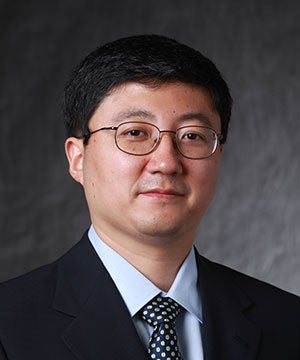
Greg D. Field is an Adjunct Associate Professor of Neurobiology at Duke University and a Faculty Network Member of the Duke Institute for Brain Sciences. His laboratory investigates retinal processing of visual scenes, focusing on functional connectivity, light adaptation, circadian rhythms, and retinal degenerative conditions. Using multi-electrode arrays, transgenic mouse models, and chemogenetics, he examines how retinal circuits encode visual information and how degeneration impacts signaling. Recent work addresses neural adaptation mechanisms, retinal mosaics, and potential therapies for retinal diseases. Research Themes : Retinal circuit organization, neural adaptation, visual signal processing, retinal degeneration, and optogenetics Technologies : Multi-electrode recordings, light-sheet microscopy, computational modeling, and transgenic approaches The 15 most recent publications (2010-2025) demonstrate his work on retinal ganglion cell function, visual hierarchy encoding, and therapies for photoreceptor degeneration. Grants from the National Institutes of Health (2015-2025) support studies on neural population mapping, comparative biology, and retinal circuit restoration. His work bridges theoretical neuroscience with clinical applications, particularly in developing interventions for blindness.
Dr.-Ing. Sebastian Nagel is a scientist at the Institute of Communication Systems and Data Processing (IKS) under the Faculty of Electrical Engineering and Information Technology at RWTH Aachen University . His research focuses on immersive binaural audio systems, spatial audio signal processing, and real-time adaptation of head-related transfer functions (HRTFs). Key research areas include: Interactive binaural reproduction for moving listeners Coherence-adaptive binaural cue algorithms Acoustic head-tracking with unconstrained movement Dereverberation and noise reduction in spatial audio His recent work (2025) extends binaural cue adaptation for hearable devices, while earlier publications (2024-2018) address multi-microphone integration, HRTF modeling, and real-time signal enhancement. Teaching activities include Laboratory Real-Time Audio Processing and Selected Topics in Communications Engineering seminars. Contact: Room 314 | Phone: +49 241 80-26961 | Email: nagel@iks.rwth-aachen.de
Dr. Roméo Courbis is a University Researcher at the Department of Geosciences and Geography, Institute of Seismology, University of Helsinki. His work focuses on advanced seismic methodologies including ambient noise tomography, distributed acoustic sensing (DAS), and passive seismic monitoring techniques. Previously, he served as a Post-Doctoral Researcher at Université Grenoble-Alpes (2017–2018) and as a geophysicist/research engineer at Sisprobe Inc (2018–2023). Education : Master of Science in Computer Science (Université de Franche-Comté, 2007), Master of Science in Geophysics (Université Grenoble-Alpes, 2017), Doctor of Philosophy in Computer Science (Université de Franche-Comté, 2011) Courbis specializes in Seismology and Geophysics , with technical expertise in Ambient Noise Tomography , DAS Data Processing , Seismic Imaging , and Instrumentation . His recent publications emphasize applications of passive seismic monitoring for subsurface fluid dynamics, structural defect detection, and geological hazard assessment. He manages the FLEX-EPOS mobile Finnish Seismic Instrument Pool , a collaborative infrastructure for seismic data acquisition. Key trends in his research include: Integration of DAS with traditional seismic methods Development of ambient noise-based imaging algorithms Time-lapse monitoring of subsurface processes Applications in geohazard detection and civil engineering Courbis has contributed to 17 total research outputs since 2008 and currently leads a project funded by K.H. Renlunds Stiftelse (2025–2028) titled Toward integration of seismic interferometry .
Dr. Pavlos Kollias is a Professor at Stony Brook University’s School of Marine and Atmospheric Sciences and holds a joint appointment as Atmospheric Scientist in the Environmental Science and Technologies Department at Brookhaven National Laboratory. He also serves as International Faculty at the University of Cologne and Adjunct Professor at McGill University. Education Ph.D. in Meteorology, University of Miami, 2000 M.S. in Atmospheric Science, University of Athens, Greece, 1996 B.S. in Physics, University of Athens, Greece, 1994 Research Interests Kollias’s research integrates radar engineering, signal processing, and smart-sensor development to advance understanding of cloud and precipitation microphysics, boundary-layer turbulence, and satellite remote sensing . His work spans the design of novel phased-array and space-borne radars, fusion of multi-sensor observations, and agile adaptive observing strategies for weather and climate science. Key thrusts include: Development and deployment of ground-based and airborne radar networks Spaceborne cloud-profiling missions (EarthCARE, WIVERN, INCUS) High-resolution observations of marine boundary-layer clouds and polar mixed-phase systems Algorithms for retrieving vertical air motion, liquid water content, and drizzle microphysics Scientific Awards & Recognition AGU Atmospheric Sciences Ascent Award (2020) NASA Group Achievement Awards (2015, 2003) Humboldt Research Fellowship for Experienced Researchers, Germany (2013–2014) Canada Research Chair (Tier I 2012–2017, Tier II 2007–2012) Visiting Scientist Fellowship, CIRES, University of Colorado (2003–2004) Leadership & Service Since 2020 he directs the SBU–BNL Radar Observatory and since 2017 has led the Center for Multiscale Applied Sensing at BNL. Editorial roles include Editor of the AMS Journal of Applied Meteorology and Climatology (2024–present) and Associate Editor of EGU Atmospheric Measurement Techniques (2019–present). He sits on mission advisory groups for ESA EarthCARE and WIVERN, the NASA INCUS and ACCP science teams, and the DFG Collaborative Research Center CRC1502 advisory board.
Pradeep Kundu serves as an Assistant Professor in the Department of Mechanical Engineering at KU Leuven's Faculty of Engineering Technology (Bruges Campus), where he leads the M-Group Asset Performance Management subdivision. He is an active member of Leuven.AI Institute for Artificial Intelligence and holds governance roles in the Mechanical Engineering Department Council and Faculty Council. His research centers on Industrial Artificial Intelligence integrated with Digital Twin Technology, focusing on three core domains: rotating machinery condition monitoring (fault diagnosis/prognosis), manufacturing quality control (tool wear/surface monitoring), and production process optimization. Key methodological contributions address data scarcity through synthetic data generation (Digital Twin/Generative AI) and enhance model robustness via Physics-Informed Machine Learning, Hybrid Modeling, and advanced Statistical Regression. Analysis of his 15 most recent publications (2024-2025) reveals a dominant focus on predictive maintenance for mechanical systems, utilizing diffusion models for damage imaging, entropy-based domain adaptation for bearing failure prediction, and sensor fusion techniques. His work consistently bridges physics-based modeling with deep learning across rotating machinery, structural health monitoring, and smart manufacturing applications. Dr. Kundu currently leads multiple funded projects including 'Intelligent Prognosis of Rotating Machines in Industry 4.0 using Generative AI' (2024-2025) and 'Digital Twin Framework for Fleet-Level Feed Drive Systems Health Assessment' (2023-2027), addressing critical challenges in data-limited industrial AI deployment. His research directly supports Industry 4.0 transformation through maintenance optimization and quality control innovations. He actively contributes to academic governance as member of the OC Smart Operations and Maintenance in Industry committee and the Mechanical Engineering Department Council, while his research group within the Mecha(tro)nic System Dynamics unit develops practical AI solutions for industrial asset performance management.
Pavel Kejik is a part-time Lecturer at the Swiss Federal Institute of Technology Lausanne (EPFL), affiliated with the School of Engineering. He joined EPFL's Institute of Microelectronics and Microsystems in 1999 and concurrently works at Monolithic Power Systems (formerly Sensima Technology SA) since 2014. His dual industry-academia role focuses on magnetic sensor industrialization. Education: Diploma degree, Czech Technical University in Prague (1994) PhD, Czech Technical University in Prague (1999) Research Interests: Dr. Kejik specializes in integrated magnetic sensor systems, including Hall effect and fluxgate magnetometry. His work emphasizes low-noise circuit design, offset cancellation techniques, CMOS integration, and applications in contactless current measurement, angular sensing, and non-destructive testing (NDT). Key innovations involve micro-Hall probes, orthogonal fluxgate structures, and noise-reduction methodologies for industrial applications. Publication Trends: His recent articles (2007-2014) demonstrate a consistent focus on CMOS-integrated magnetic sensors, particularly Hall effect devices and fluxgate systems. Research themes include miniaturization, power efficiency optimization, angular position detection, and novel compensation architectures for industrial sensing applications. Advising: Supervised one PhD student: Özge Zorlu. No grants or awards mentioned. Industry Collaboration: Active in sensor industrialization through Monolithic Power Systems and contributes to the Europractice course 'Smart Sensor Systems'. Patents cover innovations in Hall arrays, fluxgate structures, and magnetic anomaly detection.
Wooram Lee is an Associate Professor in Electrical Engineering, specializing in millimeter-wave (D-band) and sub-THz communication systems. His research focuses on integrated circuit design, phased arrays, and optical transceivers for next-generation wireless technologies and sensing applications. Lee’s research interests include Phased Array Engineering , D-band Communication , Optical Transceiver Development , and WDM-PON Systems . He explores calibration-free phase control, energy-efficient designs, and heterogeneous integration of arrays for scalable sub-THz communication and radar applications. Recent publications emphasize advancements in D-band amplifier design , frequency doubler efficiency , and 5G phased array transceivers . His work targets high-performance components like beamformers , power amplifiers , and spectrum sensing processors to address bandwidth and efficiency challenges. Lee has received a Predoctoral Fellowship from the Solid-State Circuits Society (SSCS) (2006–2011). His research is supported by multiple National Science Foundation (NSF) grants , including projects on energy-efficient D-band communication modules and heterogeneously integrated arrays. Current grants from the National Science Foundation fund projects such as Heterogeneously Integrated Arrays for Massively Scalable sub-THz Communications and Sensing (2024–2027) and Heterogeneous module, array antenna, and IC co-design for energy-efficient D-band wireless communications and radar (2023–2026). These emphasize scalable architectures and co-design methodologies for wireless systems.
Eon-Kyung Lee is a Professor in the Department of Mathematics and Statistics at Sejong University, South Korea. She has established herself as a prominent researcher in geometric group theory with a focus on braid groups, Garside theory, and right-angled Artin groups. Her academic career spans over two decades with continuous research output from 2000 to present. Her research interests encompass a specialized niche within pure mathematics, particularly focusing on Braid groups , Geometric group theory , Garside theory , and Right-angled Artin groups . These areas intersect with knot theory, combinatorial structures, and have potential applications in cryptography as evidenced by the fingerprint analysis of her work showing connections to cryptanalysis. Analysis of her 26 research publications reveals a consistent focus on theoretical group theory with increasing specialization in right-angled Artin groups in recent years. Her work demonstrates strong collaborative patterns, particularly with S.J. Lee on numerous publications. The research spans pure mathematics with one notable interdisciplinary publication in signal processing related to angle-of-arrival estimation, showing the practical applications of her theoretical work. Her scientific contributions include significant achievements such as establishing translation discreteness of Garside groups, developing new presentations for pure braid groups, and advancing understanding of Temperley-Lieb algebras and braid groups of imprimitive complex reflection groups. Professor Lee maintains an active research profile with publications in reputable journals including the Journal of Knot Theory and its Ramifications, International Journal of Algebra and Computation, and Bulletin of the Korean Mathematical Society. She has an h-index of 8 with 208 citations according to Scopus data, reflecting the impact of her research within the mathematical community.
Byung Moo Lee is a Professor in the Department of Artificial Intelligence and Robotics at Sejong University, South Korea. He holds a Ph.D. in Electrical Engineering from the University of California, Irvine (2006), an M.S. (2003) in the same field from UC Irvine, and a B.S. (2000) from Hongik University, Seoul. His professional experience spans academia and industry, including roles at Samsung Electronics, Samsung Advanced Institute of Technology (SAIT), and KT Central R&D Center prior to joining Sejong University in 2016.
Dr. Winncy Y Du is a Professor in the Department of Mechanical Engineering at San José State University (SJSU) and directs the Robotics, Sensors, and Machine Intelligence Laboratory . She previously served as an assistant professor at Georgia Southern University and held a visiting professorship at MIT (2014-2015). PhD in Mechanical Engineering, Georgia Institute of Technology (1999) MS in Mechanical Engineering, West Virginia University (1994) MS in Electrical Engineering, Georgia Institute of Technology (1999) BS in Mechanical Engineering, Jilin University (1983) Her research focuses on sensors , robotics , and mechatronics applied to biomedical systems, automation, and control. Key projects include stroke rehabilitation robotics , pipeline leak detection , and spacecraft testbed control . Her publications span sensor technologies, medical robotics, and industrial automation. Notable scientific awards include: Fellow, American Society of Mechanical Engineers (ASME) (2010) ASME Diversity & Outreach Award (2004) Newman Brothers Award for Faculty Excellence (2014) She has led over 23 research grants and 20 industry-sponsored projects, including collaborations with NASA, Boston Scientific, and KWJ Engineering, Inc.
Ann Marie Schmiedekamp is a Professor in the Division of Engineering and Science at Penn State University Abington campus. With an h-index of 23 and 2951 citations, she is a prominent researcher in gravitational-wave astronomy and pulsar timing arrays. Her work primarily focuses on using pulsar timing to detect gravitational waves in the nanohertz frequency range. Dr. Schmiedekamp's research interests center around gravitational-wave detection through pulsar timing arrays, particularly with the North American Nanohertz Observatory for Gravitational Waves (NANOGrav). Her expertise spans gravitational-wave background analysis, pulsar timing techniques, statistical methods for signal detection, and the astrophysical implications of gravitational-wave observations. She has made significant contributions to understanding supermassive black hole binaries and cosmic string signatures through gravitational-wave data. Her recent publications (2023-2025) demonstrate a strong focus on the NANOGrav 15-year data set, with multiple papers analyzing different aspects of the gravitational-wave background detection. These works cover spectral index analysis, pulsar selection methods, data validation techniques, and the properties of the detected signal. The research shows a progression from detection to detailed characterization of the gravitational-wave background. 23 h-index with 2951 citations Active participant in NANOGrav collaboration Significant contributions to gravitational-wave background detection Dr. Schmiedekamp serves as Co-Principal Investigator on two major National Science Foundation projects: the NANOGrav Student Teams of Astrophysics Researchers Undergraduate Pathways (STARS-UP) focusing on community college transitions in astrophysics, and the Sustainable Summer Bridges project for underrepresented engineering students. These projects highlight her commitment to education and diversity in STEM fields. She is actively involved in the NANOGrav collaboration, contributing to the infrastructure for undergraduate research in gravitational-wave astronomy. Her work bridges cutting-edge research with educational initiatives, particularly focusing on creating pathways for students from two-year to four-year institutions.
Dr. Ingrid Fritsch is a Professor of Analytical Chemistry in the Department of Chemistry and Biochemistry at the University of Arkansas, College of Arts & Sciences. She has pioneered the field of redox-magnetohydrodynamic microfluidics and developed multifunctional miniaturized analytical devices and sensors, including protein and DNA-hybridization microarrays interfaced to electrochemical detection. Her work is critical for developing portable devices for environmental and point-of-care chemical analysis. Education: B.S. in Chemistry, University of Utah, Salt Lake City Ph.D. in Chemistry, University of Illinois at Urbana-Champaign Postdoctoral Associate, Massachusetts Institute of Technology Dr. Fritsch's research focuses on the development of multifunctional, miniaturized analytical devices with integrated components on a single substrate. She pioneered the field of redox-magnetohydrodynamic (R-MHD) microfluidics, which applies astrophysical plasma principles to analytical chemistry. Her innovative approach enables picoliter-scale stirring, solution movement across chips for processing, and solvent forcing through channels for mixture separations. Her work spans ultrasmall volume analysis, novel microelectrode geometries, neurotransmitter differentiation via electrochemical methods, and interfacing micro/nano-scale electrochemistry with immunoassays and DNA-hybridization assays. Analysis of her recent publications reveals strong continuity in her research focus on redox-magnetohydrodynamics, with increasing sophistication in applications to biological systems, nanoparticle characterization, and neural analysis. Her group has expanded from fundamental fluid manipulation to specialized applications in neurotransmitter detection, cytometry, and bioelectronic interfaces. Scientific Awards: Society of Electroanalytical Chemistry Young Investigator Award (1997) National Science Foundation Career Award NSF Special Creativity Extension American Chemical Society Chemistry Ambassador (2013-2015) Fellow of the National Academy of Inventors (2014) University of Arkansas Golden Tusk Award (2015) Fellow of the American Association for the Advancement of Science (2015) University of Arkansas Alumni Distinguished Faculty Award in Research (2016) Dr. Fritsch has secured significant research funding including an NSF Career Award and Special Creativity Extension. She has co-founded two startup companies and holds ten issued U.S. patents, demonstrating strong translational impact. Her teaching spans undergraduate and graduate levels, with extensive outreach to middle and high school students. She has taught courses ranging from Chemistry I for Majors to specialized graduate courses in Electrochemical Methods of Analysis and Energy Conversion and Storage. Her research group investigates chemistry at ultrasmall volumes with materials having ultrasmall features, developing innovative approaches to solution movement for automated sequential reactions. They have made seminal contributions to redox-magnetohydrodynamics, creating methods for picoliter-scale stirring and channel-free fluid manipulation within microfluidic devices.
Pietro Rosatti is a Research Fellow at the Department of Industrial Engineering, University of Trento, specializing in electromagnetic systems and artificial intelligence applications. His research focuses on: Antenna Design for automotive radar and communication systems Microwave Engineering and mm-wave technologies Artificial Intelligence integration in electromagnetic problem-solving Inverse Problems and electromagnetic imaging System-by-Design optimization frameworks Real-world applications in medical imaging and radar systems Analysis of his 17 publications (2018-2025) reveals a dominant trend toward AI-driven solutions for electromagnetic challenges, particularly in automotive radar antenna design (77 GHz systems), microwave medical imaging, and ground-penetrating radar. His work consistently employs multi-objective evolutionary optimization and system-by-design methodologies to overcome the curse of dimensionality in inverse scattering problems, with increasing emphasis on real-time deep learning frameworks since 2021.
Dr. Meera Srivastava is a Research Professor in the Department of Anatomy, Physiology and Genetics at the Uniformed Services University of the Health Sciences (USUHS) in Bethesda, MD. She has been with USUHS since 1996, initially as an Associate Professor and since 2002 as a Research Professor. Dr. Srivastava completed her educational training in India, earning a BS in Chemistry from Madras University in 1972, an MS in Biochemistry in 1974, and a Ph.D. in Biochemistry from the Indian Institute of Technology, New Delhi in 1980. Her academic journey included positions at Auburn University, Georgetown University, and the NIH before joining USUHS. Dr. Srivastava's research has focused extensively on the molecular basis of calcium signaling processes, with particular emphasis on the ANX7 (Annexin 7) gene as a tumor suppressor. Her work spans multiple disease areas including prostate and breast cancers, cystic fibrosis, diabetes, and inflammation. She has made significant contributions to understanding how ANX7 functions as a tumor suppressor, discovering that approximately 30% of human prostate and breast tumor cells exhibit loss of heterozygosity or complete loss of ANX7 alleles. Her expertise extends to genomic cDNA array technology, which she developed for studying cystic fibrosis and various tumor cell lines. Dr. Srivastava's publication record demonstrates a trajectory from fundamental biochemical studies of membrane proteins to translational research with clinical implications. Her early work focused on cytochrome b561 and nucleolin gene characterization, while her later research centered on the ANX7 gene's role in cancer biology. Her work spans multiple disciplines including molecular biology, oncology, and pulmonology, reflecting her interdisciplinary approach to biomedical research. Co-author of patent on ANX7 gene with Dr. Pollard Co-author of patent for drug development related to ERG fusion gene in prostate cancer 90 peer-reviewed articles in prestigious journals including PNAS and Journal of Biological Chemistry First author on the first paper demonstrating the power of antibody microarrays for identifying serum biomarkers Dr. Srivastava has held positions at several prestigious institutions including the Indian Institute of Technology, Georgetown University, and the National Institutes of Health. Her technical expertise includes cDNA microarrays, protein arrays, and antibody microarrays. She has collaborated extensively with Dr. Pollard and other colleagues at USUHS on research related to kidney graft rejection, cancer, cystic fibrosis, inflammation, post-traumatic syndrome, and major depressive disorder. Dr. Srivastava leads research focused on molecular mechanisms of disease, particularly examining how gene expression and signaling pathways contribute to conditions like cancer and cystic fibrosis. Her work bridges basic science and clinical applications, with potential therapeutic implications for multiple disease states.
Tong Zhang is a Professor in the Electrical, Computer and Systems Engineering Department at Rensselaer Polytechnic Institute (RPI). He joined RPI in 2002 as an assistant professor, advancing to associate professor in 2008 and full professor in 2013. His research focuses on computer systems, particularly memory and data storage across software and hardware stacks, with interdisciplinary applications in computer architecture, VLSI signal processing, and error correction coding. He holds a B.S. and M.S. from Xian Jiaotong University (China) and a Ph.D. from the University of Minnesota. His work emphasizes energy-efficient storage solutions, transparent compression, and hardware-software co-design. Notable contributions include innovations in SSD arrays, computational storage drives, and database systems. He is an IEEE Fellow and maintains affiliations with RPI's Computer Science programs. Research interests span memory systems optimization, storage architectures, and emerging technologies like CXL-based AI acceleration. His publications highlight advancements in reducing energy consumption, improving data deduplication, and enhancing B+-tree performance on modern storage hardware. Awards: IEEE Fellow (2023) Grants/Advising: Extensive grant-funded research in storage systems; no student advisees explicitly listed. Labs/Teams: Engaged in interdisciplinary collaborations within RPI's computational storage and memory research groups.