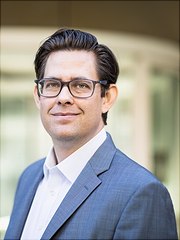
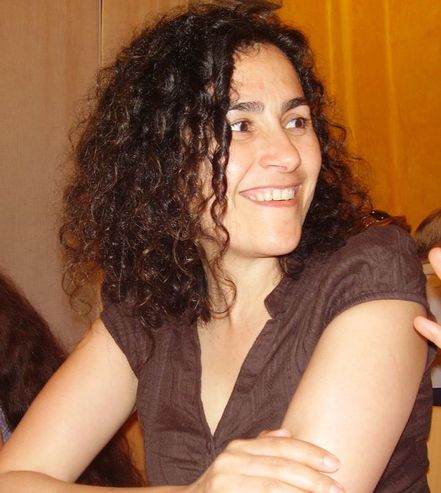
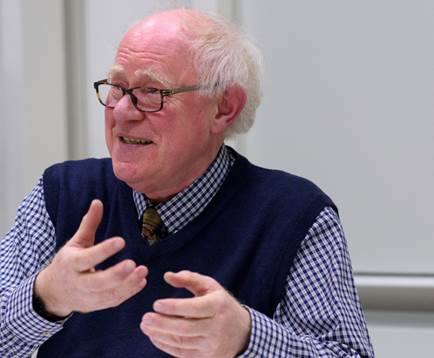
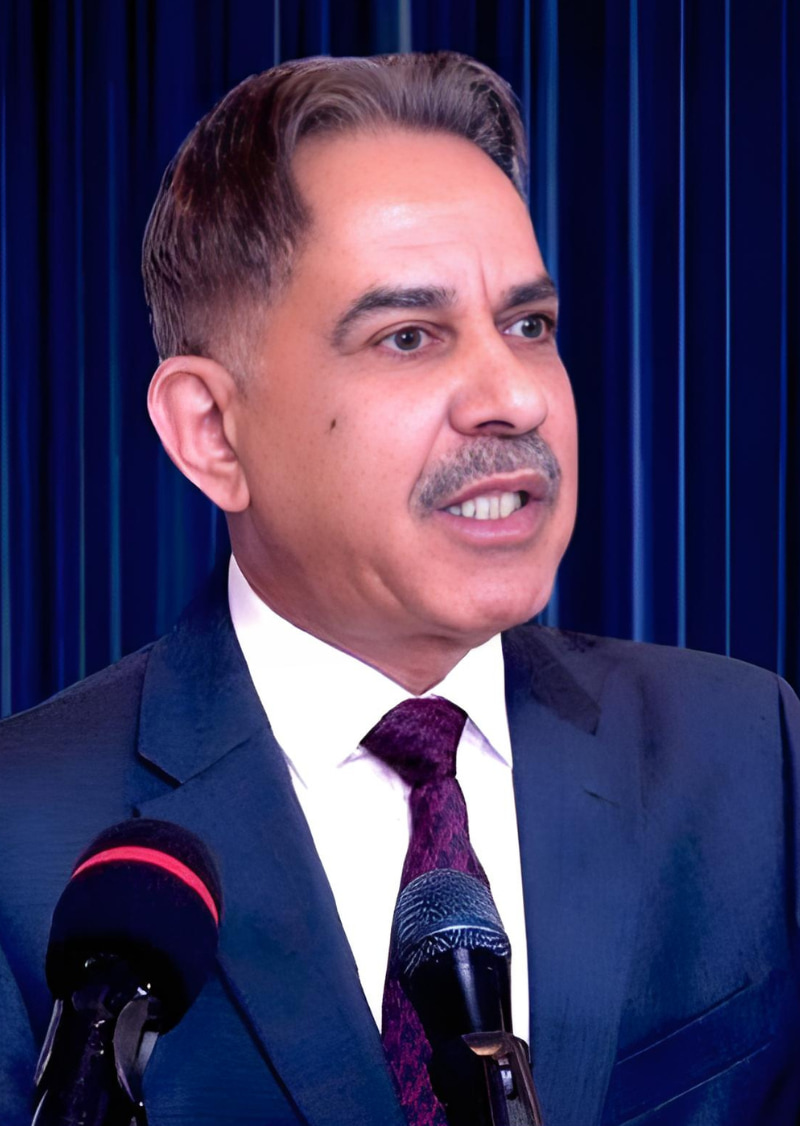
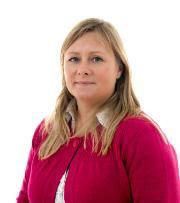
Assoc. Prof. Dr. Emannullah Polat is an Associate Professor at the Department of Basic Islamic Sciences, Tefsir Subfield, within the Faculty of Islamic Sciences at Bingöl University. He has held this position since 2011 and continues to serve actively. His academic journey includes a doctorate from Sakarya University (2010) and a master's degree from Marmara University (2001), both in Quranic Exegesis. He previously served as an Imam-Hatip and district Mufti before transitioning to academia. His research focuses on Quranic studies, Tafsir methodology, Arabic linguistics, and psychological aspects of religious concepts. Notable publications include analyses of Quranic language, studies on spiritual diseases, and interpretations of specific surahs. He has organized conferences and served in administrative roles such as Department Head and Farabi Unit Coordinator at Bingöl University. Polat has supervised three master's theses and received several recognitions, including the Academic Incentive Award from YÖK (2016). He is a member of TADER (Tefsir Akademisyenleri Derneği) and has contributed as a referee for multiple Islamic studies journals.
Associate Professor Dr. Ramazan Korkut is a faculty member in the Department of Islamic Law at Bingöl University's Faculty of Islamic Sciences. He holds a PhD from Atatürk University (2017) and has conducted research at the University of Jordan. His academic roles include serving as Head of the Islamic Law Department since 2024 and previously as Research Assistant at various institutions from 2010-2012. Education: Imam Hatip High School (1999) → BA in Theology (2006) → MSc in Islamic Law (2010) → PhD in Islamic Law (2017) Languages: Arabic (KPDS 85), Persian, English (KPDS 65) Research Focus: Fiqh Usulü, Contemporary Jurisprudential Issues, Islamic Economic Theory, and Digital Age Legal Challenges His research interests span classical legal texts analysis (e.g., Molla Muhammed Gerdî's commentaries), modern applications of Islamic law in technology (Metaverse implications), and interfaith legal comparisons. He has authored books on Fiqh methodology and edited works on Nursi's theological contributions. Recent publications address topics like Zakaat calculation for agricultural products, Istihsan (juristic preference) in evidence evaluation, and the epistemological integration of science with Islamic belief systems. He coordinates weekly seminars on Fiqh methodology and leads student clubs focusing on Islamic thought preservation. Awards: None explicitly stated. Active in academic service: referee for 17+ Islamic studies journals, coordinator of interfaith initiatives with Bingöl Mufti Office, and organizer of public lectures on topics like Metaverse ethics and Jerusalem's legal status.
Professor Dr. Aaron Michael Butts is a University Professor of Semitic Studies specializing in Ethiopian and Eritrean studies at the University of Hamburg. He holds the Andrew W. Mellon Chair of Early Christian Studies (2022) and received his Ph.D. from the University of Chicago. Current projects include the ERC Consolidator Grant-funded BeInf: Beyond Influence – The Connected Histories of Ethiopic and Syriac Christianity (2022–2027). Ph.D., University of Chicago (2013) Master of Arts, University of Chicago (2007) Master of Theological Studies, Duke Divinity School (2005) Bachelor of Arts, Howard Payne University (2002) His research focuses on: Ethiopic and Syriac Christian traditions Aramaic and Semitic linguistics Manuscript transmission and textual criticism Greco-Roman linguistic influences Christian-Muslim textual interactions Recent publications analyze Narsai's works, Syriac-Akkadian connections, and Ethiopic-Greek loanword dynamics. He serves as Editor-in-Chief of Aramaic Studies and Supplements to Aramaic Studies , with editorial roles in multiple patristic journals. Scientific awards: ERC Consolidator Grant (2022) Current affiliations: University of Hamburg (since 2022) The Catholic University of America (2014–2022) Yale University (2010–2013)
Michael Waltisberg is a Professor of Semitic Studies at the University of Heidelberg , appointed in early 2021. His role is associated with the Research Center for Aramaic Studies , supported by the NISIBIN Foundation. Since February 2023, he has served as faculty coordinator for the Faculty of Humanities and Social Sciences. Educational Background: Master of Arts in Semitic Studies (Munich) Doctorate in Semitic Studies (University of Marburg, 2008) focusing on Classical Arabic syntax Habilitation in Semitic Studies (University of Marburg, 2014) studying Neo-Aramaic Ṭuroyo sentence structures His research specializes in Semitic languages , including historical and syntactic analysis of Classical Arabic and Neo-Aramaic. He has held interim professorships at Erlangen and Heidelberg and led a German Research Foundation (DFG)-funded project on Syriac (Middle Aramaic) prior to his current role. Professional Contributions: Active in academic coordination as Faculty Coordinator for Humanities and Social Sciences at TDU Linked to the Research Center for Aramaic Studies
Giosuè Baggio is a Professor of Psycholinguistics at the Norwegian University of Science and Technology (NTNU), affiliated with the Department of Language and Literature within the Faculty of Humanities. His research integrates cognitive science, neurolinguistics, and philosophy to explore language, logic, and music as models of human cognitive complexity. He co-directs the Language Acquisition and Language Processing Lab and coordinates English linguistics teaching. Education: Philosophy (University of Pavia/Strasbourg), MSc in Logic, Language & Computation (University of Amsterdam), PhD in Cognitive Neuroscience (Donders Institute, Nijmegen). Prior to NTNU, he worked at the Max Planck Institute for Psycholinguistics and SISSA (Trieste). Research focuses on semantic composition, neural correlates of language processing, and interdisciplinary theories linking linguistics to neuroscience. Key books include *Meaning in the Brain* (2018) and *Neurolinguistics* (2022, translated into Arabic/Spanish). Recent work explores ERP studies of morphological agreement, computational complexity in quantifier verification, and neural markers of musical perception. Awards: None explicitly listed. However, his impactful publications and book translations indicate scholarly recognition. Supervision spans linguistics and cognitive science topics at all levels. Active in outreach, advocating for evidence-based academic practices and interdisciplinary collaboration. Labs/Teams: Co-director of the Language Acquisition and Language Processing Lab. Teaching includes courses on semantics, pragmatics, and cognitive neuroscience of language.
Mena Lafkioui is a Full Professor (Directeur d'études) in Berber linguistics at the Ecole des hautes études en sciences sociales (EHESS) in Paris, holding a concurrent position as Research Director at the Centre National de la Recherche Scientifique (CNRS). She has been affiliated with these institutions since 2018 and 2014 respectively, following previous academic positions at Università degli Studi di Milano-Bicocca, Università della Calabria, and Ghent University. Her educational background includes a Habilitation in 'Sciences du langage' from EHESS (2010), a Ph.D. in Linguistics from INALCO, Paris (1999), a Postgraduate degree in Linguistics from INALCO (1995), and a Master's in Oriental Languages and Cultures from Ghent University (1994). Lafkioui's research spans Berber linguistics, geolinguistics, sociolinguistics, Afroasiatic linguistics, Arabic dialectology, and negation typology. Her work integrates structural linguistic analysis with sociocultural contexts, particularly focusing on the Rif Berber language continuum, language contact phenomena, and the impact of digital communication on Amazigh identity construction. Analysis of her recent publications reveals a consistent focus on Berber language structures, particularly examining negation patterns, topicalization mechanisms, geolinguistic variation, and the impact of language contact with Arabic. Her methodological approaches blend traditional linguistic analysis with computational and algorithmic perspectives, reflecting an innovative approach to language documentation and analysis. Elected as Academician, Accademia Ambrosiana, Milan (2014) Elected as founding member of the 'Classe Africa' of the Accademia Ambrosiana, Milan (2014) Elected as founding member of the 'Section Berbero' of the Accademia Ambrosiana, Milan (2014) Lafkioui has supervised 10 PhD students and 55 Master's dissertations while securing competitive research grants across Europe. She serves on multiple editorial boards including the International Journal Dialectologia et Geolinguistica and Afrika Focus. Her institutional roles include membership on the Scientific Council of the Laboratoire d'excellence Empirical Foundations of Linguistics in Paris and participation in numerous academic committees overseeing PhD programs in African languages and cultures. She has organized 17 international scientific meetings and is an active member of 10 scientific societies, including the Société de Linguistique de Paris, demonstrating her significant contribution to the academic community in linguistics and African studies.
Zeineb Sellami is a Humanities Teaching Fellow and Ph.D. candidate in Linguistics at the University of Chicago. They specialize in syntax, focusing on clitic structures in spoken Arabic dialects and the historical evolution of Maghrebi Arabic. Their research explores clitic doubling and agreement mechanisms across dialects, informed by prior work on Maghrebi Arabic's historical linguistics. Education : Ph.D. in Linguistics, University of Chicago (anticipated 2024) M.A. in Linguistics, INALCO and Paris 3 Research : Investigates syntactic phenomena in Arabic dialects, blending formal syntax with historical linguistic analysis. Current work addresses clitic placement, agreement patterns, and diachronic changes in Maghrebi Arabic. Labs/Teams : No explicit lab affiliations mentioned, though their research may intersect with computational or fieldwork-based projects in the Department of Linguistics.
Faruk Akkuş is Assistant Professor in the Department of Linguistics at UMass Amherst, where he coordinates undergraduate studies. He holds a Ph.D. from the University of Pennsylvania. Research examines syntactic variation in endangered languages, particularly Arabic dialects, Kurdish varieties, and Turkish. Fieldwork documents grammatical structures in understudied language communities. Current investigations analyze implicit arguments and morphosyntactic features across dialects. Teaching includes syntax and field methods courses for linguistics students.
Michael Becker is an Associate Professor and Undergraduate Advisor in the Department of Linguistics at the University of Massachusetts Amherst, specializing in phonological theory and experimental approaches to language. His research focuses on how speakers generalize patterns from existing words to novel forms, computational modeling of lexical systems, and documentation of endangered languages. He holds a Ph.D. in Linguistics from the University of Massachusetts Amherst. His primary research examines phonological organization of the lexicon through behavioral experiments and computational modeling, particularly investigating how speakers extend patterns to new words. Recent research explores prosodic patterns in diverse languages including Brazilian Portuguese, Cairene Arabic, Slovenian, and Kuikuro. His methodologies integrate experimental phonology with constraint-based grammatical frameworks to model language-specific and universal phonological patterns. Becker maintains collaborations with international researchers and indigenous communities for language documentation. His computational work includes developing the Sublexical Learner for modeling morphological productivity and Experigen for online linguistic experiments.
Carolina González is a full-time Professor at Florida State University's Department of Modern Languages and Linguistics, College of Arts and Sciences. Holding a Ph.D. in Linguistics from the University of Southern California, she specializes in Spanish phonetics, phonology, and prosody with particular focus on language invention and phonation patterns. Research Areas: Phonology, Phonetics, Prosody, Laboratory phonology, L2 phonological acquisition, Syntax-phonology interface, Morph-phonology, Language invention Her publication trends reveal sustained expertise in Spanish consonantal phenomena, intonation patterns, and prosody-conditioned alternations across Romance languages. Notably, she is collaborating with Lara Reglero on mirativity and developing a book on language invention with Cambridge University Press. While no formal scientific awards are mentioned in the available text, her laboratory phonology research integrates acoustic analysis with phonological theory. No graduate students are explicitly listed in the provided materials.
Antje Muntendam is an Associate Professor of Linguistics and Spanish at Florida State University (FSU), affiliated with the Modern Languages and Linguistics department. She holds a M.A. from Leiden University and a Ph.D. from the University of Illinois at Urbana-Champaign. Her roles include serving as Coordinator and Adviser of Linguistics at FSU, Affiliate Faculty at the Native American and Indigenous Studies Center, and Affiliated Member of the Heritage Linguistics Lab at Leiden University. Her research focuses on bilingualism, language contact, and prosody, with particular emphasis on Quechua-Spanish and Turkish-Dutch bilingual communities. She investigates cross-linguistic influence, code-switching, and intonation patterns in Andean and European contexts. Muntendam is co-founder of the international conference on Bilingualism in the Hispanic and Lusophone World (BHL). She currently leads a National Science Foundation-funded project (2024-2027) on Quechua and Spanish intonation in Andean language contact. Muntendam teaches courses such as Bilingualism in the Spanish-Speaking World , Psycholinguistics of Bilingualism , and Spanish Phonetics . Her work bridges syntax, sociolinguistics, and psycholinguistics, addressing topics like clitic placement, focus marking, and heritage language acquisition. Her publications span journals like Linguistic Approaches to Bilingualism and Bilingualism: Language and Cognition . Her academic contributions include co-editing volumes on Quechua stance and deixis and co-authoring studies on prosodic transfer and syntactic interfaces in bilingual contexts. She actively engages in interdisciplinary research, integrating experimental methods (e.g., eye-tracking) and comparative analyses of multilingual speech.
Dr. Amal El Haimeur serves as an Assistant Professor of African and African-American Studies and Coordinator of the African & African Diasporic Language Program at the University of Kansas. She holds a Ph.D. in Linguistics from the University of Wisconsin-Milwaukee and is an ACTFL OPI-certified language tester. Her work bridges linguistic theory with pedagogy, focusing on heritage language education, second language acquisition, and technology-enhanced learning. Education: Ph.D. in Linguistics (University of Wisconsin-Milwaukee) Certification: ACTFL Oral Proficiency Interview Tester Her research explores Moroccan Arabic heritage speakers in France, North African women’s cultural agency, and the intersection of language policy with identity. She emphasizes curricular innovation and online learning strategies to improve Arabic language instruction. Current projects include analyzing women’s roles in Arabic media and reviving historical narratives like the legacy of Sayyida al-Hurra. Publications span linguistic analysis (e.g., verb derivation patterns) to cultural studies (e.g., women in Arabic video clips). Upcoming works include a book chapter on North African queens and a collaborative textbook on Arabic writing pedagogy. Dr. El Haimeur leads the African & African Diasporic Language Program, fostering linguistic diversity through courses in Arabic and other African languages. She advocates for inclusive curricula that reflect diasporic experiences and empower marginalized voices.
Prof. Frans Plank is a distinguished linguist holding dual appointments as Professor of Linguistics and English Language at the University of Konstanz (Germany) and Senior Research Fellow at Somerville College, University of Oxford (UK). His career spans over four decades, with professorships at institutions such as the University of Aarhus (Denmark) and Universität Hannover (Germany). He has served as Dean of the Faculty of Arts at Konstanz and Chair of its Linguistics Department and Sonderforschungsbereich 471. Plank earned academic degrees from Universität Regensburg, University of York, and University of Edinburgh, culminating in a Dr. phil. from Universität Hannover (1980) and a Habilitation in Linguistics (1981). His research focuses on linguistic typology, historical linguistics, Germanic languages, morphology, syntax, and the history of linguistic thought. His work bridges theoretical and empirical linguistics, with contributions to the study of valence orientation, categorial change, and phonological phrasing. He founded Linguistic Typology journal (1997) and the Association for Linguistic Typology (1994). Over 150 papers and 7 edited volumes reflect his prolific output, including seminal works on Maltese noun phrases and double case systems. Recognition includes his 2014 election as Senior Research Fellow at Oxford and editorial leadership roles at major journals like Transactions of the Philological Society . His research also extends to interdisciplinary studies, such as the parallels between linguistics and geology in 19th-century science.
Dr. Abdulqadir Abdulkarim is an Adjunct Professor of Arabic at Wayne State University's College of Liberal Arts and Sciences. With over 45 years of experience in teaching and research across Iraq, Jordan, Oman, and the US, he specializes in Applied Linguistics, Second Language Acquisition, and Arabic pedagogy. His innovative approaches to language instruction have influenced global educational practices. Education: PhD in Applied Linguistics from Glasgow University (UK, 1978). He has authored 31 academic books published by Pearson, Routledge, and others, focusing on Arabic language education and literary studies. His poetry collections address mythological and societal themes. Awards include recognition from academic institutions and governments worldwide, alongside a 2024 nomination for Wayne State's Excellence in Teaching Award. Professional memberships include the American Translators Association (ATA), American Association of University Professors (AAUP), and International Union of Universities (IUU). His courses span elementary to intermediate Arabic language instruction.
Merete Brendeford Anderssen is a Professor of English Linguistics at UiT The Arctic University of Norway, serving as Academic Programme Director for English Language and Theoretical Linguistics and Deputy leader of the research group AcqVA-Nor. She leads the C-LaBL Learning Domain and oversees study programs in English linguistics (M-EAC) and theoretical linguistics (M-TLIN). Her research focuses on multilingual acquisition, syntactic variation, heritage languages, and cross-linguistic influence. She has contributed to projects like MultiGender (CAS), MiMS (RCN), INPUT (MSCA), and MuMiN (RCN), exploring language representation, attrition, and maintenance across diverse populations. Her work integrates experimental methods (ERP studies, response time analysis) with theoretical linguistics, examining how structural similarities between languages influence acquisition and attrition. Key themes include heritage language trajectories in Syrian Arabic-German bilinguals, L3 acquisition processes, and dialect levelling mechanisms in Norwegian dialects. She has published extensively on word order variation, possessive constructions, and cross-linguistic influence in multilingual contexts. Current research interests include studying heritage speakers across ages and examining the role of English-Norwegian similarities in multilingual minds. Anderssen collaborates internationally, leading teams that bridge psycholinguistics and sociolinguistics. Her grants include €1.5M from RCN for MuMiN (2021-2025) and MSCA funding for INPUT (2021-2023).