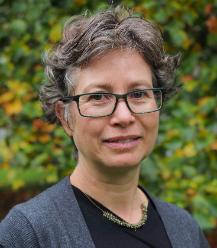
Dr. Amanda Kimpton serves as the Assistant Associate Dean in Chiropractic at RMIT University's Health and Biomedical Sciences Department (Bundoora West Campus, Australia). With an ORCID identifier 0000-0002-4465-8272, she specializes in evidence-based healthcare and leads research projects related to Saudi Arabian healthcare systems.
Antje Muntendam is an Associate Professor of Linguistics and Spanish at Florida State University (FSU), affiliated with the Modern Languages and Linguistics department. She holds a M.A. from Leiden University and a Ph.D. from the University of Illinois at Urbana-Champaign. Her roles include serving as Coordinator and Adviser of Linguistics at FSU, Affiliate Faculty at the Native American and Indigenous Studies Center, and Affiliated Member of the Heritage Linguistics Lab at Leiden University. Her research focuses on bilingualism, language contact, and prosody, with particular emphasis on Quechua-Spanish and Turkish-Dutch bilingual communities. She investigates cross-linguistic influence, code-switching, and intonation patterns in Andean and European contexts. Muntendam is co-founder of the international conference on Bilingualism in the Hispanic and Lusophone World (BHL). She currently leads a National Science Foundation-funded project (2024-2027) on Quechua and Spanish intonation in Andean language contact. Muntendam teaches courses such as Bilingualism in the Spanish-Speaking World , Psycholinguistics of Bilingualism , and Spanish Phonetics . Her work bridges syntax, sociolinguistics, and psycholinguistics, addressing topics like clitic placement, focus marking, and heritage language acquisition. Her publications span journals like Linguistic Approaches to Bilingualism and Bilingualism: Language and Cognition . Her academic contributions include co-editing volumes on Quechua stance and deixis and co-authoring studies on prosodic transfer and syntactic interfaces in bilingual contexts. She actively engages in interdisciplinary research, integrating experimental methods (e.g., eye-tracking) and comparative analyses of multilingual speech.
Richard Bartle is a Visiting Professor at the University of Essex's School of Computer Science and Electronic Engineering, renowned for co-creating the first virtual world (MUD) in 1978 and developing the influential Player Types model. His research examines virtual world design, player psychology, and game mechanics. Research explores fundamental principles of multiplayer interaction systems, player motivation frameworks, and ethical considerations in virtual environments. Current projects investigate natural language annotation through game mechanics and design patterns for games with purpose (GWAPs). Publications establish theoretical foundations for virtual world design and analyze player behavior patterns. His book Designing Virtual Worlds remains the standard reference in game design education worldwide. GDCOnline Game Legend Award (2010) Courses explore game design theory, virtual world architecture, and the sociotechnical aspects of multiplayer systems. He maintains influential writings on MMO design and development through his daily blog.
Prof. Frans Plank is a distinguished linguist holding dual appointments as Professor of Linguistics and English Language at the University of Konstanz (Germany) and Senior Research Fellow at Somerville College, University of Oxford (UK). His career spans over four decades, with professorships at institutions such as the University of Aarhus (Denmark) and Universität Hannover (Germany). He has served as Dean of the Faculty of Arts at Konstanz and Chair of its Linguistics Department and Sonderforschungsbereich 471. Plank earned academic degrees from Universität Regensburg, University of York, and University of Edinburgh, culminating in a Dr. phil. from Universität Hannover (1980) and a Habilitation in Linguistics (1981). His research focuses on linguistic typology, historical linguistics, Germanic languages, morphology, syntax, and the history of linguistic thought. His work bridges theoretical and empirical linguistics, with contributions to the study of valence orientation, categorial change, and phonological phrasing. He founded Linguistic Typology journal (1997) and the Association for Linguistic Typology (1994). Over 150 papers and 7 edited volumes reflect his prolific output, including seminal works on Maltese noun phrases and double case systems. Recognition includes his 2014 election as Senior Research Fellow at Oxford and editorial leadership roles at major journals like Transactions of the Philological Society . His research also extends to interdisciplinary studies, such as the parallels between linguistics and geology in 19th-century science.
Dorit Ravid is a Full Professor at the School of Education and Department of Communications Disorders, Tel Aviv University, specializing in psycholinguistics and language acquisition. Her career spans over two decades, with positions ranging from Lecturer (1994-1997) to Tenured Senior Lecturer (1998), Associate Professor (2003), and Full Professor (2007). Research Focus : Language acquisition in adolescents and adults, Hebrew morphology, cross-linguistic studies, written language development, and literacy acquisition in typical and disordered populations. Key Contributions : Pioneering work on Hebrew's morphological complexity, cross-linguistic analysis, and a comprehensive model for linguistic literacy development. Publications & Collaborations : Authored/Co-authored studies on Hebrew spelling, discourse structures, and Arabic plural acquisition. Collaborated with international institutions in Belgium, Wales, and Denmark, including the ESRC Centre for Research on Bilingualism. Awards : International Francqui Chair in the Humanities (2005) Visiting Researcher award, University of Bangor (2008) Leadership Roles : Chair of the Israeli Organization for Literacy and Language (SCRIPT) (2005-2009), Executive Committee member of IASCL (1999-2005), and editorial board member for journals like Reading and Writing and Annals of Dyslexia .
Professor Aristidis Tsatsakis is a distinguished academic and researcher currently serving as Professor of Toxicology and Director of the Toxicology and Forensic Science Department at the School of Medicine, University of Crete and University General Hospital in Heraklion, Greece. With over three decades of academic service at the University of Crete, he has held various progressive positions from Lecturer to his current Professorship since 2010. He is also the founder and chief scientific leader of the University of Crete spin-off companies ToxPlus S.A. and LifePlus S.A. Professor Tsatsakis' research interests span multiple critical areas in toxicology and public health. His primary focus includes biomonitoring and risk assessment of xenobiotics, particularly examining the links between chronic low-dose exposure to chemicals and health problems such as metabolic disorders, autoimmune conditions, and cancer. He has developed numerous biomarkers of exposure and effects for various chemicals including pesticides and pharmaceuticals, while also exploring telomere length, chronic diseases, aging, and nanotoxicology. His work on real-life risk simulation of exposure has been particularly influential in advancing safety evaluations in the 21st century. His extensive publication record includes over 1,000 publications with more than 700 in ISI journals and PubMed, reflecting his significant contributions to the field. His most recent research (2023-2025) demonstrates a continued focus on substance abuse patterns, innovative drug development approaches, and cross-cultural studies of drug use. These works reveal a consistent emphasis on practical applications of toxicological research to public health challenges, particularly in the areas of alcohol use disorders, opioid addiction, and pharmaceutical safety assessment. Professor Tsatsakis' scientific achievements have been recognized through numerous prestigious awards: EUROTOX Merit Award 2022 Highly Cited Researcher (2020, 2021) Commemorative medal '130 years of the Federal Scientific Center of Hygiene' Gold Medal, Eminent Scientist from IRPC As Principal Investigator, he has coordinated over 60 scientific research and technology projects, establishing worldwide collaborations across multiple continents. His editorial contributions include serving as Editor-in-Chief for Public Health and Toxicology journal and long-standing roles with Toxicology and Toxicology Letters. His leadership extends to prominent positions including past President of the Federation of European Toxicologists and European Societies of Toxicology (EUROTOX) and Honorary President of the Hellenic Society of Toxicology. Professor Tsatsakis leads the Toxicology Science and Research Centre, which investigates thousands of forensic cases annually from Greek territory and internationally. His work bridges academic research with practical applications through his spin-off companies, demonstrating his commitment to translating theoretical knowledge into real-world solutions for public health and safety.
Professor Alexandra I. Cristea is a faculty member in the Department of Computer Science at Durham University, serving as Deputy Executive Dean (Postgraduate Research) in the Faculty of Science. She founded the Artificial Intelligence in Human Systems research group and leads the SCENE Lab , focusing on adaptive, personalized, and gamified educational technologies. Alan Turing Academic Liaison for Durham N8 CIR Digital Humanities Team Lead IEEE European Public Policy on ICT Member Research Interests include adaptive learning systems, gamification frameworks, user modeling, semantic/social web applications, and AI-driven educational analytics. Her work spans learning analytics, VR/XR environments, and ethical AI, with over 350 publications and 7100+ Google Scholar citations. Recent Publications highlight AI in education, including MOOC dropout prediction, XAI frameworks, VR safety training, and sentiment analysis tools. Notable collaborations include the Weizmann Institute, British Council, and industry partnerships with Distinctive Publishing. Scientific Awards BCS Fellow HEA Fellow IEEE Senior Member EATEL Founding Member Associate Editor roles at ACM, IEEE, and Frontiers Supervision involves mentoring postgraduate students in AI, educational technology, and data ethics. Her labs and teams, such as the SCENE Lab, drive innovations in neuro-enhanced education and cultural diversity initiatives like the TechUP project.
Dr. Sana Tibi is an Associate Professor in the Department of Communication Sciences and Disorders at Florida State University (FSU), appointed since 2016. She holds dual PhDs from the University of Florida (Communication Sciences & Disorders, 1997) and Queen’s University (Cognitive Studies of Reading, 2016). Her research focuses on Arabic literacy challenges, particularly in children with dyslexia, and psychometric assessment methodologies. Education: BA (Yarmouk University, 1987), MA (University of Bath, 1989), and two PhDs (1997 & 2016) Previously served as Associate Professor at UAE University (2002-2010) and advised UNESCO-DI on dyslexia interventions Research explores cognitive-linguistic processes in reading, with emphasis on Arabic script complexities. Over 30 peer-reviewed publications address topics like morphological awareness, RAN tasks, and refugee literacy challenges. Awards include a $2.3M U.S. Department of Education grant (2023-2028) and FSU's Outstanding Faculty Research Award (2021). Key collaborations include World Bank literacy projects and Ministry of Education Dubai advisory roles. Active in developing Arabic-specific literacy assessments and educational technologies for language learners.
Daniel Emilio Gallego Hernández is a full professor at the University of Alicante's Department of Translation and Interpretation, affiliated with the Interuniversity Institute of Modern Applied Languages. He specializes in economic translation, terminology studies, and bibliometric research. He has coordinated several international conferences and research projects, including the 'Traducción económica e investigación. Estudio bibliométrico' funded by the Spanish Ministry of Science (2021-2025). Education: PhD in Translation and Interpretation (2010), Master's in Terminology (2014), and degrees in Modern Languages and Translation from University of Alicante and Avignon University. His research focuses on economics translation training, terminological resources, and bibliometric studies of translation practices. Recent work includes analysis of economic translation trends in the Arab world and professional financial translation practices. He has directed 19 theses in the last five years and actively participates in international conferences such as the 5th East Asian Translation Studies Conference (2024). His teaching includes specialized courses on economic translation, terminology, and translation theory.
Dr. Alessandro Lanteri is a Full Professor of Strategy and Innovation at ESCP Business School, with teaching roles at Hult International Business School, Saïd Business School (Oxford University), and London Business School. His expertise focuses on emerging technologies like AI and blockchain, strategic adaptation in turbulent environments, and innovation ecosystems. He advises multinationals, governments, international organizations, startups, and family businesses globally. Dr. Lanteri holds a PhD from Erasmus University Rotterdam, a Master's from Bocconi University, and has studied at NYU, Oxford, MIT, Stanford, and Harvard. His research explores strategic drivers for the Fourth Industrial Revolution, corporate foresight, and the intersection of technology with economic policy. His book CLEVER. The Six Strategic Drivers for the Fourth Industrial Revolution became an Amazon bestseller, with his next book Innovating with Impact scheduled for 2022 publication. His work spans interdisciplinary themes including social entrepreneurship, fintech trends, and the ethical dimensions of economic decision-making. Key contributions include studies on social incubators, blockchain's role in finance, and policy frameworks for digital transformation. He frequently publishes in leading outlets like Harvard Business Review and MIT Technology Review.
Merete Brendeford Anderssen is a Professor of English Linguistics at UiT The Arctic University of Norway, serving as Academic Programme Director for English Language and Theoretical Linguistics and Deputy leader of the research group AcqVA-Nor. She leads the C-LaBL Learning Domain and oversees study programs in English linguistics (M-EAC) and theoretical linguistics (M-TLIN). Her research focuses on multilingual acquisition, syntactic variation, heritage languages, and cross-linguistic influence. She has contributed to projects like MultiGender (CAS), MiMS (RCN), INPUT (MSCA), and MuMiN (RCN), exploring language representation, attrition, and maintenance across diverse populations. Her work integrates experimental methods (ERP studies, response time analysis) with theoretical linguistics, examining how structural similarities between languages influence acquisition and attrition. Key themes include heritage language trajectories in Syrian Arabic-German bilinguals, L3 acquisition processes, and dialect levelling mechanisms in Norwegian dialects. She has published extensively on word order variation, possessive constructions, and cross-linguistic influence in multilingual contexts. Current research interests include studying heritage speakers across ages and examining the role of English-Norwegian similarities in multilingual minds. Anderssen collaborates internationally, leading teams that bridge psycholinguistics and sociolinguistics. Her grants include €1.5M from RCN for MuMiN (2021-2025) and MSCA funding for INPUT (2021-2023).
Dr. Mohammed Elhenawy is a Senior Lecturer and Senior Research Fellow at the Centre for Accident Research & Road Safety – Queensland (CARRS-Q), Queensland University of Technology (QUT), Brisbane, Australia. He holds a PhD in Computer Engineering from Virginia Tech. His research focuses on applying machine learning, AI, and statistical learning to transportation safety and intelligent transportation systems (ITS). He has authored over 120 papers and led projects like Australia’s largest Cooperative Intelligent Transport Systems (C-ITS) pilot, the LAARMA system for animal-vehicle collision prevention, and the 'Hold the Red' traffic signal evaluation. His work has been recognized with awards such as the Best Paper Award in Intelligent Vehicle Technologies. Affiliations: CARRS-Q, Faculty of Health (School of Psychology & Counselling) Education: PhD in Computer Engineering (Virginia Tech) Research Interests: Transportation safety, AI-driven traffic solutions, cooperative vehicle-infrastructure systems, and data-driven safety models. His work spans connected vehicles (V2V/V2I), near-miss detection, and multimodal large language models (MLLMs) for real-time traffic control. He also explores applications in pedestrian safety, e-scooter rider protection, and tunnel glare mitigation. Articles Trends: Recent work emphasizes LLMs for traffic safety analysis, multimodal data fusion, and autonomous vehicle perception. Key themes include real-time intersection control, zero-shot learning for crash analysis, and optimizing urban mobility systems. Awards: Best Paper Award in Intelligent Vehicle Technologies Advising & Grants: Leads interdisciplinary projects funded by Australian transport agencies and collaborates globally on ITS initiatives. His work bridges academia and industry, focusing on deployable safety solutions. Labs/Teams: CARRS-Q, collaborating with QUT’s School of Psychology & Counselling and external transport agencies.
Einar Wigen is a Professor of Turkish studies and Research Director at the Institute for Culture and Society (IKOS), University of Oslo. He specializes in Ottoman and Turkish political history, conceptual history, and the socio-political impact of epidemics. His work bridges disciplines like international relations, historical sociology, and medical history. Wigen holds a PhD from the University of Oslo (2014) and has held fellowships at institutions such as Harvard-Koç Ottoman Summer School and the Swedish Research Institute in Istanbul. Education: PhD, Turkish and Middle Eastern Studies, University of Oslo (2014) MA, Political Science, University of Oslo (2009) MA, Peace and Conflict Studies, European University Center for Peace Studies (2005) Bachelor’s Competency in Turkish Language (2007) Research Projects: ERC Synergy Grant-funded project reconstructing plague drivers in Eurasia (1300–1900) EPIDEMICS (2018–23) and LIFETIMES (2018–23) "Synchronizing the World" (2015–18), focusing on Ottoman historiography Key Publications: The Steppe Tradition in International Relations (2018, with Iver B. Neumann) State of Translation: Turkey in Interlingual Relations (2018) Awards/Grants: Recipient of ERC Synergy Grant (2020–present) Professional Roles: Head of PhD Program, Department of Culture Studies and Oriental Languages (2022–24) Board Member, Department of Culture Studies and Oriental Languages (2021–24) Wigen’s research interests span early Turkic state-formation, temporalities of epidemics, and the Ottoman Empire’s transformation into modern Turkey. His work analyzes how political concepts and medical metaphors shaped state-building processes. He advises PhD students and mentors MSCA projects on topics like political authoritarianism in Turkey and conceptual histories of tradition in the Arab world.
Allegra Cattani is an Associate Professor at the Department of Psychology of Developmental and Socialization Processes at Sapienza University of Rome. Her research focuses on developmental psychology, language acquisition, and cross-cultural studies, with a particular emphasis on child language development, cross-linguistic comparisons, and the application of robotics in psychological practice. She has contributed to the adaptation of language assessment tools for diverse populations, including Arabic-speaking children and individuals with brain injuries. Her work spans topics such as maternal/paternal education influences on toddler language skills, naming errors in bilingual children, and the integration of technology (e.g., humanoid robots) into psychological education. Recent studies include cross-cultural analyses of gesture use in naming tasks and computational models explaining scale errors in children’s language learning. Key contributions include the WinG Words in Game Test for preschool vocabulary assessment and adaptations of the MacArthur-Bates CDI for Arabic dialects. She has also explored nurses’ challenges in assessing pain in multilingual pediatric populations. Dr. Cattani’s research methodologies include experimental designs, cross-cultural comparisons, and computational modeling, reflecting her interdisciplinary approach to developmental and clinical psychology.
Tamar Keren-Portnoy is a Professor in the Department of Language and Linguistic Science at the University of York, where she has held academic positions since 2006, progressing from Research Fellow to Professor in 2021. She is actively involved in research, teaching, and external collaborations, focusing on early language acquisition and developmental psycholinguistics. Her work bridges linguistics, psychology, and clinical applications, particularly in supporting infants at risk of language delay. Her research interests center on how low-level skills such as babbling and phonological perception contribute to higher-level language development. She investigates the role of infant vocalizations, parental speech input, sleep, and motor development in vocabulary growth. A significant focus is on interventions for children with Down syndrome, including the development and evaluation of the BabblePlay app. She also explores the psycholinguistics of Semitic languages like Hebrew and Arabic, examining root-and-pattern morphology in early language learners. The most recent publications reflect a strong trend in interdisciplinary research combining developmental science, technology, and clinical intervention. Topics include app-based babbling reinforcement, sleep’s role in word learning, cross-linguistic child-directed speech, and sound symbolism in maternal speech. Her work increasingly integrates experimental methods, systematic reviews, and randomized controlled trials to advance both theoretical understanding and practical applications. She is a member of the ESRC Peer Review College and leads multiple funded projects with collaborators across psychology, engineering, and health sciences. Her grants include support from the British Academy and the Economic and Social Research Council (ESRC), focusing on early intervention, vocalization reinforcement, and language outcomes in at-risk populations. Her laboratory, associated with the BabblePlay project and the York Baby Lab, engages in naturalistic observation and experimental studies with infants and toddlers. She collaborates internationally, including work with Ugandan populations and cross-linguistic studies of Danish, Arabic, and Hebrew. Her team includes researchers in linguistics, psychology, and health sciences, reflecting the interdisciplinary nature of her work.