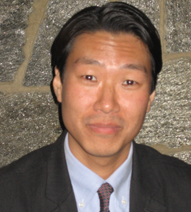
KC Choi is an Associate Professor at Seton Hall University , focusing on the intersection of race, theological education, and pedagogical innovation. Their work critically examines systemic racism, anti-racist teaching strategies, and the dynamics of racial identity in classrooms. Research Interests : Racial/ethnic diversity in education, social justice pedagogy, online theological teaching, and curriculum design that challenges white supremacist ideologies. Notable Contribution : Authored a pivotal 2015 blog post analyzing Dylann Roof’s racist assumptions about Asian Americans and implications for teaching race in theological contexts. Key Themes : Explores embodied teaching, trauma-informed pedagogy, and the role of creativity in dismantling oppressive classroom structures. Their work aligns with global efforts to decolonize education and foster inclusive learning environments.
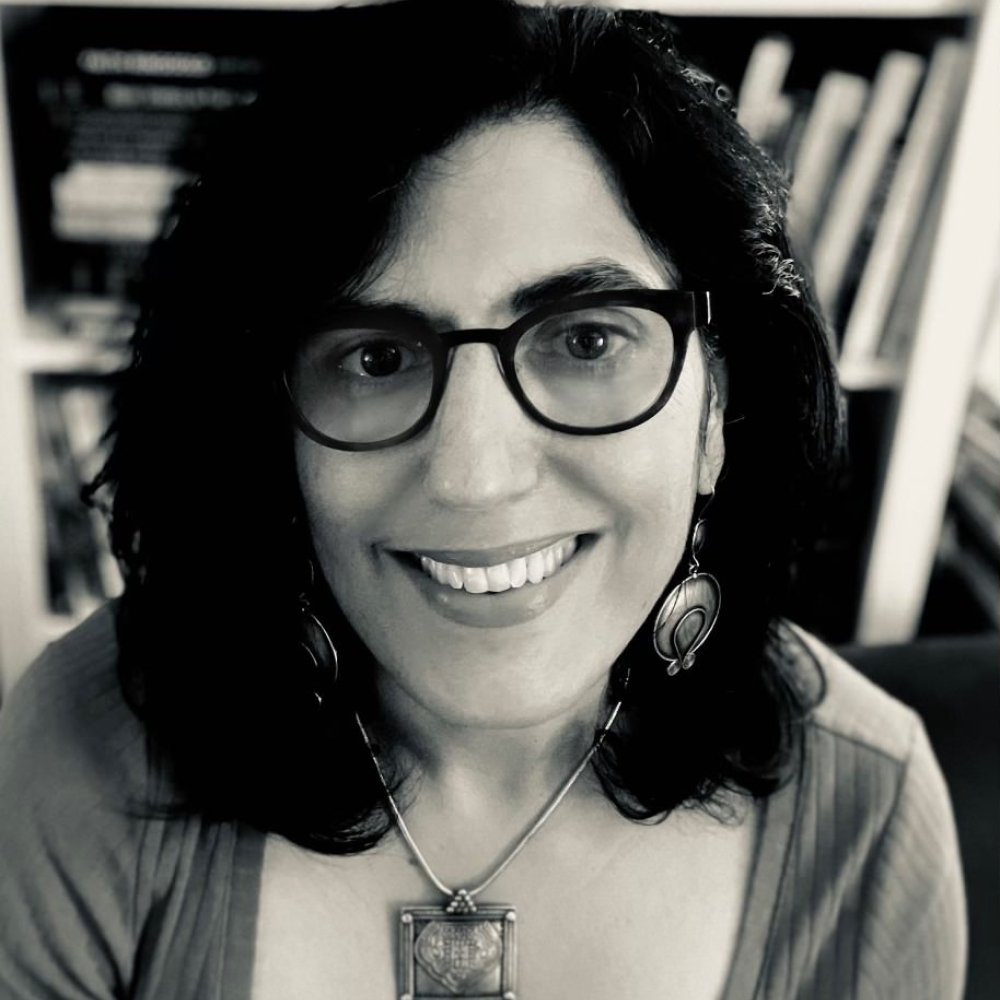
Shana Sippy is an Associate Professor of Religion and Chair of Asian Studies at Centre College , where she has taught since 2017. Her work bridges Hindu studies, feminist theory, and critical race studies , with a focus on diasporic identity and interfaith solidarity. She is a co-founder of the Feminist Critical Hindu Studies Collective (Auntylectuals) and previously taught at Carleton College for eight years. Research Interests include: Caste oppression in religious education Intersectional gender/sexuality critique Transnational Hindutva politics Vernacular Hinduism practices Diasporic self-fashioning Co-optation of decolonial language Her recent work analyzes the political dimensions of Hindu educational programs, the affective labor in diasporic communities, and the entanglement of Hinduism with white supremacy. Public Scholarship features collaborations with Twin Cities Public Television on the Sacred Minnesota documentary series (2021) and the curation of Beyond Borders: The Art of Siona Benjamin (2022). She also co-developed the Intersectional Hindu Studies Seminar at the American Academy of Religion.
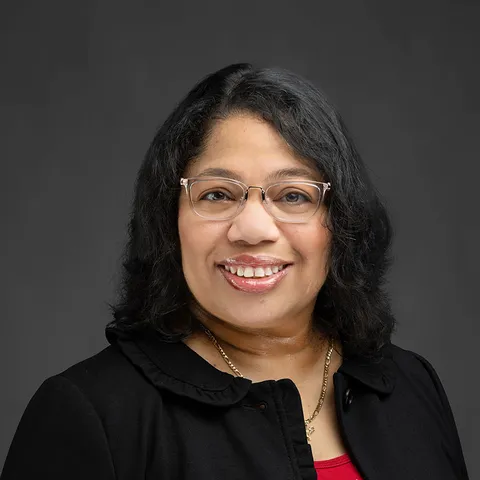
Enid Logan is an Associate Professor in the Department of Sociology at the University of Minnesota (Twin Cities). Her research focuses on the racialization of Indigeneity, race and electoral politics, racial rhetoric, and the intersection of race with gender and class. She has contributed to debates on post-racial narratives, the racial implications of Donald Trump's political rise, and Obama's presidency. Education: PhD from University of Michigan, BA from Yale University Her work explores how racial identities and emotions are constructed in contemporary U.S. politics, with attention to presidential elections, media narratives, and the experiences of marginalized groups. She has published extensively on topics like the racialization of Blackness in the Americas, whiteness studies, and the sociological implications of race-related policies. She received the Institute for Advanced Study Faculty Fellows award in 2019. Her research has been cited in Scopus and Plum Print metrics, reflecting its impact in discussions around race, media, and political discourse. Scientific Awards: Institute for Advanced Study Faculty Fellows, Fall 2019
Dr. Wenyang Sun is an Assistant Professor in the Department of Education, Culture & Society and affiliate faculty at the Asia Center at the University of Utah since 2020. Her work bridges language education , critical race theory , and transnationalism to address equity in multilingual learning environments. Education : Bachelor of Economics, Zhejiang University (2011) Bachelor of Arts, Zhejiang University (2011) Master of Education, Vanderbilt University (2013) PhD in Cultural Studies and Literacies, University of North Carolina at Chapel Hill (2020) Research Interests : Dr. Sun examines how sociopolitical forces shape language education for Asian/Asian American communities, with a focus on raciolinguistic ideologies , critical consciousness , and neoliberalism in bilingual programs . She applies AsianCrit and Critical Race Theory to analyze teacher identity, heritage language preservation, and anti-racist pedagogies. Publication Trends : Her recent work (2022–2025) analyzes Dual Language Bilingual Education (DLBE) programs through transnational and critical lenses , addressing racial barriers in teacher practices, immigrant family agency, and curriculum reform. Earlier studies (2017–2021) focus on heritage language textbooks , immigrant student integration , and global English education policies . Grants : Principal investigator for the U.S. Department of Education: National Professional Development Grant (APEX) (2021–2026), aimed at supporting multilingual educators. Teaching : Dr. Sun has taught courses including: Language and Identity Heritage/Community Language Education Foundations of Bilingual/Biliteracy Education Instructional Methods for Linguistically Diverse Populations
Camille R. Quinn is a Professor at the University of Michigan School of Social Work, specializing in health equity and systemic disparities affecting Black adolescent girls. Her research bridges social work, public health, and criminology through critical theories and intersectional frameworks. Current Principal Investigator on NIMHD grants (2L60MD017910-02, 2R21MD016940-01A1) Co-PI on MacArthur Foundation Safety and Justice Challenge 2023 SSWR Fellow and University of Chicago Milestone Achievement Award recipient Research Focus: Uses mixed methods to examine trauma, PTSD, and systemic criminalization of Black girls in youth punishment systems. Develops healing-centered interventions to address mental health disparities and promote resilience. Education: PhD, University of Illinois at Chicago (2014) AM in Social Service Administration, University of Chicago (1998) BS in Psychology, University of Alabama, Birmingham (1992) Scientific Contributions: Prominent work includes trauma-informed approaches to juvenile justice reform, culturally responsive interventions for court-involved Black girls, and analyses of systemic racism in educational, legal, and health systems. Key Awards: NIMHD Loan Repayment Program MacArthur Foundation Safety and Justice Challenge University of Chicago Milestone Achievement Award SSWR Fellowship Teaching: Instructs courses on social welfare policy, mixed methods research, feminist intersectionality, and substance abuse prevention in marginalized youth populations.
George Sefa Dei is a Professor of Social Justice Education and Director of the Centre for Integrative Anti-Racism Studies at the Ontario Institute for Studies in Education (OISE), University of Toronto. He is recognized as a leading scholar in race, anti-racism, and decolonization studies, with significant contributions to Black and minority education. Anti-Colonial Studies Race and Ethnicity Anti-Racism Black and Minority Education Fanon and Decolonization Dei's research focuses on critical anti-racism, decolonizing methodologies, and educational equity for marginalized communities. His work bridges theoretical frameworks like Fanonist theory with practical applications in anti-racist education. Scientific Awards: Carnegie African Diasporan Fellow (multiple years) Professor Extraordinarire at University of South Africa Royal Society of Canada Fellow Whitworth Award for Educational Research Paulo Freire Social Justice Award Ontario Alliance of Black School Educators Lifetime Achievement Award Dei has authored 40 books and over 70 refereed journal articles. He was installed as a traditional Ghanaian chief (Gyaasehene of Asokore, Koforidua) in 2007 with the stool name Nana Adusei Sefa Tweneboah.
Kristi Bartlett is an Assistant Professor in Product Design at the University of Kentucky, specializing in virtual reality, spatial ability assessment, and equity in design education. Her work bridges technology and pedagogy through projects like the OVPR Curate Program and UNITE Research Priority Area initiatives. Doctor of Philosophy, Purdue University (2023) Master of Science, University of Houston (2019) Research interests focus on: Virtual reality applications in design education Equity and inclusion in design disciplines Critical analysis of spatial skills assessment tools Generative AI ethics in creative processes Interdisciplinary medical device development Collaborative virtual learning environments Recent publications analyze AI-generated design renders, mental rotation assessment in VR, and gender dynamics in industrial design. Her projects examine immersive technologies, historically excluded student experiences, and sustainability integration in engineering curricula. Current grants include: Comparing Physical and Virtual Reality Product Models (2025-2026, UK OVPR) Mixed Reality in Product Design Education (2024-2025, UK IRC) Equity in Healthcare Design (2024-2025, UK UNITE) Historically Excluded Students in Design (2024-2025, UK UNITE)
Carey Andrzejewski is a Professor at Auburn University in the Department of Educational Foundations, Leadership, and Technology within the College of Education. She holds the Emily R. and Gerald S. Leischuck Endowed Professorship for Educational Leadership and serves as a Consultant for the Office of Research Compliance. Education: Ph.D. in Teacher Education Policy and Leadership (2008), Ohio State University M.A. in Educational Policy and Leadership (2006), Ohio State University M.A. in Dance and Related Arts (2002), Texas Woman’s University B.S. in Mathematics and Dance (1999), Berry College Her research focuses on social justice in education , critical consciousness development , and reform of school discipline practices , often using youth participatory action research (YPAR) and qualitative methods . She examines how educators can foster equitable, humanizing practices through community-university collaborations and curriculum design. Recent publications analyze critical consciousness in food security research , white fear in school discipline , and methodological critiques of mixed methods . Her outreach includes collaborations with O Grows and the Alabama Youth Justice Coalition.
Tamar Garb holds the prestigious Durning-Lawrence Chair of History of Art at University College London, where she has been a faculty member since 1989. She was promoted to Reader in 1995 and to Professor in 2001, and served as Director of the Institute of Advanced Studies from 2014 to 2019. Educated at the Michaelis School of Fine Art (University of Cape Town), Institute of Education (University of London), and Courtauld Institute of Art, she earned her PhD in 1991 while working part-time in secondary education. Her academic background includes a BA (Art) from the Michaelis School of Fine Art, University of Cape Town (1978), an MA in Art Education from the Institute of Education, University of London (1980), an MA in Art History from the Courtauld Institute of Art (1982), and a PhD from the Courtauld Institute (1991). Professor Garb's research spans gender and sexuality in Modern and Contemporary Art, African photography, women artists, and feminist aesthetics, with particular focus on nineteenth century French art and post-apartheid South African visual culture. Her influential publications include Sisters of the Brush: Women's Artistic Culture in Late Nineteenth Century Paris (1994), Bodies of Modernity: Figure and Flesh in Fin de Siecle France (1998), and The Painted Face, Portraits of Women in France 1814-1914 (2007). Her curatorial practice is equally significant, featuring major exhibitions including 'Gauguin: Maker of Myth' (Tate, 2011), 'Figures & Fictions: Contemporary South African Photography' (V&A, 2011), 'Distance & Desire: Encounters with the African Archive' (Walther Collection, 2014), and 'Beyond the Binary: Santu Mofokeng and David Goldblatt' (2023). Analysis of her 15 most recent publications (2018-2024) reveals continued scholarly engagement with African art and photography, feminist theory, and postcolonial critique, demonstrating how her foundational work on gender in 19th century art has evolved to address contemporary issues of race, migration, and archival politics in visual culture. Lucie Award nomination in Curating for 'Figures and Fictions: Contemporary South African Photography' (2011) Professor Garb actively supervises PhD students working on nineteenth century French art, contemporary African art, and gender studies, including Akin Oladimeji, Darya Aloufy, Kalvin Schmidt-Rimpler Dinh, and Renée Mussai. She teaches undergraduate and postgraduate courses including 'Art and Society in France' and 'South African Photography: From Colonialism to the Contemporary.' Her institutional service includes participation in UCL's Academic Board Working Group on Racism and Prejudice (2020). Her office is located at 205, 21 Gordon Square with office hours on Wednesdays 9:30-10:30am and Thursdays 12:00-1:00pm.
Anna Rastas is a Doctor of Social Sciences currently serving as an Adjunct Professor of Social Anthropology at Tampere University and Adjunct Professor of European Ethnology at the University of Helsinki. She has been affiliated with Tampere University since 2001, holding various positions including Professor of Social Anthropology (2012-2014), Senior Research Fellow (2014-2015), and Academy Research Fellow (2015-2020). Her work bridges sociology and social anthropology through multidisciplinary and intersectional approaches. Her primary research interests encompass racism and anti-racism, racialized and ethnic relations, knowledge production concerning minorities and marginalized communities, diaspora studies, transnationalism, childhood and youth studies, cultural production, and critical heritage studies. She has conducted extensive ethnographic fieldwork across Europe, the U.S., and Africa, with a particular focus on African diaspora communities and their representations in museums and exhibitions. Rastas has led significant research projects including the Academy of Finland-funded project 'Rethinking diasporas, redefining nations. Representations of African diaspora formations in museums and exhibitions' (2015-2020). Her scholarly work reveals patterns in how African diaspora communities navigate identity, belonging, and representation in predominantly white European societies, with particular attention to intersectional approaches to museum work and decolonial practices. Academy Research Fellow (Academy of Finland, 2015-2020) Visiting Scholar at University of Amsterdam (2017) Visiting Scholar at University of California, Davis (2018) As an educator and activist, Rastas has trained authorities, professionals, and NGOs in Finland and internationally on anti-racism and diversity issues. She considers herself an anti-racism activist and has previous work experience with asylum seekers, refugees, and NGOs, complementing her academic work with practical engagement in social justice issues.
Dr. Jakob Hartl is a Lecturer at the Institute of Sociology of Martin Luther University Halle-Wittenberg and a Research Fellow at the Research Institute for Social Cohesion since 2021. He holds a PhD in Sociology from the University of Bristol (2015-2019) and has been affiliated with the university's Institute of Sociology since 2018. Education: Diploma in Sociology from the University of Vienna (2005-2012) Prior roles: Research Associate at University of Bristol (2015-2018), Researcher at Institute for Advanced Studies Vienna (2012-2015) Dr. Hartl’s research focuses on social cohesion , political participation , and social inequality , with particular attention to electoral integrity, right-wing extremism, and the impact of precariousness on civic engagement. His work bridges empirical sociology with policy analysis, examining how structural factors shape individual outcomes across urban, regional, and national contexts. Recent publications (2017-2025) reveal a trajectory from educational and labor market dynamics to political sociology , including analyses of the Halle (Saale) attack, rural migration patterns, and electoral behavior. Articles often intersect with social inequality , urban development , and democratic legitimacy .
Dr. Kristof Dhont is a Reader in Psychology and Director of Graduate Studies (Research) at the University of Kent's School of Psychology. He leads SHARKLab, studying human-animal and intergroup relations. His research focuses on social-ideological drivers of prejudice, speciesism, and the paradoxes in human-animal interactions. He has held editorial roles at journals like Psychology of Human-Animal Intergroup Relations and Group Processes & Intergroup Relations . Dr. Dhont earned his PhD in Psychology from Ghent University and held a postdoctoral fellowship at the Research Foundation Flanders (FWO-Vlaanderen). His work bridges psychological theory with advocacy, addressing topics like meat consumption ethics, gender stereotypes linked to dietary choices, and the moral psychology of animal exploitation. Research interests include social dominance orientation, human supremacism, and the intersection of sexism and speciesism. Key areas of inquiry explore why people both care for and exploit animals, strategies to reduce intergroup prejudices, and the implications of human-animal relations for societal cohesion. Publications highlight themes such as meat-eating commitment's link to pandemic risks, the role of language in conveying moral commitments to animals, and the psychological barriers to clean meat acceptance. His work often integrates environmental, health, and ethical motives in dietary choices. Grants and awards include a £192,118 Leverhulme Trust grant (2018–2021) and multiple collaborative grants with Ghent University. His editorial work emphasizes advancing interdisciplinary scholarship on human-animal relations. Supervision of doctoral students has produced research on topics like emotional intelligence and prejudice, anti-veganism, and Euroscepticism. Dr. Dhont's lab fosters collaborative projects with international partners, reflecting his commitment to global academic networks.
Anne Garland Mahler is Associate Professor of Spanish, Italian, and Portuguese at the University of Virginia’s College of Arts & Sciences, where she also serves as Director of Global South Studies and co-coordinates the university’s Internationalism project and Interdisciplinary Doctoral Fellowship in Caribbean Literatures, Arts, and Cultures. An interdisciplinary scholar trained in Latin American cultural studies (PhD, Emory University, 2013), she has received major fellowships from the ACLS, Ford, and Mellon foundations. Education: PhD in Latin American Cultural Studies – Emory University (2013) Research Interests revolve around South-South political and cultural movements, racial capitalism, and globalization. She interrogates how Latin American, African American, and U.S. Latinx writers articulate transnational solidarities, anti-imperial critiques, and alternative epistemologies of liberation. Her work synthesizes cultural studies, critical theory, and historical analysis to map circuits of radical thought across the Global South. Her 2018 monograph From the Tricontinental to the Global South: Race, Radicalism, and Transnational Solidarity (Duke UP) has garnered over twenty interdisciplinary reviews. Three additional books are under contract or in progress, including co-edited volumes with Routledge and Oxford University Press and a second monograph supported by an ACLS Fellowship. Scientific Awards & Honors ACLS Fellowship (2020-21) Research grants from the Ford Foundation, Mellon Foundation, and American Council of Learned Societies Institutional Leadership & Grants Founding executive committee member, MLA Global South Forum Director, Global South Studies, University of Virginia Co-coordinator, Internationalism Project, Academy of Global Humanities and Critical Theory, UVA Co-coordinator, Interdisciplinary Doctoral Fellowship in Caribbean Literatures, Arts, and Cultures, UVA Director of Diversity, Equity, and Inclusion, Department of Spanish, Italian, and Portuguese, UVA Labs, Teams & Scholarly Networks Mahler leads the Global South Studies initiative at UVA, an interdisciplinary hub that fosters collaborative research, curricular innovation, and public scholarship on Global South issues. She collaborates with scholars across the humanities and social sciences, guest-edits special journal issues, and mentors graduate students through UVA’s Caribbean studies fellowship program.
Prof. Dr. Sérgio Costa is a University Professor of Sociology of Latin America at the Institute of Sociology and the Latin America Institute of Freie Universität Berlin since February 2008. He holds a prominent position in German-Latin American academic relations and has made significant contributions to sociological theory with a focus on Latin America. His research interests span Racism and Anti-racism , Living together in diversity , Social inequality , and Postcolonial theories . Costa's work bridges German and Latin American academic traditions, with particular attention to the Black Atlantic, conviviality frameworks, and entangled inequalities. His theoretical contributions have shaped contemporary discussions on social cohesion in unequal societies. Costa's scholarly output reveals consistent focus on the interconnections between conviviality and inequality, with recent work examining these dynamics during the pandemic, in middle-class formations, and in intersectional politics. His publications demonstrate interdisciplinary reach across sociology, political science, and area studies. Iberoamericano Buchpreis der Latin American Studies Association (2021) for 'Entre el Atlántico y el Pacífico Negro' Preis der Dahlem Research School für Exzellente Betreuung (2020) Costa has supervised 24 completed PhD dissertations and currently advises 10 doctoral candidates at Freie Universität Berlin, in addition to numerous master's theses. His research is supported by multiple grants including the Maria Sibylla Merian Centre for Advanced Studies on Conviviality in Unequal Societies, where he serves as Speaker, and the Berlin University Alliance project 'Beyond Social Cohesion: Repertoires of Living Together.' He leads the International Graduate College 'Temporalities of Future' and the 'Minor Cosmopolitanisms' Graduate College, demonstrating his leadership in shaping next-generation scholarship on global inequalities and alternative futures.
David Naguib Pellow serves as Dehlsen Chair and Professor of Environmental Studies at the University of California, Santa Barbara's Bren School of Environmental Science & Management, where he directs the Global Environmental Justice Project. Previously, he held the Don Martindale Endowed Chair in Sociology at the University of Minnesota and served as Associate Professor of Ethnic Studies at UC San Diego. PhD in Sociology, University of California, Santa Cruz MA in Sociology, University of California, Santa Cruz BA in Sociology, University of California, Santa Cruz Professor Pellow pioneers critical environmental justice studies with research spanning environmental racism, carceral systems, animal liberation, and global labor movements. His work challenges traditional frameworks by examining how race, class, immigration status, and species hierarchy intersect with ecological crises. He develops transformative frameworks like the Critical POET Model connecting production, oppression, ecology, and time. Analysis of his 15 most recent publications reveals an expanding research trajectory from urban environmental justice to carceral ecology and transnational climate justice. His scholarship increasingly integrates prison abolition, animal rights, and Indigenous sovereignty frameworks while maintaining focus on corporate power and state violence. Academic Influence Sociology World Rank #1158 Highly cited publications including Garbage Wars (867 citations) and Resisting Global Toxics (381 citations) Pellow leads the Global Environmental Justice Project, fostering university-community collaborations with frontline environmental justice organizations. His research has secured significant funding for projects examining environmental health disparities in carceral settings and climate justice initiatives in California. He actively mentors emerging scholars through engaged scholarship models that bridge academic and activist communities. His laboratory of critical inquiry operates through the Global Environmental Justice Project, which functions as a hub for collaborative research connecting scholars, activists, and communities globally. Current initiatives focus on carceral environmental justice, climate adaptation for vulnerable populations, and transnational movement building.