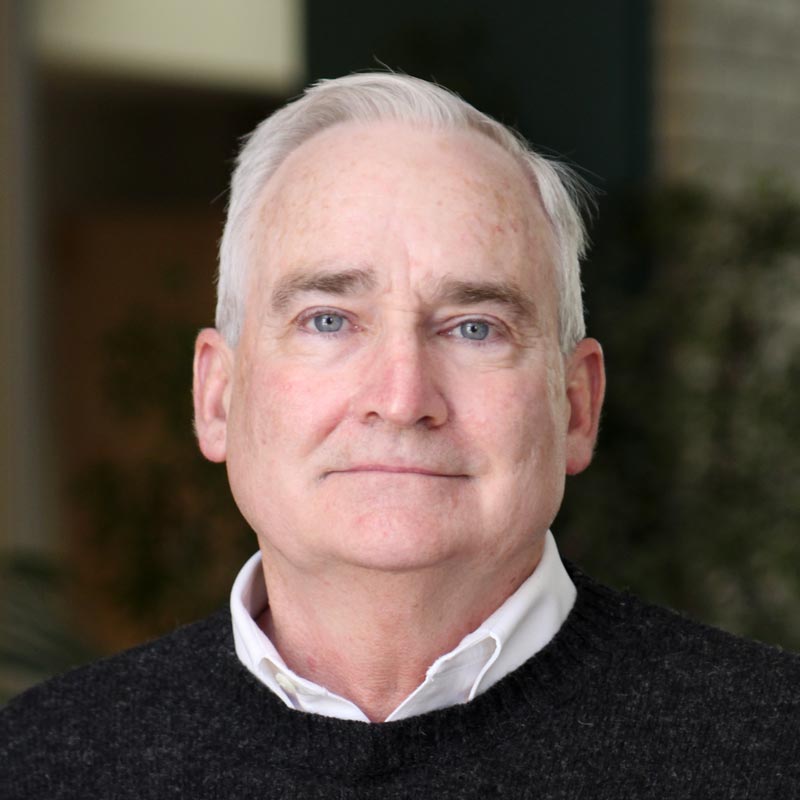
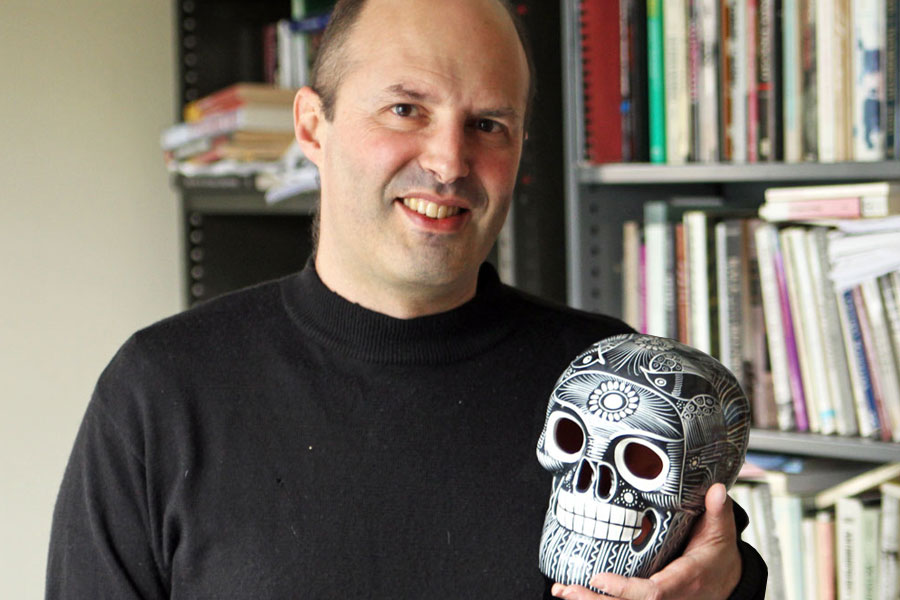
Edmund Russell is a Professor of History and David M. Roderick Professor of Technology and Social Change at Carnegie Mellon University's Dietrich College of Humanities and Social Sciences. He joined the university in 2019, drawn by its interdisciplinary ethos. His research bridges environmental history, technology history, and American history, with a focus on coevolutionary dynamics, warfare, and capitalism. He holds a B.A. in English (with distinction and highest honors) from Stanford University and a Ph.D. in biology from the University of Michigan (1993). His work synthesizes historical methodologies with biological principles, particularly ecology, evolution, and neuroscience. Russell has authored influential books such as Greyhound Nation: A Coevolutionary History of England, 1200–1900 (2018) and Evolutionary History (2011). He leads a digital project on telegraph history ( https://telegraph.library.cmu.edu/ ). His honors include a Guggenheim Fellowship, presidency of the American Society for Environmental History, and the National Science Foundation CAREER Award. Russell’s current projects include a history of the U.S. transcontinental telegraph and exploring coevolutionary frameworks in environmental policy. He is actively involved in academic leadership, having served as Vice President for Research at the American Historical Association and as a Distinguished Lecturer for the Organization of American Historians.
Kenya C. Dworkin y Méndez is an Associate Professor of Hispanic Studies at Carnegie Mellon University (CMU), with a courtesy appointment in the English Department. She holds a Ph.D. in Hispanic Literatures and Linguistics from the University of California, Berkeley, and an M.A. and B.A. in Spanish from the University of Hawaii, Manoa. Her research focuses on Cuban, U.S. Latino, and Sephardic cultural studies, emphasizing transnationalism, community engagement, and historical recovery of marginalized voices. She has authored or co-edited major works like Spanish and Empire , Herencia: The Anthology of U.S. Latino Literature , and En Otra Voz . Current projects include Cuban to the Core , exploring Cuban diaspora in South Florida. Her work bridges academia and community through initiatives like Círculo Juvenil de Cultura, CORITO children’s choir, and leadership roles in the Latin American Cultural Union and Coro Latinoamericano. Awarded the Mark Gelfand Award for Educational Outreach (2011) and multiple Outstanding Role Model recognitions, she also secured grants from the National Endowment for Democracy and Pittsburgh Foundation. Her teaching spans diaspora studies, translation, and cross-cultural analysis, integrating service-learning and community-based research.
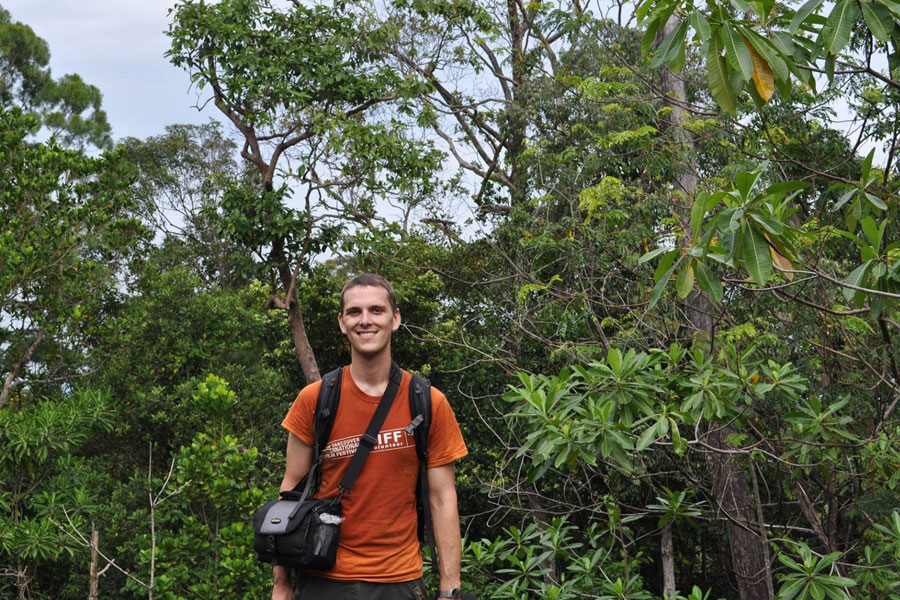
Noah Theriault is Associate Professor of Anthropology in Carnegie Mellon University's Department of History, part of the Dietrich College of Humanities and Social Sciences. He joined the faculty in 2017 and serves as Faculty Advisor for the Anthropology Minor and co-organizer of the History Department Research Seminar. His work bridges anthropology, history, and geography to examine how global capitalism shapes local social and environmental inequalities. Theriault earned his Ph.D. from the University of Wisconsin-Madison in 2013. His academic journey reflects a deep commitment to understanding the intersections of political power, environmental change, and cultural survival, particularly in Southeast Asia. As a political ecologist, Theriault's research focuses on how the globalization of capitalism shapes social and environmental inequality at the local level. His long-term ethnographic work in the Philippines, particularly in Palawan (described as the country's "last frontier"), examines how conservation efforts intersect with Indigenous rights and capitalist expansion. His forthcoming book, A Forest of Dreams: Conservation, Capitalism, and Indigenous Rights in the Philippines (University of Hawai'i Press, 2025), argues that attempts to "save the last frontier" often reinforce rather than reverse colonial and capitalist processes. He also investigates Manila's traffic congestion as a fulcrum for social inequality struggles and collaborates on energy justice research for Northern Appalachia. Theriault's publications reveal consistent themes of ontological multiplicity, Indigenous survivance, and the politics of visibility. His work spans Indigenous land rights in the Philippines, multispecies relations in urban contexts, toxic research methodologies, and the intersections of pandemic politics with land struggles. He frequently collaborates with Indigenous scholars and community members, reflecting his commitment to decolonial research practices that center Indigenous knowledge and perspectives. Theriault actively contributes to academic communities beyond CMU, having served on the executive board of the Philippine Studies Group of the Association for Asian Studies and as co-convenor of the Environmental Humanities Research Seminar. He was Visiting Professor in Indigenous Studies at the University of the Philippines - Baguio. His dedication to collaborative research is evident in his numerous co-authored publications with Indigenous scholars, demonstrating his commitment to relational, reciprocal knowledge creation that serves community organizing and collective action.
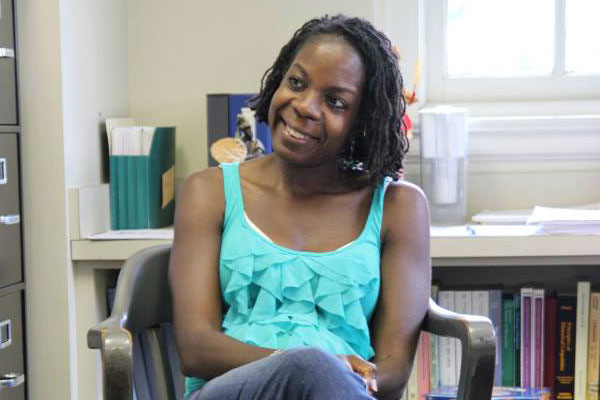
Dr. Edda L. Fields-Black is Professor in the Department of History and Director of the Dietrich College Humanities Center at Carnegie Mellon University. She has been a faculty member since 2001 and serves as Faculty Advisor for Carnegie Mellon's African and African American Studies Minor. Her work bridges academic research with public engagement, bringing untold stories of enslaved Africans and their descendants to broader audiences through innovative interdisciplinary collaborations. Dr. Fields-Black earned her Ph.D. from the University of Pennsylvania in 2001. Her academic journey has focused on connecting historical research with contemporary social issues, particularly through the lens of African diasporic experiences and the legacy of slavery in the United States. Dr. Fields-Black specializes in the trans-national history of West African rice farmers, peasant farmers in pre-colonial Upper Guinea Coast, and enslaved laborers on rice plantations in the antebellum South Carolina and Georgia Lowcountry. Her research employs interdisciplinary methods to recover the voices of historical actors who left few written records. She examines how enslaved Africans' technological expertise in rice cultivation shaped both the economies of the American South and cultural practices that persist in the Gullah Geechee communities. Her work challenges conventional narratives about pre-colonial Africa and the African Diaspora, revealing dynamic, diverse societies with specialized agricultural knowledge. Dr. Fields-Black's recent publications demonstrate a consistent focus on uncovering previously marginalized perspectives in American history, particularly regarding slavery and the Civil War era. Her work increasingly integrates environmental history with social history, examining how enslaved people interacted with and transformed coastal landscapes. The 2024 publication 'COMBEE: Harriet Tubman, the Combahee River Raid, and Black Freedom during the Civil War' represents the culmination of this trajectory, using Civil War pension files to reconstruct the experiences of freedom-seekers in their own words. Dr. Fields-Black has received numerous prestigious awards for her scholarship, including: 2025 Pulitzer Prize in History 2025 Gilder Lehrman Lincoln Prize 2025 Tom Watson Brown Book Award 2024 George C. Rogers Jr. Award 2024 Marsha M. Greenlee History Award Honorable Mention - 2025 James A. Rawley Prize Finalist - 2025 Mark Lynton History Prize Finalist - 2025 ASALH Book Prize Dr. Fields-Black has secured significant research funding from major foundations including Ford, Mellon, Woodrow Wilson, and Annenberg Foundations, as well as the Smithsonian Museum and Fulbright-Hays. She currently leads an interdisciplinary team of scientists studying 'Queen Rice': How Enslaved Labor Transformed Wetland Landscapes and America,' examining the 300-year impact of enslaved labor on coastal wetlands. Her work extends beyond traditional academic boundaries through collaborations with artists, filmmakers, and museum curators to bring historical narratives to wider audiences. Dr. Fields-Black leads the 'Requiem for Rice' project, an innovative collaboration with composer John Wineglass and filmmaker Julie Dash that transforms historical research into a symphonic work memorializing enslaved Africans on rice plantations. She also serves as principal investigator for a team of scientists studying the environmental impact of enslaved labor on coastal wetlands, integrating archaeology, conservation, digital humanities, and ecological studies. Her work with museums includes advising for the Smithsonian National Museum of African American History and Culture, the Senator John Heinz History Center, and the International African American Museum.
Paul K. Eiss is an Associate Professor of History and Anthropology at Carnegie Mellon University, affiliated with the Dietrich College of Humanities and Social Sciences. His research focuses on Mexico, particularly Yucatán, exploring themes of indigenous identity, performance traditions, and political history. He holds a Ph.D. from the University of Michigan (2000). Key research projects include studies of teatro regional performance, mestizaje, and collective violence in contemporary Mexico. His book In the Name of El Pueblo won multiple awards, analyzing communal identity and political history in Yucatán. Eiss has also published widely on topics like narcomedia and indigenous education. His awards include the María Elena Martínez Book Prize (2011) and the Cultural Horizons Prize (2003). He teaches courses such as 'Mexico: From the Aztec Empire to the Drug War' and 'Mayan America Beyond the Border.'
Alisha B. Wormsley is an Assistant Professor of Social Practice at Carnegie Mellon University’s School of Art. Her interdisciplinary work explores collective memory, Afrofuturism, and the intersection of public art with sociocultural narratives. She holds an MFA in Film and Video from Bard College and has received prestigious grants including the Heinz Award and Mellon Fund support. Her major installations include 'There Are Black People In The Future' and 'Streaming Space,' a 24-foot pyramid in Pittsburgh’s Market Square. Wormsley’s research integrates film, performance, and community engagement, addressing themes of identity and historical legacy. Education: MFA in Film and Video, Bard College Anthropology studies at University of California, Berkeley Photography and Digital Media, International Center of Photography Research Interests: Wormsley’s practice merges art with activism, focusing on marginalized histories and speculative futures. Projects like 'afronaut(a)' and 'Children of NAN' use multimedia to reclaim narratives of Black futurism. Her work often critiques spatial justice through public installations in urban environments. Awards & Recognition: Heinz Award (2014) Mayor’s Public Art Award Nominated for USA Artist Fellowship (2015) Presidential Postdoctoral Research Fellowship (Carnegie Mellon) Teaching & Grants: Adjunct Professor at Carnegie Mellon (2015–present), Human Rights Education through the Arts at University of San Francisco, and residencies at Project Row House (Houston) and the Andy Warhol Museum. Her grants include Mellon Fund awards, Heinz Endowments funding, and the Pittsburgh Foundation’s Advancing Black Art Grant. Labs/Teams: Collaborations with Transformazium Arts Collective and CSA PGH, focusing on community-driven art initiatives.
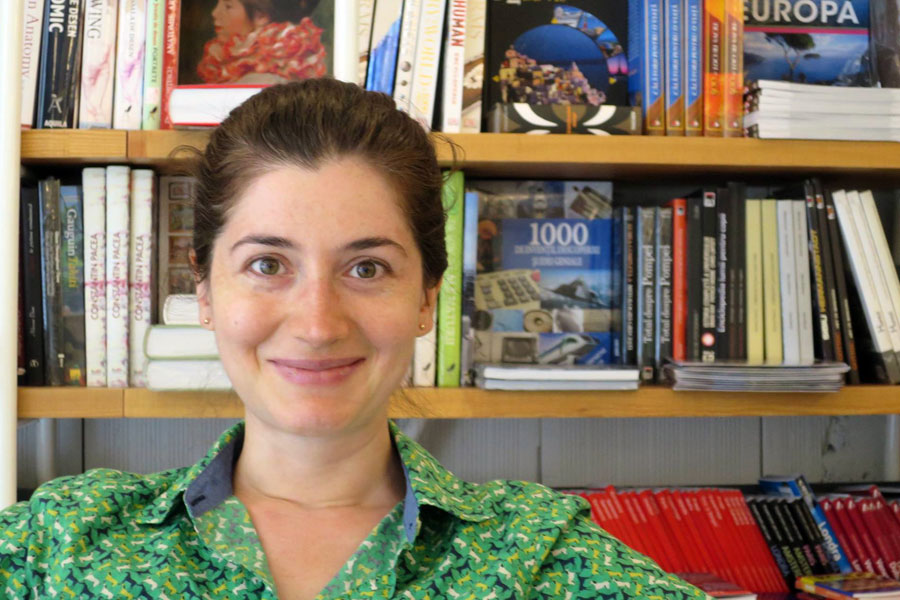
Emanuela Grama is an Associate Professor in the Department of History at Carnegie Mellon University , where she has been a faculty member since 2013. She specializes in the history of 20 th and 21 st century Central and Eastern Europe, with a particular focus on urban politics, state-making, property restitution, and cultural memory in Romania. Education: Ph.D. in Anthropology and History from the University of Michigan, Ann Arbor (2010) Her research combines archival and ethnographic methodologies, analyzing how political regimes use material practices to construct heritage and belonging. She has published extensively on topics including socialist urban planning, the politics of archaeology, and post-socialist property debates. Her personal website details her ongoing work on Transylvania's multiethnic heritage. Recent publications reveal a focus on heritage studies , urban history , and post-socialist transitions , with keywords spanning state-making , ethnic minority rights , and legal history . Her 2019 book Socialist Heritage (Indiana University Press) won the 2020 Ed Hewett Book Prize for outstanding work on the political economy of Eastern Europe. Fellowships: Wenner Gren Foundation, American Council for Learned Societies, Max Weber Postdoctoral Program (European University Institute)
Lauren Herckis is an anthropologist affiliated with Carnegie Mellon University's Simon Initiative, School of Computer Science (Human-Computer Interaction Institute), and University Libraries. Her research focuses on implementation science, faculty culture, educational technology, and sociotechnical systems in higher education. She explores how technology adoption impacts teaching practices and organizational culture, with a particular emphasis on issues like digital literacy, VR pedagogy, and AI-Augmented Learning. Her work is funded by organizations including the National Science Foundation, the Chan Zuckerberg Initiative, and the Hillman Family Foundations. She has held a Fulbright Fellowship and collaborated with institutions such as the U.S. Department of Veterans Affairs and the University of Pittsburgh's Center for Teaching and Learning. Her research methodologies combine ethnography, mixed-methods approaches, and design-based research. Key projects include developing the Digital Robotics Archive and Multimodal Archive Toolkit, analyzing barriers to technology adoption in academia, and designing interventions for workforce readiness in community colleges. She advises students like Rotem Guttman and contributes to initiatives like the CyberSim Lab and AI-literacy programs in academic libraries. Key Awards: Fulbright Fellowship Funding Sources: NSF, CZI, Carnegie Corporation, Hillman Foundations Major Projects: Simon Initiative collaborations, Digital Robotics Archive, AI-Augmented Learning in Community Colleges Her interdisciplinary approach bridges anthropology, education science, and computer science to address challenges in postsecondary education transformation and sociotechnical systems.
Lila Abu-Lughod is the Joseph L. Buttenwieser Professor of Social Science and Anthropology at Columbia University. She is a leading scholar in women’s rights and gender dynamics in the Middle East. In 2018, she delivered the Margaret Morrison Distinguished Lecture in Women’s History at Carnegie Mellon University, focusing on the intersection of women’s rights and countering violent extremism. Her research emphasizes critical perspectives on globalization, cultural politics, and the role of gender in socio-political contexts. The lecture highlighted her commitment to interdisciplinary approaches, blending anthropology with contemporary socio-political issues. No specific educational background or grants are detailed in the provided text, though her status as a "decorated specialist" suggests significant recognition in her field.
Sue-mei Wu is a Teaching Professor of Chinese Studies at Carnegie Mellon University's Dietrich College of Humanities and Social Sciences, Department of Languages, Cultures & Applied Linguistics. She serves as Director of the Masters in Applied Second Language Acquisition program and Executive Director of the national Chinese Language Teachers Association (CLTA). Her work integrates linguistics, pedagogy, and technology to advance Chinese language education. Ph.D., Chinese Linguistics & Language Pedagogy (The Ohio State University) B.A., Chinese Language & Literature (National Tsing Hua University) Research Interests: Wu focuses on Technology-enhanced language learning frameworks Chinese folk performance traditions (especially Taiwanese puppetry and opera) Digital storytelling for cultural preservation Modern/Classical Chinese syntax pedagogy DEI (Diversity, Equity & Inclusion) in language education Selected Projects: Leadership of CMU's NSF-funded OLI Chinese Online initiative, Chinese Link textbook series (Pearson), Classical Chinese Primer (co-author), and immersive cultural modules like the Wedding Banquet and Internet Café websites. Her work bridges traditional arts with digital innovation. Awards & Grants: Andrew W. Mellon Seed Grant (2016-2018) Chiang Ching-kuo Foundation Grant (2015-2018) CLTA-Cengage Innovative Excellence Award (2014) NSF support through PSLC Professional Service: Founded CLTA-WPA (2014-present), served on editorial boards of Foreign Language Annals and Chinese as Second Language , and coordinated multiple teacher training workshops for K-16 educators.
Michal Friedman is an Assistant Professor and Jack Buncher Endowed Chair in Jewish Studies at Carnegie Mellon University's Dietrich College of Humanities and Social Sciences . Her scholarship bridges Jewish diasporic history and Iberian studies , with a focus on Sephardi communities and Spain's contested engagement with its Jewish past. She has developed interdisciplinary collaborations with CMU's School of Drama and Entertainment Technology Center for public history projects, including a theatrical production and Belgrade Jewish neighborhood walking tour app tied to Centropa Archive oral histories. Her research interrogates Spain's neocolonial designs in Morocco/Balkans and the ambivalent mobilization of Sephardi heritage in political movements like Zionism and Fascism. She co-founded the Genealogies of Sepharad network, advancing comparative analyses of Sephardi identity. Current projects examine 21st-century Spanish citizenship campaigns for Sephardi descendants and modern antisemitism in the context of Holocaust memorialization. Dr. Friedman's publications span journals like Jewish Quarterly Review and edited volumes including The Routledge Companion to Jewish History and Historiography . She teaches courses on Jewish diaspora , Christian-Muslim-Jewish relations , and 20th-century European history , emphasizing public engagement through digital humanities and oral history projects .
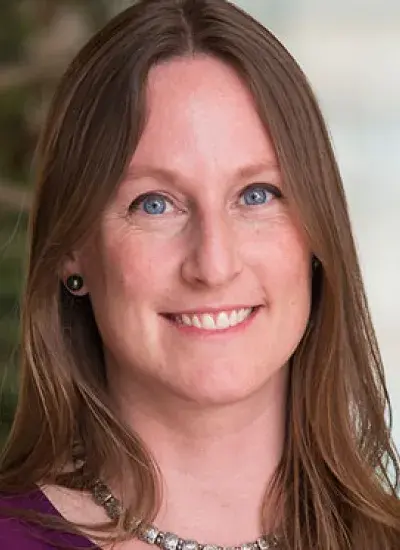
Erin Dean serves as an Associate Teaching Professor in the Department of History at Carnegie Mellon University's Dietrich College of Humanities and Social Sciences. She joined the department in 2024 and maintains her office at 5000 Forbes Avenue, Pittsburgh, PA 15213. As an environmental anthropologist, Dr. Dean's research critically examines the intersections between environmental and social justice issues. Her scholarly work spans renewable energy systems and electrification initiatives, with additional research conducted on gender dynamics, cosmological frameworks, community-based conservation models, agricultural practices, participatory forestry approaches, and political authority structures in Tanzania and Zanzibar. Her teaching portfolio encompasses diverse courses in environmental humanities and qualitative research methodology. Dr. Dean's research demonstrates a strong commitment to understanding how environmental challenges intersect with social justice concerns, particularly through community-centered approaches in East African contexts. Her work bridges anthropological theory with practical applications for sustainable development and community empowerment. While specific details about her advising activities are not provided in available materials, her expertise in qualitative research methodology suggests she likely mentors students in ethnographic fieldwork and research design. Her position as a Teaching Professor indicates a primary focus on undergraduate and graduate instruction within the History Department's curriculum.
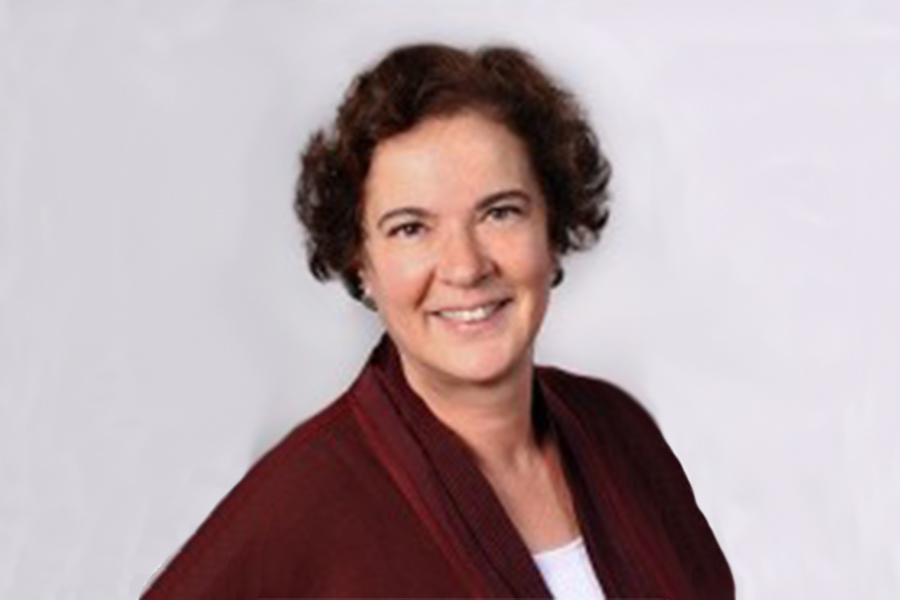
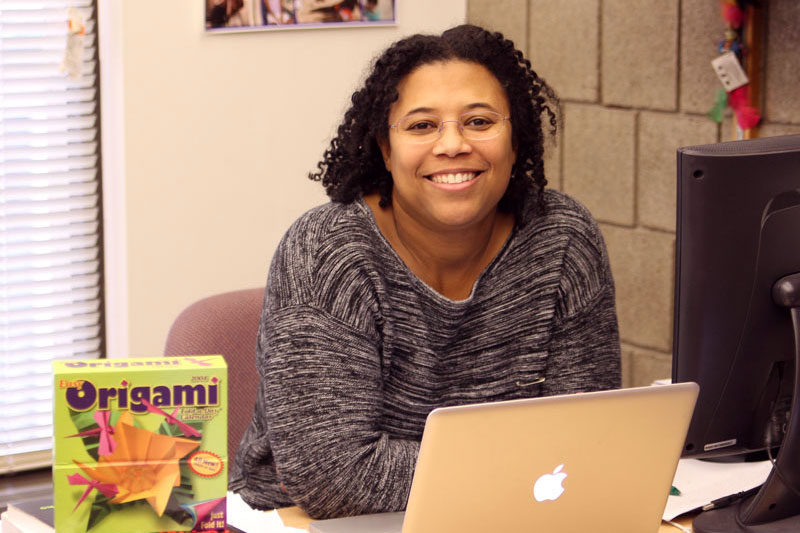
Shawn Alfonso-Wells is an Adjunct Professor in the Department of History at Carnegie Mellon University, affiliated with the Dietrich College of Humanities and Social Sciences. She joined the university in 2008 after completing her doctorate at the University of Pittsburgh. As an anthropologist, her academic focus centers on Latin American culture, particularly Cuba, and explores intersections of sex, gender, and race relations. Outside the classroom, she is passionate about teaching origami and Spanish to children, often blending these activities with her family life. Her love for Cuban dance, especially casino-style salsa, reflects her immersive approach to cultural engagement. Expertise: Latin American cultural studies, gender and race dynamics, anthropology Engagement: Combines traditional teaching with creative hobbies like origami and board games
Jessica Cantlon is the Ronald J. and Mary Ann Zdrojkowski Professor of Developmental Neuroscience/Psychology at Carnegie Mellon University's Dietrich College of Humanities and Social Sciences. She leads the Concepts, Actions, and Objects Lab and the Kid Neuro Lab, focusing on the neural and cognitive foundations of quantitative reasoning in humans and non-human primates. Her research employs behavioral and neuroimaging techniques to explore how numerical and spatial concepts develop in children and how these relate to evolutionary processes. Key research themes include cross-species comparisons of numerical processing (e.g., studies on rhesus monkeys and olive baboons), the role of the intraparietal sulcus (IPS) in numerical cognition, and the impact of environmental and gender factors on mathematical development. She has contributed to debates on core knowledge theories, semantic frameworks, and the evolution of human intelligence. Her work bridges developmental psychology, cognitive neuroscience, and comparative psychology, with implications for education and public health policy. Her labs emphasize interdisciplinary approaches, combining fMRI studies with behavioral experiments to understand how abstract concepts emerge from neural systems. Current projects investigate recursive pattern processing, hierarchical reasoning, and the neural basis of mathematical learning from naturalistic environments like educational videos.
Dr. Xiuyu Wang is an Associate Professor of History at Washington State University, specializing in Chinese, East Asian, and Modern World History. His doctoral training at Carnegie Mellon focused on the history and anthropology of modern China. Research Evolution: Expanded from Kham Chinese-Tibetan borderland studies to broader examinations of political relations between state and frontier society in 20th century Chinese Southwest, analyzing co-evolution of political relations, regional economy, and ecology influenced by external cultural and ideological forces. Education: PhD in History (Carnegie Mellon University), Master of Science in Environmental and Resource Economics (University of Massachusetts), BS in Industrial Engineering (Universidad Javeriana).