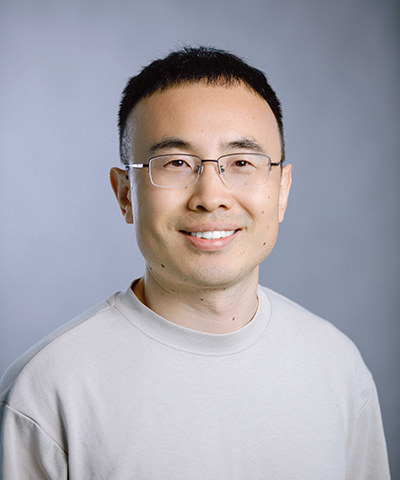
Matthew Jones is a Senior Lecturer in Theology at the School of Theology, Charles Sturt University , affiliated with Hong Kong Ming Hua Theological College. Holding a PhD from the University of Auckland, he specializes in Melanesian Brotherhood and theologies of relational power in the Asia-Pacific region. Education : BA (Hons), MA, PhD (University of Auckland) Research Focus : Contemporary theology in global contexts, indigenous theologies, and Christianity in Oceania/Melanesia Teaching : Courses include Christian Theology, Ecological Theology, and The Triune God Leadership : Involved in clergy training and Doctor of Educational Ministry Programme at Ming Hua His publications analyze Christian adaptation in Melanesia, Solomon Islands, and Oceania, emphasizing indigenous practices and interfaith dialogues. Jones contributes to Anglican theological networks and explores Christianity's intersection with ecological ethics. Contact: majones@csu.edu.au
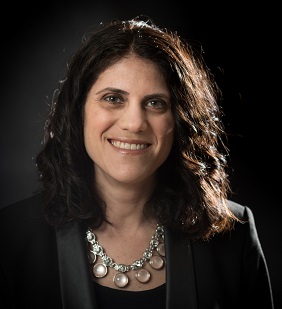
Cristina Ciancio is an Associate Professor in the Department of Law, Economics, Management and Quantitative Methods (DEMM) at the University of Sannio, Italy, where she teaches Legal History (IUS/19). She is also a member of the academic board of the national PhD program in Teaching & Learning Sciences and serves on the executive board of the Center for the History of Criminal Justice at the University of Bologna. Her academic appointments reflect a strong engagement with interdisciplinary legal research and international collaboration. Her research interests center on the history of medieval and modern law, with a particular focus on the legal treatment of death, burial, and commercial jurisdiction in 19th- and early 20th-century Italy. She explores the intersections of law, religion, medicine, and culture, especially in the context of secularization and state formation. Her work often adopts a comparative lens, analyzing legal transfers and dialogues between Italy and France. Her recent publications reveal a consistent scholarly trajectory examining taboo subjects such as necrophilia, vampire trials, unbaptized infants, and the desecration of corpses, as well as institutional reforms in commercial law. These works demonstrate a deep engagement with primary legal sources, forensic medicine, and cultural narratives, published in high-impact journals and edited volumes. National Academic Qualification as Full Professor of Legal History (2019) Visiting Professor, Université Toulouse 1 Capitole (2022) Invited Researcher at multiple Max-Planck Institutes and French research centers (2012–2023) Organizer of international conferences on death, criminal law, and Franco-Italian legal exchange She has advised on and participated in numerous scholarly events and research initiatives, though no formal students are listed. Her leadership in organizing international conferences and her active publication record indicate a vibrant research agenda and strong academic network. Cristina Ciancio leads and participates in collaborative research projects across Europe, particularly with French institutions such as EHESS, Université Paris Nanterre, and CNRS. She has been instrumental in organizing international conferences that bring together legal historians, criminologists, and cultural scholars, fostering interdisciplinary dialogue on topics at the margins of law and society.
University of California, Los AngelesUnited States
Ismail K. Poonawala is a Professor in the Department of Near Eastern Languages and Cultures at the University of California, Los Angeles (UCLA). Holding a PhD in Near Eastern Studies from UCLA (1968), he specializes in Ismaili studies, Islamic jurisprudence, and Arabic literature. PhD, Near Eastern Studies, UCLA (1968) MA with distinction, Arabic Language and Literatures, Cairo University (1964) MA, Arabic, Bombay University (1959) BA, Arabic, Bombay University (1957) His research focuses on Ismaili thought, particularly through critical editions and analyses of foundational texts like the Rasāʾil Ikhwān al-Ṣafāʾ and works of al-Qāḍī al-Nuʿmān. He has extensively studied Qur'anic exegesis, doctrinal controversies, and the historical intersection of Islamic theology and politics. Poonawala has contributed to debates on authorship attribution in Islamic manuscripts and addressed modern succession disputes within the Bohra community. His publications include critical editions of Ismaili texts and articles exploring Islamic messianism, humanism, and the translatability of the Qur'an.
John Freeman is a Lecturer in the Department of History at Duke University's Arts & Sciences school. His interdisciplinary research combines field anthropology and textual scholarship, focusing on South Asian religions, cultural anthropology, and ethnohistory. Education: Ph.D., M.A., and B.A. (hons) from the University of Pennsylvania (1991, 1984, 1979). Freeman's work examines the intersection of Brahmanical Sanskrit traditions and vernacular cultures in Kerala, particularly through the lens of spirit possession practices like Teyyam, caste-strata dynamics, and historical analysis of language ideologies. His research synthesizes literary sources with anthropological methods to explore South India's religious culture. Recent publications address spirit possession in media representations, language hybridity in Malayalam literature, and material religion. Key themes include ritual dynamics, caste systems, and environmental symbolism in Kerala's cultural history.
University of North Carolina at Chapel HillUnited States
Barbara R. Ambros serves as Professor and Department Chair in the Department of Religious Studies at the University of North Carolina at Chapel Hill. She specializes in East Asian Religions with particular expertise in Japanese religious traditions. Her academic foundation includes a PhD in East Asian Civilization and Languages from Harvard University (2002), an MA in Regional Studies East Asia from Harvard University (1995), and an MA in English and Comparative Literature from Columbia University (1993). Her research focuses on gender studies within religious contexts, human-animal relationships in religion, and the significance of place and space in religious practice. She teaches diverse courses including RELI 073 (From Dragons and Foxes to Godzilla and Pokemon: Animals in Japanese Myth, Folklore, and Religion), RELI 184 (East Asian Religions), and RELI 586 (Women, Sexuality, and Gender in Japanese Religions). Dr. Ambros has served in significant leadership roles including co-chair of the Animals and Religion Group of the American Academy of Religion (2014-2021) and co-chair of the Japanese Religions Group (2008-2014). Her scholarly work appears in journals such as the Japanese Journal of Religious Studies, Religions, and Monumenta Nipponica, with notable books including Women in Japanese Religions (2015) and Bones of Contention: Animals and Religion in Contemporary Japan (2012). American Council of Learned Societies fellowship National Humanities Center fellowship UNC's Institute of Arts and Humanities fellowship Japanese Society for the Promotion of Science fellowship Japanese Ministry of Education fellowship German Academic Exchange Service fellowship Her academic trajectory includes teaching positions at Columbia University and International Christian University in Tokyo. She participated in a National Gallery of Art symposium in June 2019 titled 'The Role and Representation of Animals in Japanese Art and Culture,' demonstrating her engagement with broader cultural institutions beyond academia.
Dr. Joaquim Azevedo is a Professor at Southwestern Adventist University (SWAU), where he has worked for 11 years. He specializes in religion, biblical languages, and theology, teaching courses such as Biblical Archaeology, Hebrew, New Testament Greek, Christian Beliefs, and Christian Ethics. His academic journey includes a Ph.D. in Old Testament from Andrews University (1999) and graduate studies in biblical languages (1994). Ph.D. in Old Testament, Andrews University, 1999 M.A. in Biblical Languages, Andrews University, 1994 B.A. in Religion, Seventh-day Adventist Theological Seminary, Brazil, 1998 Dr. Azevedo's research focuses on Old Testament theology, biblical languages, archaeological contexts of scripture, and ethical implications of biblical narratives. His work bridges ancient near eastern studies with contemporary theological interpretations. His publications span biblical archaeology, linguistic analysis, theological exegesis, and comparative religious studies. Key areas include Hebrew syntax, divine judgment in Psalms, anthropological concepts in Chronicles, and historical development of alphabetic systems.
Ray Qu is a Lecturer in the Department of Anthropology at the University of Virginia, specializing in medical and cultural anthropology. His work focuses on marginalized groups in rural China, including peasants, migrant workers, and aging populations, blending ethnographic fieldwork with theoretical advancements in the anthropology of hope, healing, and religious practices. His research examines: Medical Anthropology: Health inequities, chronic illness, and disability in rural China. Anthropology of Religion: Folk healing (incense seeing), Daoism, and affective therapeutics. Aging Studies: Experiences of rural elders under the hukou system and zero-COVID policies. Recent publications explore ‘sickening landscapes’ in healthcare access and the cultural politics of religious temples. His work is supported by grants from the Templeton Religion Trust, YuRun Foundation, and Chiang Ching-kuo Foundation. Scientific awards include: All-University Graduate Teaching Award (2023) Best Teaching Assistant, University of Virginia (2021) Multiple Conference Travel Awards (2022, 2021) Ray’s projects, including his upcoming book Sweet Apples, Bitter Lives , aim to amplify the voices of rural Chinese peasants and contribute to global discourses on care ethics and structural violence.
Vera Tripodi is an Associate Professor at the Department of Electronics and Telecommunications (DET) at Politecnico di Torino. Her academic career spans multiple institutions including the University of Milan 'La Statale,' University of Turin, University of Barcelona, University of Oslo, and Columbia University. She serves on the Single Guarantee Committee and is actively involved in gender equality initiatives. Dr. Tripodi earned her PhD in Logic and Epistemology from Sapienza University of Rome. Her academic journey includes postdoctoral research positions at prestigious international institutions and a research position at the University of Milan from July 2021 to March 2022. Her research focuses on the intersection of philosophy, technology, and gender. She specializes in bioethics, ethics of technology, feminist philosophy and ethics, and social ontology. Her work addresses critical contemporary issues including climate change ethics, reproductive technologies, AI ethics, and gender equality in philosophy and academia. She has made significant contributions to understanding the ethical dimensions of emerging technologies and their social implications. Dr. Tripodi's publication record demonstrates a consistent focus on ethical frameworks for technological development, gender issues in philosophy and society, and the philosophical implications of medical and technological innovations. Her work bridges theoretical philosophy with practical ethical concerns in rapidly evolving technological landscapes. Vice President of SWIP Italia (Society for Women in Philosophy) for two terms (2018-2021, 2021-2024) Member of the Bioethics Committee since 2019 Member of SIFA (Italian Society of Analytical Philosophy) since 2008 Associate Editor of AESTHETICS MAGAZINE since 2022 Member of the APHEX editorial board since 2010 Dr. Tripodi advises PhD students in philosophy programs at the University of Pavia and University of Eastern Piedmont. She teaches courses on Research Ethics in Dual-Use Technology, Gender and Diversity in Research, Ethics of Technology, and Bio- and Nanotechnologies in Medicine across various engineering programs at Politecnico di Torino. She also serves on course committees for Biomedical Engineering and Electronic, Telecommunications and Physics Engineering programs. She leads the NOW research project (2023-2025) titled 'Understanding Natural History: Nature, Evolution and Human Beings. A New Philosophical Framework' funded through the National Research PRIN program.
Jari Ristiniemi is a Professor of Religious Studies at the University of Gävle, where he also serves as Educational Director for the Master's program in Religious Studies. He joined the university in 1999, previously holding positions as Head of the Department of Cultural, Religious and Educational Studies (2010-2011) and Subject Representative for Religious Studies (2002-2009). Prior to Gävle, he taught at Uppsala University and Sköndal Institute/Ersta & Sköndal University. Education: Bachelor of Theology, Uppsala University (1981) Doctor of Theology in Philosophy of Religion, Uppsala University (1987) His research explores the intersections of ethics, religion, and existential philosophy, with emphases on: Globalization and social ethics Dostoevsky's philosophical legacy Paul Tillich's differential monism Children's existential questions and meaning-making Existential pedagogy in higher education Ristiniemi's work bridges theology, cultural analysis, and educational theory through phenomenological and interdisciplinary frameworks. Publications since 2019 demonstrate strong thematic coherence: 80% analyze existential philosophy (particularly Tillich/Dostoevsky), 40% focus on childhood existentialism, and 33% address democracy/totalitarianism. Recurring methodologies include theological hermeneutics, educational ethnography, and cultural critique. Administrative service includes committee roles for Uppsala University's Gender Equality Committee, library council, and the North American Paul Tillich Society Board (2016-2018). Pedagogic training includes Uppsala's teacher/supervisor certification programs.
Southern Connecticut State UniversityUnited States
Audrey Kerr serves as Professor of English literature at Southern Connecticut State University while concurrently holding the position of University co-Ombuds. Her academic expertise centers on functional intersectionality within Black and feminist literary discourse analysis, with significant contributions to African American literary studies. Her educational background includes: BA in Political Science, Rutgers University MA in English Language and Literature, University of Maryland MA in Religion and the Arts, Yale University PhD in English Language and Literature, University of Maryland Dr. Kerr's research demonstrates exceptional depth in African American literary traditions , particularly examining colorism, Black feminist theory, and postcolonial narratives . Her scholarship bridges literary analysis with social justice imperatives , focusing on 20th-21st century works, the Harlem Renaissance, and film studies. This interdisciplinary approach reveals how literary discourse shapes identity formation within marginalized communities. Her publication trajectory from 2000-2019 shows consistent evolution in examining racial and gender dynamics , moving from foundational studies of colorism to contemporary analyses of cultural phenomena like Oprah Winfrey's influence. Key thematic threads include the intersection of religion and literature and resistance narratives in Black women's writing , with increasing attention to urban communities and educational systems. As co-Ombuds, she leverages her mediation certification from Quinnipiac University's Center for Dispute Resolution and membership in the International Ombuds Association to facilitate conflict resolution. While specific advising details aren't documented, her dual academic-administrative role demonstrates significant institutional leadership beyond traditional faculty responsibilities.
Ane Ohrvik is a Professor of Cultural History at the University of Oslo's Department of Culture Studies and Oriental Languages. Her research bridges historical and cultural studies, focusing on knowledge transmission, manuscript cultures, and intersections of religion, medicine, and magic in Northern Europe. Academic Appointments: Professor (2021–), Associate Professor (2015–2021), Senior Lecturer (2001–2007) Research Projects: Leading Re-Storied Sites and Routes (Baltic Research Program), co-leading REA:Life (UiO:Life Sciences). Methodologically, Ohrvik specializes in close reading of textual sources and paratextual analysis. Her work examines how historical communities preserved knowledge through encrypted texts, folk medicine, and ritual practices. Recent Publications: Analyzed 2024 special issue on cultural history methodologies, 2023 study on foliate masks in material culture, and 2022 pharmacological reanalysis of historical manuscripts. Affiliations: Editorial board member for ARV Nordic Yearbook of Folklore (2025–), former Head of Education at IKOS (2021–2024), and leader of the Association for Cultural Research (2017–2022).
Auli Vähäkangas serves as Professor of Practical Theology at the University of Helsinki's Faculty of Theology, where she also supervises in the Doctoral Program in Theology and Religious Studies and contributes to the Helsinki Inequality Initiative (INEQ). Her international academic presence includes visiting researcher positions at both University of Johannesburg (2023-2026) and Stellenbosch University in South Africa (2023-2026). Her research centers on death studies, bereavement practices, and pastoral care in contemporary contexts. Vähäkangas examines how religious communities navigate grief, particularly through her leadership in the MeDea project on worldview minority cemeteries in Finland. Her work bridges theological inquiry with practical social challenges, including refugee support through diaconal work, African-Catholic identity formation in Finland, and chaplaincy with dementia patients in nursing homes. She investigates how secularization pressures affect spiritual care while maintaining narrative approaches to existential questions. Analysis of her recent publications reveals consistent focus on death rituals across Nordic contexts, innovative pastoral approaches in healthcare settings, and religious responses to migration crises. Her work combines empirical theology with practical application, often addressing how traditional religious practices adapt to contemporary societal challenges. Vähäkangas actively mentors the next generation of scholars as evidenced by her supervision of 8 doctoral dissertations and 2 Master's theses. Her research is supported by significant grants including Academy of Finland funding for the MeDea project (2024-2028) and the 'Funerals during Covid-19' initiative. She also contributes to institutional change through projects like establishing Black History Month at the University of Helsinki. Her public engagement includes 23 public talks and 8 media appearances where she discusses death positivity, grief processing, and religious responses to social crises. Notable presentations include 'Waves of grief after the loss of a loved one' and 'Life is about dying – how should we talk about the inevitable?'
Cinzia D. Solari is an Associate Professor of Sociology and Graduate Program Director at the University of Massachusetts Boston. A feminist ethnographer, her work focuses on post-Soviet peoples navigating capitalist systems, with recent research examining nonbinary and transgender youth and how nation-states deploy pro and anti-LGBTQ+ rhetoric internationally. Her educational background includes: PhD in Sociology from the University of California, Berkeley BA from Brown University Dr. Solari's research spans feminist intersectional theory, migration studies, transnational nation-state building, post-Soviet transformation, and neoliberal capitalism. As a first-generation scholar, she employs global ethnography to investigate how gender intersects with migration and modernity, with regional expertise in Ukraine and the former Soviet Union, and Europe. Her publications reveal a consistent focus on how gendered migration patterns shape national identities and global power structures. Early work examined post-Soviet migration to Italy and California, while more recent research investigates transgender and nonbinary youth, neoliberalism's gender order, and geopolitical implications of Russia's war on Ukraine. Her scholarly contributions have been recognized with prestigious awards: 2024 Immanuel Wallerstein Book Award from the American Sociological Association for The Gender Order of Neoliberalism 2020 Mirra Komarovsky Book Award from the Eastern Sociological Society for On the Shoulders of Grandmothers: Gender, Migration, and Post-Soviet Nation-state Building As Graduate Program Director, Dr. Solari mentors sociology students while continuing her research on gender, migration, and transnational processes. Her work connects historical socialist and post-colonial contexts to contemporary neoliberal globalization, offering critical perspectives on how gender structures the global order.
Dr. Jessica Marie Falcone is a Professor of Cultural Anthropology at Kansas State University's College of Arts and Sciences, where she serves as Program Coordinator for Anthropology and manages the Religious Studies and Museum Studies certificates. Her academic work bridges anthropology and religious studies, focusing on transnationalism, diaspora, and digital material culture in Buddhist contexts. Education : PhD in Sociocultural Anthropology (Cornell University, 2010); MA in Development Anthropology. Her research explores themes like futurity/temporality, globalization, and the anthropology of gift exchange, with fieldwork conducted in India and virtual worlds. She is currently writing an ethnography about Buddhist community-building at a Zen temple in Hawai'i. Her publications analyze topics such as digital ephemerality in virtual religious spaces and the cultural dynamics of transnational Tibetan Buddhism. Dr. Falcone has received prestigious awards, including the 2020 Ron Gaches Teaching Award for innovative upper-level undergraduate instruction and the 2014 Edward C. Dimock Prize for her book Battling the Buddha of Love . She has also been honored with a fellowship from the American Institute of Indian Studies and a Society for Humanistic Anthropology award for ethnographic fiction. At Kansas State University, she has taught diverse courses such as the Anthropology of Futurity, Ethnomusicology, and Asian Religions, emphasizing creative ethnographic methodologies and interdisciplinary approaches. Her work continues to address transformations in religious practices and cultural identities across global and digital landscapes.
Prof. Dr. hab. Helena Słotwińska is a full-time Professor at the Department of Integral Catechetics within the John Paul II Catholic University of Lublin, Poland. Her academic career spans decades, focusing on religious education, pedagogy of religion, and the intersection of theology with moral and educational practices. Role: Professor in Integral Catechetics Institution: John Paul II Catholic University of Lublin Her research explores the emotional and psychological impacts of religious education, the role of liturgy in pedagogy, and the challenges of aggression and moral development in educational settings. She emphasizes the authority of educators and the integration of theological values into modern pedagogical frameworks. Recent publications highlight her work on sacramental rites, teacher-student dynamics, and the sociological dimensions of religious pluralism. Her articles span journals like Religions , Collectanea Theologica , and Pedagogical Annals , reflecting both qualitative and quantitative methodologies. While no explicit scientific awards are listed in the provided texts, her extensive bibliography and advisory roles (e.g., reviewing Fr. Grzegorz Śniadach's doctoral thesis) underscore her influence in academic and pastoral theology.