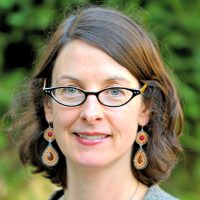
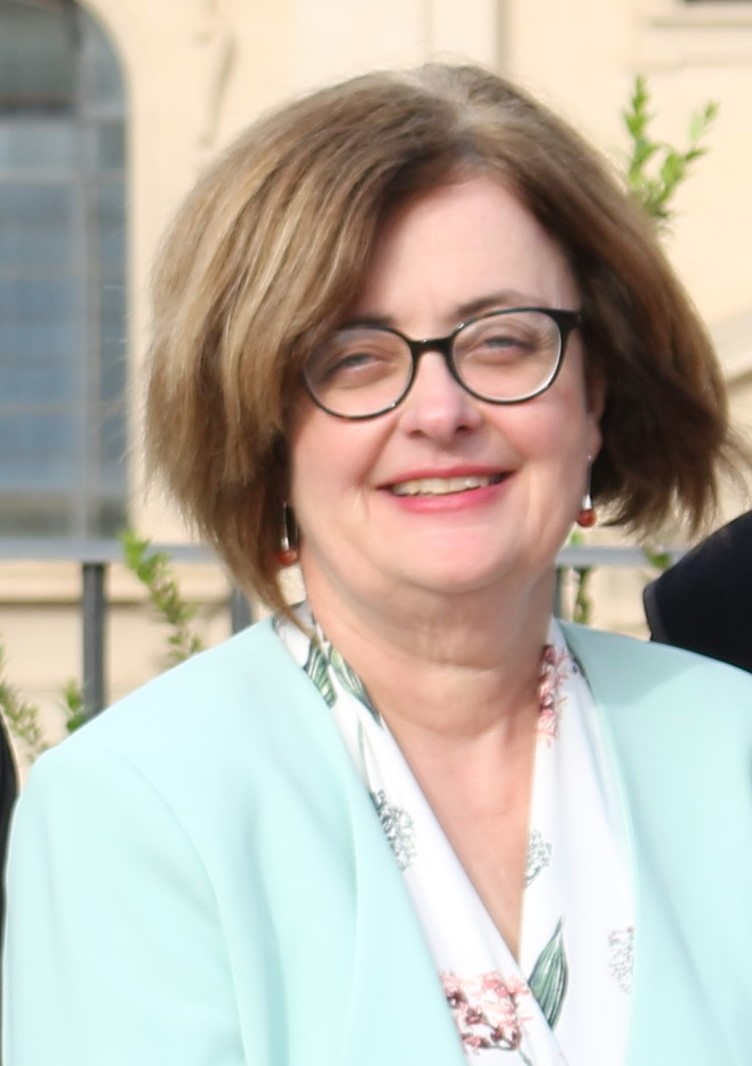
Kimberly Stratton is an Associate Professor in the Department of Religion at Carleton University within the College of the Humanities. She holds a Ph.D. in the History of Religions in Late Antiquity from Columbia University (2002), following degrees from Barnard College and Harvard University. Her research focuses on religion, violence, and social identity in antiquity, ancient magic, and gender studies. She has authored Naming the Witch: Magic, Ideology, and Stereotype in the Ancient World (2007), which won the F. W. Beare Book Award, and co-edited volumes such as Daughters of Hecate: Women and Magic in Antiquity (2014). Her work examines intersections between religion, power, and identity in Greco-Roman, early Christian, and Rabbinic Jewish contexts. Recent projects include exploring violence and Exodus narratives in early religious identity formation, as seen in her 2017 article in History of Religions . She has presented widely on topics like Roman imperialism and apocalyptic literature at venues such as the Society of Biblical Literature. Her research highlights how ancient societies used religious discourse to construct social boundaries and authority. Awards include recognition from students and scholarly societies for her impactful contributions. Education: B.A. Barnard College (1991), M.T.S. Harvard (1995), Ph.D. Columbia (2002) Affiliations: Canadian Society of Biblical Studies, American Academy of Religion Office: 2A47 Paterson Hall | Email: kim.stratton@carleton.ca
Christopher Epplett is an Associate Professor in the History and Religion Department at the University of Lethbridge, Alberta, Canada. His teaching portfolio spans Western Civilization, Ancient History, Greek and Roman Mythology, and specialized senior seminars on ancient warfare and sport. Education B.A. (Hons), McMaster University M.A., McMaster University Ph.D., University of British Columbia Research Interests Epplett’s scholarship focuses on ancient military and social history , especially the Hellenistic world and the later Roman Empire . A recurrent theme is the organisation and impact of spectacles —notably gladiatorial combat and animal hunts (venationes) . His doctoral dissertation examined Roman beast-hunts, and he continues to publish and lecture on the procurement, training, and deployment of exotic animals for public entertainment. Additional current projects include a monograph titled Animal Spectacles of the Roman Empire and collaborative fieldwork on irregular Roman forts along the Rhine frontier in Germany, the Netherlands, and Switzerland. Grants & Funding University of Lethbridge Research Fund, CAD 4,500 (2003–present) – “Irregular Roman Forts” (with Tony Barrett, UBC) Languages & Expertise Besides English, Epplett reads German and is frequently consulted for his expertise on gladiatorial combat, Roman military logistics, and the socio-political role of public spectacles in antiquity.
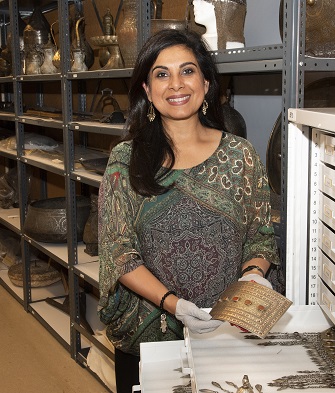
Fahmida Suleman is Senior Curator of Islamic Art & Culture at the Royal Ontario Museum (ROM) and holds a non-budgetary cross-appointment as Associate Professor at the University of Toronto (Department of Near and Middle East Civilizations and Art History). She specializes in medieval and contemporary Islamic art, with a focus on the Fatimid period , Shi‘i material culture , and Islamic iconography , particularly textiles and jewelry from the Middle East and Central Asia. Education : DPhil and MSt in Islamic Art & Archaeology from the University of Oxford; BA Hons in Islamic and Religious Studies from the University of Toronto. Her research integrates fieldwork on female silversmithing traditions in Oman and exhibitions like Being and Belonging (2023–2024), Picnics and Pastimes (2024–2025), and the forthcoming The Indian Ocean: Monsoon Worlds (2026). She co-founded the Islamic Art and Material Culture Collaborative (IAMCC) to promote interdisciplinary research and curated the Albukhary Foundation Gallery of the Islamic World at the British Museum. Her work bridges medieval Islamic art with modern diasporic narratives, emphasizing marginalized voices and cultural preservation. At the University of Toronto, she teaches courses on curating Islamic material culture and Islamic iconography . She is currently documenting the Widad Kawar Collection of Arab Dress and Heritage Arts and exploring food and hospitality cultures in the Middle East through material culture.
Katja Goebs is an Associate Professor in the Department of Near and Middle Eastern Civilizations at the University of Toronto, where she specializes in Egyptology, particularly ancient Egyptian religion, mythology, kingship, and iconography. She is based at the St. George campus and is actively engaged in research and academic service. Education: DPhil, University of Oxford MA, Universität Hamburg, Germany Her research centers on the cognitive and symbolic dimensions of Egyptian myth, with a focus on the interplay between text and image, royal ideology, and comparative mythology within the ancient Near Eastern and Mediterranean worlds. She investigates how myth functioned in society, the logic behind mythical thinking, and the religious symbolism embedded in royal regalia and funerary texts. The trends in her publications reveal a sustained engagement with mythological structures, divine kingship, and iconographic symbolism across millennia of Egyptian history. Her work bridges philology, religious studies, cognitive science, and art history, offering interdisciplinary insights into ancient Egyptian thought. Scientific Awards and Honors: Alexander von Humboldt Fellowship, Freie Universität Berlin (2011–2012) Fellow, Institute for Advanced Studies, University of Birmingham (2015) Kommunizierendes Mitglied, German Archaeological Institute, Cairo She serves on the editorial boards of the book series MythoS and the Journal of Egyptian Archaeology , contributing significantly to the global Egyptological community. While no advising or grant information is available, her international academic footprint—including prior positions at Oxford, UCLA, McGill, and Trinity College Dublin—underscores her prominence in the field. Her research has been supported by major fellowships, and she continues to publish foundational work on Egyptian myth and symbolism. She was on research and study leave from January to June 2023, indicating ongoing scholarly activity.
Dr. Mona Tokarek LaFosse serves as Assistant Professor of New Testament and Sacred Literature Studies (Teaching Stream) at the University of Toronto's Faculty of Divinity through a joint appointment at Emmanuel College and Victoria College. She teaches across undergraduate, basic-degree, and graduate programs at Victoria University, specializing in New Testament studies and early Christian history through interdisciplinary lenses. Her educational background includes a PhD from the University of Toronto's Department for the Study of Religion (2011), MA in Religion and Culture from Wilfrid Laurier University (2001), Honors BA in Anthropology from the University of Waterloo (1998), and Biblical Studies certificate from Columbia Bible College (1994). She previously taught at Martin Luther University College, Wilfrid Laurier University, Huron University College, and the University of Toronto. Dr. LaFosse approaches New Testament scholarship through cultural anthropology, storytelling theory, and age studies. Her research examines early Christian communities through the lens of age structure, intergenerational dynamics, and oral storytelling practices. She explores how life course stages shaped social relationships in the ancient Mediterranean, particularly focusing on 1 Timothy's treatment of age hierarchies. Her innovative teaching methodology emphasizes 'embodied story'—integrating performance and physical engagement with texts influenced by Indigenous storytelling traditions. Her recent publications reveal a strong focus on aging in early Christianity, with 2024 articles examining age demographics and comparative gerontology. She also maintains active scholarship in oral tradition studies, particularly regarding the Gospel of Mark and Shepherd of Hermas, while contributing to academic discourse through society leadership and book reviews. Dr. LaFosse holds significant leadership roles including current service on the Canadian Society for Patristic Studies Nominating Committee (2025–26) and co-chairing the Society of Biblical Literature's Social-Scientific Criticism of the New Testament section (2025–27). She actively participates in the Canadian Society of Biblical Studies, Society of Biblical Literature, and KW Biblical Colloquium. Her distinctive teaching portfolio includes innovative courses like 'Zombies, the Bible and the End of the World' and 'Gospel of Mark as Embodied Story,' reflecting her commitment to interdisciplinary engagement with biblical texts through contemporary cultural frameworks and physical performance.
Margaret Y. MacDonald is a Professor of Religious Studies at Saint Mary’s University (Halifax), where she served as Dean of Arts from 2014 to 2020. Previously, she taught at St. Francis Xavier University and the University of Ottawa. She held the McCarthy Chair in Biblical Studies at the Pontifical Biblical Institute in Rome during 2018. Her research focuses on Early Christianity’s social dynamics, particularly Pauline studies, gender roles, and children’s roles in religious contexts within the Roman world. She earned her BA (1983) with distinction from Saint Mary’s University and a DPhil (1987) from Oxford University under a Commonwealth Scholarship. Her research interests include the Roman context of Christian origins, women and gender in early Christian communities, education systems in antiquity, and Corinthian Christianity. Current projects explore education in early Christianity and ancient Corinth’s religious landscape. She has authored/co-authored five major books and numerous articles, with a notable focus on family structures in early Christian communities and house church networks. Her publications span socio-historical analysis of Pauline epistles, gender dynamics in early Christian communities, and children’s societal roles. Awards include the prestigious Faculty of Arts Medal and Governor General's Medal from SMU (1983). She has held significant academic leadership roles, including deanship and visiting professorships in Rome, reflecting her scholarly prominence in religious studies.
Dr. Chelsea Gardner is a Classical Archaeologist specializing in ancient Greece, Rome, and the broader Mediterranean world. Her work focuses on archaeological exploration in southern Greece, particularly the Mani Peninsula, and she co-directs The CARTography Project , a Digital Humanities initiative reconstructing early modern travelers' routes. She is actively engaged in public scholarship through the Peopling the Past Podcast , which she co-hosts. Ph.D., Classics (Classical Archaeology), University of British Columbia, 2018 M.A., Classical, Near Eastern, and Religious Studies, University of British Columbia, 2010 B.A., Classics and Religious Studies, McMaster University, 2008 Her research spans ancient and modern cultural identity, religious spaces, the history of travel, and digital humanities. She explores women in antiquity, animals and nature in antiquity, and landscape studies. Her recent work includes analyzing Hellenistic Mani's localism, reconstructing historical journeys via GIS, and reinterpreting the Oracle of the Dead at Tainaron. Publications address Spartan identity continuity, modern classroom integration of women in antiquity, and digital methodologies in Mediterranean teaching. Dr. Gardner's articles reflect interdisciplinary approaches combining classical archaeology with digital tools and public outreach. She collaborates with institutions and scholars globally, emphasizing community engagement and ethical scholarship. Her podcast work amplifies underrepresented voices in antiquity and critiques colonial narratives in heritage studies.
James Chlup is an Associate Professor at the University of Manitoba , where he teaches in the Department of Classics within the Faculty of Arts . His academic career spans multiple institutions, having earned a PhD in Latin from Durham University, an MA in Ancient History from Dalhousie University, and a BA (Honours) in Classics from the University of New Brunswick. Specializes in Roman history (Middle to Late Republic, 250-30 BCE) Research focuses on Greek/Latin historiography, military manuals, and biographical traditions Currently working on a commentary of Plutarch's Life of Crassus and related articles on Frontinus, Appian, and Roman decapitation practices Chlup's publications reveal particular interest in ancient military theory, exempla tradition, and intertextual relationships between Plutarch's Lives. He has co-edited volumes on Greek and Roman military manuals while maintaining active research into Roman imperialism and its literary representations. His work frequently bridges classical texts with contemporary political theory frameworks. As a member of the Department of Classics, Chlup teaches diverse courses spanning: Greek and Roman mythology Ancient history surveys Latin language instruction (beginner to advanced) Specialized seminars on Roman Republic topics
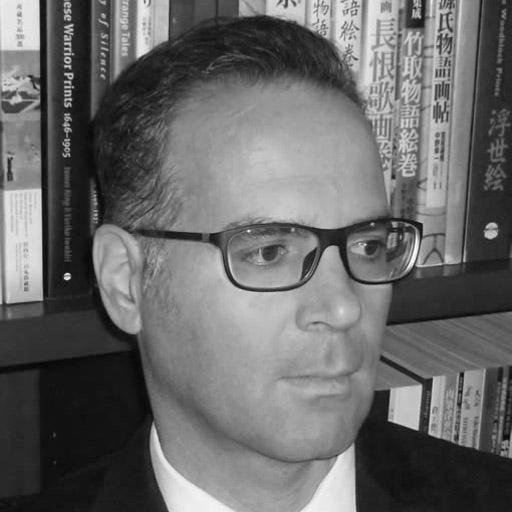
Lorenzo DiTommaso serves as Professor in the Department of Religions and Cultures at Concordia University, Montreal, where he has progressed from Assistant Professor (2004) to full Professor (2013), including service as Department Chair. His academic home encompasses Jewish Studies and Christianity programs, with biennial teaching of the graduate religion and popular culture seminar. Ph.D. in Religious Studies, McMaster University (2002) Postdoctoral Fellow, Yale University Divinity School (2001-03) NEH Postdoctoral Fellow, Center for Medieval and Renaissance Studies, Saint Louis University (2003-04) DiTommaso's research constitutes a comprehensive exploration of apocalyptic speculation across temporal and cultural boundaries, from ancient Near Eastern traditions to contemporary digital media. His work uniquely bridges textual scholarship on biblical apocrypha and medieval manuscripts with cutting-edge analysis of apocalyptic expression in video games, anime, and popular music. The intellectual scope spans apocalyptic historiography , manuscript studies , apocalyptic and millenarian movements , and religion in contemporary media , with distinctive expertise in Japanese cultural intersections. His methodological approach combines rigorous textual analysis with interdisciplinary cultural theory, particularly examining how apocalyptic frameworks shape human responses to crisis across historical periods. Analysis of his recent publications reveals a pronounced shift toward contemporary apocalyptic manifestations, with nearly half of his 2021-2024 output focusing on digital media, video games, and modern cultural phenomena. Simultaneously, he maintains deep engagement with medieval manuscript traditions and early Jewish-Christian apocalyptic literature, demonstrating remarkable versatility across historical periods. The thematic through-line remains apocalyptic determinism versus human agency , examined through diverse lenses from ancient prophecy to interactive gaming environments. Bibliographical Society of America - Pine Tree Foundation Fellowship in Hispanic Bibliography (2019) Nicky Carpenter Fellow in Manuscript Studies Marilyn Hollinshead Visiting Scholar (2023) Research Fellow at Herzog August Bibliothek (2024) DiTommaso has supervised over 20 graduate students since 2019 across diverse apocalyptic topics including disability studies in biblical interpretation, Satanism in virtual communities, and environmental apocalypse in radical movements. His research has been continuously supported by four major SSHRC grants (2004-07, 2007-11, 2011-16, 2018-24), supplemented by specialized fellowships at premier manuscript repositories including the Vatican Film Library, Herzog August Bibliothek, and special collections at Michigan State and Minnesota universities. He co-organizes the biennial 'Through a Glass Darkly' Symposium on Apocalyptic with Colin McAllister, now in its eighth year, rotating between Colorado Springs and Montreal. The 'Through a Glass Darkly' symposium serves as his primary collaborative platform, fostering international scholarly exchange on apocalyptic themes. He maintains active research partnerships with institutions including the Enoch Seminar and Azrieli Institute for Israel Studies, while leveraging special collections access at major libraries for manuscript-based projects. Current work on apocalyptic comic art involves collaboration with special collections at Michigan State and Minnesota universities, demonstrating his commitment to bridging traditional textual scholarship with contemporary cultural analysis.
Lynn Kozak is an Associate Professor in the Department of History at McGill University, affiliated with the Faculty of Arts. They specialize in ancient Greek literature, its modern receptions, and comparative media studies. Currently on leave until 2023, Kozak holds a PhD from the University of Nottingham (2009), an MA from King's College, University of London (2004), and a BA from Barnard College, Columbia University (2003). Research focuses on Homeric epic, classical reception in contemporary media (e.g., television, performance), and queer interpretations of ancient texts. Notable work includes Experiencing Hektor: Character in the Iliad (2016) and collaborations on projects like McGill Classics Play and Oimoi Productions . Publications analyze Homeric fandom in Greek tragedy, modern adaptations of classical texts (e.g., Lucifer , Stranger Things ), and H.D.’s translations. They co-edit The Classics in Modernist Translation and lead creative initiatives bridging classical studies with Montreal’s theatre community. Teaching includes advanced Latin, ancient Greek language courses, and topics in Greek literature. Kozak’s innovative work spans academic writing, performance (e.g., serial Iliad readings), and mentorship through Oimoi Productions, fostering student engagement with classical texts in modern contexts.
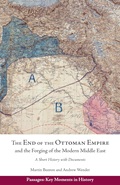
Andrew Wender is a Teaching Professor and Director of the Religion, Culture and Society Program at the University of Victoria. He has been affiliated with the Department of History and the Department of Political Science since 2001, where his work bridges Middle Eastern history, world history, and the intersection of religion and law. His academic credentials include a BA in History from Western Washington University JD from Seattle University School of Law PhD from the University of Victoria (2006) with interdisciplinary focus on religion and secular law. Wender’s research explores Critical approaches to religion and politics in global contexts Comparative political thought Historical trajectories of messianic salvation Quantum theory applications in social sciences Secular-religious binaries in Middle Eastern politics . His publications span interdisciplinary themes, analyzing Ottoman history, Zoroastrian and Jewish messianic traditions, and the impact of political theology on modern conflicts. He has contributed to journals such as PS: Political Science & Politics , Sociology of Islam , and Telos , alongside co-edited works. Scientific and teaching accolades include 2011 Gilian Sherwin Alumni Award for Excellence in Teaching Contributions to critical education frameworks . He has designed courses on Comparative World Revolutions, Western Imperialism in the Middle East, and Religion and Empire, reflecting his commitment to interdisciplinary education and sociopolitical analysis.
Amir Harrak is Professor of Aramaic and Syriac in the Department of Near and Middle Eastern Civilizations at the University of Toronto. He is based at the St. George campus and is a leading scholar in Syriac studies, with expertise in epigraphy, chronography, art, and the history of Middle Eastern Christianity. Education: Diploma in Classical Philosophy, Syro-Chaldean Dominican Seminary, Iraq (1973) Diploma in Theology, Syro-Chaldean Dominican Seminary, Iraq (1973) Licence in Semitic Philology, Catholic University of Louvain, Belgium (1980) Licence in Archaeology and Art History, Catholic University of Louvain, Belgium (1980) MA and PhD in Assyriology and Aramaic Studies, University of Toronto (1987) His research centers on Syriac language and literature, with a focus on Syriac chronography, legal texts, inscriptions, and the art and architecture of Christian sites in Iraq. He also explores the relations between Syriac Christianity and Islam, and the use of Syriac script for writing other languages like Kurdish (Garshuni). His teaching includes Biblical Aramaic, Aramaic epigraphy, and Syriac historical and exegetical texts. The 15 most recent articles reflect a sustained focus on Syriac manuscripts, chronicles, inscriptions, and cultural history. They span disciplines such as historical linguistics, religious studies, art history, and Middle Eastern archaeology, with recurring themes in Syriac Orthodox historiography, Christian-Muslim interactions, and the material culture of Eastern Christianity. Scientific Awards: No awards mentioned in the provided text. Advising and Grants: No information provided on students or advisees. No grants or funding sources are mentioned in the text. Labs and Teams: No specific research labs, teams, or collaborative groups are mentioned in the source material.
Emily Hutchison, PhD, is an Associate Professor in the Department of Humanities at Mount Royal University (MRU). She holds a PhD in Medieval Studies from the University of York (UK), alongside an MA from the same institution and a BA (Hons) from Trent University. Her research focuses on the political and social history of Late Medieval Paris during the reign of Charles VI (1380-1422), with a particular emphasis on gender, space, emotions, and sustainability challenges. She leads the SSHRC-funded project Spatial Narratives of Late Medieval Paris and is completing a monograph titled A View from the Street: The Genderscapes of Late Medieval Paris , examining agency through gendered spatial interactions. Her teaching spans medieval history, including courses on the Global Middle Ages, histories of violence, and research methods. She has taught at MRU since 2011, previously at Thompson Rivers University (2008–2011) and Mount Allison University (2007–2008). Her courses include Medieval World , History of Ancient Rome , and Pre-Modern Crime and Punishment . Dr. Hutchison’s research integrates interdisciplinary frameworks such as the History of Emotions and Space & Place. Recent work includes studies on anti-pollution measures in medieval Paris and gendered spatial dynamics. Her SSHRC grant supports exploration of Parisian urban narratives, emphasizing marginalized voices. She advises honors students on topics like medieval gender dynamics, heresy, and chivalric culture.
Monica Carolina Good is an Associate Professor at the Faculty of Creative and Critical Studies, University of British Columbia Okanagan Campus. Her research focuses on Spanish Culture and Literature, Indigenous Literature, and Indigenous Language Reclamation and Revitalization, with a particular emphasis on Mexico. She also investigates Indigenous Peoples' Rights to Court Interpretation, especially in Oaxaca. Bachelor of Arts in Modern Languages from Emporia State University (2009) Masters of Fine Arts in Spanish-American Literature and Linguistics from New Mexico State University (2012) Ph.D. in Interdisciplinary Studies from UBC Okanagan (2019) Her academic work bridges Spanish and Indigenous Studies, highlighting sociopolitical dimensions in literature and the role of magical realism in representing Indigenous narratives. She has contributed to discussions on literacy in Indigenous Mexico, intercultural education, and the challenges of Indigenous knowledge in legal contexts. Monica Good received the Provost Award for Teaching Assistants and Tutors (2016-2017). She is actively involved in professional services, including peer reviewing at The Student Anthropologist and editorial work at Hallazgos Magazine. Her publications and presentations span topics like language revitalization, disaster response, and cultural heritage, with a focus on Indigenous communities in Mexico and cross-cultural collaborations.
David Campbell is a Professor in the Department of History at Mount Saint Vincent University, where he has taught since 2006. He holds a BA from the University of Prince Edward Island, an MA from the University of Toronto, and a PhD from the University of Calgary. His research focuses on military history, particularly Canada’s army during the First World War, with additional interests in regional military development, cultural memory, and public commemoration of military experiences. He has authored a monograph on the 19th Battalion of the Canadian Corps and published articles on recruitment, tactical evolution, and social dynamics within the Canadian Expeditionary Force. Key research areas: Military History, Canadian History, Social History, Operational History, Cultural Studies, Public Commemoration Current projects include a social history of Halifax militia (1896-1914) as part of a broader SSHRC-funded study on military service and political culture in Atlantic Canada. His recent publications emphasize the intersection of military operations, soldier experiences, and historical memory. He teaches courses such as HIST 1121 (Canoes and Colonialism), HIST 1122 (Consolidation and Conflict), and specialized topics courses on the First World War, ancient civilizations, and Atlantic Canada.