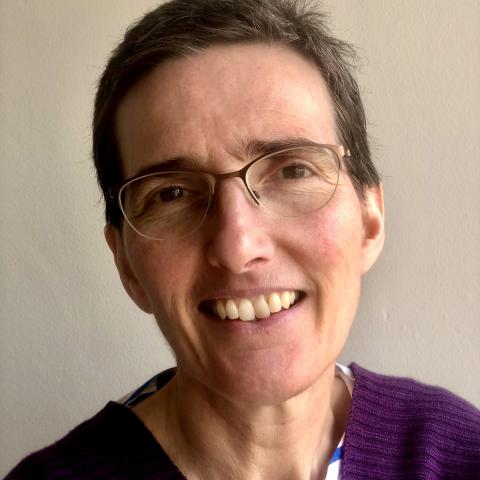
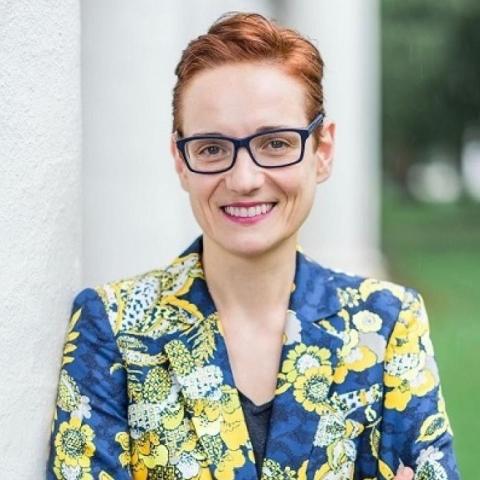
Caitie Barrett is a Professor in the Department of Classics at Cornell University. She co-directs the Casa della Regina Carolina archaeological project at Pompeii, a joint initiative between Cornell University and the University of Bologna. Education: Ph.D. in Anthropology (Archaeology), Yale University B.A. in Anthropology (Archaeology), Harvard University Her research investigates everyday life, religious experience, and cross-cultural interactions in the ancient Mediterranean. She specializes in Egyptian and Greco-Roman archaeology, particularly household religion and material culture. Her work examines how objects and images created meaning in domestic contexts. She has received funding from numerous organizations including the National Endowment for the Humanities, National Geographic Society, and the Fulbright Foundation. At Cornell, she received teaching and advising awards including the Robert A. and Donna B. Paul Award for Excellence in Advising. Her publications include 'Domesticating Empire: Egyptian Landscapes in Pompeian Gardens' and 'Egyptianizing Figurines from Delos: A Study in Hellenistic Religion'. She also co-edited 'Households in Context: Dwelling in Ptolemaic and Roman Egypt'.
Professor Katja Vogt is a distinguished faculty member in the Department of Philosophy at Columbia University's Faculty of Arts and Sciences. She serves as Professor of Philosophy, Director of the M.A. Program in Philosophy, and Chair of the Climate Committee. Additionally, she is an Affiliate of the Data Science Institute and has affiliations with Computing Systems for Data-Driven Science, Data, Media and Society, and Health Analytics. Professor Vogt joined Columbia University in 2002 after teaching at Humboldt University Berlin, both in the Philosophy Department and at the Charité Medical School. Professor Vogt specializes in ancient philosophy, ethics, and normative epistemology, with particular expertise in Plato, Aristotle, Stoicism, and Pyrrhonian skepticism. Her research explores fundamental questions that bridge ancient and contemporary philosophical discussions: What are values? What kind of values are knowledge and truth? What does it mean to want one's life to go well? She has developed significant work on the role of knowledge in ethics, generics and generalizations, and is currently finalizing a monograph entitled The Original Stoics . Her approach combines careful historical scholarship with contemporary philosophical analysis, creating dialogues between ancient texts and modern debates in metaethics, epistemology, and philosophy of action. Professor Vogt's scholarly output reveals consistent engagement with ancient philosophical frameworks while addressing contemporary concerns. Her recent work shows a particular focus on Stoic philosophy, with multiple papers examining Stoic logic, physics, and ethics. She also maintains a strong interest in skepticism, particularly Pyrrhonian approaches, and has made significant contributions to understanding how ancient philosophical concepts can inform current debates about generics, value theory, and the relationship between knowledge and virtue. Her collaborative work with Jens Haas on topics like ignorance, love, and hatred demonstrates her interdisciplinary approach that connects ancient philosophy with contemporary philosophical issues. Columbia Distinguished Faculty Award Class of 1932 Fellow in Classical Philosophy at Princeton University Fellowships from the Templeton Foundation, Maimonides Centre in Hamburg, Center for Advanced Studies in Munich, DFG (German Research Association), and Columbia University-Paris 1 Alliance Program Professor Vogt is actively involved in mentoring students and developing innovative educational approaches. She serves as academic sponsor for "Logic Made Accessible," a project mentored with Columbia College student Jonathan Tanaka that has reached students in over 30 countries. The project makes ancient logic freely accessible to learners of all ages, backgrounds, and interests. She has also served on numerous university committees including the Provost's Faculty Committee on Educational Innovation, Policy and Planning Committee, Committee on Instruction, and as Acting Director of the Center for the Ancient Mediterranean. Her grant work includes support from major foundations that have enabled her to pursue research at the intersection of ancient philosophy and contemporary epistemology. Professor Vogt collaborates with photographer and artist Jens Haas on the "On the Road" project, which combines artistic photography with philosophical reflection. She is also involved in "Movies and Morals," a collaboration with H8URS that provides philosophical commentary on contemporary film and television. These projects demonstrate her commitment to making philosophical inquiry accessible beyond traditional academic settings.
Natalie B. Dohrmann is an Adjunct Associate Professor of Religious Studies at the University of Pennsylvania’s School of Arts & Sciences, where she also serves as Associate Director of the Katz Center for Advanced Judaic Studies and Coeditor of the Jewish Quarterly Review . She holds a Ph.D. in the History of Judaism from the University of Chicago (1999), an M.A. in Liberal Arts from St. John’s College (1990), and a B.A. in Religious Studies from Princeton University (1987). Her research focuses on rabbinic legal and literary culture within the Greco-Roman context, emphasizing intersections between Jewish law, Roman imperial structures, and cultural exchange in Late Antiquity. Her teaching spans Religious Studies, History, Classics, and Middle Eastern Languages and Cultures. Key research areas include rabbinic jurisprudence, Jewish-Roman legal interactions, and the sociohistorical dynamics of ancient Jewish communities under Roman rule. She has authored and edited numerous volumes exploring topics such as rabbinic law’s relationship to Roman legal frameworks, textual censorship, and comparative exegesis across Abrahamic traditions. Her recent work examines how rabbinic legal thought navigated Roman imperial authority, as seen in publications like Legal Engagement (2021) and upcoming contributions like Unrest in the Roman Empire (2025). She has held the Michael R. Steinhardt Term Fellowship and led initiatives such as the Katz Center’s fellowship programs on themes like premodern legal cultures and Jewish textual traditions. Her blog posts and editorial work further highlight her role in fostering interdisciplinary scholarship on Jewish studies and ancient Mediterranean history.
David Brakke is the Joe R. Engle Chair in the History of Christianity and Professor of History at The Ohio State University's Department of History, housed within the College of Arts and Sciences. His expertise spans ancient Christianity, with a focus on asceticism, monasticism, Gnosticism, biblical interpretation, and Egyptian Christianity. Brakke earned his B.A. in English from the University of Virginia (1983), M.Div. from Harvard University (1986), and Ph.D. in Religious Studies from Yale University (1992). Before joining OSU in 2012, he was a professor and department chair at Indiana University's Religious Studies Department. His research explores the social and cultural dimensions of early Christian practices, including monasticism’s role in forming virtuous identities and the definition of Gnosticism. Brakke has authored influential books like *The Gnostics* (2010) and *Demons and the Making of the Monk* (2006), recognized with academic accolades such as the Choice Outstanding Academic Title and Guggenheim Fellowship. He currently serves as president of the North American Patristics Society and contributes to scholarly publications like the *Journal of Early Christian Studies*. His current projects include studies on early Christian scriptural practices and translations of Nag Hammadi texts. Brakke’s work integrates textual analysis with historical context, examining how early Christians navigated theological debates, institutional hierarchies, and cultural shifts. He has held grants from the NEH and National Humanities Center, among others. His professional network includes leadership roles in global scholarly organizations, reflecting his impact on Patristics and Coptic Studies. Despite being on leave during the 2023–2024 academic year, his contributions to understanding early Christian history remain foundational.
Annetta Alexandridis is an Associate Professor in the Department of History of Art and Visual Studies at Cornell University, affiliated with the College of Arts and Sciences and the Institute for European Studies. She earned her Ph.D. from Ludwig-Maximilians-Universität Munich, where her dissertation won the Munich University Association's Förderpreis and a German Archaeological Institute travel scholarship. Her research spans Roman sculpture, Greek mythological iconography, and intersections of gender/animal studies with archaeology. She examines how media like plaster casts and photographs shape archaeological knowledge, particularly through colonialist and Enlightenment discourses. Her current work investigates human-animal boundaries in antiquity and co-directs the Harvard-Cornell Sardis excavation funerary culture survey. Key publications include Destroy the Copy – Plaster Cast Collections in the 19th and 20th Centuries (2022) Mensch und Tier in der Antike (2008) Archäologie der Photographie (2004) Die Frauen des römischen Kaiserhauses (2004) Scientific honors include: 2015–16 Cornell Society for the Humanities Fellow 2005–06 Harvard Center for Hellenic Studies Junior Fellow 1997–98 German Archaeological Institute travel scholarship Munich University Association Förderpreis for dissertation She co-curates Cornell's plaster cast collection with Verity Platt, advises cross-departmental dissertations, and co-ordinates graduate exchange with Freiburg University. Her teaching integrates material analysis with theoretical approaches to antiquity.
Nathaniel B. Jones is an Associate Professor of Art History and Archaeology and Director of Graduate Studies at Washington University. His work focuses on Greco-Roman art's intersections with social practice, theory, and aesthetics. He holds a PhD from Yale University (History of Art) and a BA from Grinnell College (Classics and Art History). Research emphasizes meta-pictorial reflections in Roman art, spatial-temporal dynamics, and art collection practices. Supported by institutions like the National Gallery of Art and the Institute for Advanced Study, his scholarship bridges ancient artistic practices with modern theoretical frameworks. Selected Awards: 2021 First Book Award (The Classical Association of the Middle West and South) for Painting, Ethics, and Aesthetics in Rome Teaching spans ancient Mediterranean visual culture, emphasizing critical analysis of material evidence. Courses include 'The Age of Augustus' and 'Pictorial Illusion in the Ancient Mediterranean.' Recent grants include Washington University's 'Literacies for Life' Faculty Engagement Grant (2023).
J. Albert Harrill is a Professor of History at The Ohio State University , where he has been affiliated with the Department of History since at least 2010. Holding a Ph.D. in New Testament and Early Christian Literature from the University of Chicago , Harrill specializes in the intersection of New Testament , early Christianity , and Roman social history , particularly focusing on ancient slaves and marginalized communities . Education: Ph.D., New Testament and Early Christian Literature, University of Chicago His research explores social and cultural dynamics in early Christian texts, with significant contributions to slavery studies through works like Slaves in the New Testament (2006) and The Manumission of Slaves in Early Christianity (1995). He also investigates ethnic fluidity in Ephesians, exegetical methodologies , and classical literary topoi in patristic writings. Recent Publications examine: Ephesians as a circular letter 1 Corinthians 7:21 and evolving scholarship on Pauline slavery Atheist catalogues in classical and Christian contexts Architectural ekphrasis in Roman culture Origen's exegetical techniques Scientific Awards: 2021 Sphinx and Mortar Board Outstanding Faculty 2019 Honors Faculty Service Award in Arts and Sciences 2017 Clio Award for Distinguished Teaching in History 2012 Distinguished Teaching Award in Religious Studies (Indiana University) With nearly 35 years of teaching experience , Harrill has received consistent recognition for courses on Paul's apostleship , historical Jesus , Greek/Roman slavery , and ancient Roman religion . He maintains active academic engagement through the Graduate Interdisciplinary Specialization in Religions of the Ancient Mediterranean World .
Robert H. Tykot is a Professor in the Department of Anthropology at the University of South Florida, where he has served since 1996, achieving full Professor status in 2006. He previously held positions as Associate Professor (2001-2006) and Assistant Professor (1996-2001), and served as Undergraduate Director (2012-14) and Acting Chair (summers 2002, 2003). His academic leadership extends to professional societies where he has served as President of the Archaeological Institute of America (Tampa Bay Society), International Association for Obsidian Studies, and Society for Archaeological Sciences. Dr. Tykot earned his Ph.D. and M.A. in Anthropology from Harvard University (1995, 1993), an M.A. in Classical Archaeology from Tufts University (1984), and a B.S. in Archaeology (with special honors) and Chemistry ( cum laude ) from Tufts University (1983). His educational background uniquely bridges scientific methodology with archaeological practice. His research focuses on archaeological science methodology, particularly stable isotope analysis and elemental archaeology applied to Mediterranean prehistory, ancient diets worldwide, obsidian and marble sourcing, and Sardinian/Sicilian archaeology. Dr. Tykot has pioneered techniques for analyzing bone chemistry to reconstruct ancient diets and mobility patterns, with significant fieldwork conducted across the Mediterranean, particularly in Sardinia, Sicily, and Algeria. His work integrates laboratory science with archaeological fieldwork to address fundamental questions about ancient trade networks, subsistence strategies, and cultural interactions. Dr. Tykot has received numerous scientific honors including multiple USF Outstanding Research Achievement Awards (2018, 2020), the USF Outstanding Faculty Award (2013), and recognition as a Fellow of the American Association for the Advancement of Science. His editorial leadership includes serving as Editor-in-Chief of Science and Technology of Archaeological Research (STAR) and editorial roles with Archaeometry and Journal of Archaeological Science: Reports . As an advisor, Dr. Tykot has chaired numerous doctoral and master's committees across diverse research topics in archaeological science. His grant portfolio demonstrates exceptional funding success with over 100 external awards totaling millions of dollars from NSF, NEH, Wenner-Gren Foundation, and other major funders. He directs the Lab for Archaeological Science & Technology at USF and has established significant research partnerships with institutions worldwide, particularly in Italy, Argentina, and Kuwait.
Susan E. (Sue) Alcock is the Barnett Family Professor of Classical Archaeology at the University of Oklahoma, holding dual appointments in the Department of Classics and Letters. She specializes in Hellenistic and Roman archaeology, landscape studies, and the archaeology of memory and imperialism. Alcock has directed major field projects in Greece, Armenia, and Jordan, including the Brown University Petra Archaeological Project. Her academic career includes leadership roles as inaugural Director of Brown University’s Joukowsky Institute for Archaeology and the Ancient World (2006-2015), Interim Provost at University of Michigan-Flint, and Provost at University of Michigan-Dearborn. She has held the Arthur F. Thurnau Professorship at Michigan and served as Special Counsel for Institutional Outreach and Engagement there. Dr. Alcock’s scholarly contributions include seminal works like Graecia Capta (1993) and Archaeologies of the Greek Past (2002). Her research emphasizes interdisciplinary approaches to understanding ancient landscapes and the intersection of archaeology with contemporary memory politics. She has been awarded the prestigious MacArthur Fellowship (2001) and is an Honorary Fellow at Clare College, Cambridge. Alcock earned her doctorate in Classical Archaeology and Classics from the University of Cambridge, complemented by bachelor’s degrees from both Cambridge and Yale University. Her advisory roles and institutional leadership span university administration and archaeological research coordination.
Mary Harrington serves as a Lecturer in the Department of Classical Studies at Tufts University, contributing to undergraduate education and research in classical antiquity. Her academic foundation includes: PhD, University of Washington, Seattle, USA, 2024 Master of Arts, University of Washington, USA, 2020 Bachelor of Arts, University of Notre Dame, USA, 2018 Dr. Harrington's research spans critical dimensions of ancient Mediterranean societies with focused expertise in historical narrative construction and sociopolitical dynamics. Her work in Greek and Roman Historiography examines how ancient authors shaped historical memory, while her Gender, Women, and Sexuality Studies research interrogates power structures through marginalized perspectives. The Greek and Latin Language and Pedagogy focus reflects her commitment to innovative language instruction methodologies, and her Roman Political Culture studies analyze institutional frameworks that sustained imperial governance. Scientific recognition includes: No awards listed in available documentation Professional activities show no recorded graduate student mentorship or externally funded research grants. Similarly, specialized laboratories or collaborative research teams are not referenced in current institutional profiles.
Justin Leidwanger is an Associate Professor of Classics at Stanford University with a courtesy appointment in Oceans at the Doerr School of Sustainability, specializing in Mediterranean maritime archaeology through fieldwork in southeast Sicily and southwest Turkey. His educational background includes: Ph.D. in Art and Archaeology of the Mediterranean World from the University of Pennsylvania (2011) M.A. in Nautical Archaeology and Anthropology from Texas A&M University B.A. in History & Classical Studies from Loyola University Chicago Leidwanger's research centers on Mediterranean mobilities, maritime communities, and exchange systems from the Roman period through late antiquity, using shipwrecks and port sites to analyze socioeconomic dynamics. His work integrates ceramic analysis, port network studies, and digital heritage methods to explore ancient technologies of distribution and long-term maritime interactions. Recent publications reveal consistent focus on Roman/late antique maritime economies with growing emphasis on digital documentation (3D modeling, GIS) and contemporary relevance through migration studies. Key trends include transport amphorae standardization, underwater survey methodologies, and the intersection of ancient maritime heritage with modern migration patterns in the central Mediterranean. Leidwanger actively advises students in classical archaeology while leading major field projects including the Marzamemi 'church wreck' investigation (2013-2019) and ongoing 'U Mari research in Sicily. His work combines underwater survey, community-based archaeology, and heritage activism addressing both ancient tuna fishing traditions (mattanza) and contemporary migration routes. He directs the Maritime Archaeology and Digital Heritage Lab (MEDLab) at Stanford's Archaeology Center, which supports advanced digital modeling (photogrammetry, laser scanning, network analysis) and ceramic analysis (petrography, pXRF, computational morphometrics) for field research and museum collaborations.
Anna L. Boozer is a Professor in the History Department at Baruch College's Weissman School of Arts and Sciences, City University of New York. Her research focuses on households, connectivity, and empires in Roman Egypt and Meroitic Sudan, with extensive fieldwork at Amheida (Dakhleh Oasis) and Meroe. She directs the CUNY excavations at Amheida and the Meroe Archival Project. Boozer earned her Ph.D., M.Phil, and M.A. in Archaeology/Anthropology from Columbia University and a B.A. in Philosophy and History of Math/Science from St. John's College. Her scholarly contributions span household archaeology, imperial borderlands, and material culture studies, examining how domestic spaces reflect broader social and political dynamics in antiquity. Her research interests center on social archaeology of Roman Egypt and Meroitic Sudan, with particular focus on household organization, material culture, and imperial connectivity. She examines how domestic spaces serve as sites of cultural negotiation, exploring themes of identity formation, social memory, and daily life practices at imperial frontiers. Her work challenges traditional Romanization narratives by highlighting local agency and cultural hybridity. Boozer's publications reveal consistent engagement with household archaeology, material culture analysis, and imperial borderlands studies. Her work demonstrates how domestic contexts provide critical insights into larger imperial processes, with recurring themes of connectivity, cultural negotiation, and the social significance of material remains. She frequently employs interdisciplinary approaches bridging archaeology, anthropology, and history. Teaching and Learning Award (University of Reading, 2013) Lump Sum Award (University of Reading, 2012) Boozer actively supervises doctoral dissertations and has secured multiple research grants including PSC-CUNY awards totaling over $20,000 for projects on Roman Egypt and Meroitic Sudan. She serves as Area Editor for the Encyclopedia of Ancient History and sits on editorial boards for Dotawo: A Journal of Nubian Studies and Brepols' Borders, Boundaries, and Landscapes series. She directs two major research initiatives: the CUNY excavations at Amheida (ancient Trimithis), a Romano-Egyptian city in the Dakhleh Oasis, and the Meroe Archival Project which analyzes legacy data from Sudan's ancient Meroitic capital. These projects involve international collaborations with institutions in Egypt, Sudan, and Europe, focusing on household archaeology and imperial connectivity.
Kim Haines-Eitzen is the Paul and Berthe Hendrix Memorial Professor of Ancient Mediterranean Religions at Cornell University's Department of Near Eastern Studies within the College of Arts and Sciences. She holds affiliations with multiple programs including Classics, Feminist Gender and Sexuality Studies, Jewish Studies, Medieval Studies, Religious Studies, and the Society for the Humanities. For the 2024-25 academic year, she is a Fellow at the National Humanities Center working on Earth, Wind, and Fire: A Field Guide to the Apocalypse . Her research interests focus on early Christianity, early Judaism, and religion in late antiquity with particular expertise in sound studies, desert monasticism, and the intersection of gender and text transmission. Her work combines traditional textual analysis with innovative field recordings of desert soundscapes to explore how acoustic environments shaped religious imagination in ancient contexts. She approaches her research through interdisciplinary frameworks including phenomenology, affect theory, sound studies, and ecocriticism. Haines-Eitzen's publications include three major monographs: Sonorous Desert: What Deep Listening Taught Early Christian Monks and What It Can Teach Us (2022), The Gendered Palimpsest: Women, Writing, and Representation in Early Christianity (2012), and Guardians of Letters: Literacy, Power and the Transmitters of Early Christian Literature (2000). Her scholarly articles span topics from female scribes in antiquity to the acoustic imagination in early Christian texts. Her scholarly recognition includes an Atkinson Center Faculty Fellowship, an American Academy of Religion Research Grant (2013-2014), and her current National Humanities Center Fellowship. Her work has gained significant public attention through media appearances including NPR's Academic Minute, The Conversation, The Commonweal Podcast, and the National Geographic Channel's 'The Story of God' with Morgan Freeman. Born in Jerusalem and raised in Nazareth, Haines-Eitzen divides her time between Cornell's Finger Lakes campus and the high desert of Southeastern Arizona, where her personal connection to desert landscapes informs her scholarly work. Her field research involves making environmental sound recordings in the Negev, Judaean deserts of Israel, and the American Southwest to illuminate the acoustic dimensions of ancient religious texts and practices.
Robert K. Gnuse serves as the James C. Carter, S.J./Bank One Distinguished Professor of the Humanities in Loyola University New Orleans' Department of Religious Studies, where he has taught since 1980. Holding a Ph.D. in Old Testament from Vanderbilt University, he has authored 12 books and approximately 80 scholarly articles in biblical studies. His educational background includes: Ph.D., Vanderbilt University, 1980 M.A., Vanderbilt University, 1978 S.T.M., Concordia Seminary in Exile, 1975 M.Div, Concordia Seminary in Exile, 1974 B.A., Concordia Senior College, 1970 A.A., St. Paul's College, 1968 Dr. Gnuse's research centers on biblical interpretation with critical focus on theological traditions, ethical trajectories, and contemporary applications. His work examines Hellenistic influences on biblical texts, environmental justice frameworks within scripture, and nuanced analyses of biblical passages concerning slavery, gender roles, and sexuality. He challenges traditional interpretations through historical-critical methods while exploring the Bible's relevance to modern social justice movements. Recent publications reveal consistent engagement with ethical dilemmas, demonstrating how ancient texts inform current debates on ecological responsibility, human rights, and inclusive theology. His scholarship bridges academic biblical criticism with practical ethical concerns, particularly regarding marginalized communities. His distinguished contributions are recognized through the James C. Carter, S.J./Bank One Distinguished Professorship of the Humanities. He teaches foundational courses including Introduction to World Religions, Old Testament as Literature, Hebrew Prophets, and Law in the Ancient World, emphasizing literary and historical approaches to religious texts.
Ivana Petrovic is the Hugh H. Obear Professor of Classics at the University of Virginia. She specializes in Ancient Greek religion, Hellenistic poetry, and the interplay between texts and their historical, social, and religious contexts. Her research focuses on the role of belief in Greek religion, particularly the concepts of inner purity and pollution, challenging traditional views of Greek ritualism. Petrovic holds a Diploma in Classics from Belgrade, Serbia, and a PhD from Giessen University (2004). She has taught at Giessen University, Durham University, and joined UVA in 2016. She is the editor of the journal Greece and Rome and has co-edited major volumes such as Archaic and Classical Greek Epigram (2010), Inner Purity and Pollution in Greek Religion (2016), and Greek Epigram from the Hellenistic to the Early Byzantine Era (2019). Her current research with Andrej Petrovic explores the diachronic study of belief in Greek religion, emphasizing the significance of intrinsic faith-based elements. She has published extensively on topics including Greek epigram, sacred regulations, and religious interactions in the ancient Mediterranean. Petrovic has contributed to interdisciplinary discussions on the materiality of texts and the cultural poetics of Hellenistic poetry. Her work bridges literary and epigraphic analysis, examining how religious and social contexts shaped literary production.