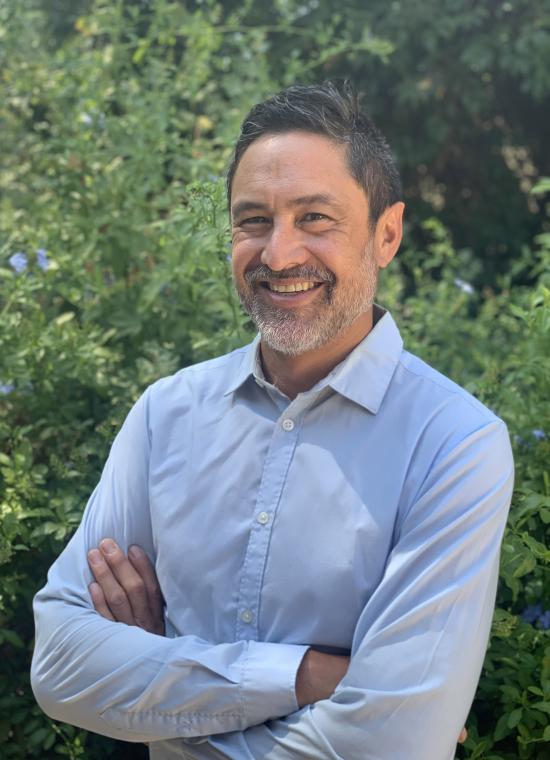
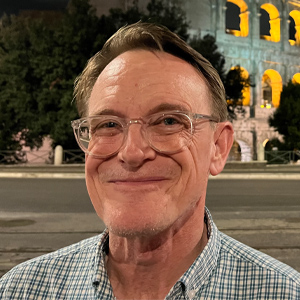
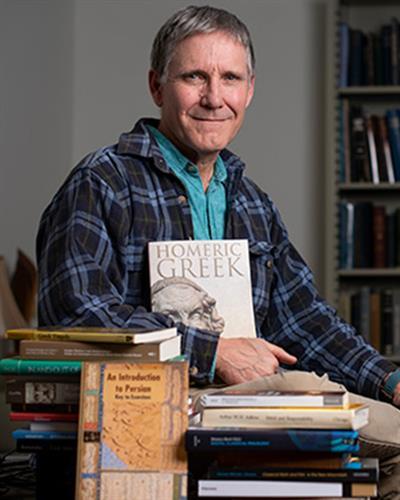
Christopher M. Chinn is a Professor of Classics at Pomona College since 2007, specializing in Augustan and Imperial Roman poetry. He teaches Latin and Greek languages alongside translation courses like Ancient Epic and Introduction to the Greeks and Romans . Research Focus: Roman poetry, ecocriticism, art-text relationships Key Contributions: Studies on Statius, Pliny, and intertextual analysis His work bridges visual art analysis with literary interpretation, particularly in Flavian-era texts. Recent publications address environmental themes in ancient Mediterranean literature and the evolution of ekphrastic techniques. Scientific Awards & Honors Jim Greenfield Dissertation Fellowship (University of Washington, 2001-2002) Downing-Pomona Exchange Fellow (2009) Pomona College Summer Research Grant (2011) His teaching includes advanced language courses and senior seminars on classical studies, reflecting his commitment to both pedagogy and research in ancient literature.
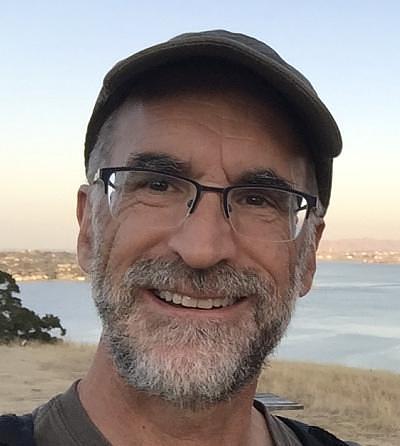
John MacFarlane is a Professor of Philosophy at the University of California, Berkeley , with affiliations to the Group in Logic and the Methodology of Science and co-organizer roles in the Meaning Sciences Club and Townsend Center Working Group . His research spans philosophy of language, philosophical logic, metaphysics, epistemology, philosophy of mathematics, history of logic , and ancient philosophy , particularly Aristotle . He has held visiting positions at institutions like École des Hautes Études en Sciences Sociales (EHESS), Paris . Education : Ph.D. in Philosophy (2000, University of Pittsburgh), M.A. in Classics (1997) and Philosophy (1994), A.B. summa cum laude in Philosophy (1991, Harvard). Research Interests focus on semantic relativism , particularly assessment sensitivity as explored in his book Assessment Sensitivity: Relative Truth and Its Applications (Oxford, 2014). He investigates how epistemic modals and vagueness interact with truth evaluation. His work in philosophical logic includes a textbook Philosophical Logic: A Contemporary Introduction (Routledge, 2021). Secondary interests include ancient philosophy (Aristotle, Plato), formal logic , and fiddlosophy . Article Trends reveal contributions to relativism , epistemic modals , vagueness , and logicism . His recent work (2025) examines Plato’s Protagoras and belief utility , while 2022–2020 articles address semantic indecision and probabilistic knowledge . Earlier works (2008–2000) include foundational studies on Frege, Kant, and Aristotle . Scientific Awards include a 2023 Residential Fellowship at Wissenschaftskolleg, Berlin (declined), 2016–17 Fellow at IEA Paris , and 2015 American Academy of Arts and Sciences membership . He has received multiple Humanities Research Fellowships at Berkeley (2016, 2008, 2003) and Research Enabling Grants (2000–2009). Advising includes supervising 15+ PhD students in areas like logic, epistemology, and philosophy of language . Notable advisees include Richard Lawrence (2017) and Sophie Dandelet (2021). He also guided honors theses at Berkeley, such as Benjamin Logan’s work on epistemic modals (2018). Labs and Teams involve co-organizing the Townsend Center Working Group in History and Philosophy of Logic, Mathematics, and Science and contributing to the Group in Logic and Methodology of Science . His interdisciplinary approach integrates philosophy, logic, and computational tools , including creating Pandoc for document conversion.
University of North Carolina at Chapel HillUnited States
James J. O’Hara is the George L. Paddison Professor of Latin at the University of North Carolina at Chapel Hill. His academic journey includes a B.A. from the College of the Holy Cross and a Ph.D. from the University of Michigan. He has held significant roles, such as Department Chair (2003-2007), Director of Graduate Studies, and President of the Vergilian Society. His research focuses on Greek and Latin poetry, with a special emphasis on the Augustan period, epic, didactic literature, and satire. Education highlights include studies at the College of the Holy Cross (A.B., 1981) and the University of Michigan (Ph.D., 1986). He taught at Wesleyan University before joining UNC in 2001, where he has contributed extensively to teaching and scholarship. Research interests span Latin poetry, particularly Vergil, Catullus, Lucretius, and Ovid. Notable works include Death and the Optimistic Prophecy in Vergil’s Aeneid (1990), True Names: Vergil and the Alexandrian Tradition of Etymological Wordplay (1996), and Inconsistency in Roman Epic (2007). Current projects explore teaching authority in didactic and satirical works. Publications include over 40 articles and book reviews, with a focus on Vergilian studies, Lucretian analysis, and classical pedagogy. Recent lectures address topics like Aeneid Book 8 and Horace’s Ars Poetica . Grants/Awards: James Gilmore Fletcher Whitton Faculty Fellowship (2012), Loeb Classical Library Fellowship (2015-2016), SUTASA Teaching Award (2013). Students: Directed 15+ M.A. and Ph.D. theses, including works on Lucan, Lucretius, and Vergilian reception. Labs/Teams: Collaborative projects include the Focus-Hackett Aeneid commentary series and editorial work for Vergilius . Active in professional organizations like the Vergilian Society and Classical Association of the Middle West and South.
University of Illinois Urbana-ChampaignUnited States
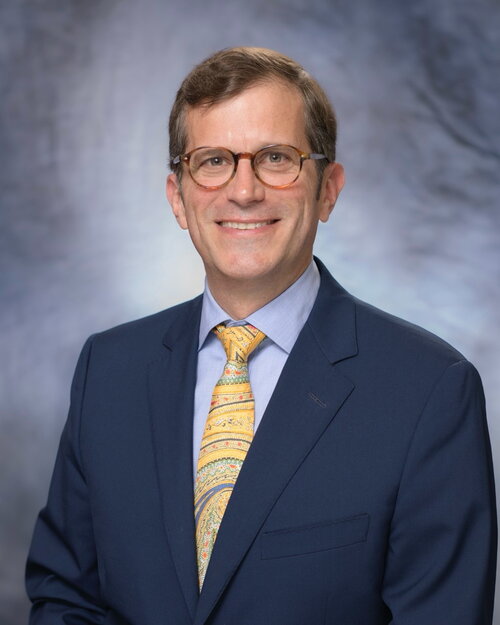
Kirk Sanders is an Associate Professor split between the Departments of Classics and Philosophy at the University of Illinois. He holds a PhD in Philosophy from the Joint Classics-Philosophy Program at the University of Texas at Austin. His research focuses on Hellenistic philosophy and Xenophon's Socratic writings, with notable contributions including co-editing Epicurus and the Epicurean Tradition (2011) and ongoing projects on Xenophon's texts. His work bridges classical philology, philosophical analysis, and historical context. Education: PhD in Philosophy (UT Austin) Research interests include Hellenistic philosophical traditions, Socratic literature, and ancient Greek language structures. His recent publications explore Roman Epicureanism and textual analysis of classical works like Xenophon's Apology . Publications include contributions to Mnemosyne , Illinois Classical Studies , and edited volumes. Sanders also serves as an editor for peer-reviewed journals and maintains affiliations with the Center for Hellenic Studies. His current projects involve translating and commenting on Xenophon's Socratic writings, combining philological rigor with philosophical interpretation.
Jocelyn Saidenberg is a Lecturer specializing in comparative literature, ancient poetry, and interdisciplinary studies. She holds a doctoral degree in Comparative Literature from the University of California, Berkeley. Her research integrates linguistics, social anthropology, and psychoanalysis to analyze didactic poetry’s transformative potential, as seen in her dissertation Echo Otherwise on Lucretius’s atomic poetics. Her creative work includes multiple poetry collections and essays exploring themes like displacement, existential inquiry, and interdisciplinary art. Key publications span academic interviews and poetry anthologies, with notable works such as kith & kin (2018), Dead Letter (2015), and Shipwreck (2013). Dr. Saidenberg has received prestigious awards including the Frances Jaffer Award and the American Academy of Poets Greenwald Prize (2001). Her creative and critical outputs reflect a sustained engagement with language’s capacity to interrogate human experience across historical and cultural contexts.
Kenneth S. Sacks is a Professor of History and Classics at Brown University, with a focus on Greek intellectual history and American Transcendentalism. He previously served as Dean of the College at Brown (1995–1998) and taught at the University of Wisconsin-Madison (1976–1995). Holding a PhD in Ancient History from UC Berkeley (1976), he has authored seminal works such as Understanding Emerson and Diodorus Siculus and the First Century . His research explores the intersection of classical antiquity and American thought, including projects funded by the Mellon Foundation Sawyer Seminar Program. Awards include the Rabbi Joseph L. Baron Faculty Achievement Award and recognition as a top educator by Wisconsin students. He teaches courses on Hellenistic Greece, Transcendentalism, and the history of historical writing. Education: PhD, MA (UC Berkeley); BA (University of Pittsburgh) Research: Currently co-PI on a $105,000 grant for Mediterranean cultural exchange studies (Brill Press publication pending). His teaching spans ancient and American intellectual history, including popular courses like World of Walden Pond and History of Greece . He has held leadership roles in academic committees and boards, including the Howard Foundation and Brown’s Ancient Studies Program.
University of California, Los AngelesUnited States
M. Rahim Shayegan is a prominent scholar in Iranian and Near Eastern studies, specializing in Old and Middle Iranian philology, Achaemenid-Sasanian history, and Greco-Roman-Iranian cultural interactions. He holds a PhD from Harvard University and has conducted postdoctoral research at the University of Göttingen and Sorbonne. His work bridges philology, epigraphy, and historical analysis to explore ancient political ideologies, religious traditions, and cross-cultural exchanges. Education: PhD, Iranian Philology & Ancient History, Harvard University MA, Iranian Philology, Sorbonne University BA, Philosophy & Comparative Philology, University of Cologne Research Interests: Iranian epigraphy and royal inscriptions Political dynamics of pre-Islamic Iranian empires Greco-Roman and Iranian cultural dialogues Zoroastrianism and ancient Near Eastern religions His publications include seminal works like Arsacids and Sasanians: Political Ideology in Post-Hellenistic Persia (2011) and Cyrus the Great: Life and Lore (2019). He has held prestigious fellowships at the Guggenheim Foundation and is a member of the Austrian Academy of Sciences. Awards: Ehsan Yarshater Book Award (2012) Academia Europaea Membership (2019–) Courses Taught: Achaemenid Civilization Sasanian History Old Persian Cuneiform Zoroastrianism and Ancient Religions
Andrew Ollett is an Associate Professor and Director of Graduate Studies in the Department of South Asian Languages and Civilizations at the University of Chicago , where he has taught since 2019. His research focuses on the literary and intellectual traditions of South and Southeast Asia, particularly through works in Sanskrit, Prakrit, Apabhramsha, and Kannada from the first millennium CE. Co-founder and editor of NESAR (New Explorations in South Asia Research) Director of NEH-funded edition/translation of the Kavirājamārga (earliest Kannada literary manual) Expert in Prakrit and Kannada literary traditions His work explores the 'question of language'—examining how language choice shaped cultural production and change in premodern India. Current projects include a monograph on context-sensitivity in Indian language theories and a study of manuscript technology's impact on early South Asian knowledge communities. He has authored The Mirror of Ornaments (Naples: Unior Press, 2025) and Language of the Snakes (UC Press, 2017), and co-authored Lilavai (Harvard, 2021). Recent publications include interdisciplinary studies on: Sanskrit-Prakrit campū genre reevaluation Pragmatics in Mīmāṁsā interpretive concepts Manuscript literacy's influence on literary forms Historical linguistics of Middle Indic syllable reduction Philosophy of language in Śālikanātha and Kumārila Bhaṭṭa Awarded the NEH 'Scholarly Editions and Translations' grant , he teaches classical South Asian literature courses covering Sanskrit, Prakrit, and Tamil traditions. He maintains digital resources including a Prakrit Digital Texts Project and Mīmāṁsādigdarśinī digital text repository, and actively contributes to open-access scholarship.
Alexander Tulin is an Associate Professor in the Department of English at Howard University, within the College of Arts & Sciences. He has been a faculty member at Howard since 1990, originally in the Department of Classics, which he chaired from 2017 to 2021 before its closure led to his transition to the English Department. Institution: Howard University School: College of Arts & Sciences Department: Department of English Academic Rank: Associate Professor Email: atulin@Howard.edu Education: PhD in Classics, Columbia University, 1990 Dr. Tulin's research and teaching span classical antiquity and modern literature. His primary scholarly interests include Ancient Greek Philosophy, Plato, Ancient Law, and Rhetoric, with a current focus on the interstices between Antiquity and Modernity. In the English Department, his teaching centers on Modernism, modern art from 1870–1950, and the 20th-century novel in Europe and America. His publications reflect a deep engagement with classical philosophy and textual analysis. The most recent works show a sustained interest in Platonic dialogues, Socratic method, philosophical rhetoric, and the interpretation of ancient legal and literary texts. He has also contributed numerous scholarly reviews, demonstrating active participation in the academic discourse of classical studies. Scientific Awards: No specific awards or honors are mentioned in the provided text. Advising and Grants: There is no information available regarding students advised, research grants, or funding received. Labs and Research Teams: No information is provided about laboratories, research groups, or collaborative teams associated with Dr. Tulin.
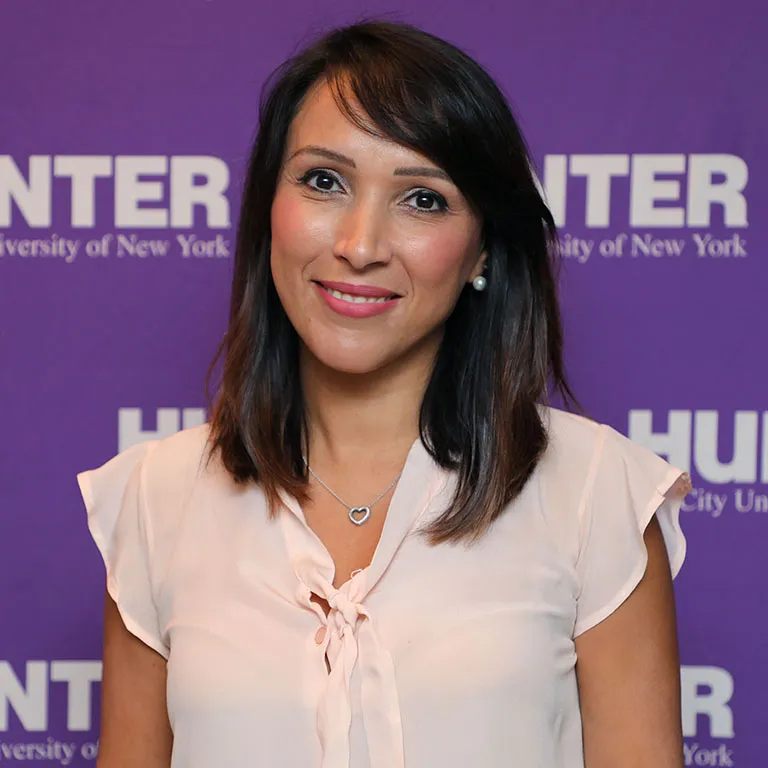
Maria Silvia Sarais serves as a Lecturer within the Department of Classical and Oriental Studies at Hunter College, City University of New York (CUNY), where she contributes to both undergraduate and graduate programs in Classical Studies. Her academic profile centers on advanced instruction and research in ancient Mediterranean civilizations, with particular emphasis on literary analysis and cultural interpretation. Her research portfolio encompasses a sophisticated interdisciplinary range of classical scholarship: Latin Poetry, examining stylistic innovations and socio-political contexts in Roman verse Greek and Roman Drama, analyzing theatrical conventions and performance traditions Seneca studies, focusing on philosophical contributions and literary techniques Ancient Literary Criticism, investigating early theoretical frameworks for textual analysis Poetic Theory and Metapoetics, exploring self-referential elements in classical composition Classical Mythology and Contemporary Reception, tracing evolutionary adaptations of mythic narratives Gender and Ethnicity in Classical Literature, interrogating identity construction and representation in antiquity No scientific awards or honors were documented in the provided materials. While the available information does not specify doctoral or master's students under her supervision, nor detail external research funding sources, her role as Doctoral Lecturer indicates active engagement in advanced academic mentorship within Hunter College's graduate program structure. There is no reference to dedicated research laboratories, collaborative teams, or specialized research centers associated with her current academic position.
Walter D. Penrose, Jr. is a Professor at San Diego State University specializing in the History of Gender and Sexuality in Ancient Greek, Hellenistic, and South Asian contexts. His work also explores the Reception of Classics in modern periods, Disability Studies, and Ancient Religions. Penrose holds a Ph.D. in History from the City University of New York (2006) and a B.S. in Business Administration from California State University, Long Beach (1988). His research interests span interdisciplinary topics including gender diversity in classical thought, queer historiography, and cross-cultural comparisons of ancient societies. Penrose has published widely on topics such as Amazons in classical and modern media, disability discourse in antiquity, and homoeroticism in South Asian history. His 2016 monograph Postcolonial Amazons is a foundational text in comparative studies of gendered heroism in Greek and Sanskrit literature. Penrose’s publications include over a dozen book chapters and journal articles, with recent contributions analyzing gendered power dynamics in Hellenistic royal courts (2021), visual representations of Amazons in Troy adaptations (2022), and the intersection of disability and identity in ancient Greece (2015). His pedagogical work emphasizes inclusive approaches to teaching challenging classical topics like homophobia and gender variance. While no specific grants or awards are noted, Penrose’s work consistently bridges classical studies with modern interdisciplinary frameworks, contributing to fields such as queer studies, disability studies, and world history. His research continues to explore marginalized voices in ancient texts and their contemporary receptions.
Gregory Crane is Professor of Classical Studies and Computer Science at Tufts University, where he holds the Winnick Family Chair in Technology and Entrepreneurship and serves as Chair of the Classical Studies Department. He also maintains a professorship in the School of Engineering's Computer Science department. Previously, he was Alexander von Humboldt Professor of Digital Humanities at Leipzig University in Germany from 2013-2019. PhD in Classical Philology, Harvard University (1985) BA in Classics, Harvard University (1979) Crane's research bridges traditional classical scholarship with digital technology. His work in classical studies focuses on ancient Greek authors, particularly Thucydides, with two major books published on the subject. Simultaneously, he has been a pioneer in digital humanities, beginning work on digital tools for classics as a graduate student in 1982. He is the Editor-in-Chief of the Perseus Project, which he has directed since 1985, developing morphological analysis systems and overseeing the project's evolution through multiple generations of digital library technology. His recent publications demonstrate a strong trend toward integrating artificial intelligence with classical language studies, developing next-generation digital libraries, and exploring new methods for engaging with classical texts in the digital age. Crane's work increasingly focuses on making ancient languages more accessible through technology, with research spanning digital philology, language learning tools, and corpus-based approaches to historical languages. Winnick Family Chair in Technology and Entrepreneurship Alexander von Humboldt Professor of Digital Humanities Crane has secured substantial research funding from major organizations including the National Endowment for the Humanities, the Andrew W. Mellon Foundation, the National Science Foundation, and Google. His current and recent projects include "Reinventing the study of ancient languages" and "Beyond Translation -- new possibilities for reading in a digital age." He has advised numerous students through senior honors theses and directed dissertation research in Classical Studies at Tufts University. Crane leads the Perseus Digital Library research program, which has evolved through multiple generations of technology to become a leading resource for classical studies. His work has established critical infrastructure for digital classics, including named entity identification systems and morphological analysis tools that have shaped the field of digital humanities.
Delbert Burkett is the Jaak Seynaeve Professor of Biblical Studies and Professor of Religious Studies at Louisiana State University. He specializes in New Testament studies, particularly the history, religion, and literature of earliest Christianity. His research focuses on the Synoptic Problem and early Christian textual traditions. Before joining LSU in 1996, he taught at Western Kentucky University, Appalachian State University, and Lebanon Valley College. He served as Section Head of Religious Studies (2004-2007) and Department Chair (2010-2016). Education: B.A. in Koine and Classical Greek, Abilene Christian College (1971) M.T.S., Harvard Divinity School (1973) Ph.D. in New Testament and Christian Origins, Duke University (1989) Research Interests: Burkett's work examines the literary relationships between the Synoptic Gospels, the 'Son of Man' title in the New Testament, and early Christian origins. His publications include Rethinking the Gospel Sources (multi-volume series) and The Case for Proto-Mark . Publications Trends: His recent articles address topics like Markan narrative analysis, Jewish ritual practices, and Luke-Acts theological unity. Earlier work engaged with Johannine resurrection narratives and Coptic liturgical texts. Awards: 2009-2010 ATLAS Grant 2007 Tiger Athletic Foundation Teaching Award Repeated recognition for undergraduate instruction (Alpha Lambda Delta, 1999/2003) LSU Council on Research Summer Stipends (1997, 2000) 1992 Southern Regional Education Board Travel Grant Teaching & Grants: Teaches courses such as 'A History of God' and 'Apocalyptic Literature.' His grants supported research on gospel sources and early Christian texts. No formal lab affiliations are noted, though he collaborates on initiatives like the 'AI & Religion Collaborative.'
Laura Fine is a Professor of English and holds the Norma Rose Chair in English at Meredith College. She specializes in literary analysis with a focus on gender, race, and cultural dynamics in American and Southern literature. Her research explores themes such as identity formation, social critique, and narrative structure in works by authors like Harper Lee, Jesmyn Ward, and Bonnie Jo Campbell. She actively contributes to academic conferences and publications, balancing her scholarly work with department leadership and undergraduate education. Dr. Fine earned her B.A. from the University of Minnesota, followed by M.A. and Ph.D. degrees from the University of California at Davis. Her teaching philosophy emphasizes connecting students to literary themes through small-class discussions, fostering critical thinking and effective communication. Her research spans contemporary and classic texts, with publications analyzing gender in modern American fiction, race in Southern Gothic narratives, and postcolonial identity in works like Jhumpa Lahiri’s stories. Recent work includes a chapter on rape culture in Bonnie Jo Campbell’s fiction and re-evaluations of Harper Lee’s legacy. As department head, Fine prioritizes community-building among English majors, faculty, and staff. She has contributed to major reference works like the Encyclopedia Britannica and engages with public discourse through platforms like The Conversation.
Mario Telò is a Professor of Ancient Greek & Roman Studies, Comparative Literature, and Rhetoric at the University of California, Berkeley, with an affiliation in the Program for Critical Theory. He serves as Chief Editor of the journal Classical Antiquity and sits on the editorial board of Representations . His work bridges antiquity and modernity through interdisciplinary lenses, focusing on psychoanalysis, queer theory, and political theory. Telò has authored monographs such as Archive Feelings: A Theory of Greek Tragedy (2020) and Resistant Form: Aristophanes and the Comedy of Crisis (2023), exploring themes like tragic aesthetics, crisis, and canonical reimagining. Recent projects include co-editing Reading Greek Tragedy with Judith Butler (2024) and organizing conferences on Jean-Luc Nancy and Classics. His research emphasizes textual form’s emancipatory potential, engaging with art, film, and architecture to deconstruct normative narratives. Education : His academic background is not detailed here, but his prolific publications reflect advanced expertise in Classics and interdisciplinary humanities. Research Interests : Telò’s work critically examines Greek tragedy and comedy through modern theoretical frameworks. He investigates the interplay between aesthetic form and political/social issues, leveraging psychoanalysis (Freud, Lacan) and queer theory (Judith Butler, Lee Edelman) to analyze ancient texts. His focus on 'resistant form' highlights how classical works challenge equilibrium and normativity, offering tools for contemporary critical discourse. Grants & Collaborations : He co-organizes international conferences (e.g., on Jean-Luc Nancy) and collaborates on interdisciplinary projects like a forthcoming book on artist William Kentridge. His editorial work spans special journal issues on topics like elemental objects and queer philology. Labs/Teams : He leads editorial initiatives and hosts academic events such as the Townsend Center book chats and Syndicate symposia, fostering dialogue between classicists and modern theorists.