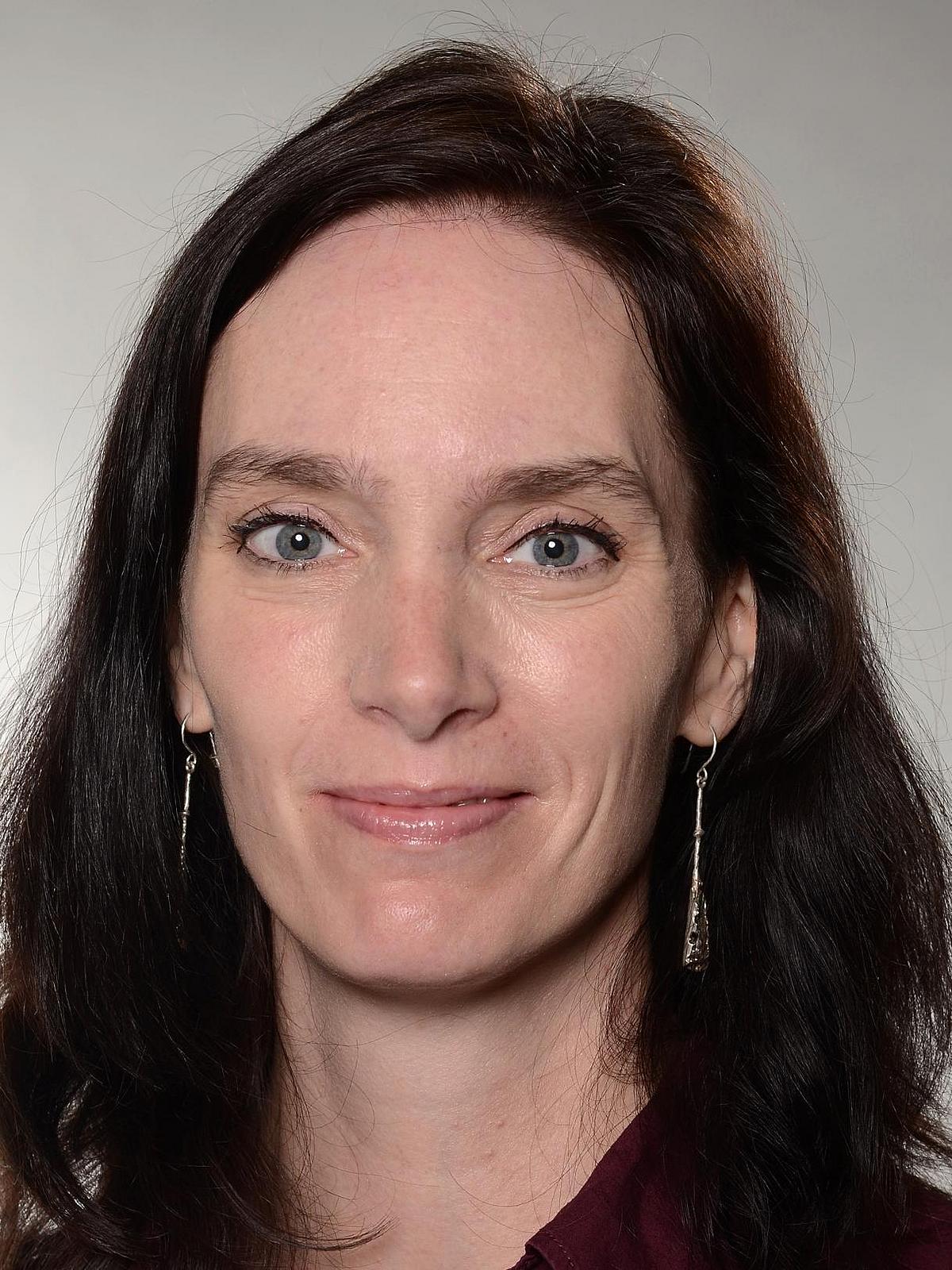
Eliese-Sophia Lincke is a Junior Professor at the Department of History and Cultural Studies, Freie Universität Berlin, since May 2022. Her work bridges computational methods with Egyptology, focusing on digital tools for studying ancient texts. Bachelor's and Master's in Egyptology, Humboldt-Universität zu Berlin (2007) PhD in "The Conception of Spaces in Language" (TOPOI Cluster, 2012) Research interests include: Digital Humanities : Developing machine learning models for Hieroglyphic, Demotic, and Coptic text processing Linguistic Typology : Analyzing classifier systems in Ancient Egyptian and Sign Languages Spatial Linguistics : Investigating prepositions and spatial adverbs in Egyptian-Coptic Recent publications focus on Neural Lemmatization , OCR for Coptic , and Classifier Semantics , demonstrating her commitment to computational Egyptology. Scientific awards include the Humboldt-Preis 2008 for best Master's thesis and the Prize for Good Teaching 2014 . She has co-organized workshops like "Wege zum Ägyptischen" and served as Co-Editor for Lingua Aegyptia . Her teaching contributes to the Digital Studies of Ancient Texts Master's program.
Prof. Dr. Frank Kammerzell is a Professor at the Department of Archaeology and Cultural History of Northeast Africa within Humboldt University of Berlin since May 2003. His academic career includes habilitation at the University of Göttingen (1999) and extensive research collaborations with Hebrew University of Jerusalem and University of Vienna. His educational background encompasses Medieval and Modern History (major 1980), Egyptology (major), Coptic Studies, General and Indo-European Linguistics, and Assyriology. He earned his Dr. phil. from Göttingen with a dissertation on 'Studies on the Language and History of the Carians in Egypt' (1990) and completed habilitation with 'Language contact and language change in ancient Egypt' (1999). Kammerzell's research spans Egyptian phonology, morphology, syntax, lexis, language history, diachronic typology, language contact, writing systems, and Carian history in Egypt. His work integrates linguistic analysis with archaeological contexts, examining language evolution through contact and typological shifts. Notable projects include studies on Egyptian-Akkadian typological developments and classifiers in ancient Egypt. His publications since 2000 demonstrate sustained focus on Egyptian linguistic structures, writing systems, and cross-linguistic influences. Key themes include verb classifiers, glossing rules for Ancient Egyptian, and lexical semantics-pragmatics interfaces, bridging Egyptology with broader linguistic theory. Graduate Scholarship from the State of Lower Saxony (Doctoral Scholarship) 1987-1989 Kammerzell has led significant research projects funded by the DFG, Fritz Thyssen Foundation, and Volkswagen Foundation. His collaborative work with institutions in Jerusalem and Göttingen highlights international partnerships. While specific advisees aren't listed, his editorial roles suggest mentorship in academic publishing. He co-founded research groups on multilingualism and script systems, contributing to journals like Lingua Aegyptia and Ägypten und Levante , underscoring team-based archaeological-linguistic research.
Rhenish Friedrich Wilhelm University of BonnGermany
Prof. Ludwig D. Morenz is a Professor of Egyptology at the University of Bonn and Director of the Egyptian Museum Bonn. He holds positions as a Principal Investigator in archaeological research and leads excavations in Egypt. His academic journey includes a Habilitation from the University of Tübingen (2001), a PhD from Leipzig (1994), and extensive postdoctoral fellowships across Europe. His research focuses on Pharaonic socio-economic systems, particularly dependency relationships between state expeditions and Canaanite populations. He examines ancient Egyptian economy, religion, and cultural interactions through material and textual evidence. Key areas include the origins of alphabetic writing, solar deity symbolism, and Roman-Egyptian cultural hybridity. Morenz has secured over €1 million in third-party funding from institutions like the German Research Foundation (DFG) and Gerda Henkel Foundation. He supervises numerous doctoral and master's students, reviewing over 30 theses and international PhDs. His editorial roles include founding journals like Studia Sinaitica and Bonner Ägyptologische Beiträge . Major excavations under his leadership include the Elite Necropolis of Qubbet el Hawa and the Serabit el-Chadim Hathor temple project. He participates in consortia such as the DFG Research Training Group 'Archeology of Pre-Modern Economies' and the International Congress of Egyptologists. Awards: Heisenberg Fellowship (DFG), Feodor Lynen Fellowship (Humboldt Foundation), Herzog-Ernst Scholarship Exhibitions: Curated annual special exhibitions at the Egyptian Museum Bonn, including a landmark show on alphabetic writing origins at Cairo's National Museum Publications: 13 monographs, 4 edited volumes, and over 100 articles
Professor Richard Bussmann is a Professor of Egyptology at the Institute for African Studies and Egyptology, University of Cologne. His office is located at Meister-Ekkehart-Str. 7, first floor, room 1.04 in Cologne, Germany. He has made significant contributions to the field of Egyptology, particularly in the areas of social archaeology of ancient Egypt, urbanism in North-Eastern Africa, and cross-cultural comparison of early complex societies. Professor Bussmann's research focuses on combining Egyptology with social archaeology, anthropology and cultural history. His work revolves around questions of ancient Egyptian society and culture at a local level, using material, visual and written sources to understand long-term transformations in North-Eastern Africa. His chronological focus spans from late prehistory to the New Kingdom (the Bronze Age), though he also examines earlier and later developments. His research includes a book on community shrines of the third millennium, examining how central administration penetrated into local milieus. He is currently writing "The Archaeology of Pharaonic Egypt," which synthesizes discussions of Egyptian society and culture from the Old to the Middle Kingdom. He directs a project on seals and seal impressions from Hierakonpolis to investigate administrative practice in early Egypt and co-directs the archaeological fieldwork project at Zawyet Sultan, exploring life of a local community from prehistory to the present day. Professor Bussmann has published extensively, with recent works including "The archaeology of pharaonic Egypt: society and culture, 2700-1700 BC" (2023) and "Zawyet Sultan: second preliminary report. Excavation season 2022" (2023). His publications demonstrate a strong focus on social structures, urban development, and cultural practices in ancient Egypt, particularly during the Old and Middle Kingdoms. His professional memberships include: Secretary General of the International Association of Egyptologists Full member of the German Archaeological Institute Member of scientific advisory board of the Cairo division of the German Archaeological Institute Speaker of the Association of archaeological institutions in Cologne and Bonn Deputy speaker of the Research Training Group 1878 "Archaeology of premodern economies" Member of the advisory board of the Competence Area IV, University of Cologne Member of the steering committee of the Friends of Egyptology in Cologne "Uschebti e.V." Member of the board of the German Association of Egyptology Professor Bussmann has supervised numerous PhD students, including Anouk Everts, Isabell Steinhardt-Sedlak, Lisa Augner, and others, working on diverse topics ranging from social networks in the Middle Kingdom to economic systems and resource management in ancient Egypt. His teaching focuses on Egyptian archaeology and language, with an emphasis on source critical skills and theoretically informed discussions of ancient Egyptian society and culture.
Tonio Sebastian Richter is a Professor of Egyptology with a focus on Coptology at the Free University of Berlin's Department of History and Cultural Studies, Institute of Egyptology. He holds the position of Academy Professor at the Berlin-Brandenburg Academy of Sciences and Humanities and has served as the head of several major research projects including the DFG long-term project "Database and Dictionary of Greek Loanwords in Coptic" (DDGLC) and the Academy project "Structures and Transformations of the Vocabulary of the Egyptian Language. Text and Knowledge Culture in Ancient Egypt." His educational background includes a Magister Artium in Egyptology and Religious History from the University of Leipzig (1996), followed by a doctorate in 1999 and habilitation in 2005, both based on works concerning Coptic legal documents and their linguistic features. Richter has held academic positions at the Universities of Leipzig, Heidelberg, and Berlin, including serving as a Heisenberg Fellow of the German Research Foundation from 2011-2014. Richter's research interests span the history and cultural history of Egypt during the Roman, Byzantine, and early Islamic periods, with particular focus on Coptic language and texts. His work examines documentary texts including papyri, ostraca, and inscriptions that illuminate economic, legal, and social history. He has made significant contributions to the study of Coptic legal documents, magical and alchemical texts, and language contact phenomena between Egyptian/Coptic and Greek/Arabic. His research has revealed important insights into Coptic alchemical papyri, which represent some of the earliest witnesses to "the divine art" and enrich our knowledge of the development of late antique science and its transmission from Greek to Arabic. Richter has also pioneered work on language change and contact in the Egyptian-Coptic language, particularly regarding Greek and Arabic loanwords. Academy Professor, Berlin-Brandenburg Academy of Sciences and Humanities (2015-present) Professor of Egyptology with focus on Coptology, Free University Berlin (2014-present) Heisenberg Fellow, German Research Foundation (2011-2014) Extraordinary Professor, University of Leipzig (2011) Richter has received numerous scientific awards including the Heisenberg Fellowship from the German Research Foundation (2011) and the Friedrich-Weller Prize from the Saxon Academy of Sciences (2000). He serves on the scientific advisory boards of several prestigious institutions including the International Thesaurus Commission of the Thesaurus Linguae Latinae and the Scientific Advisory Board of the German Archaeological Institute. As an educator, Richter has been a main instructor for multiple International Summer Schools in Coptic Papyrology and has organized numerous academic conferences and workshops on Coptology, papyrology, and Egyptology. His work bridges linguistic, historical, and archaeological approaches to understanding ancient Egyptian civilization through its textual remains.
Patrick Sänger is a Professor of Ancient History at the University of Münster, where he also serves as Dean of the Faculty of Philosophy since November 2020. His academic career spans institutions including the University of Vienna, University of Kiel, and the Austrian Academy of Sciences. He specializes in the administrative, legal and social history of the eastern Mediterranean from Hellenism to Late Antiquity, with particular focus on Ephesus, Jewish Diaspora, and minority communities in antiquity. His educational background includes a Mag. phil. in Ancient History from the University of Vienna (1997-2004), doctoral studies at the same institution (2004-2009), and a Habilitation in Ancient History and Papyrology completed in 2017. Sänger has held various academic positions, progressing from research assistant to his current professorship at Münster since 2018. Sänger's research interests center on administrative systems in Hellenistic and Roman periods, particularly the politeuma system as an organizational form for minority communities, military diasporas, and the social history of Ephesus. His work combines epigraphic, papyrological, and historical analysis to understand legal frameworks, migration patterns, and cultural integration in antiquity. Recent projects focus on cult spaces in Ephesus and late antique ostraca from the region. His scholarly output demonstrates consistent engagement with military history, legal frameworks, and minority communities across the Greek and Roman world. He has edited significant volumes on military diasporas and migration in the ancient world, while his monograph on the Ptolemaic politeuma system represents a major contribution to understanding how Hellenistic kingdoms managed ethnic diversity. Sänger has received notable recognition including membership at the Institute for Advanced Study in Princeton (2014), an APART-Fellowship from the Austrian Academy of Sciences (2013), and the Klaus-Georg und Sigrid Hengstberger Prize from Heidelberg University (2010). As an academic mentor, he has supervised doctoral research on religious practices in Ephesus, reflecting his commitment to advancing knowledge of ancient urban religious landscapes. His external engagements include leadership roles in the Center for Digital Humanities at Münster and membership in international scholarly organizations focused on epigraphy and papyrology.
Joachim Friedrich Quack is Professor of Egyptology and Director of the Institute of Egyptology at Heidelberg University , Faculty of Arts. Since 2009 he has been a full member of the Heidelberg Academy of Sciences and Humanities and since 2017 a foreign member of the Royal Danish Academy of Sciences and Letters . Education & Career: 1985 – Abitur, Hermann-Tast-Schule, Husum 1985–1990 – Studies in Egyptology, Semitic Studies and Biblical Archaeology, Eberhard Karls University Tübingen (German National Academic Foundation scholar) 1988–1989 – Study visits, École pratique des hautes Études & Collège de France, Paris 1990 – M.A. (magna cum laude), Tübingen 1993 – Ph.D. summa cum laude , Tübingen; dissertation on „The Teachings of Ani“ 2003 – Habilitation, Free University of Berlin 2003–2005 – DFG Heisenberg Fellowship Since 2005 – Professor and Director, Institute of Egyptology, Heidelberg University Research Interests: Quack’s work bridges philology, religion, and cultural history of Egypt from the Late Period through Greco-Roman times. His core projects revolve around the Book of the Temple , Demotic magical and divinatory texts, animal omina, and the reception of Egyptian traditions in the classical world. Linguistically, he analyses Demotic grammar, Afro-Asiatic etymology, and the emergence of Coptic. A further strand explores purity concepts, priestly norms, and ritual dynamics, integrating papyrological evidence with broader anthropological questions. Publications & Trends: With more than 300 scholarly items, his output ranges from critical text editions ( Carlsberg Papyri ) to synthetic monographs such as the Anthology of Demotic Literature (2018, with F. Hoffmann). Recent articles increasingly address astral religion, cross-cultural deity transfer, and the materiality of writing, reflecting a methodological shift toward interdisciplinary and theoretical frameworks while remaining grounded in meticulous philology. Awards & Memberships: Gottfried Wilhelm Leibniz Prize (DFG, 2011) University of Heidelberg Annual Research Prize (2011) Member, Heidelberg Academy of Sciences and Humanities (since 2009) Foreign Member, Royal Danish Academy of Sciences and Humanities (since 2017) Heisenberg Fellowship, German Research Foundation (2003–2005) Projects & Grants: Quack has directed numerous externally funded initiatives, most notably the DFG long-term project on the Book of the Temple , reconstructing this fundamental priestly handbook from papyrus fragments. Further ventures include editions of Demotic magical texts, the Corpus of Demotic Magical Texts , studies on the Names of Horus , and cataloguing the Heidelberg Papyrus Collection . Laboratory & Teams: As Institute Director, he oversees the Heidelberg Papyrus Collection with dedicated conservation labs, digital humanities units for multispectral imaging, and several ongoing doctoral and post-doctoral projects funded by the DFG and the European Research Council.
Laura Christin Charlott Gonnermann is a Research Associate at the University of Leipzig's Institute for Old Testament Studies, affiliated with the Theological Faculty's Department of History and Religion of Israel and its Environment. Since 2017, she has worked under Prof. Angelika Berlejung while pursuing her doctoral dissertation on Egyptian amulets in the Southern Levant. She also serves as Equal Opportunities Officer (2019-2024) and Faculty Council member. Her research integrates archaeology, philology, and iconography to study: Egyptian amulets in 1st-millennium BC Palestine/Israel Biblical archaeology through the Tell el-Badawija excavation Cognitive metaphors in ancient texts Semitic-Egyptian multilingualism Publications reflect interdisciplinary work spanning archaeology, religious studies, and educational technology. Recent articles analyze ancient fear embodiment (2024), digital learning tools (2023), and hieroglyphic amulets (2021), demonstrating expertise in both ancient Near Eastern studies and modern pedagogical methods. Awards include the Evangelical Studienwerk Villigst Scholarship (2011-2016). She leads the project 'Crafting for the God(s): Dynamics of Cult, Craft Production, and Socio-Technological Identities' (2022-present) and contributes to excavations at Tell el-Badawija/Hannathon (2023-2030). Teaching activities include courses on Old Testament exegesis, biblical studies, and ancient writing systems, with excursions to archaeological collections.
Dr. Elena Luise Hertel is an affiliated researcher at the University of Hamburg’s Centre for the Study of Manuscript Cultures (CSMC). She holds a PhD in Egyptology from the University of Basel (2024) and specializes in ancient Egyptian cursive scripts (Hieratic, Abnormal Hieratic, Demotic), focusing on materiality, writing across media, and cultural change during Egypt’s Late Bronze and Iron Ages. Her current project, funded by the Swiss National Science Foundation, investigates the use of cursive script on stelae during the Third Intermediate Period. She also serves as Principal Investigator for this project (2025–2027). During her Petra Kappert Fellowship (Oct 2024–Mar 2025), she prepared interdisciplinary collaborations, finalized publications, and established technical frameworks for 3D scanning of stelae inscriptions. Education: PhD in Egyptology, University of Basel (2024); studies in Egyptology in Germany and the Netherlands. Research Focus: Materiality of writing, cultural transitions in ancient Egypt, and stelae inscriptions. Her work bridges archaeological and textual analysis, emphasizing interdisciplinary approaches to manuscript cultures. Projects & Labs: Leading a project on stelae inscriptions, integrating digital technologies like 3D scanning. Collaborates with scholars across disciplines at CSMC to explore script use beyond traditional media contexts.
Dr. Gunnar Sperveslage is a Researcher at the Institute for African Studies and Egyptology at the University of Cologne. His academic journey includes a Magister Artium from Humboldt-Universität Berlin (2007) and a PhD from Freie Universität Berlin (2014). He has held research positions at prestigious institutions including the Berlin-Brandenburgische Akademie der Wissenschaften and Leipzig University. His research focuses on intercultural contacts between Egypt and Arabia/Rome , digital annotation of ancient texts, and the history of Egyptological scholarship. Notable projects include the 'Digital database of early Egyptian inscriptions' and work on lexicon history. Recent publications highlight his expertise in Roman-Egyptian cultural hybridity, Arabian-Egyptian trade networks, and epigraphic analysis. He co-edits the journal Internetbeiträge zur Ägyptologie und Sudanarchäologie and has curated exhibitions at Bonn's Egyptian Museum. His work bridges traditional Egyptology with digital humanities, emphasizing collaborative research and historical methodology.
Prof. Dr. Markus Asper is a Professor of Greek Studies at Humboldt University of Berlin's Institute of Classical Philology since 2010. Previously, he held positions at Penn State University (2004-2007) and New York University (2007-2010). His academic career includes a doctorate from the University of Freiburg (1994), habilitation from Mainz (2003), and research roles in Konstanz and Mainz. His research focuses on Hellenistic poetry, Greek scientific literature, and the intersection of narrative and knowledge-making in antiquity. Education: Bachelor/Master: University of Vienna and Albert-Ludwigs-Universität Freiburg (1989-1994) PhD: University of Freiburg (1994) Research Assistant: University of Konstanz (1995-2001) Habilitation: University of Mainz (2003) Research Interests: Epistemological studies of ancient Greek science and rhetoric Narratology in legal, medical, and philosophical texts Terminology and systematicity in ancient knowledge systems Commentary traditions and textual authority Cross-cultural comparisons in knowledge production Current Projects: Leading a DFG-funded project on Galen's commentaries on Hippocratic Aphorisms, involving workshops and international collaborations. Active in editing and publishing ancient scientific and literary texts. Teaching: Lectures on Greek tragedy, presocratic philosophy, imperial literature, and ancient science. Courses emphasize interdisciplinary approaches to classical texts.
PD Dr. Felix Wiedemann is a Senior Lecturer at the Institute for Ancient Near Eastern Studies (Freie Universität Berlin), specializing in intellectual history, historiography, and migration narratives. His research focuses on the intersection of knowledge production, identity construction, and colonial discourse in ancient studies. He leads the DFG-funded project 'Völker- und Rassenkunde in Stein,' examining racial cartography through ancient Egyptian imagery. Education: 2003-2006: PhD in Modern History at Freie Universität Berlin (dissertation on witchcraft's modern reception) 1995-2002: MA in Modern History, Political Science, and Philosophy at Freie Universität Berlin Research Interests: 19th-20th century knowledge systems and ideological narratives Historiography of the ancient Near East and migration studies Racial theories, orientalism, and colonial ethnography Right-wing extremism and religious movements Key Projects: DFG-funded 'Völker- und Rassenkunde in Stein' (Stone-Based Ethnography) 'Wanderungsnarrative' (Migration Narratives in Near Eastern Studies) Co-edited volumes on migration historiography and identity mapping Teaching: Courses on historiography, migration history, antisemitism, and scholarly writing methods. Labs/Teams: Leads interdisciplinary research groups at the Einstein Center Chronoi and former Topoi Cluster of Excellence.
Prof. Dr. Jochem Kahl is a leading Egyptologist at the Institute of Egyptology, Freie Universität Berlin , specializing in Ancient Egyptian language, writing systems, and archaeology. He has directed the The Asyut Project since 2003, focusing on the necropolis and regional history of Asyut.
Kristina Hülk serves as a Scientific Associate (Researcher) at the Department of Theory and History of Multimodal Communication within the Institute of Archaeology at Humboldt University of Berlin since March 2023, while concurrently pursuing doctoral studies under Prof. Dr. Silvia Kutscher and Prof. Dr. Frank Kammerzell on multimodal communication in ancient Sudan. Education MA in Archaeology and Cultural History of Northeast Africa, Humboldt University of Berlin (2017-2020), thesis: The second pylon of the pyramid chapel Beg. N11 in Meroe BA in Archaeology and Cultural History of Northeast Africa and Art and Visual History, Humboldt University of Berlin (2013-2017), thesis: Running phonetic symbols? On the transcription of the grapheme O35 Research Focus : Her interdisciplinary work bridges linguistic variation, hieroglyphic systems, and material culture in ancient Northeast Africa, with specialized attention to semiotic analysis of visual communication in Meroitic sacred spaces. She examines how spatial design, gaze direction, and multimodal elements functioned in royal cemeteries of Sudan, integrating archaeology with semiotics and linguistics to decode cultural meanings. Publication Trends : Her recent scholarship demonstrates a cohesive trajectory analyzing multimodal communication across Egyptian and Nubian contexts, with emphasis on register variation in visual systems and attention-guiding mechanisms in funerary architecture. The 2024 publication advances understanding of semiotic resources in Meroitic pyramid chapels, while the 2022 co-authored work establishes cross-cultural frameworks for language register analysis. Professional Engagement : She holds leadership roles in the Institute Council (Deputy academic mid-level member since 2024), contributes to the Collaborative Research Center 1412 Register project, and participates in the German Archaeological Institute's Research Cluster 4 on Religion-Society-Individual. Her fieldwork spans excavations at Meroe's royal cemeteries (2016-2020) and Berlin's Schlossplatz site.
Dr. Maria Hermes-Wladarsch serves as Lecturer in Modern and Contemporary History at the University of Bremen and Head of Historical Collections, Manuscripts & Rare Books at the Bremen State and University Library (SuUB Bremen). She completed her Dr. phil. at the University of Bremen in 2012 with research on the history of psychiatry in Bremen during World War I, following Magister studies in Cultural Studies and Philosophy in Bremen and Leipzig, and a Master's in Library and Information Science from Humboldt University Berlin. Her educational background includes: Magister in Cultural Studies and Philosophy from Universities of Bremen and Leipzig Master's in Library and Information Science from Humboldt University Berlin Doctorate (Dr. phil.) from University of Bremen (2012) Dr. Hermes-Wladarsch specializes in the history of natural sciences and medicine in Bremen during the 18th and 19th centuries, manuscript traditions of Bremen history from the 18th-20th centuries, and the study of historical estates and autographs. Her interdisciplinary work bridges historical research with archival science, focusing on how historical documents illuminate social, cultural, and scientific developments in the Bremen region. Her recent publications reveal a strong focus on Bremen's scientific heritage, historical documentation practices, and the intersection of science and civic identity in merchant cities. Professional Affiliations: Member of the board of Historischen Gesellschaft Bremen e.V. (since 2016), serving as Secretary since 2018 Ordinary member of the Historical Commission for Lower Saxony and Bremen Co-editor of 'Arbeiterbewegung und Sozialgeschichte' (2011-2018) Dr. Hermes-Wladarsch has been teaching history courses since 2009 at the Universities of Vechta and Bremen, and at Leuphana University Lüneburg. Her teaching focuses on practical archival work, manuscript analysis, and regional history, with recent seminars examining historical estates of notable Bremen figures including Johann Georg Kohl and Johann Gildemeister. She previously worked as a freelance exhibition curator and museum educator (2004-2013) and as a research assistant at SuUB Bremen (2008-2018) before becoming Head of Historical Collections in 2018. Her work with historical collections includes extensive cataloging of estates from prominent Bremen families and individuals, making these resources accessible for historical research. She has particular expertise in paleography and the processing of historical documents written in Kurrent and Sütterlin scripts, with significant contributions to understanding Bremen's scientific heritage and wartime experiences.