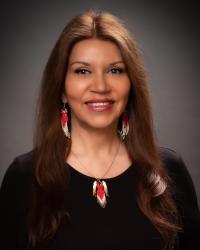
Beth Piatote is an Associate Professor of English and Comparative Literature at the University of California, Berkeley. She holds a PhD in Modern Thought and Literature from Stanford University and is an enrolled member of the Confederated Tribes of the Colville Reservation (Nez Perce). Her work bridges scholarly and creative realms, focusing on Indigenous literature, law, language revitalization, and cultural studies. Education: PhD in Modern Thought and Literature (Stanford University). Research interests include Native American legal systems, Nez Perce language preservation, global Indigenous literatures, and creative writing. She co-founded and chairs Berkeley’s Designated Emphasis in Indigenous Language Revitalization and directs the Arts Research Center, where she leads the Indigenous Poetics Lab. Her publications include Domestic Subjects: Gender, Citizenship, and Law in Native American Literature (2013) and the short story collection The Beadworkers (2019), which received multiple literary recognitions. Her plays Antíkoni and Tricksters, Unite! explore Indigenous narratives through performance. Awards include MLA honorable mentions, PEN/Bingham Prize longlistings, and a 2020 Playwrights Retreat win. Current projects involve a scholarly monograph on sensory representations of Indigenous law and creative works in poetry and essays.
Fahad Ahmad Bishara is an Associate Professor at the University of Virginia , specializing in the economic and legal history of the Indian Ocean and Islamic world . His work bridges global capitalism, international law, and historical narratives of mobility. Key Books: A Sea of Debt (Cambridge, 2017) and Monsoon Voyagers (UC Press, forthcoming) Awards: Hurst Prize, Jerry Bentley Prize, Peter Gonville Stein Book Award Research Focus: Explores debt, legal systems, and trade through microhistories of ships and merchant families, with recent interests in narrative scales and conceptualizations of law in global history. Academic Collaborations: Co-authored works with Nandini Chatterjee, Hollian Wint, and others, emphasizing Persianate and Indian Ocean interconnections. Scientific Awards: J. Willard Hurst Prize (Law and Society Association) Jerry Bentley Prize (World History Association) Peter Gonville Stein Book Award (American Society for Legal History)
University of California , Santa Barbara (UCSB)United States
Utathya Chattopadhyaya is an Assistant Professor in the Department of History at the University of California, Santa Barbara, specializing in Modern South Asian and British Imperial History with intersecting interests in the Indian Ocean World, Global History, and Commodity History. His research combines critical materialist and anti-imperial frameworks to analyze colonial agrarian frontiers, intoxicant commodities, and social dynamics of caste, class, and gender. He teaches undergraduate and graduate courses including commodity histories, South Asian public culture, and historical methods. Ph.D., University of Illinois, Urbana-Champaign (2018) His recent publications focus on cannabis regulation, colonial political economy, and multispecies entanglements in imperial contexts. He has received prestigious fellowships from the American Council of Learned Societies, UC Humanities Division, and the Mellon Foundation. Chattopadhyaya co-teaches interdisciplinary courses on topics such as race, colonialism, and cannabis history, contributing to emerging scholarship in Science, Technology, and Society (STS) and decolonial studies. Chattopadhyaya's research clusters around British imperialism's material impacts, particularly in eastern Bengal's agrarian transformations and intoxicant commodity systems. His work synthesizes historical methods with critical plant studies and gender analysis, producing innovative insights into colonial governance and resistance. He actively engages with graduate students in comparative history and Indian Ocean World studies. "Ganja and the Godhead" (2024) - Colonial cosmologies and cannabis "Colonial Capitalism" (2024) - Economic structures of empire "Bodies that Cohere" (2023) - Gender analysis in colonial contexts Key awards include the Margaret T. Getman Service to Students Award (2024), Regents Humanities Fellowship (2022-23), and ACLS Fellowship (2021-22). His scholarly activities intersect with research clusters in Science, Technology and Society; Race, Blackness and Abolition; and Global Antiquity.
Valerie Hansen is the Stanley Woodward Professor of History at Yale University's Department of History. She specializes in Chinese history to 1600, the Silk Road, and global medieval connectivity. Her research bridges legal, religious, and economic dimensions of pre-modern societies. Hansen’s work includes groundbreaking books such as The Year 1000 (2020), redefining globalization’s origins, and The Silk Road: A New History (2012), integrating archaeological and textual sources. She led the Luce Foundation-funded Silk Road Project (1995–1998), unifying Turfan artifacts. Her articles span legal pluralism in Silk Road cities, Liao dynasty material culture, and Viking exploration’s global impacts. Awards include American Academy of Arts and Sciences Fellowship (2021) and Collège de France lectureship (2019). Hansen collaborates internationally, editing volumes on textiles as money and Song-Yuan studies. Her research emphasizes interdisciplinary methods, blending history with archaeology and art.
Jeffery A. Jenkins is a Provost Professor of Public Policy, Political Science, and Law at the University of Southern California’s Sol Price School of Public Policy, and holds the Maria B. Crutcher Professorship in Citizenship and Democratic Values. He directs the Political Institutions and Political Economy (PIPE) Collaborative and edits the Journal of Political Institutions and Political Economy and the Journal of Historical Political Economy . Previously, he served as Editor in Chief of The Journal of Politics (2015-2020) and founded the Southern California Political Institutions and Political Economy Working Group. His research focuses on American political history, particularly the development of congressional and partisan institutions, and the political economy of historical policy decisions. His major works include Republican Party Politics and the American South, 1865-1968 (Cambridge University Press, 2020), which won the 2021 V.O. Key Award and J. David Greenstone Prize, and Congress and the First Civil Rights Era, 1861-1918 (University of Chicago Press, 2021), awarded the 2023 V.O. Key Award. He co-edited The Oxford Handbook of Historical Political Economy (2024) and oversees a book series on historical political economy with Cambridge University Press. Roles: Editor in Chief of Broadstreet , a historical political economy blog, and host of the podcast P.S. You’re Interesting . Awards: Multiple book prizes recognizing contributions to political science and historical analysis. Research Themes: Reconstruction-era policies, civil rights legislation, Southern Republicanism, and institutional development. His recent articles explore topics such as presidential favoritism in grant allocation, historical disenfranchisement strategies, and the evolution of congressional partisan tactics. Jenkins’ work bridges historical analysis with modern political questions, emphasizing long-term institutional dynamics and their implications for contemporary governance.
Rakesh Peter-Dass serves as Associate Professor of Religion at Hope College, where he has been teaching since 2016. His academic journey spans multiple prestigious institutions including Harvard University, Yale University, and the University of Oxford, where he earned advanced degrees in theology, divinity, and business administration. His research focuses on the complex intersections of religion with business, language, law, and politics, particularly in the South Asian context. Dr. Peter-Dass examines how religious identities are shaped through linguistic choices, legal frameworks, and socio-political dynamics, with special attention to Hindu-Christian relations and religious rights. His work bridges theological scholarship with practical applications in interfaith dialogue and religious freedom advocacy. His publications reveal a consistent focus on South Asian religious contexts, particularly examining Hindi Christian literature, Hindu nationalism, and comparative theological approaches between Hindu and Christian traditions. The research demonstrates interdisciplinary connections between religious studies, political science, linguistics, and legal studies, with significant contributions to understanding religious rights in both Indian and American Supreme Court contexts. Among his notable honors are the Saïd Foundation Scholarship from Oxford University, multiple Harvard University fellowships, and the Selva J. Raj Endowed International Dissertation Research Fellowship from the American Academy of Religion. His teaching excellence has been recognized through Harvard University's Certificate of Distinction in Teaching. Dr. Peter-Dass has served in significant professional capacities including as Co-Chair of the Theology and Religious Reflection Unit at the American Academy of Religion (2018-2023) and on the Editorial Board of the Hindi Theological Literature Committee in India (2011-2015). His extensive consulting work with international development agencies, intergovernmental organizations, and religious bodies demonstrates his commitment to applying academic research to real-world religious and social challenges.
Professor Jennifer Carleton is a Visiting Professor of Law at the University of Nevada, Las Vegas William S. Boyd School of Law and the Distinguished Fellow of Gaming Law. Her expertise spans payments, internet, sports, and Indian gaming, with a focus on the intersection of technology and regulation. She currently serves as Chief Legal Officer for Sightline Payments and has held significant advisory roles for global gaming and investment firms. B.A., Political Science (Honors), Indiana University-Bloomington (1991) J.D., University of Wisconsin Law School (1996, cum laude) Her research and practice emphasize regulatory compliance in gaming industries, advanced federal Indian gaming law, and the legal challenges of integrating technology within regulated frameworks. She has taught advanced federal Indian gaming courses at both the University of Wisconsin Law School and Boyd Law School. Professor Carleton has received notable recognition, including: Finalist for 2022 Global Gaming Awards American Executive of the Year Distinguished Fellow in the Indian Nations Gaming and Governance (INGG) Program She has held leadership roles such as former member of the Executive Committee of the Gaming Law Section of the State Bar of Nevada, former trustee of the International Association of Gaming Advisors, and former chair of the Indian Gaming Section of the State Bar of Wisconsin. Her career includes a decade as in-house counsel for an Indian casino and 14 years in private practice advising premier gaming and investment companies.
Circe Sturm is Professor of Anthropology at the University of Texas at Austin's College of Liberal Arts and affiliate faculty in Native American and Indigenous Studies. With 25 years of teaching experience spanning the University of Oklahoma and UT Austin, her scholarship examines race-sovereignty-citizenship intersections in Native and African American communities through settler colonial frameworks. Education: Ph.D., University of California, Davis Her research critically analyzes racial formation , tribal sovereignty , and indigenous identity politics across Native North America, Central America, and Europe. Fieldwork with Cherokee and Freedmen communities informs her exploration of dominance-resistance dynamics and subjectivity within colonial structures, consistently bridging academic theory and social justice praxis. Recent publications (2016-2023) demonstrate evolving engagement with ontological anthropology, Black-Indigenous relations, and demographic politics of race. Key themes include sovereignty recognition struggles, racial classification systems, and the material consequences of settler colonial logics across legal, demographic, and cultural domains. Author of award-winning books Blood Politics (2002) and Becoming Indian (2011), her work is widely cited by scholars, tribal citizens, legal professionals, and journalists. Public intellectual contributions include New York Times features and NPR interviews. Sturm has mentored generations of students through courses including Cultural Anthropology, Mapping Indigenous Austin, and Oral History of Native Texas. Her public lectures for entities like the US Forest Service and New York Public Library demonstrate deep commitment to community-engaged scholarship beyond academia.
Viral V. Acharya is the C.V. Starr Professor of Economics in the Department of Finance at New York University Stern School of Business. He is a Research Associate at the National Bureau of Economic Research (NBER), a Research Affiliate at the Center for Economic Policy Research (CEPR), and a Research Associate at the European Corporate Governance Institute (ECGI). He previously served as Deputy Governor of the Reserve Bank of India (2017–2019), with responsibilities in monetary policy, financial markets, and financial stability. He is currently Director of Doctoral Education at NYU Stern (2025–), Advisor to the NYU Stern Henry Kaufman Initiative on Financial History (2023–2026), and a Scientific Advisor to the Sveriges Riksbank (2024–). He is also a member of the Climate-related Financial Risk Advisory Committee (CFRAC) of the Financial Stability Oversight Council (2023–2026), the Bellagio Group, and the Financial Advisory Roundtable of the Federal Reserve Bank of New York. Education: B.Tech. in Computer Science and Engineering, Indian Institute of Technology, Mumbai (1995) Ph.D. in Finance, New York University Stern School of Business (2001) His research focuses on systemic risk, financial regulation, sovereign and financial linkages, credit and liquidity risk, and the macroeconomic implications of financial frictions. He has also recently explored risks related to pandemics and climate change. His recent publications examine commercial real estate exposure in banks, spillover risks from non-banks, U.S. Treasury market dynamics, and industrial policy in India. The body of work consistently emphasizes financial stability, regulatory design, and the interaction between public policy and financial markets. Scientific Awards: Alexandre Lamfalussy Senior Research Fellowship, Bank for International Settlements (2017) Inaugural Banque de France – Toulouse School of Economics Junior Prize (2011) Senior Houblon-Norman Research Fellowship, Bank of England (2008) Clarivate Analytics Highly Cited Researcher (2020–2022) Acharya has held numerous editorial and leadership roles, including Editor of the Journal of Law, Finance and Accounting (2014–2016, 2020–), member of the Editorial Committee of the Annual Review of Financial Economics (2022–), Board Member of the American Finance Association (2024–), and Director of the Western Finance Association (2012–2015). He has served as an Academic Advisor to multiple Federal Reserve Banks and international institutions including the IMF, World Bank, and BIS. He advises on financial policy globally and is a frequent commentator in major media outlets. He is not known to advise specific students, but his leadership in doctoral education at NYU Stern underscores his role in mentoring the next generation of finance scholars. He is affiliated with research centers and policy initiatives focused on financial history, climate risk, and financial stability.
James Rice serves as the Walter S. Dickson Professor of English and American History in the Department of History at Tufts University's School of Arts and Sciences. Appointed in 2016 and serving as Department Chair from 2018-2024, he holds a prominent position in early American historical scholarship. His academic credentials include a BA in History from Colorado College (1985), followed by an MA (1989) and PhD (1994) in History from the University of Maryland, College Park. Prior to Tufts, he taught at SUNY Plattsburgh, Washington College, and Tübingen University. Rice's research dismantles traditional boundaries between American history and Native American history, colonial history and prehistory, and national histories across North America. His work bridges historical scholarship with environmental studies and interdisciplinary approaches, currently focusing on two major book projects: a comprehensive synthesis of Native American environmental history spanning from Oaxaca to the Arctic since first human habitation, and a critical reassessment of England's first permanent American colony titled Founding Massacres: Violence, Ambition, and the Birth of Virginia . His publication record reveals a sustained emphasis on Indigenous perspectives in colonial America, with recurring themes of environmental change, intercultural violence, and political diplomacy. Recent works increasingly integrate environmental history frameworks with ethnohistorical methods, particularly examining Powhatan expansionism, Bacon's Rebellion, and captivity narratives within broader Atlantic World contexts. His scholarly recognition includes: OAH Binkley-Stephenson Award for best article in the Journal of American History (2015) State University of New York Chancellor’s Award for Excellence in Scholarship (2016) Professional service demonstrates significant field leadership through editorial board membership for Environmental History journal (2025-2029), prize committee roles for the American Society for Environmental History and American Society for Ethnohistory, and advisory positions including the Commonwealth of Virginia's 2019 Commemoration Historian Council and Historic Jamestowne project. His teaching portfolio at Tufts spans advanced seminars on North American history, colonial America, and environmental humanities.
Noah Gelfand is a Doctoral Lecturer in the History Department at Hunter College. He specializes in early American history, colonial America, and American Indian history, teaching US history surveys and advanced courses in these areas. His research focuses on the intersection of religion and commerce in the Jewish Atlantic world during the early modern era. Education: PhD in Atlantic History and US History to 1877 (New York University, 2008) MA in US History (San Francisco State University) BA in History (University of Connecticut) Research Interests: Gelfand examines how merchant communities navigated religious and commercial landscapes across the Atlantic, particularly focusing on Sephardi Jews' roles in transatlantic trade networks. He explores themes of religious tolerance, economic exclusion, and cultural adaptation in colonial contexts. Publications reflect a focus on marginalized groups' experiences in colonial America, including Jewish communities in New Netherland, merchant networks in the Caribbean, and religious diversity in New Amsterdam. His current book project extends this analysis to broader Jewish Atlantic commercial networks. Recognitions include prestigious fellowships from the McNeil Center for Early American Studies and the John Carter Brown Library. He contributes to public history through museum resources and engages in ongoing scholarly discourse about colonial pluralism and economic systems.
Afra Afsharipour is the Martin Luther King, Jr. Professor of Law at the University of California, Davis School of Law. She served as Senior Associate Dean for Academic Affairs from 2018 to 2024 and teaches courses in business associations, mergers and acquisitions, startups and venture capital, and antitrust. B.A., Cornell University (magna cum laude, 1996) J.D., Columbia Law School (Harlan Fiske Stone Scholar, 1999) Her research focuses on comparative corporate law, corporate governance, and mergers and acquisitions. Recent work explores ESG integration in dealmaking, gender dynamics in corporate law, and inclusive leadership practices. She has contributed to global discussions on board diversity, risk management, and shareholder rights. Her publications have been featured in top journals like the University of Chicago Law Review and Vanderbilt Law Review , with recognition as a Top Ten Corporate and Securities Article in 2011 and 2023. She has delivered talks in India, China, and Taiwan and serves on editorial boards such as the Asian Journal of Law and Society and the Indian Law Review . Scientific Awards & Honors: Elected member of the American Law Institute (ALI) ECGI Research Member (2023) American Bar Foundation Fellow (2019) AALS Outstanding Mentor Award (2018) Lawyers of Color’s 50 Under 50 list (2014) Prior to academia, she practiced at Davis Polk & Wardwell LLP, focusing on mergers, securities offerings, and corporate governance. She clerked for Judge Rosemary Barkett on the Eleventh Circuit Court of Appeals.
Paul D. Halliday is the Julian Bishko Professor of History and Professor of Law at the University of Virginia, jointly appointed in the Department of History within the College of Arts and Sciences and the Law School . He is a leading scholar in legal history, with a focus on British, imperial, and global legal developments from 1500 to 1850. BA, Wesleyan University, 1983 MA, University of Chicago, 1988 PhD, University of Chicago, 1993 His research centers on the history of legal institutions, particularly habeas corpus, judicial authority, and the role of law in empire. Halliday challenges traditional narratives by emphasizing how judicial power evolved from royal prerogative rather than as a check on monarchy. His work bridges legal doctrine, archival practice, and material culture, with current projects exploring the sensory and spatial dimensions of law, including courthouse architecture and archival procedures. His publications reveal a consistent engagement with themes of liberty, authority, and legal continuity across time and space. Notably, his book Habeas Corpus: From England to Empire (2010) has had a profound impact, influencing the U.S. Supreme Court in Boumediene v. Bush (2008), and reshaping scholarly understanding of habeas corpus as a tool of imperial governance. His recent work extends into South Asian and Caribbean legal histories, emphasizing global legal interconnectedness. Inner Temple Book Prize (2011) for Habeas Corpus: From England to Empire Sutherland Prize, American Society for Legal History (2009) for co-authored Virginia Law Review article At UVA, Halliday teaches courses such as History of English Law , Law’s Empire , and Global Legal History . He advises graduate students in legal history and is a core member of GLH@UVA (Global Legal History at the University of Virginia), an interdisciplinary community that includes faculty and students from history and law. This group fosters collaborative research, professional development, and regular discussions on works in progress, contributing to a vibrant intellectual environment.
Fay Yarbrough is the Senior Associate Dean of Faculty and Graduate Programs and William Gaines Twyman Professor of History at Rice University's School of Humanities. She specializes in 19th-century Native populations of the U.S. Southeast and Indian Territory, focusing on Indigenous-African diaspora interactions. Her research examines tribal sovereignty, race formation, and gender through legal frameworks and colonial dynamics. Education: PhD (Emory University), MA (Emory University), BA (Rice University). Teaches courses on Civil War history, Native history, African American history, and gender studies. Key works include Race and the Cherokee Nation (2008), Choctaw Confederates (2021), and co-edited Gender and Sexuality in the Indigenous Americas (2011). Explores topics like Cherokee marriage laws, Choctaw Civil War participation, and colonial gender manipulation. Affiliated with Rice's Center for the Study of Women, Gender & Sexuality and Center for African & African American Studies. Active in promoting interdisciplinary research on race, Indigenous sovereignty, and gender in historical contexts.
Professor Charlotte Coté (Tseshaht/Nuu-chah-nulth) is a faculty member in the Department of American Indian Studies at the University of Washington. She holds a Ph.D. and M.A. from UC Berkeley and a B.A. in Political Science from Simon Fraser University. Her research focuses on Indigenous food sovereignty, traditional ecological knowledge, and environmental justice. She co-edits the Indigenous Confluences book series with UBC's Coll Thrush and chairs the wǝɫǝbʔaltxʷ Intellectual House Advisory Committee. Dr. Coté teaches courses including Indigenous Food Sovereignty, Northwest Coast Cultures, and Indigenous Law. She actively serves on boards for the Burke Museum, Na-ah Illahee Fund, and NDN Collective. Her scholarship bridges academic rigor with community-centered narratives, exemplified in her award-winning works on whaling traditions and food sovereignty. Her recent work emphasizes interdisciplinary approaches linking Indigenous philosophies with contemporary issues. She co-founded the annual Living Breath Indigenous Foods Symposium, fostering dialogue between scholars, activists, and community members.