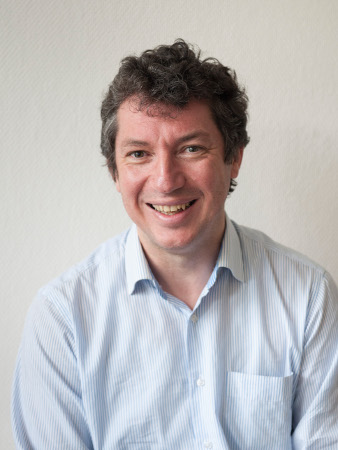
Hussain Syed Kazmi is an Assistant Professor at KU Leuven, affiliated with the Department of Electrical Engineering (ESAT) and the Faculty of Engineering Science. He serves as head of the Subdivisie EnergyVille Electa - Kazmi and is a member of EnergyVille and KIES (KU Leuven Institute for Energy and Society). His work focuses on energy systems innovation through data science and machine learning. Assistant Professor, Department of Electrical Engineering (ESAT) Head of Subdivisie EnergyVille Electa - Kazmi Member of EnergyVille and KIES Institute His research spans energy systems, machine learning, and building dynamics, with projects addressing electric vehicle smart charging, renewable energy forecasting, grid stability analysis, and climate-resilient building design. Publications emphasize interpretable AI, physics-informed modeling, and energy flexibility quantification. Recent projects include: Physics-infoRmEd: Data-driven control for building energy demand Esurrogates: Climate resilience and energy efficiency co-optimization FlexIQ: User flexibility in distribution networks Kazmi teaches courses such as Capita Selecta Data Science for Energy and Smart Distribution Systems, integrating his research into energy-focused academic training.
Wouter Verbeke is Professor of Decision Science at KU Leuven's Faculty of Economics and Business (FEB), where he directs the POC Doctoraatsprogramma Economie en Bedrijfswetenschappen and chairs the Doctoral Committee. He is a core member of Leuven.AI and leads the Information Systems Engineering Research Group (LIRIS), focusing on data-driven business decision-making. His research spans causal machine learning, uplift modeling, and cost-sensitive learning with applications in fraud detection, credit risk, operations management, and pricing. Verbeke pioneers decision-centric frameworks that optimize business outcomes rather than purely predictive accuracy, emphasizing causal inference for resource allocation and fairness in algorithmic decision systems. Analysis of his recent publications reveals a strong trend toward graph-based anti-fraud systems (particularly for AML/smurfing detection), interpretable causal machine learning in finance, and HR analytics using process mining. His work increasingly integrates fairness considerations into operational decision systems while advancing theoretical foundations of treatment effect estimation under network interference. Scientific awards: EURO award for best article in European Journal of Operational Research (Innovative Applications of O.R.) (2014) Verbeke actively supervises doctoral candidates including S. De Vos and M. Reusens, with research funded through major grants like ANUBIS (Aligned oNline and multilevel User and entity Behavior) and prescriptive analytics projects for intelligent organizations. He serves on editorial boards of Decision Support Systems, Business Information Systems Engineering, and INFORMS Journal on Data Science. As leader of the LIRIS research group within FEB, he drives interdisciplinary collaborations between data science and business domains, maintaining strong industry partnerships for real-world validation of fraud analytics, credit risk, and operational decision systems.
Katrien Antonio is a **full professor** in actuarial science and insurance analytics at **KU Leuven** and holds a **part-time professorship** in actuarial data science at the University of Amsterdam. She leads the **Insurance Research Group** and chairs the **Department of Accountancy, Finance and Insurance** within the **Faculty of Economics and Business (FEB)**. Her roles include directing the LRISK research center and overseeing education commissions at KU Leuven’s Leuven and Kortrijk campuses. **Research Interests**: Insurance analytics, data science, predictive modeling in insurance, actuarial science, and sustainable finance. Key projects include designing inclusive insurance products, compliant actuarial models, and risk analytics for societal impact. **Publications**: Her recent work focuses on environmental impacts on mortality, neural networks for insurance pricing, fraud detection, and IoT-driven maintenance risk assessment. She has published in top journals like *Journal of the Royal Statistical Society*, *North American Actuarial Journal*, and *European Journal of Operational Research*. **Education**: PhD in Mathematics (KU Leuven, 2007), with prior degrees in Mathematics from the same institution. Extensive teaching experience across higher education, emphasizing data-driven insights and innovative materials. **Grants & Projects**: Leads initiatives such as the “Actuaries and STatisticians” project (2022–2025) and “VALERIA” (2021–2024), focusing on emerging risks and sustainable finance. **Labs & Teams**: Directs the LRISK center, fostering interdisciplinary collaboration in risk analysis. Active in academic networks, including IMAC and the Faculty Board of Economics and Business.
Andres Algaba is a Part-time Professor in econometrics and mathematics for business and economics at Vrije Universiteit Brussel (VUB), where he also serves as an FWO Postdoctoral Researcher in Artificial Intelligence and Coordinator in Generative AI. He holds a joint PhD in Business Economics from VUB and Ghent University (2020), along with MSc (2015) and BSc (2014) degrees in Business Sciences from KU Leuven. His research focuses on: Fairness in machine learning and algorithmic decision-making Large language models and their scientific applications Generative AI and interpretability methods Science of science and bibliometric analysis Econometric modeling and sentiment analysis His publications demonstrate a strong evolution from econometric modeling (2020) toward cutting-edge AI fairness research and LLM analysis (2023-2025), with increasing focus on generative models and scientific disruption patterns. Awards: FWO Postdoctoral Fellowship Election to Young Academy Belgium (2024) Research Leadership: Principal investigator for Francqui Collen Start-Up Grants (2025-2028) focusing on generative AI and interpretability methods. Supervises multiple master's students in AI fairness and algorithmic bias. Affiliations: Member of Data Analytics Lab and Integrated Intelligence Lab at VUB, with frequent collaborations in national and international research networks focused on algorithmic transparency and AI ethics.
Joeri Lenaerts is a Researcher at Vrije Universiteit Brussel (VUB) in Belgium, affiliated with the Integrated Intelligence Lab. His work focuses on the intersection of Physics and Artificial Intelligence, particularly using neural networks to advance Nanophotonics and applying physical principles to enhance AI interpretability. Research interests include: Inverse design of nanophotonic components via deep learning Disentangled representations in β-VAEs Oscillatory loss landscapes in photonic design Physics-informed AI transparency His recent publications demonstrate trends in computational physics, AI-driven optical design, and interpretable machine learning. Scientific recognition includes the FWO Aspirant Mandate. Joeri teaches Advanced Mathematics for Business Economics at VUB, covering infinite sequences, differential equations, and Wolfram Language programming. He earned a Master in Physics from VUB (2020), conducted an Erasmus exchange at EPFL, and contributed to open-source projects like beta-VAE on GitHub.
Guy De Tré is an Associate Professor at the Department of Telecommunications and Information Processing within Ghent University's Faculty of Engineering and Architecture. He leads the Database, Document and Content Management (DDCM) research group and focuses on computational intelligence in information systems, with expertise in bi-polarity handling, uncertainty modeling, and multi-valued logic systems. Primary Affiliation: Ghent University Research Focus: Data quality, fuzzy querying, spatio-temporal modeling Key Contributions: Foundational work in possibilistic databases and explainable AI His research combines theoretical and applied approaches to information management systems. Theoretical work includes: Bipolarity and uncertainty handling in databases Multi-valued logic frameworks Interval B-tree indexing for possibilistic data Applied research spans: NoSQL database optimization Decision support systems Contextualized machine learning 3D/4D modeling for geological resources Recent publications show increasing focus on explainable AI, with multiple works on contextualized support vector machine classification and orthographic similarity measures for graph-based data representations. His work bridges database theory with practical applications in data quality assessment, medical informatics, and cultural heritage projects like the Byzantine Book Epigrams database. Research Group: Leads the DDCM group at Ghent University, specializing in: Database management innovation Content modeling techniques Fuzzy logic implementations Temporal data indexing Intelligent information systems
Rudy De Winne is a Full Professor at the Université catholique de Louvain (UCLouvain) , affiliated with the Louvain School of Management (LSM) and the Louvain Institute of Data Analysis and Modeling in economics and statistics (LIDAM) . His research focuses on behavioral finance , market microstructure , and financial psychology , with a particular interest in retail investor behavior, liquidity provision, and the implications of negative interest rates. Department: Finance (inferred from affiliations) Email: rudy.dewinne@uclouvain.be Address: LSM - Building B, M1.01.01, Chaussée de Binche 151, 7000 Mons De Winne’s recent work explores topics such as the disposition effect , robo-investing , and risk preferences under negative interest rates . His studies often use empirical methods to analyze trading behavior, market transparency, and the psychological factors influencing financial decisions. He has contributed to understanding high-frequency trading , hidden liquidity , and ETF market dynamics .
Jean Herveg is a Researcher at the LIS Department (CRIDS) within the Faculty of Law at the University of Namur . With a Doctorate in Law , his work focuses on legal frameworks for technology , particularly in eHealth , AI regulation , and data protection . He has contributed to 119 research outputs and collaborated on 12 projects since 1994. Education : Doctorate in Law, University of Namur Research interests span data privacy , medical device regulation , and ethical AI , with a strong emphasis on European Commission policy and UN Sustainable Development Goals (digital ethics, health equity). His INSPEX project (2017-2019) integrated smart spatial exploration systems with legal safeguards. Recent publications (2022) analyze AI regulation , collaborative energy management , and personal data protection in European law, reflecting his expertise in digital ethics and health informatics . He received the Les Etoiles de l'Europe Prize (2020) for his contributions to the H2020 INSPEX project and was recognized with the Study of the Month (2007) by the European Commission for his eHealth research. Scientific awards include "Les Etoiles de l'Europe" (2020) - French Ministry of Higher Education, Research and Innovation Study of the Month (2007) - European Commission (ICT for Health) Collaborations with institutions like the Académie Royale des Sciences de Belgique and projects such as TRUEDEV (trust in end-user devices) demonstrate his cross-disciplinary impact. His work aligns with SDGs related to responsible innovation and health data equity .
Prof. Dr. Max-Emanuel Geis is a distinguished Professor of Public Law at the Friedrich-Alexander University Erlangen-Nuremberg (FAU), where he has held a chair since the winter semester of 2002/03. He also serves as Director of the Research Centre for Science and Higher Education Law at FAU and holds significant administrative roles including Head of the Juridicum in Erlangen since 2013. Notably, he is a Member of the Bavarian Constitutional Court, having been re-elected in 2024, demonstrating his continued prominence in constitutional jurisprudence. His educational background includes studies in Augsburg and Freiburg, followed by a doctorate from the University of Regensburg in 1990 with the dissertation "Cultural State and Cultural Freedom: An Investigation of Ernst Rudolf Huber's Concept of the Cultural State from a Constitutional Perspective," for which he received the East Bavaria Cultural Prize. He completed his habilitation in Regensburg in 1994 on "Public support for social self-help – constitutional foundations and administrative law design," earning venia legendi in constitutional and administrative law, legal philosophy, and social law. Prof. Geis's research spans multiple dimensions of public law with particular emphasis on constitutional law, administrative law, and higher education law. His scholarly work demonstrates a consistent engagement with the relationship between state and culture, the constitutional foundations of academic freedom, and the legal frameworks governing public institutions. His recent publications reveal an increasing focus on interdisciplinary scientific reflection, AI in academia, and comparative constitutional responses to authoritarianism. His scholarship bridges theoretical legal analysis with practical implications for governance and public administration. His extensive publication record shows a clear evolution from foundational work on cultural constitutionalism to contemporary challenges in higher education governance, constitutional democracy protection, and spatial planning law. The breadth of his scholarship encompasses monographs, handbook contributions, encyclopedia entries, and numerous journal articles addressing both theoretical and applied aspects of public law. East Bavaria Cultural Prize for his dissertation Throughout his career, Prof. Geis has held numerous leadership positions including Dean of Research of the Faculty of Law (2014-2019), Vice Dean of the Faculty of Law and Economics (2011-2012), and various committee roles including Chairman of the Commission for Conflict Resolution in Scientific Workplaces (2003-2007). His external engagements include service on the Accreditation Committee of the German Council of Science and Humanities, Chairman of the Scientific Advisory Board of the German Research Institute for Public Administration, and membership on multiple evaluation committees. Prof. Geis leads the Research Centre for Science and Higher Education Law at FAU, which focuses on the legal frameworks governing academic institutions and research activities. His work with the FAU Competence Center for Interdisciplinary Scientific Reflection (of which he is Spokesperson since 2022) represents a significant institutional commitment to examining the ethical and governance dimensions of contemporary research practices.
Stephan Poelmans serves as an Assistant Professor at KU Leuven within the Faculty of Economics and Business (FEB). He is affiliated with the Information Systems Engineering Research Group (LIRIS), maintaining offices in both Brussels (Warmoesberg 26) and Leuven (Naamsestraat 69). His academic duties encompass teaching courses such as Business Process Management, ICT-Management, and Data Management, alongside conducting research in conceptual modeling and educational technology. His primary research areas include business process management, conceptual modeling education, and the development of e-learning methodologies. Poelmans investigates how token-based animations in BPMN can enhance novice modelers' comprehension and explores adaptive blended learning techniques to improve software engineering education. His work bridges theoretical modeling frameworks with practical educational applications, emphasizing empirical validation through user studies and learning analytics. Analysis of his recent publications (2023-2025) shows a concentrated effort on optimizing business process modeling education. Key themes include token animation for process model comprehension, ambiguity detection in user stories, and the application of explainable AI in learning analytics. His research increasingly integrates eye-tracking and anomaly detection to understand learner behavior, reflecting a multidisciplinary approach combining information systems, cognitive science, and educational technology. Stephan Poelmans has not been recognized with any scientific awards, fellowships, or major prizes as per the available information. As a promotor, Poelmans leads two significant research projects: "Doctoral Researcher in Information Management: Teaching Modelling Skills in the BPMN formalism" (2021-2025) and "Adaptive Blended learning effectiveness in teaching software engineering" (2019-2025). These projects focus on pedagogical innovation in information systems education, particularly for novice learners. Although specific student advisees are not listed, his role as promotor indicates active supervision of doctoral candidates. He operates within the LIRIS research group, which specializes in information systems engineering. His collaborative work extends to the Faculty of Economics and Business, where he participates in the Council and Campus Council for the Brussels Campus, contributing to academic governance and strategic initiatives.
Ashwinee Kumar serves as Scientific Employee at the Metajuridica research group within the Law, Science, Technology and Society (LSTS) department of Vrije Universiteit Brussel's Faculty of Law and Criminology. Concurrently, Kumar holds elected leadership as Co-coordinator of the European Society of International Law's Interest Group on International Health Law (2024-2028) and maintains active membership in ESIL. Research centers on technology-law-society intersections with emphasis on international health law , medical device cybersecurity , algorithmic governance , and blockchain regulation . Current projects address urgent gaps in digital health regulation including MDCG cybersecurity guidance implementation and WHO pandemic treaty frameworks. The work bridges technical specifications with legal requirements through translational research methodologies. Analysis of 14 publications (2019-2025) reveals consistent focus on operationalizing abstract principles into implementable frameworks, particularly in EU regulatory contexts. Recent outputs show growing emphasis on healthcare technology governance, with 2024-2025 works addressing real-time monitoring systems for medical device security and equitable digital health access. Kumar directs significant research initiatives including CYMEDSEC (focusing on LESoP aspects of medical cybersecurity) and contributes to LOCARD's blockchain forensics development. Current leadership in organizing the 2025 HELT Symposium and HALL-EKFZ Summer School demonstrates active project management and international collaboration. The 6-month OECD internship (2024) provided direct policy implementation experience. Based in VUB's Metajuridica group, Kumar operates within a dynamic interdisciplinary environment that connects legal scholars with computer scientists and public health experts. The research unit maintains active collaborations with EU institutions, WHO, and industry partners through projects like CYMEDSEC, with recent work influencing EU medical device cybersecurity standards and digital health equity frameworks.
Vero Vanden Abeele is an Associate Professor in Human-Computer Interaction at KU Leuven's Department of Computer Science (Faculty of Engineering Technology). Her research focuses on user experience design, health-focused gamification, and motivational design in healthcare technology. She co-founded TinkerList, a live media production tool with superior UX. Vero holds a master's in industrial design from the University of Antwerp and a PhD in Social Sciences from KU Leuven. Her work bridges HCI with healthcare applications, including VR rehabilitation systems (e.g., HEMIRehApp for neglect therapy), wearable sensor technologies for continence care, and explainable AI interfaces in health dashboards. She leads KU Leuven's Human-Computer Interaction group and collaborates with MINTlab and the e-Media Research Lab. Vero actively contributes to the games research community as a CHI PLAY steering committee member. Recent studies explore clinical decision support systems for digital biomarkers, algorithmic explanations in health apps, and gamified chronic pain management. Her research emphasizes human-centered design principles across medical, educational, and elderly care contexts. Affiliations: KU Leuven's Faculty of Engineering Technology, MINTlab, HCI@GroepT, e-Media Research Lab Key Projects: Glaucoma Easy Screener (GES), HEMIRehApp VR therapy system, TinkerList startup Methodological Focus: Mixed-methods research, participatory design, algorithmic transparency
Niels Van Dijk is a postdoctoral researcher at the Vrije Universiteit Brussel (VUB), affiliated with the Department of Law, Science, Technology & Society. His primary role is as a Researcher within the Metajuridica Contextual Research in Law group. He specializes in intersections of law, technology, and ethics, with a focus on data protection, AI governance, and EU legal frameworks. His research explores topics such as digital psychiatry, robotic autonomy, and privacy engineering. Van Dijk holds a PhD in Metajuridica Law from VUB (2013), supervised by Professors Serge Gutwirth and Mireille Hildebrandt. His work spans interdisciplinary collaborations, including projects like IOF3026 (Cybersecurity & Health) and Data4Food2030 (sustainable food systems). He has received the 2015 Dissertation Award for his thesis on intellectual rights and conflict-based legal approaches. Key research interests include AI ethics, EU data protection law, and the governance of emerging technologies. He has published extensively on topics like privacy by design, ethical reviews in scientific research, and the socio-legal implications of digital psychiatry. His grants include funding for projects on risk assessment methodologies and the integration of cognitive science into data protection law. Grants/Projects: IOF3026: Optimizing Legal and Ethical Use of Technologies for Cybersecurity & Health (2024–2028) FWOAL1099: Risk as a Subjective Phenomenon (2024–2027) Data4Food2030: Pathways for a Fair Data Economy (2022–2026) Van Dijk actively participates in international conferences and workshops, focusing on digital constitutionalism, posthuman legal theories, and interdisciplinary research ethics. His work bridges legal philosophy, technology studies, and policy design, contributing to debates on responsible innovation and regulatory frameworks for emerging technologies.
Tim Raats is an Associate Professor in Communication Sciences at Vrije Universiteit Brussel (VUB), specializing in media policy, public service broadcasting, and digital transformation in the media landscape. His research focuses on how traditional broadcasters navigate challenges posed by streaming platforms, examining regulatory frameworks, media policy, and strategic adaptations in the platform era. His research interests center on public service media in the digital age, with particular emphasis on video-on-demand services, platform regulation, media visibility, and the evolving relationship between public broadcasters and global streaming platforms. Raats investigates how broadcasters like VRT maintain relevance and fulfill public service mandates in competitive media markets dominated by services like Netflix and Disney+. His recent publications demonstrate a consistent focus on media policy implementation, prominence measures for public service content, and the strategic adaptations of European broadcasters. Raats employs both qualitative and quantitative methods to analyze media ecosystems, with particular attention to the Belgian and European contexts. His work shows strong engagement with current regulatory debates around due prominence and discoverability of public service media on digital platforms. Winner Best PhD Research Award (2011) Raats has supervised numerous students and leads multiple research projects examining the intersection of media policy, digital platforms, and public service broadcasting. His current research portfolio includes studies on viewpoint diversity in news recommenders, European public service media strategies, and the regulatory challenges facing broadcasters in the platform ecosystem. He frequently collaborates with researchers across Europe and engages with policymakers through presentations and media appearances. His work appears regularly in leading media studies journals, and he actively participates in academic conferences and public debates on media policy. Raats has established himself as a key researcher on media regulation and public service broadcasting in the digital age, particularly within the Belgian and European contexts.
Wendy Van den Broeck is a Professor at the Vrije Universiteit Brussel (VUB) in the Faculty of Communication Sciences, Department of Communication Sciences. Her work focuses on media innovation, digital youth work, data literacy, and the ethical implications of algorithmic systems. She leads strategic initiatives like the SRP-Onderzoekszwaartepunt on algorithm-driven media industries and coordinates EU-funded projects such as TransMIXR, exploring immersive media technologies. Education: Master's thesis on digital public broadcasting, supervised by Prof. Christophe Pauwels. Research interests span digital inclusion, VR evaluation, and prosumer dynamics in media. She has co-authored over 200 publications and secured grants totaling millions in funding for interdisciplinary projects. Current projects include SHALGO (2024-2028), focusing on algorithmic systems valorization. Recipient of the Jaarprijs voor Wetenschapscommunicatie (2020) and COST Action fellowship (2005). Her lab work involves designing participatory methods for digital youth engagement and developing data literacy frameworks. She advises on policy for digital inclusivity and chairs bodies like Speerpuntclusters Vlaanderen and NWO committees.