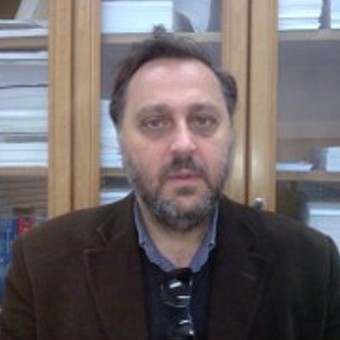
Simeon Papadopoulos is an Associate Professor at the Department of Accounting and Finance, University of Macedonia. His expertise lies in Banking, Corporate Finance, and Financial Markets, with a focus on Stock Markets and Risk Management. B.A. Economics, University of Macedonia (1987) M.A. Economics, Concordia University (1989) Ph.D. Banking and Finance, Bangor University (1996) His research explores capital structure theories (Trade-off vs. Pecking Order), banking efficiency, precious metals volatility, and financial stability in emerging markets. Publications span peer-reviewed journals and conferences, emphasizing cross-border comparative studies in banking systems. Teaching includes courses on Bank Management, Corporate Finance, and Financial Markets for both undergraduate and postgraduate programs. He has supervised doctoral theses and mentored students in financial research.
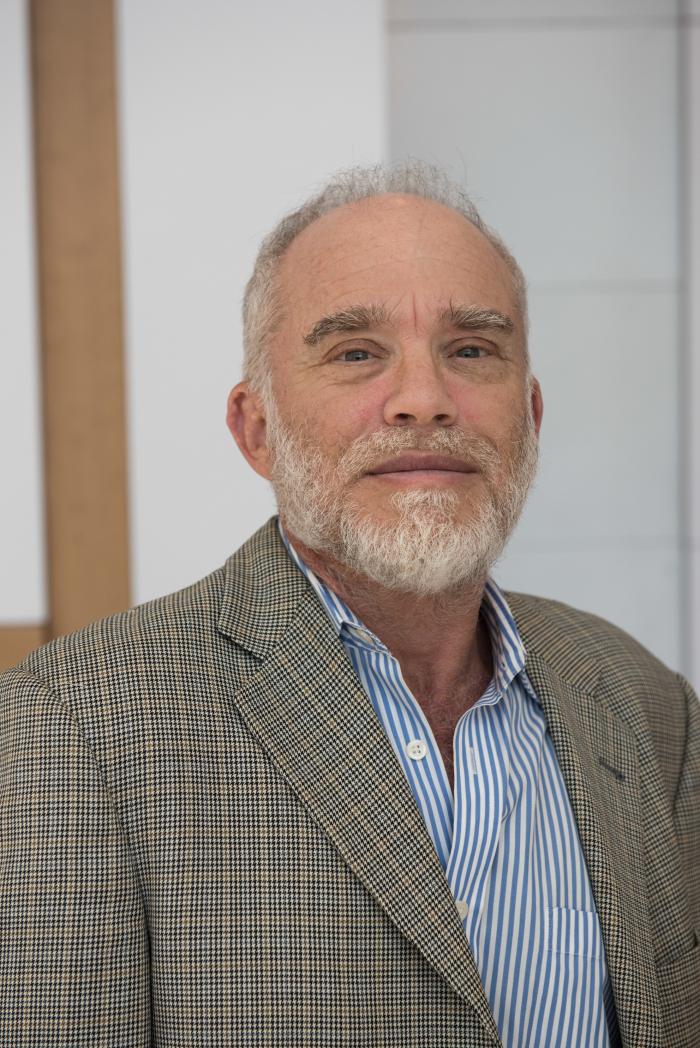
Evangelos Ioannidis is an Associate Professor at the Department of Statistics, School of Informatics and Statistics, Athens University of Economics and Business. Born in 1962, he holds a Mathematics PhD from the University of Heidelberg (1993) and has served in his current department since 1999, progressing from Lecturer (1999) to Assistant Professor (2007) and Associate Professor (2023). His expertise spans spectral analysis of time series , cointegration methods , and bootstrap applications in economic data analysis, with additional focus on Official Statistics and sampling techniques . University of Heidelberg: MMath (1987), PhD (1993) Researcher, University of Heidelberg (1987-1991) Visiting Researcher, University of Orsay, Paris Sud (1992-1993) OECD, Paris (1994-1998) National Institute of Labour (1999) His scientific contributions focus on time series econometrics, VAR model spectra, and R&D expenditure analysis. Recent work includes non-parametric spectral estimation and risk-based sampling methodology. He has collaborated with Eurostat on statistical projects (2012-2014). Current affiliations include the Athens University of Economics and Business , where he teaches and conducts research on economic time series analysis and statistical methods.
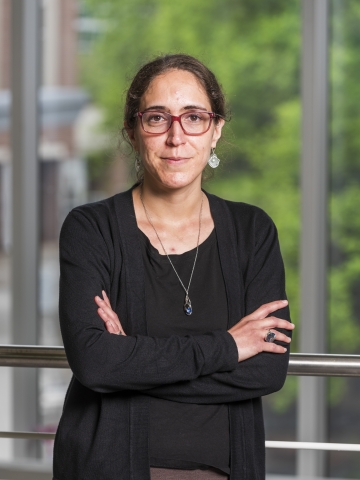
Trisha Rajput is an Assistant Professor at the School of Business, Economics and Law , University of Gothenburg , where she teaches international trade law to both law and management students. Her research focuses on international economic law, with particular emphasis on trade facilitation, global value chains and the intersection of law and digital technology in international commerce. Education Doctor of Laws (PhD), University of Leeds, UK – thesis on WTO coordination with non-WTO regimes in public international law. LL.M. in European and International Business Law, University of Leeds, UK. LL.B., India – prior lecturing experience at Rajiv Gandhi National University of Law. Research Interests Dr Rajput’s work lies at the nexus of international trade law , public international law and emerging digital technologies . Current projects investigate how digital infrastructures—ranging from AI-based transport systems to blockchain-enabled single-window environments—can enhance supply-chain finance for SMEs along the China-Europe railway corridors. Her scholarship also critically examines normative conflicts between WTO rules and other specialist international regimes. Publications Overview Spanning 2013-2024, her publications reveal a consistent focus on (i) trade-facilitation mechanisms (single-window reforms, paperless trade initiatives), (ii) regulation of risk in multimodal transport, and (iii) technology governance such as AI transparency in customs and blockchain adoption in export-oriented firms. Collaborative work with scholars from law, logistics and management disciplines underlines an interdisciplinary approach. Research Funding & Projects European Union funded project on trade facilitation and global value chains. Principal investigator, “Role of Digital Infrastructures in Financing SMEs” (2019-2022). Co-investigator, “Transition to AI-based Transport Systems” (2020-2021). Contact & Location Room C620, Department of Law, Vasagatan 1, SE-411 24 Göteborg, Sweden. Email: trisha.rajput@law.gu.se
Chiara Cortinovis is a Researcher at the Department of Civil, Environmental and Mechanical Engineering, University of Trento. Her work focuses on urban planning, ecosystem services, and climate adaptation, integrating Geographic Information Systems (GIS) and Strategic Environmental Assessment (SEA) into sustainable development frameworks. Current research emphasizes nature-based solutions, urban green infrastructure, and spatial databases for territorial planning. Recent publications analyze ecosystem service hotspots, geodesign methodologies, and policy instruments for sustainable peri-urban landscapes. Teaches Introduction to Urban Planning and Ecological Land Planning Specializes in GIS applications, environmental sustainability, and urban-climate resilience
Robert J. Weiner is Professor of International Business, Public Policy and Public Administration, and International Affairs at George Washington University School of Business. He serves as Director of the Master of Science in International Business (MSIB) program and Faculty Director of the Center for International Business Education and Research (CIBER). He holds affiliate appointments at the Elliott School of International Affairs' Institute for International Economic Policy, Institute for Middle East Studies, Institute for Security and Conflict Studies, and Sigur Center for Asian Studies. His educational background includes a Ph.D. (1986), M.A. (1982), and B.A. (1979) from Harvard University. Prior to academia, he worked as an energy and environment consultant at ICF Inc. Professor Weiner's research centers on energy security and petroleum markets, with specific focus areas including: Resource nationalism and political risk in energy sectors Oil market turbulence and speculation dynamics State-owned enterprises and sovereign wealth funds Corruption in energy trade (notably UN Oil-for-Food Program) US-China competition for oil resources Foreign investment in petroleum industries His publication portfolio spans top journals including Journal of International Business Studies, Strategic Management Journal, and Accounting, Organizations and Society. His scientific recognition includes: Tucker and Dean's Scholarships for research excellence Gilbert White Fellowship at Resources for the Future Research awards from NSF, Québec government, and Columbia Center Professor Weiner maintains significant policy engagement through congressional testimony (U.S. House Small Business Subcommittee 2011, UK Treasury Select Committee 2008), UN advisory roles (UNCTAD Eminent Person on Commodities 2003), and extensive consulting for major oil companies (Amoco, Mobil, Phillips, Texaco), exchanges (NYMEX, IPE), and international institutions (World Bank, U.S. DOE). He has directed the International Business Department (2001-2005, 2013-2016) and Elliott School's MA in International Trade and Investment Policy (2016-2018). His institutional leadership extends to CIBER (Center for International Business Education and Research) and multiple Elliott School research institutes, where he contributes to energy policy analysis and international business education through study abroad programs and executive education initiatives.
Leila Rafi is an adjunct professor at Toronto Metropolitan University’s Alexander Lincoln School of Law, where she teaches an introductory securities regulations course. She previously taught at Queen’s University Faculty of Law and the University of Windsor and Western Ontario law schools. Adjunct Professor, Toronto Metropolitan University (current) Former adjunct faculty, Queen’s University, University of Windsor, University of Western Ontario Her research and professional focus includes securities law, corporate governance, investment funds, and psychedelics industry regulation. She has advised on major M&A transactions, regulatory compliance, and legislative modernization projects. Recent publications and speaking engagements highlight her expertise in capital market trends, regulatory technology, and ESG reporting. She has received numerous awards, including recognition in Best Lawyers in Canada (2022–2025), Lexpert directories, and Canadian Lawyer’s Top 25 Most Influential Lawyers (2022). 2025: Recognized in Lexpert Special Edition on Finance and M&A Guide 2024: Lexpert “Consistently Recommended Lawyer” 2023: Lexpert “Leading Finance and M&A Lawyer” 2022: Canadian Lawyer’s Top 25 Most Influential Lawyers Leila mentors through the University of Toronto Women’s Association and serves on the Board of Directors for VersaFi (formerly Women in Capital Markets) and GEM (Girls E-Mentorship). She was called to the Ontario bar in 2006 and holds a JD from the University of Western Ontario (2005) and a BA from the University of British Columbia (2001).
Lynn Kamerlin is a Professor at the Georgia Institute of Technology and co-leads the Kamerlin Laboratory, which operates across Georgia Tech and Lund University. Her work integrates computational chemistry and biophysics to address fundamental questions in enzyme evolution, catalysis, and protein design. Education MNatSc in Chemistry, University of Birmingham (UK) PhD in Chemistry, University of Birmingham (UK) Her research spans computational biophysics , focusing on mechanistic biochemistry , protein evolution , and enzyme engineering . Key methodologies include machine learning , molecular dynamics simulations , EVB/QM/MM modeling , and natural language models for protein structure prediction. Recent publications highlight trends in AI-driven enzyme design , conformational dynamics , and mechanistic studies of phosphoryl transfer reactions . Tools like WatCon and Q-RepEx demonstrate her commitment to method development in computational biology. Scientific Awards Georgia Research Alliance Eminent Scholar (2022-Present) Wallenberg Scholar (2020-2024) ERC Starting Grant (2012-2017) Wallenberg Academy Fellowship (2014-2019, prolonged 2019-2024) Young Academy of Europe Chair (2014-2015) Fellow of the Royal Society of Chemistry (2017) Her lab collaborates with experimental groups worldwide, leveraging enhanced sampling techniques and structural bioinformatics to engineer enzymes with tailored properties. Grants from the Swedish Research Council and European Research Council underpin her research on enzyme evolution and catalytic mechanisms. Current projects include computational design of thermostable enzymes , allosteric modulators for biomedical targets, and modular protein scaffolds . The lab also investigates non-canonical amino acid incorporation and FAIR data principles in biomolecular simulations.
Janis Witte serves as a Research Associate at the Chair of Business Administration, specializing in Marketing, within the Faculty of Business Administration and Economics at Heinrich Heine University Düsseldorf. Employed since December 2020, he contributes to the faculty's reputation for diverse specializations and innovative teaching that blends traditional lectures with digital elements and practical tutorials. Education: Dual Bachelor of Business Administration with Marketing focus (2015-2018) at Hochschule Osnabrück, featuring integrated vocational training in trade marketing at a consumer goods company. Master of Technology-oriented Management (2018-2020) at Technische Universität Braunschweig, specializing in Marketing, Service Management, and Law, with concurrent roles as student assistant at a service management chair and working student at Volkswagen Financial Services AG. His research centers on ethical challenges in digital environments, particularly analyzing dark patterns and user manipulation techniques in online interfaces. Current projects investigate how deceptive design practices influence consumer behavior, measure perceived manipulation, and explore trust dynamics in human-AI systems. This work bridges marketing theory with practical implications for digital ethics and regulatory compliance. Publication trends from 2022-2024 reveal escalating focus on dark patterns' societal impact, evolving from foundational definitions to empirical consequence analysis and human oversight in algorithmic systems. His interdisciplinary output spans marketing, information systems, and consumer psychology venues, demonstrating methodological rigor in measuring manipulation effects while addressing urgent digital marketplace concerns. As part of Prof. Peter Kenning's research team, Witte leverages Düsseldorf's strategic location near major corporations and cultural institutions. The faculty's extensive doctoral community fosters cross-disciplinary collaboration, enriching his work on digital consumer behavior through connections with economics, computer science, and business ethics scholars.
Maurice van Keulen is an Associate Professor affiliated with the University of Twente's research institutes including Datamanagement & Biometrics, Digital Society Institute, and TechMed Centre. His multidisciplinary work bridges computer science, healthcare, and social systems. Research Focus: Van Keulen specializes in artificial intelligence applications with emphasis on: Data management (quality, integration, probabilistic databases) Explainable AI and interpretable machine learning models Healthcare informatics (cancer prediction, medical imaging, outcome analysis) Natural language processing and social media analytics His recent work explores dynamic sparse training, meta-learning for data imputation, and ethical AI frameworks. Publication Trends: Recent articles (2023-2025) show strong focus on: Interpretable AI methods in healthcare diagnostics Robust machine learning under data corruption Meta-learning approaches for data preprocessing 3D medical imaging and reconstruction techniques Awards: Beste paper award (2018) for work on probabilistic data conditioning Supervision & Activities: Has supervised 14 research projects and serves on executive boards including EDBT (Extending DataBase Technology) and IFIP WG 2.6. Leads research on ethical dimensions of AI systems.
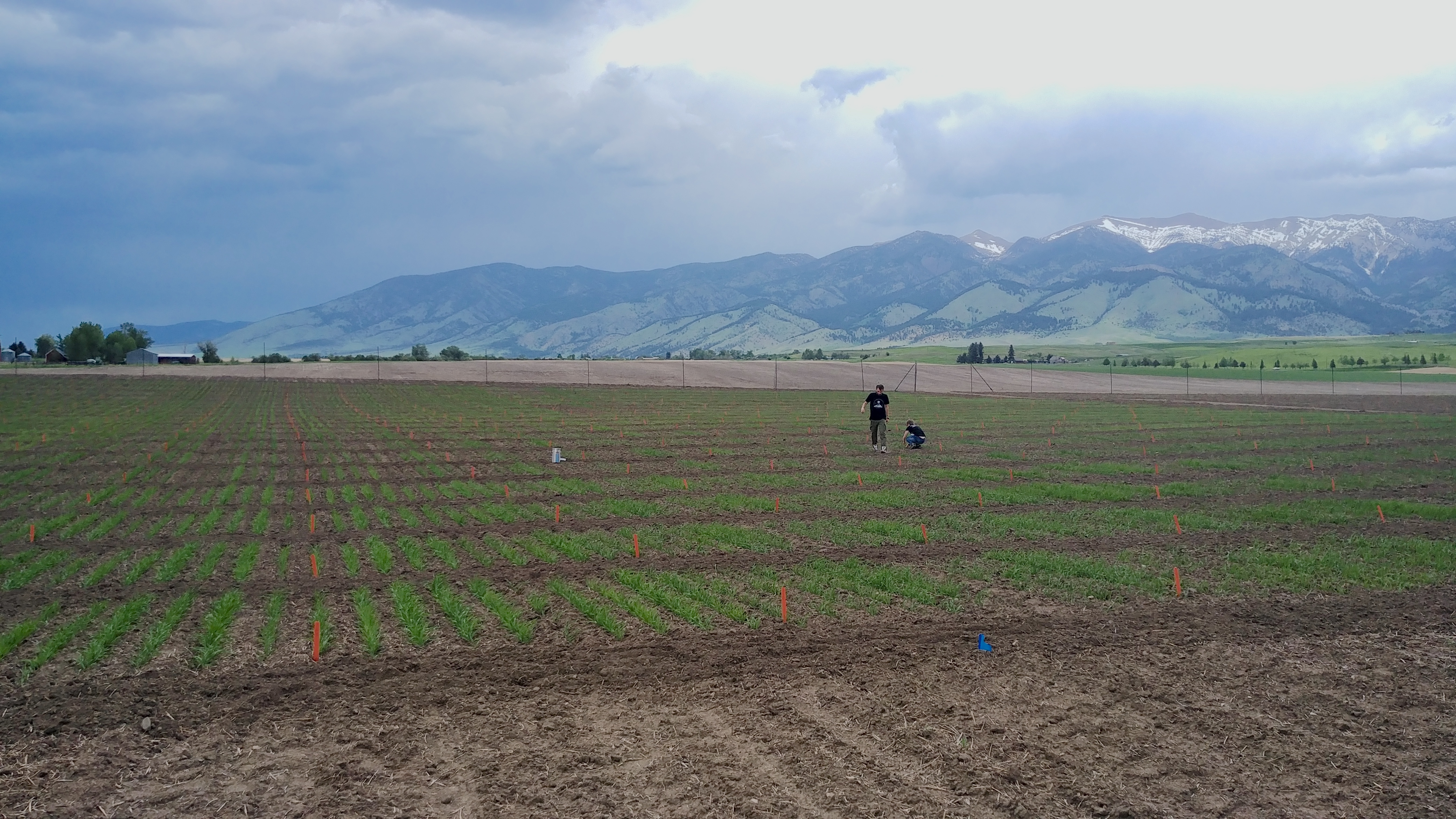
Jennifer Lachowiec serves as Associate Professor in the Department of Plant Sciences and Plant Pathology at Montana State University's College of Agriculture. Her research program focuses on understanding genetic robustness in plants through interdisciplinary approaches spanning quantitative genetics, genomics, and molecular biology. She teaches foundational courses in biometry and research design while leading a technology-driven laboratory that utilizes unoccupied aerial systems for large-scale phenotyping. Educational background: Ph.D. in Molecular and Cellular Biology, University of Washington (2014) B.S. in Genetics and Anthropology, University of Wisconsin - Madison (2008) Her research centers on predicting phenotypes from genetic sequences with emphasis on plant robustness—the capacity to maintain phenotypes despite genetic mutations and environmental fluctuations. The Lachowiec Lab integrates quantitative genetics, molecular biology, and evolutionary approaches to study gene regulatory networks and genetic interactions. A key innovation involves deploying UAVs and automated imaging systems to quantify robustness across plant populations, enabling high-throughput analysis of crop resiliency traits. This work bridges fundamental genetic mechanisms with practical agricultural applications for developing climate-resilient crops. Recent publications (2022-2025) reveal consistent focus on UAV-based phenotyping, polyploid genomics, and crop stress adaptation. Key trends include development of robust phenomic databases, genetic dissection of barley malting traits, herbicide resistance mechanisms in aquatic weeds, and metabolic responses to environmental stress. The work demonstrates strong translational impact through USDA-funded projects addressing nitrogen-efficient camelina production and heat stress tolerance in cereal crops. Scientific recognition includes: Nominated for USDA Teaching Award (2023) Phi Kappa Phi Anna K. Fridley Award (2023) College of Agriculture Teaching Award of Merit (2023) Transformative Teaching Award (2022) Open Education Resources Adoption Award (2021) Research is supported by multiple USDA NIFA and DOE grants including 'Enhancing Camelina Oilseed Production with Minimum Nitrogen Fertilization,' 'Uncovering developmental mechanisms to sustain grain number during heat stress,' and 'Genetic controls for crop microbiome recruitment.' Dr. Lachowiec serves on the North American Plant Phenotyping Network DEI Committee and has organized outreach events including MSU Family Science Day. Her laboratory, located in the Plant Bioscience Building on traditional Amskapii Pikani, Apsaalooke, Tsétsêhéstâhese, and Seliš lands, maintains specialized facilities for UAV-based phenotyping and growth room imaging systems to advance plant robustness research.
David Wright is an Associate Professor and Director of Graduate Studies at the Centre for Cultural and Media Policy Studies within the School of Creative Arts, Performance and Visual Cultures at the University of Warwick. He joined Warwick in 2008 and the Centre in 2009 after completing five years of post-doctoral research with the ESRC's Centre for Research into Socio-Cultural Change (CRESC) at the Open University. His PhD from the University of Nottingham in 2004 focused on work in the UK retail book trade. His research spans cultural policy, creative industries, and the memorialization of popular culture, with particular focus on statues and monuments to comedians and musicians. He has contributed significantly to understanding how digital technologies transform cultural policy and the future of creative work. His monograph Celebrity and Public Art: Memorialising Popular Culture is under preparation with Liverpool University Press, following his earlier work Understanding Cultural Taste (2015). Wright has been actively involved in major research projects including the evaluation of Coventry UK City of Culture 2021, special issues of Arts and the Market on Evaluating Cities of Culture, and a UKRI Policy Support Fund project on cultural devolution in the UK. His research often examines the relationship between universities and broader cultural ecosystems. He teaches across MA programs including Global Media and Communication (which he co-founded in 2010), International Cultural Policy and Management, Creative and Media Enterprises, and the BA in Media and Creative Industries. His teaching includes modules on Working in the Cultural and Creative Industries and The Mediated Self. Director of Graduate Studies at Centre for Cultural and Media Policy Studies Co-founded MA in Global Media and Communication (2010) Coordinated Work-in-Progress seminars for PhD students Regular contributor to multiple MA programs at Warwick Wright has received research funding from UKRI's Policy Support Fund and has collaborated with numerous academic and creative sector partners including Culture Commons. His work bridges academic research with practical cultural policy applications, particularly in local and regional contexts.
Baishakhi Ray is an Associate Professor of Computer Science at Columbia University, working at the intersection of AI, Software Engineering, and Security. She received her Ph.D. from the University of Texas, Austin, and has established herself as a leading researcher in applying artificial intelligence to software engineering challenges. Her educational background includes a Ph.D. from the University of Texas, Austin, which provided the foundation for her research career at the forefront of AI and software engineering. Dr. Ray's research focuses on leveraging artificial intelligence to solve fundamental challenges in software engineering and security. Her work spans multiple areas including code generation with large language models, vulnerability detection, software testing, and program analysis. She has pioneered approaches that combine deep learning with traditional software engineering techniques to create more robust, secure, and efficient software development processes. Her research has practical implications for improving code quality, enhancing software security, and accelerating development cycles through AI assistance. Her recent work demonstrates a strong emphasis on semantic-aware code generation, execution reasoning, and addressing hallucinations in code language models. She has also made significant contributions to evaluating the functionality and security of AI-generated code, identifying critical challenges in the practical adoption of AI for software development. Dr. Ray has received numerous prestigious awards recognizing her contributions to the field: IEEE TCSE Rising Star NSF CAREER award IBM faculty award VMware Faculty award Distinguished Paper awards at FSE'17, ASE'22, and ISSTA'23 ICSME Most Influential Paper award Publications featured in CACM Research Highlights As an Amazon Visiting Academic and active participant in major software engineering conferences, Dr. Ray has established herself as a thought leader in AI for software engineering. Her research has been widely covered in trade media, indicating its relevance and impact on industry practices. She has mentored numerous students through their research and has been instrumental in shaping the next generation of researchers in this interdisciplinary field. Her work demonstrates a consistent focus on bridging theoretical advances with practical applications, ensuring that her research has tangible benefits for the software development community. The trajectory of her publications shows an evolving research agenda that has successfully adapted to the rapidly changing landscape of AI and its applications to software engineering.
Dr. GOH Khim Yong is an Associate Professor and Head of the Department of Information Systems and Analytics at the National University of Singapore (NUS School of Computing). He holds a Ph.D. in Business Administration (University of Chicago), M.Sc. and B.Sc. in Computer & Information Sciences (NUS). His research focuses on digital media marketing, social/mobile platforms, AI pricing strategies, and econometric methods. He advises major firms like Alibaba, Lazada, and Johnson & Johnson across industries such as e-commerce, healthcare, and retailing. Educations: Ph.D., Business Administration, University of Chicago (2005) M.Sc., Computer & Information Sciences, NUS (1998) B.Sc., Computer & Information Sciences, NUS (1997, First-Class Honours) His research explores digital transformation, AI-driven pricing, live-streaming commerce, and consumer behavior in platform ecosystems. Notable projects include studying AI pricing agents' impact on e-commerce sales and analyzing live-streaming dynamics' socio-economic effects. He has published in top journals like Management Science and Information Systems Research , and his work frequently addresses practical industry challenges. Recipient of prestigious awards including the International Conference on Information Systems Best Paper Award (2022) and AIS Distinguished Member (2021). He teaches courses in econometrics and data analytics across NUS and the University of Chicago. His former Ph.D. students hold faculty positions at institutions like Tsinghua University and the Chinese University of Hong Kong (Shenzhen).
Professor Petko Kalev is an Adjunct Professor in the Department of Accounting & Data Analytics at La Trobe University Business School. He has held academic roles including Professor of Finance at the University of South Australia (2010–2017) and Senior Lecturer/Lecturer at Monash University (1999–2010). He obtained a PhD in Financial Econometrics from Monash University (2002), an MSc in Statistics from the University of Melbourne (1994), and a B.Sc. in Mathematics from the University of Plovdiv (1982). His research focuses on Asset Pricing, Market Microstructure, Corporate Finance, Quantitative Finance, and Behavioural & Experimental Finance. Notably, he is recognized for contributions in market microstructure, including studies on asymmetric information, informed trading, and volatility modeling. Recent publications explore retail trader behavior, algorithmic trading dynamics, and carbon risk management in financial markets. He has secured research funding, including the 2020–2021 grant on stochastic variance-covariance risk in commodity and forex markets. His work frequently addresses topics like price discovery, market efficiency, and the impact of institutional vs. individual investor actions in turbulent markets. Key research trends in his articles include analyzing post-trade behaviors, lifecycle events' financial impacts, and the interplay between algorithmic trading and market volatility. His contributions bridge empirical finance with practical market mechanisms, emphasizing policy implications for market design and regulation.
Mehdi Toloo is a Reader in Business Analytics at the University of Surrey's Surrey Business School. He holds a BSc, MSc, and PhD, and is a docent. Previously, he was a Professor at Technical University of Ostrava (Czech Republic) and Sultan Qaboos University (Oman). His research focuses on Business Analytics, Operations Research, Data Envelopment Analysis (DEA), and Decision Analysis. He has supervised over 40 postgraduate students and contributed to top-tier journals like European Journal of Operational Research and Omega. He is an editor for journals including Computers & Industrial Engineering and Decision Analytics. Recognized globally, he ranks in the top 2% of scientists worldwide in Business Analytics & Operations Research (2020-2024). His research projects include performance evaluation with unclassified factors, economies of scope in network DEA, and selective measures in DEA. He collaborates internationally on projects like robust optimization and supply chain sustainability. His teaching spans undergraduate courses in Operations Research, Mathematics for Business, and Programming, alongside postgraduate modules on Quantitative Methods and Advanced DEA. His work bridges theoretical and applied research, with applications in healthcare, renewable energy, and public policy.