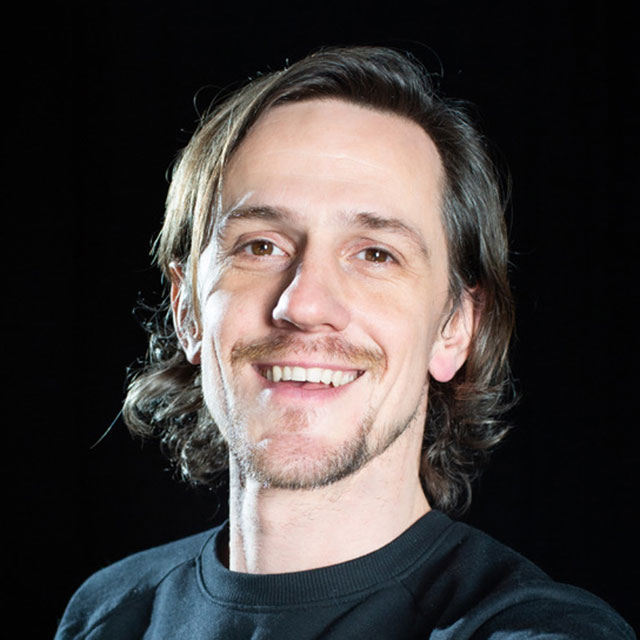
Neil Nicholson is a Professor of the Practice in the Department of Mathematics at the University of Notre Dame, part of the College of Science. He holds a B.A. from Lake Forest College (2002) and a Ph.D. from the University of Iowa (2007). His research focuses on collaborative undergraduate projects across diverse mathematical fields, with primary interests in topology (knot theory, knot invariants, and piecewise linear knots) and secondary interests in algorithmic music writing, graph theory, computational geometry, and math education. He has published works in mathematics education and interdisciplinary journals, including a textbook on proof techniques and studies on service-learning impacts. Nicholson advises undergraduate research in areas bridging pure mathematics and applied computational methods. His office is located in 146 Hayes-Healy Bldg.
Aura Satz is a Visiting Professor at the School of Arts & Humanities, Royal College of Art , with expertise in Critical Practice and Art & Curating. Her work spans film, sound, performance and sculpture with focus on distributed voice and listening strategies. Visiting Artist, School of the Arts Institute of Chicago (2021-2025) Lectured at London Consortium, Goldsmith's College and Slade School of Fine Art Research focuses on: History of sound technology and resistance to standardization Gender roles in WWII ballistic research and computing Emergency sirens as metaphor for societal alarm fatigue Interdisciplinary collaborations with astrophysics and medical research Recent article trends show: 2023-2025 works on warning systems and emergency sound Long-term exploration of sound notation and technological history Scientific Awards: CPH Dox NEW:VISION Award (2024) St. Moritz Art Film Festival Best Feature (2024) Shortlisted at multiple international festivals (2015-2025) Key collaborations include: Warning Research Centre at UCL Nuclear Consulting Group Harvard Centre for Astrophysics Research partnerships with EMPAC and Sonic Acts
Dr Stace Constantinou is a Senior Lecturer in Popular Music and Programme Leader for the Popular Music course at the University of Northampton, affiliated with the Centre for Cultural and Literary Studies within the Culture school. He holds a PhD from Kingston University and is actively engaged in creative research, supervision, and public engagement. PhD, Processes of creative patterning: a compositional approach, Kingston University (2015) His research centers on the intersection of music, technology, and artificial intelligence. He explores AI through programmatic electronic music, develops analytical tools for popular song, and investigates the adaptation of mathematical symmetry into digital signal processing. His creative work emphasizes spatial sound, immersive performance, and the materiality of the audio-object within DAW environments. Key themes include musical creativity, novelty, patterns, and the philosophical implications of AI in music. His recent creative outputs form a thematic arc exploring AI, rebellion, and human identity, most notably through The SAPIAN Trilogy and Rebel-Misfit . These works blend electronic composition with narrative depth, often inspired by thinkers like Zylinska, Bostrom, and Kurzweil. His publications and compositions reflect a consistent focus on sound as a medium for knowledge exchange and conceptual exploration. His scientific recognition includes the Ricordi Prize for Best Composition and the Schillinger Composition Prize. Ricordi Prize for Best Composition Schillinger Composition Prize He supervises two practice-based PhD students: Gemma Boaden, exploring hybrid voice practices for actors, and Michael W. Bell, researching experiential soundtracks using spatial audio technologies. He has secured internal funding for the LIPSY: Live Immersive Performance Soundscape project (2024–2025), demonstrating active grant involvement. His work extends to public engagement through podcasts, radio programs, and exhibitions with the Royal Society of Arts. Dr Constantinou is actively involved in a creative research lab focused on immersive and spatial sound, leading the LIPSY project. His work is inherently collaborative, involving partnerships with artists, film directors, and institutions like Resonance FM, Angel Studios, and The Podcast Company.
Dr David Jackson is a Senior Lecturer in Digital Visualisation at Manchester Metropolitan University's School of Digital Arts (SODA). As SODA Doctoral Student Lead and Research Degrees Coordinator, he explores the creative application of AI in narrative contexts, focusing on audience engagement, prosody in conversational agents, and parasocial dynamics. His work includes the Audience with a Hero project (Innovate UK-funded) and co-founding Algorithms for Marginalised People (AMP) , addressing AI biases through projects like Mood/Music . Research interests: His practice-led work bridges AI, digital storytelling, and immersive technologies. Key areas include conversational agent design, reparative approaches to algorithmic bias, transdisciplinary methodologies, and the psychological impact of voice-based interactions in VR environments. He investigates how prosodic features (tone, pitch, pace) affect audience perception of synthetic voices and the role of parasocial relationships in shaping interactions with digital personas. Scientific contributions: Notable works include the Storybox conversational agent framework and the D-PAF conversational storytelling methodology. His AHRC post-doctoral fellowship (2018) advanced techniques for integrating audience psychology into AI-driven narrative systems. Selected publications: Recent articles examine generative AI's cultural biases in creative education ( Brazilian Creative Industries Journal , 2023), speech-led VR documentaries ( XR-Metaverse Cases , 2023), and chatbot development for Shakespearean narratives ( Expert Systems with Applications , 2021). His 2026 book Listening In: How Audio Surveillance became Artificial Intelligence will explore surveillance technology's evolution.
Michael Betancourt is a Professor of Motion Media Design at Savannah College of Art and Design (SCAD), where he has held roles such as Interim Department Chair and Graduate Coordinator. His academic journey includes a Ph.D. in interdisciplinary studies from the University of Miami, an M.A. in film studies, and a B.A. in radio-TV-film from Temple University. He also served as an Adjunct Professor at Grand View College. His research focuses on semiotics, glitch art, digital capitalism, and the intersection of technology with visual media. He has authored numerous books, including Force Magnifier: The Cultural Impacts of Artificial Intelligence and Typography and Motion Graphics: The 'Reading-Image' . His work explores visual music, cinematic theory, and the philosophical implications of automation in art and society. Betancourt has received accolades such as SCAD's Presidential Fellowship and NEA grants. His exhibitions include works like Dancing Glitch and Cinema as a Modernist Conception . He actively contributes to organizations like the College Art Association and Society for Cinema and Media Studies. His grants include funding for projects like Resplendent Reconnaissance and Surveillance State . He has also curated exhibitions such as #AVLGlitch and Snap to Grid , showcasing his commitment to avant-garde digital art practices.
Sha Xin Wei is a Professor in the School of Arts, Media, and Engineering (AME) at Arizona State University (ASU), directing the Synthesis Center for responsive environments and improvisation. He also holds roles in the School of Complex Adaptive Systems, ASU-SFI Center for Biosocial Complex Systems, and is an Affiliated Faculty in English. His interdisciplinary work bridges art, philosophy, technology, and anthropology. Education: PhD in Mathematics, with research extending into experimental theater, political activism, and computational media. Key affiliations include the European Graduate School (Philosophy, Art, Critical Theory) and McGill University’s Building21 as a Senior Fellow. Research focuses on responsive environments, media choreography, and urban futures. Notable projects include TGarden (a responsive media space), Heat and Noise urban ecology studies, and investigations into indeterminacy in technology. He explores themes like socio-technical entanglements, material computation, and non-anthropocentric design. Labs/Initiatives: Directs the Synthesis atelier and co-founded the Topological Media Lab (Montreal). Collaborates with interdisciplinary teams on projects blending art and science. Active in grants and fellowships, including ASU-Santa Fe Institute collaborations and Global Futures Scientist designation.
Niels Penke is a researcher in the Department of German Studies at the University of Siegen, Faculty I. He completed his habilitation in Modern German Literature and General and Comparative Literature at the same institution, earning the Venia Legendi. He has held acting professorships at TU Dresden and FAU Erlangen-Nuremberg and is currently a Research Associate on the Volkswagen Foundation-funded project Eco-Folk . He is also a member of the Young Academy of the Academy of Sciences and Literature, Mainz. His research spans literary studies, popular culture, Scandinavian literature and film, ecocriticism, fantasy, and digital literature. Key interests include the transformations of the popular, literary media, Nordic myths, and the cultural poetics of nature. He has co-edited volumes on moor literature, generative literature, and depopularization, and authored a book on Danish film and Formations of the Popular . His recent publications reflect interdisciplinary trends in cultural and literary studies, with a focus on digital culture, ecological themes, and the evolution of popular forms. He has contributed to journals such as LiLi and Textpraxis , and engages with contemporary phenomena like Instapoetry and AI-generated literature. Scientific Awards: Dirlmeier Foundation Prize (2023) for habilitation thesis Future Prize of Research College Siegen (2018) Member, Young Academy of the Academy of Sciences and Literature Mainz (2020) Penke has advised and collaborated on multiple research projects and publications, including editorial and grant-funded work such as the Volkswagen Foundation project Eco-Folk and the Collaborative Research Center 1472 'Transformations of the Popular'. He has supervised academic teaching and research across Germany and abroad, including at Göttingen, Dresden, Erlangen, and Tartu. He is involved in the Cuts film podcast, contributes to public scholarship through media appearances, and organizes the Moor Literature Prize in collaboration with the Andrea von Braun Foundation. His academic network includes collaborations with Niels Werber, Matthias Schaffrick, and Joana van de Löcht.
Professor Emily Keightley is a leading scholar in Media and Memory Studies at Loughborough University, where she has held the position since 2007. Her academic journey includes a PhD from Loughborough University (2007) and a prestigious £1m Research Leadership Award from The Leverhulme Trust (2017–2022). She serves as editor for the journal Media, Culture & Society and co-founded the Global Media Studies Network. Her work bridges media studies with interdisciplinary themes of memory, migration, and postcolonialism. Key research focuses include the mediation of memory in everyday life, temporal structures of modernity, and the role of media in shaping individual and collective memory. She explores topics like diasporic heritage, gendered mnemonic experiences, and the intersection of migration and identity. Recent projects examine the Partition of British India’s legacy in South Asian diasporas and the impact of AI on power dynamics. Her publications span methodological innovations (e.g., embodied memory practices) and critical analyses of digital media’s role in nostalgia and cultural transmission. She critiques Western media theory through decolonial lenses and emphasizes creative methodologies in memory research. Awards and editorial roles reflect her global influence in shaping media and memory discourse. Emily’s work engages with transnational mnemonic encounters, digital disconnection, and the ethics of commemoration. She explores how media technologies mediate historical events, personal narratives, and cultural identities across diverse geographies and temporalities.
S. Sean Tu is a Professor at West Virginia University College of Law, where they contribute significantly to intellectual property law scholarship through the Law Faculty Scholarship program. Their research focuses on patent law with particular expertise in patent examination processes, examiner behavior, and statistical analysis of patent office operations. Their research interests span intellectual property law, patent law, artificial intelligence applications in legal contexts, pharmaceutical patents, and copyright law. Tu's work demonstrates sophisticated analysis of patent examiner metrics, litigation outcomes, and the impact of examiner interviews on patent prosecution efficiency. They've developed novel metrics like Office Actions per Grant Ratio (OGR) and examined gender disparities in pharmaceutical patent law. Analysis of Tu's publications reveals a strong trend toward empirical patent law research with increasing focus on AI applications in legal reasoning and copyright assessment. Their work bridges legal theory with practical patent office operations, particularly examining how examiner behavior affects patent quality and litigation outcomes. Recent publications show growing interest in pharmaceutical patent issues and AI's role in legal analysis. Tu actively contributes to legal education discussions, particularly regarding AI's impact on legal research and writing. Their scholarship demonstrates engagement with both theoretical legal frameworks and practical applications in patent examination and intellectual property enforcement.
Ben Houge is a Professor in the Electronic Production and Design (EPD) department at Berklee College of Music, where he has been teaching music technology since 2011. He also serves as a Senior Audio Lead at Bungie and previously held key audio roles at Sierra and Ubisoft. His work spans academia, game audio, digital art, and immersive multisensory experiences. Bachelor of Arts in Music, St. Olaf College (1996) Houge’s research and artistic practice focus on the intersection of music, technology, and sensory experience. He is best known for his food operas —multisensory dining events that use real-time, interactive soundtracks delivered via mobile devices. These projects apply video game audio techniques to everyday experiences, exploring cross-modal correspondences between taste and sound. His work often involves algorithmic composition, audience participation, and interdisciplinary collaboration with chefs, scientists, and musicians. His recent creative output includes large-scale installations and performances such as Night Rain , On the Sensations of Beer , and Mugaritz XX , which blend real-time audio, mobile technology, and cultural narratives. His publications and performances reflect a strong trend in interactive music systems , site-specific sound design , and audience-engaged art , often drawing from historical, poetic, and scientific sources. Selected awards and recognitions include: Faculty-Led Innovations in Education (FLY) Grant (2019) Berklee Newbury Comics Faculty Fellowship (2017) Knight Foundation Grant (2015) Artist Residency at MIT (2011) Shortlist, Guggenheim YouTube Play Biennial (2010) Stranger Genius Award (2004) Houge lectures widely at institutions such as MIT, Harvard, and the Shanghai Conservatory, and at major conferences including GDC, ICMC, and TEDx. He has advised and mentored students through academic and project-based learning, particularly in the areas of audio programming and interactive media. His work has been supported by grants from the Knight Foundation and Berklee, enabling large-scale public and collaborative art projects. He is actively involved in the global digital art and game audio communities, with exhibitions and performances across North America, Europe, and Asia. He has led initiatives such as the Vox Festival and the launch of Berklee’s master’s program in Valencia, Spain. His labs and creative teams often involve collaborations with ensembles like Zeitgeist, institutions like the Boston Symphony Orchestra, and research groups such as Oxford’s Crossmodal Research Laboratory.
Prof. Giovanni Tonon is a Full Professor at Vita-Salute San Raffaele University and holds key leadership roles including Director of the Center for Omics Sciences and Head of the Functional Genomics of Cancer Unit at the San Raffaele Scientific Institute in Milan, Italy. His academic journey includes a Medical Degree from the University of Padua (110/110 cum laude) and a PhD in Clinical Methodology from the University of Milan. He has held prestigious positions at institutions like Harvard Medical School and the NIH in the US. His research focuses on genomic and bioinformatics approaches to identify cancer-related genes/pathways, with particular emphasis on multiple myeloma and CAR T-cell therapies. He has pioneered studies on DNA damage responses in cancer and developed novel diagnostic/therapeutic technologies. His work integrates molecular oncology, epigenetics, and precision medicine. Prof. Tonon has secured major awards including the Leukemia & Lymphoma Society Special Fellow Award (2006-2009) and holds 7 patents related to cancer diagnostics and therapies. He actively contributes to teaching, leading courses in Molecular Oncology, Gene Expression Analysis, and Scientific Writing at San Raffaele University. His research group collaborates internationally, driving initiatives like the DigiONE federated learning system for precision oncology. Education: PhD in Clinical Methodology, University of Milan (2002) Medical Degree, University of Padua (1992) Music Professor Certification in Piano, Conservatory of Venice (1989) Key Roles: Director, Center for Omics Sciences (2016-present) Unit Head, Functional Genomics of Cancer (2008-present) Professor of Molecular Oncology (2008-2016) His lab focuses on translating genomic discoveries into clinical applications, with recent work advancing CAR T-cell therapies for colorectal cancer and developing federated learning systems for oncology research. He maintains active participation in doctoral programs in Neurocognitive Sciences and serves on institutional research committees.
Galia Kollectiv is a Senior Lecturer in Fine Art at Camberwell, Chelsea and Wimbledon Colleges of Arts, part of the University of the Arts London. She holds a PhD in Art from Goldsmiths College and teaches at multiple institutions including the University of Reading and Royal College of Art. Her work spans performance, film, and installation, focusing on labor organization, ideology in late capitalism, and avant-garde legacies. Research Interests: Art and Politics, Ideology, Immaterial Labour, Curating, and Performance Art Affiliations: Co-director of xero, kline & coma research institute; member of experimental band WE Key grants include the Creative Europe Programme and Sasakawa Foundation Award. Her 2023 book Subversive Performance in the Age of Human Capital explores performance as ideological critique. Notable exhibitions include Fossils (2023) and The Immigrants (2017), addressing global capital flows and border politics. Scientific Awards: Fellowship of the Higher Education Authority (FHEA, 2019) Grants: Over £2M secured from Arts Council England and EU initiatives Supervised 6 PhD/Master’s students in areas like spatial politics and labor studies. Her practice includes collaborative performances and curatorial projects, often blending art with socio-political commentary.
Todd Schack is an Associate Professor of Journalism and Media Studies at Ithaca College's Roy H Park School of Communications, where he also serves as Associate Director of the Park Center for Independent Media. His academic work focuses on the intersection of media, power, and social justice, with particular emphasis on independent media forms and critical approaches to journalism. Education: Professional Certificate in Online Teaching, University of Wisconsin-Madison (2013) Ph.D., Media Studies, University of Colorado at Boulder (2006) M.A., Communications, Colorado State University (1996) B.A., English, Creative Writing, Colorado State University (1992) Schack's research interests span multiple dimensions of contemporary media studies, with particular focus on independent media ecosystems, the historical evolution of literary journalism, and critical examinations of media representations related to the wars on terror and drugs. His work explores how social media platforms have become sites of political struggle, examining the weaponization of digital communication and its relationship to rising illiberal tendencies globally. Schack also investigates niche journalism forms including graphic non-fiction, comics journalism, and music journalism, analyzing how these formats challenge conventional journalistic paradigms through innovative narrative techniques and visual-verbal integration. Schack's recent publications reveal a consistent thematic trajectory examining media's role in shaping public understanding of complex social issues. His research demonstrates how media narratives construct meaning around drug policy, border politics, and social control mechanisms, often revealing tensions between journalistic objectivity and committed reporting. The scholarship shows particular attention to how marginalized voices and alternative media forms challenge dominant narratives, especially regarding international sex trafficking, opioid addiction, and the cultural production of war discourse. Schack has been an active participant in academic discourse, presenting his research at numerous international conferences across multiple continents. His recent work includes presentations on social media weaponization, literary journalism traditions, and the cultural production of drug war discourse. He has also engaged in scholarly exchange through visiting positions at the Institut Américan Universitaire in Aix-en-Provence, France. As an educator, Schack has developed curriculum in independent media studies, narrative journalism, journalism history, graphic non-fiction, and critical examinations of the cultural production surrounding the wars on drugs and terror. His teaching reflects his research interests, emphasizing critical media literacy and the historical context of contemporary media challenges.
Mireille Miller-Young is an Associate Professor in the Department of Feminist Studies at the University of California, Santa Barbara. Her work focuses on race, gender, and sexuality in US history, popular culture, and the sex industries. She holds affiliations with Film and Media Studies, Black Studies, History, and Comparative Literature departments. Dr. Miller-Young earned her PhD and MA from New York University and a BA from Emory University. Her research explores Black cultural studies, the history of sexuality, and pornography/sex work studies. Notable publications include A Taste for Brown Sugar: Black Women in Pornography (2014), which won major awards, and co-edited volumes like Black Sexual Economies (2019). She leads initiatives like the Black Sexuality Studies Collective and the New Sexualities Research Initiative at UCSB. Her recent work includes a visiting fellowship at the Institute for Cultural Inquiry Berlin for her upcoming book Hoe Theory , and projects such as The Black Erotic Archive and Sex Worker Oral History Project. Awards include the Sara A. Whaley Prize, John Hope Franklin Prize, and UCSB’s Distinguished Teaching Award. Dr. Miller-Young serves on editorial boards for Porn Studies and Signs , and her public engagement includes media contributions to The New York Times, Netflix’s Explained , and podcasts like Marketplace . Her interdisciplinary approach bridges academia, activism, and cultural critique.
Taylor Annabell is a postdoctoral researcher at Utrecht University School of Law, affiliated with the Molengraaff Institute for Private Law and the Governing the Digital Society focus area. She contributes to the ERC Starting Grant HUMANads project, collaborating across legal, computer science, and media studies disciplines to examine platform governance and creator economies. PhD from King’s College London MSc in Communication Studies from Auckland University of Technology Former Research Associate at University of Leeds and Sheffield Research Themes : Her work interrogates platform society , focusing on: Platform governance mechanisms Influencer monetization practices Digital memory work through Spotify/Instagram User-agent interactions with algorithmic systems Legal frameworks for platform accountability Discursive constructions in digital spaces Recent Publications : 2025 articles span TikTok monetization ethics, influencer labor rights, memory assemblages, and DSA compliance challenges. Earlier works (2019-2023) analyze postcolonial commemoration, pandemic memory practices, and digital cultural identity. Methodological Expertise : Employs ethnography, narrative inquiry, scroll-back methodology, and policy analysis. Collaborates with multidisciplinary teams across Europe, including ERC-funded researchers and EU Commission consultants.