Gerardo van Halsema is an Associate Professor in Water Resources Management at Wageningen University. His expertise focuses on sustainable water management, delta planning, and agricultural productivity. He has been actively involved in strategic delta planning initiatives in Bangladesh, Vietnam, and the Netherlands, emphasizing ecosystem services and adaptive governance. His research interests span climate change adaptation, irrigation systems, and water policy reform. Notable projects include analyzing water distribution networks in Spain and exploring transformative changes in Jordan’s water systems. He has supervised multiple PhD candidates, including Shahid R. and Urfels A., focusing on topics like rice-wheat systems and urban delta dynamics. Van Halsema frequently engages in public discourse through media contributions, addressing issues like Mekong Delta sustainability and food security challenges. His work bridges technical analysis with policy implementation, emphasizing contextual approaches to water management.
Daniel Greene is an Associate Professor in the College of Information at the University of Maryland , and serves as Vice President of the campus chapter of the American Association of University Professors. His work focuses on the futures of work , privacy, surveillance, and organizational change through interpretive social science methodologies. He holds a Ph.D. in American Studies from the University of Maryland. Research interests include technology and work dynamics, privacy governance, information institutions, race/gender inequality, and critical design ethics. His landmark book The Promise of Access (MIT Press, 2021) won the McGannon Book Award for its analysis of how poverty is framed through technological solutions like 'learn to code' initiatives. Current projects explore organizational exclusion via performance metrics and resistance strategies. Publications span topics from gig economies to AI ethics in policing, reflecting his interdisciplinary approach bridging information studies, sociology of work, and critical theory. He maintains an active online presence at dmgreene.net and is not currently accepting Ph.D. students.
Abdullatif Baba is an Assistant Professor in the Department of Computer Engineering at Turkish Aeronautical Association University. His research focuses on interdisciplinary applications of artificial intelligence, robotics, and sustainable energy systems. He develops solutions for smart infrastructure, including AI-driven energy forecasting, autonomous drones for grid maintenance, and hyperspectral imaging techniques. His research interests span: AI/ML Systems : Neural networks, probabilistic forecasting, and FPGA-accelerated deep learning Robotics : Autonomous drones with computer vision for industrial and energy applications Sustainable Energy : Solar-based systems, smart grid optimization, and consumption prediction Security : Chaos-based cryptographic systems for secure communications Recent publications (2020-2024) demonstrate strong trends in practical AI implementations. Key themes include energy forecasting using adaptive neural networks (11 papers), robotics for infrastructure maintenance (4 papers), computer vision for biometrics and imaging (3 papers), and cryptographic systems (2 papers). Methodologies frequently involve hybrid approaches combining ANN, fuzzy logic, and hardware acceleration. No awards, students, or grant details were mentioned in the source material. Research collaborations include institutions in Turkey and the Middle East.
Thomas Emile Robert Le Barbanchon is a Full Professor of Economics at Bocconi University since 2025 and holds the Rodolfo Debenedetti Chair in Labor Economics. He earned his PhD in Economics from Ecole Polytechnique (CREST-ENSAE) in 2012, following earlier studies at Universitat Pompeu Fabra and Ecole Polytechnique. His research focuses on labor economics, particularly job search behavior, unemployment insurance design, gender wage gaps, and search-and-matching models, with significant contributions to policy evaluation in public finance and econometric methodology. PhD in Economics, Ecole Polytechnique (2012) M.Sc. Economics, Universitat Pompeu Fabra (2005) Diplôme d'ingénieur statisticien-économiste, ENSAE (2004) Diplôme d'ingénieur, Ecole Polytechnique (2003) Research trends across his 15 most recent articles reveal expertise in: Unemployment insurance reforms using quasi-experimental designs Gender disparities in job search and wage determination AI applications for labor market matching efficiency Dynamic effects of hiring subsidies on firm behavior Econometric innovations for measurement error correction Long-term impacts of work-study programs Scientific accolades include: ERC Consolidator Grant (2024) Bocconi Impact Award (2022) ERC Starting Grant (2017) Multiple institutional affiliations (CEPR, CREST, J-PAL, IGIER, IZA) His academic leadership includes directing IGIER research center, serving on editorial boards of top journals, and extensive PhD student mentorship placing advisees at leading institutions. The 2019 UI reform evaluation and upcoming WeSET project (2025-2029) highlight his policy influence.
Hans Auer serves as Professor in Energy System Economics and Head of the Energy Economics Group (EEG) at Vienna University of Technology (TU Wien) since 2024, with additional appointment as Adjunct Professor at the Norwegian University of Science and Technology (NTNU) since 2023. His leadership spans academic research, European project coordination, and energy policy development. Education: MSc in Electrical Engineering (1996) PhD in Energy Economics (2000) Venia Docendi in Energy Economics (2012) Research Focus: Professor Auer specializes in energy market design, system modeling, and decarbonization strategies with emphasis on renewable integration, sector coupling, and grid flexibility. His work bridges theoretical modeling with practical policy applications across European energy systems, addressing challenges from local communities to continental-scale transitions through advanced computational methods and economic analysis. Publication Trends: Recent publications (2023-2026) reveal concentrated research on European decarbonization pathways, hydrogen storage economics, electric vehicle integration, and peer-to-peer energy trading. Key thematic clusters include scenario modeling for 2050+ transitions, optimization of flexible resources in congested grids, and socio-technical analysis of local energy communities within circular economy frameworks. Academic Leadership: With over 25 years of supervision experience for bachelor, master, and PhD students, Professor Auer coordinates major European initiatives including PSS2030+ (power system security), iDesignRES (renewable integration tools), and RENVELOPE (building energy retrofits). His project portfolio demonstrates sustained funding success across EU Horizon programs and national research agencies. Operational Framework: Leading the EEG research unit within TU Wien's Institute of Energy Systems and Electrical Drives, he directs a multidisciplinary team conducting policy-relevant analysis for European Commission bodies, national regulators, and industry stakeholders through evidence-based modeling of energy transitions.
Maria Holmlund-Rytkönen is Professor of Marketing and Head of Department at Hanken School of Economics. Her research examines service management, business relationships, and organizational sensemaking in changing markets. She directs projects on mental models in SMEs and sales management in B2B services. Research investigates how organizations make sense of market disruptions, digital transformation, and customer ownership concepts. Work develops frameworks for financial well-being and service ecosystem resilience. Publications advance understanding of managerial cognition in service contexts and vulnerability in service ecosystems. Research demonstrates strong theoretical contribution to service management literature. Awards include: Knight of the Order of the White Rose of Finland (2022) International Fellow of CTF Service Research Center Multiple Outstanding Reviewer awards Active in doctoral supervision and international research networks. Editorial board roles include Journal of Business Research and Industrial Marketing Management.
Younes Zahraoui is a Research Fellow at the Department of Engineering Cybernetics, Norwegian University of Science and Technology (NTNU). His work focuses on enhancing power systems and microgrid resilience through advanced technologies like artificial intelligence and predictive control. Zahraoui's research addresses critical challenges in renewable energy integration, energy storage optimization, and smart grid infrastructure. Key research interests include AI-driven solutions for power system stability, fault detection, and grid resilience. His publications emphasize practical applications such as peer-to-peer energy trading frameworks, voltage inverter efficiency improvements, and explainable deep learning models for photovoltaic system reliability assessment. Zahraoui collaborates with international teams on projects involving multi-microgrid market participation and multi-energy community management. His recent work (2024-2025) demonstrates a focus on both theoretical advancements (e.g., mutated predictive control algorithms) and applied solutions (e.g., degradation cost modeling in energy storage systems). Zahraoui's contributions span academic journals like Renewable and Sustainable Energy Reviews , Sustainability , and IEEE Access , reflecting his interdisciplinary approach to energy systems research.
Sofia Ranchordás is a Full Professor of Administrative Law at Tilburg Law School, Tilburg University, where she is affiliated with the Public Law and Governance department. She also holds a part-time appointment as Professor of Public Law, Innovation, and Sustainability at Luiss Guido Carli in Rome. Ranchordás serves as Principal Investigator for the Administrative Vulnerability - VIDI Project and is co-PI of a large WASP-HS project on the automation of the social welfare state. Ranchordás is a leading expert in the regulation of digital transformation in the public sector, with particular focus on AI systems and their equity challenges. Her research examines power asymmetries between government and citizens, how digital technology exacerbates vulnerabilities in government-citizen interactions, and approaches to empower individuals through more empathic law and technology. She has published extensively on innovation policy, experimental regulations, and regulatory sandboxes. Her recent scholarly work demonstrates a clear trajectory toward examining the human dimensions of digital governance, with increasing focus on vulnerability, empathy, and equity in automated government systems. Publications from 2023-2025 show deep engagement with AI regulation, digital inequalities, institutional racism in regulatory frameworks, and the human consequences of administrative blindness in digital government. NWO-Vidi project (2022) Niels Stensen Fellowship Knight Foundation Fellowship WASP-HS Fellowship (Sweden) KNAW Fellowship Resident Fellow, Yale Information Society Project Affiliated Fellow, Yale Information Society Project Ranchordás has received significant research funding, including a five-year NWO-Vidi grant in 2022 to study vulnerability in the automated state from a comparative perspective. She collaborates extensively across institutions, currently serving as co-PI on a WASP-HS project (2023-2028) on the automation of the social welfare state with Lund University, where she holds a Visiting Professor position. Her work has been cited by international courts and featured in major media outlets worldwide. As part of her research activities, Ranchordás leads the Administrative Vulnerability research project and collaborates with the Penn Regulation Programme as an Affiliate Researcher. Her work connects with multiple research teams across Europe and North America, including collaborations with Yale Law School, University of Pennsylvania, George Washington University, and several European institutions through her various visiting appointments.
Dr. Kashinath Basu is a Senior Lecturer in Computer Science at Oxford Brookes University, affiliated with the School of Engineering, Computing and Mathematics. He holds a PhD in Computer Science and specializes in network virtualization, cloud computing, AI/ML for infrastructure management, and smart grid communication. His research explores SDN/NFV, cybersecurity frameworks, and quantum-resistant cryptography. Education: PhD in Computer Science, with academic and professional experience spanning over two decades. Research focuses on next-gen networks, cloud orchestration, and AI-driven security solutions. Current projects include softwarization of networks, smart grid communication protocols, and QoS-aware cloud services. Research interests span from foundational network architecture design to applied cybersecurity in smart cities. He has authored influential papers on topics like SD-WAN traffic prediction using ML, QoS-aware service selection in cloud environments, and control frameworks for smart grids. His work bridges theoretical network research with real-world infrastructure challenges. Professional contributions include editorial roles for journals like IEEE Transactions on Smart Grid and active participation in IEEE Working Groups on SDN/Quantum Communication. He has organized major conferences such as IEEE MobileCloud and ITNAC, reflecting his leadership in advancing network technologies. Labs/Teams: Member of the Cloud Computing and Cybersecurity Research Group, Artificial Intelligence, Data Analysis and Systems (AIDAS) Institute, and the Dependable Systems Engineering Research Centre. Collaborates with industry partners on projects related to autonomous cyber defense and blockchain for smart city infrastructure.
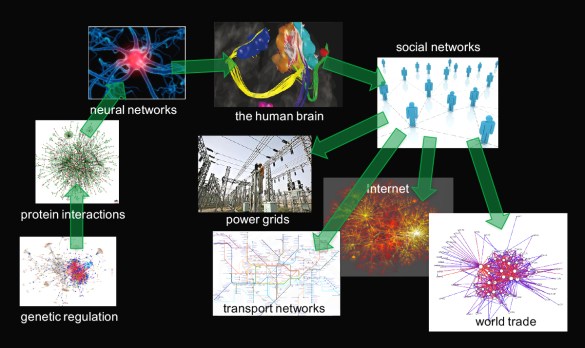
Jari Saramäki is a Professor at the Department of Computer Science, Aalto University, and a member of the Helsinki Institute for Information Technology (HIIT). His research focuses on complex systems, particularly complex networks, spanning social networks, computational science, and network neuroscience. He holds a Doctoral degree in Engineering and Technology from Helsinki University of Technology (1998) and a Master's degree in the same field (1995). His academic roles include leading projects such as NetResilience (focusing on social networks and population resilience in Finland) and Decoding Urban Public Transport Networks . He has authored over 160 publications and actively collaborates internationally, contributing to areas like temporal networks, functional brain connectivity, and mobility analysis. Research highlights include studies on child mortality risk in historical Finland, dynamics of social and communication networks, and the application of network theory to public transport optimization. His work bridges interdisciplinary fields, emphasizing the universal patterns and resilience of complex systems.
Lily Hu is an Assistant Professor of Philosophy at Yale University, specializing in causal theorizing and its applications to social sciences. Her research examines causal inference methodologies, particularly their treatment of social categories like race, and how these inform normative claims about discrimination and inequality. She also contributes to machine learning ethics, algorithmic fairness, and the intersection of technology with societal structures. Previously, she earned a Mathematics undergraduate degree and a doctorate in Philosophy from Harvard University (2022). Her work bridges philosophy, social sciences, and computer science, addressing topics such as race perception in causal models, algorithmic bias mitigation, and the ethical integration of technology into education and governance. She has contributed to publications like the Boston Review, Los Angeles Review of Books, and Phenomenal World. Lily’s research trends emphasize interdisciplinary methodological critique, with recent focus on causal frameworks in social sciences and algorithmic fairness debates. She critiques conventional statistical approaches to race and proposes normatively grounded alternatives. Her earlier work includes computational social choice and tech ethics curriculum design. No specific advising or grant details are provided in the text, though her academic role implies ongoing research projects. She is affiliated with Yale’s Philosophy Department and maintains an active presence in interdisciplinary technology ethics discourse.
Baoze Wei is an Associate Professor at Aalborg University's Department of Electric Power Systems and Microgrids, part of the Faculty of Engineering and Science. His research focuses on advanced control strategies for power electronics, microgrid stability, and energy management systems. He leads and collaborates on projects such as the Digital Twin-based Reliability Framework for Aviation Systems and Holistic Optimization of Green Fuel-Powered Microgrids. Key contributions include work on distributed energy systems, fault-tolerant architectures, and predictive maintenance for power electronics. His research emphasizes practical applications in renewable integration, smart grids, and industrial electrification. Wei has supervised one PhD student, Q. He, and contributed to projects funded by entities like Horizon JU and Huawei. Notable collaborations include work on hybrid-electric aircraft systems (HECATE) and advanced control algorithms for distributed converters. His research spans technical areas such as voltage source inverters, uninterruptible power systems (UPS), and DC shipboard microgrids. His publications reflect expertise in model predictive control, energy trading strategies, and condition monitoring. Current research trends include data-driven lifetime prediction for power electronics components and optimization of multi-energy systems. He actively participates in international conferences, contributing to both theoretical advancements and real-world system implementations.
Kean Birch is a Professor at York University, Canada, and Director of the Institute for Technoscience & Society. His research explores how entities like personal data, knowledge, and digital technologies are transformed into economic assets, focusing on techno-economic rentiership and market power in 21st-century capitalism. Ontario Research Chair in Science Policy Series Editor, Technoscience & Society Book Series , University of Toronto Press Editorial Board Member, IEEE Transactions on Technology and Society , Progress in Economic Geography , and others His work spans biotechnology, AI, Blockchain, and low-carbon technologies, analyzing the shift from entrepreneurship to rentiership in technoscientific capitalism. He critiques Silicon Valley's innovation model, linking it to monopolistic practices, data control, and regulatory challenges. His recent articles examine digital rentiership, competition policy reforms, and the implications of Big Tech's dominance. Scientific Awards : Ontario Research Chair in Science Policy He engages in public debates via op-eds in National Post , contributing to discussions on antitrust laws, platform ecosystems, and the urgency of updating Canada’s Competition Act for the digital era. His research emphasizes the structural power of Big Tech, the crisis in online advertising, and the need for global regulatory alignment.
Martin Ebers is a Visiting Professor of Information Technology Law at the School of Law, Faculty of Social Sciences, University of Tartu, Estonia, currently serving part-time. His career includes roles as Associate Professor and dotsent (senior lecturer) in IT Law from 2019 to 2022, with part-time appointments since 2023. He specializes in AI regulation, data protection, consumer rights, and EU legal frameworks for emerging technologies. Research interests focus on governance of AI and robotics, particularly in healthcare, legal technology, and digital identity. Notable projects include 'Machine learning and AI powered public service delivery' (2019–2022), addressing AI in public administration, and 'Protection of consumer rights in the Digital Single Market' (2018–2021). He leads publications on the EU AI Act, generative AI regulation, and ethical challenges in AI-driven healthcare. Advised doctoral students on topics like AI liability, telemedicine regulation, and EU consumer law. Supervised research projects include 'The Promise and Perils of AI in Public Administration' (2023) and 'Liability for Artificial Intelligence' (2021). Active in editing legal handbooks like 'Rechtshandbuch ChatGPT' and contributes to journals like European Journal of Risk Regulation and Recht Digital .
Hassan Shanechi is a Teaching Professor of Electrical and Computer Engineering at Illinois Institute of Technology, affiliated with the Armour College of Engineering. He joined the university in 2007 and specializes in nonlinear and intelligent systems, with a focus on power system dynamics, security, and planning. His research addresses stressed power systems' behavior under heavy loading, maintenance scheduling, and transmission network optimization. Education: Ph.D. in System Science and Electrical Engineering, Michigan State University, 1980 B.S. and M.S. in Electrical Engineering, Tehran University, Tehran, Iran, 1975 Research Interests: Nonlinear systems analysis and intelligent control methodologies Power system dynamics, stability, and security under stressed conditions Market-based transmission planning and expansion strategies Advanced algorithms for power system maintenance and scheduling His publications span adaptive control techniques, transmission system optimization, and modal analysis of power networks. He has contributed to IEEE Transactions on Energy Conversion, Power Systems, and other journals. His work integrates theoretical advancements with practical applications in modern power grids. No scientific awards or major grants are explicitly mentioned in the provided text.