Arul Mishra is a David Eccles Professor of Marketing at the University of Utah , affiliated with the David Eccles School of Business . Her academic career spans roles such as Faculty Fellow and Emerging Scholar , focusing on consumer behavior and decision-making processes. Ph.D. in Marketing , University of Iowa MBA in Marketing Bachelor in Mathematics and Physics Her research explores consumer decision-making , behavioral promotions , risk perception , and financial decision-making , utilizing methodologies like predictive analytics and machine learning . Recent publications investigate topics such as clustering algorithms , temporal decision-making , and spatial bias . Arul Mishra has received prestigious awards including the David Eccles Professor title and the Outstanding Reviewer Award from the Journal of Consumer Research . Her work has been featured in top-tier journals like Marketing Science and Psychological Science , with popular mentions in Scientific American and The Wall Street Journal .
Selçuk Karabatı is a Professor of Operations Management at the College of Administrative Sciences and Economics, Koç University (Turkey). His research spans retail operations, sustainable supply chains, and production systems optimization. He holds a PhD from the University of Texas at Austin and has previously taught graduate courses in Service Operations Management , Operations Strategy , and Sustainable Operations Management at Koç University. Education : PhD (University of Texas at Austin), MS (University of Southern California), BS (Boğaziçi University) Editorial Roles : Senior/Associate Editor at Production and Operations Management and IIE Transactions His research focuses on Supply Chain Management , Retail Operations , and Sustainable Operations , with applications in inventory control, pricing strategies, and production planning. Recent and historical publications reveal expertise in optimization frameworks , dynamic pricing , portfolio rebalancing , and retail analytics . While no explicit scientific awards are listed in the provided text, his work has consistently addressed challenges in inventory substitution, auction mechanisms, and logistics coordination.
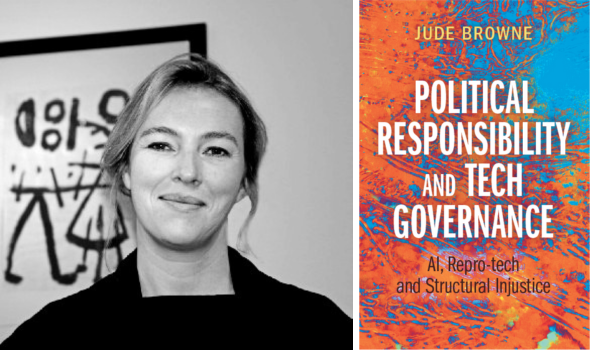
Professor Jude Browne serves as Head of the Department of Politics and International Studies (POLIS) at the University of Cambridge, while also holding the position of The Jessica and Peter Frankopan Director of the University of Cambridge Centre for Gender Studies (currently on leave from this role while serving as HoD). She is a Fellow and Director of Studies for Human, Social and Political Sciences (Part II) at King's College, Cambridge, demonstrating her deep integration within the university's academic structure. Professor Browne's research spans several interconnected areas of political theory and social justice. Her work focuses on political theories of equality , feminist theory , political responsibility , and structural injustice . She has increasingly examined the impact of technology on society , particularly how AI systems intersect with existing social inequalities. Her scholarship bridges theoretical political philosophy with practical policy concerns, addressing issues like public interest, rights frameworks, and regulatory approaches to emerging technologies. Analysis of Professor Browne's recent publications reveals a clear trajectory toward examining technology governance through feminist and structural justice lenses. Her work increasingly focuses on AI ethics, structural inequality in technological systems, and reconceptualizing political responsibility in digital contexts. She has pioneered feminist approaches to understanding who bears responsibility for ethical AI development, examining how structural factors shape technological outcomes beyond individual accountability. Her research demonstrates how algorithmic systems can perpetuate structural injustice while challenging traditional notions of responsibility in complex technological environments. Aaron Rapport Prize (inaugural winner) University of Cambridge Pilkington Prize Professor Browne has been actively engaged in public discourse on technology and society, appearing on the BBC Rethink Podcast and delivering the 2024 Alan Turing Lecture on "AI and Political Responsibility." Her research has attracted significant attention in both academic and policy circles, influencing discussions on gender equality, structural injustice, and technology governance. She has led collaborative research projects through the University of Cambridge Centre for Gender Studies and edited multiple influential volumes including "Feminist AI: Critical Perspectives on Algorithms, Data, and Intelligent Machines" (2023) and "What is Structural Injustice?" (2024).
Timo Seppälä is a University Lecturer in Digital Operations at Aalto University's School of Science, Department of Industrial Engineering and Management. His research focuses on global value chains, supply chain management, and digital technology implementations in technology- and service-based businesses. He explores platformization of supply chains, collaborative innovation management for complex digital ecosystems, and the implications of artificial intelligence platforms across industries. Global Value Chains Digital Platforms & Ecosystems Artificial Intelligence Governance Blockchain Applications in Industry Recent publications highlight trends in AI diffusion monitoring, blockchain-based systems for industrial applications, and sustainability challenges in digital economies. His work spans empirical analysis of corporate digitalization, platform governance, and multi-actor value creation. No scientific awards are currently documented.
Juha Kasperi Tolvanen serves as an Assistant Professor in the Department of Economics and Finance at Tor Vergata University of Rome, teaching Master's-level courses including Game Theory and Industrial Organization, Industrial Organization, Microeconomics 2, and Strategy and Information since completing his PhD at Princeton University in 2016. His academic profile bridges theoretical rigor with practical applications in economic systems. His research investigates how information asymmetries and strategic communication shape social outcomes across two domains: industrial organization examines how minor informational advantages distort market structures and cause failures, while political economy analyzes anti-establishment parties' use of ambiguity to destabilize democracies. Tolvanen uniquely combines theoretical modeling with operational data from corporate partnerships to quantify the economic costs of information flows. Recent publications (2022-2025) reveal consistent exploration of information dynamics through high-impact studies in the RAND Journal of Economics, Management Science, and American Political Science Review. His work spans decentralized markets, algorithmic recommendations, political platforms, and demand estimation, demonstrating methodological versatility through experimental designs and empirical analyses of strategic behavior in markets and elections. No scientific awards or fellowships were documented in the source materials. Tolvanen actively mentors graduate students through course instruction and research supervision, while collaborating with companies to address real-world implications of information economics. Although specific grant details remain unreported, his applied research approach leverages day-to-day corporate operational data to translate academic insights into business solutions. He operates within Tor Vergata University of Rome's Department of Economics and Finance, with collaborative networks evidenced by co-authored publications spanning international institutions. His current work extends into moral hazard measurement, historical economic analysis, and strategic communication through active working papers.
Tobias Salz is the Castle Krob Career Development Associate Professor of Economics at the Massachusetts Institute of Technology. He focuses on industrial organization, with expertise in platforms, digital markets, transportation, and artificial intelligence, combining theoretical and empirical methods in his research. Research Interests: Platforms and digital market design Transportation economics and policy Artificial intelligence applications in industrial organization Experimental economics with observational data His recent publications span topics like AI-assisted labor markets ( Management Science , 2025), web search market power ( American Economic Review , 2025), and urban transportation policy ( Econometrica , 2024). Key methodologies include field experiments, econometric modeling, and analysis of novel data sources. Scientific Awards: Castle Krob Career Development Chair Contact: tsalz@mit.edu | Office: E52-460 | Office Hours: Wednesday 11:00-12:00
Antonios Deligiannakis is a Professor at the School of Electronic and Computer Engineering of the Technical University of Crete, specializing in database systems and distributed data processing. His academic career includes a postdoctoral position at the National and Kapodistrian University of Athens (2006-2007) and a visiting researcher role at AT&T Labs-Research (2003). His educational background includes: PhD in Computer Science, University of Maryland, USA (2005) Master's Degree in Computer Science, University of Maryland, USA (2001) Diploma in Electrical and Computer Engineering, National Technical University of Athens (1999) Professor Deligiannakis's research spans Databases , Stream Processing , and Sensor Networks , with pioneering work in Approximate Query Evaluation for massive datasets and Complex Event Processing in distributed environments. His contributions enable efficient analytics in resource-constrained settings through techniques like synopses-based engines and windowed outlier detection. His 15 most recent publications (2020-2025) reveal a dominant focus on distributed streaming analytics, with recurring themes of cross-platform integration, federated learning, and extreme-scale interactive systems. Key innovations include the INFORE framework for interactive analytics, DAG* for IoT workflow optimization, and communication-efficient federated learning techniques—demonstrating consistent translation of theoretical advances into production-ready platforms. Scientific Awards: No specific awards were listed in the provided material. Information about advisees and research grants was not provided in available documentation, though his leadership in the Distributed Information Systems and Applications laboratory suggests active mentorship and project direction. He directs research in the Distributed Information Systems and Applications laboratory, developing systems for real-time analytics across domains including maritime surveillance, financial technology, and IoT platforms, with emphasis on scalability and fault tolerance in geo-distributed environments.
Robert Laubacher is a Research Fellow at the MIT Center for Collective Intelligence within the Sloan School of Management , focusing on how technological innovations like generative AI and large language models are reshaping organizational practices, work structures, and social patterns. Education: B.A. in American Studies, Northwestern University M.A., Doctoral Coursework in Modern History, Harvard University His research explores: Developing ontologies for work activities inspired by biological taxonomy Enhancing human creativity through AI collaboration frameworks Building collective intelligence systems for global challenges like climate change and sustainable development Identifying foundational elements of collective intelligence Historical analysis of IT's impact on employment relationships Recent publications focus on human-AI co-creation , crowdsourced problem-solving , and organizational adaptation to digital transformation. His work has been featured in Harvard Business Review , Sloan Management Review , and ACM conference proceedings.
Nisarg Shah is an Associate Professor in the Department of Computer Science at the University of Toronto, affiliated with the Theory Group. He also serves as a Research Lead at the Schwartz Reisman Institute for Technology and Society and a Faculty Affiliate at the Vector Institute for Artificial Intelligence. Education: Ph.D. in Computer Science, Carnegie Mellon University (2016) B. Tech. with Honors in Computer Science & Engineering, IIT Bombay (2011) Shah's research focuses on the theoretical foundations of artificial intelligence, particularly algorithmic fairness, social choice theory, game theory, and mechanism design. His work addresses fair resource allocation, strategic agent behavior, and robust AI system design through interdisciplinary approaches combining computer science, economics, and cognitive psychology. Recent publications highlight temporal fair division, constrained allocations, and market value integration in fair division. His 2024 awards include the prestigious IJCAI Computers and Thought Award and Kalai Prize for game theory contributions. Scientific Awards: 2024 - IJCAI Computers and Thought Award 2024 - Kalai Prize in Game Theory and Computer Science 2022 - MIT Technology Review Innovators Under 35 2020 - IEEE Intelligent Systems AI's 10 to Watch 2016 - Victor Lesser Distinguished Dissertation Award (IFAAMAS) 2014 - Facebook Graduate Fellowship 2013-14 - Hima and Jive Graduate Fellowship 2011 - IIT Bombay President's Gold Medal Shah supervises numerous graduate students across diverse institutions and leads research initiatives at the intersection of technology and society. His lab collaborates with institutions like Carnegie Mellon University and Harvard University, while developing practical applications such as Spliddit.org for fair decision-making in everyday life.
Jesse Sowell is an Associate Professor at the University College London (UCL) in the STEaPP (Science, Technology, Engineering and Public Policy) department. His work intersects internet governance , cybersecurity policy , and public policy analysis , with a focus on emerging technologies like artificial intelligence and the Internet of Things. He contributes to the Sustainable Development Goal 11 (Sustainable Cities and Communities) through digital policy research. Email: j.sowell@ucl.ac.uk Collaboration Network: Active in international policy and cybersecurity research Research interests span: AI-driven policy crafting and systematic review methodologies Security lifecycle of IoT devices and networks Adaptive governance frameworks for digital risks Competition dynamics in internet infrastructure Transnational cybersecurity norms and incident response IPv4-IPv6 transition policy comparisons Publication trends reveal a focus on internet governance , cybersecurity , and AI policy , with increasing attention to IoT security (2017-2021) and AI integration in policymaking (2025). His work bridges technical and policy dimensions, emphasizing network resilience and multi-stakeholder collaboration .
Aitor Goti Elordi is a Professor in the Department of Mechanics, Design and Industrial Management at the Faculty of Engineering, University of Deusto. His extensive research portfolio spans industrial engineering, maintenance optimization, Industry 4.0 implementation, and sustainable manufacturing practices. He leads multiple EU-funded and industry-collaborative research projects focused on digital transformation in manufacturing sectors. His research interests center around the intersection of industrial engineering and digital transformation, with particular focus on maintenance optimization using evolutionary algorithms, predictive maintenance systems, and the development of future skills requirements for evolving industrial sectors. His work bridges theoretical research with practical industrial applications, particularly in the Basque manufacturing ecosystem. Analysis of his recent publications reveals a strong trend toward interdisciplinary research addressing Industry 4.0 challenges across multiple sectors. His work consistently focuses on practical applications of data science and AI in industrial contexts, with growing emphasis on sustainability and circular economy principles. A distinctive pattern in his research is the development of competency frameworks to identify future skills requirements across various industrial sectors including steelmaking, renewable energy, and supply chain logistics. Professor Goti Elordi leads multiple significant research projects including SUSTASKILLS (2023-2025) focused on industrial symbiosis skills, REshaping Supply CHAins for Positive social impact (2022-2025), and Real-time acoustic sensorS and artificial Intelligence appLications (2023-2026). His work has secured funding from the European Commission, Basque Government, and major industrial partners including SIDENOR, NEMAK, and ETXE-TAR. He actively supervises student projects, particularly in the area of machinery redesign and additive manufacturing applications. His teaching and research integrate practical industrial experience with academic rigor, emphasizing the development of both technical and transversal skills needed for future industrial challenges.
Dr. Adel Aazami is an Assistant Professor at the Institute of Transport Economics and Logistics at Vienna University of Economics and Business (WU Vienna) since 2023. His academic journey began with a B.Sc. in Industrial Engineering from University of Tehran (2010-2014), followed by an M.Sc. (2014-2016) and Ph.D. (2016-2021) from Iran University of Science and Technology (IUST), Tehran. Prior to his current position, he worked as a Postdoctoral Researcher at Sharif University of Technology (2021-2022) and was a Visiting Researcher at the University of Toronto (2020). His educational background includes: Ph.D. in Industrial Engineering (2016-2021) - Iran University of Science and Technology (IUST), Tehran, Iran M.Sc. in Industrial Engineering (2014-2016) - Iran University of Science and Technology (IUST), Tehran, Iran B.Sc. in Industrial Engineering (2010-2014) - University of Tehran, Tehran, Iran Dr. Aazami's research spans multiple interconnected domains within operations research and supply chain management. His primary focus areas include Operations Research and Optimization, Supply Chain and Logistics, Production and Distribution/Transportation Planning, Competition and Game Theory, Stochastic Programming, and Decomposition Algorithms. His work demonstrates a strong emphasis on developing mathematical models and optimization algorithms for complex supply chain problems, particularly those involving perishable goods, competitive environments, and sustainability considerations. He has made significant contributions to integrating environmental factors into traditional logistics problems and developing robust optimization approaches for supply chain networks. Analysis of Dr. Aazami's publication record reveals a consistent trajectory of increasingly sophisticated research in supply chain optimization. His work shows a clear progression from foundational mathematical optimization techniques to increasingly complex integrated problems involving multiple stakeholders, uncertainty, and environmental considerations. A notable trend is his focus on perishable products within supply chains, developing models that account for limited product lifetimes while optimizing across multiple echelons of the supply chain. More recently, his research has expanded to incorporate green logistics considerations, developing algorithms that balance economic and environmental objectives in transportation and distribution problems. His notable scientific achievements include: Winner of the 'Best Student' award among nationwide students evaluated by the Iranian Ministry of Science (2020) Winner of the Iranian Nobel Prize (known as the Alborz National Foundation Prize) (2019) Winner of the Best Student Award at IUST (2018) Winner of the Top Researcher Award at IUST (2018) Annual Awards of the National Elites Foundation Iran (2015-2020) Dr. Aazami has extensive teaching experience across multiple Iranian universities including Tehran University, Amirkabir Technical University, Isfahan University, Yazd University, Zanjan University, Damghan University, Abrar University and Iran Technical University. His peer review activities include reviewing for prestigious journals such as Soft Computing, Expert Systems with Applications, and Annals of Operations Research. While specific grant information isn't detailed in the provided text, his research output suggests active engagement with complex optimization problems relevant to transportation and logistics industries. At WU Vienna, Dr. Aazami is part of the research team at the Institute of Transport Economics and Logistics, working alongside other faculty members including Prof. Kummer and Prof. Wakolbinger. His research integrates theoretical optimization methods with practical applications in transportation and logistics, contributing to the institute's focus on sustainable and efficient supply chain solutions.
Gerhard Schwabe is a Professor in the Department of Informatics at the University of Zurich, Faculty of Business, Economics and Informatics. His research spans collaborative technologies, information management, E-government, blockchain applications, and digital health. He leads the Information Management Research Group and contributes to the university's Digital Society Initiative (DSI). Research Focus: Human-AI collaboration, blockchain systems, crisis informatics, persuasive technologies Key Projects: RefuGPT (refugee support chatbots), Scripted Medicine (health worker assistance), PROMISE (AI prompt orchestration) Technical Expertise: Design Science Research, conversational agents, data-driven governance His recent publications emphasize AI integration in collaborative workflows, blockchain applications for data markets, and digital solutions for crisis management. He explores how generative AI impacts freelance development practices and transforms advisory services through automated systems. Contact: schwabe@ifi.uzh.ch
Prof. Dr. Haris Gačanin is a faculty member at RWTH Aachen University, affiliated with the Institute for Distributed Signal Processing under the College of Electrical Engineering. His research focuses on integrating machine learning with wireless communication systems, particularly in industrial IoT, edge computing, and network optimization. Current academic rank: Professor Contact: harisg@dsp.rwth-aachen.de Research Interests: Wireless systems, machine learning, signal processing, and network optimization. Key contributions include: Adaptive resource allocation in IIoT and vehicular networks AI-driven channel estimation and feedback mechanisms Security-oriented emitter identification via metric learning Federated/transfer learning for edge environments Hardware-efficient deep learning models for mmWave and THz communications Methodological Focus: Combines reinforcement learning, attention mechanisms, and robust neural architectures with practical implementations on FPGA and vehicular systems.
Jamie J. Baker serves as Associate Dean and Director of the Law Library and Dean's Distinguished Service Professor of Law at Texas Tech University School of Law. She oversees all Law Library operations while teaching Civil Trial: Practice & Litigation Materials, Academic Legal Writing, Intro to the Study of Law, and Legal Practice research workshops for first-year students through the Excellence in Legal Research Program. Her educational background includes a B.S. in Political Science & Public Administration from Central Michigan University, an M.L.I.S. from Wayne State University's School of Library & Information Science, and a J.D. from Western Michigan University Cooley Law School, where she was recognized as the most outstanding editor of the Cooley Law Review. Professor Baker's research centers on cognitive computing applications in legal research, legal research pedagogy, and the evolving role of law librarianship. She examines how artificial intelligence disrupts traditional legal research methods and addresses the duty of technology competence for legal professionals. Her work bridges library science and legal education, focusing on practical implementation in academic settings. Analysis of her 15 most recent publications reveals consistent focus on AI's impact on legal research, with recurring themes including algorithmic regulation, technology competence ethics, and future law library services. Her scholarship spans law reviews, book chapters, and conference presentations, demonstrating interdisciplinary engagement between legal academia and library science. ABA Blawg 100 recognition Top-Ten Blog for Information Professionals Best of the Legal Blogs by Internet Legal Researcher Most outstanding editor of Cooley Law Review As an educator, she mentors students through specialized research workshops and legal writing instruction. Her professional engagement includes frequent presentations at major conferences like the American Association of Law Schools and American Association of Law Libraries annual meetings. She previously served as a Law Librarian and Adjunct Professor at Western Michigan University Cooley Law School and worked at the Michigan Supreme Court's Friend of the Court Bureau. Her influential blog, The Ginger Law Librarian, serves as a hub for discussions on AI in legal research and modern law librarianship, reflecting her commitment to advancing the profession through technological innovation.