Anne Helmond is an Associate Professor of Media, Data and Society at Utrecht University , specializing in the platformization , algorithmization , and datafication of the web. She is a key contributor to the focus area Governing the Digital Society , where she develops digital methods for analyzing mobile data flows and app store infrastructures . Her work combines empirical and historical perspectives, emphasizing the material and programmable data infrastructures of platforms.
Mark Scheper is a Professor at Macquarie University (Faculty of Medicine and Health Sciences) and Lecturer at Rotterdam University of Applied Sciences in the field of AI & Data-Supported Healthcare. He serves as Science Lead at HR Datalab Healthcare and co-founded the National Expertise Center for Ehlers-Danlos Syndrome at Erasmus MC. PhD in Pediatric Rare Diseases (University of Amsterdam, 2019) Specialist in Ehlers-Danlos syndrome and chronic fatigue Expert in ethical AI and data science for healthcare His research focuses on integrating artificial intelligence into clinical practice while addressing ethical implications and workforce readiness. He leads transdisciplinary projects like ACT4FATIGUE (chronic fatigue prediction) and Orange Babies (sports performance optimization), emphasizing responsible AI adoption. Recent publications analyze trends in digital healthcare ethics , AI-assisted diagnostics , and chronic pediatric conditions . His work spans from rare diseases in children to sports injury prevention, with particular attention to data quality and technology accessibility. Collaborates with Medical Delta, Health Holland, and national medical centers Develops learning communities through co-creation with professionals, patients, and policymakers Focuses on training healthcare workers for AI literacy and ethical deployment
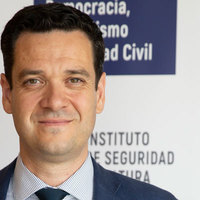
Manuel Ricardo Torres Soriano is a Catedrático de Universidad (Full Professor) in Public Law at Pablo de Olavide University in Seville, Spain. His academic work focuses on political and administrative science with a specialization in terrorism studies, particularly jihadist terrorism and cyberterrorism. He serves as one of the 15 international advisors on the Advisory Council on Terrorism and Propaganda of the European Counter-Terrorism Centre (ECTC) within Europol, contributing to European counterterrorism efforts since the center's establishment nearly three years ago. PhD in Political Science from Universidad de Granada (2007), thesis: "La dimensión propagandística del terrorismo yihadista global" Academic experience at institutions including London, Stanford, and Harvard Professor at both Pablo de Olavide University and the University of Granada (UGR) Professor Torres Soriano specializes in the intersection of terrorism, technology, and political communication. His research examines jihadist propaganda ecosystems, cyberterrorism, disinformation campaigns, and the evolving nature of modern terrorism. He has pioneered work on the concept of "technophobic terrorism" as a potential fifth wave of terrorism, building on David Rapoport's theoretical framework of terrorism waves. His expertise spans both historical analysis of terrorist movements and forward-looking assessments of emerging threats in the digital age, with particular focus on how technology transforms both terrorist tactics and counterterrorism responses. His recent publications reveal a consistent analytical framework examining how terrorist organizations adapt to technological change, particularly in the digital realm. He has documented the evolution of jihadist media platforms, analyzed Russian disinformation tactics using false-flag cyber operations, and explored the relationship between technological advancement and potential future terrorist motivations. A recurring theme across his work is how digital technologies both enable new forms of terrorism while simultaneously providing tools for counterterrorism efforts, creating a complex dynamic that requires sophisticated analytical approaches. Member of the Advisory Council on Terrorism and Propaganda of the European Counter-Terrorism Centre (ECTC) within Europol Recipient of recognition from Spain's Ministry of Defense for his doctoral thesis Author of influential books including "Espejismos del mañana" and "#Desinformación. Poder y manipulación en la era digital" Professor Torres Soriano actively contributes to security policy through his work with European security institutions and Spanish government advisory bodies. He has collaborated extensively with state security forces in both analytical and training capacities, translating academic insights into practical counterterrorism strategies. His research has informed counterterrorism approaches in Spain and at the European level, particularly regarding online radicalization, digital countermeasures, and the evolving nature of terrorist propaganda. He regularly engages with policymakers through institutional reports and advisory roles, ensuring his academic work has direct relevance to contemporary security challenges. His work bridges academic research with practical security applications through collaborations with the European Counter-Terrorism Centre, Spanish security services, and international academic networks focused on extremism and counterterrorism. As digital technologies continue to transform the security landscape, his research remains at the forefront of understanding how terrorist organizations adapt their strategies and how societies can develop effective countermeasures in the digital age.
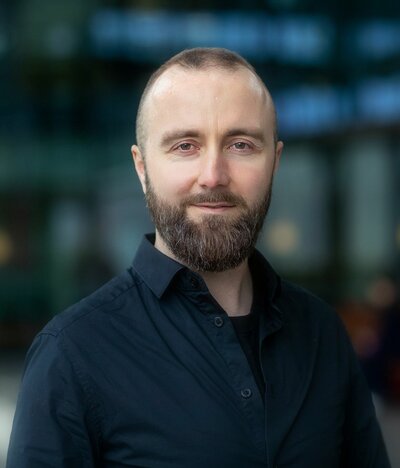
Dr. Hisham AbouGrad is a Senior Lecturer in Computer Science and Digital Technologies at the University of East London, within the School of Architecture Computing and Engineering. With over 20 years of experience in IT industry and higher education, he has taught at multiple UK institutions including Falmouth University, Northumbria University, Roehampton University London, and University of Plymouth. Department of Computer Science and Digital Technologies School of Architecture Computing and Engineering University of East London Dr. AbouGrad holds a DProf (DBA) in Workflow Information Systems Performance from London South Bank University (2020), an MSc in Software Engineering from University of Bradford (2002), and an MBA in Management from University of Lincoln (2002). His research spans multiple domains including Business Process Management (BPM), Decision Support Systems (DSS), Workflow Systems Performance, Enterprise Content Management (ECM), Machine Learning, and Geographic Information Systems (GIS). His recent publications demonstrate a strong focus on applying AI and machine learning to solve real-world problems in finance, healthcare, agriculture, and transportation. His publication trends show a clear progression from foundational work on business process management and enterprise content systems toward cutting-edge applications of deep learning, blockchain, and computer vision in diverse domains. The breadth of his research covers financial technology, healthcare monitoring, agricultural optimization, transportation safety, and food security systems. Fellow of the Higher Education Academy (FHEA) Project Management Professional (PMP) in IT Professional member of the British Computer Society (BCS) since 2009 Member of the Central & North London Branches (CeNLB) Committee of BCS Dr. AbouGrad actively supervises doctoral research (ProfDoc, PhD), master's dissertations, and undergraduate degree projects. He has participated in doctoral research workshops and academic events to support university researchers. His teaching portfolio includes modules on Database Systems, Software Engineering, Information Systems, and Business Information Systems. He is a member of the Intelligent Systems Research Group and contributes to Research Enhanced Learning & Teaching initiatives at UEL.
Matthew Dennis is an Assistant Professor in Ethics of Technology at Eindhoven University of Technology (TU/e) , affiliated with the Philosophy & Ethics group and the EAISI institute. He co-directs the Eindhoven Center for Philosophy of Artificial Intelligence (ECPAI) and serves as Senior Research Fellow with the Ethics of Socially Disruptive Technologies (ESDiT) consortium. His research examines how emerging technologies challenge concepts of fairness, autonomy, well-being, and creativity , particularly in digital content consumption and AI-generated synthetic content. He contributes to debates on digital well-being, algorithmic ethics, and self-cultivation , with a focus on platform design and societal impact. Key Collaborations : European Parliament's Science-Media Hub, Royal Bank of Scotland, EIT Digital, Responsible Sensing Lab Academic Leadership : Co-edited Philosophy of Fame & Celebrity (Bloomsbury 2024), Values for a Post-Pandemic Future (Springer 2023), and Ethics of Self-Cultivation (Routledge 2018) Scientific Contributions : Published in Science and Engineering Ethics , Ethics & Information Technology , and Journal of Applied Philosophy Recognized with the Next Nature Fellowship (2024) , Dennis integrates French/German philosophy with practical technology ethics, currently co-designing a digital wellness space with What Design Can Do .
Dr. Nagy Róbert is an Assistant Professor at the Department of Structural Mechanics, Faculty of Civil Engineering, Budapest University of Technology and Economics. His academic career spans both engineering and biomedical research domains. Education: Structural Engineer MSc Visiting Scientist: Imperial College London Languages: English (fluent), Italian (conversational), Portuguese (basic), Chinese (beginner) Research focuses on two primary areas: (1) Biomechanics – analyzing hemodynamic stresses in abdominal aortic aneurysms and developing inverse kinematic methods for rupture risk estimation using SPH numerical models and finite element simulations; (2) Structural Engineering – investigating explosion-resistant building design, blast parameter attenuation in urban geometry, and linear buckling analysis of thin-walled members. Additional work includes agricultural processing effects on cereal properties and digital pedagogy implementation in schools. His computational mechanics expertise bridges civil engineering applications (explosive load modeling) and biomedical innovations (aneurysm simulations). Key methodologies include smoothed particle hydrodynamics, nonlinear finite element analysis, and stress distribution modeling. Teaching contributions include tutorials in Statics, Advanced Mechanics, Strength of Materials, and Dynamics at both BSc and MSc levels in Hungarian and English. He also developed curriculum components for Nonlinear FEM and basic mechanics courses.
Sterling Raskie is a Senior Lecturer of Finance at the University of Illinois-Urbana-Champaign since 2017, previously holding roles as Adjunct Assistant Professor at Millikin University and Instructor at Benedictine University. He specializes in wealth management, personal finance, and investments. Education: Ph.D., The American College, 2017 MBA, Benedictine University, 2013 MS in Financial Services, The American College, 2012 BA in Criminal Justice (Cum Laude), University of Wisconsin, 2003 Research Interests: Focuses on mutual funds, financial decision-making frameworks, agency theory applications, and consumer perspectives on financial designations. His work critiques AI-driven financial advice (e.g., ChatGPT limitations) and explores practical wealth management strategies. Recognition: Received Excellence in Undergraduate Teaching awards consecutively from 2020-2023 at UIUC Serves as Associate Editor for the Journal of Financial Service Professionals (2023-present) Peer Review Board Member for Journal of Financial Planning (2018-present) Teaching & Leadership: Oversees advanced courses like Corporate Finance (FIN 221), Finance Academy (FIN 390), and Wealth Management (FIN 535). Also leads Employee Benefit Plans (FIN 434) and Personal Wealth Management (FIN 435). External Ventures: CEO of Raskie Education since 2009, and former CEO of The Raskie Agency (2005-2010). Active as a personal financial counselor and director in financial planning firms.
Angela D. R. Smith is an Assistant Professor at The University of Texas at Austin, specializing in human-computer interaction (HCI), computer supported cooperative work, and information sciences. Her research focuses on designing equitable sociotechnical interventions for homeless young adults in shelter networks, employing community-based participatory research and participatory design methods. She draws on critical race theory, intersectionality, and asset-based approaches to address systemic inequities in technology. Before her academic role, Angela worked as an IT Consultant, Cybersecurity Analyst, and UX Researcher at Airbnb and startups. Her interdisciplinary background bridges technical expertise with social justice advocacy. She holds a Ph.D. in Technology & Social Behavior from Northwestern University. Her work emphasizes ethical AI frameworks, culturally informed design, and social justice in computing education. Key themes include algorithmic equity, marginalized community engagement, and reimagining technology’s role in fostering social change.
Joseph B. Walther is a Distinguished Professor of Communication at the University of California, Santa Barbara, holding the Bertelsen Presidential Chair in Technology and Society. He previously directed the UCSB Center for Information Technology and Society and is affiliated with Harvard University's Berkman Klein Center. His research focuses on interpersonal and intergroup dynamics in mediated communication, including the development of theories like the hyperpersonal model and social information processing theory. Walther's current work explores online hate, examining social motivations and gratifications in collaborative hate production. He has held positions at institutions globally and received prestigious accolades including Fulbright Scholar and Fellow of the International Communication Association. Education: PhD in Communication from the University of Arizona (1990). Research Interests: Walther investigates how mediated interactions shape relationships, group dynamics, and interethnic conflict. His theoretical contributions include warranting theory and frameworks explaining online hate's social processes. His work bridges media psychology, digital communication ethics, and the societal impacts of technology. Awards & Honors: Bertelsen Presidential Chair in Technology and Society Fulbright Scholar Fellow, International Communication Association Distinguished Scholar, National Communication Association Advising & Grants: While specific advisees aren't listed, his extensive research likely involves mentorship in communication studies. His work has been supported through grants exploring topics like online hate mechanisms and AI in healthcare. Labs & Collaborations: Associated with UCSB's Center for Information Technology and Society and Harvard's Berkman Klein Center, focusing on technology's societal implications.
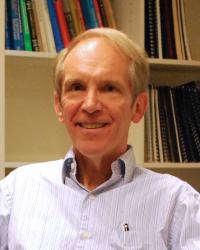
John Geweke is the Charles R. Nelson Endowed Professor in Economics at the University of Washington, with joint appointments at the University of Technology Sydney and emeritus status at the University of Iowa. His research focuses on econometric theory, Bayesian modeling, and applications in macroeconomics and finance. He has supervised over 30 doctoral students and received prestigious fellowships including the Alfred P. Sloan Research Fellowship. Education: Ph.D. in Economics, University of Minnesota (1975) B.S. in Social Sciences, Michigan State University (1970) His research explores econometric methods for time series analysis, Bayesian inference in complex models, and financial econometrics. Geweke's work integrates theoretical rigor with practical applications in macroeconomic forecasting and decision-making under uncertainty. Geweke's publications demonstrate consistent focus on Bayesian econometrics, time series analysis, and financial modeling, with recent emphasis on model comparison, prediction under uncertainty, and computational methods for high-dimensional problems. Awards and Honors: Fellow of the Econometric Society Fellow of the American Statistical Association Alfred P. Sloan Research Fellow (1982-1984) H. I. Romnes Faculty Fellowship He has mentored numerous PhD students and secured significant research funding from NSF and ARC for projects on Bayesian computation and economic modeling. Geweke leads methodological developments at the intersection of statistics and economics.
Paula M. Poindexter is a Professor at the School of Journalism and Media, University of Texas at Austin. She holds a Ph.D. from Syracuse University’s S.I. Newhouse School of Public Communications and has served as President of AEJMC (2013-2014), where she founded News Engagement Day and initiated the Scholarsourcing book-publishing venture. Her research focuses on news engagement, diversity in media, and voting behavior, with notable works including Millennials, News, and Social Media (2018) and News for a Mobile-First Consumer (2016). She has chaired 10 Ph.D. dissertations and co-chairs the Maxwell McCombs Graduate Student Research Publishing Award. Awards include the Eleanor Blum Distinguished Service Award (2016) and the Lionel C. Barrow Jr. Award (2009). She spearheaded AEJMC’s Ethical Research Guidelines and the Tankard Book Award. Her advocacy extends to mentoring, with the MAC Division naming a research grant after her. Key contributions include curating the Millennials and News resource and advancing media diversity through grants and pedagogical innovations. She has created seven courses and contributed to over a dozen scholarly publications across books, journals, and encyclopedias. Her work bridges academic research with practical journalism ethics and audience engagement strategies.
Connor Bain is an Assistant Professor of Instruction in the Department of Computer Science at the McCormick School of Engineering, Northwestern University. He focuses on integrating computational thinking into STEM education, particularly in high school science classrooms. His work emphasizes teacher professional development, co-design approaches, and the use of block-based tools to scaffold student engagement. He holds a PhD in Computer Science and Learning Sciences from Northwestern University, along with dual Bachelor of Science degrees in Computer Science and Mathematics (both Honors) from the University of South Carolina. Education: PhD in Computer Science and Learning Sciences, Northwestern University, Evanston, IL BSCS in Computer Science (Honors), University of South Carolina, Columbia, SC BS in Mathematics (Honors), University of South Carolina, Columbia, SC Research Interests: Dr. Bain’s research bridges computational thinking and STEM pedagogy, exploring how teachers can effectively integrate CT practices through workshops, co-design initiatives, and curriculum development. He investigates the role of authentic tools and block-based programming in fostering student agency, as well as challenges in aligning CT with existing classroom frameworks. His work highlights the importance of teacher collaboration in designing inclusive and effective educational technologies. Publications Trends: Recent articles focus on teacher perceptions of CT-infused curricula and the impact of professional development programs. Earlier works explore the transition from block-based to text-based programming and the use of agent-based modeling in K-12 classrooms. These studies collectively advocate for iterative, teacher-centered approaches to educational technology adoption. Advising & Grants: No formal advisees or grants are listed in the provided texts. His contributions are primarily through curriculum design and teacher training initiatives. His CV is available for download for further details. Labs & Teams: While no specific lab is mentioned, his collaborations likely involve interdisciplinary teams within the McCormick School and partnerships with high school educators through co-design projects.
Sruti Bhagavatula is an Assistant Professor of Instruction in the Department of Computer Science at Northwestern University's McCormick School of Engineering. She leads the Computer Science Research Track Program for undergraduates and teaches courses such as Data Structures and Algorithms, Foundations of Security, and Data Privacy. Her research focuses on security, privacy, human-computer interaction, and CS education innovation. Education: PhD and MS in Computer Science from Carnegie Mellon University (2021), BS in Computer Science from University of Illinois at Chicago (2014). Industry experience includes roles at Amazon, MIT Lincoln Laboratories, and Microsoft Research India. Research interests include cybersecurity education, privacy in IoT/smart devices, adversarial machine learning, and improving security advice dissemination through social media. She has received awards for curriculum innovation and was recognized as an EECS Rising Star in 2020. Advising: Actively mentors undergraduate and high school students in security/privacy research. Collaborates on grants related to expanding participation in computing sciences. Labs/Teams: Runs the CS Research Track Program which provides early research exposure to undergraduates, fostering diverse participation in computational fields.
James J. Hodge is an Associate Professor of English and member of the graduate faculty at Northwestern University, affiliated with Art History and Screen Cultures. He holds a Ph.D. from the University of Chicago. His research focuses on digital media aesthetics, media theory, and critical theory, particularly exploring how artistic forms express the incoherence of lived experience. His book Sensations of History: Animation and New Media Art (2019) examines animation in the digital age, while his current project Ordinary Media: An Aesthetics of Always-On Computing analyzes digital artworks reflecting the psychological impacts of constant connectivity. Teaching and Collaboration: Hodge teaches courses on digital aesthetics, media theory, and film, including future courses on Jordan Peele, American horror film, and classic Hollywood genres. He collaborates across disciplines, co-organizing events on media aesthetics with Communication Studies, Asian Languages, and the Humanities Institute. Notable collaborations include co-curating Paul Chan's exhibition at the Block Museum and co-editing Oxford Bibliographies in Cinema and Media Studies . Research Interests: Explores network visualization, digital mental health (anxiety/depression), meme aesthetics, and the materiality of digital art. His work bridges philosophy (phenomenology/psychoanalysis) with contemporary media practices, emphasizing tactile experiences of technology and the entanglement of human/machinic creativity.
Prof. Filip Sadlo is a Full Professor of Computer Science at Heidelberg University's Interdisciplinary Center for Scientific Computing (IWR), leading the Visual Computing Group. He serves as Dean of Studies for the Department of Informatics since 2022 and holds roles in multiple academic organizations including VGTC Executive Committee (2022–2025) and Associate Director of IWR (2022–present). His research focuses on visualization of complex scientific data, flow analysis, vector field topology, and high-performance computing. Education: PhD in Computational Visualization from ETH Zurich (2010), with prior roles at European Forest Institute and University of Freiburg. Research Interests: Specializes in visualization techniques for fluid dynamics, vector fields, and uncertainty quantification. Key areas include Lagrangian coherent structures, advection-diffusion processes, and interactive visualization systems. His work bridges computational methods with real-world applications in engineering and environmental science. Publications: Over 80 peer-reviewed papers since 2004, emphasizing visualization algorithms for dynamic systems, topological data analysis, and scientific computing. Recent work explores metacognition in data visualization and discontinuous vector field analysis. Grants & Projects: Principal investigator in DFG-funded projects on visualization in meteorology and MRI-based diagnostics, as well as initiatives in data integration and simulation science (e.g., SFB-TRR 191, HIDSS4Health). Labs & Teams: Heads the Visual Computing Group, fostering interdisciplinary research in computational visualization and scientific computing.