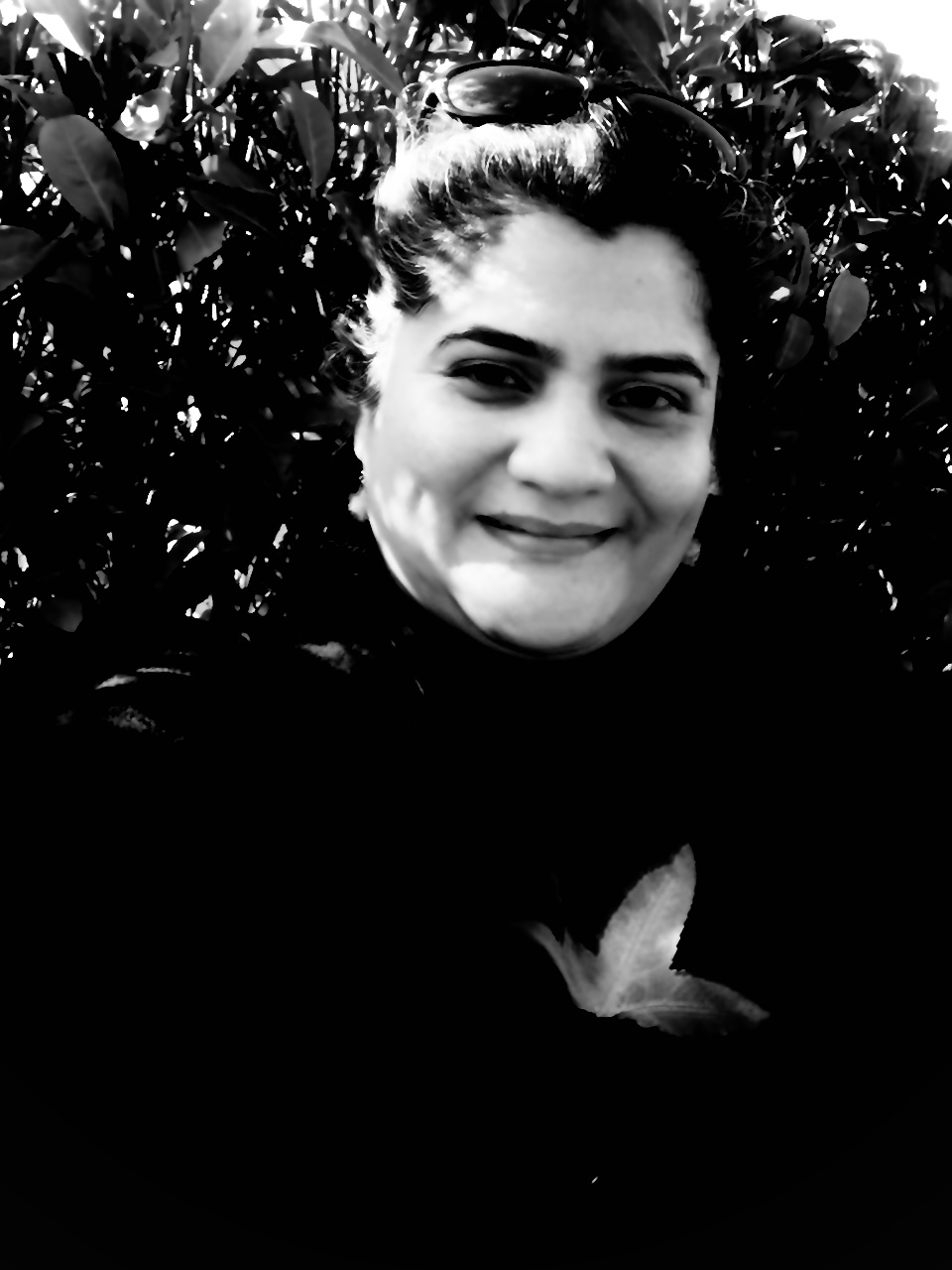
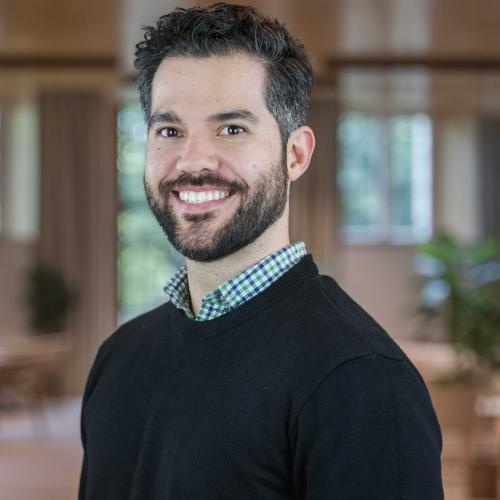
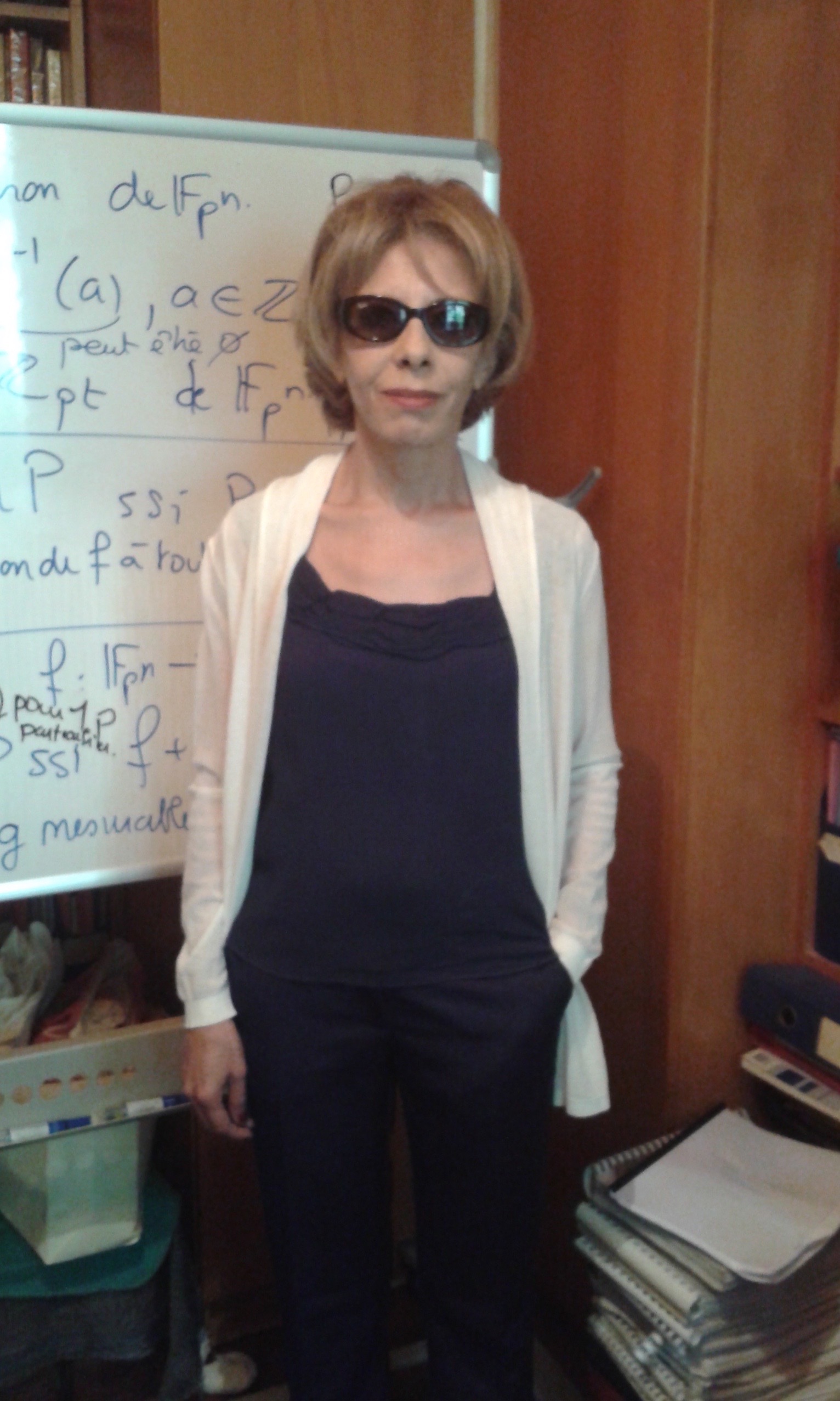
Ronja Sczepanski is an Assistant Professor at the Centre for European Studies and Comparative Politics (CEE) at Sciences Po. Her research explores the intersection of national and European identities, focusing on how political perceptions, social sorting, and behavioral processes drive identity change. Specializes in identity formation through political events like referenda Analyzes neighborhood effects and ethnic diversity on identity dynamics Investigates political party framing of social groups Her recent work examines how differentiated integration impacts EU policy compliance and validates open-source machine translation for text analysis. She teaches courses on European integration at institutions including ETH Zurich and the University of Cologne. Recipient of the PolMeth Europe Best Poster Award (2023) Published in journals like Comparative Political Studies and European Union Politics
Prof. Maryline Laurent is a Professor at Telecom SudParis, affiliated with the SAMOVAR research laboratory. Her work focuses on cybersecurity, privacy-preserving technologies, blockchain applications, and IoT security. She has contributed to numerous high-impact publications and conferences, addressing challenges in secure healthcare systems, decentralized identity management, and privacy in distributed systems. Her research spans cryptographic protocols, access control mechanisms, and compliance with EU data protection regulations. Key areas of expertise include secure communication protocols for IoT, blockchain-based solutions for healthcare, and privacy-enhancing technologies. She has collaborated on projects such as self-sovereign identity frameworks, anonymized data aggregation, and privacy-preserving smart grid systems. Her work emphasizes practical methodologies for assessing re-identification risks in anonymized datasets and designing secure systems compliant with evolving regulations. Prof. Laurent’s contributions extend to book chapters and edited volumes on digital identity management and wireless network security. She actively participates in international conferences and initiatives, advocating for privacy-by-design principles in intelligent infrastructures.
Pierre-Henri Paris is an Associate Professor (Maître de Conférences) at Paris-Saclay University since September 2024. Previously, he worked as a Postdoctoral Researcher at Telecom Paris (Institut Polytechnique de Paris) from September 2020 to August 2024. His academic journey includes a PhD in Artificial Intelligence from Sorbonne University and CNAM (Conservatoire National des Arts et Métiers) completed in 2020. Education: PhD in Artificial Intelligence, 2020, Sorbonne University and CNAM M.Sc. in Artificial Intelligence, 2016, CNAM M.Sc. in Mathematics, 2008, CY Cergy Paris University (incomplete) Pierre-Henri Paris's research focuses on the intersection of artificial intelligence, knowledge representation, and natural language processing. His work particularly emphasizes knowledge graphs, entity linking, and data quality. He has made significant contributions to projects like YAGO 4.5, which enhances knowledge bases with cleaner, logically consistent structures, and MAFALDA, a benchmark for fallacy classification. His research often bridges theoretical foundations with practical applications, particularly in how knowledge can be effectively represented, extracted, and utilized in complex systems. His recent publications reveal a strong focus on knowledge graph enhancement, semantic representation, and natural language understanding. The work on YAGO 4.5 demonstrates his commitment to creating more robust knowledge bases, while MAFALDA shows his interest in the intersection of language understanding and logical reasoning. His research trajectory indicates a consistent exploration of how structured knowledge can be integrated with linguistic analysis to create more intelligent systems. Advising: PhD students: Simon Coumes (2022-), Chadi Helwe (2022-2024), François Amat (2022-) Master's students: Syrine El Aoud (2021), Ayoub Mountassir (2013-2015) Bachelor's students: Khalil Halloul (2013-2014) Pierre-Henri Paris is actively involved in teaching at Paris-Saclay University, where he instructs courses including Introduction to Machine Learning, Introduction to Neural Networks, Algorithms for Data Science, Databases, and Data Warehousing. His teaching reflects his research expertise, providing students with both theoretical foundations and practical applications in artificial intelligence and data science.
Fatima Aziz is an Assistant Professor in the Department of Communication, Media and Culture at The American University of Paris (AUP) . She is affiliated with the Center for Media, Communication & Global Change (MCGC) since 2024 and the Centre de Recherches sur les Arts et le Langage (CRAL/EHESS) since 2023. Prior to her current role, she was a member of the editorial committee for the French blog Culture Visuelle (2010–2014) and affiliated with the Association of Internet Researchers (AoIR) in 2014–2015. Education: PhD in Visual Cultures, École des Hautes Études en Sciences Sociales, Paris (2023) Master of Arts (Master Recherche) in Information and Communication Sciences, Université Paris-Ouest Nanterre-La Défense, Paris (2008) Research Interests: Aziz’s work focuses on Visual Generative Media , Text-to-Image models , and Algorithmic identity , with a critical lens on how digital platforms mediate identity and social interaction. Her research includes studies on fame, influence, and privacy in social media, such as Facebook , Instagram , and TikTok . She explores the intersections of visual culture, digital anthropology, and ethical frameworks for online data usage. Teaching & Research Contributions: Aziz has taught courses such as Global Digital Cultures , Visual Culture, Theory & Communication , and Topics: Digital Anthropology , reflecting her expertise in media and digital studies. Her conference presentations include discussions on the Visual Culture of War , Algorithmic Mediation , and Participatory Politics in Digital Spaces . Advising & Grants: No specific advising or grant information is explicitly listed in the texts. However, she is involved in research labs and centers, contributing to initiatives like the Civic Media Lab and the MCGC . Labs/Teams: Faculty affiliate at the MCGC (since 2024) and CRAL/EHESS (since 2023). Active in the Civic Media Lab through graduate seminars and workshops on digital ethnography and media ethics.
Christine ABDALLA MIKHAEIL is an Assistant Professor in the Department of Management of Information Systems at IÉSEG School of Management in France. She holds dual Ph.D. degrees in Business Administration with a focus on Information Technology from the University of Paris Dauphine (France) and Georgia State University (USA), alongside advanced degrees in Business Consulting and Administration from Paris Dauphine. Her research focuses on collective action dynamics in social media, cybersecurity and privacy challenges, artificial intelligence applications, and disinformation propagation. Recent work explores the adoption of privacy-enhancing technologies (PETs), paradoxes in hybrid work visibility, and data adequacy in qualitative IS research. She has published in leading journals such as Information Systems Journal and Information and Organization . Her articles reflect a strong emphasis on understanding socio-technical systems through interdisciplinary lenses, combining behavioral theories with digital technology analysis. No specific awards or grant details are mentioned in her profile. She currently advises no formally listed students.
Jon Crowcroft is the Marconi Professor of Communications Systems in the Department of Computer Science and Technology at the University of Cambridge, and serves as the Chair of the Programme Committee at the Alan Turing Institute. He is also a Fellow of Wolfson College, Cambridge, and a visiting professor at the Department of Computing at Imperial College London. With a career spanning over three decades in computer networking research, Professor Crowcroft has made seminal contributions to the development of the Internet and continues to be highly active in cutting-edge research areas. His educational background includes: BA in Physics from Trinity College, University of Cambridge (1979) MSc in Computing from University College London (1981) PhD from University College London (1993) Professor Crowcroft's research spans multiple domains in computer networking and distributed systems. He has worked in Internet support for multimedia communications for over 30 years, with three main focus areas: scalable multicast routing, practical approaches to traffic management, and the design of deployable end-to-end protocols. His current research focuses on opportunistic communications, social networks, and techniques to scale infrastructure-free mobile systems. He is particularly known for his 'build and learn' paradigm for research and has recently been exploring decentralized digital identification systems, smart cities, and edge computing. His work often bridges theoretical foundations with practical implementations, emphasizing privacy-preserving approaches and sustainable network architectures. Professor Crowcroft has received numerous prestigious awards recognizing his contributions to the field, including: Election as Fellow of the Royal Society (2013) ACM SIGCOMM Award (2009) ACM Fellow (2002) Fellow of the Royal Academy of Engineering IEEE Fellow (2004) Chartered Fellow of the British Computer Society Throughout his career, Professor Crowcroft has advised numerous PhD students, including Mark Handley and Pan Hui, who have themselves become influential researchers in the networking community. He has authored several influential books that have been adopted internationally in academic courses, such as 'TCP/IP & Linux Protocol Implementation,' 'Internetworking Multimedia,' and 'Open Distributed Systems.' His research has been supported by various grants and collaborations with both academic institutions and industry partners, contributing to successful startup projects and influencing Internet standards. Professor Crowcroft is actively involved in several research initiatives, including serving on the Scientific Council of IMDEA Networks Institute since 2007 and the advisory board of the Max Planck Institute for Software Systems. He is also a director of the Matrix Foundation, which develops open network protocols. His current research group focuses on privacy-preserving analytics, decentralized systems, and the future of Internet architecture.
François Robinet serves as a Lecturer in Contemporary History at the University of Versailles Saint-Quentin-en-Yvelines (UVSQ), where he is an elected member of the Council of the Institute of International Cultural Studies. He concurrently directs the Graduate School of Humanities and Heritage Sciences at the University of Paris-Saclay and holds appointments with the Laboratory Center for the Cultural History of Contemporary Societies (CHCSC) and the 22nd section of the CNU. Education: Doctor of History (2012) Robinet's research centers on 20th-21st century cultural and political history, with concentrated expertise in the Rwandan Tutsi Genocide, post-colonial Franco-African memory politics, and media history since 1990. His work critically examines French journalistic coverage of African conflicts, international information manufacturing during wartime, and the cultural history of colonial and post-colonial societies. He employs interdisciplinary approaches bridging media studies, genocide research, and digital humanities to analyze historical narratives and memory construction. His 15 most recent publications (2016-2023) reveal consistent thematic focus on Rwandan genocide documentation, Franco-Rwandan historical accountability, and media's role in shaping political memory. Key trends include digital methodologies for genocide archives, analysis of French state-media interactions during crises, and evolving commemorative practices through digital platforms. The work demonstrates increasing engagement with digital humanities tools while maintaining rigorous historical analysis of colonial legacies. No scientific awards were documented in the source material. Robinet coordinates the international RwandaMAP2020 research network mapping genocide documentation sites and serves as Vice-president of the Association for the Development of Cultural History. He is an active member of the Society for the History of Media (SPHM) and editorial board of Le Temps des Médias , demonstrating significant scholarly leadership beyond traditional academic advising. His institutional presence spans laboratory governance (CHCSC), university administration (UVSQ Board of Directors), and major conference organization including the 2014 Rwanda international conference and 2022 International Communication Association pre-conference on empires in media history.
Fabienne Berger-Remy is a Senior Lecturer at Dauphine University – PSL, accredited to supervise research (HDR). She transitioned to academia in 2014 after extensive professional experience in marketing, brand management, and consumer goods consulting, with prior affiliations at IAE Paris Sorbonne. Research Focus : Multidisciplinary studies on marketing profession transformations, work-brand-consumption dynamics, and intangible capital creation. Publications in M@n@gement , Journal of Business Research , and Journal of Marketing Management highlight her work on digital transformation, brand crisis management, and organizational psychology. Publications reveal trends in digital marketing impacts, crisis communication strategies, and intellectual capital dynamics. Her work bridges theoretical frameworks with practical marketing challenges, including brand dissonance and datafication.
Prof. Joaquin GARCIA ALFARO is a Professor at Telecom SudParis, affiliated with the SCN department. His research focuses on cybersecurity, network security, quantum computing applications, and resilience engineering in cyber-physical systems. He has contributed to advancements in intrusion detection systems, blockchain integration in cellular networks, and privacy-preserving frameworks for IoT and healthcare. University: Telecom SudParis Key Research Areas: Cybersecurity, Quantum Computing, IoT Security, Resilience Engineering Labs: SAMOVAR laboratory His work emphasizes practical solutions for real-world challenges, including secure data provenance, digital twin implementations, and energy-efficient edge computing. Recent research explores quantum-resistant protocols and collaborative drone systems.
Caroline Lequesne (HDR) is a Lecturer in Public Law at the Faculty of Law and Political Science , University of Côte d'Azur. She conducts research within the Law, Economics, Management (GREDEG) group and co-manages the EDEN team under the PNCR (Norms, Competition, and Regulation) division. Her work focuses on algorithmic law, data governance, and digital welfare state policies. Master 2 Program Director in Algorithmic Law and Data Governance Specializes in public digital law and AI regulatory frameworks Active in surveillance technology analysis and digital inequality research Her publications address critical legal challenges in AI governance, digital welfare systems, and emerging technologies like Web3 and the Metaverse. She has contributed to key debates on French and European digital policy through articles in journals such as Revue française de droit administratif and Recueil Dalloz . Caroline Lequesne also participated in analyzing surveillance technology experiments during the 2024 Olympic Games. As co-manager of the EDEN team in the PNCR division, she contributes to interdisciplinary research on economic law and digital regulation frameworks.
Indranil Bose is a Distinguished Professor and Head of the Area of Excellence in AI, Data Science, and Business at NEOMA Business School, with a Ph.D. in Management from Purdue University. He specializes in business analytics, big data, and digital transformation, leveraging expertise from prior roles at IIM Calcutta, University of Hong Kong, University of Florida, and UT Arlington. Education: Ph.D. in Management (Purdue University, 1997) M.S. (Purdue University) M.S. (University of Iowa) B.Tech (IIT Kharagpur) Research Focus: His work spans predictive analytics, social media impact on business, innovation management, cybersecurity, fintech, and AI ethics. Key themes include consumer behavior in digital ecosystems, AI-driven decision systems, and ethical implications of emerging technologies. Publication Trends: Recent articles emphasize AI ethics, digital misinformation, and predictive modeling in finance/healthcare, reflecting a focus on societal impacts of technology. Methodologies include deep learning, sentiment analysis, and causal inference. Awards & Recognition: Winner, EFMD 2017 Case Competition Ranked 29th globally for Information Systems research productivity (2005–2014) Editorial Leadership: Senior Editor for Decision Support Systems and Pacific Asia Journal of the AIS ; Associate Editor for Information & Management , Journal of the AIS , and Communications of the AIS .
Vitor Lima serves as Assistant Professor of Marketing at ESCP Business School's Madrid campus. His academic journey includes a Postdoctoral Fellowship at Schulich School of Business/York University, establishing his international research profile. PhD in Business Administration (Marketing) from IAG/PUC-Rio and Schulich School of Business/York University MSc in Business Administration from FGV/EBAPE MBA in Marketing from FGV BA in Advertising with Branding extension from ESPM Digital Marketing Strategy Executive Certificate from Harvard University Professor Lima's research explores the intersection of emerging technologies and consumer behavior through critical theoretical lenses. His work examines how biohacking, transhumanism, and AI reshape human identity and consumption practices. He investigates consumer experiences with cyborg technologies, self-tracking devices, and human enhancement, often employing enactive and posthumanist frameworks to analyze these phenomena. His research methodology frequently incorporates arts-based and speculative approaches to examine technological futures. His recent publications reveal a strong focus on posthuman consumer identities, with significant contributions to understanding biohacking cultures, NFT implications, and human-robot interactions. The interdisciplinary nature of his work bridges marketing, philosophy of technology, and medical humanities, creating novel theoretical syntheses for analyzing technologically mediated consumption. AMS Mary Kay Doctoral Dissertation Award AMS Review - Sheth Foundation Doctoral Competition for Conceptual Articles (ADCCA) ACR Best Working Paper Award Professor Lima actively engages with media outlets including the BBC, translating complex academic concepts for broader public discourse. His collaborations extend beyond academia into practical applications of marketing theory, particularly regarding digital transformation and emerging technology adoption. His research on biohacking and human enhancement technologies has generated significant cross-disciplinary interest, influencing both academic and industry discussions about the future of consumer experiences.
Sihem Mesnager is a University Professor of Mathematics at the University of Paris VIII, affiliated with the Laboratory of Analysis, Geometry and Applications (LAGA) at Paris XIII (CNRS) and the AGC3 research group (Algebra, Geometry, Combinatorics) . She holds an adjunct professorship at Télécom Paris within the MIC2 Mathematics team of the Computer Science and Networks department (INFRES). Her work bridges pure mathematics and applied cryptography, focusing on Boolean functions, bent functions, and coding theory for secure communication and data protection. PhD in Mathematics, University of Pierre and Marie Curie (Paris VI), Sorbonne University (2002) Habilitation (HDR) in Mathematics, University of Paris VIII (2012) Research Interests Dr. Mesnager specializes in symmetric cryptography and coding theory , particularly their applications to secure digital communication, error correction, and post-quantum cryptographic protocols. Her algebraic approach employs finite fields, exponential sums, algebraic geometry, and finite geometry to analyze and construct cryptographic primitives like S-boxes, APN functions, and optimal linear codes. She also investigates algorithmic aspects of computer algebra in these domains. Scientific Awards George Boole International Prize (2020) PEDR Excellence Scientific Award (2019-2022) PEDR Excellence Scientific Award (2014-2017) Publications & Projects Her recent work includes constructing weightwise perfectly balanced Boolean functions for the FLIP cipher, optimizing Inner Product Masking schemes via coding theory, and developing post-quantum secure functional encryption using multivariate cryptography. She has contributed to Reed-Muller codes, BCH codes, and Gaussian sum-based linear codes with one-dimensional hulls, emphasizing their applications in side-channel attack resistance and quantum error correction.
Imene ZAIDI is a Teacher-researcher at CESI engineering school in France, affiliated with the Engineering and Digital Tools research team. Her work bridges computer science and operational research with practical applications in sustainable transportation systems. Her academic background includes: Doctorate in Optimized management of electric vehicle fleet charging from University of Haute-Alsace (2022) Engineering Diploma in Computer Systems from ex.INI Algiers (2018) ZAIDI's research centers on optimization challenges in electric mobility, particularly electric vehicle charging scheduling. She develops computational approaches including heuristics, metaheuristics, and exact algorithms to address grid capacity constraints, demand satisfaction, and energy maximization in unbalanced power systems. Her work integrates operational research with real-world transportation and energy infrastructure challenges. Analysis of her 2020-2024 publications reveals consistent focus on preemptive scheduling, computational complexity, and multi-objective optimization in electric vehicle ecosystems. The research demonstrates increasing sophistication from foundational scheduling models to grid-integrated solutions addressing three-phase power imbalances and capacity limitations. She teaches computer science courses including Object-oriented programming, Algorithms, Databases, Embedded systems, Web development, and Information systems to engineering and bachelor's students across multiple academic levels. The Engineering and Digital Tools research team at CESI provides the collaborative framework for her investigations into decision support systems for sustainable mobility and energy-efficient transportation solutions.
Professor Wenyu Dou serves as Academic Dean of SKEMA Business School China and holds the Chair Professorship in Digital Marketing & Chinese Social Media. He concurrently serves as Vice Dean at the International Joint Audit Institute (SKEMA x Nanjing Audit University) and Wenlan Chair Professor at Zhongnan University of Economics and Law. Previously, he held leadership roles at City University of Hong Kong, including Associate Dean for Graduate Programs and EMBA Director. His academic journey began with a Ph.D. in Marketing from the University of Wisconsin-Milwaukee. His research focuses on digital marketing, social media dynamics, and international business strategies. He has authored over 50 peer-reviewed articles in top journals like MIS Quarterly and Journal of International Business Studies , and published the seminal book Content Marketing in 2021. He leads the New Media Marketing Committee of the Chinese Marketing Association of Universities (CMAU) and founded the Annual New Media Marketing Conference. Professor Dou’s work bridges academic rigor and practical applications, addressing topics such as influencer marketing, consumer engagement in emerging markets, and the integration of IoT in brand management. His research has been recognized through editorial roles at Journal of Interactive Advertising and Journal of Advertising . He has held key administrative roles, including Academic Director of SKEMA China and leadership in undergraduate/graduate programs at CityU. His contributions span institutional collaborations, such as the SKEMA-NAU partnership, and academic leadership in cross-border education. His research interests also include organizational innovation, brand strategy in digital ecosystems, and the socio-cultural dimensions of marketing in China. He actively participates in global academic networks and has supervised numerous research initiatives at the intersection of technology and consumer behavior.