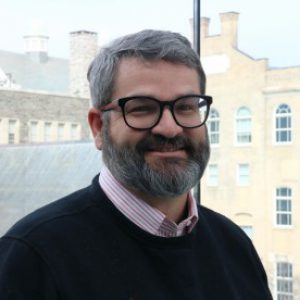
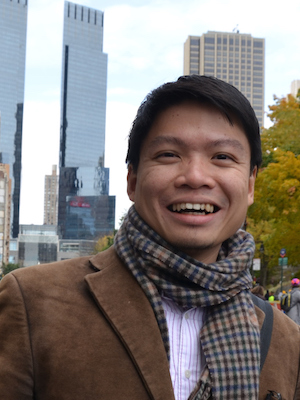
Paolo Cesarini is a Part-time Professor and Programme Director at the Florence School of Transnational Governance within the European University Institute. He leads the European Digital Media Observatory (EDMO) and European Media and Information Fund (EMIF) projects, focusing on digital media governance, EU competition law, and combating online disinformation. He also serves as a Senior Advisor at Teneo, advising on strategy and corporate communications. Education : Master's in International Law (University of Siena), LLM (College of Europe, Bruges) His expertise spans media policy , Digital Single Market regulations, and EU competition law , with a focus on technological transitions in media industries and the interplay between digital platforms and societal challenges. Recent research examines platform self-regulation of harmful content and foreign interference in digital ecosystems.
Jean-François Godbout is a Professor in the Department of Political Science at the Université de Montréal and an Associate Academic Member of Mila - the Quebec AI Institute. He directs the undergraduate program in Big Data Analytics in Social Sciences and Humanities at UdeM and conducts interdisciplinary research through the Complex Data Lab. Affiliated with IVADO (AI Consortium) Member of CÉRIUM (International Research Centre) and CECD (Democratic Citizenship Centre) His research focuses on: Data Science applications in political institutions AI Safety and generative AI's impact on political attitudes Misinformation Mitigation through large language models Comparative Political Development in Canadian and Lower Canada contexts Legislative Institutions and voting records analysis Political Polarization in online societies Recent publications analyze social media disinformation, AI persuasion on harmful topics, and education-focused text simplification. His articles frequently combine graph mining , machine learning , and political science methodologies. Scientific collaborations include: Mila researchers (Andreea Musulan, Maximilian Puelma Touzel) IVADO data science initiatives McGill University interdisciplinary projects He supervises students in: Political science (Julien Robin, Matthew Taylor) Artificial Intelligence (Kellin Pelrine, Camille Thibault) Computational social science applications
Thorsten Schmidt is Professor of Mathematical Stochastics at the University of Freiburg, succeeding Prof. Ernst Eberlein in the summer semester of 2015. He also serves as Senior Financial Engineer at MathFinance. Previously, he held professorships at Chemnitz University of Technology (2008-2015), Technical University Munich (2008), and University of Leipzig (2004 onwards). From 2017-2019, he was a Research Fellow at the Freiburg Institute for Advanced Studies (FRIAS) in a joint research group with the University of Strasbourg and USIAS on the topic of Linking Finance and Insurance. His research focuses primarily on financial and actuarial mathematics, stochastic processes, and statistics, with recent work on machine learning methods and their applications in financial mathematics and AI regulation. In Freiburg, his goal with his young team is to tackle complex challenges with improved mathematical models and apply these methodologies to various fields. Key Research Areas: Financial mathematics and credit risks Pricing and hedging of derivative financial products Statistics of stochastic processes Energy markets and nonlinear filter theory Machine learning applications in finance and insurance His recent publications show a strong trend toward integrating machine learning with traditional mathematical finance, particularly in risk management, insurance-finance arbitrage, and robust financial modeling. His work increasingly addresses ethical considerations in AI applications within finance, reflecting his broader interest in responsible AI development. Notable Awards: IDA Award Finance (2015) FRIAS-USIAS Research Fellow (2017/2018) IDA Award Machine Learning and AI (2020) MAPFRE Research Grant (2020) Luis Bachelier Fellow (2021) As Editor-in-Chief of Statistics and Risk Modeling and Associate Editor for Mathematical Finance and International Journal of Theoretical and Applied Finance, Schmidt plays a significant role in academic publishing. He leads the CRC 'Small Data' research center with Harald Binder, focusing on medical problems where disease progression must be estimated with few data points per patient. His LeanAI project, funded by the Vector Foundation, explores the connection between machine learning and theorem-proving software LEAN, aiming to develop AI that can translate between mathematics and formal proof systems. His laboratory work centers around the application of stochastic methods combined with machine learning to solve problems in finance and insurance where data is limited ('Small Data' initiative), with significant funding from DFG (€12 million for CRC Small Data) and the Carl Zeiss Foundation.
Lukasz Szpruch serves as Professor at the University of Edinburgh's School of Mathematics and Programme Director for Finance and Economics at The Alan Turing Institute. He leads the FAIR research programme on responsible AI adoption in financial services and co-investigates the UK Centre for Greening Finance & Investment (CGFI), directing partnerships with the National Office for Statistics, Accenture, Bill & Melinda Gates Foundation, and HSBC. He maintains affiliations with the Oxford-Man Institute for Quantitative Finance. His research focuses on probability theory , stochastic analysis , and theoretical machine learning , with current investigations into deep learning foundations, mean-field models, reinforcement learning, game theory, multiagent systems, and computational optimal transport. These theoretical frameworks are rigorously applied to financial economics problems including market dynamics, risk modeling, and regulatory compliance, emphasizing mathematical precision in AI system design. Recent publications reveal a strategic shift toward responsible AI deployment in finance , addressing large language model governance, synthetic data privacy, and non-asymptotic sampling theory. His work consistently bridges abstract mathematics with financial sector applications, particularly through the FAIR programme's industry collaborations that translate theoretical advances into practical frameworks for trustworthy AI adoption. As Principal Investigator of FAIR and CGFI co-Investigator, Szpruch manages significant research funding streams focused on AI ethics in financial services and sustainable finance. His academic leadership drives cross-sector initiatives where theoretical research directly informs regulatory policy development and industry best practices, though specific student mentoring details remain unspecified in source materials. Szpruch operates at the nexus of three critical research ecosystems: the FAIR programme's industry partnerships, CGFI's sustainability-focused finance research, and the Oxford-Man Institute's quantitative finance initiatives. These interconnected teams combine mathematical rigor with real-world financial applications, developing frameworks for AI assurance, green finance metrics, and synthetic data validation that address systemic challenges in modern financial systems.
Professor Simon F Deakin is a leading academic in Labour Law, Tort Law, and Corporate Governance at the University of Cambridge and holds the Professor of Law title. As Director of the Centre for Business Research (CBR) and a Fellow of Peterhouse , he bridges empirical legal studies with socio-economic analysis. His work spans comparative law, legal history, and the interplay between law and capitalism, with significant contributions to understanding labor regulation in global contexts. M.A., Ph.D. (Cambridge), Honorary Ph.D. (Louvain-la-Neuve) Director, Centre for Business Research Fellow, Peterhouse College His research program integrates law and economics , institutional theory , and computational legal studies , focusing on labor law evolution, corporate governance, and legal institutionalism. Key projects include computational analysis of historical poor law cases and cross-national studies of labor regulation. His empirical work uses the Cambridge Leximetric Database to quantify legal frameworks' economic impacts. Scientific recognition includes: Fellow of the British Academy (2005) Honorary Doctorate, Catholic University of Louvain (2012) ECGI and Allen & Overy Prizes for Corporate Governance As editor of the Industrial Law Journal and contributor to the Cambridge Journal of Economics , he shapes academic discourse. His advisory roles include Omron Visiting Fellow at Doshisha University (2004-2016) and Francqui Visiting Professor (2012-13). Research collaborations span Japan, China, and Europe, examining labor-market deregulation and legal origins theory.
François Robinet serves as a Lecturer in Contemporary History at the University of Versailles Saint-Quentin-en-Yvelines (UVSQ), where he is an elected member of the Council of the Institute of International Cultural Studies. He concurrently directs the Graduate School of Humanities and Heritage Sciences at the University of Paris-Saclay and holds appointments with the Laboratory Center for the Cultural History of Contemporary Societies (CHCSC) and the 22nd section of the CNU. Education: Doctor of History (2012) Robinet's research centers on 20th-21st century cultural and political history, with concentrated expertise in the Rwandan Tutsi Genocide, post-colonial Franco-African memory politics, and media history since 1990. His work critically examines French journalistic coverage of African conflicts, international information manufacturing during wartime, and the cultural history of colonial and post-colonial societies. He employs interdisciplinary approaches bridging media studies, genocide research, and digital humanities to analyze historical narratives and memory construction. His 15 most recent publications (2016-2023) reveal consistent thematic focus on Rwandan genocide documentation, Franco-Rwandan historical accountability, and media's role in shaping political memory. Key trends include digital methodologies for genocide archives, analysis of French state-media interactions during crises, and evolving commemorative practices through digital platforms. The work demonstrates increasing engagement with digital humanities tools while maintaining rigorous historical analysis of colonial legacies. No scientific awards were documented in the source material. Robinet coordinates the international RwandaMAP2020 research network mapping genocide documentation sites and serves as Vice-president of the Association for the Development of Cultural History. He is an active member of the Society for the History of Media (SPHM) and editorial board of Le Temps des Médias , demonstrating significant scholarly leadership beyond traditional academic advising. His institutional presence spans laboratory governance (CHCSC), university administration (UVSQ Board of Directors), and major conference organization including the 2014 Rwanda international conference and 2022 International Communication Association pre-conference on empires in media history.
Dr. Jason Bennett Thatcher is a Professor at Temple University in the Department of Management Information Systems at the Fox School of Business. He holds additional faculty appointments at the Technical University of Munich, Information Technology University-Copenhagen, and Hong Kong Polytechnic University. His research bridges human behavior and information technology, focusing on cybersecurity, strategic alignment, and digital innovation. 20-year track record in top FT50 journals Top 35 active IS researcher by productivity Senior Editor roles at MIS Quarterly , Information Systems Research , and Journal of the AIS Research spans three pathways: strategic IT decisions (firm performance, governance), IT workforce management (job satisfaction, turnover), and post-adoption IT innovation (technostress, IT identity). 2022 publications emphasize digital commerce, social media ethics, and technostress mitigation. Awards include: Clemson's 2008 Undergraduate Teaching Award KPMG Foundation Circle of Compadres Top Associate Editor recognition by Information Systems Research Multiple productivity rankings Teaching spans undergraduate to Ph.D. levels with global mentorship experience. Editorial leadership roles include Senior Editor positions and former editorial board memberships. Productivity metrics highlight 12,000+ Google Scholar citations and consistent publication in FT50 journals since 2002.
Dr. Gianluca Demartini is a leading researcher in Human-in-the-loop AI Systems with significant contributions to Crowdsourcing , Information Retrieval , and Generative AI applications. His work bridges Machine Learning and Human-Computer Interaction , focusing on Bias Management , Fact-Checking , and Ethical AI . Major Affiliations : L3S Research Center, ScienceWISE platform, and collaborations with institutions like University of Queensland and University of Padua Over 15 years, his research has explored Crowdsourcing Quality Control (Mechanical Cheat 2012), Entity Ranking (2008-2013), and Semantic Search . Recent work (2024-2026) focuses on Generative AI Impacts in domains like Media Literacy , Data Curation , and Visual Analytics . Scientific Recognition : Best Paper Award (Top 1.4%) at ICTIR 2023 Best Short Paper Award (Top 0.6%) at ECIR 2020 Honorable Mention (Top 2%) at CSCW 2020 Best Demo Award at ISWC 2011 3rd Best Paper at LA-WEB 2008 His 15 most recent publications (2024-2026) demonstrate expertise in LLM-based Content Moderation , Immersive Data Visualization , and Trustworthy AI Systems . He has pioneered methods for Bias Detection in Wikipedia (2013), Entity Ranking (2008-2013), and Human-AI Collaboration frameworks. His work consistently addresses ethical challenges in AI for Social Good and Responsible Data Science .
Leonardo Becchetti is a Full Professor at the University of Rome Tor Vergata's Department of Economics and Finance, teaching Microeconomics and Topics in Applied Economics for the 2025-2026 academic year. Based in room P2 S55, he maintains an active research profile with email contact becchetti@economia.uniroma2.it. His research centers on Corporate Finance, Corporate Social Responsibility, and Happiness Economics, extending to Sustainable Development and Ecological Transition. He investigates how economic structures influence well-being through relational goods, generativity, and sustainability frameworks, employing game-theoretic and empirical methodologies to analyze climate action, AI impacts, and cooperative behavior. Analysis of his 2024-2025 publications reveals intensifying focus on ecological transition mechanisms, including renewable energy communities, circular economy governance, and sustainable investment models. His work increasingly integrates climate economics with behavioral insights, examining conditional cooperation in environmental actions and AI's disruption of labor markets. No scientific awards or student advising information is publicly documented. He participates in departmental research initiatives including DEF Seminars and ROBO Seminars, contributing to the university's research centers on economic and social impact.
Fabienne Berger-Remy is a Senior Lecturer at Dauphine University – PSL, accredited to supervise research (HDR). She transitioned to academia in 2014 after extensive professional experience in marketing, brand management, and consumer goods consulting, with prior affiliations at IAE Paris Sorbonne. Research Focus : Multidisciplinary studies on marketing profession transformations, work-brand-consumption dynamics, and intangible capital creation. Publications in M@n@gement , Journal of Business Research , and Journal of Marketing Management highlight her work on digital transformation, brand crisis management, and organizational psychology. Publications reveal trends in digital marketing impacts, crisis communication strategies, and intellectual capital dynamics. Her work bridges theoretical frameworks with practical marketing challenges, including brand dissonance and datafication.
Walter Jetz is a Professor of Ecology and Evolutionary Biology and the School of the Environment at Yale University, where he directs the Center for Biodiversity and Global Change. He chairs the E.O. Wilson Biodiversity Foundation and co-chairs the GEO BON Species Population Working Group. His work focuses on biodiversity science, conservation, and global change ecology. Education: D.Phil. in Zoology (University of Oxford, 2002), M.Sc. in Integrative Bioscience (Oxford, 1997) Research interests include macroecology, species distribution modeling, and conservation science across spatial scales. His group develops tools like Map of Life , Wildlife Insights , and Half-Earth Project to address biodiversity monitoring and area-based conservation. Current projects explore climate change impacts on tropical ecosystems, movement ecology, and machine learning applications in biodiversity science. Recent publications focus on niche scaling, climate change vulnerability, deep learning for species distribution, and mountain biodiversity monitoring. Awards include being an ISI Highly Cited Researcher since 2014. Over 30 former students hold faculty positions globally. The lab promotes diversity, equity, and inclusion in science and collaborates with NASA, Microsoft, and the Gordon and Betty Moore Foundation.
Thomas Poell is Senior Lecturer in the Department of Media Studies at the Faculty of Humanities, University of Amsterdam. His scholarly work sits at the intersection of digital media studies, platform studies, and political communication, with a focus on how digital platforms reshape public communication and cultural production. Poell's research interests primarily center on platformization processes and their societal implications. His influential work examines how digital platforms mediate public communication, with particular attention to protest movements, multilingual communication, and the transformation of cultural industries. He has made significant contributions to understanding the political economy of platforms, platform power dynamics, and the evolving relationship between platforms and public values. His methodological approach combines qualitative analysis of platform architectures with empirical studies of user practices across different cultural and linguistic contexts. Analysis of Poell's recent publications reveals a clear trajectory from studying social media's role in political movements to examining broader platformization processes. His work increasingly focuses on platform power across specialized domains including medical imaging, advertising ecosystems, and news industries. A consistent thread throughout his scholarship is examining how platform architectures shape communication practices and power relations, with growing attention to issues of visibility, governance, and equity in platformized environments. Poell has made significant contributions to the field through his co-authored book The Platform Society (2018), which established foundational concepts for understanding how digital platforms transform various sectors of society. He has also co-edited Global Cultures of Contestation (2017) and The Sage Handbook of Social Media (2018), demonstrating his leadership in synthesizing scholarly knowledge about digital media and platform dynamics. His influential article "Twitter as a multilingual space: The articulation of the Tunisian revolution" exemplifies his approach to studying platform-mediated communication during political upheavals. This work demonstrated how Twitter functioned as a global communication space during the Tunisian revolution, with different language communities articulating distinct accounts of the revolution while remaining interconnected through strategic language use by key activists.
Sylvie Delacroix is the Inaugural Jeff Price Chair in Digital Law and Director of the Centre for Data Futures at King's College London. She is also a Visiting Professor at Tohoku University, focusing on bridging theory and practice in ethics and public policy initiatives. Her research spans Data & machine ethics Ethical agency and habit Social sustainability of data ecosystems Participatory infrastructure for AI systems Uncertainty communication in LLMs Legal theory and digital law Recent publications address LLM interfaces as transitional spaces for democratic revival and sustainable data rivers in generative AI. Her work has attracted significant grant funding from the Patrick J. McGovern Foundation, Wellcome Trust, and Omidyar Network. Scientific awards include the Leverhulme Prize Peter Birks 2d Prize for Outstanding Legal Scholarship Montgomery Fellowship at Dartmouth College She supervises PhD research on large language models and uncertainty communication, as well as habit in ethical lives. Her policy contributions include advising the Law Society of England and Wales on algorithmic justice systems.
Novi Quadrianto is a Professor of Machine Learning at the School of Engineering and Informatics, University of Sussex, where he joined as a Lecturer in February 2014. He is currently a Principal Investigator on three active EU grants: BayesianGDPR (ERC), TANGO (EU Horizon RIA), and Act.AI (ERC Proof of Concept). He also holds an Adjunct Professor position in Data Science at Monash University, Indonesia, and serves as Strategic Lab co-Leader of the BCAM Severo Ochoa Strategic Lab on Trustworthy Machine Learning in Bilbao, Spain. His educational background includes a PhD in Machine Learning from the Australian National University (2012) and a BEng in Electrical and Electronics Engineering from Nanyang Technological University, Singapore. During his PhD, he conducted research at multiple international institutions including HIIT-Finland, Yahoo! Research-US, University of Alberta-Canada, Fraunhofer IAIS-Germany, and IST Austria. From 2012-2014, he was a Newton International Fellow of the Royal Society at the University of Cambridge. Professor Quadrianto directs the Predictive Analytics Lab (PAL) since 2017, which focuses on "Responsible AI" research developing AI models that embed fairness, accountability, transparency, and trustworthiness. His research spans algorithmic fairness, federated learning, and computer vision, with applications in sustainable development, healthcare, and finance. His work has been funded by prestigious organizations including the European Research Council, EPSRC, and HM Treasury. His publications reveal a strong focus on addressing challenges in AI fairness, robustness, and privacy, particularly in dynamic environments and heterogeneous data settings. Recent work explores performative prediction, diversity-driven learning, and efficient vision transformer inference, demonstrating his leadership in cutting-edge machine learning research. European Research Council ERC Proof of Concept Grant (2023) Guarantor Researcher for BCAM Severo Ochoa Excellence Accreditation (2023) European Lab for Learning and Intelligent Systems (ELLIS) Scholar/Fellow (2020) European Research Council ERC Starting Grant (2019) Newton International Fellowship (2012) Microsoft Research Asia Fellowship (2009) Professor Quadrianto currently supervises six PhD students and five postdoctoral researchers. He has served as Action Editor for Transactions on Machine Learning Research since 2022 and as Associate Editor for IEEE Transactions on Pattern Analysis and Machine Intelligence since 2016. He has also been an Area Chair for major conferences including NeurIPS, ICML, and AAAI. His PAL laboratory hosts a team of 15 members focused on inter-disciplinary AI research with domain experts across various sectors. The PAL Lab operates three innovation strands: AI for Sustainable Development (supporting UN SDGs), AI for Healthcare (transforming health outcomes), and AI for Finance (personalized loan decision-making). The lab also leads initiatives in Diversity & Inclusion in AI and offers Pro-Bono Office Hours to organizations seeking guidance on machine learning aspects.
Dr. Radosław Sierocki serves as a Lecturer in the Department of Sociology at the University of Warmia and Mazury in Olsztyn, Poland. His academic profile demonstrates sustained scholarly engagement since at least 2008, with increasing publication output in recent years. Dr. Sierocki maintains an active research agenda focused on the intersection of sociology, religion, and digital media, with particular attention to how religious institutions adapt to contemporary communication environments. Dr. Sierocki's research interests center on the sociology of religion, especially examining the Roman Catholic Church's presence and practices in digital spaces. His work investigates how religious communities navigate social media platforms, with multiple publications analyzing Catholic Facebook communities in Poland through social network analysis. He also explores broader themes of digital mediatization, algorithmic culture's impact on religious authority, and the transformation of religious practices in online environments. His scholarship extends to political discourse analysis, particularly examining pandemic communication strategies and metaphorical framing in media coverage of major crises. Analysis of Dr. Sierocki's publication trajectory reveals a clear evolution from foundational work on religious practices in new media (2016-2018) to increasingly sophisticated analyses of digital religious communities (2021) and most recently to examining algorithmic culture in religious contexts (2024) and comparative pandemic-war metaphor analysis (2025). His methodological approach combines qualitative discourse analysis with quantitative social network techniques, demonstrating versatility in research methods. The consistent thematic focus on religion's digital transformation, coupled with responsiveness to contemporary events like the pandemic and Ukrainian war, highlights both theoretical depth and practical relevance in his work. Dr. Sierocki maintains professional contact through his university email address (radoslaw.sierocki@uwm.edu.pl) and institutional phone number (89 524 65 90), indicating active participation in the academic community at University of Warmia and Mazury. His scholarly contributions appear in both Polish and international publications, reflecting engagement with academic discourse across linguistic contexts.