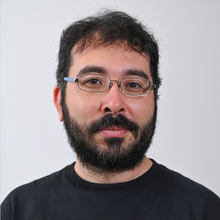
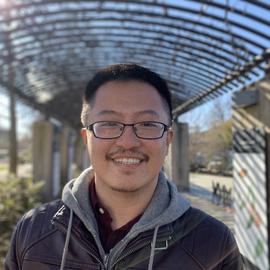
Giuditta Franco is an Associate Professor at the Department of Computer Science, University of Verona. Her research focuses on Bioinformatics , Natural Computing , and Computational Genomics , with expertise in algorithmic modeling of biological processes and DNA computing. Academic Sector: IINF-05/A - Information Processing Systems Research Areas: ERC PE6_13 (Bioinformatics, Bio-inspired Computing) and PE6_4 (Theoretical Computer Science, Formal Methods) She teaches courses such as Discrete Biological Models and Natural Computing in the Bioinformatics and Medical Bioinformatics degree programs. Her office is located at Ca' Vignal 2, Floor 1, Room 72.
Bessem Chouaia is a Researcher at INRAE (since February 2024) and previously held academic roles including Assistant Professor (Tenure Track and non-Tenure Track) at Ca' Foscari University of Venice. He specializes in microbial ecology and symbiotic interactions, focusing on bacteria-arthropod relationships. His work addresses symbiotic control strategies for insect pests and environmental microbiology. Education: PhD in Animal Biology (2010, University of Milan), MSc in Microbiology (2006, Tunis), BSc in Biological Sciences (2002, Monastir). Professional Experience: Extensive postdoctoral research at institutions like Cornell University and the Rowland Institute at Harvard. Research Themes: Symbiotic nutritional interactions, microbial diversity in extreme environments, and biotechnological applications of symbiosis. His recent projects include leading the Maricostems initiative (PRIN 2022) and contributing to EU-funded programs like BIODESERT. He collaborates with institutions in Italy, France, Saudi Arabia, and the USA on symbiosis research. Teaching roles include courses on industrial microbiology and environmental biotechnology. He actively reviews for journals like Frontiers in Microbiology and serves on the British Ecological Society Peer Review College.
Dr. Francesco Fontanella is an Associate Professor at the Department of Electric and Information Engineering (DIEI) at the University of Cassino and Southern Lazio. His research focuses on evolutionary computation, machine learning, and their applications in neurodegenerative disease detection (e.g., Alzheimer’s and Parkinson’s), cultural heritage preservation, and environmental monitoring. He leads the AIDA Lab and has contributed to major initiatives like the HAND project for neuromuscular disease diagnosis and the C4E environmental monitoring system. Fontanella holds editorial roles in journals such as Pattern Recognition Letters , Genetic Programming and Evolvable Machines , and Applied Soft Computing . He has organized international workshops including the XVI International Workshop on Artificial Life and Evolutionary Computation (2022) and chairs the IEEE Computational Intelligence Society’s Task Force on Evolutionary Computer Vision. His teaching responsibilities include courses on computer science fundamentals, operating systems, and cybersecurity at both undergraduate and graduate levels. Notable projects include developing handwriting analysis systems for medical diagnostics and AI-driven tools for medieval manuscript analysis. Fontanella’s work bridges computational techniques with real-world challenges, emphasizing interdisciplinary collaboration between computer science and fields like healthcare, archaeology, and environmental science.
Alessia Vignoli is a Research Fellow at the Department of Chemistry, University of Florence, affiliated with the Magnetic Resonance Center (CERM). She holds a M.Sc. in Chemical Sciences (cum laude) and a PhD in Structural Biology from the University of Florence. Her research focuses on NMR-based metabolomics for disease diagnosis and prognosis, particularly in cardiovascular, neurological, and oncological contexts. She has been awarded the GIDRM Under 35 award (2022) and the Airalzh Grant for Young Researchers (2022). Education: M.Sc. in Chemical Sciences (cum laude) - University of Florence (2014) PhD in Structural Biology (cum laude) - University of Florence (2017) Research interests emphasize metabolic profiling of biofluids using NMR spectroscopy, with applications in precision medicine. Key areas include biomarker discovery for diseases like Alzheimer’s, cancer, and cardiovascular conditions. She has contributed to projects analyzing metabolomic signatures in breast cancer recurrence, myocardial infarction outcomes, and drug response monitoring. Awards and grants include the AIRC fellowship (2019-2020), CERM/CIRMMP institutional support, and collaborations with clinical teams to develop diagnostic tools. Her work bridges analytical chemistry, computational statistics, and clinical translation, leveraging multivariate data analysis and metabolic network modeling. Her research has been applied to diverse fields, including veterinary medicine (e.g., dairy calf health) and space-related physiology (e.g., skeletal muscle adaptation in microgravity).
Gianfranco Michele Maria Politano is an Associate Professor at the Department of Control and Computer Science (DAUIN) at Polytechnic University of Turin, with affiliations to the College of Computer, Film and Mechatronics Engineering and College of Biomedical Engineering. His research focuses on Bioinformatics, Systems Biology, and Deep Learning applications in health. Research trends span computational modeling of biological systems, protein function prediction using machine learning, and public health analysis of disease burdens (influenza, rectal cancer, and COVID-19). He also investigates gene regulatory networks and microRNA roles in inflammation. His teaching includes Bioinformatics and Internship courses for Computer Engineering and Aerospace Engineering students since 2019. He supervises PhD student Sofia Ostellino on computational solutions for disease monitoring and has secured research grants for biostatistics projects like DIDES (exotic animal diagnostics) and rectal cancer ultrasound staging. Notable projects : DIDES (2020), Feasibility study for rectal cancer diagnostics (2021) Patents : Computerized culture protocols for biomanufacturing, Simulation of biological ontogeny
Marco Rengo is a Lecturer at the Department of Medical-Surgical Sciences and Biotechnologies , Sapienza University of Rome , with a focus on oncological and cardiovascular imaging. He obtained his PhD in Surgical Angio-Cardio-Thoracic Physiopathology and Radioisotopic Functional Imaging in 2012 and specializes in Radiodiagnostic Medicine (cum laude, 2008). His research spans contrast media optimization, artificial intelligence, radiomics, and early cancer diagnosis. Education: PhD, 2012: "Innovazione nella diagnosi e terapia delle patologie oncologiche" Specialization in Radiodiagnostic Medicine, 2008: "Quantificazione della placca coronarica con TC multistrato" MD, 2004: "Riduzione dell’intensità di segnale del miometrio dopo USPIO" Research Interests: Oncological Imaging Cardiovascular Imaging Artificial Intelligence and Radiomics Contrast Media Evaluation Response to Chemotherapy Assessment Publications: Over 31 peer-reviewed articles, 3 books, and 13 book chapters. His work addresses CT/MRI applications in colorectal, prostate, and bariatric imaging, with recent focus on AI-driven diagnostics and blockchain in radiology. Projects: AIRC 2013: "MR Imaging Biomarkers in Rectal Cancer" FIRB 2012: "GPU-based pattern recognition algorithms" Multicenter trials on coronary CT angiography and contrast media (Xenetix 350, I-CON)
Domenico Tortorella is an Assistant Professor (RTD-A) in the Department of Computer Science at the University of Pisa, Italy. He earned a PhD in Computer Science (cum laude) in 2024, an MSc in Computer Science (cum laude) in 2020, and a BSc in Computer Engineering (cum laude) in 2017. His research focuses on graph neural networks , reservoir computing , and deep learning on graphs , particularly addressing challenges like heterophily, over-squashing, and structural encoding. He contributes to conferences such as ICANN, ESANN, and NeurIPS, and is part of the Computational Intelligence and Machine Learning (CIML) research group. Research Trends: His recent publications emphasize Graph topology encoding (e.g., Randomized Ising Models) Efficiency in graph kernels and neural networks Explainable AI for deep graph models Stability analysis in echo state networks Handling heterophilic graphs via reservoir computing Temporal resolution in recurrent architectures Grants & Service: He received funding from the Future AI Research (FAIR) project (2024–2025) and served on program committees for ICANN, NeurIPS workshops, and GbRPR. He was Vice-Chair of the IEEE Student Branch of Pisa (2023–2024) and holds memberships in IEEE, ACM, ENNS, and IAPR's CVPL.
Renato Bruni is Associate Professor at the Department of Computer, Control and Management Engineering of Sapienza University of Rome , Italy. He teaches in the Management Engineering and Bioinformatics study programs. His research focuses on Optimization, Machine Learning, and Bioinformatics , with applications spanning spacecraft control, biomedical engineering, and financial portfolio management. Research Interests His scientific activity is centered on: Combinatorial Optimization Data Mining and Classification Derivative-free Optimization Computational Molecular Biology Information Reconstruction Recent Research Trends The analysis of his publications reveals a strong focus on: Power distribution network optimization Spacecraft attitude control via mathematical programming Higher education data quality and institutional heterogeneity Robust classification with limited training data Stochastic dominance in portfolio selection Physician scheduling optimization Grants and Collaborations Principal Investigator in Sapienza-funded projects (2013–2019) Member of EU H2020 RISIS 2 project (2019–2022) Collaboration with international experts: Peter L. Hammer (Rutgers), Fabio Tardella (Sapienza), and Istat (Italian National Statistical Institute)
Letizia Bergamasco is a Ph.D. candidate in Computer and Control Engineering at Politecnico di Torino, currently in her 38th cycle (2022-2025). She is affiliated with the SMILIES research group (reSilient coMputer archItectures and LIfE Sciences) within the Department of Control and Computer Engineering (DAUIN), and collaborates with the LINKS Foundation. Bergamasco received her B.Sc. in Electronics Engineering (2018) and M.Sc. in ICT for Smart Societies (2020) with a Double Degree from Politecnico di Torino and Politecnico di Milano through the Alta Scuola Politecnica program. LINKS Foundation researcher since 2020 Focus on medical/industrial AI solutions Her research combines computer vision and AI for clinical applications, particularly in early dementia detection through facial expression analysis and pediatric pain assessment using camera-based vital parameter evaluation. Recent publications demonstrate her work in: Deep learning for cognitive impairment detection Digital twin architectures for energy optimization Neonatal pain assessment systems LLM applications in pediatric emergency diagnostics Current projects involve developing non-invasive biomarkers for dementia diagnosis and AI algorithms for infant monitoring systems. Bergamasco's work bridges computer engineering with healthcare applications, integrating multimodal data analysis and real-time processing systems.
Dr. Mario Milazzo is a researcher at the BioRobotics Institute of Sant'Anna School for Advanced Studies , with a current appointment at Massachusetts Institute of Technology (USA). His work bridges robotics, biomaterials, and computational modeling through interdisciplinary projects. He earned a PhD in BioRobotics (2016) from Sant'Anna School for Advanced Studies after completing his Mechanical Engineering degree at the University of Pisa (2010). Research Areas: Multiscale modeling, industrial robotics, biomaterials, and bioinspired design using deep learning. Industry Collaborations: Ge Oil&Gas, Brembo, Magneti Marelli, Piaggio. His recent publications highlight trends in industrial robotics (autonomous platforms, path planning, electro-hydraulic systems) and biomedical applications (bone regeneration, protein nanostructures, tympanic scaffolds). Key methodologies include sonification, molecular modeling, and AI-driven material design. Scientific Awards : Marie Skłodowska-Curie Individual Fellowships (MSCA-IF-GF) with MIT, University of Antwerp, Tufts, and University of Pisa He has co-authored 25+ international journal papers , 9 patents , and 24 conference contributions , while serving as a reviewer for 20+ journals and guest editor for Polymers (MDPI). His leadership roles in industry projects and symposium organization demonstrate his translational research focus.
Chengsheng Zhu serves as a Research Fellow in the Department of Biochemistry and Microbiology at Rutgers University's School of Environmental and Biological Sciences, conducting computational microbiome research within the BrombergLab. His work focuses on developing analytical tools for large-scale microbial genomic data to understand microbe-environment interactions with applications in bioremediation, human health, and climate science. His academic background includes: Ph.D. in Microbiology and Molecular Genetics (2017), Rutgers, the State University of New Jersey M.Sc. in Biology (2010), Central Michigan University B.Sc. in Biology (2006), Fudan University Research centers on microbiome dynamics, machine learning applications for function prediction, and computational genomics. He investigates how microbes reshape environments ranging from human guts to extraterrestrial samples, with emphasis on detoxification processes and health implications. Current work develops high-precision tools for microbial community analysis at massive scales. Publications reveal strong computational focus across diverse environments—human gut, urban subways, snowpacks, and waste treatment systems—with recurring themes in functional annotation, microbial diversity assessment, and bioinformatics tool development for big data challenges. No scientific awards were documented in the source materials. Advising and grant activities aren't specified in available information, though his BrombergLab affiliation indicates active participation in collaborative research projects. He contributes to the BrombergLab's mission of advancing computational approaches to microbiome analysis, particularly for environmental and biomedical applications requiring large-scale data processing.
Ottavia Spiga serves as an Associate Professor in the Department of Biotechnology, Chemistry and Pharmacy at the University of Siena, Italy. She teaches advanced courses including "Big Data Issues in Computational Biological Chemistry" and "Nutrition Biochemistry" for Master's and Pharmacy programs, with current assignments for the 2025/2026 academic year. Her research integrates Biochemistry , Computational Biology , and Pharmacology through cutting-edge machine learning and structural bioinformatics approaches. Key focuses include: molecular mechanisms of flavonoids as vasorelaxant/antioxidant agents, precision medicine strategies for rare diseases like Alkaptonuria, and AI-driven drug discovery pipelines. Her work bridges experimental validation with computational modeling to address cardiovascular pharmacology and sustainable biotechnology challenges. Analysis of her 2024-2025 publications reveals dominant trends in AI-enhanced drug development , with 60% of recent work applying machine learning to: immunogenicity prediction (SHASI-ML), protein-mutation profiling in Mendelian diseases, and natural product repurposing. Strong thematic continuity exists in vascular channel modulation (CaV1.2/KCa1.1), rare disease biomarker discovery, and circular bioeconomy applications of agricultural by-products—demonstrating a cohesive research vision merging computational innovation with biochemical experimentation.
Mario Lauria is an Associate Professor at the Department of Mathematics of the University of Trento, also affiliated with the Interdepartmental Center for Mind/Brain Sciences (CIMEC). He holds a PhD in Electrical and Computer Engineering from the University of Naples Federico II and conducted postdoctoral research at the University of Illinois and UC San Diego. He has held academic positions at The Ohio State University, TIGEM in Naples, and the Microsoft Research-COSBI Centre. His research focuses on computational methods for biomarker discovery, systems biology, and gene regulatory network analysis. Lauria has coordinated multiple EU and industry-funded projects, including work on metabolic markers of pre-diabetes and systems biology approaches to neurodegenerative diseases. Education: PhD in Electrical and Computer Engineering, University of Naples Federico II (1997) M.S. in Computer Science, University of Illinois at Urbana-Champaign (1996) Laurea in Electrical Engineering, University of Naples Federico II (1992) Research interests emphasize bioinformatics , systems biology , and high-performance computing , with applications to gene regulatory networks, diagnostic biomarkers, and multi-omics data integration. His work bridges computational methods with biological systems, particularly in aging, neurodegenerative diseases, and metabolic disorders. Publications reflect a focus on Alzheimer’s biomarkers , diabetes , and gene network analysis . Key contributions include rank-based biomarker algorithms and consensus clustering methods for metabolic profiles. His interdisciplinary approach spans computational tools (e.g., SCUDO, rScudo) and collaborative projects with pharmaceutical and academic partners. Awards include the 2012 SBV IMPROVER Challenge win and IEEE Senior Membership. He serves on editorial boards for journals like IEEE Transactions on Parallel and Distributed Systems and BMC Bioinformatics . Grants and collaborations include leadership in the EarlyBird pre-diabetes project and contributions to EU-funded initiatives like AnEUploidy . His academic service roles include coordinating the Data Science and Quantitative Biology master’s programs at Trento University. Labs/Teams: Active in the Microsoft Research-COSBI Centre for systems biology and the CIMEC interdisciplinary neuroscience hub.
Dr. Luigi Santangelo is affiliated with the University of Pavia. He focuses on High-Performance Computing (HPC), Cloud Computing, and Parallel Computing, with significant contributions to bioinformatics applications and network security. His research integrates cloud-based scheduling for protein analysis and hemodynamic simulations, emphasizing computational efficiency and cost analysis in cloud vs on-premise systems. His work spans hybrid parallel computing models (OpenMP-MPI) and enterprise network management tools like RedHat Directory Server and OpenNMS. Recent efforts prioritize optimizing cloud infrastructure for bioinformatics tasks, such as protein secondary structure analysis and geometric motif searches in proteins. No scientific awards or grants are listed, but his publications reflect a strong emphasis on practical HPC solutions and cybersecurity protocols like SPID digital identity systems. He has not listed formal advisees, though his collaborative research likely involves student contributions.
Marinella Sciortino is a Professor at the University of Palermo , affiliated with the School of Basic and Applied Sciences and the Department of Mathematics and Computer Science . She serves as Director of the CINI Research Unit and is a member of the Academic Senate (2022-2024). Sciortino contributes to editorial and scientific committees for journals and conferences, including Theoretical Computer Science and the GRIN Committee . Research focuses on: Combinatorics on Words String Algorithms Automata Theory Symbolic Dynamics Data Compression Biological Sequence Analysis Her work includes groundbreaking studies on the Burrows-Wheeler Transform (BWT) , extending its application to multiple sequences and improving compression efficiency. She has supervised PhD student Giuseppe Romana and participated in numerous conference program committees (e.g., SPIRE , ICTCS , CiE ). Recent scientific contributions (2022-2020): BWT teaching methodologies String attractors Variant discovery in genomics Algorithmic perspectives on alternating BWT Positional clustering for SNP detection Mental rotation effects on computational learning Teaching roles include Laboratorio di Algoritmi (Computer Science) and Teoria dell'Informazione e Compressione Dati (Master's in Computer Science). Contact: marinella.sciortino@unipa.it , +39-091-238-91080.