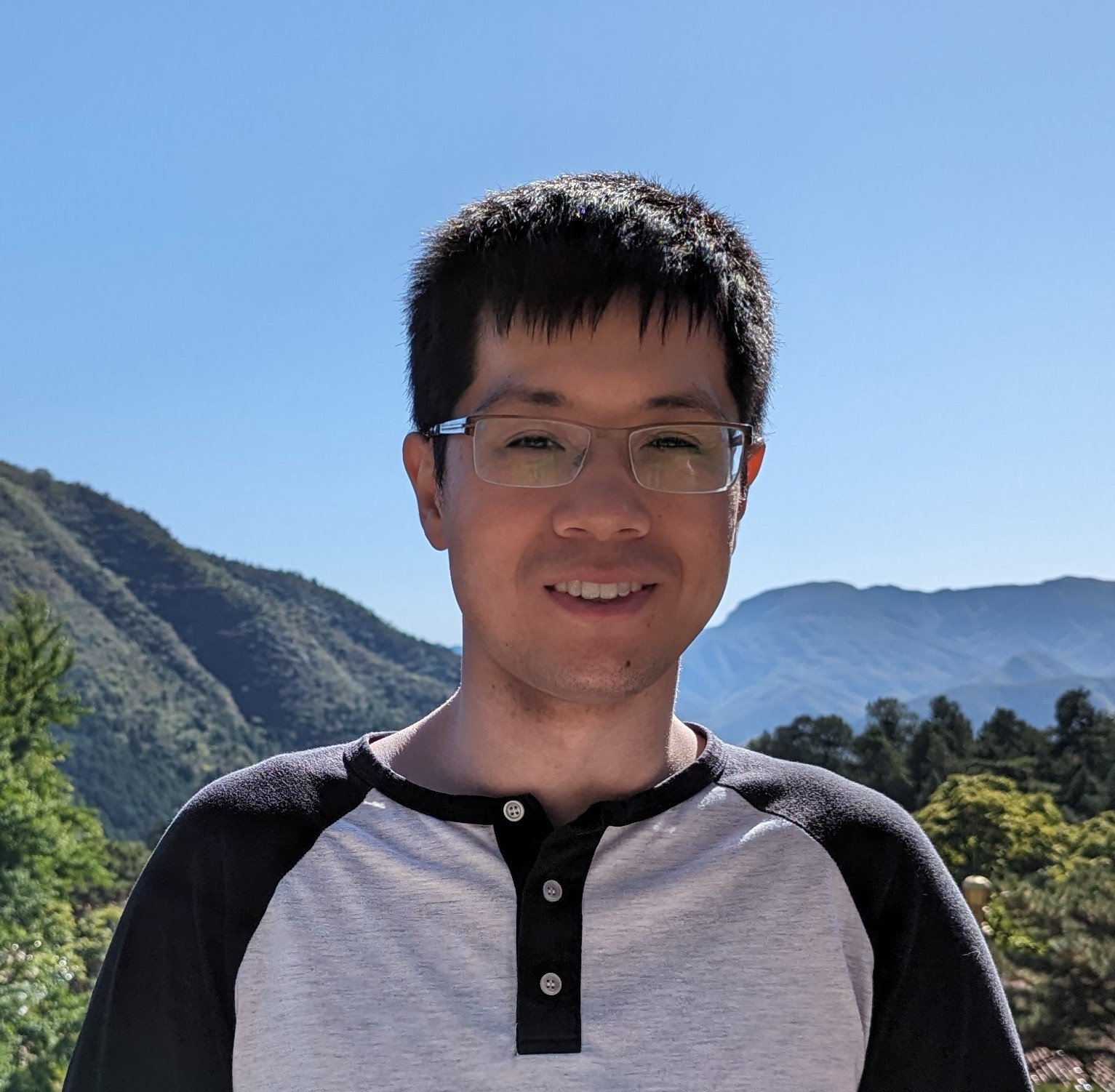
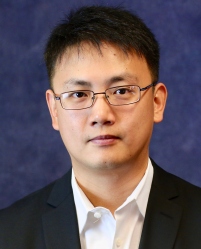
David B. Lindell is an Assistant Professor in the Department of Computer Science at the University of Toronto, with affiliations to the Vector Institute and AXL. He is a founding member of the Toronto Computational Imaging Group. His research focuses on physically based intelligent sensing, integrating physical models, signal processing, and AI to advance sensing systems. Notable projects include imaging around corners, through scattering media, and developing machine learning algorithms for 3D scene reconstruction. Education: Ph.D. in Computational Imaging from Stanford University (advisor: Gordon Wetzstein). Awards include the 2024 Ontario Early Researcher Award and the Best Student Paper at CVPR 2025. His work combines computational imaging with applications in computer graphics and autonomous systems. Research interests span non-line-of-sight imaging, single-photon sensing, and neural representations. Key contributions include the Light-Cone Transform (Nature 2018), confocal diffuse tomography (Nature Communications 2020), and AutoInt (CVPR 2021). His lab develops systems for 3D reconstruction, transient imaging, and photon-efficient sensors. Selected grants and support: NSF CAREER Award, DARPA REVEAL program, and KAUST Visual Computing Center funding. Active collaborations with industry and academic institutions on autonomous driving and medical imaging applications.
Maher Elshakankiri is an Assistant Professor, Teaching Stream at the University of Toronto's Faculty of Information. He holds a Ph.D. in Computer Engineering from Ain Shams University (Egypt), followed by a postdoctoral fellowship at the University of Regina. His research focuses on IoT, Wireless Sensor Networks (WSN), and pedagogical integration of technology and gaming. He has supervised over 100 student projects and authored a book on WSNs. Education: Ph.D. in Computer Engineering, Ain Shams University, Egypt M.Eng., B.Eng. in Engineering, Ain Shams University, Egypt Postdoctoral Fellowship, University of Regina, Canada Research Interests: IoT in healthcare, agriculture, and sports Active learning classrooms and technology in education Wireless communication protocols (V2V, UAV, RFID) Leadership & Grants: Director, Bachelor of Information (BI) Program (2024–present) Coordinator, Information Systems and Design (ISD) Concentration (2023) SSHRC Grant: 'Gaming in teaching towards a more inclusive class' (2022–2023) Professional Activities: Member, SCC IoT & Digital Twins Standards Committee Reviewer for journals including Wireless Networks , Telematics and Informatics , and Computational Intelligence Technical Program Committee member at multiple conferences Teaching: Courses include INF1340 (Programming for Data Science), INF1005/1006 (IoT Workshops), and INF452 (Information Design Coding).
Wenhu Chen is an Assistant Professor at the University of Waterloo's Computer Science Department and a CIFAR AI Chair at the Vector Institute. He also holds a part-time role as a Senior Research Scientist at Google DeepMind (20% allocation). His research focuses on natural language processing, deep learning, and multimodal reasoning, with contributions to models like MAmmoTH, OpenCoderInterpreter, and VISTA. He received awards including the Canada CIFAR AI Chair (2022) and the UCSB CS Outstanding Dissertation Award (2021). Education: PhD in Computer Science from the University of California, Santa Barbara (under William Wang and Xifeng Yan). Research interests include complex reasoning, controllable GenAI, and multimodal benchmarks like MEGABench and MMMU. Grants include CIFAR AI Chair Funding (2022-2027), NSERC Discovery Fund (2023-2028), and multiple NRC Canada grants. He directs the TIGER Lab, advancing generative models in text, images, videos, and music. Recent talks include presentations on multimodal reasoning at Apple and NeurIPS workshops.
Qingguo Li is a Professor and Associate Head at the Department of Mechanical and Materials Engineering , Queen's University , and a member of the Ingenuity Labs Research Institute . He specializes in biomechanical system design, energy harvesting, wearable sensors, gait analysis, and load carriage systems. His research integrates robotics, biomedical engineering, and sensor technology to develop human-centric devices and mobility aids. Current Roles : Professor, Associate Head, Queen's University Research Institute : Ingenuity Labs Research Institute Lab : Bio-Mechatronics and Robotics Laboratory His work focuses on biomechanical energy harvesting , IMU-based motion analysis , and assistive device development . Key applications include stroke rehabilitation, gait monitoring, and wearable power generation systems. Articles span cable-driven robots , smart walkers , and 3D printing mechanisms , emphasizing human-robot interaction and dynamic modeling . The lab explores sensor calibration , adaptive control algorithms , and human movement optimization . Areas of impact include rehabilitation engineering , load carriage stability , wearable sensor accuracy , and assistive robotics . His team develops solutions for gait asymmetry detection , post-stroke mobility , and low-cost energy systems , leveraging machine learning and kinetic modeling .
WonSook Lee is a tenured Full Professor in the School of Electrical Engineering and Computer Science at the University of Ottawa’s Faculty of Engineering. Her expertise spans medical imaging, machine/deep learning, computer graphics, and computer vision. She earned her Ph.D. in Computer Science from the University of Geneva (Switzerland) and holds degrees from POSTECH (Korea) and NUS (Singapore). Before academia, she worked at Korea Telecom, Samsung Advanced Institute of Technology, and Eyematic Interfaces Inc. (USA). Her research focuses on applications such as virtual/augmented reality, MRI/CT/Ultrasound analysis, and 3D mesh modeling. She has authored over 130 publications, including 30+ journal papers, and serves on conference committees and editorial boards. Lee has secured major grants (NSERC, CFI, ORF) as Principal Investigator and contributed to global initiatives like South Korea’s National Research Foundation. Her lab explores cutting-edge techniques in medical imaging, AI-driven object detection, and multimodal systems. Notable projects include adversarial perturbation analysis for model robustness, cross-domain GANs for semantic segmentation, and real-time ultrasound-enhanced pronunciation training. She actively promotes interdisciplinary research in healthcare technology and autonomous systems.
Niko Troje is a Professor at York University, affiliated with the Departments of Psychology, Biology, and Electrical Engineering & Computer Science. He holds cross-appointments and leadership roles, including Director of the BioMotion Lab. His research focuses on perceptual representations, biological motion, and vision science. Education: Ph.D. in Biology (1994) - Albert-Ludwigs Universität B.Sc. in Biology (1990), Physics & Mathematics (1987) - Albert-Ludwigs Universität Research Interests: Troje investigates how the brain processes biological motion, perception of human and animal movement, and applications in virtual reality. His work bridges neuroscience, psychology, and computer science. Key Contributions: Pioneered point-light displays for motion perception, explored gait analysis in mental health, and developed tools for motion capture and analysis (e.g., bmlTUX). Awards: Humboldt Research Prize (2014) NSERC Steacie Fellowship (2008-2009) Canada Research Chair (2003-2013) Grants & Labs: Led funded projects on movement perception, collaborated with institutions like the Max Planck Institute, and directs the BioMotion Lab at York University.
Mahmoud El-Sakka is an Associate Professor at the Department of Computer Science, University of Western Ontario since 1999. Previously, he was a faculty member at the University of Waterloo (1997–1999). He holds a B.Sc. and M.Sc. from Alexandria University (Egypt) and a Ph.D. in Systems Design Engineering from the University of Waterloo. His research focuses on medical imaging, image processing, and computer-aided diagnostics. He has served as Chair of the graduate program (2002–2007) and undergraduate program (2017–present) in Computer Science at Western Ontario. El-Sakka is a Senior Member of the IEEE and a licensed Professional Engineer in Ontario. His work spans grants from NSERC, internal university funding, and industry collaborations. Major research areas include image compression, segmentation, and medical applications like vascular analysis and echocardiography. He has led over 20 funded projects since 1999, emphasizing interdisciplinary approaches in healthcare technology. Academic contributions include advisory roles in summer programs, thesis evaluations, and conference participation. His service includes roles as Pro-Chancellor at convocations and involvement in equipment purchasing committees. Collaborations include consulting with NCR Canada and VRP Web Technology.
Anup Basu is a Professor in the Department of Computing Science at the University of Alberta. His research focuses on computer graphics, computer vision, and multimedia communications. He holds an B.S. in Math & Statistics from the Indian Statistical Institute (1980), an M.E. in Computer Science from the Indian Statistical Institute (1983), and a Ph.D. in Computing Science from the University of Maryland (1990). His work emphasizes Quality of Service (QoS) in multimedia delivery for e-commerce and telelearning, adaptive bandwidth monitoring, and 3D visualization tools. He pioneered foveated image compression and stereo visualization techniques, contributing to MPEG-4 coding standards. He leads major initiatives like the ASRA/TelePhotogenics/IBM 3D Medical Imaging project ($2M+ funding) and developed patented SHR Stereo/3D scanning technologies. Awards include the American Neurological Association Fellowship. He has held leadership roles as General Chair for IEEE International Conferences on SMC (2017), Multimedia & Expo (2013), and SMC (2014). His research integrates interdisciplinary collaborations across universities and industry partners, leveraging advanced equipment like the CAVE system for immersive visualization.
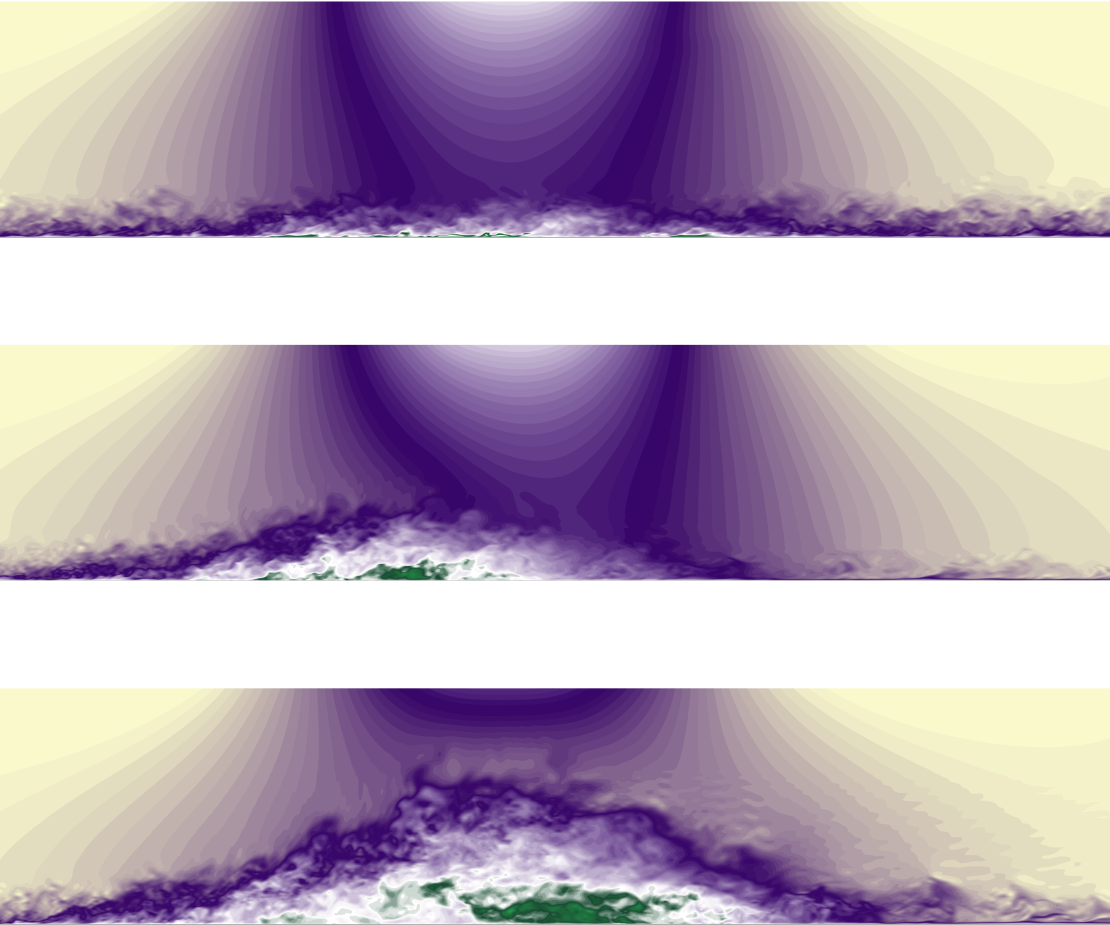
Francesco Ambrogi is an Assistant Professor in the Department of Mechanical and Materials Engineering at Queen's University, where he leads the Fluids, Energy, and Bio-inspired Unsteady Simulations (FEBUS) lab. His research focuses on computational and theoretical studies of turbulent boundary layers under pressure gradients, with applications in unsteady aerodynamics (turbine blades, rotor blades) and biomimicry (swimming/flying animals) for flow control. Dr. Ambrogi received his PhD in Mechanical Engineering from Queen's University in 2024, following a MASc in Energy and Nuclear Engineering from the University of Bologna, Italy (2019), and a BAsc in Mechanical Engineering from the University of Modena and Reggio Emilia, Italy (2015). He previously served as an Adjunct Assistant Professor at Queen's University in 2024 and completed a Postdoctoral Research Fellowship at the University of Waterloo in Mechanical and Mechatronics Engineering. His research program centers on advancing the understanding of turbulent boundary layer physics under unsteady pressure gradients. Dr. Ambrogi's team leverages modern computational tools, particularly large-eddy simulations, to investigate separated turbulent boundary layers and large-scale coherent structures. These structures are pivotal for the transport of mass, momentum, energy, and contaminants in turbulent flows. His work has significant implications for engineering applications such as turbulent mixing, heat diffusion, and contaminant transport in the atmosphere, with direct relevance to turbine blades, rotor blades, and biomimetic systems for flow control. Dr. Ambrogi's recent publications demonstrate a consistent research trajectory focused on unsteady boundary layer separation phenomena, showing increasing sophistication in handling complex unsteady flow physics. His work combines rigorous computational methods with practical applications in aerodynamics and flow control, particularly examining how time-varying freestream conditions affect boundary layer separation and how turbulent kinetic energy is advected in these complex flows. Dr. Ambrogi has secured funding through the Natural Sciences and Engineering Research Council of Canada (NSERC-CRNSG) under the Discovery Grant Program, with computational support provided by the Digital Research Alliance of Canada. His educational initiatives include ARC4CFD, an open-source course designed to bridge the gap between small-scale CFD simulations and large-scale computations on high-performance computing systems. As director of the FEBUS lab at Queen's University, Dr. Ambrogi leads research that combines fundamental fluid dynamics with practical engineering applications. The lab's work spans from theoretical investigations of flow separation mechanisms to the development of computational tools for practical engineering problems in aerospace and bio-inspired systems.
Dr. Oscar Meruvia-Pastor is a faculty member in the Department of Computer Science at Memorial University of Newfoundland, within the Faculty of Science. He holds a B.Sc. from ITESM-Monterrey, Mexico, an M.Sc. from the University of Alberta, and a Ph.D. from Otto-von-Guericke Universität Magdeburg, Germany. His research focuses on interactive 3D graphics, non-photorealistic rendering, and biomedical visualization, with applications in telepresence systems, augmented reality (AR), and virtual reality (VR). He has developed tools like OMARC for respiratory condition training and GeNET for gene co-expression network analysis. Dr. Meruvia-Pastor has supervised numerous graduate students and contributed to over 50 publications. His work includes evaluating stereo correspondence methods in AR, robot arm manipulation via depth sensors, and smartphone integration in immersive VR. He has been recognized with awards such as the Best HCI Poster at Graphics Interface 2014 and a semi-finalist poster at SIGGRAPH 2015. He teaches courses in computer science, including computer graphics, multimedia development, and introductory science modules. His research lab focuses on 3D telepresence, medical visualization, and human-centered VR/AR solutions. His academic contributions span software tools for medical imaging analysis, interactive visualization systems, and educational technologies. He actively collaborates with health professionals to advance telemedicine and remote procedural training through AR platforms. His work bridges computer graphics with real-world applications in healthcare, education, and environmental advocacy.
Dr. Ian Bruce is a Professor in the Department of Electrical and Computer Engineering at McMaster University, Hamilton, ON, Canada. He has been with the department since 2002, conducting interdisciplinary research that bridges electrical engineering with auditory neuroscience. His work has significant implications for hearing technologies and auditory rehabilitation. Education: B.E. (electrical and electronic) from The University of Melbourne (1991) Ph.D. from the Department of Otolaryngology, The University of Melbourne Dr. Bruce's research program focuses on auditory modeling, hearing aids, cochlear implants, tinnitus, neural coding of speech, and digital speech processing. His work centers on understanding the physiological mechanisms of auditory processing and applying this knowledge to develop improved hearing technologies. He has pioneered computational models of the auditory periphery that accurately predict speech intelligibility for hearing-impaired listeners, directly informing hearing aid and cochlear implant design. Analysis of Dr. Bruce's recent publications (2019-2025) reveals a consistent focus on cochlear implants and auditory nerve modeling, with increasing integration of machine learning techniques. His work demonstrates a sophisticated balance between physiological accuracy and computational efficiency, with recent papers exploring WaveNet-based approximations of cochlear models and DNN-based auditory processing. A significant portion of his research examines the relationship between neural responses and perceptual outcomes in hearing-impaired individuals, particularly regarding temporal processing and speech understanding. Scientific Awards and Recognitions: Fellow of the Acoustical Society of America Member of the Association for Research in Otolaryngology Registered Professional Engineer in Ontario Associate Editor of the Journal of the Acoustical Society of America Dr. Bruce has mentored numerous graduate students through various capstone design projects across multiple engineering disciplines including biomedical, electrical, mechanical, and software engineering. His teaching portfolio includes specialized courses in biomedical signals and systems, cellular bioelectricity, models of the neuron, and advanced signal processing. He has consistently supervised M.Eng. projects and independent studies, demonstrating commitment to training the next generation of engineers in auditory technology development. Dr. Bruce's research is conducted within McMaster University's interdisciplinary biomedical engineering framework, collaborating with clinicians and researchers in otolaryngology and audiology. His laboratory work focuses on developing and validating computational models that simulate auditory nerve responses to both natural and prosthetic stimulation, with direct applications to improving cochlear implant performance and hearing aid algorithms for real-world listening environments.
Dr. Tristan A.F. Long is an Associate Professor in the Department of Biology at Wilfrid Laurier University's Faculty of Science in Waterloo, Ontario. A behavioral ecologist and evolutionary geneticist, he focuses on sexual selection and the role of female mate preference variation in evolutionary change. With teaching responsibilities for large introductory biology courses like BI111 and BI393, he has developed innovative active learning techniques using playing cards, iClickers, and role-playing games to teach population genetics and ecological principles. University of Western Ontario - BSc in Honours Ecology and Evolution (1999) University of Guelph - MSc in Zoology (2001) Queen’s University - PhD in Biology (2005) University of California Santa Barbara - Postdoctoral Fellow (2005-2009) University of Toronto - Postdoctoral Fellow (2009-2010) His research examines how female Drosophila melanogaster vary in their mating preferences and how these differences shape evolutionary trajectories. He has published extensively on reproductive plasticity, sexual conflict, and environmental interaction effects. His laboratory combines experimental evolution with computational modeling to explore genetic trade-offs and behavioral adaptations. Scientific awards include the Laurier Teaching Award for Sustained Excellence (2017). He has developed innovative classroom techniques like the Battle of the Beaks exercise for teaching adaptive evolution and an iClicker-based population genetics simulation using playing cards. His 2024 BI393 biostatistics course policy strongly discourages generative AI use due to concerns about educational integrity and environmental impact.
Michel Laroche serves as Professor of Marketing and holds the Royal Bank Distinguished Professorship at Concordia University's John Molson School of Business. He maintains active research leadership through editorship of the Canadian Journal of Administrative Sciences and extensive scholarly contributions across global marketing domains. His educational background includes a Diplôme d'ingénieur from École Centrale de Paris, M.S.E. from Johns Hopkins, and M.Ph./Ph.D. from Columbia University, complemented by an honorary Doctor of Science from the University of Guelph. This multidisciplinary foundation underpins his research approach. Consumer behavior modeling Social media/digital marketing analytics Cross-cultural retailing dynamics Advertising effectiveness in global contexts Internet of Things consumer adoption Artificial intelligence in marketing systems His publication portfolio demonstrates consistent innovation in digital consumer behavior, with recent work examining social commerce cultural dynamics, TikTok authenticity metrics, and pandemic-driven media consumption patterns. Articles consistently integrate technological advancement with deep cultural analysis. Fellow of the Royal Society of Canada Recipient of the Jacques-Rousseau Medal for multidisciplinary research Living Legend of Marketing Award (HEC-Montreal) Hans B. Thorelli Award for international marketing research JBR Outstanding Associate Editor Award (namesake) Laroche has supervised 64 M.Sc. and 27 Ph.D. theses while securing major funding from SSHRC and FQRSC. His editorial leadership spans 16 years as Managing Editor of the Journal of Business Research and current Editor-in-Chief role at CJAS , establishing significant infrastructure for marketing scholarship. Professional service includes presidential roles in ASAC and AMS, plus extensive journal editorial board participation.
Tao Huan is an Associate Professor in the Department of Chemistry , University of British Columbia , and holds the Canada Research Chair in Metabolomics and Exposomics . His research focuses on advancing mass spectrometry (MS) for metabolomics , integrating bioinformatics to address challenges in cancer metabolism , disease biomarker discovery , and exposome characterization . Education: Ph.D. in Analytical Chemistry (University of Alberta, 2015), Postdoctoral Research Associate (The Scripps Research Institute, 2015-2018). Dr. Huan’s work emphasizes systems biology , combining metabolomics with genomics and proteomics to decode complex biological mechanisms. He has pioneered methods for chemical isotope labeling and multimodal data integration , enhancing metabolite identification and pathway analysis. His recent publications (2020-2019) highlight innovations in LC-MS/MS workflows , freeze-thaw sample stability , and applications in colorectal cancer and Alzheimer’s disease . Dr. Huan’s lab actively recruits students and postdocs in analytical chemistry, metabolomics, and bioinformatics. Awards: Fred Beamish Award (2025), President’s Award, Metabolomics Society (2025), UBC Killam Faculty Research Award (2024), Michael Smith Health Research BC Scholar Award (2023). He serves as a faculty member in UBC’s Graduate Program in Bioinformatics , Genome Science and Technology , and the Cluster for Microplastics, Health and Environment . Lab alumni include Ph.D. and M.Sc. students now in academia and industry.
Simon Yang is a Professor in the School of Engineering at the University of Guelph, part of the College of Engineering and Physical Sciences. His research focuses on artificial intelligence, robotics, sensors, control systems, and bio-inspired intelligence. He has contributed to advanced robotics applications, including mobile robot navigation, underwater vehicle control, and agricultural automation. Dr. Yang holds editorial roles for journals such as the International Journal of Robotics and Automation and IEEE Transactions on Cybernetics . His work bridges theoretical advancements with practical implementations in areas like sensor networks, machine learning, and multi-agent systems. Recent projects include developing robust control frameworks for autonomous systems, digital twin applications, and bio-inspired neural network algorithms. His research emphasizes real-world challenges in robotics, environmental monitoring, and precision agriculture, with a focus on integrating AI-driven solutions for enhanced decision-making and system reliability. Professional contributions include advisory roles in multiple journals and conference committees, reflecting his leadership in the field.