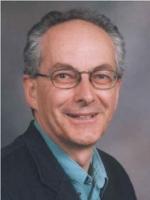
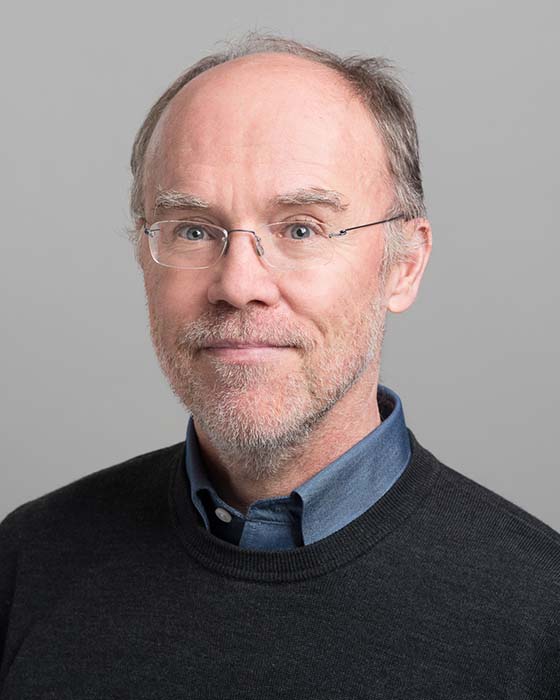
R.K. Shyamasundar is a Professor at the Indian Institute of Technology Bombay , with a focus on Real-Time and Reactive Programming, Logic Programming, Pi-Calculus, and Parallel Programs. Research spans formal verification, concurrency, and distributed systems. Key contributions include RT-CDL semantics, Esterel language extensions, and hybrid system controller synthesis. Scientific awards include JC Bose National Fellow, Fellowships at Indian Academy of Sciences and Indian National Science Academy, and Senior Membership in IEEE. His work involves collaborations with institutions like TCS Group and researchers such as Basant Rajan, N. Raja, and Deepak Kapur.
Matthew Collinson is a Senior Lecturer in Computing Science at the University of Aberdeen, where he also serves as Head of Computing Science and Academic Line Manager. He holds an affiliation with the Scottish Informatics and Computer Science Alliance (SICSA) and leads the EPSRC-funded project SSPEDI (Supporting Security Policy with Effective Digital Intervention). Education: BSc Mathematics, University of Edinburgh (1997) MSc Mathematical Logic, University of Manchester (1998) PhD Computer Science, University of Manchester (2003) Research Interests: His research spans theoretical computer science and cybersecurity , focusing on non-classical logics (intuitionistic, modal, substructural), semantics of computation , concurrency theory , and type theory . He applies these foundations to information security , particularly in modelling security policies, access control, and the economics of cybersecurity decisions. His work integrates formal verification , simulation tools (e.g., Gnosis), and game-theoretic models . Publications Trends: Recent publications (2016–2022) emphasize human-centred security , exploring how persuasion and behavioural interventions can reduce cybersecurity vulnerabilities. Earlier works (2008–2015) concentrate on mathematical systems modelling , layered graph logics , and trust domains , bridging high-level policy and low-level system configurations. Projects & Grants: SSPEDI (2017–2020, EPSRC): Human dimensions of cybersecurity policy compliance. ALPUIS (EPSRC consortium): Algebra and logic for security policy and utility. Trust Domains (RCUK/TSB, 2011–2014): Framework for modelling secure information sharing. Seconomics (EU FP7, 2012–2015): Socio-economic impacts of cybersecurity regulation. PhD Supervision: He has successfully supervised PhD students including Kevin McDonald (2014), Barry Taylor (2015), and Robert (Bob) Duncan (2016), whose theses addressed logic-based security architectures, vulnerability analysis, and cloud stewardship respectively. Labs & Teams: His research is conducted within the Computing Science section of the School of Natural and Computing Sciences, leveraging collaborations with National Grid, HP Labs, and other academic partners.
Prof. Dr. Valentina Dagienė serves as a Professor and Senior Researcher at the Educational Systems Group within the Institute of Data Science and Digital Technologies at Vilnius University, Lithuania. Her academic career spans several decades with significant contributions to informatics education globally, particularly through her leadership in the international Bebras contest initiative. Her research focuses on computational thinking education through constructionist learning approaches, with particular emphasis on task design that promotes deep conceptual understanding in K-12 settings. Prof. Dagienė has pioneered methods for integrating computational thinking into primary education curricula while addressing cultural differences in learning approaches. Her work bridges theoretical frameworks with practical classroom implementations, making complex informatics concepts accessible to young learners through engaging short tasks. Analysis of her recent publications reveals a clear progression toward interdisciplinary integration of computational thinking with STEAM education and digital competence frameworks. Her research increasingly addresses assessment methodologies for computational thinking skills and explores the connections between computational and algebraic thinking. The Bebras contest serves as both a research platform and practical implementation vehicle for her educational theories. Prof. Dagienė has established herself as a key figure in international informatics education through her editorial work, conference organization, and cross-national collaborations. She has fostered partnerships between educators and researchers across Europe and beyond, creating sustainable communities around computational thinking education. Her leadership in the Bebras International Contest has engaged millions of students worldwide in computational problem-solving activities. Through her work with the Educational Systems Group, Prof. Dagienė has developed comprehensive teacher training programs that support educators in implementing computational thinking concepts in diverse classroom settings. Her research on student approaches to problem-solving has informed the design of learning environments that accommodate different learning styles and cultural backgrounds.
Cheng Huang is an Assistant Professor in the Department of Aerospace Engineering at the University of Kansas. His research focuses on computational fluid dynamics, aerospace propulsion, turbulent combustion modeling, and reduced-order modeling techniques. He is affiliated with the Computational AeroPropulsion Laboratory and can be contacted at chenghuang@ku.edu. Education: B.S. from Shanghai Jiaotong University M.S. and Ph.D. from Purdue University Research Interests: LES Modeling of Turbulent Reacting Flows Data-Driven and Reduced-Order Modeling of Complex Fluid Flows Combustion Instability Analysis in Aerospace Propulsion Recent Work Trends: His publications emphasize reduced-order modeling techniques for rocket combustion dynamics, rotating detonation engines, and multiscale fluid systems. Key methodologies include projection-based models, data-driven approaches, and nonlinear approximations of latent dynamics.
Professor Subrahmanya Sastry Challa is affiliated with the Department of Mathematics at Indian Institute of Technology Hyderabad. His academic journey includes a PhD from IIT Kanpur under Prof. P. C. Das, an M.Sc(Tech) from JNT University, and a B.Sc from Hindu College, Machilipatnam. Research Focus: He specializes in Wavelets and Sparse Optimization Theory Frame Theory and Data-driven Learning Methods Applications in Medical Imaging and Signal Processing His recent work explores sparsity-driven optimization techniques with applications in tomography, ECG signal recovery, and machine learning algorithms. Publications & Collaborations: He has contributed to advancements in compressive sensing, inverse problems, and numerical linear algebra through collaborations with researchers like Dr. Phanindra Jampana and Dr. Praveen Pradhan. Key journals include IEEE Transactions on Signal Processing , Inverse Problems , and Neurocomputing . Teaching: Courses taught include Wavelets & Applications, Compressive Sensing, Numerical Linear Algebra, and Mathematics Behind Machine Learning, emphasizing both theoretical and applied aspects. Administrative Roles: Served as Associate HoD/HoD (2010-2014), Chief Vigilance Officer (2015-2019), and participated in policy-drafting committees during IIT Hyderabad's formative years.
Professor Ivo Sachs is a distinguished theoretical physicist at the Ludwig-Maximilians-Universität München (LMU), where he holds a position at the Arnold Sommerfeld Center for Theoretical Physics with a Chair on Cosmology. His research spans multiple areas of theoretical physics with a particular focus on string theory, quantum field theory, and cosmological applications. He maintains an active research program with numerous recent publications in prestigious journals. Professor Sachs' research interests center around fundamental theoretical physics, with significant contributions to string field theory, cosmological perturbation theory, and the mathematical structures underlying quantum gravity. His work often bridges abstract mathematical concepts with physical applications, particularly in understanding the early universe and quantum aspects of gravity. He has developed innovative approaches to studying cosmological correlators, spinning particles, and the relationship between quantum field theory and gravitational physics. Analysis of his recent publications reveals a strong focus on the intersection of cosmology and string theory, with particular attention to mathematical structures in quantum gravity. His work demonstrates consistent exploration of how quantum field theory techniques can be applied to cosmological problems, especially regarding correlation functions in the early universe. He frequently collaborates with researchers across Europe, indicating an active international research network. Martín Enríquez Rojo (PhD, 2022): Asymptotic symmetries in FLRW and deformations of gravitational symmetry algebras
Praveen Agarwal is a Professor of Mathematics at the Department of Mathematics, International College of Engineering, located near Kanota, Agra Road, Jaipur-303012, Rajasthan, India. He also maintains a significant affiliation with the Lepage Research Institute in Slovakia. His academic profile demonstrates a strong international presence with collaborations spanning multiple continents. Dr. Agarwal's research expertise centers on Special functions , Fractional calculus , and Mathematical Physics . His work in fractional calculus represents cutting-edge contributions to this specialized mathematical field, developing theoretical frameworks with applications across diverse scientific disciplines. His research in special functions has led to numerous extensions and generalizations of classical mathematical constructs, creating innovative tools for solving complex differential equations. In mathematical physics, he applies rigorous analytical techniques to model physical phenomena, particularly those involving wave propagation, diffusion processes, and energy systems. Analysis of Dr. Agarwal's extensive publication record reveals a sophisticated approach to fractional-order differential equations with applications spanning viscoelastic wave behavior, neural networks, energy storage systems, and biomedical engineering. He frequently develops novel mathematical methods, including specialized integral transforms and polynomial-based solution techniques, to address complex nonlinear systems. His research consistently bridges pure mathematical theory with practical engineering applications, particularly in areas requiring precise modeling of memory effects and non-local phenomena. The interdisciplinary nature of his work is evident in publications addressing both theoretical mathematics and practical engineering challenges. Dr. Agarwal maintains active research collaborations with prestigious institutions worldwide, including The Union of Czech Mathematicians and Physicists, University of Prešov in Prešov, Eötvös Loránd University, Italian Society for General Relativity and Gravitation, Transilvania University of Brasov, VŠB-TU Ostrava, and Lodz University of Technology. These international partnerships reflect the global recognition of his contributions to mathematical sciences and demonstrate his ability to work across disciplinary boundaries to solve complex problems.
Kristian Gjøsteen is a Professor at the Department of Mathematical Sciences within the Norwegian University of Science and Technology (NTNU) . He actively contributes to the Algebra Group and specializes in cryptographic systems with a focus on electronic voting , security proofs , and privacy-enhancing technologies . Educational Background: MSc and PhD from NTNU Research Interests: His work spans cryptography , key exchange protocols , cloud security , and formal verification of security mechanisms. Particular emphasis is placed on coercion-resistant voting systems , lattice-based encryption , and blockchain privacy models . Article Trends: Recent publications demonstrate expertise in post-quantum cryptography , machine-checked security , and privacy-preserving voting architectures . Collaborative efforts explore hybrid cryptographic schemes , verifiable decryption , and mix-net implementations for secure elections.
David Renfrew is an Associate Professor in the Department of Mathematics and Statistics at SUNY Binghamton. His research focuses on probability theory, random matrix theory, and their applications to mathematical physics and biological systems. Primary research areas: Probability, Random Matrix Theory, Mathematical Physics Special interest in non-Hermitian matrices and free probability interplay Current work explores dynamics of coupled systems and spectral properties of structured matrices Recent publications analyze singularity degrees of random matrices (2025), fractional free convolutions (2024), and universality phenomena in elliptic random matrices (2023). His methodological work bridges abstract probability theory with concrete applications in network dynamics and differential equations.
Andreas Kugi is the Scientific Director at the AIT Austrian Institute of Technology and a full professor of Complex Dynamical Systems at TU Wien (Vienna University of Technology) in the Faculty of Electrical Engineering and Information Technology, Institute of Automation and Control. He has held significant academic and leadership roles across Europe, including professorships at Saarland University and offers from TU Dresden and KIT. His research focuses on the modeling, control, and optimization of complex dynamical systems , with strong applications in mechatronics, robotics, and industrial automation . He has led major research centers such as the Christian Doppler Laboratory for Model-Based Process Control in the Steel Industry and the Center for Vision, Automation & Control at AIT. His work bridges theoretical control design and real-world industrial implementation. The recent publications reflect a consistent focus on nonlinear, hybrid, and distributed parameter systems , with applications in robotics, manufacturing, energy, and process industries. His research integrates advanced control theory with practical engineering challenges, emphasizing real-time optimization, robustness, and system efficiency. Scientific Awards: Mechatronic Systems Outstanding Investigator Award (IFAC, 2022) Goldene Stefan-Ehrenmedaille (OVE, 2023) 16 best paper awards Andreas Kugi has supervised over 50 completed PhD dissertations and has been deeply involved in research leadership, including serving as Editor-in-Chief of Control Engineering Practice (2010–2017) and Vice President of the OVE Austrian Electrotechnical Association (2017–2023). He has secured and led numerous research grants, particularly through industrial collaborations in automation and process control. He leads and contributes to major research initiatives, including the Center for Vision, Automation & Control at AIT and the Christian Doppler Laboratory , fostering interdisciplinary teams focused on industrial digitalization and smart systems.
Professor Martin Hyland is a Professor of Mathematical Logic in the Department of Pure Mathematics and Mathematical Statistics within the Faculty of Mathematics at the University of Cambridge. His work bridges mathematical logic, category theory, and theoretical computer science, with significant contributions to lambda calculus, realizability, and game semantics. Professor Hyland's research spans three interconnected domains: Mathematical Logic (focusing on Lambda Calculus, Recursion Theory, Realizability, Proof Theory, and Linear Logic), Category Theory (specializing in Topos Theory, Categorical Algebra, Operads, and Higher-dimensional Categories), and Theoretical Computer Science (exploring Applications of Category Theory, Domain Theory, Polymorphism, and Game Semantics). His work demonstrates how abstract mathematical structures can illuminate computational phenomena. His recent publications reveal a continued focus on categorical structures for computation, with increasing attention to higher-dimensional categorical frameworks. His work connects foundational logic with practical computational models, showing how category theory provides unifying principles across diverse computational paradigms. The progression from lambda calculus to game semantics to higher categorical structures demonstrates deepening connections between abstract mathematics and computation. Professor Hyland has made foundational contributions to game semantics, categorical models of lambda calculus, and the categorical understanding of algebraic theories. His work on computational effects, particularly in papers like 'Combining algebraic effects with continuations' and 'Combining computational effects: Commutativity and sum,' has influenced both theoretical computer science and practical programming language design.
Jorg Liebeherr is a Professor in the Department of Electrical and Computer Engineering at the University of Toronto, holding the Nortel Chair of Network Architecture and Services. His research focuses on computer networks , particularly network calculus , self-organizing networks , protocol design , and traffic scheduling . Education: Diplom-Informatiker (with distinction), University of Erlangen (Germany), 1988 PhD, Computer Science, Georgia Institute of Technology, 1991 His recent work includes low-cost LoRa mesh networks for environmental sensing and mathematical frameworks for traffic control in 5G and IoT systems. Publications span journals like IEEE Internet of Things Journal and conferences such as IEEE Infocom and ACM Sigmetrics . Scientific Awards: IEEE Fellow (2008) Outstanding Service Award, IEEE ComSoc TC on Computer Communications (2006) ACM Sigmetrics Best Student Paper Award (2005) NSF CAREER Award (1996) Advising and Grants: Supervised 15+ theses (MASc/PhD) and secured grants from NSF, Virginia Engineering Foundation, and industry partners. Labs: Leads the Network Research Lab and HyperCast projects, an open-source platform for application-layer internetworking.
Joseph Maciejko is an Associate Professor in the Department of Physics at the University of Alberta and holds a Tier-II Canada Research Chair in Condensed Matter Theory. As interim director of the Edmonton node of Quantum Horizons Alberta , he leads efforts to build a world-class theoretical quantum physics team. BSc in Engineering Physics from École Polytechnique de Montréal (2004) MSc in Physics from McGill University (2006) PhD in Physics from Stanford University (2011) His research focuses on quantum materials , particularly hyperbolic lattices and topological phases of matter , using mathematical models to predict novel material properties. Recent work includes hyperbolic Chern insulators and non-Abelian semimetals , bridging condensed matter physics with pure mathematics like algebraic geometry. Key trends in his publications (2021-2025) include: Quantum criticality in Dirac fermion systems Topological superconductivity and Majorana modes Hyperbolic geometry applications to band theory Floquet engineering for quantum computing Scientific Awards : Tier-II Canada Research Chair in Condensed Matter Theory. Maciejko emphasizes collaboration, mentoring, and interdisciplinary approaches, working with teams to explore quantum materials' fundamental properties and potential technological applications through initiatives like Quantum Horizons Alberta .
Dr. Steven Wepster is an Assistant Professor in the Department of Fundamental Mathematics at Utrecht University's Faculty of Science. His work is centered in the Mathematical Institute, where he contributes to both teaching and research in the history of mathematics. Wepster is actively involved in teaching courses including History of Mathematics, Mathematical Techniques 1, and Mathematical Techniques 2. Wepster's research focuses on the history of mathematics, particularly 18th century mathematical astronomy, lunar distance methods, and the works of historical figures like Tobias Mayer and Ludolph van Ceulen. His work bridges mathematical theory with historical context, examining how mathematical concepts evolved and were applied in navigation and astronomy. He has made significant contributions to understanding circle quadratures, celestial navigation techniques, and the development of mathematical tables. His scholarly activities reveal a strong pattern of engagement with the history of mathematical astronomy and navigation. Wepster has presented numerous invited talks on topics ranging from lunar distance methods to historical mathematical education. His editorial work for journals like 'Nieuw archief voor wiskunde' demonstrates his commitment to advancing historical mathematical scholarship. Among his notable activities are presentations on Tobias Mayer's lunar tables, circle quadratures of Kashani and Van Ceulen, and transits of Venus. Wepster has also been actively involved in connecting pre-university and university mathematics education, serving on the National working group GMFW. Editor for 'Nieuw archief voor wiskunde. Serie 4' (2011-2013) Editor for 'Zebra series' (2012) Member of Epsilon Publishing (2011-2013) Member of National working group GMFW (2011-2013) Wepster maintains an active role in both academic and public dissemination of mathematical history, presenting at museums like Museum Boerhaave and participating in national mathematics events. His work demonstrates a commitment to making historical mathematical concepts accessible to both academic and general audiences.
Shui Feng is a Professor in the Department of Mathematics and Statistics at McMaster University. His research focuses on stochastic processes and their applications in ecology, finance, population genetics, and statistical physics, with current work emphasizing Bayesian non-parametrics and measure-valued processes. He holds a PhD in Math and Stats from Carleton University (1993), an MSc in Mathematics from Beijing Normal University (1987), and a BSc in Mathematics from Beijing Normal University (1984). Research interests include stochastic processes, probability theory, and stochastic models (queueing, simulation). He has published extensively on topics such as Poisson-Dirichlet distributions, large deviation principles, and applications in population genetics and finance. Teaching responsibilities include advanced courses like Stochastic Processes (STATS 3U03), Intermediate Probability Theory (STATS 4D03/6D03), and Graduate Level Topics in Statistics (STATS 5GT3). Recent publications (2015–2025) explore theoretical advancements in stochastic models and their real-world applications.