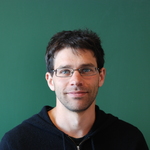
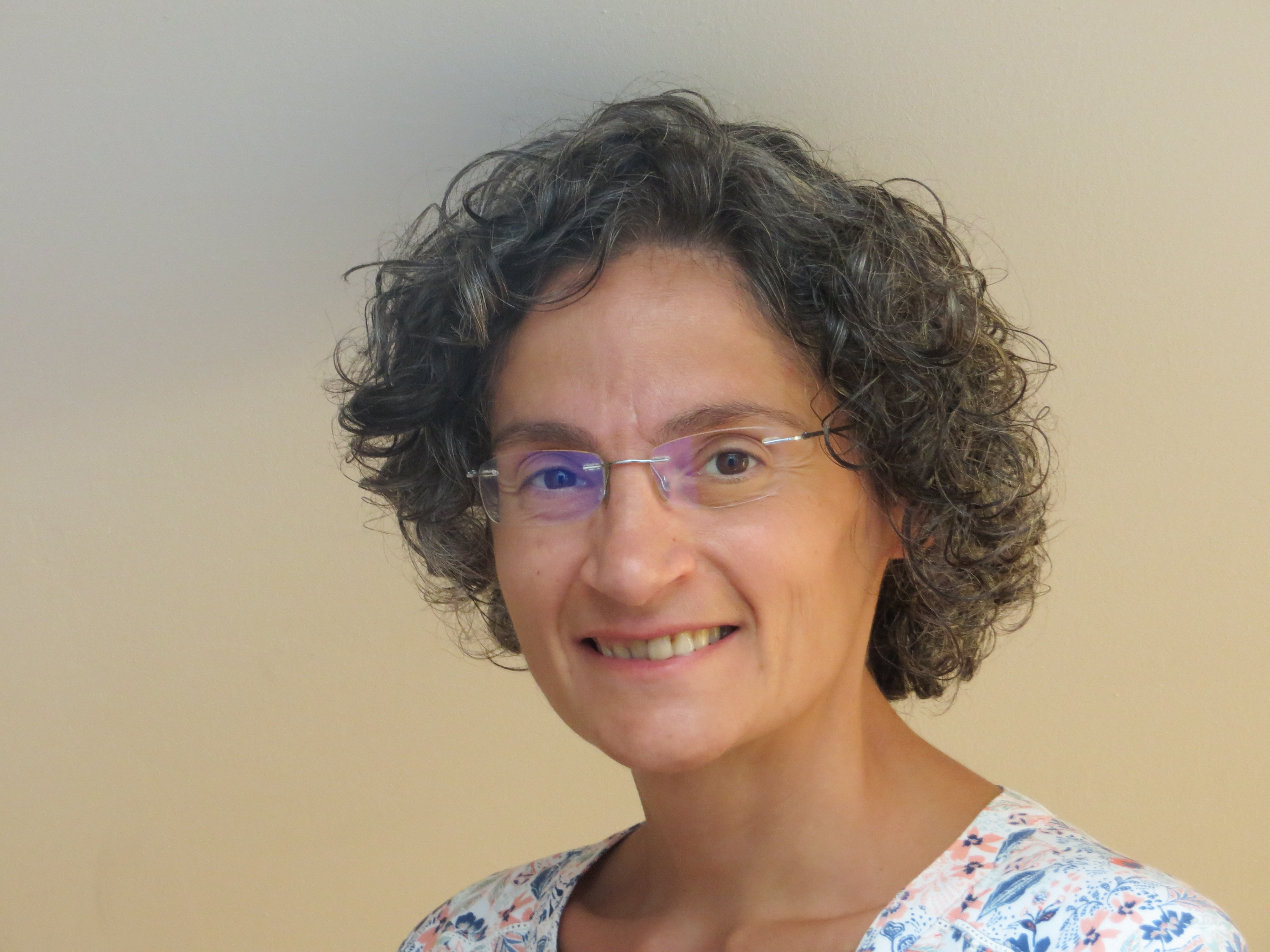
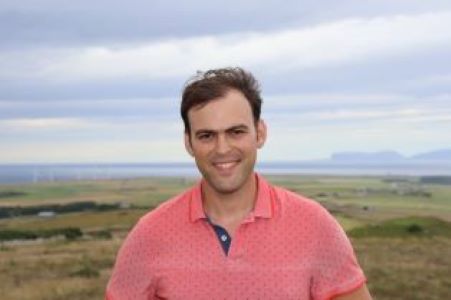
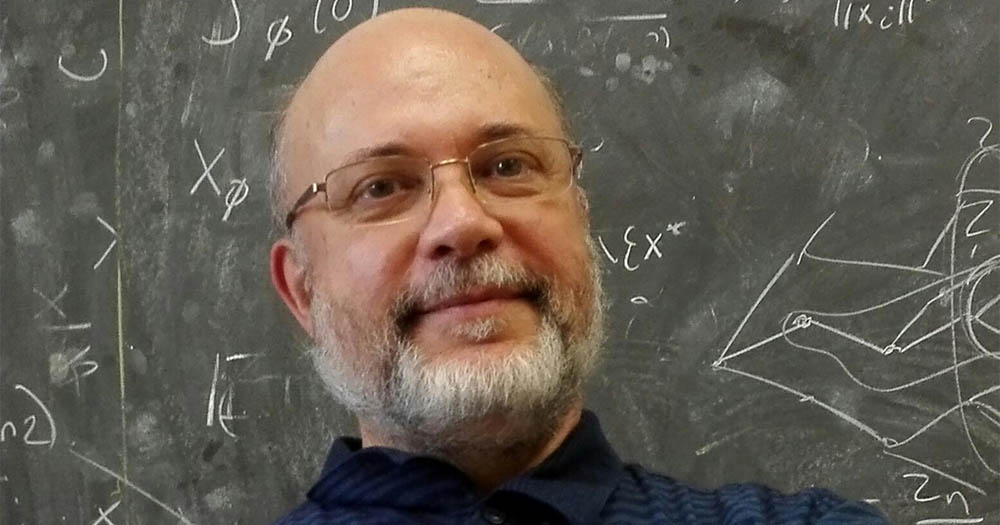
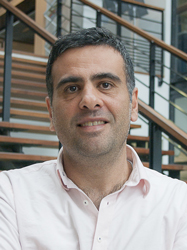
Johan Taflin is a Lecturer at the University of Burgundy, affiliated with the Institute of Mathematics of Burgundy (IMB) under the Faculty of Science. His research focuses on complex dynamics in several variables and pluripotential theory, with significant contributions to attracting sets, equidistribution, and moduli spaces of dynamical systems. He has led the ANR DynAtrois project since 2025 and oversees the new Master of Mathematics program launching in 2025. Research Interests: Complex dynamics in projective spaces and several variables Pluripotential theory and its applications Dynamical systems, attractors, and moduli spaces Interdisciplinary links with mathematical physics and algebraic geometry Publications Trends: His work spans complex dynamics, including studies on blenders, postcritically finite maps, and equidistribution toward Green currents. Key subfields include holomorphic endomorphisms, algebraic geometry, and mathematical physics. Leadership: He directs the ANR DynAtrois project (2025–2030) and manages the Dijon Master of Mathematics program, which emphasizes fundamental and applied mathematics with ties to artificial intelligence.
Maxim Kontsevich has been a permanent professor at the Institut des Hautes Études Scientifiques (IHÉS) since 1995, holding the AXA-IHES Chair for Mathematics . He is also Professor at Rutgers University (one month per year since 1997) and was Professor at University of California, Berkeley (1993–1995). Born 25 August 1964 in Khimki, former USSR, he became a French citizen in 1999. Education: Ph.D. in Mathematics, University of Bonn, March 1992. Research Interests: Prof. Kontsevich’s work lies at the intersection of algebraic geometry , mathematical physics , and quantum theory . He introduced revolutionary ideas in mirror symmetry , non-commutative geometry , and deformation quantization , creating new algebraic structures that have found applications far beyond their original contexts. His current ERC Synergy Grant “ReNew Quantum” (2019-2025) explores recursive and exact new quantum theory . Publications & Trends: Across more than 50 influential papers, Kontsevich has consistently pushed the boundaries of enumerative geometry , motivic integration , and topological field theory . His recent work delves into symplectic aspects of homological algebra , motivic Donaldson-Thomas invariants , non-archimedean geometry , and integrable systems , revealing deep connections between geometry, algebra, and physics. Scientific Awards & Honors: Fields Medal (1998) Crafoord Prize (2008) Shaw Prize in Mathematical Sciences (2012) Breakthrough Prize in Fundamental Physics (2012) Breakthrough Prize in Mathematics (2014) ERC Synergy Grant “ReNew Quantum” (2019) AMS Moore Prize (2025) Doctor Honoris Causa: Aarhus University (2014), Universität Wien (2015), Syddansk Universitet (2023) Member of Académie des Sciences, Institut de France, Academia Europaea, National Academy of Sciences (foreign), London Mathematical Society (honorary) Grants & Leadership: As Principal Investigator of the ERC Synergy Grant “ReNew Quantum” (€10 million, 2019-2025), Kontsevich coordinates an international team advancing exact methods and resurgence in quantum field and string theories. Editorial Service & Community Roles: He serves on the editorial boards of Compositio Mathematica , Publications Mathématiques IHÉS , Journal of Noncommutative Geometry , and several other leading journals, shaping the direction of contemporary mathematical research.
Anush Tserunyan is a Professor of Mathematics at McGill University, Canada, and a Visiting Professor at the Unit of Pure and Applied Mathematics (UMPA) at École normale supérieure de Lyon from December 1, 2024, to January 31, 2025. She holds a bachelor's and master's in computer science and applied mathematics from Yerevan State University (2005–2007) and a Ph.D. in Mathematics from UCLA (2013), focusing on finite generators for group actions, equivalence relations, and recursive program complexity. Research Interests: Anush Tserunyan specializes in Ergodic Theory , Combinatorics , and Group Actions , with notable contributions to graph theory, hypergraphs, and Ramsey theory. Her work bridges combinatorial structures with analytic methods, particularly in dynamical systems and descriptive set theory. Collaborations: During her visit to UMPA, she collaborates with teams in Geometry, Groups and Dynamics , and Number Theory , alongside researchers like Benjamin Schraen and Sophie Morel. Her stay includes seminars on GGD, Number Theory, and the 'Actions!' working group. Publications: Her research spans topics like ergodic theorems, disjoint matchings in graphs, and algebraic hypergraphs, reflecting a focus on foundational mathematical structures and their applications.
Raphaël Beuzart-Plessis is a CNRS Research Fellow affiliated with Aix-Marseille University and the Institute of Mathematics of Marseille (I2M) at Luminy Campus. He specializes in advanced areas of mathematics, including harmonic analysis, automorphic forms, representation theory, and number theory, with a focus on unitary groups and conjectures like Gan-Gross-Prasad. His work bridges algebraic geometry, differential geometry, and operator theory. Arithmetic, Geometry, Logic and Representations Group (AGLR) 2022-2027 ERC RELANTRA grant recipient Research interests span automorphic representations, L-functions, periods of automorphic forms, and harmonic analysis on real spherical spaces. He works extensively on the local and global Gan-Gross-Prasad conjectures, endoscopy, and supercuspidal representations. His recent publications analyze Plancher1el formulas, spherical characters, and congruences of automorphic forms. His 15 most recent publications (2014-2022) address topics such as the Gan-Gross-Prasad conjecture, Jacquet-Rallis's fundamental lemma, and the Asai Rankin-Selberg integrals. These works reflect his expertise in automorphic forms, representation theory, and number theory, often involving collaborations with leading mathematicians. 2016-2017 Peccot Prize for young mathematicians under 30 2022-2027 ERC RELANTRA grant for research in automorphic forms and representation theory Beuzart-Plessis has no listed students or laboratory teams but participates in the AGLR-RGR (Reduction Group Representations) team and has been an invited speaker at the 2022 International Congress of Mathematicians. His career includes guest lectures at Collège de France, including four sessions on Period factorizations and Plancherel formulas in 2017.
Christine Vespa is a Professor at Aix-Marseille Université affiliated with the Institute of Mathematics (I2M) in Marseille. Her research lies at the intersection of Algebra , Algebraic Topology , and Category Theory , focusing on polynomial functors , functor homology , and stable homology of group families. Education Habilitation à diriger des recherches (HDR), Université de Strasbourg, 2013. Thesis: Foncteurs polynomiaux et homologie stable à coefficients polynomiaux . Jury: William Dwyer, Vincent Franjou, Hans-Werner Henn, Nick Kuhn, Birgit Richter, Lionel Schwartz. Doctorat en Mathématiques, Université Paris 13, 2005. Thesis: La catégorie F_quad des foncteurs de Mackey généralisés pour les formes quadratiques sur F2 . Director: Lionel Schwartz. Research Interests Her work explores structural properties of polynomial functors and their applications in homology stability. She connects abstract category-theoretic frameworks with concrete algebraic and topological problems, such as stable homology for automorphism groups of free groups and orthogonal groups. Recent preprints address PROP structures , analytic exponential functors , and Jacobi diagrams , highlighting her engagement with algebraic topology and category theory. Article Trends Christine Vespa's publications and preprints emphasize algebraic topology and category theory . Recent trends include analyzing partition PROPs , exponential functors , and Jacobi diagrams in the context of stable homology. Earlier works delve into Hochschild homology , automorphism groups , and generalized Mackey functors , showcasing her contributions to homological algebra and representation theory. Advising Antoine Feltz (2020–2024): Foncteurs polynomiaux sur les catégories FI_d . Arthur Soulié (2015–2018): Foncteurs de Long-Moody et homologie stable des groupes de difféotopie . Andrea Cesaro (2012–2016): Pre-Lie algebras and operads in positive characteristic , co-supervised with Benoit Fresse. Labs & Teams She is a member of the Analyse, Géométrie, Topologie research group at I2M. She has organized academic events, including the 2014 Strasbourg workshop on Mac Lane's cubic construction and the 2015 Strasbourg Masterclass on Topological K-theory.
Yvain Bruned is a Professor of Mathematics at Université de Lorraine, Nancy, France, where he leads research in singular stochastic partial differential equations and related fields. He serves as Principal Investigator for the ERC Starting Grant LoRDeT (2023-2028), which focuses on advancing the theory of decorated trees and Hopf algebraic structures for solving singular SPDEs and dispersive PDEs at low regularity. Previously, he was a Lecturer at the University of Edinburgh (2019-2022) and completed postdoctoral work at Imperial College London and University of Warwick under Martin Hairer. His educational background includes: PhD in Mathematics (2012-2015), UPMC (Paris 6), on "Singular KPZ type equations" under Lorenzo Zambotti Master 2 in Probability and Statistics, ENS Cachan / Rennes 1, with honors Master 1 in Mathematics, ENS Cachan, with honors Bachelor in Mathematics and Computer Science, University of Rennes 1, with honors Student at ENS Cachan Brittany extension (2009-2013) Classes Préparatoires in Mathematics and Physics (2007-2009) Bruned's research centers on singular stochastic partial differential equations, with particular focus on Regularity Structures, renormalization theory, and their connections to Hopf algebras. His work bridges theoretical mathematics with applications in quantum field theory, wave turbulence, and numerical analysis. He has developed novel approaches using decorated trees to handle renormalization procedures for singular SPDEs and has extended these methods to dispersive PDEs with random initial data. His research program aims to establish existence and uniqueness results for quasilinear and dispersive SPDEs while developing algebraic tools through deformations of Hopf algebras. His extensive publication record demonstrates consistent contributions to the field of singular SPDEs, with a clear trajectory from foundational work on Regularity Structures to more recent applications in dispersive PDEs and numerical methods. The publications reveal a strong collaborative network with leading researchers in stochastic analysis, mathematical physics, and algebra. His work shows increasing sophistication in handling renormalization procedures through algebraic structures, with recent papers exploring connections between different mathematical frameworks. His major scientific recognition includes: ERC Starting Grant LoRDeT (2023-2028) Bruned actively supervises a large group of researchers, currently advising 4 PhD students and 2 postdoctoral researchers at Université de Lorraine, with several former PhD students having completed their degrees at the University of Edinburgh. His ERC grant has enabled him to organize multiple international workshops in Nancy, fostering collaboration between researchers in singular SPDEs, algebraic structures, and numerical analysis. The grant also supports the development of software platforms for decorated trees and their Hopf algebraic structures. As Principal Investigator of the ERC LoRDeT project, Bruned leads a vibrant research team based at the Elie Cartan Institute of Lorraine, which includes postdocs, PhD students, and visiting researchers. The team regularly organizes specialized workshops on topics including operads, symmetries for quantum field theory, and normal forms for singular dynamics, creating a dynamic research environment that bridges multiple mathematical disciplines.
Vasily Pestun is a Permanent Professor of theoretical physics at the Institut des Hautes Études Scientifiques (IHÉS) in Bures-sur-Yvette, France, a position he has held since 2014. Previously he was a member at the Institute for Advanced Study (2011–2014) and a Junior Fellow of the Harvard Society of Fellows (2008–2011). Education Ph.D. in Physics, Princeton University (2008). Thesis: Wilson loops in supersymmetric gauge theories under the supervision of Edward Witten. B.S. & M.S. in Physics (summa cum laude), Moscow Institute of Physics and Technology (MIPT) (2003). Research Interests Pestun’s research lies at the intersection of quantum field theory, string theory and integrable systems . He is renowned for developing supersymmetric localization techniques that yield exact results in strongly-coupled supersymmetric gauge theories placed on curved manifolds. His recent work explores deep connections between quiver gauge theories , conformal field theories , quantum algebras and integrable systems , with applications to the geometric Langlands programme . Selected Awards & Honours Hermann Weyl Prize (2016) ERC Starting Grant QUASIFT (2015–2020) Junior Fellow, Harvard Society of Fellows (2008–2011) Porter Ogden Jacobus Fellowship, Princeton University (2007–2008) Centennial Fellowship, Princeton University (2003–2008) Joseph Henry Merit Prize, Princeton University (2003) Pomeranchuk Fellowship, ITEP (2003) Russian Federation President Fellowship (1997) Gold Medal, 28th International Physics Olympiad (1997) Grants & Funding Principal Investigator, ERC Starting Grant Quantum Algebraic Structures In Field Theories (QUASIFT) – €1.5 million (2015-2020) Professional Service & Outreach Pestun serves as an editor for Letters in Mathematical Physics and regularly referees for leading journals. He has organised several high-profile meetings and schools, including the 2018 month-long programme “Localization Techniques in Quantum Field Theories” at Stony Brook, and the 2019 IHES conference “Higher Structures in Holomorphic and Topological Field Theory”. He has given more than 100 invited lectures and seminar talks world-wide.
Fanny Kassel is a CNRS Research Director at the Institute of Advanced Scientific Studies (IHES), focusing on geometric, dynamical, and spectral aspects of discrete subgroups of Lie groups. Her work connects discrete group actions on homogeneous spaces with geometric structures on manifolds, such as pseudo-Riemannian and projective geometries, and higher Teichmüller-Thurston theory. Her research spans topics like convex projective geometry, Anosov representations, and pseudo-Riemannian hyperbolic spaces. She has been recognized with the CNRS Bronze Medal (2015), an ERC Starting Grant (2016), and the Mathematics Medal of the French Academy of Sciences (2024). She actively organizes workshops and contributes to editorial boards, including Mathematics of the IHES and Gazette de la SMF . Her recent publications highlight advancements in convex projective geometry, spectral theory, and discrete group dynamics. Awards and grants underscore her influence in geometric group theory and related fields.
François Baccelli is a Research Director at INRIA Paris and Visiting Professor at Télécom Paris, leading the ERC Advanced Grant NEMO project on network mathematics. He holds a Doctor Honoris Causa from Heriot-Watt University and is a Member of the French Academy of Sciences. His career spans key roles including head of the Simons Center on Communication, Information and Network Mathematics (2012–2019), and faculty positions at École Polytechnique (1991–2003) and the University of Texas at Austin (2012–2021) as Simons Math+ECE Chair. Education: PhD in Applied Mathematics from Université Paris-Sud (1983), advised by Erol Gelenbe. Graduate of Télécom Paris (1977). Research Interests: Baccelli’s work bridges applied probability, stochastic geometry, and network dynamics with applications to telecommunications. He pioneered spatial stochastic networks, stochastic geometry modeling of wireless systems, and max-plus algebra for discrete-event systems. His contributions include foundational theories on queuing networks, Palm probabilities, and latency-constrained system design. Awards & Recognition: 2024 Blackwell Prize (INFORMS Applied Probability Society). 2014 ACM Sigmetrics Achievement Award. 2014 IEEE Stephen O. Rice and Leonard G. Abraham Prizes. Collaborations: Co-founder of the LINCS joint laboratory (INRIA/IMT/Nokia Bell Labs/Sorbonne/SystemX), fostering interdisciplinary research in communications and networks. Supervised numerous graduate students who now lead academic and industrial research globally. Labs & Teams: LINCS laboratory and ERC NEMO project, focused on network mathematics and large-scale system dynamics.
Professor Petros Elia is a faculty member at EURECOM, holding the position of Professor within the Department of Communications systems. He specializes in Information Theory , Coding Theory , Caching , Distributed Computing , and Wireless Networks , with additional research in Biometrics . His work focuses on advancing theoretical foundations and practical applications in distributed systems and wireless communication efficiency. He received a prestigious ERC Consolidator Grant for his DUALITY project (2016) and a four-year Fulbright Scholarship (1993-1997). He is also a recipient of the Newcom++ Network of Excellence Distinguished Achievement Award (2008-2011) and the Best Student Paper Award at SPAWC 2011, awarded to his advisee Arun Singh. His research explores cutting-edge topics such as tessellated distributed computing , hypergraph decomposition , and topology-aware caching , with recent contributions presented at venues like the IEEE International Symposium on Information Theory (ISIT 2025). His work bridges theoretical advancements with real-world applications in wireless networks and distributed systems. Education: Supported by his Fulbright Scholarship, he pursued studies in the U.S. during 1993-1997. Grants: ERC Consolidator Grant (2016), and others. Advising: Mentor to Arun Singh , whose work earned a student paper award. He actively contributes to teaching Mobile Communications at EURECOM and remains a key figure in advancing the field through interdisciplinary collaborations and leadership in the Communication Systems department.
Tilmann Wurzbacher is a Professor at the University of Lorraine, affiliated with the Department of Mathematics, Computer Science, and Mechanics. His research focuses on geometric methods in mathematical physics, including multisymplectic geometry, supermanifolds, complex Kähler manifolds, and infinite-dimensional analysis. He has contributed to the development of multisymplectic structures for classical field theories and collaborates on foundational questions in supergeometry. His recent publications emphasize multisymplectic geometry, supermanifolds, and infinite-dimensional structures, with applications to geometric quantization, conservation laws, and Hamiltonian systems. He has co-authored works on co-moments, Lagrangian submanifolds, and singular superspaces. Wurzbacher actively organizes seminars and workshops, including the weekly LieGA seminar and international workshops on multisymplectic geometry. He participates in CNRS-funded networks such as the 80Prime Project "GraNum" and the GDGR "GDM".
Oliver Nash is a researcher at Imperial College London, actively engaged in the formalisation of advanced mathematical concepts. His work bridges geometry and computational logic, with a focus on rigorous proof systems. Research Interests: Oliver's research lies at the intersection of geometry and the formalisation of mathematics. He specialises in using proof assistants to verify deep mathematical results, including topics such as the h-principle, sphere eversion, and Lie algebras. His work contributes to the growing field of certified mathematics, ensuring correctness through machine-checked proofs. Publication Trends: His recent publications at the CPP conference demonstrate a consistent focus on formalising foundational results in differential geometry and algebra. These works reflect a trend toward computational trust in mathematical proofs, particularly in complex geometric transformations and algebraic structures. Professional Activities: Oliver is an active contributor to the Certified Programs and Proofs (CPP) conference, presenting cutting-edge work in formal verification. He maintains a personal website detailing both his academic contributions and early explorations in computer graphics, such as raytracing and radiosity rendering from the early 2000s. Labs and Projects: While specific lab affiliations are not mentioned, his work is closely aligned with research groups in formal methods and interactive theorem proving, likely involving tools like Lean, Coq, or Isabelle.
Omar Mohsen is a Lecturer at the University of Paris-Saclay since 2021, specializing in mathematics with a focus on partial differential equations and sub-Riemannian geometry. He completed his PhD in 2018 at the University of Paris-Cité under Georges Skandalis, where his work centered on noncommutative geometry. Notably, he advanced the study of maximally hypoelliptic differential operators by proving the Helffer-Nourrigat conjecture using C*-algebras of singular foliations and deriving a topological formula for their analytic index. His research bridges noncommutative geometry with sub-Riemannian structures, leveraging operator algebras to address hypoellipticity. He has been recognized with the prestigious Peccot Course award from the Collège de France (2024-2025), proposed by Professor Nalini Anantharaman. As a guest speaker, he will deliver a lecture series titled On Maximal Hypoellipticity and Sub-Riemannian Geometry at the Mireille Delmas-Marty Amphitheater in March-April 2025.
Prof. Anne PICHON is a Professor at the University of Aix-Marseille and a member of the Institut de Mathématiques de Marseille (I2M). She holds leadership positions, including membership in the CoNRS (National Committee of CNRS) section 41 since 2021 and directorship of the FRUMAM (Research Federation of Mathematics Units of Marseille) from 2018 to 2022. Her research focuses on topology and geometry of singular spaces, algebraic geometry, and low-dimensional topology. She coordinates the ANR project LISA (2017–2022) and serves as an associate editor for the Journal of Singularities . Her work explores Lipschitz geometry, metric properties of singularities, and their classification. She actively participates in seminars like the Marseille Geometry and Topology Seminar and the Rauzy Seminar. PICHON’s contributions bridge geometric analysis with algebraic structures, emphasizing both theoretical and applied aspects of singularity theory. Research Interests Topology and geometry of singular spaces and morphisms Algebraic geometry, particularly singularities of complex spaces Lipschitz geometry of singularities and metric invariants Low-dimensional topology and fiber structures Key Activities ANR Project LISA Coordinator (2017–2022) Member of GDR Singularities and Applications Editorial Board, Journal of Singularities Leadership roles in FRUMAM and CoNRS Labs/Teams She contributes to the Institut de Mathématiques de Marseille (I2M) and collaborates within the FRUMAM federation, fostering interdisciplinary research in geometry and topology.
Christian Bonatti is a CNRS Researcher at the Mathematical Institute of Burgundy (IMB), University of Burgundy, and a member of the Geometry, Algebra, Dynamics, and Topology team. His work focuses on dynamical systems, particularly hyperbolic dynamics, partially hyperbolic systems, and singular hyperbolicity. Institute: Institute of Mathematics of Burgundy (UMR 5584 CNRS) Location: Mirande Building, Wing A, Office 307, Dijon Contact: christian.bonatti@ube.fr / christian.bonatti@u-bourgogne.fr Bonatti’s research investigates chaotic systems through geometric frameworks. He has contributed to understanding Anosov flows, Morse-Smale diffeomorphisms, and robust properties of dynamical systems in dimensions 2 and 3. His work often bridges topology and dynamics, exploring phenomena like homoclinic tangencies and singular hyperbolicity. His recent publications include studies on Anosov flows, prelaminations, and Morse-Smale classifications. Despite the absence of explicit student lists in the provided texts, he is known for mentoring postdocs and students in dynamical systems. Outside academia, Bonatti engages in painting and appreciates music, particularly works by Mahler and Stravinsky. He also practices culinary arts, passing down family recipes like his father’s meringue pie.