Professor Juanita Heredia is a scholar at Northern Arizona University's Department of English in the College of Arts and Humanities. Her research spans Latin American literature, diaspora studies, gender, and transnational cultural analysis. Focuses on Latin American diasporas in the U.S. Explores gender and spirituality in Latinx narratives Investigates trauma, migration, and translation Co-edits the Literatures of the Americas book series Key research trends include transnational identity formation, diasporic literary representations, and the intersectionality of race, gender, and migration in Latin American communities. Her 2018 collaborative work with Palgrave Macmillan examines these themes across multiple case studies.
Dr. Eliana Castro is an Assistant Professor of Secondary Education and Curriculum and Instruction at the University of Vermont's College of Education and Social Services, Department of Education. She holds a Ph.D. from Michigan State University, with certificates in Urban Education and Chicanx/Latinx Studies, along with degrees from Brown University. Her research focuses on race, racism, and racialization in educational settings, particularly in secondary history/social studies classrooms. She launched the R3 in E research collaborative to unite scholars addressing these issues. Dr. Castro has 15 years of teaching experience in high school history and teacher preparation. Education: Ph.D., Curriculum, Instruction, and Teacher Education, Michigan State University (with certificates in Urban Education and Chicanx/Latinx Studies) M.A.T., Secondary History and Social Studies, Brown University B.A., Education and Human Development, Brown University Research Interests: Dr. Castro examines how curricula can promote nuanced understandings of intersectional racial/ethnic identities like Afro-Latinidad. Her work emphasizes teaching race, power dynamics, and institutional critique in history classrooms. Recent projects include a CESS Innovation Grant-supported study on curriculum design. Publications: Her scholarship appears in top journals like the American Educational Research Journal and Race Ethnicity and Education . Notable works include award-winning analyses of historical narratives, Black girl resistance in education, and leadership lessons from Reconstruction-era policies. Awards: Article of the Year (Journal of Research on Leadership Education, 2019) CESS Innovation Grant (2024) American Association of Hispanics in Higher Education Graduate Student Fellow (2019) Teaching & Grants: Dr. Castro teaches courses like Secondary Social Studies Methods and Curriculum Design. She has secured grants to support research on anti-essentialist teaching methods and curriculum diversification. Her work bridges K-12 pedagogy with university-level teacher preparation. Labs/Teams: The R3 in E collaborative brings together researchers studying race across educational contexts, fostering interdisciplinary approaches to systemic inequities.
University of California, Los AngelesUnited States
Kaelyn D. Rodríguez is a Full-Time Assistant Professor of Art History at Santa Monica College. She holds a Ph.D. in Chicana/o Studies from UCLA, with additional master’s degrees in Chicana/o Studies and the History of Art from UCLA and UC Riverside. Her research focuses on Black and Brown visual cultures in Los Angeles, Afro-Latinx Futurism, and community-engaged art practices. She is a 2018 Smithsonian Fellow and 2020 Edward A. Dickson Fellow. Education: Ph.D., Chicana/o Studies, UCLA MA, Chicana/o Studies, UCLA MA, History of Art, UC Riverside BA, Art, California State University, Fresno Research Interests: Rodríguez explores the intersections of art historiography, urban spatial politics, and solidarity between Black, Latina/o/x, and Afro-Latina/o/x communities. Her work combines academic rigor with activist praxis, including mural-making, cartography, and exhibition curation. Her concept of Afro-Latinx Futurism reimagines Los Angeles’s visual history through collaborative, decolonial frameworks. Key Contributions: Her 2018 Dialogo Journal article pioneered anticolonial mapping methodologies in Watts. She recently collaborated with the Smithsonian’s Archives of American Art on an exhibition (projected for 2021) expanding her doctoral research on shared cultural histories. Awards & Grants: 2020 Edward A. Dickson Fellowship (History of Art) 2018 Smithsonian Fellowship Urban Humanities Certificate, UCLA Teaching & Outreach: Teaches courses like Black and Brown Art History of Los Angeles and mentors students through Research Rookies . Her pedagogy integrates fieldwork, archival research, and community partnerships. Labs/Projects: Co-leading a Smithsonian exhibition project with Dr. Josh T. Franco, applying her Emoji Mapping methodology to urban art preservation initiatives with the National Trust for Historic Preservation.
Dr. Ana Ndumu is an Assistant Professor at the University of Maryland’s College of Information Studies. Her research focuses on the intersection of social identity, information behavior, and marginalized communities, particularly African, Afro-Caribbean, and Afro-Latinx immigrants in the U.S. She examines how libraries and information systems can advance social inclusion, with a special emphasis on HBCUs’ contributions to Library and Information Science (LIS) education. Education: PhD in Information, Florida State University School of Information Research Interests: Immigrant information justice and access Africology, Afrocentricity, and Pan-Africanism in LIS Information ethics and social inclusion HBCU-LIS education pipelines Library roles in immigrant acculturation Dr. Ndumu is affiliated with the Immigration and International Information Research Alliance (i3r@UMD) and leads projects like Libraries, Integration, and New Americans and Counted In: National Forum on Libraries and the 2020 Census . She is currently not accepting new PhD students.
Karina A. Bautista is an Associate Professor in the Humanities department at Fitchburg State University , affiliated with the School of Arts and Sciences . Her academic work focuses on Latin American and U.S. Latino literatures , with particular emphasis on Caribbean studies , identity formation , and cultural hybridity . She teaches a range of Spanish language and literature courses, including Spanish for Beginners , Intermediate Spanish , and Latin American Literature . Ph.D. in Latin American Literatures, University of Massachusetts (2010) Master in Spanish Language, Literature & Culture, Syracuse University (1998) B.A. in Sociology and Spanish, State University of New York, College at Cortland (1993) Her research explores identity politics , transnationalism , and afro-Latinx perspectives through literary analysis. Recent publications examine critical race theory , Jesús Colón's essays , and Julia Álvarez's narratives , reflecting her interest in how cultural hybridity and marginalization shape diasporic experiences. While no awards are listed in the provided text, her work has been featured in notable publications such as The Caribbean Writer and The Greenwood Encyclopedia of Multiethnic American Literature . She maintains an office in Conlon Fine Arts 255B and holds fall 2025 office hours on Mondays from 2:00pm-5:00pm.
University of the District of ColumbiaUnited States
Dr. Ada Vilageliu-Diaz is an Assistant Professor at the University of the District of Columbia within the College of Arts and Sciences . Her work bridges Afro-Latinx and Caribbean literature with community-based teaching and bilingual literacy initiatives . She actively engages in anti-racist education and leads academic programs supporting marginalized voices. Education : Ph.D. in English (Afro-Latino & Caribbean Literature, Howard University), M.Phil. in American Literature (Universidad de La Laguna), BA in English Philology (Universidad de La Laguna) Her research focuses on community-based scholarship , Latinx literature , and decolonial pedagogy . Recent publications explore topics like HBCU pedagogy , anti-racist storytelling , and transnational feminist perspectives . She contributes to Campus Compact and Vernon Press publications. Dr. Vilageliu-Diaz serves as Faculty Advisor for the Latinx Student Association and organizes events like the Annual College English Association Mid-Atlantic conferences . Her awards include the Scholar of Promise Award and the Leader of Promise Award from UDC, as well as the Delta Kappa Gamma recognition for educational leadership.
Odette Casamayor-Cisneros is an Associate Professor at the University of Pennsylvania (Penn), where she has been since 2019. She holds a Ph.D. in Art and Literature from the École des Hautes Études en Sciences Sociales (EHESS) in Paris (2002). Her research focuses on Afro-Diaspora and Blackness in Latin America and the Caribbean, with particular attention to Cuban Studies and post-Cold War cultural dynamics. She has authored works such as Utopia, distopía e ingravidez (2013) and Una casa en Los Catskills (2012/2016), and is currently developing projects on Black womanhood, Cuban cultural production, and autobiographical narratives. Her academic background includes teaching at the University of Connecticut. Her interdisciplinary work bridges literary analysis, cultural studies, and ethnography. She contributes regularly to OnCuba News through her column Con tinta negra , exploring themes of race, identity, and diaspora. Her research emphasizes marginalized voices, particularly Afro-Caribbean and Latinx perspectives, and challenges hegemonic narratives in cultural production. Her recent articles analyze Black feminist epistemologies, post-revolutionary Cuba’s racial dynamics, and the intersection of art and politics. Despite no formal awards listed, her impactful scholarship and public engagement reflect her influence in Caribbean and Latin American studies.
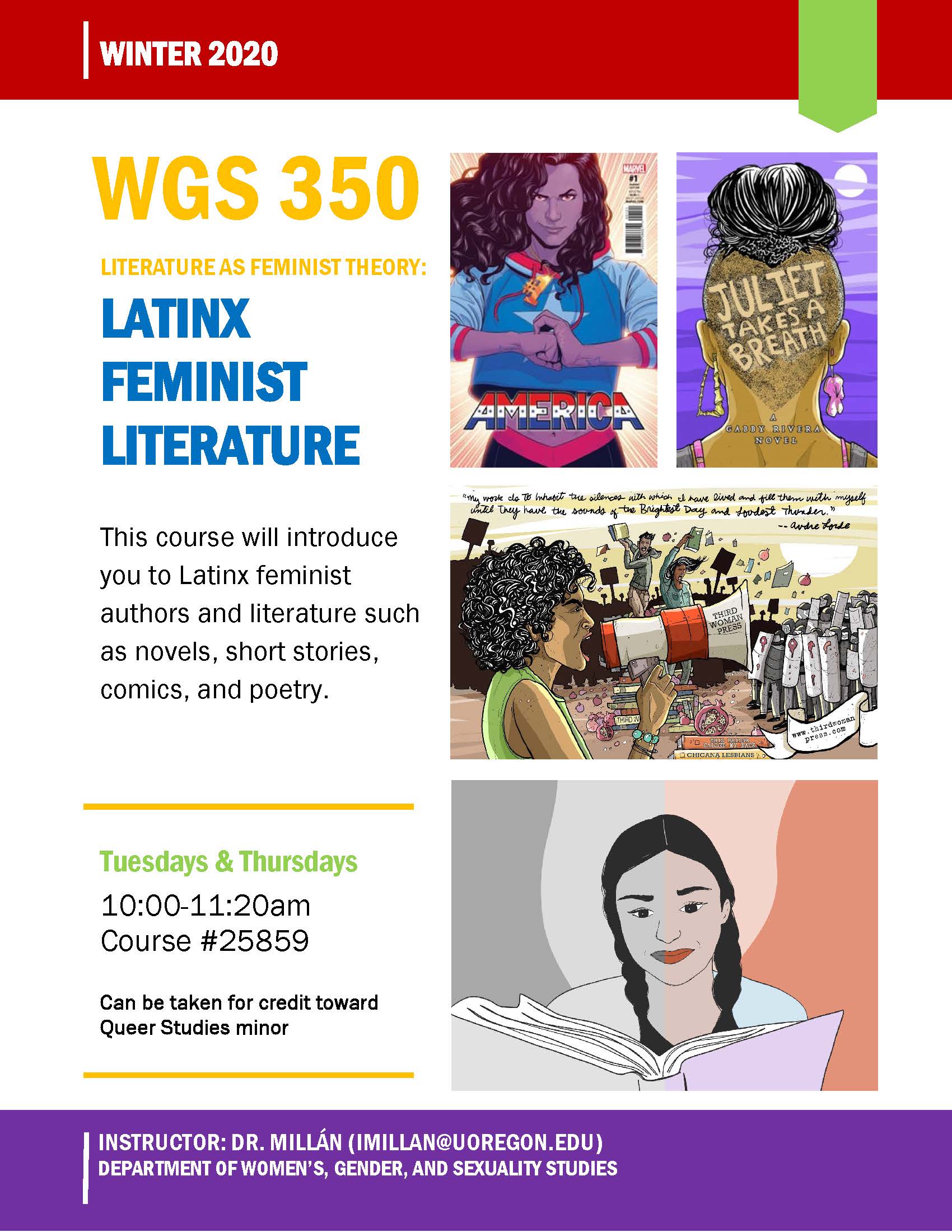
Isabel Millán is an Associate Professor in the Department of Women's, Gender, and Sexuality Studies at the University of Oregon, part of the College of Arts and Sciences. She earned her Ph.D. in American Culture from the University of Michigan and is currently on sabbatical during the 2025-2026 academic year. Professor Millán's research centers on Queer, Transnational Feminist, and Critical Race Theories with specific focus on Latinx/Chicanx Studies, Children's Literature, Television, and Film. Her work extends to Comics, Science Fiction and Fantasy, and Ephemera Studies, examining how marginalized communities create cultural spaces and representations. She approaches these fields through interdisciplinary lenses that connect literary analysis with social justice concerns, particularly focusing on queer of color worldmaking in children's media. Millán's scholarly contributions demonstrate significant impact across multiple disciplines. Her publications reveal a consistent engagement with questions of representation, identity formation, and resistance in cultural productions for and about marginalized communities. The recurring themes across her work include bilingual media, queer Latinx experiences, and the political dimensions of children's cultural production. International Latino Book Award (ILBA), Gold Medal for 'Best LGBTQ+ Themed Book' (2023) for Coloring into Existence International Latino Book Award (ILBA), Gold Medal for 'Best LGBTQ+ Themed Book' (2024) for Chabelita's Heart ChLA Book Award (2025) for Coloring into Existence NACCS Book Award (2025) for Coloring into Existence As both a scholar and creative practitioner, Millán bridges academic research with artistic production. Her teaching portfolio includes courses on Transborder Children's Literature, Latinx Feminist Literature, Queer Aesthetics, and Feminist Praxis, demonstrating her commitment to translating theoretical frameworks into accessible educational experiences. She maintains an active scholarly profile with publications in prestigious journals including Signs: Journal of Women in Culture and Society , Feminist Formations , and Aztlán: A Journal of Chicano Studies , as well as contributions to important edited collections in comic studies and Latinx cultural studies.
Dr. Cera Smith (they/she) serves as an Assistant Professor in the Department of Indigenous, Race, and Ethnic Studies at the University of Oregon. Their research bridges U.S. Black literature, Critical Race Theory, and Health Humanities, with a focus on intersections between biology and racialized life in artistic and literary contexts. Education: Ph.D. in African American Studies and English, Yale University M.Phil. in African American Studies and English, Yale University M.A. in African American Studies and English, Yale University B.A. in English Literature and Creative Writing (Minor: Psychology), California State University, Long Beach Their current book project, Vivified Viscerality: Bioscience and the Black Interior in U.S. Black Literature and Sculpture , examines how Black artists use biological frameworks to articulate racialized experiences. Their work engages Critical Race Theory, Affect Theory, and Histories of Science and Medicine. Recent publications highlight psychobiological impacts of racism in literature and intersections of physiology with Black identity. They previously taught courses on Black Life and the Body, Afro-Latinx literatures, and Trauma Writing. Dr. Smith is affiliated with social justice organizations like the California Conference for Equality and Justice and the Yale Prison Education Initiative.
Dr. Cecilia Marquez is the Hunt Family Assistant Professor in the Department of History at Duke University's Arts & Sciences school. She specializes in the history of Latino communities in the US South, examining identity formation, social movements, and regional racial dynamics. Her acclaimed book Making the Latino South reframes Southern history through Latino experiences from Jim Crow to the 21st century. Education: Ph.D. University of Virginia (2016) M.A. University of Virginia (2013) B.A. Swarthmore College (2011) Research Focus: Her work explores how regional contexts shape Latino identity, immigrant justice struggles, and intersections between Black and Latino histories in the American South. Current projects investigate cultural representation and multi-ethnic community formation. Publication Trends: Recent articles analyze racial dynamics in immigration policies, cultural stereotyping, and urban Latino contributions. Her scholarship consistently addresses erasure of marginalized voices and redefines Southern historical narratives. Awards & Support: Mellon Foundation Research Grant Woodrow Wilson Foundation Fellowship Smithsonian National Museum of American History Research Support Teaching: Courses include History of Latinxs in the US and Topics in Racial Formations, emphasizing interdisciplinary approaches to race, migration, and regional studies.
Bridget Franco is a Professor at the College of the Holy Cross, serving as Co-Director of Latin American, Latinx, and Caribbean Studies and Incoming Director of the Montserrat program starting July 2025. She earned her Ph.D. in Spanish from the University of California, Irvine. Her interdisciplinary research focuses on Latin American film studies, Southern Cone memory studies, and experiential pedagogy in Spanish-language education. Franco is committed to digital humanities initiatives, including open-access resources like Cineglos , and community-based learning projects such as El Español en Camino . Her academic work spans film analysis, literary criticism, and educational innovation, with publications in Hispania , Diálogo , and Studies in Spanish and Latin American Cinemas . She has co-edited special issues on Indigenous presence in Latin American cinema and authored books on Latin American art and film. Franco teaches courses on Latin American film, literature, and cultural studies, emphasizing collaborative learning and local community engagement. Recent projects include a 2024 article on Afro-Latin cinema pedagogy and a 2023 book on Latin American art representation. She has developed simulation games for border studies and contributed to Reacting to the Past curricula. Franco’s work bridges academic scholarship with public-facing initiatives, advocating for democratic cultural access and interdisciplinary dialogue.
Pamela Zabala Ortiz is an Assistant Professor in the Department of Sociology at Boston University, where she specializes in race and ethnicity, migration, and Afro-Latinx identity. Her research examines constructions of Blackness in the U.S. and Latin America, focusing on racial contestations and transnational identity formations. She holds a PhD from Duke University (2024), an MA from Duke (2021), and a BA in Sociology and Africana Studies from Bowdoin College (2017). Her work has been supported by the Russell Sage Foundation and the Social Science Research Council, and she has received recognition such as the 2022 ‘Rising Graduate Scholar’ award from Diverse: Issues in Higher Education . She is currently completing a book project titled Black but “not Black”: Dominican Racial Contestations and the Pursuit of Authentic Blackness , supported by a CISS Book Incubator Grant and the 2025 Dominican Studies Research Fellowship. Zabala Ortiz’s research spans migration studies, racial politics, and critical race theory, with a focus on Latin America and the Caribbean. She actively participates in initiatives like the Migration Studies Workshop at Boston University, contributing to interdisciplinary dialogues on global migration and identity.
Manuel Ricardo Cuellar is an Associate Professor in the Department of Latin American and Latinx Studies at The George Washington University. His research focuses on performance, dance, indigeneity, and Afro-mestizo imaginaries in Mexico, utilizing ethnographic fieldwork, archival research, and Nahuatl language studies. His research interests explore dance's role in Mexican national identity, indigeneity, and queerness across Mexico and the United States. Cuellar combines ethnographic methods with archival analysis and Nahuatl linguistic studies to investigate how performance shapes cultural narratives and social identities. His seminal work 'Choreographing Mexico: Festive Performances and Dancing Histories of a Nation' (2022) examines the historical and cultural significance of dance in Mexican identity formation, blending ethnographic insights with archival evidence. This publication established him as a leading scholar in performance studies of Latin America. Awards: 2023 de la Torre Bueno First Book Award (Dance Studies Association) No information is available regarding his student advising activities, grant funding, or collaborative research teams in the provided text.
Salvador Vidal-Ortiz is a Professor of Sociology at the University of Connecticut with a joint appointment at El Instituto (Institute of Latina/o, Caribbean, and Latin American Studies). Previously tenured at American University, he specializes in racialization, gender, sexuality, and embodiment across the Américas. Education : PhD in Sociology from The Graduate School and University Center, CUNY; MA from California State University – Humboldt; BA from Universidad de Puerto Rico, Recinto de Río Piedras. His research spans qualitative analyses of trans men’s masculinity, Afro-Cuban Santería practitioners, internal displacement in Colombia, and queer education in Argentina. He advocates for shifting knowledge production to the Américas through the Cuir/Queer Américas Working Group. Recent publications interrogate queer sociology, media representations, and critical race-gender intersections. He has served as Chair of the ASA Latina/o Sociology section and co-founded the Body and Embodiment section.
Rutgers, The State University of New JerseyUnited States
Kathleen López serves as Associate Professor in both the Department of Latino and Caribbean Studies and the Department of History at Rutgers University's School of Arts and Sciences. Her academic credentials include a Ph.D. in History from the University of Michigan, an M.A. in Asian Studies from Cornell University, and a B.A. in History from the University of Virginia. Professor López's research centers on transnational historical connections between Asia and the Americas, with particular emphasis on Chinese migration to Cuba and Caribbean societies. Her scholarly work intersects Latin American and Caribbean History, Asians in Latin America and the Caribbean, Race and Ethnicity in the Americas, Diaspora and International Migration, Latinx History, and Public Humanities. She employs both archival and ethnographic methodologies across Cuba, China, and the United States to explore these transnational connections. Her publications reveal consistent thematic focus on migration patterns, cultural hybridity, and diasporic community formation across the Americas. López's work demonstrates methodological sophistication through its combination of historical analysis and ethnographic fieldwork, particularly regarding Chinese migration to Cuba and other Caribbean contexts. Professor López's scholarly contributions have been recognized with: 2014 Gordon K. and Sybil Lewis Prize of the Caribbean Studies Association for 'Chinese Cubans: A Transnational History' Faculty Fellowship for the 2015-2016 Center for Cultural Analysis Archipelagoes Seminar As an academic leader, Professor López co-directs the Rutgers Latino Studies Research Initiative, where she spearheads efforts to document Latinx history at Rutgers and throughout New Jersey. She actively participates in the SAS Global Asias Initiative, the Advanced Institute for Critical Caribbean Studies, and the Center for Latin American Studies. Additionally, she co-edits two influential book series: 'Historical and Cultural Interconnections between Latin America and Asia' (Palgrave Macmillan) and 'Critical Caribbean Studies' (Rutgers University Press). Professor López teaches diverse courses spanning undergraduate and graduate levels including Introduction to Caribbean Studies, Introduction to Latino Studies, History of the Caribbean since 1898, History of Cuba, and specialized seminars on Global Diasporas and Latin American History. Her public history work includes co-directing the '50 Years of Latino and Caribbean Studies at Rutgers University (1973-2023)' exhibit and the 'Lucy Stone Hall Murals' project, both examining institutional history and campus activism.