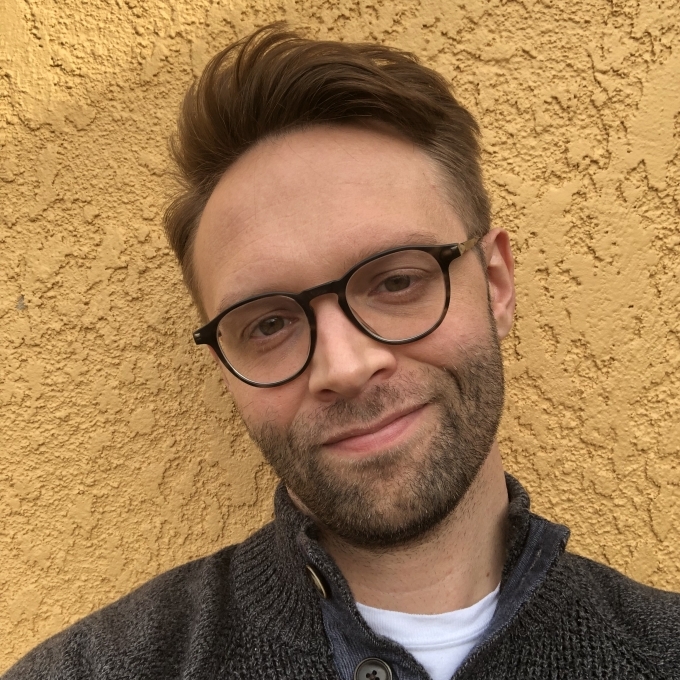
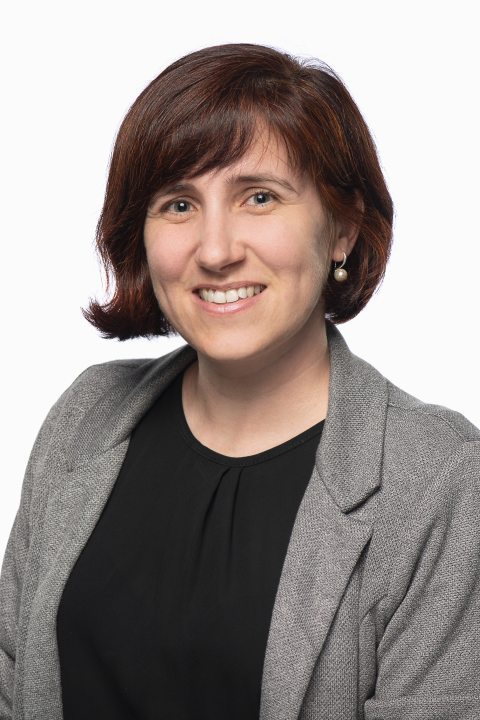
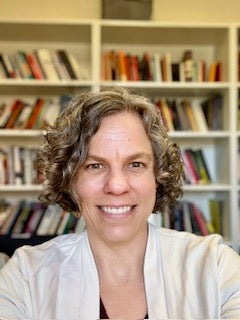
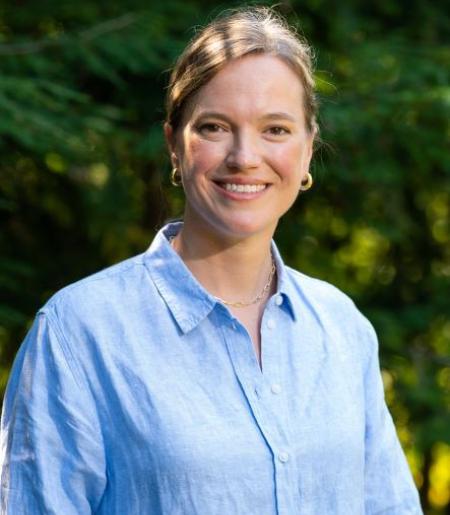
Charlie Geyer serves as Assistant Professor of Hispanic Studies at Davidson College, specializing in hemispheric border studies through comparative analysis of Latin American and Latinx literatures and cultures. His educational credentials include: Ph.D. and M.A. from Vanderbilt University B.A. from Emory University Geyer's research centers on the politics and aesthetics of bordering practices across the Americas, examining how literature, performance, and visual arts engage with geographic and social borders related to race, class, gender, sexuality, and citizenship. His current book project "Disturbing Beauty: Border Crossing in Latin American and Latinx Imaginaries" identifies an aesthetic practice that challenges violent border enforcement while proposing new political arrangements for border coexistence. His scholarly publications appear in Revista de Estudios Hispánicos, CENTRO: Journal, Chasqui, The Comparatist, and Afro-Hispanic Review. Geyer teaches specialized courses including "Border Crossing in the Latinx Americas," "Queer Crossings: Latin and Latinx Americas," and "Beauty and Marginality in Contemporary Latin America," following prior appointments at University of Arizona and Ball State University.
George Palacios, Ph.D., is an Associate Professor of Spanish in the Department of Languages at Clemson University's College of Arts and Humanities. His work focuses on racialization and multiculturalism in Latin American nation-states through an Afro-diasporic lens, examining socio-political mobilizations and cultural expressions reshaping identities across Latin America and the Global South. Education: Ph.D. in Spanish from the University of Pittsburgh (2013); M.A. in Spanish from Purdue University (2004). Courses taught include Hispanic Literary Texts, Latin American Cultural Studies, and Spanish Language Immersion programs. Research Interests: Afro-Latin America, Colombian and Brazilian Literatures, US-Latin American Relations, and Global South Cultural Dynamics. He has published extensively on Afro-Colombian intellectual figures like Manuel Zapata Olivella, earning the 2021 Best Book Award from the Asociación de Colombianistas and the 2022 Clemson University Research Award. Articles and Books: His 2020 monograph Manuel Zapata Olivella (1920-2004) analyzes Zapata Olivella's radical political thought. Recent works critique mestizaje narratives and explore Blackness in colonial contexts. Articles appear in Revista de Estudios Colombianos , PALARA , and Escritos . Awards: Recognized for scholarly excellence in Afro-Latin American studies, including awards highlighting his contributions to decolonial theory and cultural critique. Professional Activities: Maintains an active research profile via Google Scholar (FTvxUjgAAAAJ) and engages in international academic collaborations.
State University of New York at OswegoUnited States
Dr. Roseli Rojo is an Assistant Professor at the State University of New York at Oswego in the Department of Modern Languages and Literatures, specializing in Caribbean Studies and Spanish. Her research examines the agency of women and Afro-descendants in colonial Latin America and the Spanish Caribbean, with a focus on historical narratives, cultural production, and intersectional analysis. Education: Ph.D. in Spanish Literature and Culture, Rutgers University (2021); M.A. in Latin American Studies, National Autonomous University of Mexico (2016); B.A. in Hispanic and Classical Literature, University of Havana (2013) Her scholarly work spans colonial Havana urbanization, gendered representations in Caribbean literature, and environmental intersections with race and power. Recent publications analyze topics like 19th-century Cuban railroads, hysteria as a culture-bound syndrome, and Afro-Caribbean resilience narratives. Dr. Rojo’s research has earned recognition through fellowships such as the PRODiG Postdoctoral Fellowship (2022-2024) and the Goizueta Foundation Graduate Fellowship (2018). She has contributed to journals like Hispanic Review , Latin American Theatre Review , and Decimonónica , alongside book chapters published by Routledge and Hypermedia Press. Professional Experience: Assistant Professor at Jacksonville State University (2021-2022), Instructor at Rutgers University (2016-2021), Assistant Professor at University of Arts, Cuba (2013-2014)
Dr. George Cole is an Associate Professor of Spanish at Texas Tech University's Classical & Modern Languages & Literatures (CMLL) Department. He specializes in Hispanic Caribbean literature and culture (Cuba and Puerto Rico), Afro-Caribbean religious practices, and Hispanic speculative genres like fantasy, horror, and science fiction. His work bridges literature, theater, and cultural anthropology, with a focus on Yoruba religious traditions and their representation in art. Education: B.A. in French Language and Literature, University of Puerto Rico M.A., Washington State University Ph.D., Arizona State University (2005) Research Interests: Dr. Cole explores Afro-Cuban cultural identity, Latin American drama and poetry, and transgressive genres such as detective fiction and graphic novels. His recent projects examine intersections between supernatural elements and criminal narratives. He also investigates the role of Santería in Cuban cinema and literature. Awards: Nominated for AriZoni Theatre Award (Best Supporting Actor, 2002 & 2004) Three-time 'Outstanding Faculty Member' recognition from Texas Tech's College of Arts & Sciences (2005–2007) Leadership & Service: Dr. Cole has served as Director of Spanish and Portuguese Graduate Studies (2018–2025), Interim Director (2022), and Co-Director of the Hispanic Studies Collection. He also holds editorial roles at Dura and Revista Temas Americanistas . Creative Works: His poetry collections Círculos concéntricos (2014) and Hojas sueltas (2015), and the cyberpunk noir short story collection Cadáveres en la oscura ciudad y otros relatos (2023) showcase his narrative versatility. He has authored plays like La indocumentada (2008) and directed six theater productions at Texas Tech.
Lanie Millar is an Associate Professor of Spanish and Portuguese in the School of Global Studies and Languages at the University of Oregon, with affiliations across multiple academic units including African Studies, Black Studies, Comparative Literature, IRES, Portuguese, and Romance Languages. She teaches courses in Spanish and Portuguese literature with a focus on the Global South, Caribbean, Latin American, and African contexts. Her educational background includes: Ph.D. in Comparative Literature, The University of Texas at Austin (2011) M.A. in Spanish, Middlebury College (2003) B.A. in English and Spanish, Baylor University (2002) Millar is a comparative scholar of the Global South working in Spanish and Portuguese, with particular expertise in the Luso-African-Brazilian world and the Caribbean. Her research focuses on South-South comparison and transnational solidarity networks, drawing from literary and cultural studies, postcolonial studies, and theories of racialization. She has made significant contributions to understanding the poetics of disappointment in Cuban and Angolan narratives after the Cold War, as well as examining feminist solidarities and revolutionary masculinities in cultural memories of African empires. Her work demonstrates how literature from the Global South creates new formal and affective relationships to histories of revolution, decolonization, and racialization. Millar's scholarly output reveals consistent engagement with revolutionary narratives across the South Atlantic, particularly examining connections between Cuba, Angola, Brazil, and Mozambique. Her work increasingly focuses on gender dimensions within postcolonial contexts while maintaining a strong emphasis on literary form as political expression. The trajectory of her publications shows a deepening exploration of transnational solidarity networks and the cultural dimensions of decolonization movements across the Global South. Millar has received research support from prestigious institutions including the Kluge Center at the U.S. Library of Congress and the Luso-American Development Foundation/Arquivo Nacional Torre do Tombo in Lisbon, Portugal. Her 2024 translation of Mário Pinto de Andrade's works represents a significant contribution to making foundational African decolonization thought accessible to English-speaking audiences. As an educator, Millar teaches a diverse range of courses including Caribbean Crossings, Theorizing the Plantation, Runaways Rebellions and Revolutions in the Black Atlantic, and Afro-Latin American Literature. Her teaching portfolio demonstrates a commitment to interdisciplinary approaches that connect literary studies with broader questions of race, empire, and decolonization. She has developed specialized courses examining Hispanic cultures through literature, narrative techniques, and the Chinese diaspora in Latin America, reflecting her broad scholarly interests and multilingual capabilities in Spanish and Portuguese.
Reynaldo Romero serves as Associate Professor in the Department of History, Humanities and Languages at the University of Houston-Downtown, where he has maintained active teaching and research since at least 2012. His academic foundation spans linguistics, public health, and translation studies across multiple institutions. His educational background includes: Ph.D. in Spanish Linguistics from Georgetown University (Dissertation: Structural Consequences of Language Shift: Judeo-Spanish in Istanbul) M.P.H. in Community Health Practice from UTHealth (Dissertation: Beliefs on COVID-19 vaccination among Hispanic day laborers) M.A. in Translation from Kent State University Multiple B.A. degrees in French, General Linguistics, and Spanish Language/Linguistics from Rice University Romero's research creates critical intersections between linguistic theory and real-world applications. His work on Spanish for the Professions establishes frameworks for medical and legal interpreting while addressing systemic language access barriers. The scholarship on endangered languages—particularly Judeo-Spanish and Afro-Hispanic varieties—combines rigorous documentation with urgent revitalization efforts. His healthcare access research directly engages Houston's linguistic minorities through community-based projects like the Medical Translation Project with HISD. Recent publications reveal three dominant trajectories: (1) advancing methodologies in Afro-Hispanic linguistics through collaborative edited volumes; (2) developing social justice frameworks for marginalized language communities; and (3) documenting endangered linguistic varieties with innovative digital approaches. These threads converge in his community-engaged scholarship that bridges academic research and practical language access solutions. Professional recognition includes: Certified Translator status from the American Translators Association Advanced Professional Analytic Linguist certification Specialized medical and legal interpreter credentials Online teaching certification with digital tools specialization Romero's grant activity demonstrates sustained commitment to practical applications of linguistic research. Current projects include 'Promoting the Critical and Responsible Use of Digital Tools and AI in Written Tasks' (2024-2025), while past work developed medical interpreter training during disaster relief and language access protocols for healthcare settings. His service learning initiatives—like the Medical Translation Project with Houston ISD—create tangible community impact while advancing pedagogical innovation. Through the Medical Translation Project and language access advocacy, Romero cultivates collaborative spaces where academic research directly serves Houston's linguistic minorities. His work with heritage speakers and endangered language communities establishes frameworks for linguistic empowerment beyond traditional academic boundaries.
Professor Yolanda Martinez-San Miguel is a Marta S. Weeks Chair in Latin American Studies at the University of Miami 's College of Arts and Sciences , Department of Modern Languages and Literatures . She is an internationally recognized scholar in Colonial Latin American and Caribbean studies, with a focus on postcolonial theory, gender, sexuality, and migration. Ph.D., University of California at Berkeley (1996) M.A., University of California at Berkeley (1991) B.A., University of Puerto Rico, Summa cum Laude (1989) Her research interrogates colonial discourses, archipelagic methodologies, and decolonial frameworks across Caribbean and Latin American contexts. Recent projects include a book on comparative archipelagic studies from 1498-2010. She has co-edited anthologies on trans studies , critical Caribbean thought , and colonial Latin American archives . Scholarly awards include the Henry Rutgers Term Professorship in Hispanic and Latin@ Studies and a Postdoctoral Fellowship in Critical Caribbean Studies (2014-2015). Her teaching emphasizes comparative colonialities , queer Caribbean , and decolonial research methods . Decolonial Caribbean (2025) Queer Archipelagic (2024) Transatlantic Colonial Critique (2023)
Matthew Joseph Pettway is an Assistant Professor in the Department of Modern and Classical Languages and Literature at the University of South Alabama. He holds a Ph.D. in Hispanic Cultural Studies (2010) and M.A. (2001) from Michigan State University, and a B.A. (1999) from Eastern Michigan University in Business Spanish and Media Production. Education: Ph.D. in Hispanic Cultural Studies, Michigan State University (2010) M.A. in Spanish and Latin American Literatures, Michigan State University (2001) B.A. in Business Spanish and Media Production, Eastern Michigan University (1999) His research focuses on African-Cuban Studies , Afro-Caribbean Spirituality in Literature , and Critical Race Studies . He has published extensively in peer-reviewed journals like PALARA , Zora Neale Hurston Forum , and Afro-Hispanic Review , with recent work on Afro-Brazilian kinship and Cuban ethnographic interviews. Key publications include studies on Juan Francisco Manzano's poetry, Afro-Cuban ritual poetics, and comparative analyses of Caribbean literature. His forthcoming work explores Third-Gender Identity in Medieval Portugal and Afro-Cuban spirituality in Latinx literatures. Scientific Awards: Langston Hughes Visiting Professorship Pettway has taught at multiple institutions including College of Charleston and University of Kansas, offering courses on racial politics, African-based spirituality, and advanced Spanish literature. His teaching spans from 2007 to present, including team-taught courses on Cuban culture.
Carmen Lamas is an Associate Professor at the University of Virginia, jointly appointed to the Department of English and the Department of American Studies. Her work bridges Latinx literary traditions with hemispheric American and Latin American studies, focusing on 19th-century to contemporary scholarship. PhD, University of Pennsylvania M.A., Georgetown University B.S./B.A., Florida State University Lamas specializes in Latinx literary cultures, translation practices, and historiography of the Americas. Her research interrogates the intersections of race, migration, and transnational identity through 19th-century texts, digital humanities projects, and collaborative editorial work. Her recent publications highlight the enduring relevance of 19th-century Latinx literature, emphasizing translation as both a creative and political act. Themes include hemispheric transformations, Afro-Latinx representation, and archival recovery of marginalized voices. LASA 2022 Latinx Studies Book Award MLA 2023 Book Prize All-University Teaching Award, 2022 Buckner W. Clay Award, 2021 Henry Luce Project Course Development Award, 2018 As co-founder of the Latina/o Studies Association and editor of Pasados , Lamas champions interdisciplinary collaboration. She has presented widely, including plenary addresses at MACLAS and the MLA Conference, and serves on editorial boards like J19 and Recovering the US Hispanic Literary Heritage .
Rodrigo Viqueira is a Visiting Assistant Professor in the Department of Hispanic Languages and Literatures at Stony Brook University. He specializes in modern and contemporary Latin American literature and culture, with a focus on the Southern Cone and Brazil. His research explores sound studies, labor, popular culture, film/media studies, and Afro-Latin American Studies. Education: M.A. in Latin American Literature (Universidad de la República, Uruguay) and Ph.D. in Hispanic Studies (Washington University, St. Louis). Current research projects include analyzing the politics of sound in labor representation across Argentina, Brazil, and Uruguay (1920s–1970s), and examining Afro-Uruguayan cultural production through interdisciplinary archives. His monograph Negrismo, vanguardia y folklore (2019) examines Afro-Uruguayan identity construction through the work of Ildefonso Pereda Valdés. He has been awarded the 2024 LASA Southern Cone Best Article Prize for his work on Afro-Uruguayan press and Black internationalism. Courses taught include HUS 150 (Indigenous Cultures of Latin America) and SPN 321 (Advanced Spanish Grammar).
Dr. Jacqueline Alvarez-Rosales is an Associate Professor and Chair of the World Languages and Cultures Department at Spelman College. She teaches courses on Spanish language, Hispanic American literature and culture, and contributes to the African Diaspora and the World Program and the Honors Program. Her academic career spans over a decade at Spelman since joining in 2008. Ph.D., Vanderbilt University M.A., University of Nebraska-Lincoln Bachelor in Journalism, Universidad Mayor Real y Pontificia de San Francisco Xavier de Chuquisaca, Bolivia Dr. Alvarez-Rosales specializes in colonial Latin American literature, with a focus on Afro-Hispanic, Afro-Andean, and Equatorial Guinean narratives. Her research explores discourses on nation-building, race, and identities, particularly through ethnic relations in colonial historiography and subversive discourses challenging colonial power structures. She analyzes legal and literary texts to examine construction of the colonial subject and “other” in Andean and Afro-Hispanic contexts. Her publications examine colonial and postcolonial representations of Afro-descendant populations in Bolivia, Ecuador, and Equatorial Guinea. Key themes include foundational myths, racial identity in colonial texts, and legal-historical narratives of Afro-Andean communities. She has contributed to journals such as Revista Iberoamericana and College Language Association Journal . UNCF/Mellon Grant. Faculty Residence Award Recipient, 2014 Gordon-Zeto Center for Global Education: Globalizing the Curriculum in L.A Studies, 2013 Co-director of the workshop: “Exploring Connection with the African Diaspora,” August 2011 National Endowment for the Humanities (NEH). Summer Institute, 2008 Art and Science Graduate Select Scholar Scholarship. Vanderbilt University, 1999-2003 Dissertation Enhancement Grant. Vanderbilt University, 2004
Carolyn Fornoff serves as Associate Professor of Latin American Studies in the Department of Romance Studies at Cornell University's College of Arts and Sciences. She is also affiliated with the Latina/o Studies Program and maintains active service roles including membership on the Humanities Council, Environment and Sustainability curriculum committee, and Latin American and Caribbean Studies steering committee. Currently on sabbatical for the 2025-2026 academic year, she continues to contribute to academic discourse through her editorial work on the Hispanic Review and ISLE (Interdisciplinary Studies in Literature and the Environment) advisory boards. Professor Fornoff's research explores cultural responses to environmental crisis in Latin America, with particular focus on Mexico and Central America. Her work investigates how art helps narrate and make sense of temporally expansive problems like climate change that are often difficult to perceive directly. She examines how contemporary filmmakers and writers have shifted from art's evidentiary function toward more subjunctive registers of hypothesis and uncertainty that grapple with alternative world imaginaries. Her scholarship intersects environmental humanities with critical race, gender, and disability studies, creating a rich interdisciplinary framework for understanding ecological challenges through cultural production. Fornoff's publication record demonstrates consistent engagement with environmental themes across Latin American cultural production. Her work spans analyses of Mexican cinema's environmental representations, Central American environmental justice movements, extractive industries' cultural dimensions, and underwater art installations. She has developed theoretical frameworks like 'reflexive extractivist aesthetics' while examining specific case studies from 1970s Mexican cinema to contemporary Central American activism. Her scholarship reveals how cultural works navigate the complex interplay between environmental crisis, visual representation, and social justice. 2025 LASA Mexico Forum Best Book in the Humanities Prize for Subjunctive Aesthetics: Mexican Cultural Production in the Era of Climate Change Honorable mention for 2025 LASA Environment Best Book Prize 2024 LASA Mexico Forum Best Article in the Humanities Prize for 'Reflexive Extractivist Aesthetics' 2024 LASA Film Studies Section Best Article Prize for 'Greening Mexican Cinema' Professor Fornoff has made significant editorial contributions as coeditor of Timescales: Thinking Across Ecological Temporalities (University of Minnesota Press, 2020) and Pushing Past the Human in Latin American Cinema (SUNY Press, 2021). She recently cochaired the Modern Language Association's Committee on Disability Issues in the Profession, reflecting her commitment to inclusive academic practices. Her scholarly trajectory demonstrates how environmental concerns intersect with broader questions of representation, justice, and cultural production in Latin America.
Noémie Ndiaye serves as Associate Professor of Renaissance and Early Modern English Literature in the Department of English Language and Literature at the University of Chicago. Her research sits at the intersection of early modern literary studies, critical race studies, theater and performance studies, and comparative literature, with specific focus on racial, gender, and identity formation processes. She has taught at UChicago since 2019 after earning her PhD from Columbia University in 2017 (with prior studies at École Normale Supérieure, Paris). Her research interests revolve around theatrical representations of race across early modern Western Europe, particularly examining how performance culture transformed blackness into a racial category. She employs transnational, comparative, and transhistorical frameworks to analyze racialization through cosmetic, vocal, and kinetic techniques of impersonation. Additional research threads include visual culture, gender and sexuality studies, translation practices, and the intersections of race with capitalism and globalization in early modern contexts. Ndiaye's publications reveal consistent focus on racial triangulation and transnational performance networks , with recent work expanding beyond Blackness to examine representations of Muslim, Jewish, Indigenous, Romani, and Asian characters in European theater. Her scholarship demonstrates methodological innovation through contrapuntal theater history and visual culture analysis, often connecting early modern racial formations to contemporary structures of white supremacy. 2023 Bevington Award from the Medieval and Renaissance Drama Society 2023 Rose Mary Crawshay Prize from The British Academy 2023 Shakespeare’s Globe Book Award 2024 PROSE Award for Art Exhibitions 2022-2023 William Nelson Prize for best article in Renaissance Quarterly Ndiaye actively collaborates with visual artists and theater makers through UChicago's Black Baroque programming and co-curated the 'Seeing Race Before Race' exhibition at the Newberry Library. Her teaching spans undergraduate courses on Black Shakespeare, representations of Islam in early modern England, and graduate seminars in Early Modern Critical Race Studies, emphasizing intersectional trans-inclusive feminism and transnational approaches.
Rutgers, The State University of New JerseyUnited States
Sara Sáez-Fajardo is an Assistant Teaching Professor and Director of the Spanish Language Program at Rutgers University. She holds a PhD in Hispanic Linguistics (2023) from the University of Illinois at Urbana-Champaign, specializing in Second Language Acquisition and Teacher Education (SLATE), and a Master's in Teaching Spanish as a Foreign Language (2017) from the Universidad de Salamanca. Teaching Experience: Coordinated Spanish language/linguistics courses at UIUC (2018–2023) and taught at Brown University (2017–2018). Assessment Expertise: Developed DELE/SIELE proficiency tests and created bilingual proficiency assessments for Illinois public school interpreters. Her research focuses on equitable teaching practices for heritage and second language learners, multilingual learning strategies, and leveraging technology in language education. She currently explores task-based pedagogy and computer-assisted language learning methodologies. Office: AB-5167 | Office Hours: Mon/Wed 12:30–1:30 PM or by appointment.
Elena Martinez is Professor of Spanish and Latin American Literature in the Department of Modern Languages and Comparative Literature at Baruch College, City University of New York, with additional affiliation to the Department of Black and Latinx Studies. She has served on the faculty of the Latin American, Iberian and Latino Studies program at the CUNY Graduate Center since 2005. Her educational background includes a Ph.D. and M.A. in Spanish from New York University and a B.A. in Spanish from the University of Puerto Rico. Martinez served as Department Chair of Modern Languages and Comparative Literature from 2001 to 2015 and has directed the Paul André Feit Lectures on Latin American and Caribbean Cultures since 2008. Specializes in Latin American and Caribbean literatures with focus on women's and LGBTQ+ literature Expertise in diaspora studies, Afro-Caribbean literature, and gender representation Editorial board member of Chasqui: Revista de Literatura Latinoamericana since 1996 Author of three books including the influential Lesbian Voices from Latin America (1996, reprinted 2016) Her 15 most recent publications demonstrate consistent scholarly output across Latin American literary studies, with particular emphasis on Puerto Rican women writers, Cuban diaspora poetry, and erotic narratives. The works span journals such as Confluencia , Chasqui , and Revista Iberoamericana , reflecting her prominence in Hispanic literary criticism. Magna Cum Laude, University of Puerto Rico (1978) Antonio S. Pedreira Award (1978) Multiple PSC-CUNY research grants totaling over $13,000 Extensive editorial contributions to major literary journals Professor Martinez has directed over 20 PhD dissertations at the CUNY Graduate Center while serving on numerous tenure review committees at institutions including Northwestern University, NYU, and University of Pittsburgh. Her research has been supported by four PSC-CUNY grants focusing on Caribbean women writers, Cuban cinema, and Puerto Rican masculinities. She has organized significant academic events including the Paul André Feit Lecture series and co-organized conferences on Latin American women writers at the Americas Society and New School for Social Research.