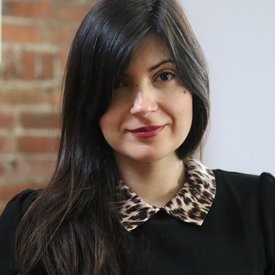
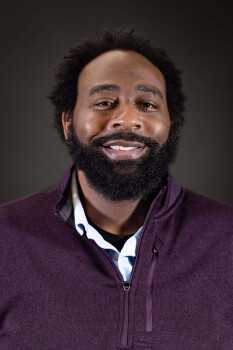
Professor Tali Sharot is a leading cognitive neuroscientist at University College London, holding dual appointments in the Department of Experimental Psychology (since 2018) and the Max Planck UCL Centre for Computational Psychiatry and Ageing Research (since 2020). She directs the Affective Brain Lab, focusing on neural mechanisms of human cognition and emotion. Education B.A. in Psychology and Economics, Tel Aviv University (1998) Ph.D. in Cognitive Neuroscience, New York University (2006) Research Focus Her interdisciplinary research bridges neuroscience, psychology, and computational modeling to investigate: How motivation shapes evidence accumulation in decision-making Neural basis of belief formation and confirmation bias Information-seeking behaviors and their impact on mental health Pharmacological and neuroimaging approaches to affective disorders Awards & Fellowships Wellcome Trust Senior Research Fellow (2019-2024) Wellcome Trust Career Development Fellow (2011-2017) British Academy Postdoctoral Fellow (2007-2011) Leadership She leads the Affective Brain Lab and serves as Group Leader at the Max Planck UCL Centre, integrating computational methods with neuroimaging to study psychiatric conditions.
Seung Kyung Kim serves as an Assistant Professor (Lecturer) in the Department of Linguistics at the University of Utah, a position held continuously since July 2022. She actively teaches undergraduate courses including Language & Culture, Language Myths, Introduction to Phonetics and Phonology, and Introduction to Sociolinguistics across multiple semesters from 2023-2024, demonstrating consistent engagement in the university's academic mission within the linguistics discipline. Her research centers on psycholinguistics with specialized expertise in speech production and comprehension mechanisms, extending into second language acquisition, sociolinguistics, and phonetics. Kim investigates how social factors—particularly accent variation, emotional prosody, and ideological frameworks—impact real-time language processing through methodologies like eye-tracking and auditory-visual priming. Her work reveals critical insights into incremental processing in native and non-native speakers, especially regarding Korean case marking systems and cross-linguistic transfer effects. Analysis of Kim's publication trajectory from 2013-2024 shows evolving focus from foundational studies on emotional prosody in word recognition toward contemporary investigations of linguistic bias in veracity judgments and sociolinguistic variation. Her research consistently bridges cognitive processing with social representation, exemplified by the dual-route speech perception model integrating linguistic and social information. Recent work demonstrates methodological rigor through preregistered replication studies examining Polish-accented English comprehension. No scientific awards or major grants are documented in available records, though her scholarship appears in high-impact journals including Studies in Second Language Acquisition and The Journal of the Acoustical Society of America. While teaching records confirm active curriculum delivery across eight distinct courses with multiple sections annually, information regarding student advising, research laboratories, or collaborative teams remains unspecified in current materials.
Kévin Bailly is a Lecturer at Sorbonne University, affiliated with the Institute of Intelligent Systems and Robotics (ISIR) and part of the Machine Learning and Artificial Intelligence (MLIA) team. His research focuses on computer vision, deep learning, and their applications in facial expression recognition, neural network optimization, and medical imaging. Dr. Bailly's research interests span multiple areas including: Computer Vision and Image Analysis Deep Learning and Neural Network Optimization Facial Expression and Action Unit Recognition Model Compression and Quantization Techniques Medical Applications of Artificial Intelligence His recent publications demonstrate a strong focus on neural network optimization, with particular emphasis on quantization, pruning, and compression techniques that maintain model performance while reducing computational requirements. His work spans both theoretical advancements in deep learning and practical applications in healthcare, human-computer interaction, and affective computing. He has developed novel approaches like PowerQuant for non-uniform quantization, RULe for real-time face alignment in degraded conditions, and RED++ for data-free pruning of deep neural networks. Dr. Bailly has published extensively in top-tier venues including ICLR, NeurIPS, IEEE TPAMI, and IEEE TAC, with a consistent output of high-impact research from 2022-2024. His work bridges theoretical computer vision with practical applications, particularly in medical diagnostics and human-computer interaction systems. He actively collaborates with researchers across multiple institutions, including Arnaud Dapogny, Edouard Yvinec, and Matthieu Cord, and has contributed to interdisciplinary projects that apply AI techniques to medical domains such as fracture classification and obstetrics.
Eva Langvik is a Professor in the Department of Psychology at the Norwegian University of Science and Technology (NTNU). Her work focuses on depression, health psychology, personality assessment, and occupational psychology. She has extensively published on topics such as moral stress in law enforcement, workplace well-being, and psychological factors in cardiovascular health. Her research interests include the intersection of personality traits and health outcomes, particularly in high-stress professions like policing. Studies often address stress management, organizational support systems, and the psychological impact of working with child abuse cases. Recent articles highlight her analysis of police employees’ experiences with workload and organizational resources, as well as investigations into public perception of offenders and patient experiences in clinical settings. She collaborates with institutions like the NTNU Department of Psychology and the Trøndelag Police District.
Jordan Bate is an Associate Professor in the Department of Psychology at the Gordon F. Derner School of Psychology, Adelphi University. He is a licensed clinical psychologist in New York and maintains active research and clinical affiliations, including with Lenox Hill Hospital and Northwell Health. His work integrates psychodynamic, attachment, and mentalization-based approaches across child, adolescent, and family therapy contexts. Education: PhD, The New School for Social Research (2017) MA, The New School for Social Research (2012) BA, Williams College (2006) His research focuses on the psychotherapy process, particularly how attachment and mentalization shape therapeutic outcomes. Key areas include parent involvement in child treatment, therapist facilitative interpersonal skills (FIS), mentalization-based interventions for youth and families in the child welfare system, and adolescent personality development. He leads the Attachment and Psychotherapy Process Lab and employs mixed-methods designs, including observational coding and self-report measures. His recent publications explore therapist training, teletherapy efficacy, epistemic trust, and the psychological impact of the pandemic on families. The work spans journals in clinical psychology, psychotherapy research, and child mental health, reflecting a strong interdisciplinary and translational focus. Scientific Awards and Honors: President, Section II (Children and Adolescents), APA Division 39 (2021–2023) Chair, Child, Adolescent and Family Therapy Research (CAFTR) SIG, Society for Psychotherapy Research (2023–Present) Steering Committee, Psychodynamic Research Mentorship Program (PRMP), Austen Riggs Center & Yale Child Study Center (2024–Present) Committee Member, Mentorship and Progression Committee, Academics for the Advancement of Psychodynamic Psychology (A2P2) (2024–Present) Voluntary Faculty, Department of Psychiatry, Lenox Hill Hospital, Northwell Health (2018–Present) Bate has been instrumental in advancing training models such as Facilitative Interpersonal Skills Training (FIRST) and has contributed to major publications on deliberate practice and mentalization-based parent work. He has received no explicitly listed awards, but his leadership roles and publication record reflect significant professional recognition. He is deeply involved in mentoring students and supporting research in attachment and psychotherapy science. He is also engaged with multiple collaborative research teams, particularly around mentalization-based treatment implementation and therapist responsiveness. His lab collaborates with institutions including Lenox Hill Hospital, The New School, and international partners, supporting a broad network of clinical and academic inquiry.
Fausto Caruana is Senior Researcher at the Italian National Research Council's Institute of Neuroscience and Adjunct Professor at the University of Parma's Department of Medical and Surgical Sciences (DIMEC). His career bridges neurophysiology , cognitive neuroscience , and neurophilosophy , focusing on mirror neuron systems , emotional contagion , and embodied cognition . Research Pillars : System neuroscience, laughter studies, social cognition, and 4E cognitive science Methodological Expertise : Intracranial EEG, brain stimulation, tractography, and cross-species comparisons His publications (over 100) demonstrate temporal progression from primate electrophysiology to human clinical neuroscience. Key themes include: Laughter's neurochemical and network basis Insula-cingulate pathways in emotional processing Sensorimotor abductive mechanisms in social cognition Pragmatist approaches to emotion theories Scientific recognition includes the prestigious Sante de Sanctis Prize for his volume "Come Funzionano Le Emozioni". He serves editorial boards for Frontiers in Theoretical Psychology and Mind & Society , while organizing international conferences like the 2024 Erice workshop on Emotional Expressions.
Stephanie Rennane is a Senior Economist at RAND and Professor of Policy Analysis at the RAND School of Public Policy. Her work bridges labor and health economics with a focus on disability policy, social insurance, and military compensation. She leads major research initiatives funded by the National Institute on Minority Health and Health Disparities (NIMHD) and contributes to critical policy evaluations for the Department of Defense and Veterans Affairs. Her research interests center on the economic and social impacts of disability programs, including Social Security Disability Insurance (SSDI), workers’ compensation, and Medicaid. She specializes in analyzing how these programs affect vulnerable populations, particularly children with special health care needs, low-SES families, and military personnel. Her work explores disparities in caregiver burden, insurance coverage, and access to workplace accommodations. The trends in her recent publications reveal a consistent focus on health and labor policy, with increasing attention to military compensation, food insecurity in military families, and systemic reform in disability evaluation. Her research combines rigorous econometric analysis with policy-relevant insights, often using administrative and survey data to assess program effectiveness and equity. Scientific Awards: None listed in the provided text. As a principal investigator on multiple NIMHD and DoD-related grants, Rennane plays a leading role in advising on public policy. Her research has informed congressional inquiries and federal program evaluations. She has not disclosed any formal students or advisees in the material provided. She is involved in research teams at RAND focused on disability policy, military health, and social safety nets. Her work often involves collaboration with interdisciplinary teams analyzing large-scale datasets and evaluating the cost and impact of public programs.
Marysa Laguë is an Assistant Professor in the Department of Geography within the Faculty of Arts at the University of British Columbia. She is a climate scientist specializing in understanding how terrestrial processes impact the atmosphere and surface climate across scales from individual plants to entire planets. Her research focuses on how changes in the land surface modify energy and water fluxes between the land and atmosphere, and how these changes subsequently affect atmospheric dynamics and climate both locally and remotely. Dr. Laguë serves as a member of the Graduate and Postdoctoral Studies program at UBC. Dr. Laguë earned her PhD in Atmospheric Sciences and MSc degrees in both Atmospheric Sciences and Applied Mathematics from the University of Washington. Her educational background provides her with strong theoretical and modeling expertise that informs her comprehensive research approach. Her research can be broadly categorized into three interconnected areas: understanding land-atmosphere interactions in the modern climate system, exploring fundamental physical connections between terrestrial and planetary processes using idealized models, and climate model development. She studies how changes in vegetation impact cloud formation, temperatures, water vapor, and atmospheric circulation in ways that can feed back on surface climate. On the idealized side, she investigates how continental configurations fundamentally alter global-scale climate patterns. Her work often involves developing and using numerical models of varying complexity to quantify land's role in the coupled Earth System. She is particularly interested in understanding where the atmosphere cares about changes in the land surface, and what particular properties of the land surface it is that the atmosphere cares about. Dr. Laguë's recent publications demonstrate a consistent focus on land-atmosphere interactions, with particular emphasis on how terrestrial evaporation, surface albedo, and vegetation properties influence climate dynamics. Her research spans from local-scale processes to planetary-scale phenomena, including studies of exoplanet climates. She frequently employs both complex Earth system models like the Community Earth System Model and idealized modeling frameworks to isolate specific mechanisms. A recurring theme across her work is the development and application of the Simple Land Interface Model (SLIM), which allows researchers to test how individual land-surface properties modify energy and water fluxes to the atmosphere. Dr. Laguë is actively involved in mentoring graduate students and is interested in supervising Master's students, Doctoral students, and Postdoctoral Fellows. She supports interdisciplinary research collaborations and is open to supervising students interested in public scholarship through the Public Scholars Initiative. She also encourages experiential learning opportunities like internships for her graduate students and emphasizes the importance of interdisciplinary research approaches. She is the lead scientific developer of the Simple Land Interface Model (SLIM), an idealized land surface model that couples with the Community Earth System Model. This tool allows researchers to isolate the effects of individual land surface properties on the Earth system. Her work has significant implications for understanding climate change impacts, land management strategies, and even the potential habitability of exoplanets. Her research methodology includes using climate models, Earth system models, numerical Earth system models, Python, Jupyter, the Coupled Model Intercomparison Project (CMIP), and Fortran programming for climate model development.
Professor Werner Härdtle is a distinguished academic at the Institute of Ecology within the School of Sustainability at Leuphana University of Lüneburg. With over 247 publications to his name, he has established himself as a leading researcher in forest ecology, heathland ecosystems, and nutrient cycling. His work primarily focuses on understanding ecosystem functioning, biodiversity conservation, and the impacts of environmental changes on cultural landscapes. Professor Härdtle's research interests center on forest ecology, heathland ecosystems, nutrient balance, and ecosystem services. His work explores how biodiversity influences ecosystem functioning, particularly in heathland landscapes of northern Germany. He investigates the impacts of management practices, climate change, and nutrient deposition on these sensitive ecosystems, with particular attention to conservation strategies that maintain biodiversity while supporting multiple ecosystem services. His research integrates field experiments with theoretical approaches to understand complex ecological processes. His most recent publications reveal a strong focus on biodiversity-ecosystem functioning relationships, climate change impacts, and conservation strategies for heathland ecosystems. Härdtle's work demonstrates how tree diversity enhances forest resilience to climate change, how management intensity affects spider diversity in heathlands, and how nitrogen deposition interacts with climate factors to influence rare plant species. His research consistently bridges theoretical ecology with practical conservation applications. Scientific Awards: Most Cited Researcher of the Year 2008 der Leuphana Universität Lüneburg (3. Platz) Most Cited Researcher of the Year 2009 der Leuphana Universität Lüneburg (3. Platz) Most Cited Researcher of the Year 2010 der Leuphana Universität Lüneburg (2. Platz) Professor Härdtle has been actively involved in numerous research projects including TreeDiversity Interactions (TreeDi), which examines tree-tree interactions in Chinese subtropical forests, and the Ökokult project focusing on ecosystem services in extensively managed cultural landscapes. His editorial work includes serving as editor for the Yearbook of the Natural Science Association for the Principality of Lüneburg from 1851. He has organized and participated in significant events such as the European Heathlands Workshop, demonstrating his leadership in the international heathland research community. His work combines ecological research with practical conservation applications, particularly in the Lüneburg Heath region of northern Germany.
Professor Rainer Sauerborn serves as Director of the Department of Tropical Hygiene and Public Health at Heidelberg University Hospital, a position he has held since 1997. With a background in pediatrics and public health, his work focuses on health systems in developing countries, particularly Burkina Faso, where he began his field work in 1979. He is an active member of the Network Aging Research since 2007, bringing a global perspective to aging research. Dr. Sauerborn completed his pediatric training at the Universities of Bonn, Heidelberg, and London, followed by further studies at the Harvard School of Public Health. His academic journey began with hands-on experience as a District Medical Officer in Nouna, Burkina Faso, where he served for three years in 1979 as a conscientious objector. This early experience shaped his lifelong commitment to global health issues in resource-limited settings. Professor Sauerborn's research spans multiple critical areas at the intersection of global health and environmental challenges. He investigates health systems in developing countries, with particular focus on aging processes in populations traditionally considered young. His work increasingly addresses climate change impacts on health, examining how environmental changes affect disease patterns, food security, and healthcare systems in vulnerable regions. He has pioneered research connecting climate variability with health outcomes in Burkina Faso and other developing nations, emphasizing the need for global cooperation on health threats that transcend borders. His recent publications reveal a strong focus on climate-health interlinkages, particularly examining heat exposure impacts on farmers, migration dynamics related to climate-driven crop failures, and healthcare system responses to climate challenges. The research demonstrates consistent attention to Burkina Faso as a key field site while expanding to other regions including Bangladesh, Brazil, and Germany. A unifying theme across these studies is the examination of vulnerable populations and health system adaptation to environmental changes. Though specific awards aren't detailed in the available information, Professor Sauerborn's leadership in global health research, particularly his long-term commitment to Burkina Faso and his role in bridging pediatric and aging research perspectives, represents significant contributions to the field. His work has influenced understanding of health systems in resource-limited settings and the global dimensions of health challenges. While specific advising information isn't provided, Professor Sauerborn's leadership position suggests he mentors junior researchers and students. His involvement in projects like the EU-funded "health system challenges of the AIDS epidemic" indicates experience with substantial research grants. His work with the Network Aging Research and his efforts to establish a junior research group focused on aging in developing countries demonstrate his commitment to building research capacity. Professor Sauerborn leads research activities centered at Heidelberg University Hospital's Department of Tropical Hygiene and Public Health, with extensive field operations in Burkina Faso, particularly in the Nouna region. His team collaborates with local health authorities and researchers to study health systems, climate change impacts, and aging processes in resource-limited settings. The department serves as a hub for international research collaborations addressing global health challenges through a multidisciplinary approach.
Luke Rendell is a Professor in Biology at the University of St Andrews, where he holds multiple affiliations including the Scottish Ocean Institute, Sea Mammal Research Unit, Centre for Biological Diversity, Centre for Social Learning and Cognitive Evolution, and the Institute of Behavioural and Neural Sciences. His academic title of Reader (equivalent to Professor in the US system) reflects his senior status within the university. Dr. Rendell's research program centers on the evolution of learning, behavior, and communication in marine mammals. He has conducted extensive work on sperm whale society and ecology, demonstrating how long-lasting social groups use distinctive vocal dialects that appear culturally transmitted. His research spans culture in whales and dolphins, learning in archerfish, human social learning, and evolutionary modeling. Through the East Coast Marine Mammal Acoustic Study (ECOMMAS), he deploys passive listening buoys along the Scottish coastline to monitor windfarm impacts on marine mammals. His recent publications reveal a strong focus on cetacean culture, vocal communication, and conservation. His work increasingly integrates machine learning with traditional bioacoustics to analyze whale communication patterns. There's a clear trend toward examining the conservation implications of cultural transmission in marine mammals, particularly how cultural knowledge affects population resilience to environmental changes. Supervised 9 PhD students to completion since 2009 Principal Investigator on multiple research grants from Scottish Funding Council, Leverhulme Trust, and NERC Co-author of the influential book "The Cultural Lives of Whales and Dolphins" Dr. Rendell maintains active science communication efforts through projects like "Sea Symphonies" that blend marine science with artistic expression. His work contributes to UN Sustainable Development Goals related to life below water and biodiversity conservation.
David Weiss is a Senior Lecturer in Developmental Psychology at the Martin Luther University Halle-Wittenberg, Germany. He leads the Developmental Psychology Section since November 2021 and has held prestigious roles including a Heisenberg Fellowship at the University of Leipzig (2018–2021) and Assistant Professor at Columbia University (2014–2018). Doctorate in Psychology (summa cum laude), Friedrich-Alexander University (2009) Habilitation, Venia legendi, Martin Luther University (2023) His research focuses on developmental lifespan psychology, examining how aging-related changes, negative age stereotypes, and social status dynamics impact physiological and psychological well-being. He employs experimental, longitudinal, and cross-cultural methods to study self-regulatory processes and motivational factors across adulthood. Recent publications analyze subjective aging, social status mobility, and essentialist beliefs about aging. His work appears in top journals like Psychology and Aging , Developmental Psychology , and Social Psychological and Personality Science . Awards include the Karl-Giehrl Award for Best PhD Thesis, Vontobel Award for Age Research, Calderone Award for Junior Faculty Excellence, and the DFG's Heisenberg Fellowship. His research has been cited in media outlets such as The New York Times and PBS Next Avenue . Current projects investigate social-cognitive mechanisms of aging, cross-cultural aging perceptions, and the interplay between social status and well-being. He collaborates with institutions in Switzerland, the USA, and China, and mentors students in experimental psychology and lifespan research.
Mona Awad serves as an Esther M. Larsen Faculty Fellow in the Humanities and Assistant Professor in the English Department at Syracuse University. An acclaimed novelist and creative writing instructor, she has established herself as a significant voice in contemporary literary fiction with a focus on horror, fairy tales, and feminist narratives. Her academic journey includes a Ph.D. in English and Creative Writing from the University of Denver (2018), an M.F.A. in Fiction from Brown University (2014), an MScR in English Literature from the University of Edinburgh (2010), and a B.A. in English from York University (2004). Awad's research and creative interests center on Contemporary Fiction, Fairy Tales, and Horror, with particular attention to feminist perspectives and psychological complexity. Her work often explores themes of female experience, identity, trauma, and the boundaries between reality and imagination. She examines how traditional narrative forms can be subverted to address contemporary social issues, particularly those affecting women. Her teaching at Syracuse includes specialized courses such as Horror in Fiction and Film , The Art of the Fairy Tale , and advanced fiction workshops that explore villains and psychological tension. Her recent publications demonstrate a consistent engagement with horror-inflected feminist literature, often blending elements of satire, psychological fiction, and magical realism. These works frequently examine the female experience through unconventional narrative structures and explore themes of bodily autonomy, social expectations, and psychological transformation. Her writing has appeared across prestigious literary platforms including The New York Times Magazine, McSweeney's, Lithub, Vogue, and Electric Literature. Her scientific awards include numerous prestigious recognitions: the Amazon Best First Novel Award and Colorado Book Award for 13 Ways of Looking at a Fat Girl (2016), the Ladies of Horror Fiction Award for Best Novel for Bunny (2019), and the International Dublin Award (2022). She has also been a finalist for the Scotia Bank Giller Prize, New England Book Award, and Goodreads Choice Award for Best Horror. Awad actively engages with the literary community through readings, workshops, and panels at major festivals including the Vancouver Writer's Festival, Toronto International Festival of Authors, Montclair Literary Festival, and Miami Book Festival. Her teaching portfolio at Syracuse University includes graduate and undergraduate courses in fiction writing, with a focus on specialized topics that reflect her research interests. She serves on departmental committees including the Agenda committee and Creative Writing committee within the English Department.
Dr. Michael D. Burton is an **Associate Professor** and **Eugene McDermott Distinguished Professor** in the Department of Neuroscience at the University of Texas at Dallas (UT Dallas), affiliated with the **School of Behavioral and Brain Sciences**. He is a founding member of the **Center for Advanced Pain Studies (CAPS)** and holds roles in the **Center for Vital Longevity (CVL)**. His research focuses on neuroimmunology, pain mechanisms, and metabolic disorders, emphasizing how immune-nervous system interactions influence chronic pain, depression, anxiety, and aging-related conditions. Dr. Burton’s work bridges preclinical and translational research, using rodent models and human clinical samples. Education: PhD in Animal Science (Immunophysiology and Behavior), University of Illinois at Urbana-Champaign (2012) B.S. in Animal Science and Biotechnology, University of Illinois at Urbana-Champaign (2006) Postdoc in Pain Neurobiology, UT Dallas (2017) Postdoc in Diabetes/Metabolism Research, UT Southwestern Medical Center (2015) Research Interests: Dr. Burton investigates how peripheral stimuli (diet, alcohol, immune activation) affect pain and behavior through neuroimmune pathways. Key areas include: Sex differences in pain sensitivity and neuroinflammation Risk factors for chronic pain (e.g., high-fat diets, aging) Neuroimmune biomarkers for pain and delirium Development of non-opioid analgesics (e.g., cannabinoids) Awards: 2024 ROAR Research Award, UT Dallas 2023 Eugene McDermott Distinguished Professorship 2022 SFNova/Rising Star (Society for Neuroscience) 2019 Mitchell Max Award for Pain Research Grants & Leadership:** Co-Director, **Enhancing Neuroscience Undergraduate Research Experiences (ENSURE)** program ($900K grant) NIH R35, R21 grants (pain and metabolism) Editorial roles: *Neurobiology of Pain*, *Journal of Neuroinflammation*, and others Labs & Teams:** Neuroimmunology and Behavior Lab (UT Dallas) Member, NIH Pain Consortium and Endocrine Society’s Basic Science Group
Dr. Chris Brown is a Senior Lecturer in Psychology at Bournemouth University . His research bridges cognitive psychology, neuroscience, and health psychology to investigate attentional mechanisms, emotion regulation, and mental health. Research Focus : Attention processing, interoceptive awareness, affective neuroscience, and pandemic-related stress impacts. Key Themes : Cognitive control, threat processing, ADHD, smoking cessation, and health communication. His recent work explores how interoceptive attention interacts with automatic thought processes and how goal relevance shapes visual search templates. Publications span journals like Emotion , Cortex , and Drug and Alcohol Dependence . Awards & Grants : Leverhulme Trust grant (2024) for "Mapping the distortion of visual search templates". Collaborations with neuroscientists and clinicians focus on attentional traits in interpersonal distancing and addiction neuroscience.