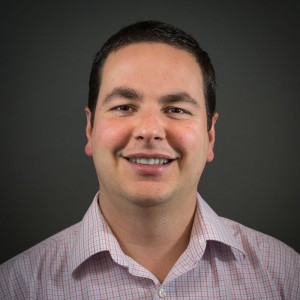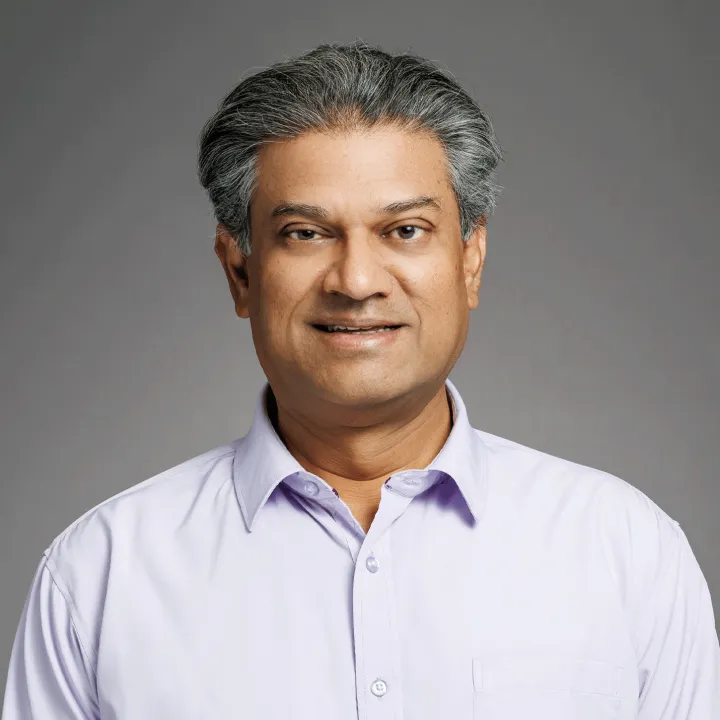
Michael GeorgeView profile
Professor
Michael George is a Professor of Chemistry at the University of Nottingham, United Kingdom. He was elected to the Academy of Europe in 2021 in the Chemical Sciences section and maintains a research group homepage at http://www.nottingham.ac.uk/research/groups/photoelectro/photo-electro.aspx. His research spans multiple innovative areas of chemistry: Innovative reactor design Green and sustainable chemistry Spectroscopy & reaction monitoring Ultrafast time-resolved vibrational spectroscopy Organometallic alkane & noble gas complexes Continuous photo-, electro- and thermal-chemistry for chemical manufacture Supercritical fluids and high pressure phase behaviour Inorganic and organic photochemistry His work bridges fundamental chemical research with practical applications for sustainable chemical manufacturing and environmental solutions, with particular emphasis on photoelectrochemical processes as indicated by his research group's focus. Scientific Awards 2020: Norman Sheppard Award of the Infrared & Raman Discussion Group 2018: United Nations Industrial Development Organization Bronze Award for Research in Chemical Leasing 2016: Meggers Award, Society for Applied Spectroscopy and Camellia Award, Ningbo Municipal Government, China 2014: Fellow of the Royal Society of Chemistry 2013: Royal Society of Chemistry Inorganic Reaction Mechanisms Medal 2012: Fellow of the Society for Applied Spectroscopy 2011: Craver Award, Coblentz Society 2010: Seaborg Memorial Lecturer, UC Berkeley 2009: Williams Evans Fellowship, University of Otago, New Zealand 2008-2013: Royal Society Wolfson Merit Award 2005: Royal Society of Chemistry Photochemistry Medal and Horiba Ltd. Japan, Masao Horiba Special Award 2004: Royal Society of Chemistry, Corday-Morgan Medal 2002-2003: Royal Society of Chemistry, Edward Frankland Fellowship 1995: John van Geuns Lecture, University of Amsterdam Michael George's career progression at the University of Nottingham demonstrates remarkable dedication to chemical sciences, having advanced from Research Officer (1996-1998) to Lecturer (1998-2001), Reader (2001-2002), and Professor of Chemistry (2003-present), with his work receiving international recognition across multiple continents.