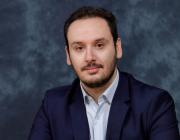
Dr. Jide Williams is an Assistant Professor in Mechanical Engineering at Colorado State University. He holds a PhD from University of Denver (2023), MSc from University of Lagos (2011), and BSc from Lagos State University (2004). Combines expertise in materials engineering with AI/ML applications. Research explores AI-emotional intelligence interfaces in engineering education, ML algorithm deployment in laboratories, and advanced materials for power systems. Current projects include predicting functional decline using ML and composite material applications for power transformer modernization. Recognized as 2022 Graduate Scholar of the Year at University of Denver. Industry experience includes Six Sigma Black Belt certification and management consulting. Develops interdisciplinary courses integrating machine learning with aerospace structures and dynamics.
Armen Sedrakian is a Professor at Wroclaw University and a Fellow at the Frankfurt Institute for Advanced Studies (FIAS), affiliated with Goethe University in Frankfurt. His research focuses on theoretical physics and astrophysics, particularly the physics of compact stars, dense matter behavior under extreme conditions, and QCD at finite temperature/density. Key areas include neutron star cooling mechanisms, hyperonization effects, quark-gluon plasma properties, and axion physics. Recent work emphasizes Bayesian analysis of covariant density functionals using multimessenger data, phase transitions in hybrid stars, and superconductivity in magnetars. His studies also address transport coefficients in neutron star crusts and the implications of NICER mission data for neutron star structure. Publications span topics like Josephson currents in neutron stars, thermal Hall effects in dense plasmas, and constraints on axion properties from cooling data. Sedrakian collaborates internationally on projects involving gravitational wave astronomy and Einstein Telescope science.
Kai Wang is an Assistant Research Professor at the School of Civil and Environmental Engineering, College of Engineering, University of Connecticut, and serves as Project Manager for the Connecticut Transportation Safety Research Center. His work focuses on applying advanced computational methods to transportation safety challenges, leveraging partnerships with the Connecticut Department of Transportation (CTDOT). His academic credentials include: Ph.D. in Civil Engineering, University of Connecticut, 2016 Dr. Wang's research centers on transportation safety analytics through multiple technical domains: Statistical and Econometric Modeling for transportation data systems Artificial Intelligence, Machine Learning, and Deep Learning applications Big Data Analytics and Computing for traffic safety Optimization and Simulation in transportation networks Financial Analytics for infrastructure investment His methodology integrates cutting-edge computational techniques to solve real-world problems in crash prediction, traffic volume estimation, and infrastructure safety management. Recent publications demonstrate pioneering work in artificial data generation (e.g., DREDGE system), vulnerable road user safety, vehicle mix effects on crashes, and telematics-based safety monitoring. This research directly informs CTDOT's safety improvement programs through evidence-based modeling and systemic screening approaches. As Project Manager of the Connecticut Transportation Safety Research Center, he leads initiatives that bridge academic research with state transportation operations, collaborating closely with the Connecticut Transportation Institute to advance data-driven safety analytics for Connecticut's road networks.
Micael Jonsson is an Associate Professor at the Department of Ecology and Environmental Science, Umeå University, Sweden. His research focuses on understanding how environmental changes and human activities influence species composition in ecological communities, and the subsequent impacts on ecosystem functioning and services. His work spans aquatic and terrestrial ecosystems, including boreal forests, streams, and riparian zones. Research interests include biodiversity-ecosystem functioning relationships, pharmaceutical contaminant effects on aquatic organisms, and the role of species interactions in maintaining ecosystem resilience. He employs innovative methods like UAV-based monitoring and deep learning to study ant mound distributions and ecological impacts. Key areas of investigation include decomposition processes, contaminant transfer via insects, and the behavioral effects of pharmaceuticals on fish. His studies often integrate field experiments with controlled laboratory trials to assess ecological and physiological responses. He collaborates on large-scale projects such as the FreshLanDiv database and RIPARIANET initiative to prioritize ecologically critical riparian zones. Publications highlight advancements in understanding PFAS contamination, bubble barrier technology for fish guidance, and the interplay between forest management and ecosystem services. His work contributes to sustainable resource management strategies and conservation practices in boreal and subarctic ecosystems.
Roslyn Bill is a Professor at Aston University, UK, leading the Aston Institute for Membrane Excellence (AIME). She holds roles as Director of AIME, Chief Scientific Officer at Estuar Pharmaceuticals, and the 50th Anniversary Professor of Biotechnology in the College of Health & Life Sciences. Her research focuses on membrane proteins, particularly aquaporins, with emphasis on their regulation and therapeutic applications in neurological disorders. Bill leads a multi-disciplinary team funded by a £10M grant from Research England. She is an ERC Advanced Grantee and has coordinated EU projects like E-MeP and EDICT. Education: DPhil in Bio-Organic Chemistry, University of Oxford (1995) BA (Hons) 1st Class in Chemistry, University of Oxford (1990) Research Interests: Membrane protein structure-function relationships Aquaporin regulation and glymphatic flow Drug discovery targeting aquaporins Biomembrane engineering and protein purification Her work on aquaporin regulation culminated in a 2020 Cell publication showing AQP4 localization as a therapeutic target for brain/spinal cord swelling. Current projects include FORTIFY (ERC-funded study on glymphatic flow physiology). Publications Trends: Recent articles emphasize aquaporin pharmacology, tetraspanin classification, and glymphatic system mechanisms. Key themes include drug development for CNS edema, structural biology of membrane proteins, and assay innovations for lipid analysis. Awards & Recognition: ERC Advanced Grant (2023) Aston University VC’s Research Excellence Award (2023) FEBS National Lecturer (2019) Fellowships: RSC (2013), Royal Society of Biology (2012) Grants & Leadership: Chair of BBSRC Research Committee E Member of REF2021 Sub-Panel 8 (Chemistry) Coordinated EU FP6/FP7 projects Executive Editor of BBA-Biomembranes Labs & Initiatives: Aston Membrane Proteins and Lipids (AMPL) AIME: £10M Expanding Excellence in England programme Spin-outs: Estuar Pharmaceuticals
Aniket Chanda is a Researcher at the School of Engineering, University of Limerick. His work focuses on advanced composite materials, structural dynamics, and smart material systems. He specializes in analyzing composite plates and beams using numerical methods like the inverse differential quadrature method and non-polynomial theories. Key research areas include vibration analysis, transient response modeling, and static/dynamic behavior of functionally graded materials, piezoelectric composites, and sandwich structures. His studies often employ finite element analysis (FEA) and analytical solutions to investigate stress distribution, porosity effects, and material behavior under various conditions. Chanda's contributions advance structural engineering and materials science, with applications in aerospace and mechanical systems. He collaborates on projects involving multi-directional functionally graded materials, smart composite laminates, and piezoelectric coupling mechanisms. No scientific awards or grants are explicitly listed in the provided information. His research aligns with UN Sustainable Development Goals, though specific goals are not detailed here.
Peter Liaw is a distinguished Professor and Ivan Racheff Chair of Excellence at the Department of Materials Science and Engineering, Tickle College of Engineering, University of Tennessee, Knoxville. With a PhD in Materials Science and Engineering from Northwestern University, he has been a faculty member since March 1993, contributing extensively to the study of mechanical behavior, fatigue, fracture, and nondestructive evaluation of advanced materials, including high-entropy alloys and superalloys. BS in Physics, National Tsing Hua University, Taiwan PhD in Materials Science and Engineering, Northwestern University (1980) His research spans multiple disciplines, focusing on neutron/synchrotron studies, life-prediction methodologies for structural alloys, and processing of bulk-metallic glasses, nano-structural materials, and ceramic-matrix composites. Collaborations with Oak Ridge National Laboratory and leadership in NSF programs (IGERT, IMI, MRI) highlight his impact on materials science education and innovation. Recent publications emphasize trends in high-entropy alloys, machine learning applications in alloy design, phase transformations, and advanced characterization techniques like STEM and synchrotron diffraction. His work bridges computational modeling, experimental validation, and practical applications across aerospace, biomedical, and energy sectors. Scientific awards and recognitions include: Royal E. Cabell Fellowship Westinghouse Outstanding Performance (2011, 2008, 2003) Moses E. and Mayme Brooks Distinguished Professor Award (2010) National Alumni Association Distinguished Service Professor Award TMS Distinguished Service Award (2007) Fellow, ASM International (1997) Peter Liaw has directed major NSF initiatives and mentored graduate students who now lead in academia, industry, and government labs. His contributions to materials science extend to editing 20 books, publishing over 500 papers, and advancing data science in alloy research through partnerships with Oak Ridge National Laboratory.
Stelios Georgantzinos is an Assistant Professor at the Department of Aerospace Science and Technology, National and Kapodistrian University of Athens. His research focuses on advanced materials, nanotechnology, and computational mechanics, with a strong emphasis on multiscale modeling of composite materials and structural analysis. His work spans applications in aerospace engineering, biomedical devices, and smart materials. Research interests include composite materials, nanocomposites, finite element analysis, and additive manufacturing. He explores topics like CNT-reinforced laminates, 4D printing, and structural behavior of nanomaterials such as graphyne and fullerene. His studies often combine experimental methods with computational tools like molecular dynamics and finite element modeling. Recent work highlights include multiscale simulations of hygrothermal effects on composite vibrations, topology optimization for orthoses, and mechanical characterization of nanosheets. He also investigates quality management strategies integrating DEA and Lean Six Sigma for industrial applications.
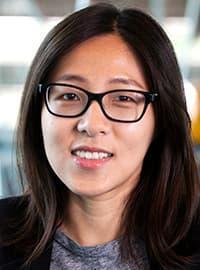
Qian Zhang is an Assistant Professor in the Department of Civil & Environmental Engineering at Florida A&M University-Florida State University's College of Engineering. Their research focuses on high-performance materials, structural applications of advanced materials, and infrastructure durability. Dr. Zhang holds a Ph.D. from the University of Michigan (2015), an M.S. from the same institution (2010), and a B.S. from Tsinghua University (2009). Education : Ph.D. Civil and Environmental Engineering, University of Michigan, Ann Arbor (2015) M.S. Civil and Environmental Engineering, University of Michigan, Ann Arbor (2010) B.S. Civil Engineering, Tsinghua University (2009) Research Interests : Dr. Zhang specializes in multi-functional cementitious materials, thermal properties of construction materials, and fire safety engineering. Their work emphasizes sustainable infrastructure solutions and innovative material applications, including self-healing concrete and ductile interlayers to prevent reflective cracking in pavements. Research Trends : Recent publications highlight advancements in additive manufacturing materials, corrosion-resistant infrastructure, and ultra-high-performance concrete (UHPC) applications. Key themes include material durability under extreme conditions, fiber-reinforced composites, and lifecycle sustainability. Awards & Grants : Not explicitly listed in available texts. Advising & Labs : No students or lab affiliations specified in provided data. Their research likely leverages university engineering facilities for material testing and structural analysis.
Dr. Eoin Hinchy is an Associate Professor at the University of Limerick (UL), affiliated with the School of Engineering, Bernal Institute, and the Centre for Sustainable Digital (Re)Manufacturing. His research focuses on digital manufacturing, advanced robotics, and additive manufacturing, with emphasis on robotic safety systems and machine learning applications. He holds a PhD in Mechanical Engineering from UL (2016) and previously worked at DePuy Synthes and Confirm Smart Manufacturing. His work integrates digital twin technology, robotics, and 3D printing to enhance manufacturing processes. He leads an SFI-ADI co-funded project on human-robot interaction in factories. Teaching interests include advanced manufacturing processes, industrial robotics, and smart manufacturing systems. He has published extensively on topics such as 4D printing, composite material processing, and machine learning in manufacturing quality control. Recent research trends include the development of adaptive materials for 3D printing, robotic drilling optimization, and digital twin frameworks for life sciences automation. His collaborative projects with industry partners like Analog Devices International aim to advance factory-of-the-future technologies.
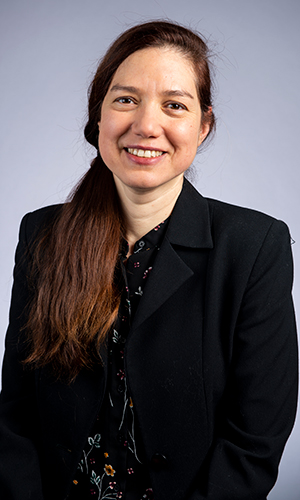
Jun.-Prof. Jannika Lauth is a faculty member at Leibniz University Hannover's Department of Functional Nanostructures, affiliated with the Institute of Physical Chemistry and Electrochemistry. She leads the Lauth group, focusing on 2D semiconductors, ultrafast spectroscopy, and colloidal chemistry. Her research combines synthesis of nanomaterials with advanced characterization techniques like transient absorption spectroscopy and terahertz spectroscopy. Education & Career: PhD (Dr. rer. nat.) in Physical Chemistry at University of Hamburg (2010–2014) Postdoctoral researcher at TU Delft (2015–2017) and independent postdoc at University of Hamburg (2014–2015) Junior Research Group Leader at Carl von Ossietzky University Oldenburg (2018–2019) Group Leader at Leibniz University Hannover since 2019 Research Interests: Development of colloidal 2D semiconductors for optoelectronics, ultrafast charge dynamics, and energy transfer. Her work spans synthesis methodologies, material characterization, and device applications, with a focus on nanoscale optoelectronic properties. Awards & Memberships: Spokesperson of the young Physical Chemists (yPC), German Bunsen Society (DBG) Teaching: Courses include Functional Nanostructures, Colloids and Nanoparticles, and Solid-State Materials Principles. She actively contributes to the Department's educational and research initiatives in functional nanomaterials. Labs & Collaborations: Her group is embedded in the Cluster of Excellence PhoenixD and collaborates with the Institute of Solid State Physics on ultrafast spectroscopy instrumentation. The lab focuses on hybrid nanostructures and their optoelectronic applications.
Donald W. Brenner is the Kobe Steel Distinguished Professor and Head of the Department of Materials Science and Engineering at North Carolina State University, within the College of Engineering. His research focuses on atomic-scale modeling and multi-scale simulation techniques for advanced materials design, including high-entropy ceramics and nanotechnology applications. He holds a B.S. (1982) and Ph.D. (1987) in Chemistry from the State University of New York and Pennsylvania State University, respectively. Before joining NC State in 1994, he was at the U.S. Naval Research Laboratory. Research interests include computational studies of materials for extreme environments, tribology, shock dynamics, and nuclear materials. Key methods employed are density functional theory, molecular dynamics, and hybrid modeling approaches. His work has led to innovations such as the REBO interatomic potential, foundational for reactive molecular simulations. Notable awards include the 2002 Feynman Prize in Nanotechnology, 2013 Alcoa Foundation Award, and 2016 Holladay Medal. His Brenner Research Group explores topics like nanoscale structure characterization, energetic materials, and self-assembled monolayers. Current projects emphasize high-entropy materials discovery via entropy landscaping and machine learning-driven interatomic potentials.
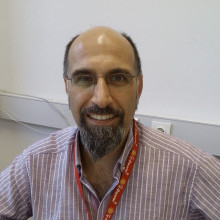
Dr. Chrissopoulou Kiriaki is a Principal Researcher (Researcher B) at the Institute of Electronic Structure and Laser (IESL) within the Foundation for Research and Technology – Hellas (FORTH). Her academic journey includes a PhD from the Physics Department of the University of Patras (2000), a Master of Science in Physics from the University of Crete (1993), and a Physics Diploma from the University of Crete (1990). She has held roles such as Maître de conférences at Collège de France (2001–2002) and Post-doctoral fellow at IESL (2000–2001). Her research focuses on static and dynamic investigations of multi-constituent polymer systems, organic-inorganic nanohybrids, polymer dynamics under confinement, and surface interactions. Key interests include polymer crystallization, block copolymers, and adhesion mechanisms between solids and elastomers. She has authored 37 journal papers, 8 conference proceedings, and 4 book chapters, with over 940 citations and an h-index of 18 as of 2022. Her work spans over 200 national/international conference presentations and includes leadership roles such as Guest Editor for Colloid and Polymer Science (Springer) and organizer of the Nanostructured Hybrid Materials II conference. She actively participates in writing scientific proposals and managing national/EU projects, alongside supervising numerous diploma, MSc, and PhD students. Notable achievements include the 2009 Best Oral Presentation Award at the Panhellenic Conference on Solid State Physics. Her research group explores advanced materials like polymer/graphene composites, superhydrophobic coatings, and nanohybrids for biomedical and environmental applications.
Lampros Papoutsakis is a Researcher at the Polymer Group of the Institute of Electronic Structure and Laser (IESL) , part of the Foundation for Research and Technology - Hellas (FORTH) . He graduated with a Physics degree from the University of Crete in 1998 and earned a Master's in Microelectronics-Optoelectronics in 2002. Career : Research Assistant (2004–present), Trainee (2003–2004) Research Focus : Smart polymeric surfaces, responsive nanoparticles, solid electrolytes, and photocatalytic materials Technical Expertise : XRD, DSC, TGA, FTIR, Raman/UV-Vis spectroscopy, TEM/SEM, surface tension analysis His work spans polymer science, nanotechnology, and surface engineering, with recent emphasis on mechanochemical synthesis of perovskite nanomaterials (2025) and 3D-printed photocatalytic sponges (2023). He explores wettability control through hierarchical roughness (2023-2015), multiphoton polymerization (2020), and stimuli-responsive polymer grafting (2016). Key contributions include: 1998: Summer School of Advanced Physics Award 2017: High-modulus polymer electrolytes with nanostructured additives 2015: Photocatalytic ZnO coatings with reversible wettability 2005: Metal nanoparticle formation in pH-responsive block copolymers
Dr. Ruthie Angelovici is an Associate Professor of Biological Sciences at the University of Missouri's College of Arts and Science. Her research focuses on the genetic and metabolic control of seed amino acid composition, employing GWAS, functional genomics, and bioinformatics to understand metabolic networks in plants. She investigates how amino acid networks respond to environmental changes and evolutionary constraints, aiming to improve crop quality through breeding and biotechnology. Her research integrates: Genetic architecture of seed traits under environmental stress Metabolic network modeling in plants Evolutionary adaptations in seed development Recent publications demonstrate a strong focus on multi-omics approaches to seed biology, with themes spanning stress response mechanisms, metabolic engineering, and sustainable agriculture. Her work frequently utilizes maize and Arabidopsis models to explore fundamental biological processes. Honors include: David B. Dunn Award (2023) College of Arts and Science Teaching Award (2021) Arthur C. Neish Young Investigator Award (2020) Jen Junior Faculty Research Award (2020) She leads a research group at the Christopher S. Bond Life Sciences Center investigating seed metabolism through advanced molecular techniques.